Lilac Lighthouse Tender, NY 
Select a photograph to view a photo gallery
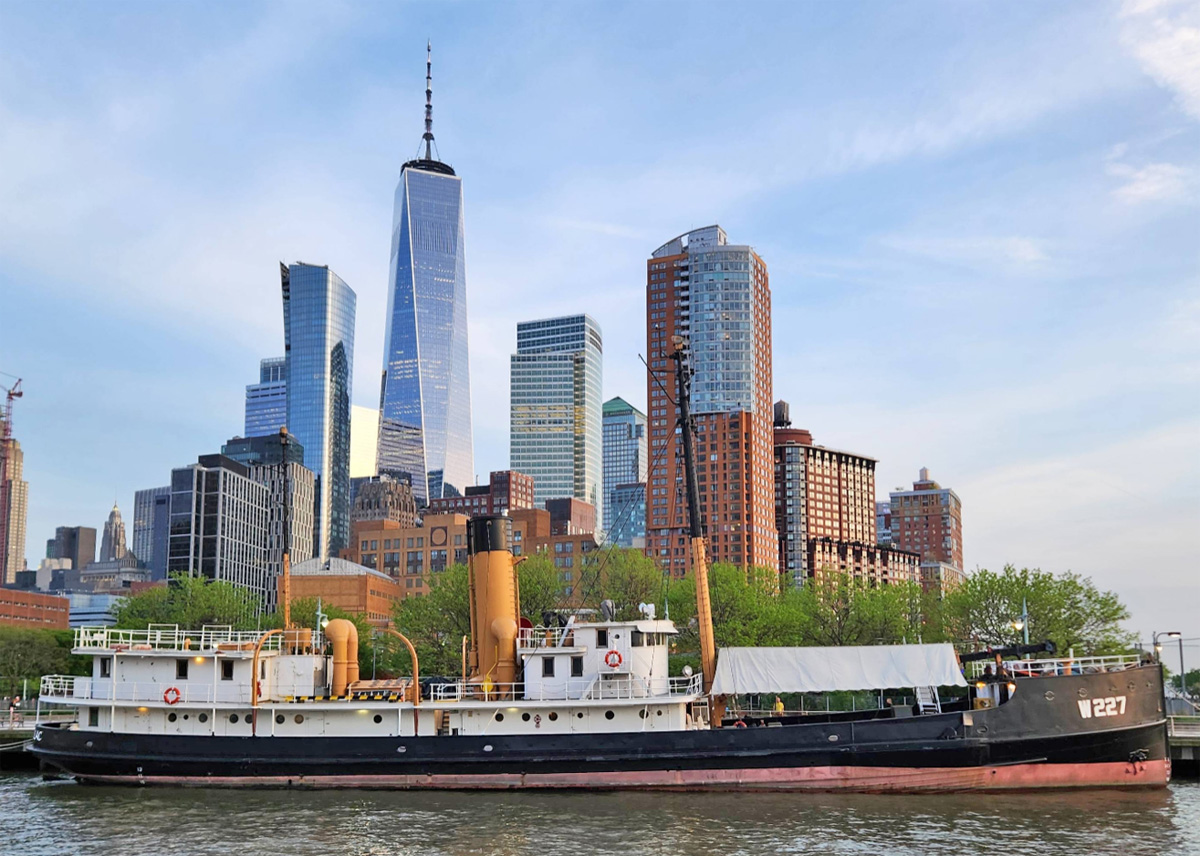
Photo Gallery
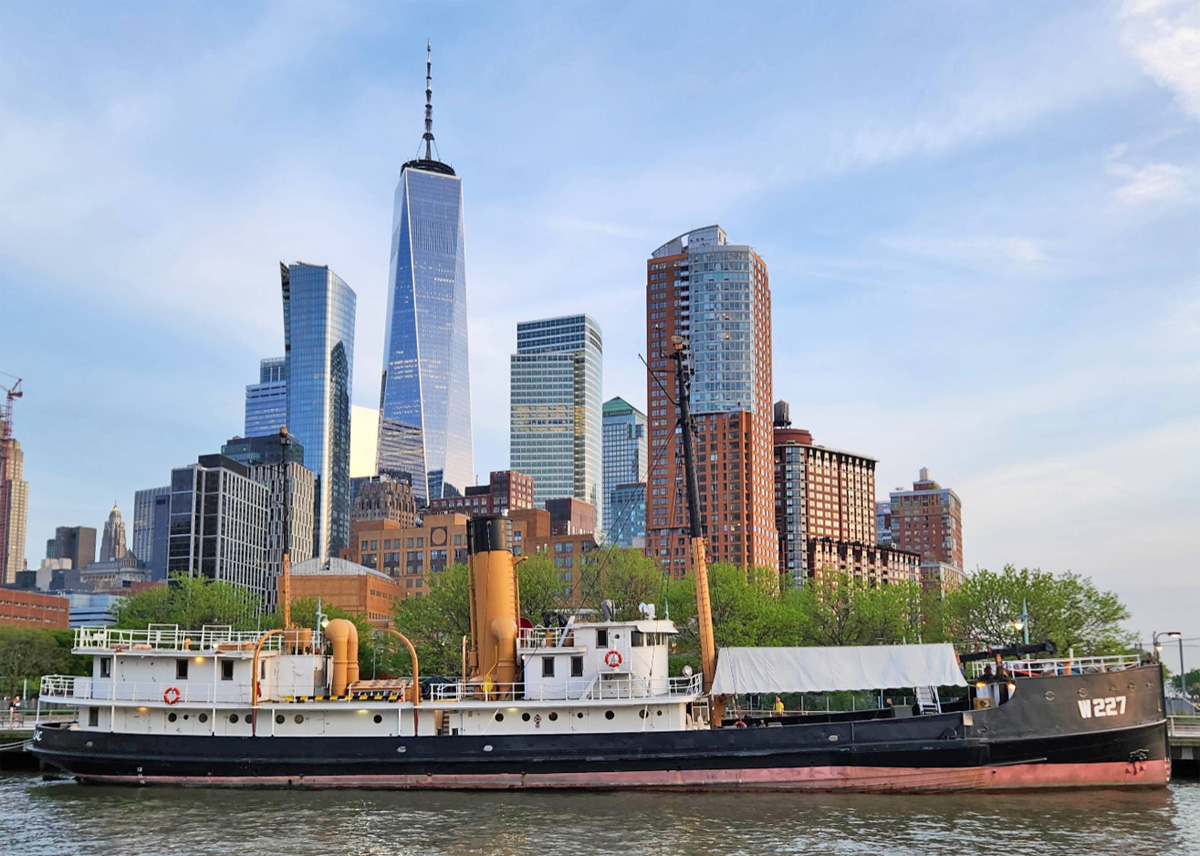
Photo Gallery
Photo Gallery
For nearly four decades, the lighthouse tender LILAC played an important but largely unseen role in keeping ships safe along the Delaware River and Delaware Bay. Built in Wilmington, Delaware, in 1933, she carried supplies to lighthouses, maintained buoys and other aids to navigation, responded to maritime emergencies, and served as a working link between the shore and the navigational system that supported one of the nation’s busiest waterways. Today, LILAC is the last surviving steam-propelled lighthouse tender in the United States and one of the most important surviving vessels associated with the U.S. Lighthouse Service. She is listed on the National Register of Historic Places and is preserved as a museum ship in New York City.
The success of America’s major seaports depended upon safe and reliable navigation. Lighthouses marked dangerous shoals and harbor entrances, while lightships, range lights, and buoys marked channels and other hazards. Lighthouse tenders were the workhorses that kept this system functioning. They carried fuel and supplies to isolated stations, transported keepers, placed and recovered buoys, and provided the heavy equipment necessary to maintain aids to navigation.
By the early twentieth century, the U.S. Lighthouse Board and, after 1910, the U.S. Lighthouse Service had developed standardized designs for large steam tenders. Between 1892 and 1939, thirty-three large tenders based on this general design were constructed. LILAC, completed in 1933, is the only one of these large steam-powered Lighthouse Service tenders to survive essentially intact with her original steam machinery.
The Lighthouse Service initially awarded the contract for LILAC to Hampton Roads Shipbuilding Corporation of Portsmouth, Virginia, in April 1931. The vessel was originally to be named AZALEA. The inexperienced shipyard, however, encountered serious difficulties. A fire in September 1931 destroyed much of the shipyard’s facilities and, although the partially completed hull survived, important drawings and other materials were lost. The project fell far behind schedule, and the Lighthouse Service terminated the contract in June 1932. Hampton Roads Shipbuilding subsequently went bankrupt.
|
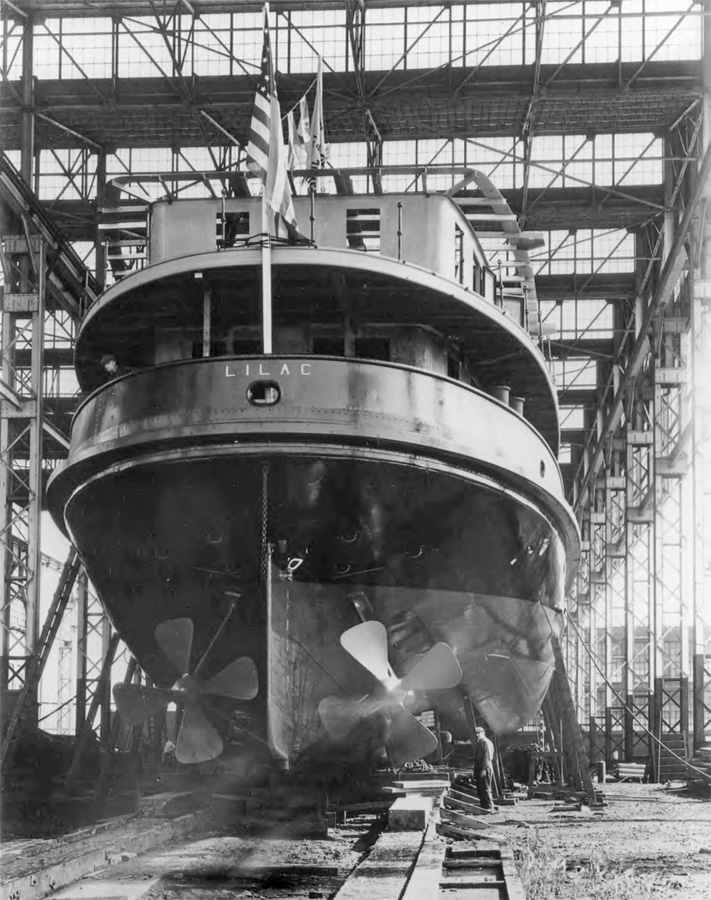
A new contract was awarded to Pusey & Jones Company of Wilmington, Delaware, in August 1932. Pusey & Jones did not simply continue construction on the partially completed hull at Portsmouth; instead, the vessel was built anew at its Wilmington shipyard. LILAC was launched on May 26, 1933, with Kristi Aresvik Putnam, daughter of Lighthouse Commissioner George R. Putnam, serving as her sponsor. Commissioner Putnam was present for the launch. In keeping with the prohibition-era restrictions then in effect, a bottle of water rather than champagne was broken over the bow.
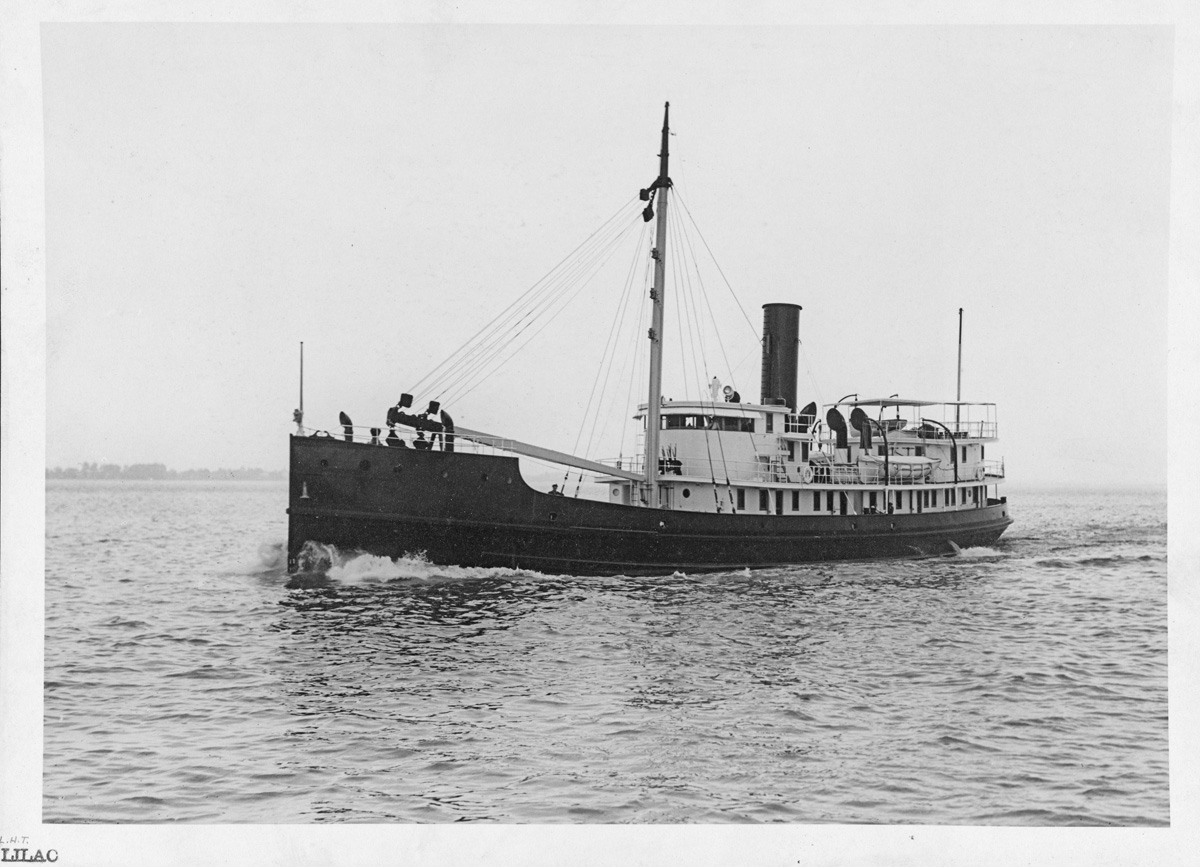
LILAC measured approximately 173 feet 4 inches in length and 32 feet in beam. Her riveted-steel hull was designed for stability in the open waters of Delaware Bay as well as the river and adjoining bays and sounds. Two triple-expansion steam engines, supplied with steam by two Babcock & Wilcox boilers, produced a total of about 1,000 horsepower and drove twin propellers. She could reach approximately 11 knots. Most importantly for her work, a steam-powered boom could lift as much as 20 tons, allowing the crew to handle the large buoys used in major shipping channels.
The ship’s design reflected her specialized mission. Her open well deck provided working space for handling buoys, while the wheelhouse gave the captain a broad view of the deck and the water alongside. Her quarters, galley, mess, offices, radio room, machinery spaces, and cargo areas were all arranged around the needs of a crew that might spend long periods away from shore. Like several other Lighthouse Service tenders, she was named for a flowering plant—in this case the lilac.
Upon entering service in 1933, LILAC was assigned to the Fourth Lighthouse District and based at the Lighthouse Service depot at Edgemoor, Delaware. Her district encompassed the Delaware River and Delaware Bay, one of the most commercially important waterways on the East Coast. The river served the major ports of Philadelphia, Camden, Trenton, and Wilmington and was lined with shipyards, refineries, power plants, factories, and other industrial facilities. The waterway also formed an important link in the Intracoastal Waterway system through the Cape May Canal and the Chesapeake and Delaware Canal.
LILAC replaced the older tender IRIS and quickly became an essential part of the region’s navigational system. Her crews repaired and replaced buoys damaged by storms, ice, and passing vessels and placed temporary buoys near wrecks to warn other mariners. She also transported fuel and supplies to lighthouses and assisted with maintenance of lighthouse equipment. Although lighthouse keepers received much of the public attention, the work of tenders such as LILAC was indispensable to keeping the entire system operating.
|
The tender’s work was not limited to routine maintenance. During the severe winter of 1935–36, heavy ice in Delaware Bay threatened offshore lighthouse stations. LILAC was sent into the lower bay to evacuate keepers from endangered stations. During the operation, her propeller was damaged by the ice, requiring her to undergo repairs and drydocking.
LILAC’s career with the Lighthouse Service lasted only six years. On July 1, 1939, the U.S. Lighthouse Service was abolished and its responsibilities were transferred to the U.S. Coast Guard. LILAC consequently became a Coast Guard vessel while continuing essentially the same work she had performed for the Lighthouse Service. She received the designation WAGL-227 and remained based at Edgemoor. The brass Lighthouse Service emblems on her bow were removed, her stack was modified to Coast Guard colors, and the Lighthouse Service pennant was replaced by the Coast Guard flag.
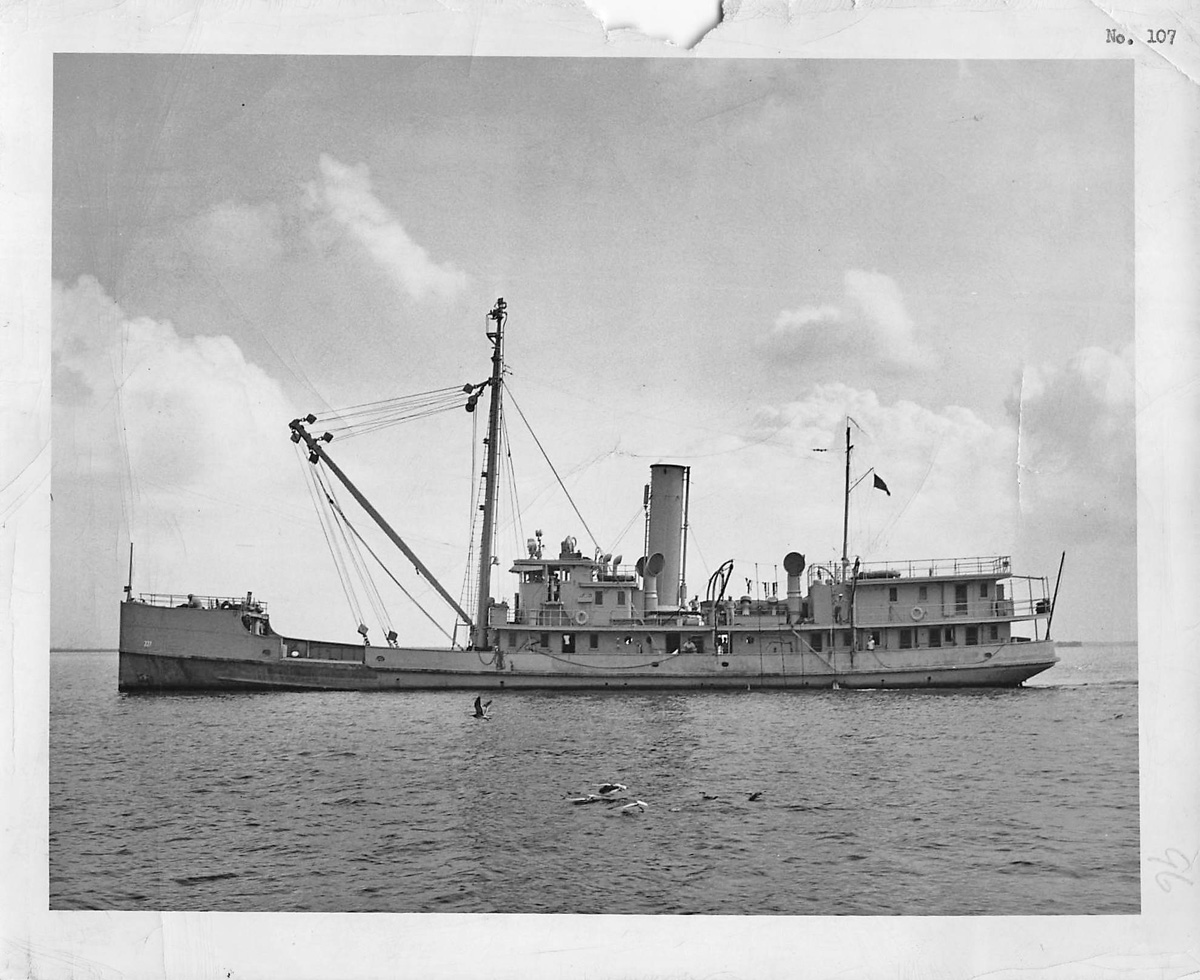
Her duties expanded during World War II. In addition to maintaining aids to navigation, LILAC was assigned port-security responsibilities and was painted gray. She received a 3-inch gun on the forecastle, two 20-mm antiaircraft guns near the bridge, and depth-charge tracks on the stern. A degaussing system was installed to protect the ship against magnetic mines that German submarines might lay near the entrance to Delaware Bay. Her buoy work also included maintaining markers for swept channels that had been cleared of mines. Although armed for wartime service, LILAC did not engage in combat. Her armament was removed after the war.
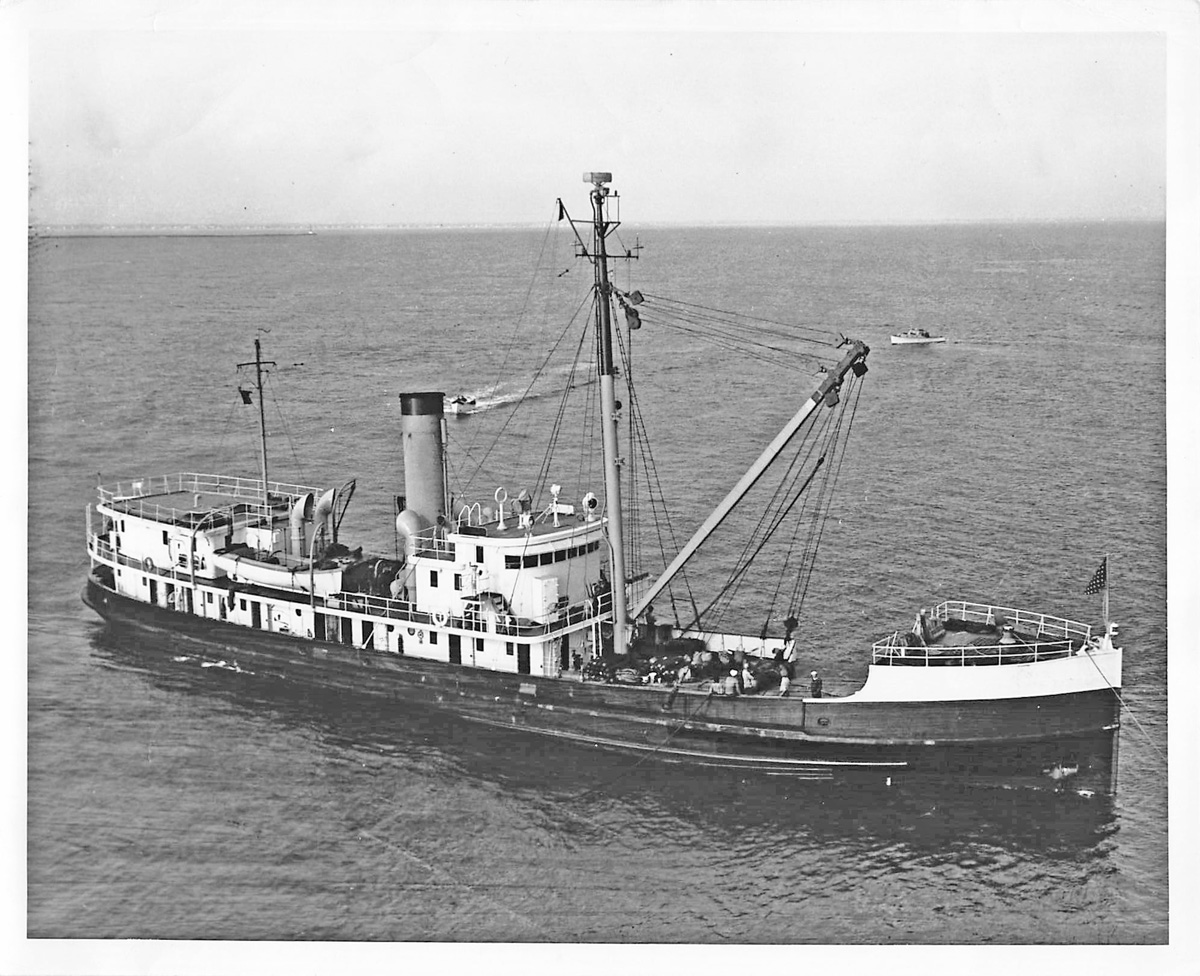
Following World War II, LILAC returned to her normal aids-to-navigation duties. In 1948, the Edgemoor base closed, and she moved to the Coast Guard facility at Gloucester City, New Jersey, near Philadelphia. Radar was added around this period, reflecting the modernization of Coast Guard vessels. In 1965, a new Coast Guard classification system changed her designation from WAGL-227 to WLM-227, identifying her as a coastal buoy tender.
While maintaining buoys and other navigational aids remained LILAC’s primary responsibility, her size, equipment, and experienced crew made her valuable during maritime emergencies. In 1952 and 1953, she responded to an extraordinary series of accidents on the Delaware River and nearby waterways.
In May 1952, LILAC assisted after the collision of the freighter BARBARA LYKES and the tanker F. L. HAYES in the Chesapeake and Delaware Canal. The tanker, carrying a large quantity of high-octane gasoline, caught fire and eventually sank, temporarily obstructing the waterway. LILAC returned to duty later that month following additional tanker collisions and was repeatedly called upon to assist vessels in distress.
|
The following year brought further emergencies. In January 1953, LILAC rescued two crewmen from the fishing vessel BENJAMIN BROTHERS II after it sank. In June, two tankers, PHOENIX and PAN MASSACHUSETTS, collided and caught fire in the Delaware River. LILAC served as an on-scene command post and helped keep other vessels away from the dangerous area. In July, she responded to an explosion and fire aboard the tanker PAN GEORGIA near Wilmington, searching for survivors and helping fight the fire. She continued to answer distress calls and assist disabled vessels throughout the remainder of her career.
One of the most tragic incidents in LILAC’s long service occurred on October 7, 1971. While the tender was moored in the Delaware River, two crewmen fell overboard during the night. Quartermaster Howard A. Jensen entered the water in an attempt to rescue them but died during the effort. Jensen was later awarded the Coast Guard Medal posthumously for his heroism.
By the early 1970s, LILAC had become a survivor from an earlier era. Diesel engines had largely replaced steam propulsion, and newer buoy tenders could perform the work more efficiently. The Department of Transportation concluded that LILAC had reached the end of her economic life, noting that her steam machinery required increasingly difficult and expensive maintenance and that replacement parts were virtually unavailable.
After almost forty years of government service, LILAC was decommissioned at the Coast Guard Yard at Curtis Bay, Maryland, on February 3, 1972. She was the last steam-powered ship in the Coast Guard fleet. Four months later, she was donated to the Seafarers International Union’s Harry Lundeberg School of Seamanship at Piney Point, Maryland, where she served as a dormitory, classroom, and training facility for merchant mariners. The union made relatively few structural changes, allowing much of the historic vessel to survive.
After the school retired her in 1984, LILAC passed briefly to Atlantic Towing Corporation and then to Henry A. Houck of Falling Creek Marina on the James River in Virginia. She remained there for nearly two decades, used partly as office space. Although some fittings were removed, the vessel escaped major alteration.
By the late 1990s, preservationists recognized the importance of saving LILAC. In 2003, the Tug Pegasus Preservation Project acquired the vessel. After being refloated and inspected in Norfolk, where her hull was found to be in remarkably good condition, she was towed to New York. Ownership was transferred in 2004 to the newly established Lilac Preservation Project, a nonprofit organization dedicated to preserving the historic vessel.
LILAC eventually moved to Pier 25 in Hudson River Park in Manhattan, where she has been preserved as a museum ship. The vessel is now open to visitors and serves as an educational resource, allowing the public to see firsthand how a lighthouse tender and buoy tender operated. The Lilac Preservation Project continues efforts to restore the vessel while preserving her historic character and interpreting the work of the men and women who maintained America’s system of aids to navigation.
Today, the automation of lighthouses and the replacement of traditional lighthouse tenders by modern buoy tenders have made vessels such as LILAC obsolete. Her survival, however, provides a rare opportunity to understand an essential part of America’s maritime history. She is not simply an old Coast Guard cutter or a surviving steamship. She represents the working infrastructure behind the nation’s lighthouse system—the vessels, equipment, and crews that made it possible for lighthouses, buoys, and other aids to navigation to function.
LILAC is an unusually complete survivor of the era when steam-powered tenders routinely traveled America’s coastal waters, carrying supplies, tending buoys, assisting lighthouse keepers, and responding to vessels in distress. Her nearly four decades of service on the Delaware make her a particularly important representative of the connection between navigational aids and the commerce that depended upon them. As the last surviving steam-powered lighthouse tender built for the U.S. Lighthouse Service, LILAC preserves not only a remarkable vessel but also the story of an entire maritime profession that has largely disappeared.