Wawatam, MI 
Select a photograph to view a photo gallery
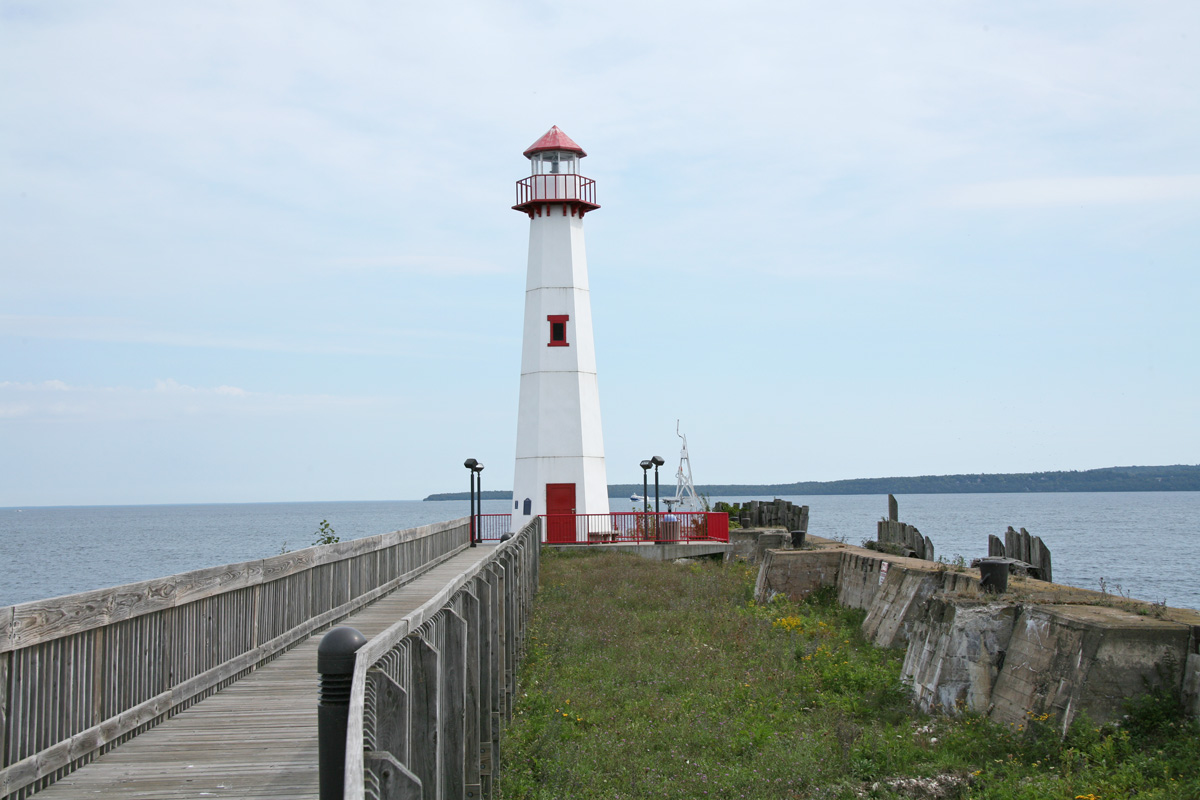
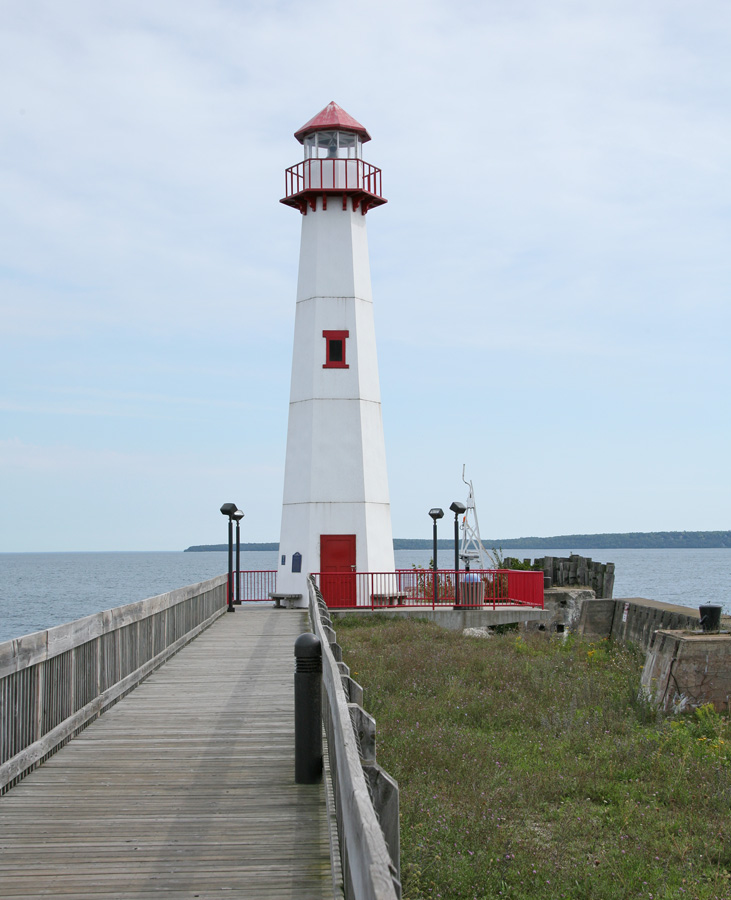
Photo Gallery
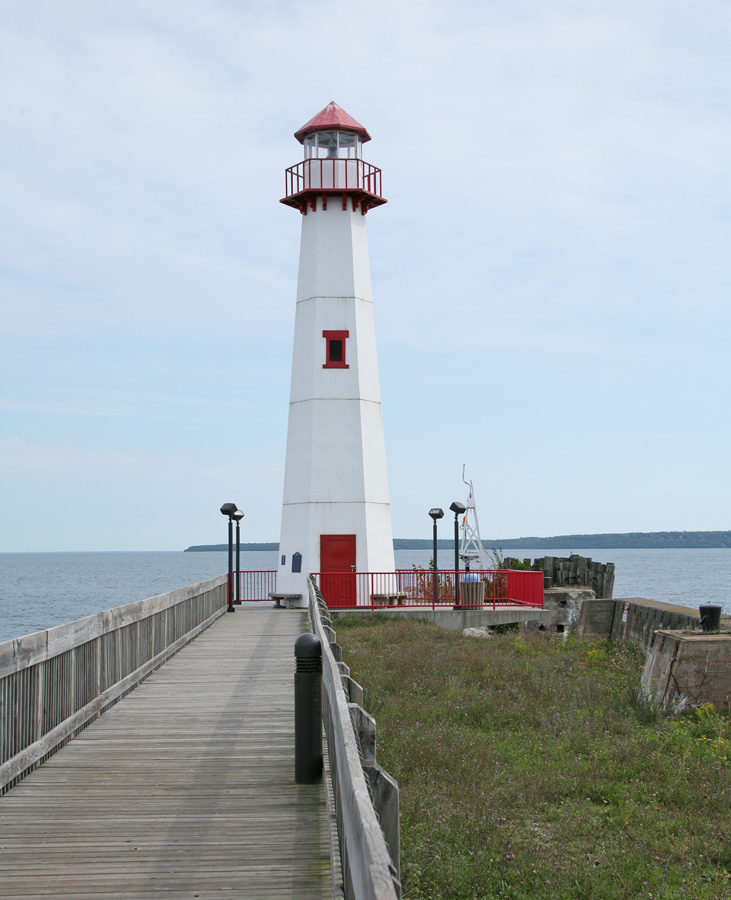
Photo Gallery
Photo Gallery
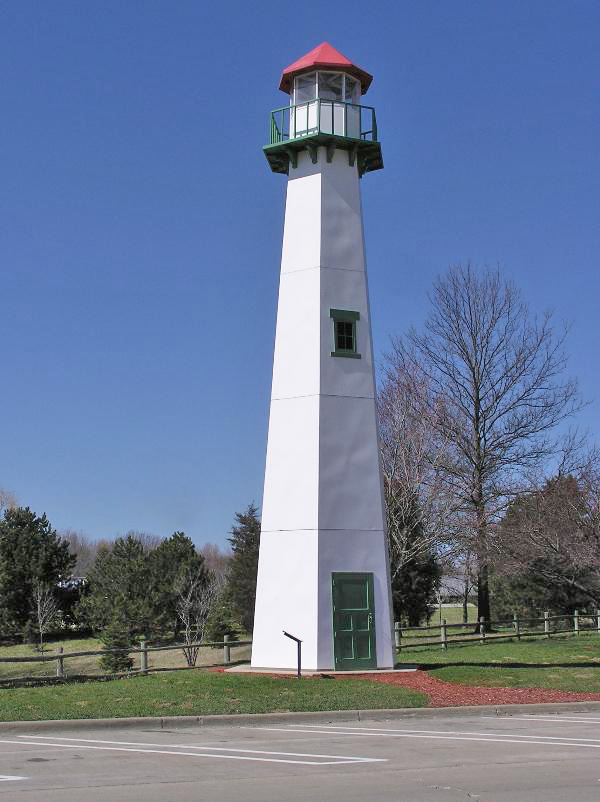
Wawatam Lighthouse stands at the end of the old Railroad Dock at St. Ignace, Michigan, marking the entrance to the St. Ignace Municipal Marina. Although it resembles the traditional lighthouses found throughout the Great Lakes, its origins are quite different. The structure was not built by the federal government as a lighthouse, never had a resident keeper, and was originally constructed as a decorative attraction for a Michigan Welcome Center. Only after it was moved to St. Ignace in 2006 did it become an official aid to navigation.
The story of Wawatam Lighthouse began in 1997 when Ed Morris, a welder and owner of Morris Machine & Mold in Bay City, Michigan, was commissioned to design and build a series of lighthouse replicas for Michigan Welcome Centers. Morris had established a reputation for his ability to fabricate steel structures and equipment. His work included steel chairs, lighting fixtures, robotic fixtures, an accessible swimming-pool lift, and equipment for the oil industry. As Morris later explained, his philosophy was simple: “If it's made out of steel, I'll do it.”
Morris originally designed the Welcome Center lighthouse to be thirty-six feet tall, but challenged himself to build something considerably larger. The resulting structures stood approximately fifty-four feet high and were constructed in five sections that were welded together. Each lighthouse rested on a base approximately twelve feet in diameter. Working with a crew of eight men, Morris and his employees completed the project in about three months.
Three of the structures were built for Michigan Welcome Centers, located at New Buffalo, Clare, and Monroe. They were intended to be museum-quality attractions that would make an imposing impression on travelers entering the state. Unlike a traditional lighthouse, however, their original purpose was not to guide ships. They were architectural and tourism attractions designed to reflect Michigan’s maritime heritage.
|
The lighthouse at the Monroe Welcome Center eventually faced an uncertain future. When the facility was remodeled in 2004, the lighthouse was scheduled to be removed. At about the same time, St. Ignace was looking for ways to improve its waterfront and redevelop the old Railroad Dock. St. Ignace Welcome Center Manager Mike Lilliquist learned that the structure was available while attending a Travel Michigan meeting in Detroit. He was told that it would be demolished within seventeen days if no community claimed it.
Lilliquist immediately saw an opportunity for St. Ignace. During the meeting, he contacted St. Ignace Marina Director Eugene Elmer, who agreed that the lighthouse would be an ideal addition to the city’s waterfront. The state subsequently donated the structure to St. Ignace in the fall of 2004.
Moving the lighthouse to St. Ignace was a substantial undertaking. Transportation of the structure cost approximately $20,000, while the total expense of moving, repairing, repainting, and erecting it came to about $50,000. Half of the cost was provided through the Michigan Waterways Commission, while the remainder was raised locally. Fifty members of the community each contributed $500 toward the project.
Fisher Contracting of Midland, Michigan, which had originally assembled the lighthouses in 1997, was involved in repainting and assembling the structure at its new location. On June 6, 2006, the lighthouse was erected at the end of the old Railroad Dock. Contemporary accounts described the structure as rising approximately fifty-two feet above the dock, while the builder later described it as a fifty-four-foot lighthouse. Regardless of the slight difference in reported height, the imposing steel structure quickly became a prominent feature of the St. Ignace waterfront.
The city chose to name the lighthouse Wawatam, connecting the new structure with the important railroad and ferry history of the site. The name commemorates the Chief Wawatam, a 338-foot railroad car ferry that operated across the Straits of Mackinac. The ferry transported railroad cars between Michigan’s Upper and Lower Peninsulas and used the dock where the lighthouse now stands.
The railroad dock had been constructed in the late nineteenth century by the Duluth, South Shore and Atlantic Railroad. Railroad cars were brought onto the dock and loaded aboard the Chief Wawatam using a track elevator that aligned the railroad tracks on the dock with the tracks on the ferry. The track elevator still stands at the base of the dock, providing a tangible reminder of the site’s former role as an important transportation center.
The lighthouse’s role changed significantly after its arrival in St. Ignace. Although it had originally been built solely as a decorative attraction, city officials wanted its light to serve a practical purpose by marking the entrance to the municipal marina. Because the structure was to function as an aid to navigation, the city had to obtain approval from the U.S. Coast Guard.
In August 2006, the St. Ignace News reported that the city was awaiting a Coast Guard permit to activate the light. The Coast Guard required the structure to have a name before the application could be processed because the lighthouse would appear on navigational charts. The city had initially submitted its application without a name and had considered holding a public naming contest. With the permit process underway, however, city officials quickly polled people at City Hall. “Wawatam” was the first choice, providing an obvious connection to the historic railroad ferry and the dock.
On August 20, 2006, the lighthouse’s navigational light was officially turned on. It was designed to remain lit year-round and became an official aid to navigation serving boaters entering the St. Ignace Municipal Marina. The 250-millimeter beacon produces a white flashing light visible approximately 13.2 miles across Lake Huron under favorable conditions, with the light covering a 152-degree arc.
The light also acquired an unexpected secondary visibility. Although an internal baffle was intended to prevent the beam from shining toward the land, some of the light reflected from the glass surrounding the lantern and could be seen from shore. Marina Director Eugene Elmer considered the unexpected effect beneficial because residents and visitors could see that the lighthouse was operating. He contacted nearby residents whose homes were in the path of the reflected light and learned that the brightness did not cause a significant disturbance.
The lighthouse was also expected to be particularly useful during winter. When ice conditions permit an ice bridge between St. Ignace and Mackinac Island, snowmobilers traveling toward St. Ignace can see the beacon across the Straits. /p>
The lighthouse became part of a larger effort to improve public access to the waterfront. A $137,500 Michigan Natural Resources Trust Fund grant helped finance an extension of the Huron Boardwalk of more than 1,000 feet. The project connected the waterfront walkway with the lighthouse and included railings, lighting, and a fishing pier. The completed improvements made the lighthouse accessible to pedestrians and helped transform the old railroad dock into a destination for residents and visitors.
Thousands of people visit the lighthouse area during the summer months. Although its primary function remains that of a navigational aid, the structure also serves as a visual symbol of St. Ignace’s connection with the water, its railroad heritage, and the Straits of Mackinac.
In 2022, the lighthouse received some much-needed maintenance. On May 13, Blair’s Power Wash and Lee’s Handyman Service teamed up to clean the structure. According to Marina Director Joe Stearns, the lighthouse had not been cleaned since it was installed in 2006. Moss and accumulated dead insects were removed, substantially improving its appearance.
For builder Ed Morris, Wawatam Lighthouse represents one of the most memorable projects of his career. Morris, who was originally from St. Ignace, had a personal connection to the community and to the area's maritime history. His father, Ted Morris, had worked as an able seaman aboard Michigan’s state-owned ferries from 1947 to 1952, helping load and unload vehicles and maintaining the vessels. As a young boy, Ed Morris remembered riding the ferries and admiring their steel construction.
Years later, his own steel lighthouse would stand overlooking the same waters. Morris noted that much of the equipment he designed and built was hidden inside industrial facilities, while the lighthouse was different because it was always in public view. “This lighthouse works,” he said, “but it had to look very, very good.” His other two lighthouses continue to greet visitors as at the welcome centers in New Buffalo and Clare.
Wawatam Lighthouse represents a somewhat unusual chapter in the history of American lighthouses. It began life not as a navigational structure but as a decorative replica at a Michigan Welcome Center. Nearly a decade later, it was rescued from demolition, transported to St. Ignace, and given a new purpose at the site of the historic Chief Wawatam railroad ferry. With the activation of its navigational light in 2006, the structure took on a genuine maritime function and became a recognized aid to navigation.
References