Holmes Hole, MA 
Select a photograph to view a photo gallery
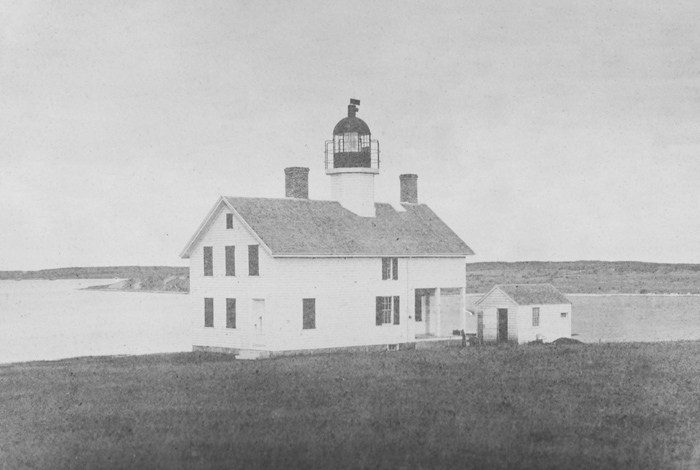
Photo Gallery
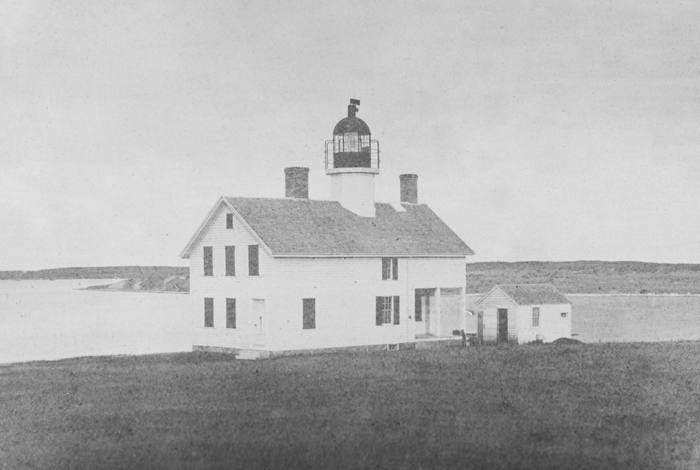
Photo Gallery
Photo Gallery
For more than two centuries, the harbor now known as Vineyard Haven Harbor on Martha’s Vineyard was called Homes Hole, a name that appeared in early records long before the modern village existed. The term “hole” was a common nautical expression in coastal New England, referring to an opening in the shoreline, a harbor, or a sheltered anchorage. Several nearby passages retained the same naming pattern, including Woods Hole, Quick’s Hole, and Robinson’s Hole. Each described a break in the land or an entrance through which vessels could pass into protected waters.
Homes Hole became an important refuge for vessels navigating Vineyard Sound. The harbor offered excellent protection from storms and a convenient stopping point for ships traveling along the busy coastal routes between New York and Boston. Over time, a small maritime community developed along its shores, supported by ship traffic, trade, and local fisheries.
For much of the eighteenth century, the name was spelled Homes Hole, but an unusual coincidence helped alter the spelling. In 1765, a man named John Holmes settled near the harbor and built its first deep-water wharf at the foot of what is now Grove Avenue. Holmes also established a successful chandlery and maritime business that served ships anchoring in the harbor. For the next century, vessels from both local and international ports tied up at Holmes wharf, and the enterprise was operated by four generations of the Holmes family.
Because of the prominence of the Holmes family in the harbor’s commercial life, the spelling of the port gradually shifted from Homes Hole to Holmes Hole or Holmes’s Hole. By the nineteenth century, the new spelling had become widely accepted. Even so, the name was often pronounced in colorful local fashion. In an 1860 novel, author James Fenimore Cooper remarked that the harbor’s name was commonly spoken as “Hum’ses Hull,” sometimes shortened simply to “the Hull.”
By the early nineteenth century, however, the harbor was changing. In the 1830s, a large new wharf was constructed at the foot of Union Street, shifting the center of maritime activity away from the Holmes family establishment. At the same time, both residents and visitors increasingly viewed the name Holmes’s Hole as awkward or unattractive, and newspapers occasionally poked fun at it. “‘Holmes Hole’ (what an horrid name!)” began an 1851 story in the Zion’s Herald.
Eventually local residents decided that the name should change. Around 1870, a movement developed to adopt something more appealing. Several alternatives were proposed, including Vineyard Port, Holmes Port, and Holmes’s Haven. Another suggestion came from Sarah Crocker, who proposed the name Vineyard Haven.
A public meeting held in early 1871 settled the matter. About 250 residents attended, and when the ballots were counted roughly two-thirds favored the name Vineyard Haven, while many of the remaining votes supported Tisburyport. After the local postmaster petitioned the federal government to change the post office designation, the new name became official. The harbor that had long been called Homes Hole or Holmes Hole was thereafter known as Vineyard Haven.
Long before the name change occurred, however, Holmes Hole had become one of the most heavily used anchorages along Vineyard Sound. The harbor served as a refuge for vessels caught in storms or adverse tides while traveling along the busy coastal shipping routes. Ships often crowded the anchorage while waiting for favorable winds or daylight before continuing their journeys.
Despite its importance, the harbor lacked a dedicated navigational light. Mariners approaching the area could rely on nearby lights—particularly the one at West Chop—but once inside the harbor entrance they had little guidance for navigating around shoals and rocks near the inner anchorage.
It is worth noting that the light at West Chop had originally been known in early records as Holmes Hole Lighthouse, since it marked the entrance to the harbor. That lighthouse, however, stood at the northern headland and served vessels passing through Vineyard Sound rather than ships navigating within the harbor itself.
By the early 1850s, federal officials began considering additional aids to navigation for the harbor. In 1853, reports from the Second Lighthouse District—covering the entire Massachusetts coastline—mentioned plans for constructing three small beacon lights at Holmes Hole Harbor. These lights were intended to help guide vessels safely toward the anchorage at the southern end of the harbor.
Rather than building a single lighthouse tower, engineers proposed an arrangement of three small beacon lights, sometimes known locally as “bug lights.” These modest wooden structures were designed to create navigational ranges that would help vessels avoid the shoals near Low Point and guide them along the best water into the harbor.
The sites for the beacons were selected and the necessary land purchased in 1854. Construction soon followed, and the three beacon lights were completed and first illuminated on December 4, 1854. Matthew P. Butler was hired as the lights’ first keeper at an annual salary of $400.
The arrangement consisted of a central white light flanked by two additional lights displaying different colors. One showed a red light and the other a green light. By lining up the appropriate pair of lights while steering, mariners could safely navigate the harbor entrance.
For example:
Although simple in construction, the system was carefully designed to provide clear guidance to ships entering the harbor at night.
At first it was believed that the keeper could maintain the lights while living in the nearby village. In practice, however, this arrangement proved impractical. A keeper’s dwelling was therefore constructed overlooking the harbor, and the building was completed on July 20, 1855. Just four days later, Moses T. Cromwell replaced Butler as keeper of the lights.
Despite the thoughtful design of the range lights, the arrangement proved less effective than expected. Maintaining three separate beacon towers also required more labor and expense than anticipated. Each structure needed its own lamp, supplies, and regular attention from the keeper.
In 1857, the Lighthouse Board attempted to simplify the system. A lantern was installed on the roof of the keeper’s dwelling, equipped with a fourth-order Fresnel lens that produced a steady white light. This new rooftop beacon replaced the three separate bug lights as the primary aid to navigation, greatly reducing operating costs.
Even this simplified arrangement did not last long. By the late 1850s, federal authorities were reviewing lighthouse stations nationwide to determine whether any had become unnecessary due to changes in navigation or commerce. An act of Congress passed on March 3, 1859 authorized the Secretary of the Treasury to discontinue lights that were deemed no longer useful.
After reviewing the station at Holmes Hole, the Lighthouse Board concluded that it provided little benefit to mariners. Ships entering the harbor were already well served by nearby lights and familiar landmarks, and the harbor itself was relatively easy to navigate.
As a result, the Board ordered that Holmes Hole Light be discontinued on December 1, 1859. The decision ended one of the shortest-lived lighthouse experiments on Martha’s Vineyard. The official report for 1860 summarized the event succinctly: “The light at Holmes’s Hole, having been deemed useless, was discontinued on the 1st December last.”
The 1872 Annual Report of the Lighthouse Board noted that the lantern room had been removed from Holmes Hole Lighthouse and placed in storage at Wood’s Hole Depot, and that the dwelling and associated land were disposed of at public sale. The former lighthouse building was later acquired by the Marine Hospital Service and converted into a marine hospital in 1879. It continued in government use for many years before finally being demolished in the 1970s.
Matthew P. Butler (1854 – 1855), Moses T. Cromwell (1855 – 1859).