Spectacle Island Range, MA 
Select a photograph to view a photo gallery
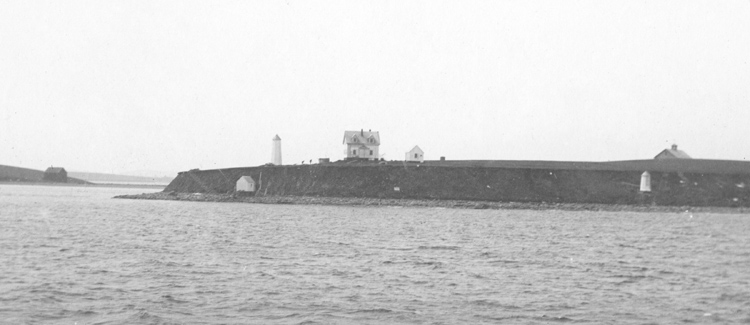
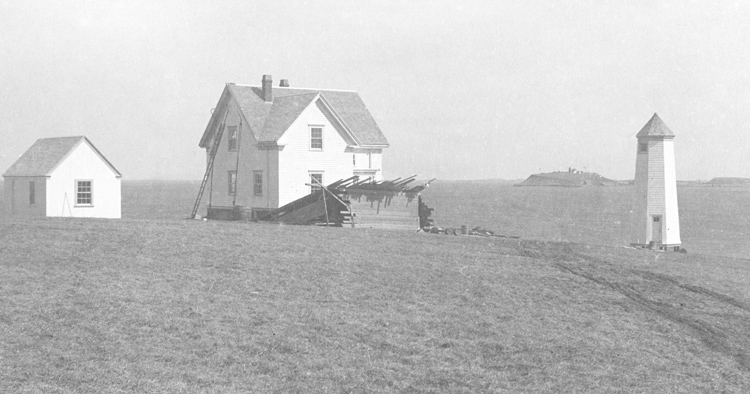
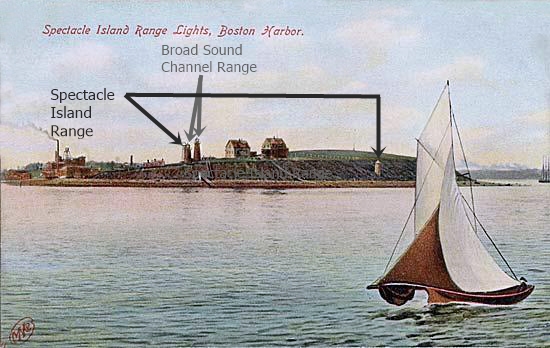
Photo Gallery
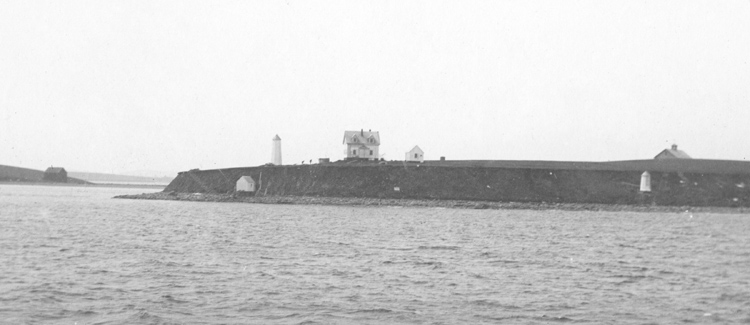
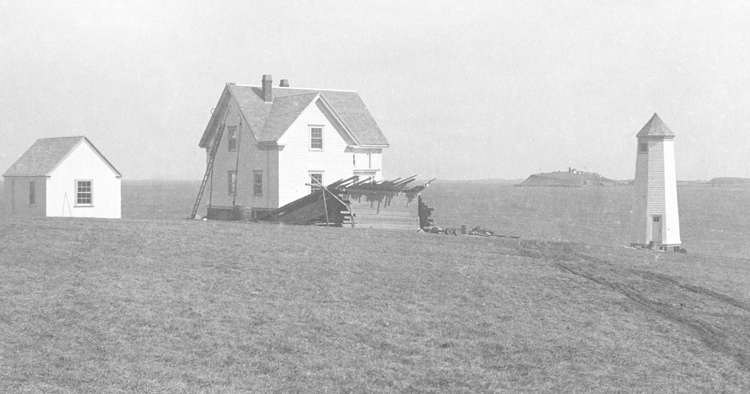
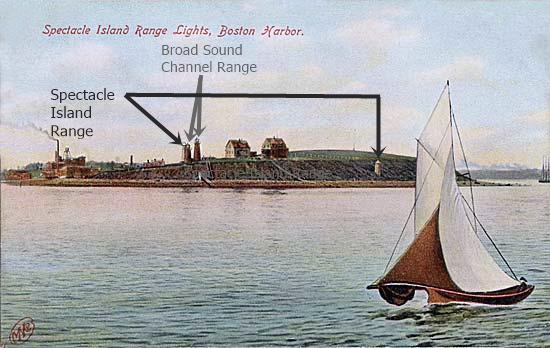
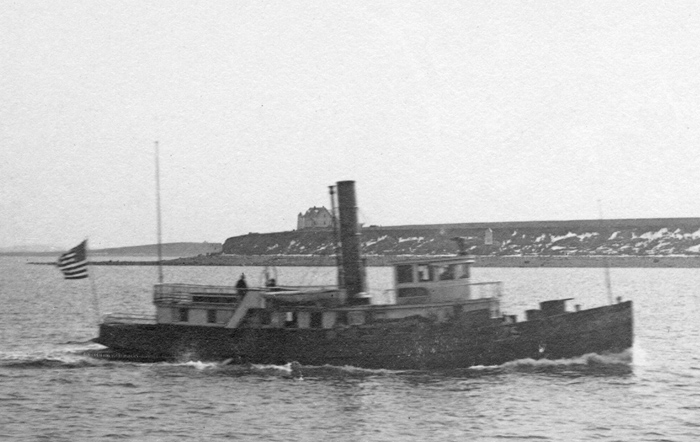
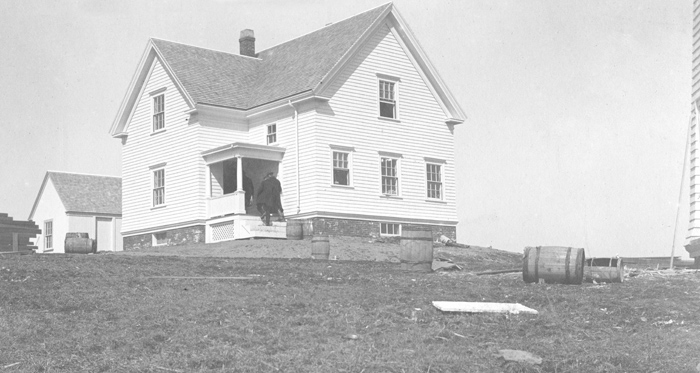
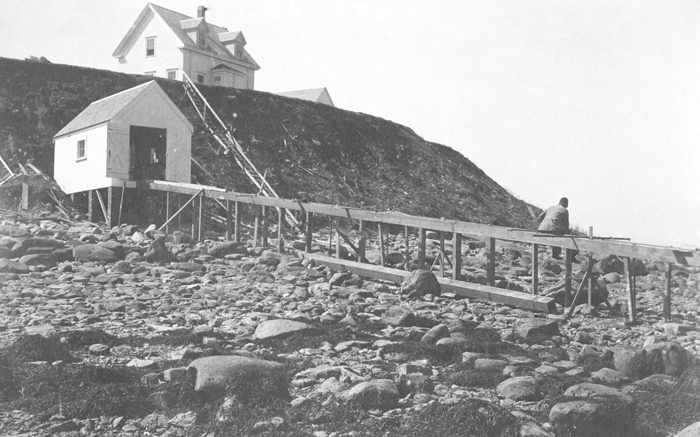
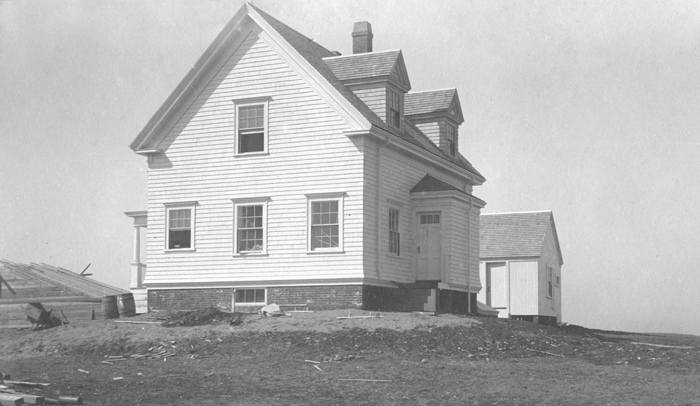
Photo Gallery
Photo Gallery
In the broad waters of Boston Harbor, just four miles from downtown Boston, lies Spectacle Island, whose history reflects centuries of changing uses—from Indigenous fishing grounds to quarantine station, industrial center, city dump, and finally a public park. For a brief but important period in the harbor’s history, the island was also home to a set of range lights that helped guide ships through the busy approaches to the city.
Although modest in appearance, the Spectacle Island Range Lights played an important role in the navigation system of Boston Harbor at a time when maritime commerce was at its height.
|
Spectacle Island’s story begins long before the establishment of its light station. For hundreds of years, Indigenous peoples visited the island seasonally to fish, gather shellfish, and harvest other resources from the harbor. Archaeological evidence such as shell middens—large piles of discarded shells—testifies to this long period of use.
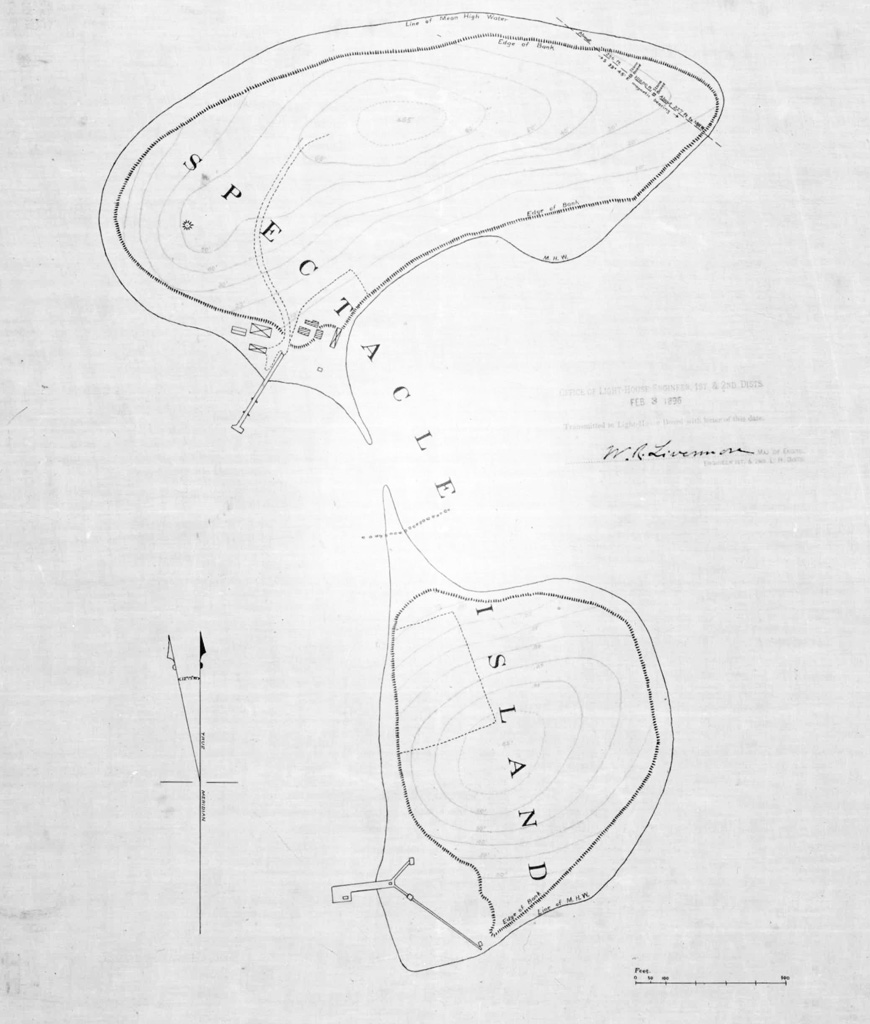
When English settlers arrived in Boston in 1630, they gave the island its distinctive name. At the time, the land consisted of two prominent hills connected by a narrow sandbar, which reminded observers of a pair of spectacles or eyeglasses. The name “Spectacle Island” soon became firmly established.
During the seventeenth century the island was used primarily for pastureland and timber harvesting. In 1717, the town of Boston established a smallpox quarantine hospital there. Ships arriving in the harbor with infected passengers were required to stop at the island, where patients were isolated before entering the city. After about twenty years, the hospital was moved to nearby Rainsford Island, leaving Spectacle Island available for other uses.
By the mid-nineteenth century, the island briefly became a recreational destination. Two resort hotels were constructed in the 1840s, offering excursions from Boston that included dining and entertainment. Their success was short-lived. In 1857 authorities raided the establishments after discovering illegal activities, including gambling and prostitution, and the hotels soon closed.
Industrial development soon followed. In 1857, entrepreneur Nahum Ward purchased the island and later established a horse-rendering plant on the island. The facility processed thousands of dead horses from Boston each year, converting their remains into glue stock, oils, hair, and other products. Later, fertilizer works and grease-reclamation plants joined the operation. By the late nineteenth century, a small community had developed on the island, with workers and their families living near the factories.
It was during this industrial era—when Boston Harbor was crowded with commercial traffic—that the need for additional navigational aids in the harbor became increasingly apparent.
By the late nineteenth century, Boston ranked among the most important commercial ports in the United States. Yet the United States Lighthouse Board repeatedly warned that the harbor lacked adequate navigational aids for the increasing volume of shipping.
Beginning in 1892, the Lighthouse Board strongly recommended establishing range lights on Spectacle Island. These lights would mark the center of a dredged shipping channel extending from State Ledge toward Boston and would also identify the turning point for vessels approaching from Nix’s Mate, a dangerous shoal in the harbor.
The proposed station called for two small wooden towers forming a range. When the lights were aligned—one directly behind the other—they would guide ships safely along the proper course toward the city. Plans included a thirteen-foot pyramidal wooden tower for the front light and a sixteen-foot tower for the rear light, along with a keeper’s dwelling, fuel house, boathouse, and boat slip.
After several years of renewed recommendations, Congress finally approved funding. On March 2, 1895, an appropriation of $9,350 was authorized for the construction of the range lights. Work began soon afterward, though some delays occurred while the government acquired the necessary land through the courts.
Construction was completed in the spring of 1897. On May 20 of that year, the Spectacle Island Range Lights were officially established.
The new lights stood on the northern part of Spectacle Island, overlooking the approaches to President Roads, the main outer anchorage of Boston Harbor. Each structure was an octagonal, pyramidal wooden tower covered with shingles and painted white.
Both lights displayed fixed red reflector lamps. The front light had a focal plane twenty-nine feet above mean high water, while the rear light stood higher, with a focal plane fifty-four feet above the water. The rear tower was positioned 379 feet southeast of the front tower. Mariners approaching Boston could align the two lights to follow the dredged channel from the line marked by the South Boston Range Lights toward the city.
The station required a resident keeper to maintain the lights and care for the property. Winfield L. Creed, an experienced lighthouse keeper who had previously served at Cuttyhunk Lighthouse and Minot’s Ledge Lighthouse, was appointed as the first—and ultimately only—head keeper of the Spectacle Island Range Lights. Creed received an annual salary of $600 and lived on the island to oversee the station.
In 1904, the two towers were moved about fifteen feet south and placed on new masonry foundations. Lightning rods were installed, and the towers were repainted in a distinctive pattern: white on the upper and lower thirds, with a red band across the middle. These improvements strengthened the structures and made them easier for mariners to identify.
By the early twentieth century, further improvements to Boston Harbor navigation led to the construction of additional range lights on Spectacle Island. In 1903, another pair of towers was erected to guide vessels through the newly improved Broad Sound Channel. These lights—later known as the Broad Sound Channel Range Lights—worked in conjunction with range lights on Lovells Island to lead ships through the channel toward the main harbor.
For a time, Spectacle Island contained four working lighthouse towers—an unusual concentration for such a small island. The addition of the new range increased the workload at the station, and Keeper Creed was given an assistant to help maintain the lights and facilities.
Although the Broad Sound Channel Range would eventually become the more significant navigational aid, the original 1897 range continued to guide vessels approaching Boston for several years.
Changes in the harbor’s shipping channels eventually made the first Spectacle Island Range Lights less necessary. In 1912, the government announced plans to discontinue them, replacing their function with lighted buoys marking the channel.
The proposal caused confusion and alarm among Boston’s maritime community. Some shipping interests mistakenly believed that all the range lights on Spectacle Island—including those guiding ships through Broad Sound Channel—would be removed. Protests quickly followed from ship owners, pilots, and maritime organizations, who argued that floating buoys could not provide the same reliable guidance as fixed lights.
Officials soon clarified the situation. Only the original 1897 range lights were scheduled for removal; the newer Broad Sound Channel lights would remain in service. With that explanation, opposition subsided.
The Spectacle Island Range Lights established in 1897 were officially discontinued on July 15, 1913. After their removal, the remaining Broad Sound Channel Range Lights were often referred to simply as the Spectacle Island Range Lights.
Keeper Winfield L. Creed remained on the island long after the first range was extinguished. He continued tending the remaining lights until his retirement in 1926 after nearly three decades of service.
By the mid-twentieth century, improvements in navigation technology and harbor marking reduced the need for the island’s range lights. The Broad Sound Channel Inner Range Lights were eventually deactivated in the 1950s, bringing an end to Spectacle Island’s lighthouse era.
Meanwhile the island itself was undergoing dramatic changes. Industrial activity had declined, and Boston increasingly used the island as a dumping ground for municipal waste. Between the 1930s and 1959, hundreds of tons of garbage were deposited there daily, dramatically altering the island’s shape and adding dozens of acres of landfill.
For decades Spectacle Island remained an unsightly landfill in the middle of Boston Harbor. Its transformation began in the 1990s with the massive Central Artery/Tunnel Project, better known as the Big Dig. Engineers needed a place to deposit millions of cubic yards of excavated soil from the project, and Spectacle Island provided an ideal site.
The landfill was capped with clay, covered with clean soil, and reshaped into two gently sloping hills. Thousands of trees, shrubs, and grasses were planted, turning the former dump into a landscape suitable for recreation.
In 2006, the reborn Spectacle Island opened to the public as part of the Boston Harbor Islands National Recreation Area. Today, visitors arriving by ferry find beaches, walking trails, picnic areas, and sweeping views of Boston Harbor from the island’s summit. Few visible traces remain today of the factories, dump, or lighthouse station that once occupied the island.
Though they stood for only a short time, the Spectacle Island Range Lights formed an important part of Boston Harbor’s navigational system during a period of intense maritime activity. Together with the later Broad Sound Channel Range Lights, they helped guide countless vessels safely toward one of America’s busiest ports.
Spectacle Island’s transformation from industrial wasteland to public park mirrors the broader environmental recovery of Boston Harbor itself. Visitors strolling along the island’s trails may find it difficult to imagine the small wooden towers that once shone red lights across the water. Yet those modest structures played a vital role in ensuring that ships could safely reach the thriving port of Boston more than a century ago.