Lovells Range, MA 
Select a photograph to view a photo gallery
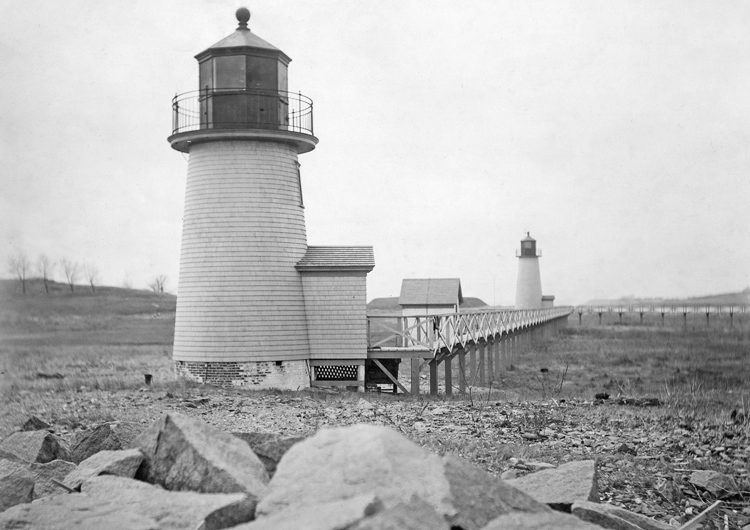
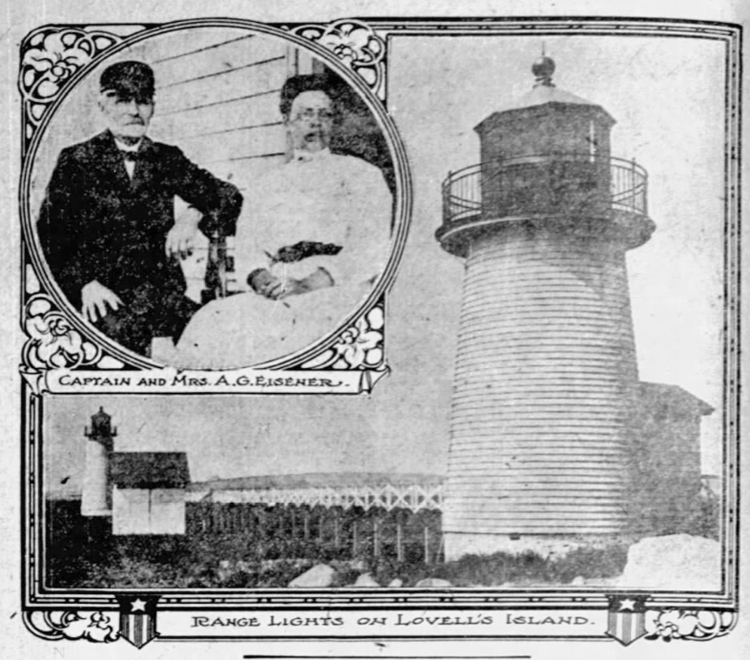
Photo Gallery
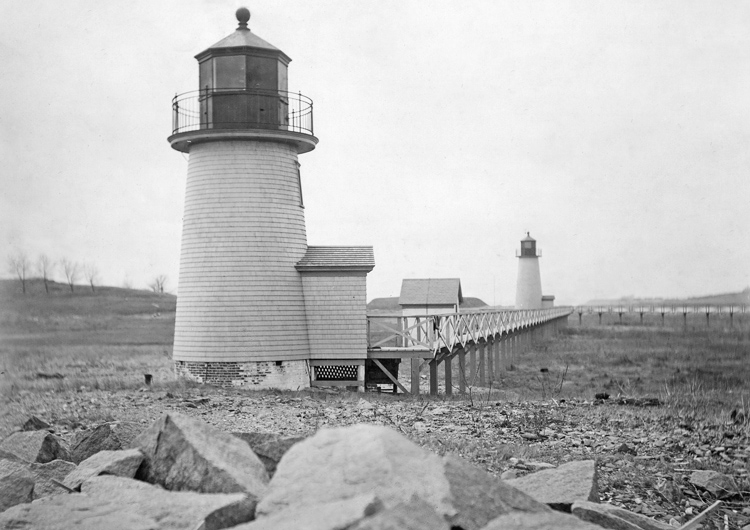
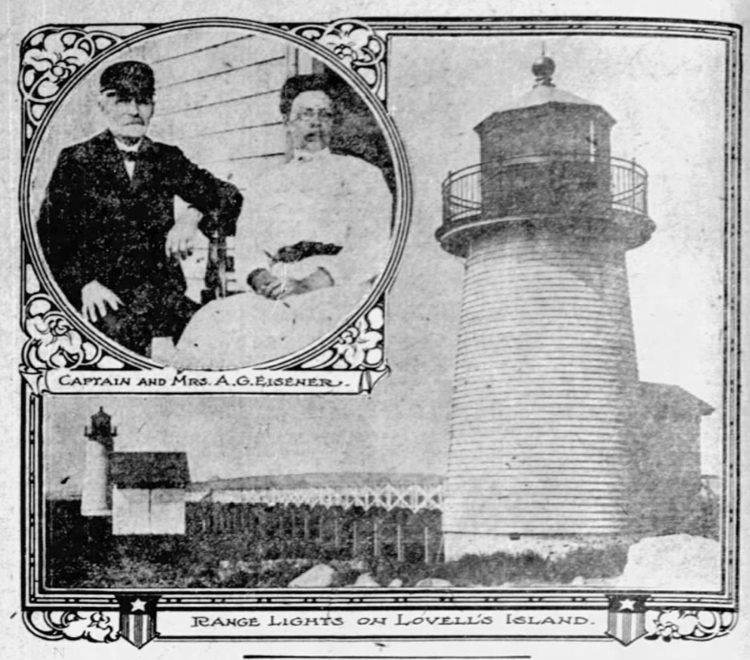
Photo Gallery
Photo Gallery
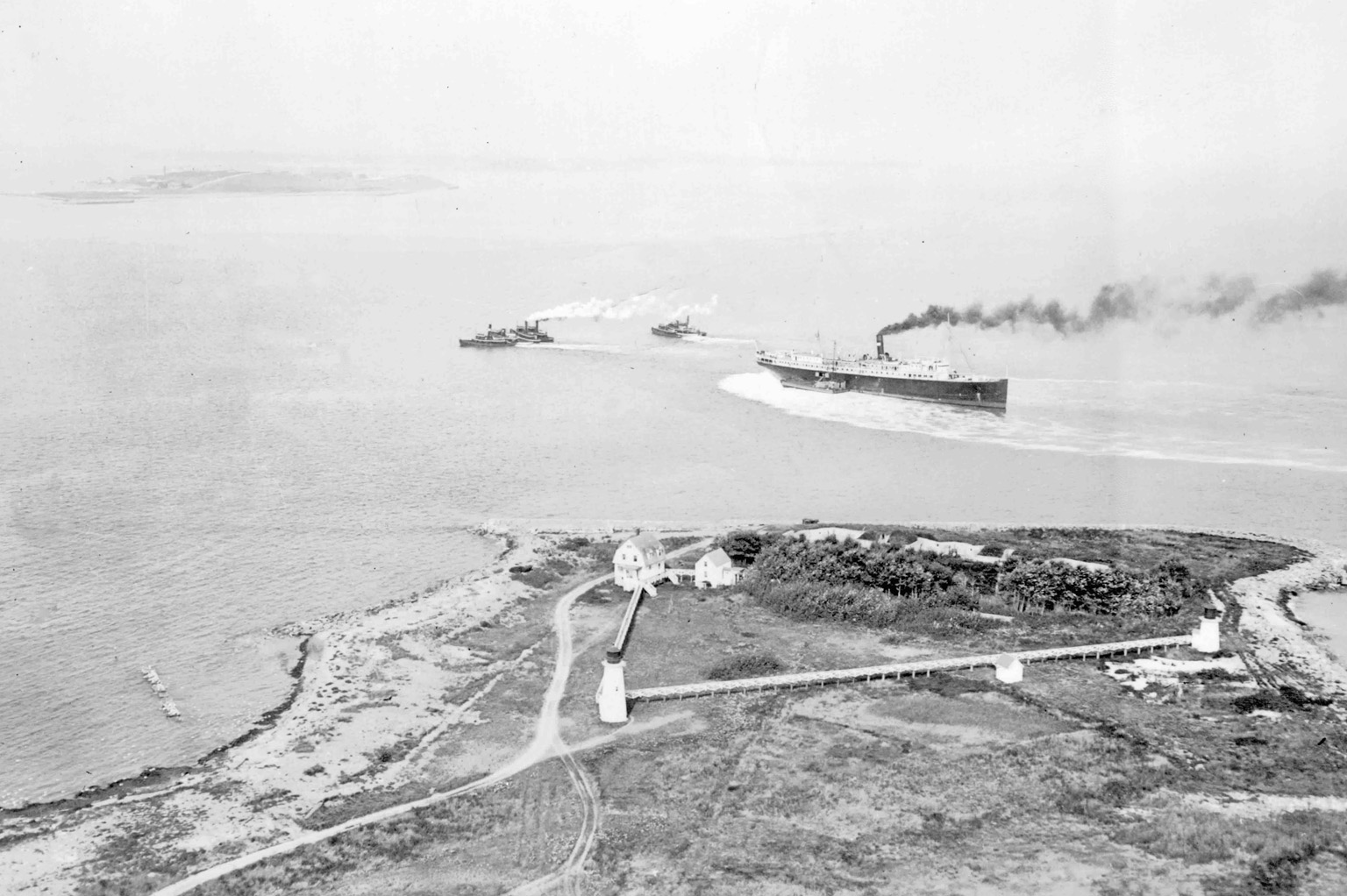
Rising from the outer reaches of Boston Harbor, Lovells Island has long occupied a strategic position along the approaches to one of New England’s most important ports. Situated roughly six miles from the Boston waterfront, the island lies along the path vessels must follow when entering the harbor from the open Atlantic through Broad Sound. Over the centuries, this small island—about three-quarters of a mile long and a quarter mile wide—has served a variety of purposes, from quarantine station to military post, buoy depot, and lighthouse station. Among its most important maritime roles was the short-lived but essential Lovells Island Range Lights, which guided vessels safely through a newly dredged shipping channel in the early twentieth century.
Lovells Island takes its name from Captain William Lovell, an early resident of Dorchester in the seventeenth century. Its position along the harbor entrance ensured that it would play a role in Boston’s maritime activity almost from the beginning of the colony’s history. During the colonial era, the island was occasionally used as a quarantine station, isolating ships suspected of carrying disease before they were permitted to enter the busy port.
|
In the nineteenth century the federal government recognized the strategic importance of the harbor islands for coastal defense. Lovells Island eventually became the site of Fort Standish, a major component of Boston’s harbor defense system.
Even before the fort was completed, the island supported maritime operations in other ways. Starting in the 1870s and continuing until 1921, the United States Lighthouse Service maintained a buoy depot on the island where navigational buoys used throughout Boston Harbor were stored and serviced.
Despite these varied uses, the island remained relatively quiet until the beginning of the twentieth century, when dramatic changes in maritime commerce required new navigational aids in the harbor.
By the late nineteenth century Boston’s shipping industry was expanding rapidly. Larger vessels required deeper channels and more reliable approaches into the harbor. The traditional routes into Boston Harbor were increasingly inadequate for the growing size and draft of modern steamships.
To solve this problem, the federal government began dredging a new deep-water route known as the Broad Sound Channel, connecting the open sea with President Roads, the main anchorage area just outside the inner harbor. According to a report submitted to Congress on February 10, 1902, the new channel was designed to be 1,200 feet wide and 30 feet deep at low water, making it one of the most significant improvements to Boston Harbor’s navigation system.
The project, however, presented serious hazards. The approach to the harbor was surrounded by numerous ledges and shoals scattered seaward from the protective barrier of the outer islands. Incoming vessels needed precise guidance not only to find the entrance to the channel but also to remain within it while navigating the dangerous waters of Broad Sound.
Recognizing this need, the U.S. Lighthouse Board recommended the establishment of several new navigational aids. These included:
Congress approved the necessary appropriations on June 28, 1902, allocating $10,000 for the Lovells Island range lights, $13,000 for the Spectacle Island range, and $75,000 toward the construction of a lighthouse on Northeast Grave, later known as Graves Light
Construction of the Lovells Island Range Light Station began during the winter of 1902–1903. The site chosen for the lights was the northern end of the island, known as Ram’s Head, where the structures would align with the new channel.
The completed station consisted of:
The towers stood 400 feet apart, forming a navigational range line. The front light was a fixed white fourth-order light positioned thirty-one feet above the water, while the rear light, standing forty feet above the water, exhibited a red flash every five seconds. When mariners approaching Boston lined the rear light directly above the front light, they knew they were centered in the safe channel leading toward the harbor.
The lights were first exhibited on April 10, 1903, marking the completion of the station. Together with range lights on Spectacle Island farther inside the harbor, they provided a carefully designed system guiding vessels from the open sea through the Broad Sound Channel and into the anchorage at President Roads.
Improvements to the station continued during the early years. In 1904, plank walks were laid between the towers and the dwelling, and lightning rods were installed. The following year, 1905, a small oil house was built to store the kerosene used to fuel the lamps.
The first keeper of the Lovells Island Range Lights was Captain Alfred G. Eisener, appointed in 1903 at an annual salary of $600. Eisener brought extensive maritime experience to the post. Born in Bremen, Maine, in 1849, he had gone to sea as a teenager and spent about twenty years sailing on coasting vessels and fishing trips to the Grand Banks and the Gulf of St. Lawrence. During his later seafaring years, he served as master, mate, and pilot.
Eisener joined the U.S. Lighthouse Service in 1883 and served at several Massachusetts stations before arriving at Lovells Island. His earlier assignments included Thacher Island, where he spent eight years as assistant keeper, Cuttyhunk Light at the entrance to Buzzards Bay, and the Gurnet Light near Plymouth.
At Lovells Island, Eisener and his wife lived in a government-built dwelling near the towers. The low-lying site occasionally flooded during unusually high tides, and at least once a dory had to be used to travel between the house and the lights. Signal wires connected the towers to the dwelling so that a loud gong would sound whenever something interfered with the lights.
Despite the isolation, the station offered sweeping views across the harbor entrance. From the towers one could see the shipping lanes stretching from Lynn Harbor to Peddocks Island, with vessels constantly passing through the channel.
Eisener became known not only as a capable lighthouse keeper, but also as a poet and writer. Inspired by the works of Rudyard Kipling, he began composing poems and narratives based on his experiences at sea. One of his works, Dan, or the Gale of Seventy-Three, recounted a dramatic storm he had encountered earlier in his maritime career.
A Boston Globe article published in 1911 titled “Poetic Lighthouse Keeper” profiled Eisener and his unusual literary hobby, describing the brilliant range lights shining across the Broad Sound Channel and the quiet life of the keeper who tended them.
After thirty-five years in the lighthouse service, Eisener retired on July 1, 1919. In interviews at the time, he expressed pride in the dedication of lighthouse keepers while also noting the hardships of the profession. Unlike most government employees, he observed, lighthouse keepers were responsible for their stations around the clock and could never truly leave their duties behind.
Eisener’s successor was Charles H. Jennings, a native of Provincetown who had previously served at several Massachusetts light stations. Jennings became keeper of the Lovells Island Range Lights in 1919, continuing the station’s role guiding vessels through the harbor entrance.
Jennings and his family lived a self-sufficient life on the island. They kept chickens, ducks, and turkeys and maintained a large garden near the keeper’s house. His son Harold later described the unusual childhood he experienced on the island—watching ships pass through the channel, learning the mechanics of the lighthouse, and even helping his father trim wicks and fill kerosene reservoirs.
Education for the children required ingenuity. At times the family arranged housing on the mainland so the children could attend school, traveling back and forth by boat each week. Eventually a tutor was sent to the island to provide lessons.
Throughout the early twentieth century the lighthouse station shared Lovells Island with the growing military installation of Fort Standish. Built as part of Boston’s coastal defense system, the fort contained powerful artillery batteries intended to protect the harbor from naval attack.
As military needs expanded during the late 1930s, the Army required additional space on the island. The presence of the range light station near the northern shore conflicted with the fort’s expansion plans. Consequently, after thirty-six years of service, the Lovells Island Range Lights were discontinued in 1939.
Keeper Jennings retired that same year after more than three decades in the Lighthouse Service. He and his family moved to a farm in Maine, ending the long association between the Jennings family and the lighthouse. Harold Jennings, the son of Charles Jennings, left high school early at the age of eighteen and looked after the range lights for two months until his ill father retired. After Harold, William A. Migneault, a soldier at Fort Standish, minded the range lights until they were discontinued.
Fort Standish remained active through World War II, playing a role in the coastal defense network that guarded Boston Harbor. After the war, however, advances in military technology made such fortifications obsolete. The government eventually declared the island surplus property.
In 1958, the Metropolitan District Commission purchased Lovells Island and converted it into a public recreational area. Today, the island is managed by the Massachusetts Department of Conservation and Recreation as part of the Boston Harbor Islands National and State Park.
Visitors can now explore trails and the crumbling remains of Fort Standish. The lighthouse towers themselves have long since disappeared, but a small brick oil house, now roofless, still stands as the last visible reminder of the Lovells Island Range Light Station.