Sabin Point, RI 
Select a photograph to view a photo gallery
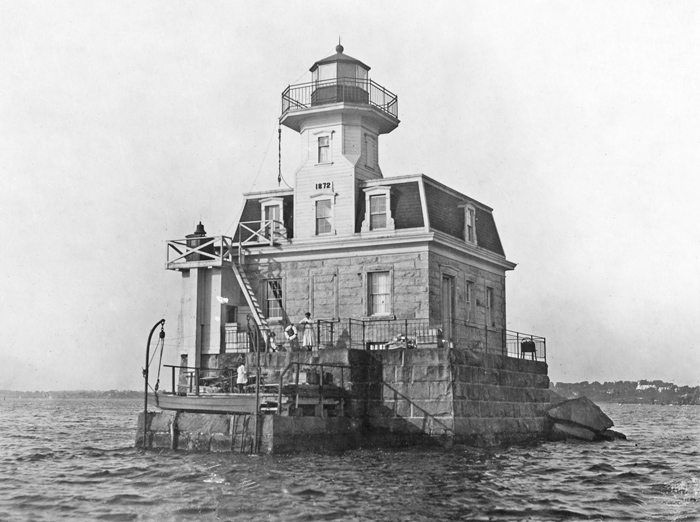
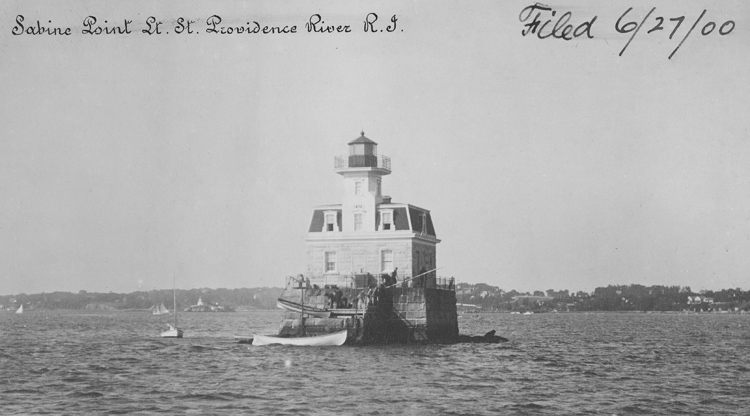
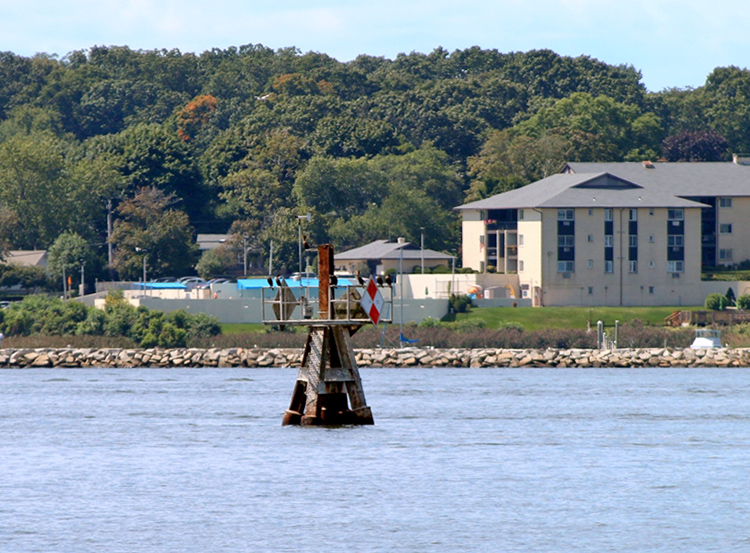
Photo Gallery
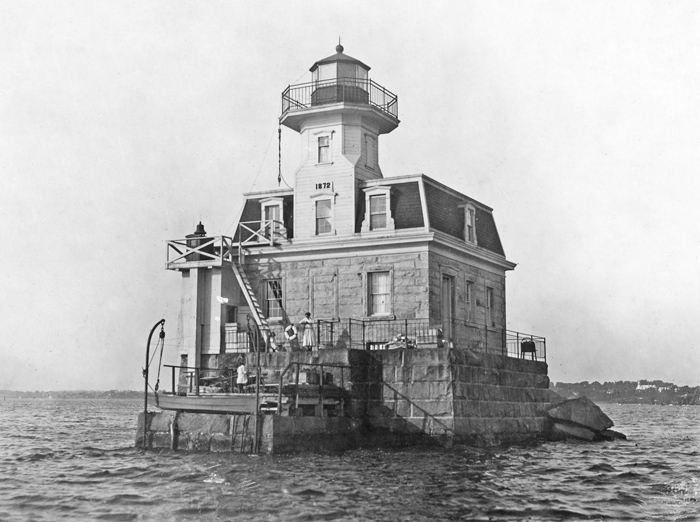
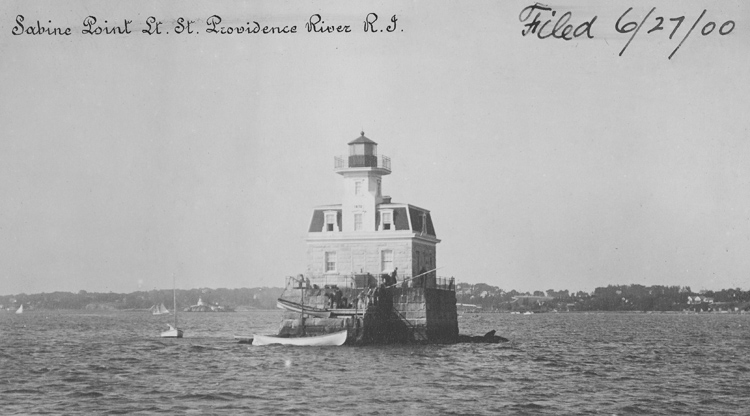
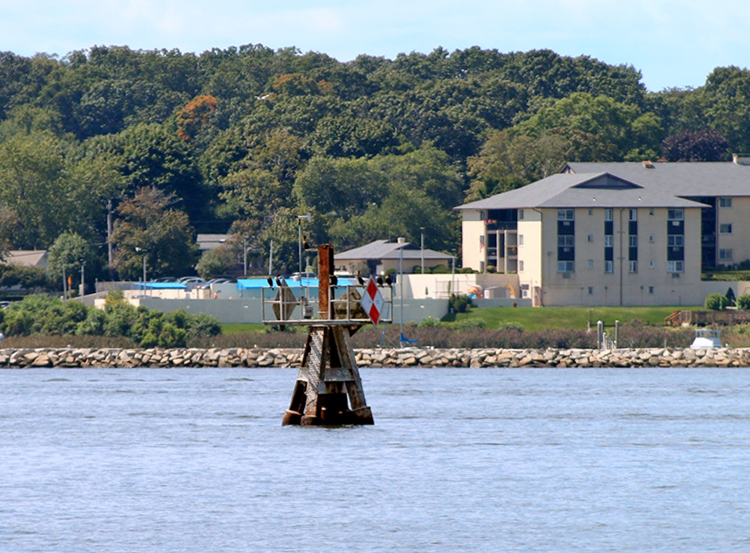
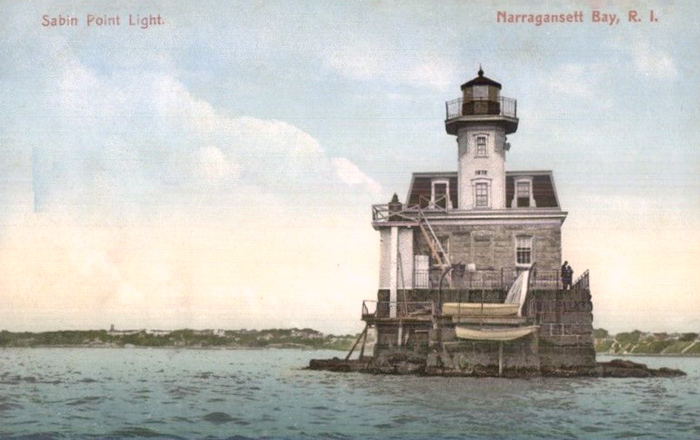
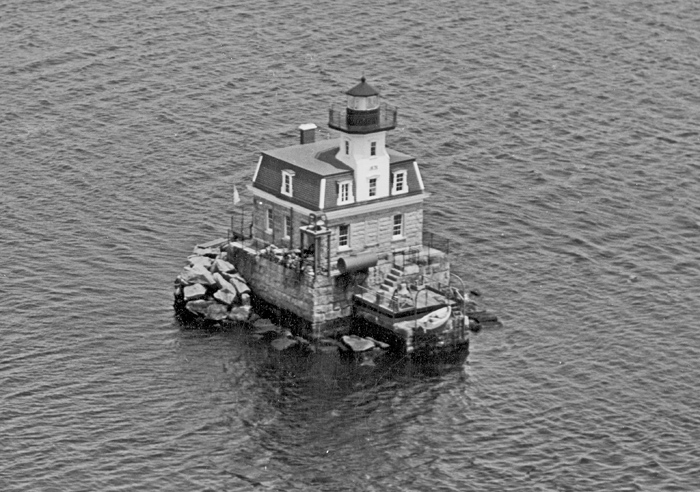
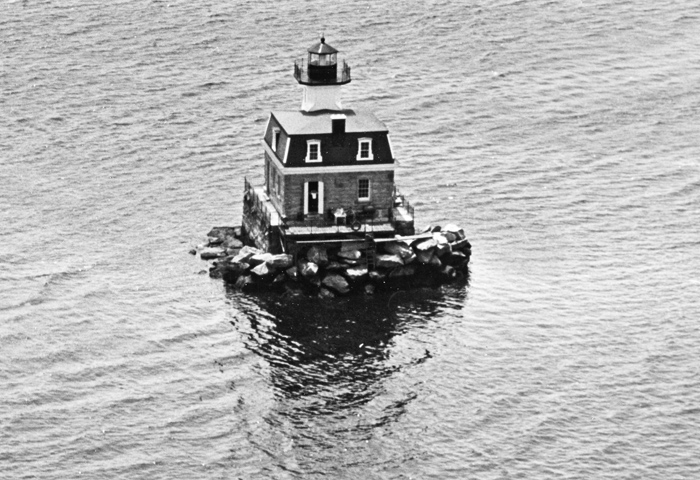
Photo Gallery
Photo Gallery
Sabin Point Lighthouse stood for nearly a century as a steadfast sentinel in the busy waters of the Providence River, guiding vessels through one of New England’s most challenging industrial waterways. Its story is not only one of engineering and navigation, but also of the people—especially its keepers—who gave the station life amid wind, ice, and storm.
Long before a permanent lighthouse rose from the shoal off Sabin Point, mariners relied on a far simpler aid: a wooden “dolphin,” or cluster of pilings driven into the riverbed to mark the hazard. This early structure, though essential, was vulnerable to the harsh conditions of the upper bay. On December 30, 1870, it was reported gone—likely carried away by heavy ice, a common winter hazard in the Providence River.
Recognizing the growing importance of Providence as a manufacturing and shipping hub in the nineteenth century, federal authorities moved quickly to improve navigation. Congress appropriated $20,000 in 1870 for three permanent lights above Sabin Point and then $42,000 in 1871 for the construction of a lighthouse at Sabin Point itself. Located at a sharp bend in the channel and in relatively shallow water, Sabin Point was a critical site for navigational aids.
In 1871, a temporary buoy replaced the lost dolphin, but plans were already underway for a more substantial structure. By mid-1872, construction had advanced significantly: a granite pier was completed, and a dwelling rose above it. The design reflected both function and durability—unlike many contemporary lighthouses built of wood, Sabin Point’s dwelling was constructed of stone, better suited to withstand the exposed conditions.
A formal Notice to Mariners in August 1872 announced the completion of the lighthouse. Built on a square granite pier in eight feet of water, the structure featured a mansard-roofed dwelling with a white-painted tower and black lantern. The light itself was a sixth-order Fresnel lens, displaying a fixed white light visible from a focal plane forty-eight feet above mean tide. The light was first exhibited on November 4, 1872.
The first man entrusted with the light was Joseph Bowes, appointed in 1872. Bowes served until 1875 and carried significant responsibility, as he also tended the beacon at nearby Bullock Point. Though his service was relatively brief, Bowes established the routines and standards that would define the station for decades.
In 1875, John F. Weeden assumed the role of keeper, beginning what would become the longest tenure in the station’s history—thirty-six years, lasting until 1911.
Weeden’s time at Sabin Point reflected both the isolation and richness of lighthouse life. He was known not only for his dedication to the light but also for his craftsmanship and domestic life within the station. Contemporary accounts describe a surprisingly cultured environment: the living quarters were furnished with pieces he crafted himself, and music often filled the rooms, with instruments such as organ, violin, and guitar.
Weeden also demonstrated the lifesaving role expected of keepers. In 1877, he assisted the crew of a schooner that had run aground near the lighthouse, bringing all safely ashore. His long service provided stability during a period when maritime traffic on the Providence River continued to increase.
By the late nineteenth century, the station underwent several improvements. In 1885, the wharf—damaged by winter ice—was rebuilt, underscoring the persistent environmental challenges faced at the site.
In 1899 and 1900, further upgrades enhanced the station’s effectiveness. A fog bell, struck mechanically every nine seconds, was established in October 1899 to aid navigation during poor visibility. The following year, the light itself was changed from white to red, aligning with a broader system in which red lights marked the starboard side of channels when entering from seaward.
Additional structures, including an oil house and landing platform, improved daily operations. By the early twentieth century, Sabin Point Lighthouse had evolved into a fully equipped and modern aid to navigation.
After John F. Weeden’s retirement in 1911, his son, Venano C. Weeden, succeeded him, continuing the family’s connection to the lighthouse. Venano served until 1916.
In 1916, Charles E. Whitford was appointed keeper—a figure who would become synonymous with Sabin Point Lighthouse.
Charles E. Whitford brought a wealth of maritime experience to the station. Having gone to sea at the age of twelve and served in the U.S. Navy—including time in Asian waters and during the era of the Russo-Japanese War—Whitford embodied the seasoned mariner turned lighthouse keeper.
Before arriving at Sabin Point, he served at Orient Point Lighthouse in New York. At Sabin Point, he and his wife Annie raised three daughters, transforming the isolated station into a lively family home.
Whitford’s tenure, lasting until 1943, was marked by both routine duty and dramatic events. He regularly assisted vessels in distress, towing disabled boats and aiding stranded crews. In 1926 and 1929 alone, he responded to multiple maritime emergencies, reflecting the continuing hazards of the river.
The lighthouse also became the setting for remarkable personal moments. Weddings were held there—including that of Whitford’s daughter Myrtle in 1932, an event attended by guests arriving by boat and celebrated with the ringing of the fog bell. Another notable wedding between Wilfred A. Teasdale, Keeper Whitford’s brother-in-law and himself a former keeper, and Bertha Schweizer took place in 1929, highlighting the lighthouse’s unique role as both workplace and home.
The defining moment of Whitford’s career—and arguably the lighthouse’s history—came during the New England Hurricane of 1938.
The storm caused widespread destruction across Narragansett Bay. At Sabin Point, the lighthouse endured tremendous forces. The kitchen flooded, equipment was lost, and the fog bell was destroyed. Whitford himself was swept away in a boat while attempting to secure it, narrowly escaping disaster.
Meanwhile, Annie Whitford displayed extraordinary courage, reportedly being swept off the structure multiple times while trying to secure equipment—yet surviving and helping ensure the light remained operational.
Despite the devastation, the granite structure held firm, a testament to its robust construction.
Following Whitford’s retirement in 1943, the lighthouse transitioned into the era of the U.S. Coast Guard, which had assumed control of lighthouse operations in 1939. A succession of keepers maintained the station until automation eliminated the need for full-time staffing.
In 1956, the lighthouse was electrified, replacing the traditional kerosene illumination. Submarine cables supplied power, and automated systems—including electric fog signals—modernized operations.
By the 1960s, changes in maritime commerce required the widening and deepening of the Providence River channel. The lighthouse, once essential, had become an obstruction.
In 1968, after nearly ninety-six years of service, Sabin Point Lighthouse was deliberately destroyed. After the lantern room was lifted off the structure and barged away, firefighters burned the structure on the eve of Independence Day, in a dramatic and somewhat surreal scene. Harbor Construction Company was contracted to remove the remaining granite blocks and then used the material to construct breakwaters for the nearby Rhode Island Yacht Club.
In 1969, a modern automated light—a simple concrete pile equipped with a flashing red beacon and fog signal—replaced the historic structure. Today, once again, only an unlighted dolphin marks Sabin Point.