Gould Island, RI 
Select a photograph to view a photo gallery
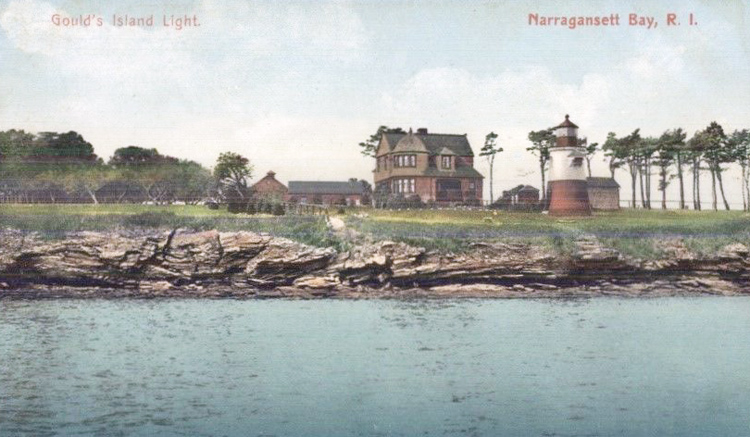
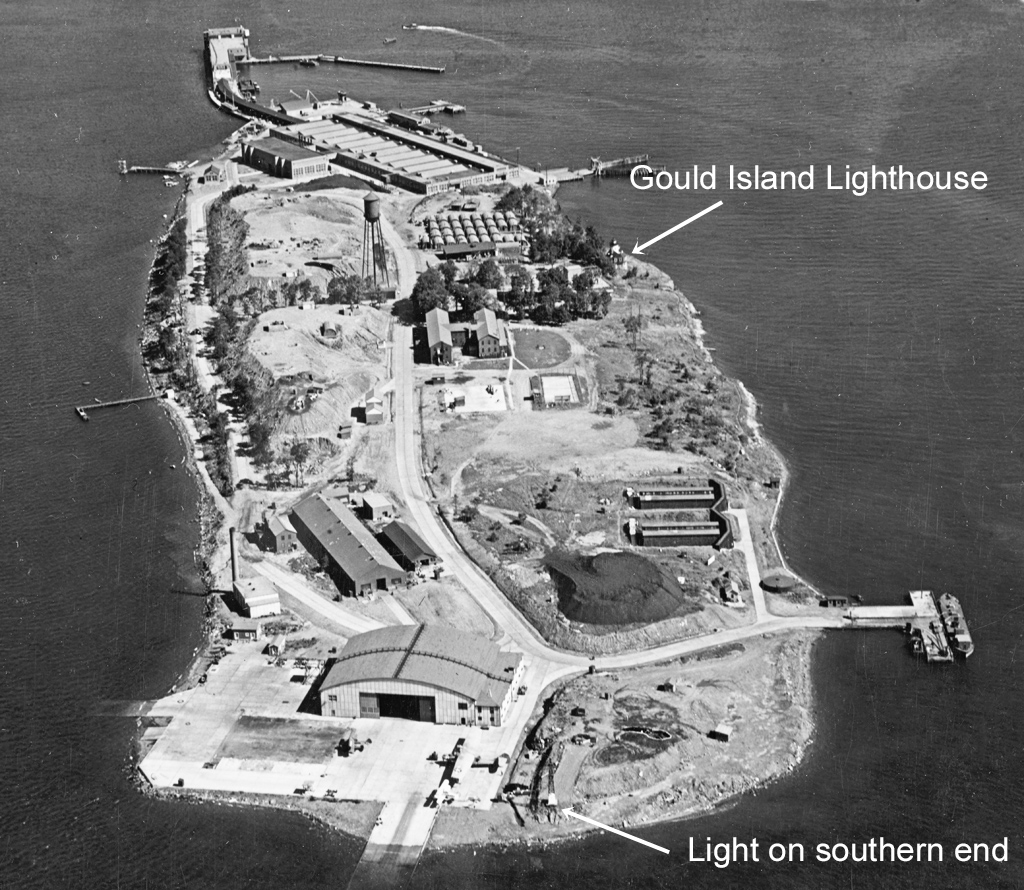
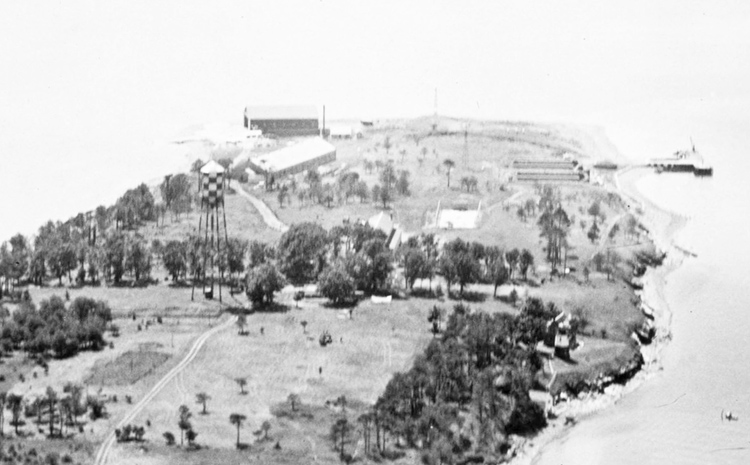
Photo Gallery
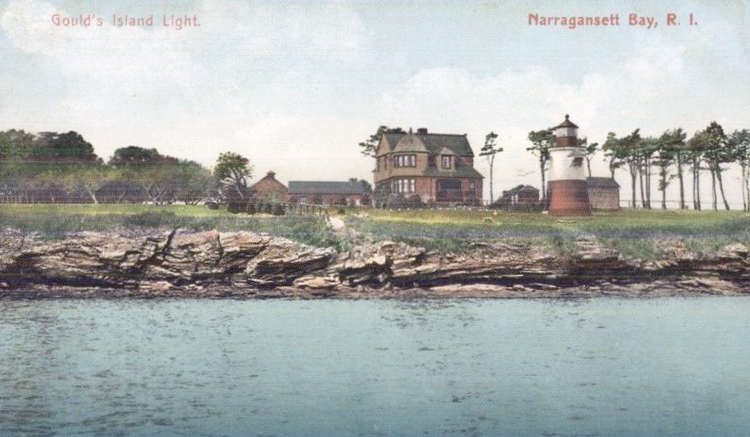
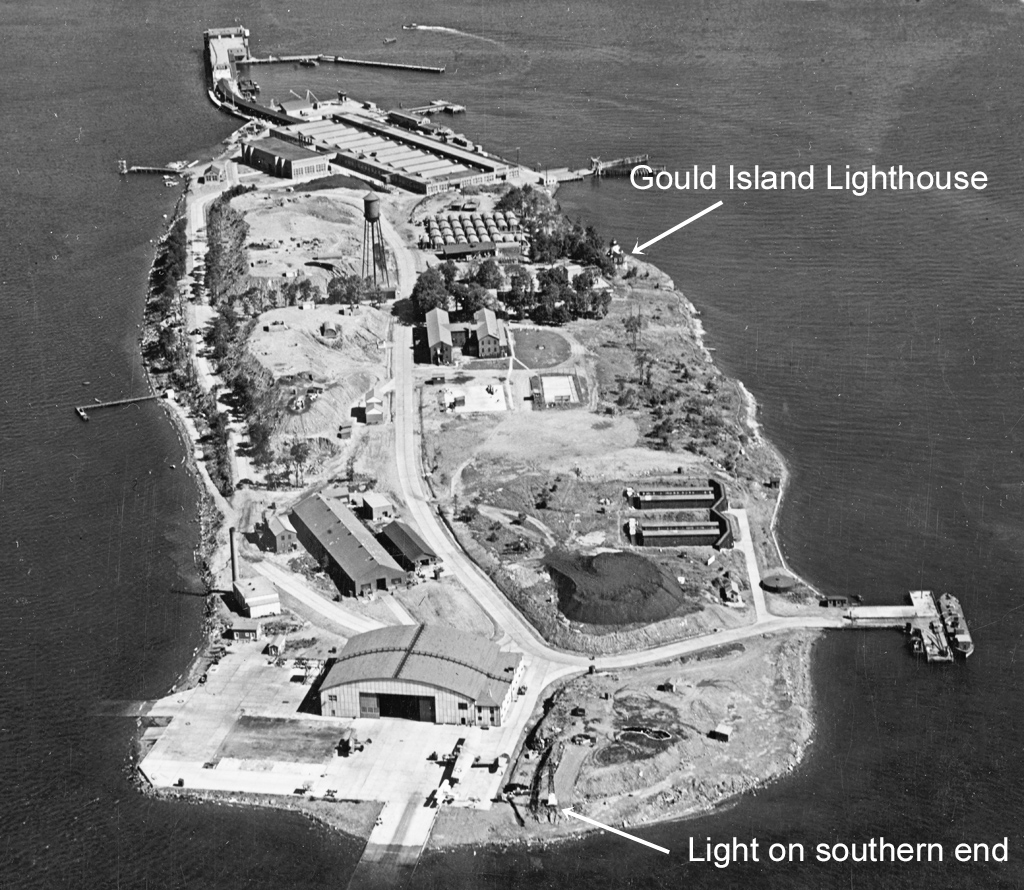
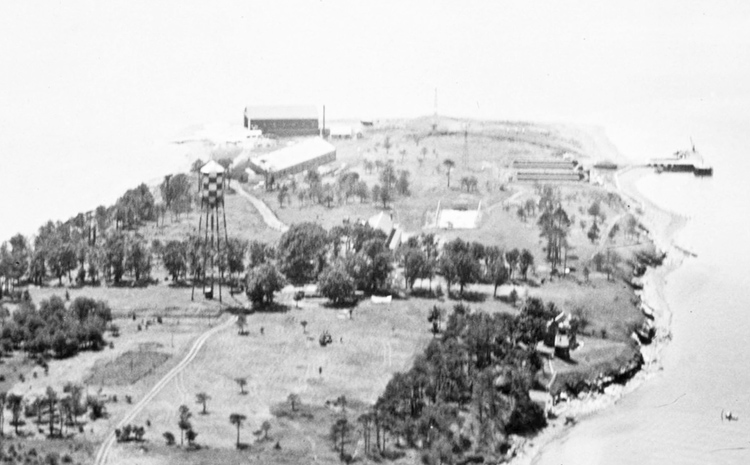
Photo Gallery
Photo Gallery
In the East Passage of Narragansett Bay, between Jamestown and Middletown, lies Gould Island, a modest fifty-acre island whose strategic position made it significant for centuries. Known to Indigenous peoples as Aquopimoguk, the island entered colonial ownership on March 28, 1657, when Scuttape, a grandson of Canonicus, sold it to Thomas Gould, for whom the island is named. In 1673 and 1674, Gould transferred the island in two parts to John Cranston, beginning a long period of private ownership.
For much of its early history, Gould Island was pastoral and quiet, a striking contrast to the bustling maritime highway that surrounded it. By the nineteenth century, however, the East Passage had become one of New England’s most important maritime thoroughfares. Steamers, schooners, and coastal traffic passed constantly between Newport, Providence, and New York. During the summers from 1871 to 1901, the island served as a retreat for the Homans family of New York, but the growing volume of navigation around the island increasingly made some form of aid to mariners necessary.
The first light on Gould Island was not established by the federal government, but by private enterprise. The Old Colony Steamboat Company installed a navigation light at the island’s east end to aid its steamers. These vessels carried thousands of passengers and enormous quantities of freight through the passage, and the importance of the route prompted official attention.
The United States Lighthouse Board, in its 1885 annual report, strongly recommended that the government replace the private light with a proper lighthouse and fog signal, warning that navigation should not depend on a privately maintained beacon. Congress responded with an appropriation of $10,000 on March 3, 1887, to establish a federal light station.
A half-acre site was acquired from Frances E. Homans for $2,500, and construction soon followed. By 1888 plans had been prepared for a lighthouse, keeper’s dwelling, and fog signal, and on June 10, 1889, Gould Island Lighthouse was placed in operation.
The new station was both handsome and practical. Its thirty-foot conical brick tower stood beside a substantial two-story keeper’s dwelling, architecturally similar to those associated with Castle Hill Lighthouse and Coney Island Light. The lower half of the tower remained natural red brick, while the upper portion was painted white, giving the structure a distinctive appearance. A fifth-order Fresnel lens displayed a flashing white light every ten seconds, the focal plane standing fifty-four feet above high water. Attached to the east side of the tower was a 1,200-pound fog bell operated by striking machinery within.
The first keeper, Edmund Taylor, had tended the private light before the federal station was built and naturally became its first official keeper. During his long tenure, the station was steadily improved. Boundary markers and fencing were added in 1890; boat davits were erected at the wharf in 1892; a boathouse and boatways were built in 1894; and in 1898 a brick oil house was constructed. Together these additions transformed the isolated light into a well-equipped station.
Gould Island Light served one of the nation’s busiest steamship routes at a time of extraordinary technological change. The late nineteenth century saw not only the golden age of coastal passenger steamers, but also major advances in naval weaponry, including the first successful wartime use of self-propelled torpedoes during the Russo-Turkish War of 1877–78. Ironically, torpedo technology would later reshape the island itself.
The greatest transformation in Gould Island’s history came during and after the First World War. On July 1, 1918, Congress authorized the federal seizure of several tracts for wartime use, including Gould Island, which was selected as a torpedo storage depot and testing base.
Beginning in 1919, the island changed rapidly from a lighthouse reservation with summer estates into a military installation. Seaplane hangars and kite balloon facilities were erected. A water tower and underground utility lines appeared. Piers were built—one for personnel at the north end and a concrete torpedo pier at the southeast point. Existing residences were adapted for barracks.
In 1920, construction expanded further with torpedo storage buildings, warhead magazines, an industrial railroad, and a power house. Tracks connected the piers, storage facilities, and aviation structures, underscoring the island’s increasingly specialized military purpose. Under Lieutenant Thomas H. Murphy, a Naval Air Detail operated there, and Gould Island became associated with the proof-firing of both aerial and tube-launched torpedoes.
Remarkably, amid all this military activity, the lighthouse remained in operation. Keepers continued their work even as naval personnel and testing operations surrounded them. The juxtaposition of a traditional nineteenth-century lighthouse with one of the nation’s early torpedo stations made Gould Island an unusual and fascinating outpost.
Keeper Taylor retired in 1923 after more than three decades of service. He was succeeded by John “Jack” Larsson, a Swedish-born mariner who had run away to sea at sixteen, served in the U.S. Navy, and later joined the Lighthouse Service.
After persistent complaints that trees on the island obstructed the light for vessels approaching from the south, a 1931 petition from the National Organization of Masters, Mates, and Pilots pushed the issue to the forefront. In response, the Bureau of Lighthouses added a skeleton tower at the island’s south end the following year to improve navigation in the area.
Keeper Larsson retired in 1940, and he was followed by veteran keeper Charles H. Eldridge, whose final assignment was also Gould Island. Leonard A. McCarthy, a coastguardsman, served for a short time between the death of Larsson and the arrival of Eldridge. After Eldridge retired in 1944, Alfred L. Bennett arrived from Block Island Southeast Lighthouse, but died only months later at age forty-seven.
By the mid-twentieth century, the era of resident lighthouse keepers was ending nationwide. On March 17, 1947, Gould Island Lighthouse was discontinued as a staffed station. An automated acetylene-powered beacon mounted on a skeletal tower replaced the old light, accompanied by an automatic fog horn.
Though the original 1889 lighthouse had served faithfully for fifty-eight years, its days were numbered. The old brick tower and keeper’s house survived for another decade, but in 1960 the historic lighthouse was razed.
The skeletal tower that replaced it nearly met a similar fate in 1972, when tentative Coast Guard plans proposed abandoning the light and fog signal. Strong protests from Rhode Island boatmen and maritime organizations persuaded officials to preserve it. The fog signal itself, however, was discontinued in 1973 after the Coast Guard judged it no longer necessary.
The final chapter came unexpectedly on October 24, 1988, when the foundation of the skeletal tower failed and the structure toppled over. This time the light was not replaced, ending more than a century of navigational service on the east side of Gould Island. The light established on the south end of the island in 1932 remains active today.