Bridgeport Harbor, CT 
Select a photograph to view a photo gallery
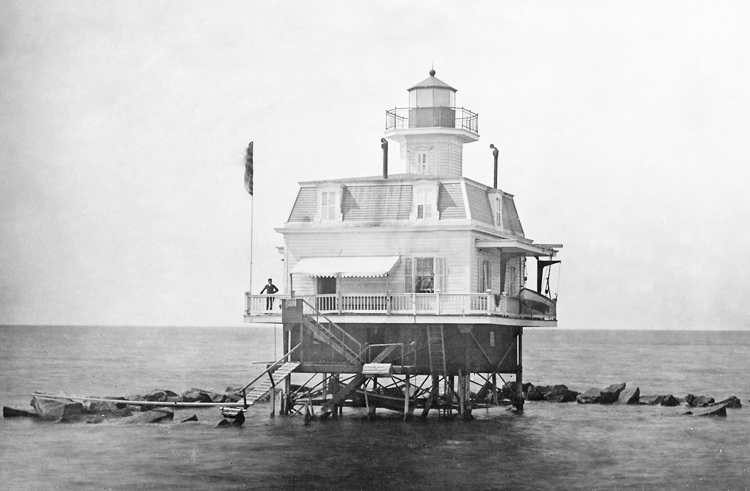
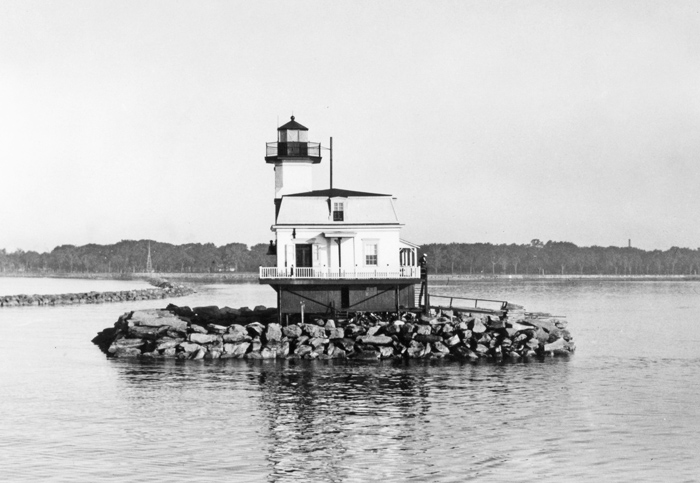
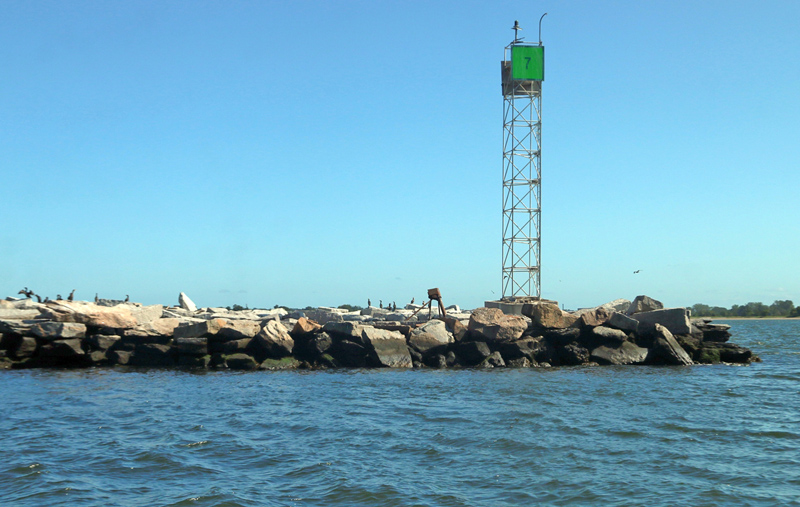
Photo Gallery
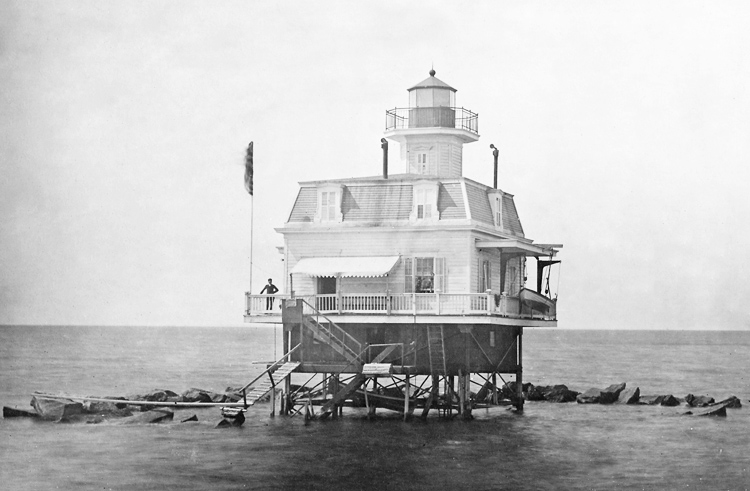
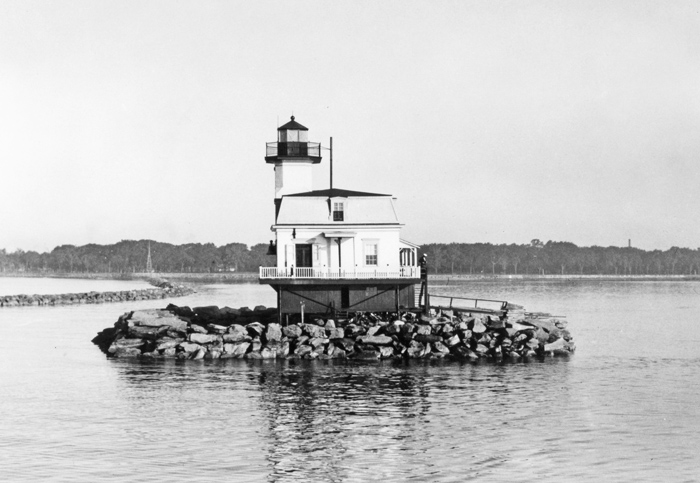
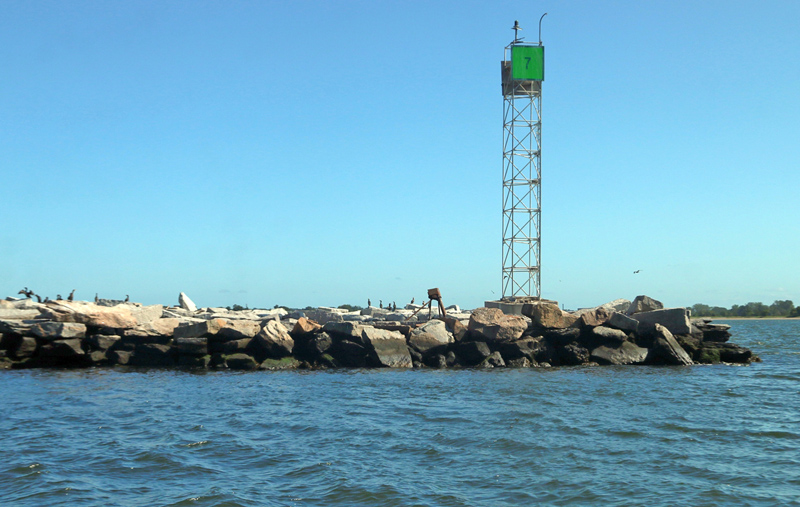
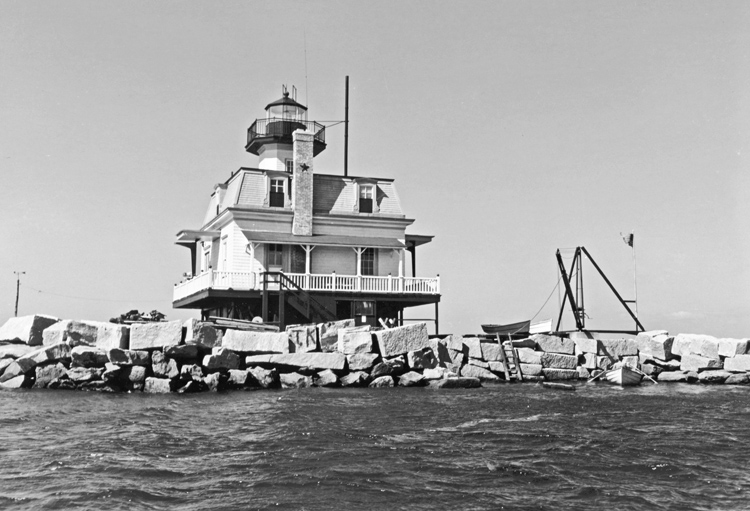
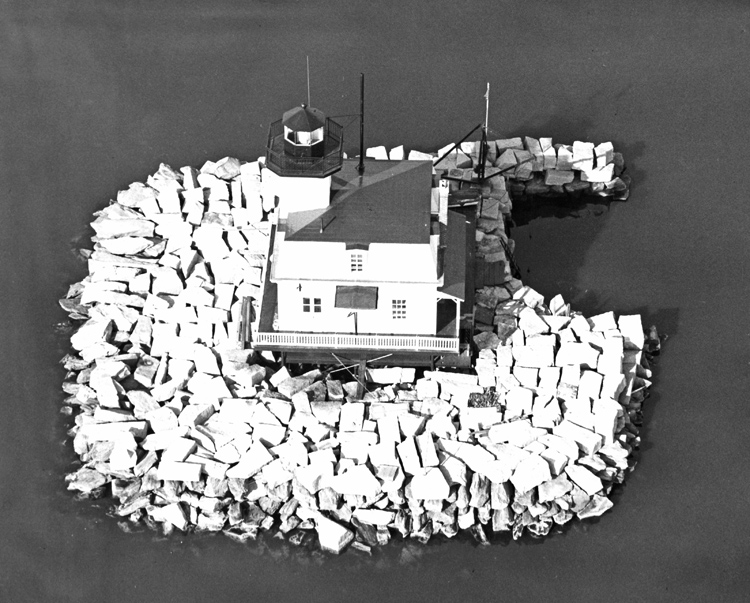
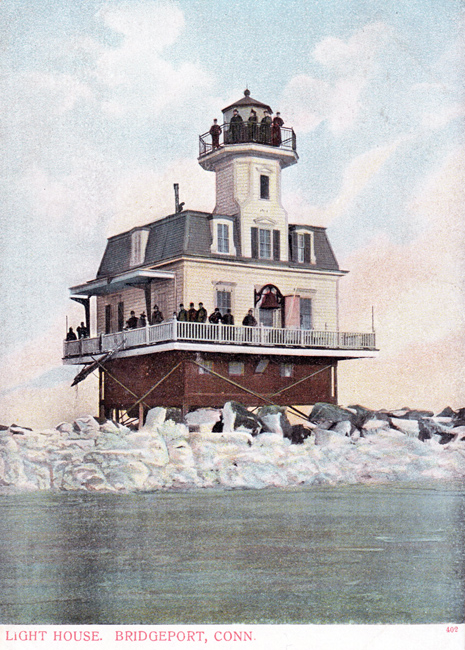
Photo Gallery
Photo Gallery
Situated at the mouth of the Pequonnock River in Long Island Sound, where a shifting bar once threatened vessels bound for the growing port of Bridgeport, Bridgeport Harbor Light evolved from a humble iron-pile beacon into a substantial screw-pile lighthouse protected by granite and riprap, and finally into a casualty of mid-twentieth-century modernization.
By the mid-nineteenth century, Bridgeport had become an increasingly important manufacturing and shipping center. A sandbar at the harbor entrance posed a hazard at low tide, prompting dredging and the construction of a breakwater in the 1840s. The captain of the steam vessel Nimrod convinced local authorities to establish a lighted aid to help vessels enter the harbor at night. This aid took the form of a rowboat fitted with a mast and lantern. When a vessel was expected, the boat was towed out and tied off to a spar buoy. After safely entering the harbor, the vessel would untie the rowboat and tow it in.
Later a whaleboat was purchased and fitted with a mast and lantern and a few cowbells to serve as a fog signal. Captain Abraham Archibald McNeil was hired as the keeper of this unique navigational aid. After this vessel parted its moorings during a storm and was wrecked, a light mounted on piles driven into the harbor bottom was established.
|
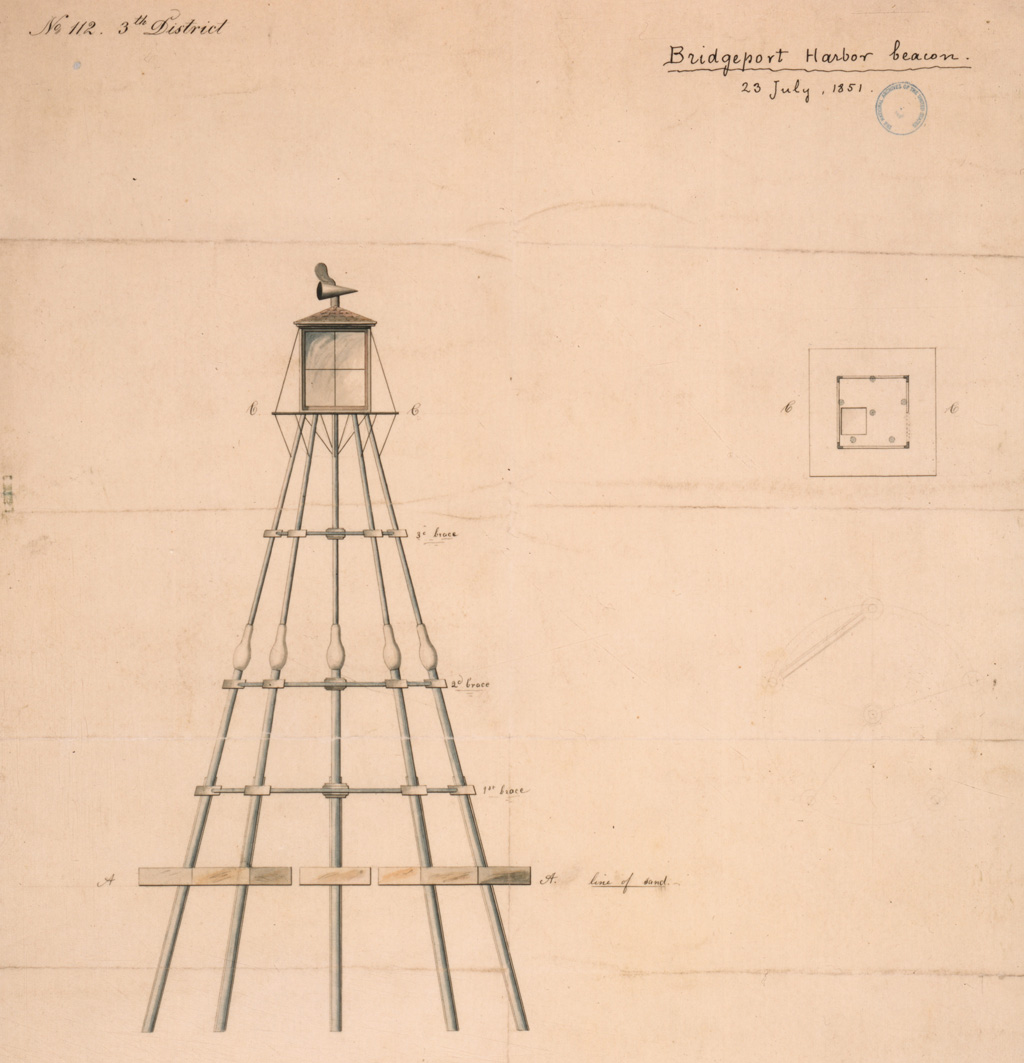
Recognizing the harbor’s commercial importance, Congress appropriated $3,500 on September 28, 1850, for a beacon at Bridgeport Bar. The correspondence that followed reveals both the modesty of the appropriation and the practical challenges of erecting a light in exposed, icy waters. In early 1851, Fifth Auditor Stephen Pleasonton wrote to the local superintendent of lights, James Donaghe, questioning the proposed iron-pile design. How deep was the water? How high would the beacon stand? How would the keeper reach and tend the lantern without risking his boat against the piles in rough weather? Most pressing of all: where would the keeper live?
Pleasonton suggested a simpler and cheaper structure, one that might allow funds for a keeper’s dwelling. Ultimately, Donaghe was authorized to proceed with the proposed iron-pile beacon—provided a house could be rented ashore for the keeper. Oil, a suitable boat costing no more than $145, and a salary of $350 per year were authorized. On December 17, 1851, Abraham A. McNeil was officially appointed keeper of the Federal aid.
The completed beacon was modest: a small box-like structure raised on iron piles. It displayed a fixed red light from a sixth-order lens. For nearly two decades, Captain McNeil and his son tended the light, rowing back and forth in all weather. The little beacon, however, was vulnerable. Winter ice battered its piles, and in 1867 a vessel struck the structure, damaging the lantern. Repairs were frequent and costly. In 1868, the Lighthouse Board warned that if ice conditions were as severe as the previous winter, the beacon might be carried away entirely. With Bridgeport’s commerce steadily increasing, a sturdier structure was urgently recommended.
Congress finally appropriated $45,000 on July 15, 1870, for reconstruction. The new lighthouse, completed in 1871 about 250 feet south of the old site, reflected the engineering advances of the era. Founded on iron screw-piles and protected by an “icebreaker” of granite blocks set in riprap, the structure was both practical and handsome. A white, wood-frame dwelling rose above the piles, crowned by a mansard roof and a tower painted white with a black lantern. The piles themselves were painted red. A fourth-order Fresnel lens exhibited a fixed red light from a focal plane sixty feet above mean tide, visible in clear weather for thirteen-and-a-half miles. A fog bell, struck mechanically every fifteen seconds in thick weather, added an essential audible warning.
The lighthouse was further encircled by a granite breakwater. Designed in part by engineer Francis Hopkinson Smith, it served as a shield against the grinding floes of winter. Even so, nature tested the station repeatedly. In severe winters the harbor froze solid; sleighs traveled across the ice, and crowds sometimes walked out to the lighthouse. In 1886, a massive cake of ice struck the structure, causing hundreds of dollars in damage to the lens. Additional coping stones and riprap were added over the years, and in 1894 the breakwater was raised and extended. That same year a new Gamewell fog-bell apparatus was installed.
The human story of the lighthouse during these decades was inseparable from the McNeil family. After Captain Abraham McNeil’s death in 1873, the keepership passed briefly to others before his son, S. Adolphus McNeil, assumed charge in 1876, serving for twenty-six years. In 1886, Adolphus married Flora Evans, a seasoned mariner’s daughter well-versed in navigation. Life at the lighthouse was both cultured and rugged. The parlor contained a piano and violin; paintings adorned the walls. Yet waves sometimes burst through the kitchen windows, and in winter glycerin was rubbed on the panes to prevent freezing spray from sealing them shut. Flora recalled rowing ashore when neither land nor lighthouse was visible between the swells, wringing seawater from her hair upon returning home.
|
During the Spanish-American War in 1898, a battery of two 10-inch guns was placed on the lighthouse foundation under War Department authority, transforming the peaceful beacon into a temporary defensive outpost.
In the twentieth century, Bridgeport Harbor Lighthouse became known as much for its rescues as for its red light. Keeper Willis A. Green saved two bathers from drowning in 1913 and also cared for a survivor who swam to the station after his vessel was run down. Over the next six years, keepers Arthur J. Baldwin, John A. Miller, and Charles R. Riley each performed lifesaving acts, assisting stranded sailors and rescuing those imperiled near the breakwater.
On December 16, 1920, Keeper William Hardwick carried out one of the station’s most dramatic rescues. In a fierce storm in Long Island Sound, seven men from the wrecked lighter Calvin Tompkins struggled in a half-swamped boat. Hardwick slid down a rope on the west side of the lighthouse to reach his powerboat in the artificial harbor. He then threw the men a line, and pulled them to safety. Nearly helpless from exposure, the men were brought into the lighthouse and given dry clothing and hot coffee. Within minutes, their boat sank in the harbor. Hardwick later received commendation for his bravery during what he said was the worst storm he had ever witnessed.
Daniel F. McCoart, keeper from 1921 to 1945, continued this tradition. In June 1922, he rescued a boy from the disabled motorboat Louise No. 560 and provided tools and materials so the men aboard could make emergency repairs. In 1930, he towed the disabled speedboat Dragon to safety and later that summer saved two boys from a capsized sailboat, one of whom could not swim. His family life at the lighthouse captured the public’s imagination. Each day he rowed his son ashore for school, returning in the afternoon. Groceries were delivered to a designated shore point, and a white handkerchief was waved to signal their arrival. Inside, the dwelling was immaculate, with kerosene stored in large tanks below and rainwater collected for household use.
Even after the Coast Guard assumed operation of the station, the lighthouse community spirit endured. In 1948, the keeper’s fifteen-year-old son, Kenneth Chilly, rowed out to rescue a drowning fisherman, earning praise for his quick action.
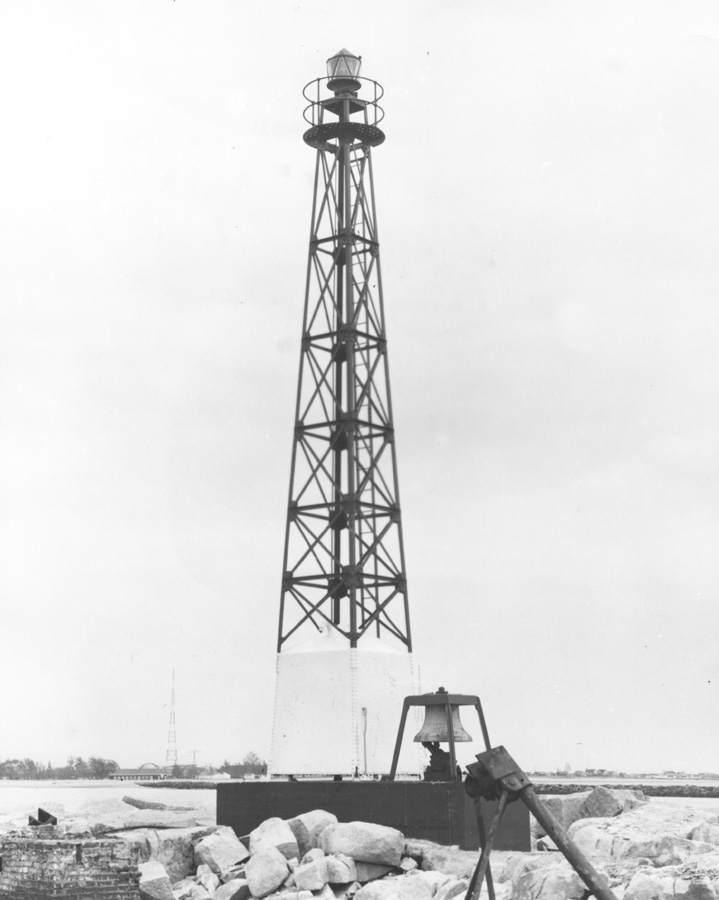
By the early 1950s, the lighthouse—now more than eighty years old—was deemed “beyond economical repair.” The United States Coast Guard announced in 1953 that it would be replaced by an automatic electric beacon mounted on a forty-foot steel tower. The kerosene lantern would be transferred to Latimer Reef Lighthouse. Editorials lamented the passing of an era, comparing the threatened demolition to the loss of storied lights.
In a last effort at preservation, the Fairfield Dock Company purchased the lighthouse for one dollar and proposed moving it ashore as a historic landmark. When city officials declined to provide a site, the company reluctantly began dismantling the structure. On December 19, 1953, as workers burned scrap wood nearby, a shift in the wind carried sparks to the old timbers. Flames quickly engulfed the building, workmen fled from the scene aboard a tugboat, and within an hour, the old lighthouse was destroyed. The following spring, construction began on the new electric beacon, its utilitarian steel form in stark contrast to the vanished mansard-roofed dwelling.
For more than a century, Bridgeport Harbor Lighthouse, in two incarnations, had marked the harbor entrance with steadfast reliability. It sheltered families, witnessed wars and winters, and served as a base for acts of quiet heroism. Though its wooden superstructure is gone, its story remains woven into the maritime heritage of Bridgeport and the waters of Long Island Sound it once guarded.