Jordan Point, VA 
Select a photograph to view a photo gallery
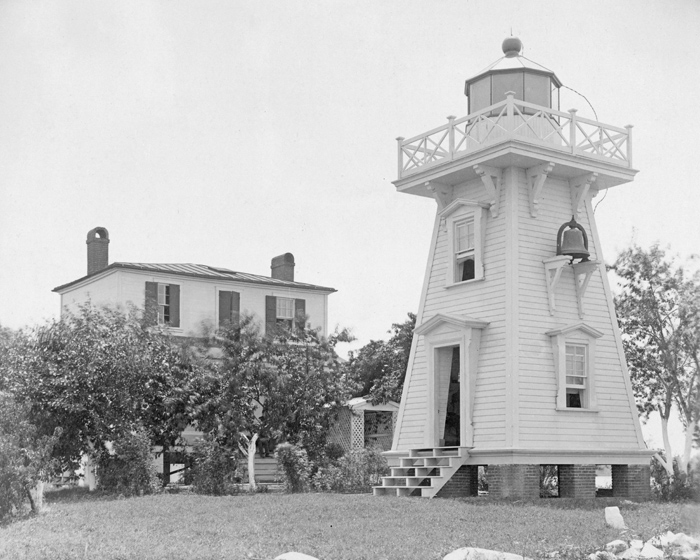
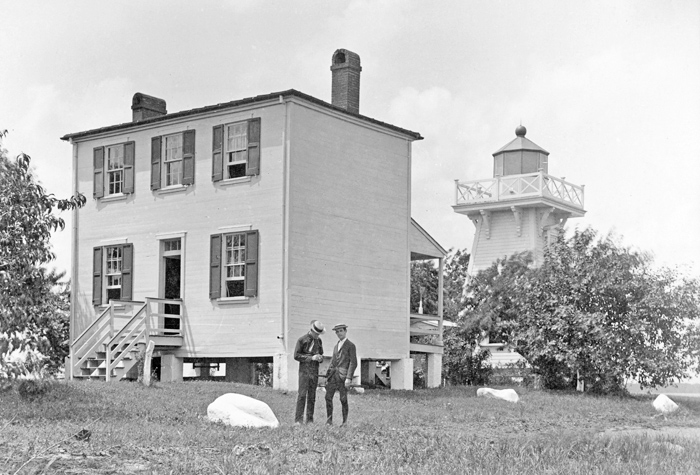
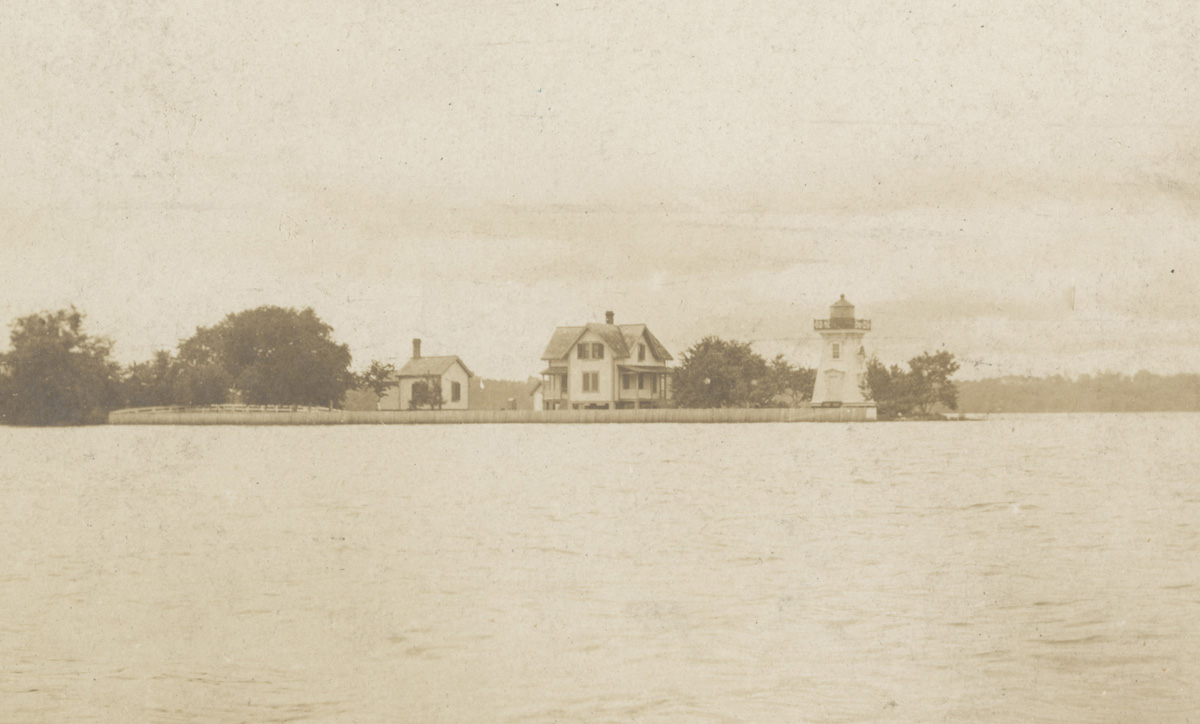
Photo Gallery
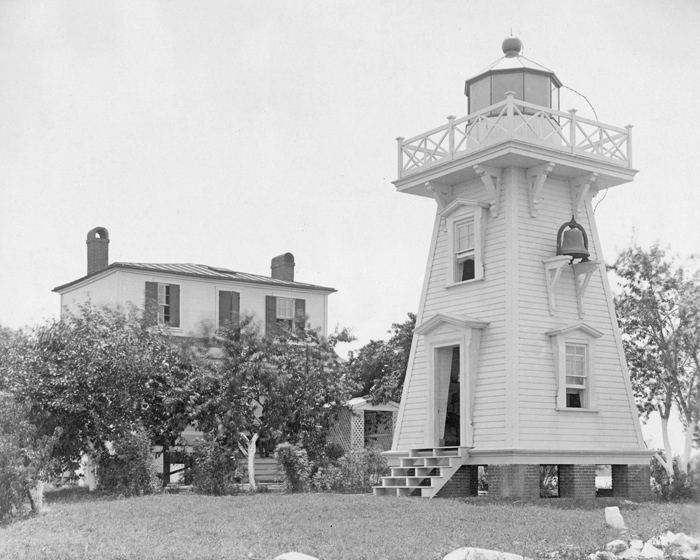
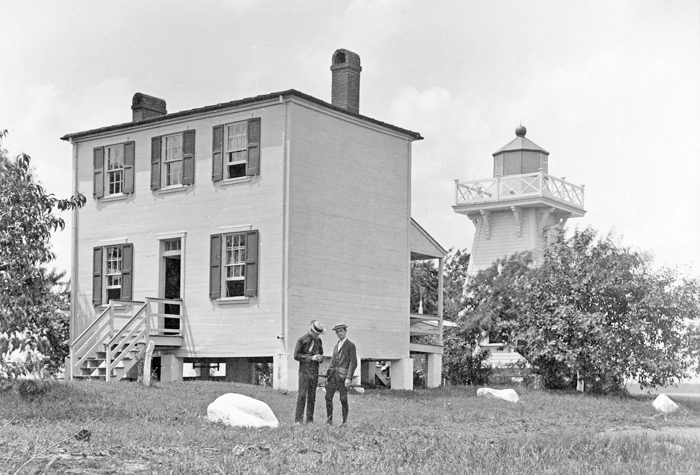


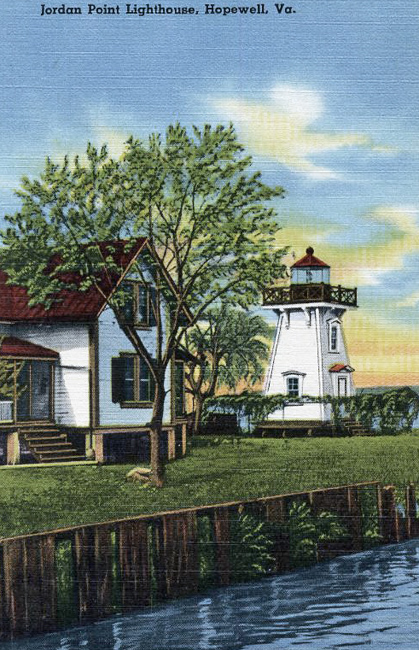
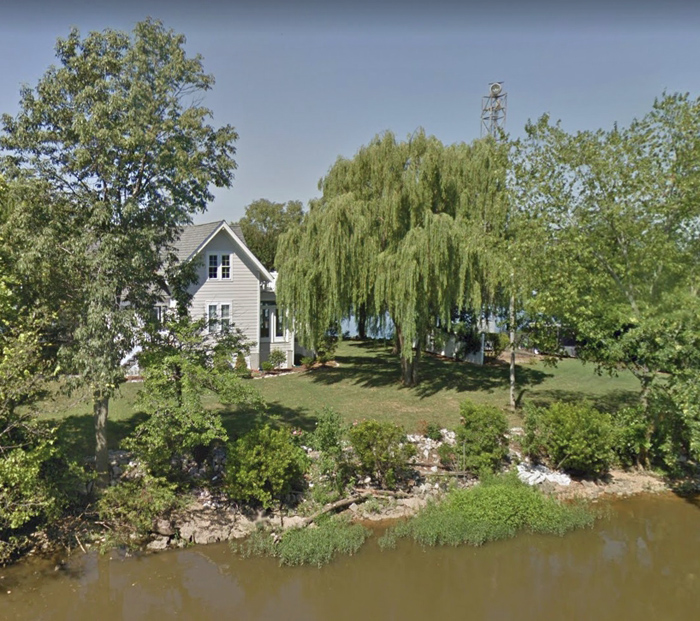
Photo Gallery
Photo Gallery
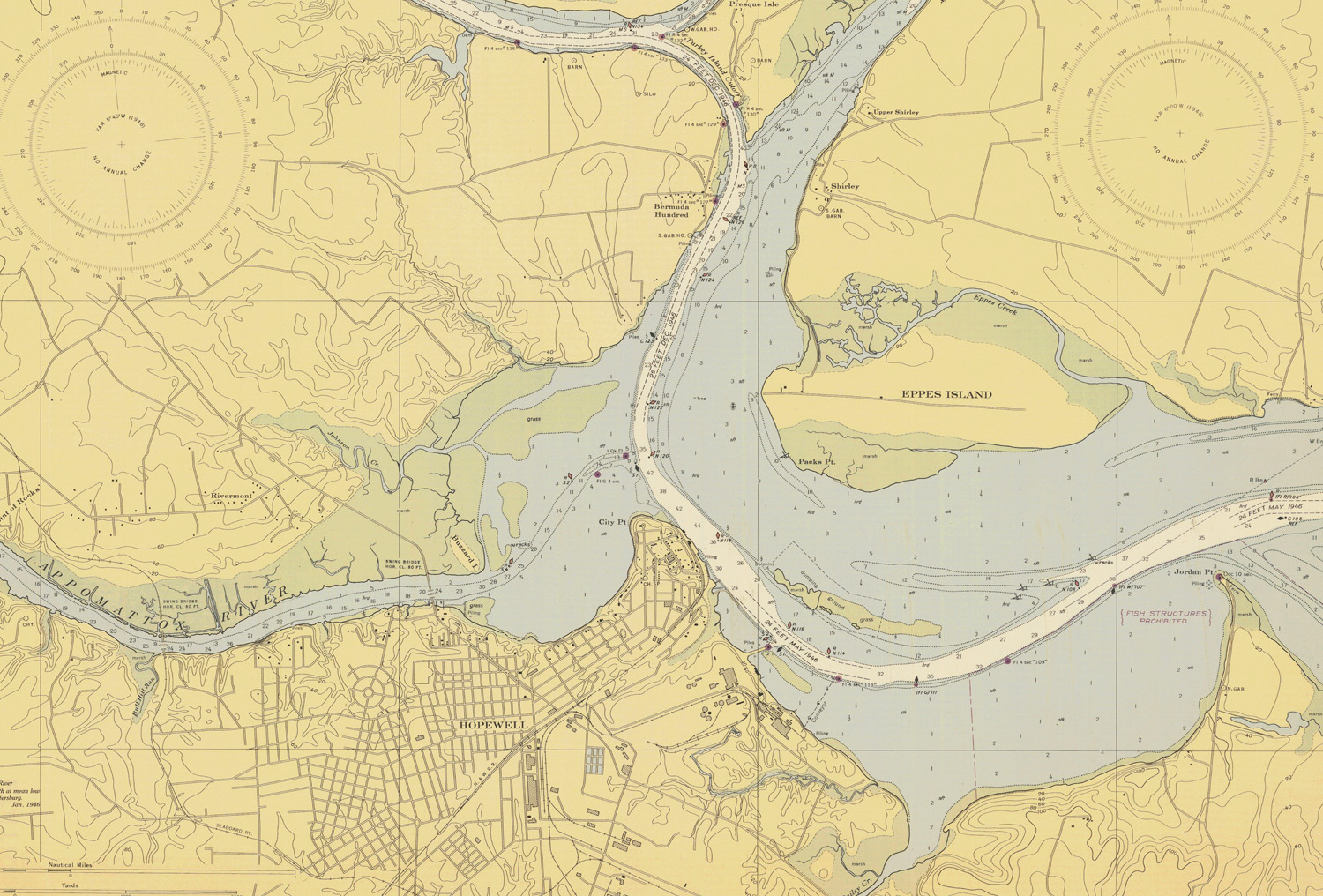
Jordan’s Point is a nearly triangular promontory extending into the James River in Prince George County, Virginia, just east of the confluence of the James and Appomattox rivers. Its position made it an important landmark for vessels navigating the James River toward Richmond and the communities farther upstream. In the mid-nineteenth century, as commercial traffic on the river increased, the federal government recognized the need for additional navigational aids along this stretch of water.
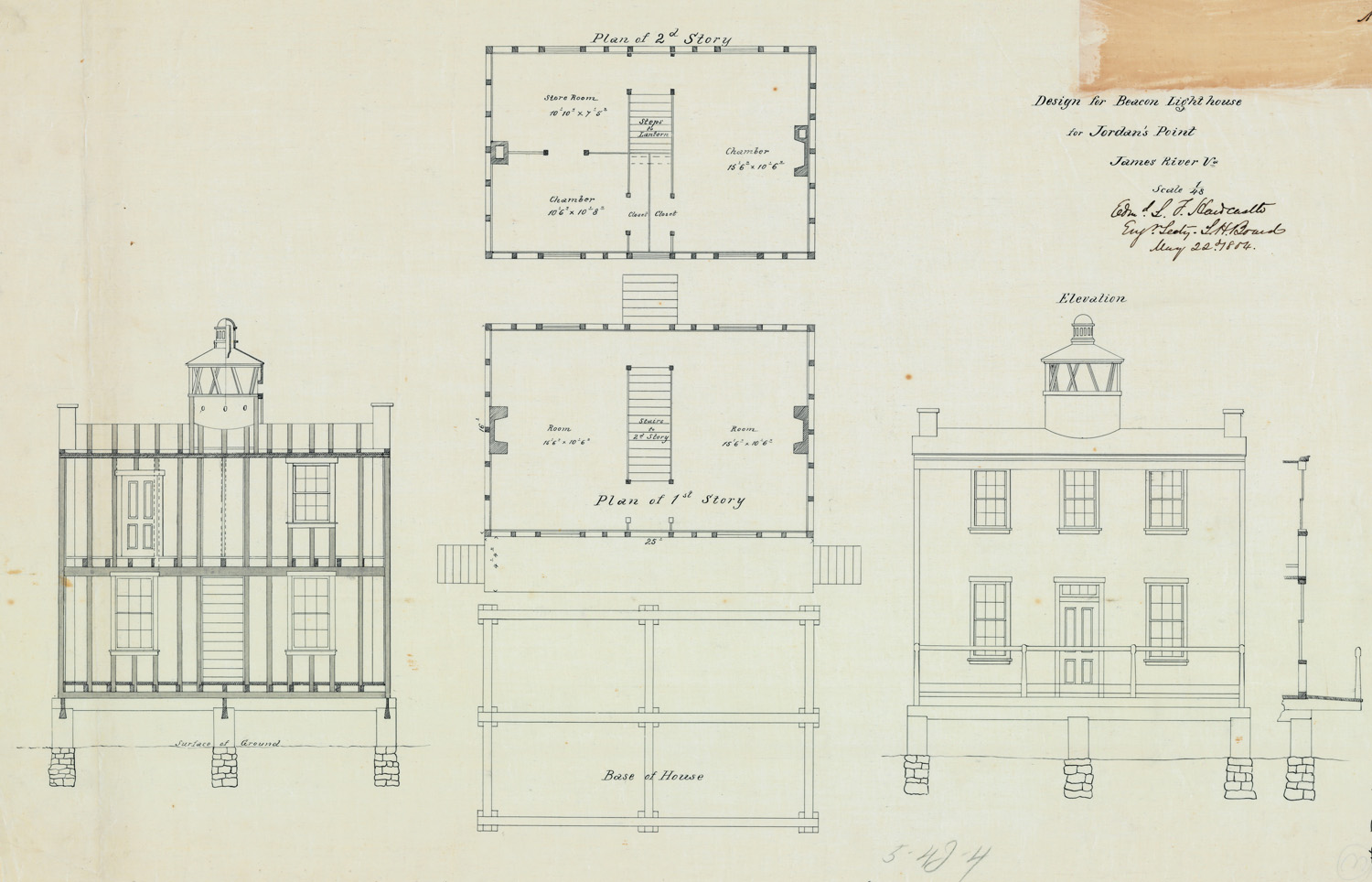
On August 31, 1852, Congress appropriated $15,000 for the construction of beacon lights at Days Point, Point of Shoals, and Jordan’s Point on the James River. The following year, the Lighthouse Establishment reported that the site for the proposed lighthouse at Jordan’s Point had been selected. Major Alexander Dallas Bache, the superintendent of the U.S. Coast Survey, had prepared plans and estimates, which were approved, and the necessary land was purchased. Once the deeds were obtained and approved, construction could begin.
|
Work on the lighthouse commenced in 1854, along with several other navigational lights on the James River, including those at White Shoal, Point of Shoals, and Deep Water Shoal. Unlike those stations, which were constructed as screw-pile lighthouses, Jordan’s Point received a lighthouse on land. The structure was completed in early 1855, and a new illuminating apparatus was first exhibited on February 7 of that year.
The first keeper was Theodorick Bland, who received an annual salary of $400. He remained in charge of the station until his death in 1859. An 1858 description of the station noted that the light was exhibited from the keeper’s dwelling, which had a red roof. The two-story, five-room frame house measured twenty-four by seventeen feet and stood approximately twenty feet high. It rested on stone piers and had a tin roof. Its sixth-order Fresnel lens, manufactured by the Brooklyn Flint Glass Company, provided the navigational light.
The outbreak of the Civil War interrupted lighthouse operations along the James River. By 1864, Jordan’s Point Light had not been exhibited since the beginning of the conflict. As Union forces gained control of the area, however, the Lighthouse Establishment began considering the restoration of navigational aids along the river.
On November 25, 1864, W. J. Newman, an engineer in the Fifth Lighthouse District, reported on the condition of Jordan’s Point Lighthouse. He noted that the station was in fairly good condition, although its wooden sills had deteriorated considerably and threatened the stability of the building. The frame and roof were otherwise in good repair, but new window sashes and doors were needed, along with extensive cleaning and painting inside and out.
The lantern was also in good condition, but no suitable lens was available at the Lighthouse Establishment’s supply depot at Old Point Comfort. Newman recommended that a new lens, illuminating two-thirds of the horizon, be sent from New York, together with all the necessary accessories. He also reported that new 50-gallon oil containers were needed at the James River stations. Several had been damaged through misuse, while another had been stolen.
In 1865, the lighthouse at Jordan's Point, near City Point, was thoroughly repaired and reestablished, with the necessary equipment and supplies provided. The other James River screw-pile stations at White Shoals, Point of Shoals, and Deep Water Shoals were also temporarily restored to service.
|
The station subsequently underwent a series of improvements. In February 1869, mariners were notified that the fog bell at Jordan’s Point had become cracked. Until a replacement could be installed, a gong was being sounded to warn vessels of the lighthouse’s proximity during foggy weather. A new fog bell was installed on March 15. That year, the dwelling was painted inside and out, windows were reglazed, the outbuildings and fences were whitewashed, and a plank walkway was laid. The bell tower was also painted, and minor repairs were made to the lantern.
The location of Jordan’s Point presented a continuing challenge for the Lighthouse Establishment. The current and waves of the James River gradually eroded the shoreline, threatening the lighthouse property. In 1874, the Lighthouse Board reported that the beach on the upper side of the point was rapidly washing away and that the lighthouse itself was already in danger. Officials recommended protecting the shore with loose stones. The fog bell, which was still rung by hand, was also due for modernization. A mechanical striking apparatus would require changes to the bell tower.
Congress responded with an appropriation of $2,000, approved on March 3, 1875, for protecting the site and establishing a mechanical fog signal. The exposed shoreline was protected with a dry-laid stone wall, six feet thick at its base and backed with dry earth. The work slightly enlarged the area of the station grounds. A new bell tower was constructed, and a fog bell operated by machinery was installed.
Before these improvements could be fully completed, the station experienced a frightening encounter with nature. On the evening of July 22, 1875, a violent storm swept across portions of the region. Strong winds and heavy hail damaged trees, crops, and buildings throughout the area. At City Point, a warehouse belonging to the Atlantic, Mississippi and Ohio Railroad was partially unroofed. On nearby farms, trees were uprooted and a large barn was blown down.
Jordan's Point Lighthouse was also severely shaken by the storm. According to a newspaper account, the keeper feared at one point that the building would be destroyed. The iron cupola covering the lantern and lens, which weighed approximately 400 pounds, was lifted from its position and thrown to the ground.
Later that summer, the Lighthouse Board announced a significant change to the station. Beginning August 23, 1875, the light would no longer be exhibited from the keeper’s dwelling. Instead, it would shine from a new white wooden tower erected on the point directly in front of the bell tower. The characteristics of the light remained unchanged, and the fog bell continued to sound mechanically at ten-second intervals during thick or foggy weather. The former bell tower was removed.
In August 1886, the Lighthouse Board advertised for proposals to remove the existing keeper’s dwelling and construct a replacement. The work was undertaken the following year. Bids were opened on September 18, 1886, and a contract for $3,449 was awarded. Construction began promptly, and the new dwelling was completed in January 1887. The well received extensive repairs, while minor improvements were made to the lighthouse tower.
The new dwelling, which still stands today, provided the keeper and his family with a more substantial residence from which to maintain the station.
Erosion remained a serious concern. In 1892, officials reported that the lower side of the point was being rapidly eaten away by the river current, threatening the safety of the station buildings. The following June, a substantial shoreline protection project was completed. It consisted of wooden sheet piling backed by oak and pine piles driven firmly into the ground. The timbers were secured with heavy cap logs and stringpieces. The protective barrier extended 279 feet along the eastern, channel-facing side of the point and another 133 feet along the western side. The fence along the eastern boundary was also rebuilt to follow the new shoreline protection. Additional minor repairs were made to the station.
Other improvements followed. In 1899, the piers beneath the lighthouse tower were repaired, with one pier rebuilt and another underpinned. A plank walkway was laid between the dwelling and storehouse, and the brick pavement in front of the house was repaired.
On June 30, 1900, a red sector was added to the light to warn mariners of a navigational hazard. This provided another means of helping vessels safely negotiate the river channel.
Jordan Point had a succession of keepers during its years of operation, including at least two African American men, Edward D. Bland and William H. Moody.
Edward D. Bland served three separate terms as head keeper, from 1880 to 1881, 1882 to 1883, and 1884 to 1885. Between Bland’s appointments, William H. Moody served as keeper from 1881 to 1882 and again from 1883 to 1884. Their alternating appointments are a reminder of the important contributions made by African American lighthouse keepers to the operation of the nation’s navigational system.
Other keepers included George W. Harrison, Charles W. Topping, William A. Wood, W. Thompson, William H. Baldwin, D. Batts, B. F. Topping, and William Dabney. John H. Knowles, Jr., served for several months in 1887 before Thomas E. Fenner assumed responsibility for the station.
Of all the men who served at Jordan’s Point, Thomas E. Fenner had by far the longest tenure. Fenner had originally worked as a farmer before entering lighthouse service. In 1885, he began his lighthouse career as an assistant keeper at Deep Water Shoals Lighthouse. Two years later, in 1887, he was transferred to Jordan’s Point to take charge of the station. He would remain there for the next thirty-seven years.
Fenner initially received an annual salary of $540. In 1914, his pay was increased to $600 following the establishment of an additional navigational light at Jordan’s Point. By the time he retired in December 1924, his annual salary had risen to $1,020. He died in July 1928.
Fenner’s responsibilities extended well beyond simply lighting the lamp each evening. In 1923, he provided the Lighthouse Service with a list of his regular duties. He was responsible for operating the sixth-order light and fog bell, maintaining the station’s buildings and grounds, keeping the machinery in working order, and preparing station records and reports. He also had to obtain mail and provisions, observe the condition of other navigational aids, and monitor the weather. His duties even included preparing meals and keeping the rooms of the dwelling clean.
The workload illustrates the varied responsibilities shouldered by lighthouse keepers, particularly at smaller stations where a single keeper was responsible for virtually every aspect of daily operations.
As commercial navigation continued on the James River, additional lights were established to help vessels follow the dredged channel. In February 1914, the Jordan Point Front Range Light was established approximately 1,300 yards from the main lighthouse. The fixed red oil light, with an intensity of about forty candlepower, was mounted fourteen feet above the water on a red, three-pile structure with horizontal slats. When viewed in line with the existing Jordan Point Light, the two lights marked the route through the lower portion of the dredged channel.
The establishment of this additional light resulted in an increase in Keeper Fenner’s salary, reflecting the added responsibilities associated with maintaining the range lights.
After Fenner’s retirement in 1924, the Lighthouse Service automated the rear light by converting it from oil to acetylene. The Service also began disposing of the original station property. In 1927, sealed proposals were solicited for the sale of the Jordan Point Lighthouse Reservation. The keeper’s dwelling and surrounding property were sold for $1,105, although a small parcel containing the lighthouse tower was retained by the government. In 1928, the lighthouse tender Holly returned to the Portsmouth depot after completing construction of a fence around the remaining lighthouse reservation.
The wooden lighthouse tower continued to serve as the rear range light until 1941, when it was replaced by a white skeletal tower.
The landscape surrounding Jordan’s Point changed dramatically in the twentieth century. In 1966, the Benjamin Harrison Memorial Bridge was constructed and opened to traffic, replacing the automobile ferry that had previously carried travelers across the James River. The bridge became a prominent feature of the area and altered the way people crossed this historic waterway.
Although the original wooden lighthouse tower has disappeared, an important piece of the station’s history survives. The keeper’s dwelling, completed in January 1887, remains standing at Jordan’s Point. It underwent extensive renovation in 2009 and is now a private residence.
Theodorick Bland (1855 – 1859), George W. Harrison (1859 – ), Charles W. Topping (1865 – 1867), William A. Wood (1867), W. Thompson (1867 – 1868), William H. Baldwin (1868 – 1878), D. Batts (1878 – 1879), B.F. Topping (1879 – 1880), Edward D. Bland (1880 – 1881), William H. Moody (1881 – 1882), Edward D. Bland (1882 – 1883), William H. Moody (1883 – 1884), Edward D. Bland (1884 – 1885), William Dabney (1885 – 1887), John H. Knowles, Jr. (1887), Thomas E. Fenner (1887 – 1924).