Deep Water Shoals, VA 
Select a photograph to view a photo gallery

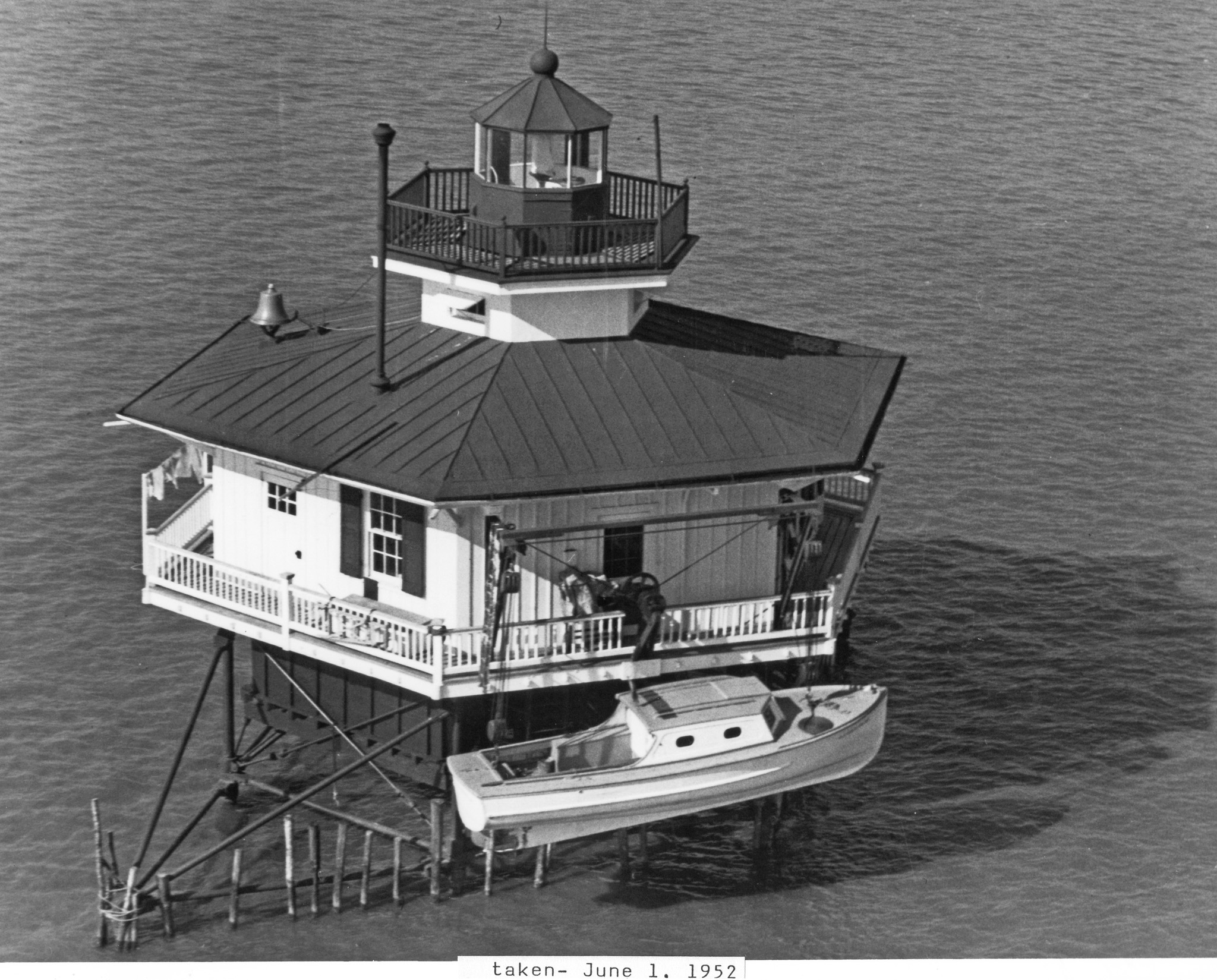
Photo Gallery

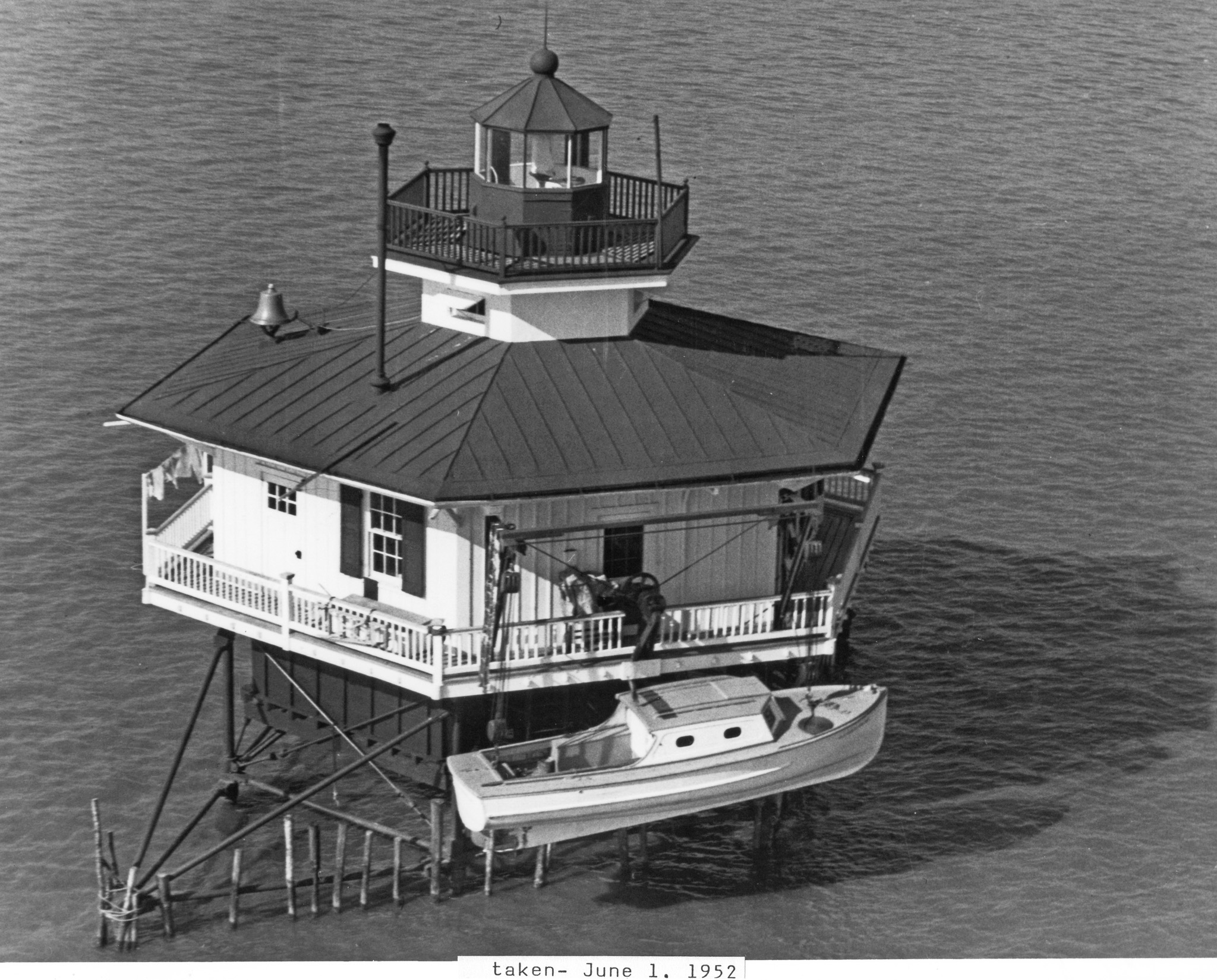
Photo Gallery
Photo Gallery
The James River has played a central role in Virginia’s history for centuries. Rising in the Appalachian Mountains, the river begins at the confluence of the Cowpasture and Jackson rivers in Botetourt County and flows approximately 348 miles eastward to the Chesapeake Bay. Including the Jackson River, the longer of its two headwaters, the James extends 444 miles. It is the longest river in Virginia, passing through landscapes that range from mountainous terrain to the broad coastal plain.
The river was named for King James I of England by the Jamestown colonists, who established the first permanent English settlement in the Americas along its banks in 1607. During the colony’s early years, the navigable portion of the James served as Virginia’s principal transportation route. Supply ships and new emigrants traveled upstream from the Chesapeake Bay, while tobacco and other goods moved downstream toward the Atlantic.
|
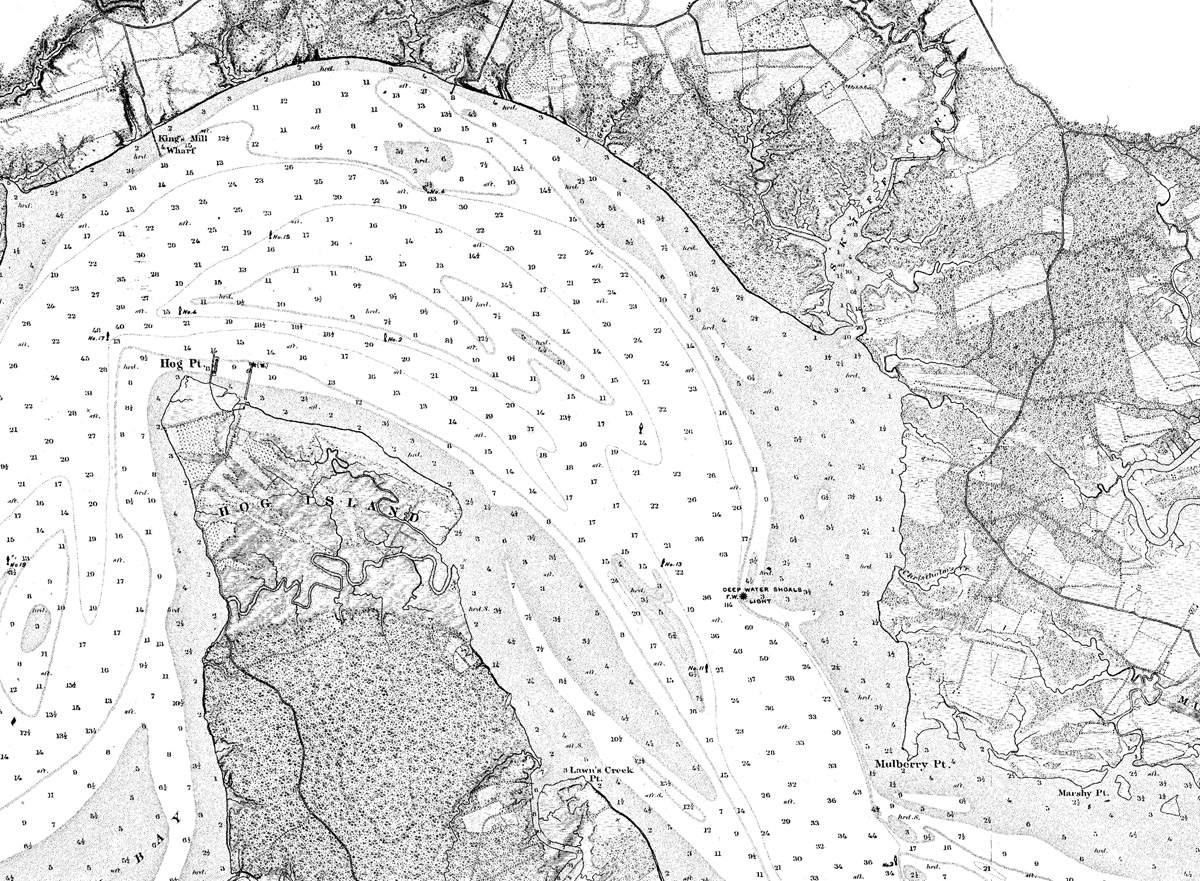
As settlement expanded, the river became an increasingly important commercial highway. Yet its navigation was complicated by numerous shoals, bars, and bends. Deep Water Shoals, located in the James River above Newport News, was among the hazards that threatened vessels traveling between the Chesapeake Bay and the river’s upper reaches.
In 1837, Captain Beverly Kennon of the U.S. Navy emphasized the need for navigational aids along the river. His report described the difficulties faced by vessels navigating the James after dark:
From the mouth of James River to the head of its navigation there is not a light of any sort, or a buoy laid down; and yet its channel is peculiarly intricate, and the shoals and bars numerous. All vessels of any draught are, therefore, obliged to anchor at night, even with a fair wind.
Kennon believed that three lights would greatly improve navigation: one at Day's Point, another at Point of Shoals, and a third at Deep Water and Lyon’s Creek Shoals. With these lights, he explained, the heaviest vessels could travel at night as far as Hog Island, approximately forty miles upriver, while lighter-draft vessels could reach Harrison’s Bar, eighty or ninety miles from Hampton Roads.
He cautioned that a single light would accomplish little, since vessels would still have to anchor upon reaching it. If only one light could be built, however, Kennon recommended Point of Shoals as the most dangerous location on the river.
His report illustrated the growing need for a coordinated system of navigational aids on the James. Deep Water Shoals would become an important part of that system.
Congress appropriated $5,000 in August 1852 for a beacon light on the shore opposite Lyon’s Creek Shoals. By 1854, plans had expanded to include several navigational aids along the James River.
The Lighthouse Board selected sites and prepared plans for the new structures. Construction of screw-pile lighthouses began in 1854 at White Shoal, Point of Shoals, and Deep Water Shoals. These structures were designed to stand above the water on iron piles driven into the riverbed, allowing them to mark hazardous shoals without obstructing navigation.
The first Deep Water Shoals Lighthouse was completed in 1855. Its wooden dwelling rested on five iron screw piles and was approximately eighteen feet square, with four rooms. The lantern was black, the piles red, and the woodwork white, with the roof and other details painted red.
A large pressed-glass masthead lens was installed in the lantern and exhibited on February 6, 1855. The lens proved suitable for the river’s navigational needs and was permanently substituted for the fifth-order Fresnel lens originally intended for the station.
James H. Ransom served as the first head keeper, with Thomas Ransom as assistant. Their first years at the station were difficult. In January 1856, the keepers abandoned the lighthouse because of its supposed dangerous condition.
The structure suffered further damage from ice and storms during the winter of 1856–1857. Temporary repairs were made so the keeper could continue exhibiting the light, but an entirely new structure was planned. The lighthouse was repaired and returned to service.
The Civil War disrupted lighthouse operations throughout the James River. In 1862, the lights at White Shoal, Point of Shoals, and Deep Water Shoals were reestablished during the summer, but their illuminating apparatus was removed and stored at Fortress Monroe after Union forces withdrew from the peninsula.
In 1864, the movement of the Army of the Potomac to the south side of the James River made the waterway an important route for transporting military supplies. The lights were again placed in operation, though their continued use depended upon protection from Confederate forces.
After the war, the Lighthouse Board restored the James River stations. Deep Water Shoals Lighthouse had suffered only slight damage from the enemy, and it was repaired and provided with a new fog bell and illuminating apparatus.
The station’s greatest threat, however, came from the river itself.
|
On January 20, 1867, enormous masses of moving ice demolished the lighthouse. The destruction was reported to Congress, and a special appropriation of $16,000 was made available for its replacement. A lightship was placed at Deep Water Shoals in 1867 to mark the hazardous location while construction proceeded.
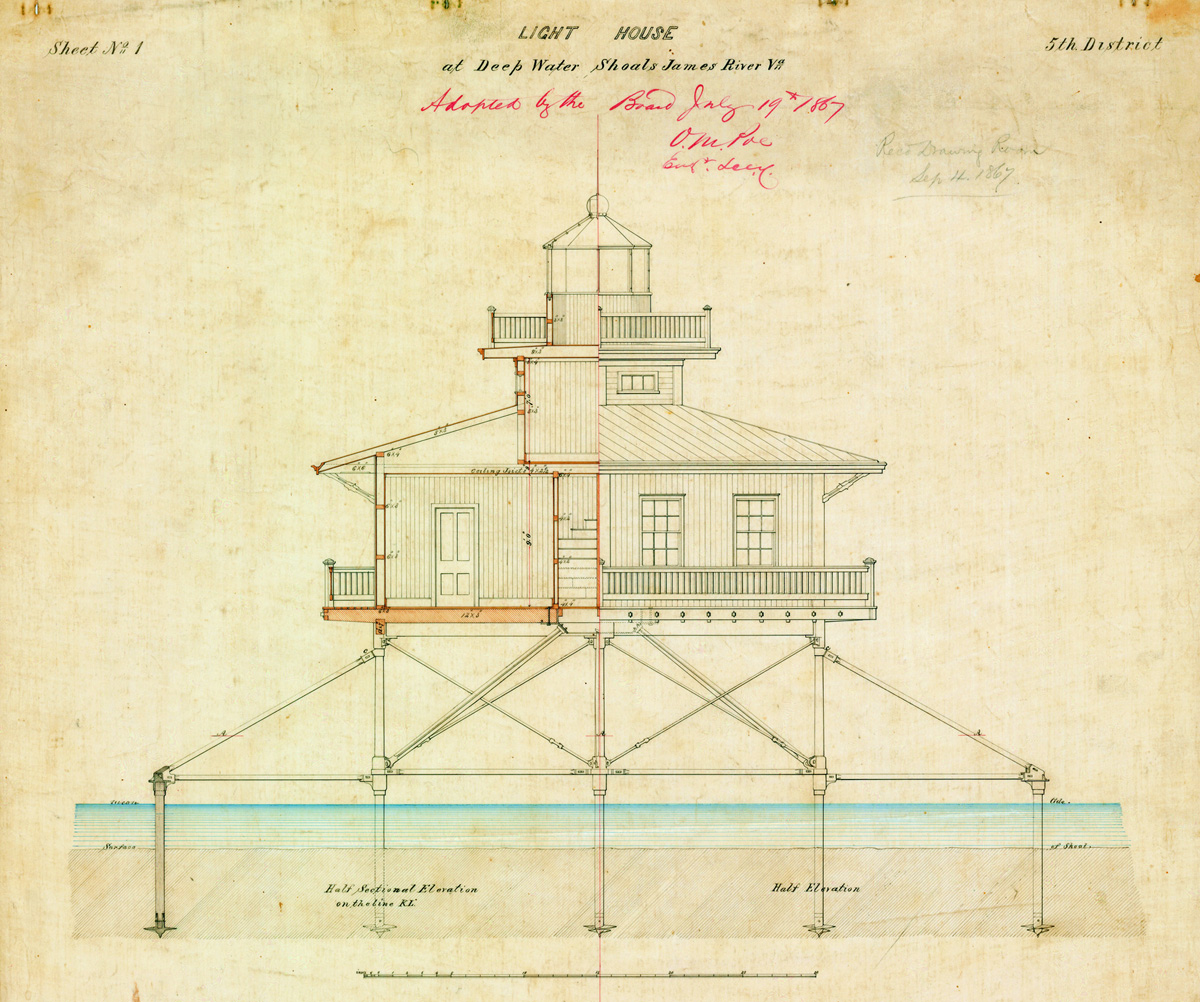
The new screw-pile lighthouse was completed before the end of the year. In late December, the Lighthouse Board announced that the structure would replace the lightship, with the new light to be exhibited for the first time on January 15, 1868.
The replacement lighthouse was hexagonal in shape. Its sixth-order Fresnel lens was positioned thirty-five feet above ordinary tides, and the light could be seen in clear weather for nine miles.
The new structure remained in service for nearly a century. Over the years, it received routine maintenance, including repairs to the keeper’s dwelling, painting, and replacement of equipment. In 1883, new boat hoisters were installed, and the station was reported to be in fair condition.
The lighthouse depended upon the dedication of its keepers, who maintained the light, cared for the equipment, and assisted mariners in distress. Among the station’s longest-serving keepers were Santa A. Morse, Alexander P. Hurst, and Thomas J. Cropper.
Santa A. Morse, an African American lighthouse keeper, served as assistant keeper from 1873 to 1874 before becoming head keeper in 1874. He remained in charge until 1885.
Morse’s promotion followed the departure of Keeper William E. Crockett. In 1874, Crockett left the station early one morning after extinguishing the light, leaving the lighthouse, lens, and lamp in a dirty condition. When the district engineer visited that day, he found the station in a filthy state. Crockett made disrespectful remarks about the engineer while attempting to justify his actions and likely would have been dismissed had he not resigned.
Morse, who was found free from blame, was recommended for promotion. He was described as clean and intelligent, and his long tenure helped provide continuity at the station.
Alexander P. Hurst became head keeper in 1907. Before his appointment at Deep Water Shoals, he had served as an assistant keeper at York Spit and Wolf Trap lighthouses. Hurst remained in charge for more than twenty-one years, retiring in 1928.
Thomas J. Cropper served two periods as assistant keeper at Deep Water Shoals, first from 1914 to 1918 and again from 1928 to 1943. When John R. Edwards retired in 1943, Cropper was promoted to head keeper. He served in that position until 1946.
Deep Water Shoals Lighthouse was more than a warning light for passing vessels. Its keepers also played an important role in assisting those in danger on the river.
On August 7, 1918, Assistant Keeper Robert H. Matthews rescued four soldiers from Camp Eustis who had been caught in a storm while sailing near the lighthouse.
The soldiers were adrift in a small sailboat when the storm struck. Their boat drifted toward the lighthouse, but strong winds threatened to blow it away from the station. Matthews made several unsuccessful attempts to pull the men to shore using a board extended toward them. He eventually succeeded in bringing all four soldiers to safety and saving their boat. The rescued men remained at the station until the following morning.
The Lighthouse Service formally commended Matthews for his actions. An official letter noted that his rescue of the four soldiers and the saving of their boat would be entered into his service record as an example of excellent service.
Matthews’s rescue illustrates the risks faced by lighthouse personnel and the important role they played in protecting lives on the river.
By the middle of the twentieth century, advances in navigational technology were changing the operation of lighthouses throughout the United States.
In 1954, the Coast Guard announced plans to convert Deep Water Shoals Lighthouse to automatic operation. At the time, three keepers were assigned to the station, which was the only attended lighthouse in the James River above Newport News.
The conversion was scheduled for approximately June 17, 1954. In July, George F. Hudgins, the station’s last head keeper, was transferred to Wolf Trap Lighthouse.
Deep Water Shoals continued to mark the river after its keepers departed. In 1966, the historic lighthouse was demolished and replaced by a skeletal tower mounted on the original screw-pile foundation.
Although the original dwelling and lantern were lost, the station’s long history remains an important part of the story of navigation on the James River. From its construction in 1855 through its automation and eventual replacement, Deep Water Shoals Lighthouse helped guide vessels through one of Virginia’s most historic waterways.