Cherrystone, VA 
Select a photograph to view a photo gallery
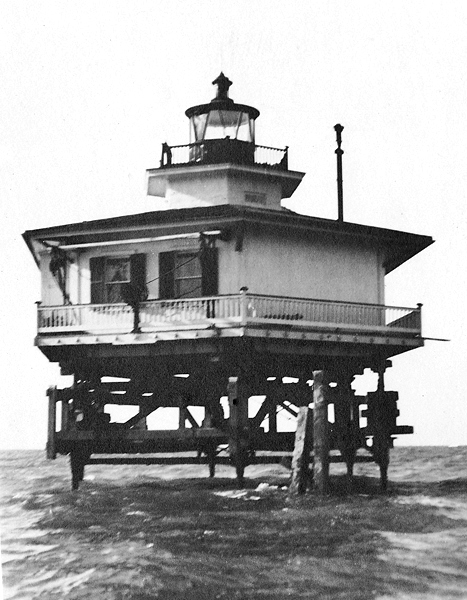
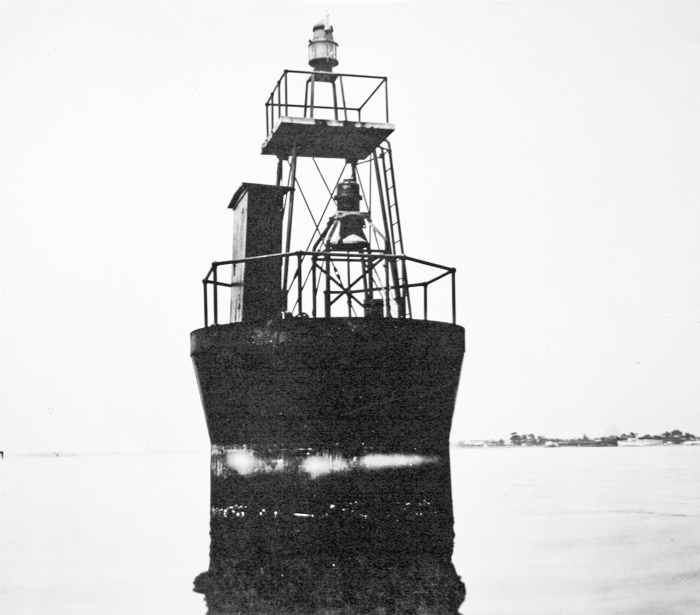
Photo Gallery
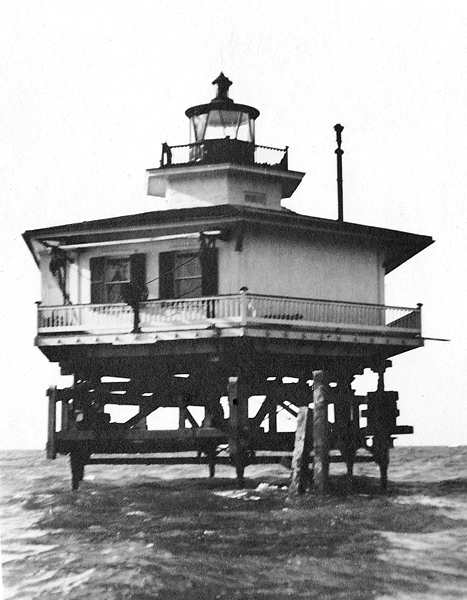
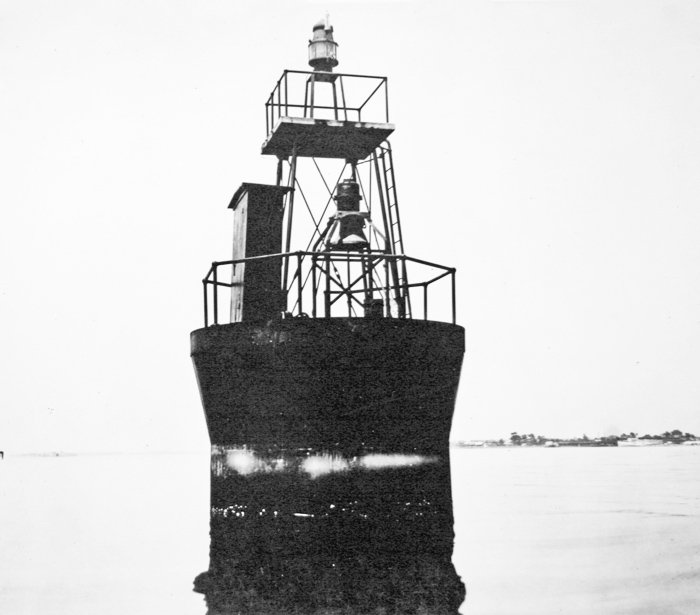
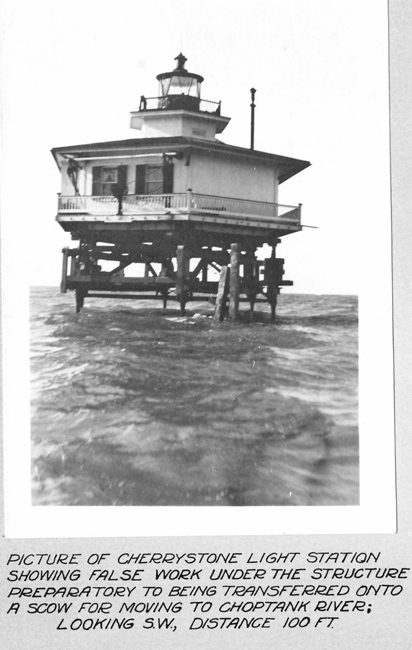
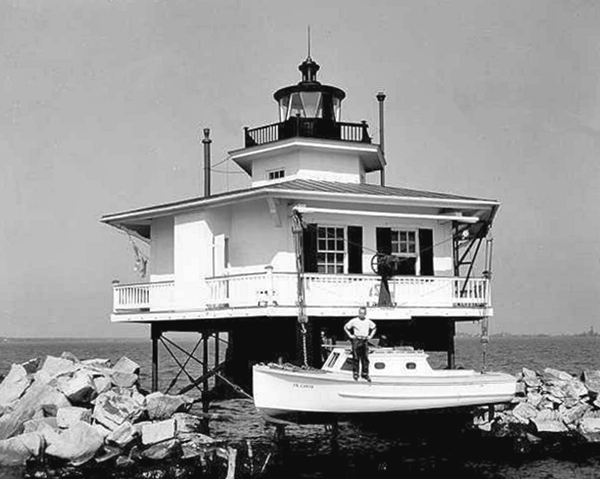
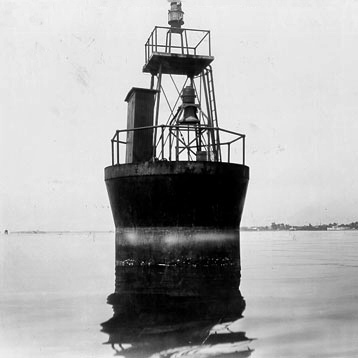
Photo Gallery
Photo Gallery
Cherrystone Harbor, on the Eastern Shore of Virginia, was regarded in the mid-nineteenth century as one of the best harbors on the southeastern portion of Chesapeake Bay. In 1853, Lieutenant Alexander M. Pennock, a lighthouse inspector, recommended that a small screw-pile lighthouse be established on one of the numerous shoals near the entrance to the intricate channel leading into the harbor. There were no lights on that side of the Eastern Shore, and Pennock believed a light at Cherrystone would be of considerable assistance to vessels navigating up and down the bay. Pungoteague Creek, about twenty-five miles to the north, was the only comparable harbor in the area.
Congress responded with an appropriation of $10,000 on August 3, 1854, for a lighthouse on the shoals off Cherrystone, at the entrance to Cherrystone Harbor. It took several years for the project to reach the construction stage. In 1857, the sites for the authorized lights at Cherrystone and Stingray Point at the mouth of the Rappahannock River had been examined and selected, and the Lighthouse Establishment expected construction to begin shortly. The following year, officials reported that the two screw-pile lighthouses had been commenced and were progressing toward completion.
Cherrystone Lighthouse was completed late in 1858. Edward R. Holt became the first head keeper, receiving an annual salary of $400, while John R. Floyd was appointed his assistant at $300 per year. Holt remained in charge only briefly, however, as Floyd succeeded him as head keeper on July 25, 1859.
The new lighthouse was a hexagonal screw-pile structure standing in about four feet of water at low tide on the west side of the entrance to Cherrystone Inlet, roughly a mile and a half south of Sandy Point. The small hexagonal dwelling was painted white, while the supporting piles and lantern were painted red. Its fourth-order Fresnel lens was mounted at a focal plane 36 ½ feet above the water. The fixed light, of natural color, illuminated 270 degrees of the horizon and was expected to be visible for about ten nautical miles in ordinary weather.
A formal notice to mariners announced that the light would be exhibited for the first time at sunset on January 1, 1859, after which it would burn every night from sunset to sunrise. The new light provided an important navigational aid along a poorly lighted portion of Chesapeake Bay and helped mark the entrance to one of the Eastern Shore’s most useful harbors.
Cherrystone Lighthouse had been in service for only a few years when the Civil War disrupted its operation. John R. Floyd was still serving as head keeper when the light was extinguished in the spring of 1861. A letter written by Commander C. K. Stribling on August 29, 1862, provides an unusual glimpse of Floyd’s circumstances. Stribling forwarded a request for payment of salary due Floyd and authorized the superintendent at Eastville to estimate the amount owed him from January 1, 1861, until the date the light was extinguished, approximately April 22, 1861, at his annual rate of $400. This amount was only to be paid Floyd if he “resisted to the extent of his ability the extinction of the light.”
With the Eastern Shore of Virginia under Confederate control, the navigational lights in the region were extinguished, leaving that portion of Chesapeake Bay without some of its most useful aids to navigation. The interruption did not last throughout the war. In 1862, following military operations that restored the Eastern Shore to governmental control, the lights at Cape Charles, Cherrystone, and Hog Island were reestablished. The Lighthouse Establishment reported that these lights were of considerable importance to the greatly increased navigation of Chesapeake Bay and its tributaries.
The station’s postwar keepers changed frequently. Henry M. Muller served from 1862 to 1866, followed by a succession of keepers whose periods of service were often measured in months rather than years. Samuel Mathews, William B. Wilson, Zackary Moore, George Trower, Isaac S. Pyle, Branson W. Dalby, E. B. Custis, Thomas H. Braxton, Peter J. Carter, Alfred J. Spady, and Frank Hoskins all served at Cherrystone as head keepers during the next two decades.
This remarkable turnover is one of the most striking characteristics of Cherrystone’s history. From the opening of the station in 1858 until its removal in 1920, the head-keeper position changed twenty-four times, with many of these keepers serving only a year or two. The station averaged only about 2 ½ years per head keeper, and the average is significantly inflated by the longer service of a few men; several keepers remained for just a few months. The assistant-keeper position was even more fluid, with roughly fifty appointments recorded. Among these assistant keepers was Mrs. F. Mathews, wife of Keeper Samuel Mathews, and William Gunter, an African American who served at the station in the 1880s and 1890s.
Despite the frequent changes in personnel, the Lighthouse Establishment continued to maintain the station. In 1867, Franklin lamps replaced the Fountain lamps previously used at Cherrystone. A new cooking stove was supplied in 1868, and the keeper’s boat was repaired. The following year the ironwork was hammered and cleared of rust before receiving two coats of paint. In addition, the exterior of the keeper’s dwelling was painted, the lantern was painted inside and out, the deck was repaired and painted, glass in the dwelling was reset, and doors, locks, and other fittings were repaired.
|
In 1875, only minor repairs were needed, but the replacing of the hand-operated fog bell with one rung by machinery was recommended. In 1883, new boat hoisters were installed, the fog-bell machinery was repaired, and the station was reported to be in good condition.
Another significant improvement came in 1888, when orders were issued to place a red sector of approximately 210 degrees on the light. The sector was intended to make the light more useful to vessels approaching the harbor. The south edge of the red sector would guide mariners through the best water inside the shoal and mark the point at which they should turn after crossing it. The change also reduced the possibility of confusing Cherrystone with Old Plantation Flats Lighthouse.
Among the many men who served at Cherrystone, Oliver R. Hudgins stands out because of the tragic manner in which his service ended. Hudgins had entered the Lighthouse Service as an assistant keeper in 1885, when he was assigned to Wolf Trap Lighthouse. In 1887 he became keeper in charge there, and in 1888 he was transferred to New Point Comfort Lighthouse. He remained at New Point Comfort until 1899, when he was transferred to Cherrystone and became its head keeper.
Hudgins served at Cherrystone for approximately four years. His death in 1903 was reported in a newspaper under the striking headline “Death from Crab Bite.” According to the report, Hudgins had been bitten on the hand by a crab. The wound became infected, resulting in blood poisoning. He died on September 5, 1903, at the age of forty-two.
The report noted that Hudgins left a family and summarized his long career in the Lighthouse Service. His death was a sobering reminder that lighthouse keeping could be dangerous in ways that had little to do with storms, shipwrecks, or the hazards of working offshore. A seemingly minor injury could become fatal in an era before modern antibiotics and infection control.
Hudgins was succeeded at Cherrystone by Charles E. Respess, who served until 1907. George P. Hudgins then served from 1907 to 1912, followed by Clarence W. Salter from 1912 to 1914.
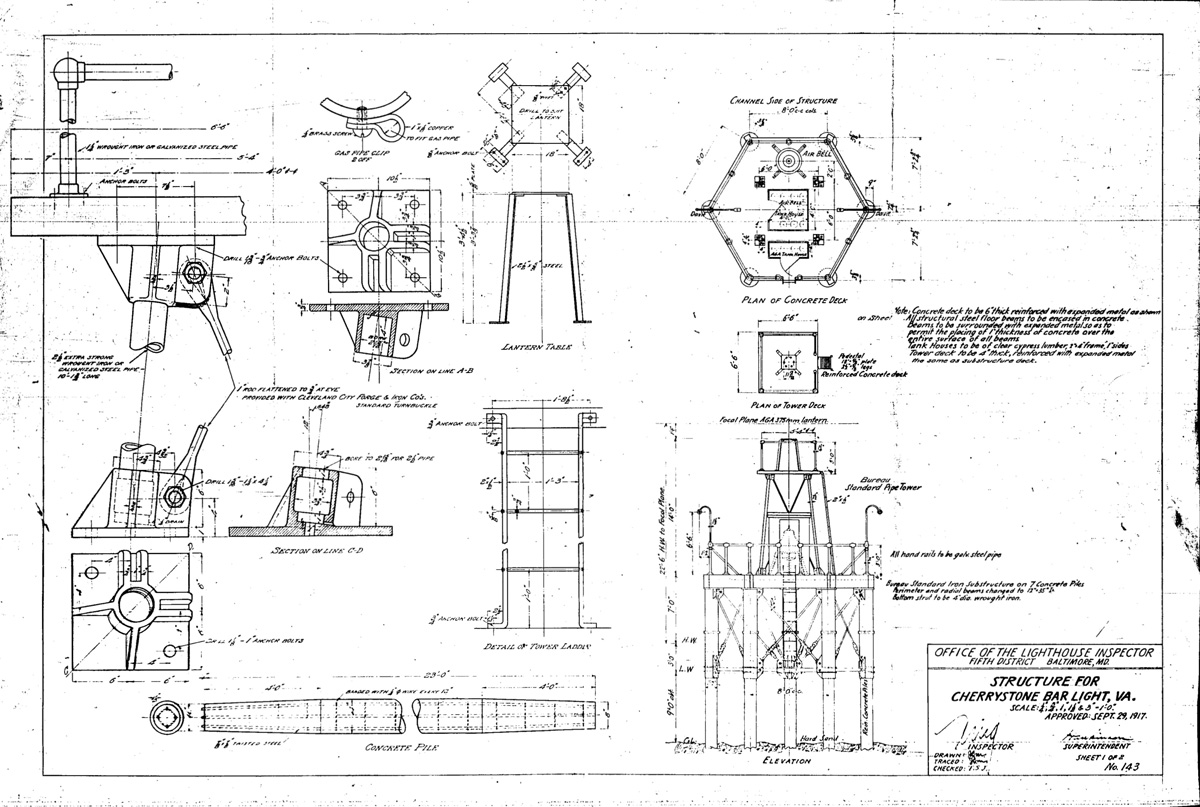
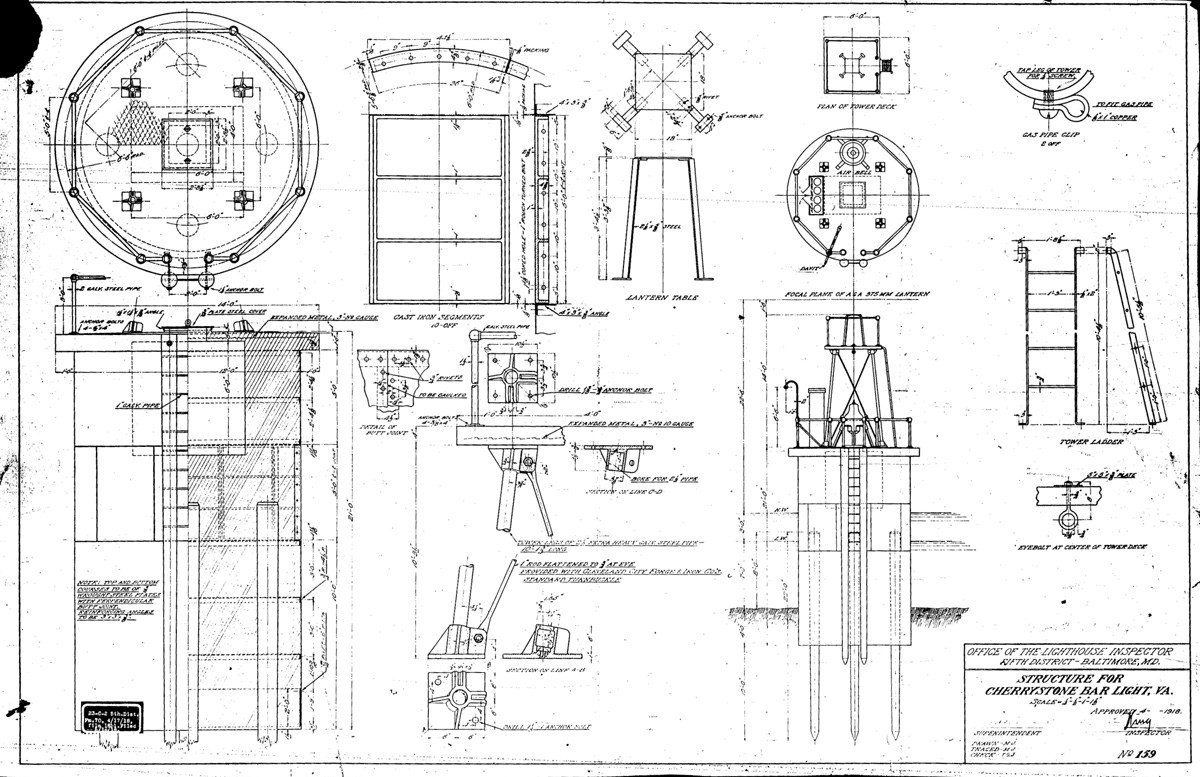
By the early twentieth century, the Lighthouse Service was developing more sophisticated aids to navigation for the approaches to Cape Charles City and Cherrystone. In 1917, Congress appropriated $12,800 for improvements to lights and fog signals leading to Cape Charles City. Plans were prepared for a new Cherrystone Bar Light, which would support an unwatched acetylene light and an automatic fog bell operated by compressed carbon-dioxide gas.
The project underwent several changes as engineers considered the severe effects of Chesapeake Bay ice on traditional screw-pile structures. In May 1918, the foundation was redesigned in light of the previous winter’s experience. The revised structure consisted of a small cylindrical metal caisson filled with concrete rather than a structure supported by concrete piles. The caisson comprised three sections totaling twenty-one feet in length and twelve feet in diameter, with an upper section that tapered out to fourteen feet in diameter at the top. It was protected by hundreds of tons of riprap.
A chamber for the gas cylinders needed to operate the light and fog bell was provided in the upper portion of the concrete used to fill the caisson. A manhole with a suitable steel-plate cover provided access to the chamber from the caisson’s deck. The cost of the caisson erected at the site was $12,020, and the riprap was $3,355.
|
The new Cherrystone Bar Light was established on October 1, 1919. It displayed a fixed white light of 160 candlepower from a black skeleton tower mounted on the black caisson, twenty-three feet above the water. It stood at the angle of the dredged channel approximately 650 yards from Cherrystone Lighthouse. An automatic fog bell was subsequently established at the station.
The new bar light was particularly significant because it represented a major change in lighthouse technology. The old Cherrystone Lighthouse required keepers to live at the station and tend the light and fog signal. The new structure was designed to operate automatically, using acetylene and compressed carbon dioxide rather than relying on a resident keeper.
Contemporary accounts described the new Cherrystone Bar Light as reportedly the first automatic light station, fog signal, and bell established in the United States. This technological advance made the old lighthouse unnecessary at its original location.
The final head keeper of Cherrystone Lighthouse was Walter S. Hudgins, who served from 1914 until the old lighthouse was removed in 1920. Before coming to Cherrystone, Hudgins had served as head keeper at both Hog Island Lighthouse and Cape Charles Lighthouse, two important coastal stations also located on Virginia’s Eastern Shore.
Walter Hudgins’s service illustrates another aspect of lighthouse keeping that can easily be overlooked: a keeper could be responsible for more than one aid to navigation. In December 1914, a change in the designation of the station and an increase of the salaries of the keeper and assistant keeper was authorized. Going forward, Walter S. Hudgins and assistant keeper Stratton B. Robins would be responsible not only for Cherrystone Light Station but also for Cherrystone Channel Lights Nos. 1 and 2.
The construction of the automatic Cherrystone Bar Light soon made the old lighthouse obsolete. Rather than being demolished, the lighthouse was selected for reuse at another Chesapeake Bay station. In 1920, the Lighthouse Service awarded a contract to remove the Cherrystone structure and rebuild it at the Choptank River Light Station in Maryland. In December of that year, the original Cherrystone Lighthouse was placed on a lighter and towed to Cape Charles City. The foundation piles were withdrawn and taken to Baltimore for lengthening, while the lighthouse itself remained at Cape Charles City through the winter.
In the spring of 1921, the lighthouse was towed more than seventy miles up Chesapeake Bay. Walter S. Hudgins and his personal belongings actually remained aboard during the journey, as Hudgins would continue to serve as keeper of the lighthouse at its new location.
After reaching the Choptank River, the structure was placed on a new foundation and reestablished as Choptank River Lighthouse on June 9, 1921. It replaced an earlier lighthouse that had been carried away by ice.
The lighthouse’s removal in 1920 marked the end of its service at Cherrystone, but the survival and reuse of the structure ensured that the physical legacy of Cherrystone Lighthouse would continue long after the light on the original shoal had gone dark.