Brant Island, NC 
Select a photograph to view a photo gallery
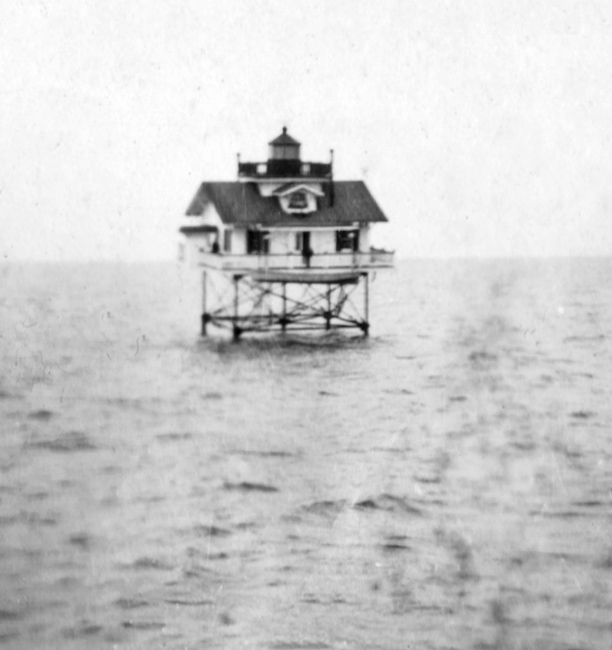
Photo Gallery
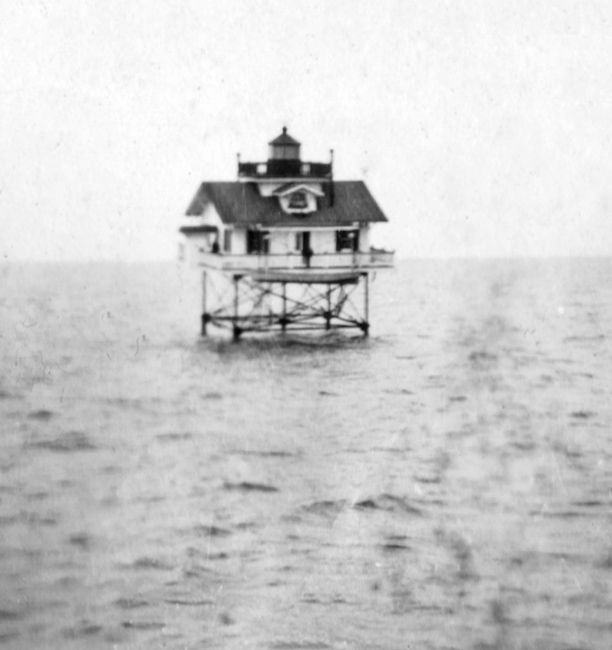
Photo Gallery
Photo Gallery
In the broad, shifting waters of southern Pamlico Sound, mariners bound west by northwest from Ocracoke toward the mouth of the Neuse and Pamlico Rivers once threaded a careful path between hidden dangers. To the south stretched the shallow reaches of Brant Island Shoal, the remnants of a low island gradually succumbing to wind and tide; to the north lay the Middle Ground, another extensive submerged hazard. Though much of central Pamlico Sound offered depths of fifteen to twenty feet, Brant Island and its surrounding shoals concealed treacherously shallow water, in places scarcely two feet deep. For generations, vessels traveling between North Carolina’s inland ports and the Atlantic navigated these waters with caution, and by the early nineteenth century the federal government recognized the urgent need for a navigational aid at this lonely and dangerous crossing.
Congress first addressed the hazard on March 3, 1831, appropriating $11,000 for the establishment of a lightship at Brant Island Shoal. Unlike fixed lighthouses erected upon solid ground, lightships served where unstable shoals or open water made permanent construction difficult. Anchored directly on station, these floating beacons combined the functions of lighthouse, fog signal, and refuge in some of the most isolated maritime environments in the country.
The Brant Island Shoal Lightship was established later that same year. By 1845, official records described it as a 125-ton vessel stationed “on the point of said shoal” in the southern part of Pamlico Sound. Suspended forty feet above the water, its lantern employed a lamp with nine cylindrical wicks to cast its beam across the sound. The vessel formed a critical waypoint for vessels moving toward New Bern and the Neuse River, especially in darkness or storm.
Life aboard a lightship was difficult, and maintaining these floating stations proved expensive. Congress appropriated an additional $15,000 in 1847 for a replacement vessel, and in 1851 a new lightship entered service. Painted a distinctive straw color and equipped with a fog bell, the vessel attempted to improve visibility and warning during the thick fogs that often rolled across Pamlico Sound.
Even with such aids, navigation remained perilous. In November 1850, the brig Roanoke, commanded by Captain Mumford and outbound from New Bern for the West Indies, struck the end of Brant Island Shoal while crossing the sound. The vessel capsized and sank almost immediately. The survivors set out in a boat the following morning, only to meet fresh disaster when their craft overturned near Cedar Island’s outer reef. Captain Mumford, one crewman, and a boy drowned, while the mate managed a dramatic rescue, swimming ashore with a female passenger on his back. The tragedy underscored the deadly importance of maintaining dependable aids to navigation in the shallow and shifting waters of Pamlico Sound.
By the 1850s, the federal government increasingly questioned whether aging lightships remained practical for North Carolina’s inland sounds. Reports repeatedly noted that Brant Island Shoal and neighboring stations required expensive repairs and frequent maintenance. In 1857, officials concluded that many North Carolina light-vessels—including Brant Island Shoal—were deteriorating beyond economical repair and recommended replacing them with permanent screw-pile lighthouses. The new iron-supported structures, already proving successful elsewhere in the sounds, promised lower maintenance costs and greater reliability.
The outbreak of the Civil War interrupted navigation and damaged the federal lighthouse system across coastal North Carolina. The Brant Island light-vessel disappeared from service during Confederate occupation but was later recovered after Union forces captured Forts Hatteras and Clark in 1861. Even then, misfortune followed: the vessel was accidentally sunk at Hatteras Inlet before being salvaged and repaired.
In July 1862, federal authorities restored a temporary aid to navigation at Brant Island Shoal. Mariners were informed that a white floating light would again be exhibited nightly from a lead-colored lightboat anchored on station. Though functional, the arrangement was understood to be temporary. Lighthouse officials considered the vessel old and defective and moved quickly toward replacing it with a permanent structure.
That transition came swiftly. During 1863, workers erected a screw-pile lighthouse directly on the southeastern point of Brant Island Shoal in seven feet of water. First illuminated on December 17, 1863, the new structure replaced the lightship that had marked the shoal for more than three decades.
The lighthouse typified the innovative screw-pile engineering then transforming navigation in North Carolina’s shallow waters. Five iron screw piles anchored a square platform into the shoal, supporting a white-painted wooden dwelling topped by a red lantern. Forty-one feet above mean sea level, a fixed white fifth-order Fresnel lens cast its beam approximately eleven nautical miles in ordinary weather. A mechanically operated fog bell sounded every fifteen seconds during thick weather, warning vessels approaching New Bern to keep the light safely to starboard.
Once the new lighthouse entered service, the old lightship met an unusual fate. Removed to New Bern, it was deliberately sunk in March 1864 by military authorities to obstruct Confederate naval movements in the Neuse and Trent Rivers.
Like many exposed wooden screw-pile lighthouses, Brant Island Shoal required constant upkeep. Throughout the late 1860s and early 1870s, crews repainted ironwork, repaired doors and glazing, maintained lamps, and replaced cooking fixtures. Despite such efforts, danger came not only from storms and corrosion but also from fire.
On the night of May 24, 1876, catastrophe struck. Sparks from the lighthouse chimney reportedly blew beneath the roof shingles, igniting the structure. Within moments the isolated station became an inferno. The keeper narrowly escaped death by leaping into the surrounding water, while all of his clothing, furniture, and nearly $300 in savings were consumed in the blaze. By morning the lighthouse had been entirely destroyed.
Fortunately, the iron screw-pile foundation survived largely intact. Recognizing Brant Island Shoal’s importance to navigation, lighthouse officials moved quickly to rebuild. Construction began in October 1877, using the surviving ironwork as the base for a replacement superstructure. Remarkably, the project progressed rapidly, and by December 1, 1877, the rebuilt lighthouse again exhibited its beam across Pamlico Sound. The restored station retained its former lighting characteristics and fog bell, now sounded every twenty seconds in thick weather.
Brant Island Shoal Lighthouse stood among the most isolated stations in North Carolina. Accessible only by boat and surrounded by miles of open water, keepers contended with storms, ice, loneliness, and logistical hardship. Supplies often had to be brought from ports forty-five miles distant, and weather could strand keepers for days.
Over the decades, numerous keepers and assistants served at Brant Island Shoal, including head keepers John W. Wilkins, Edward Hopkins, Peter Johnston, William Simmons, Alonzo English, William Newton, John T. Twiford, and finally David E. Quidley. Their duties extended well beyond tending the lamp. They maintained fog signals, painted ironwork, repaired machinery, operated station boats, and increasingly cared for neighboring unattended lights and beacons.
The station was a place of rescue. In January 1919, James O. Casey of nearby Southwest Point Royal Shoal delivered provisions to Brant Island’s keeper after he became isolated and short of food. Later that year, Keeper John T. Twiford rescued a disabled and sinking motorboat carrying two passengers, towing it to the station and helping complete repairs. In May 1920, Twiford again rendered aid when the motor tug Emily broke down near the lighthouse. After towing the vessel to safety, he personally fabricated replacement bolts, enabling the owner to resume his journey.
David E. Quidley, promoted from assistant keeper to head keeper in 1920, proved equally dedicated. In 1925, he rescued the disabled motorboat Mable, towing its occupants safely to Portsmouth. The following year he aided another disabled craft west of Royal Shoal and earned official commendation after helping free the grounded yacht Anna Marie II.
Quidley’s own words vividly captured the hardships of service at Brant Island Shoal. Writing in 1928, he described the station as “one of the most isolated stations in North Carolina.” Mail and provisions required dangerous journeys by small motorboat across “the roughest part of Pamlico Sound,” especially hazardous during winter. Beyond caring for the lighthouse itself, Quidley supervised multiple unattended beacons scattered across the sound, including the screw-pile lighthouses at Southwest Point Royal Shoal and Harbor Island Bar, which had been converted to automated gas lights. He often spent ten or eleven hours daily maintaining lights, motorboats, records, and station equipment.
After funds were provided to repair light stations damaged by ice floes during the winter of 1917-18, a new foundation of piles was built under Brant Isaland Lighthouse, and the district workforce leveled the lighthouse. Eight hundred tons of riprap stone was then deposited under and around the lighthouse to protect the foundation.
By the late 1920s, technological change was transforming lighthouse operations. Automated acetylene systems reduced the need for resident keepers, and in 1922 Quidley had already assumed responsibility for neighboring automated lights. In 1929, officials recommended discontinuing personnel at Brant Island Shoal. On October 1, the lighthouse was officially destaffed, and its keepers transferred to Gull Shoal Lighthouse, which itself had been automated and destaffed in 1925 but was becoming home to keepers again.
With the automation, the light characteristic changed to a flashing white signal every three seconds, and the fog bell—once so vital in the misty reaches of Pamlico Sound—fell silent. In 1930, the lighthouse superstructure was removed and replaced with a white, skeletal tower.
The lighthouse outlasted the island for which it was named. Through the first half of the twentieth century, Brant Island remained a seasonal outpost for fishermen who lived in tiny shanties while tending pound nets in the shallow waters. During World War II, however, Navy aircraft began using the isolated shoal for bombing practice, forcing fishermen to retreat while water-filled practice bombs exploded nearby. By the late 1940s, when live ammunition exercises commenced, the remaining residents abandoned the island for good. Hurricanes, erosion, and rising waters gradually reduced Brant Island to a submerged shoal. Brant Island Shoal Light remains active today along with several other nearby lights that also support a DANGER BOMBING RANGE sign.
Yet Brant Island Shoal remains visible to mariners in another way. Sailors crossing Pamlico Sound still note the flashing light near the shoal and the nearby wreck of the grounded freighter Governor Scott, reminders of a place where navigation, isolation, and survival long converged. For nearly a century, Brant Island Shoal Lighthouse guarded one of North Carolina’s most difficult passages, its keepers standing watch over waters where land itself slowly disappeared beneath the sea.