Bogue Banks, NC 
Select a photograph to view a photo gallery
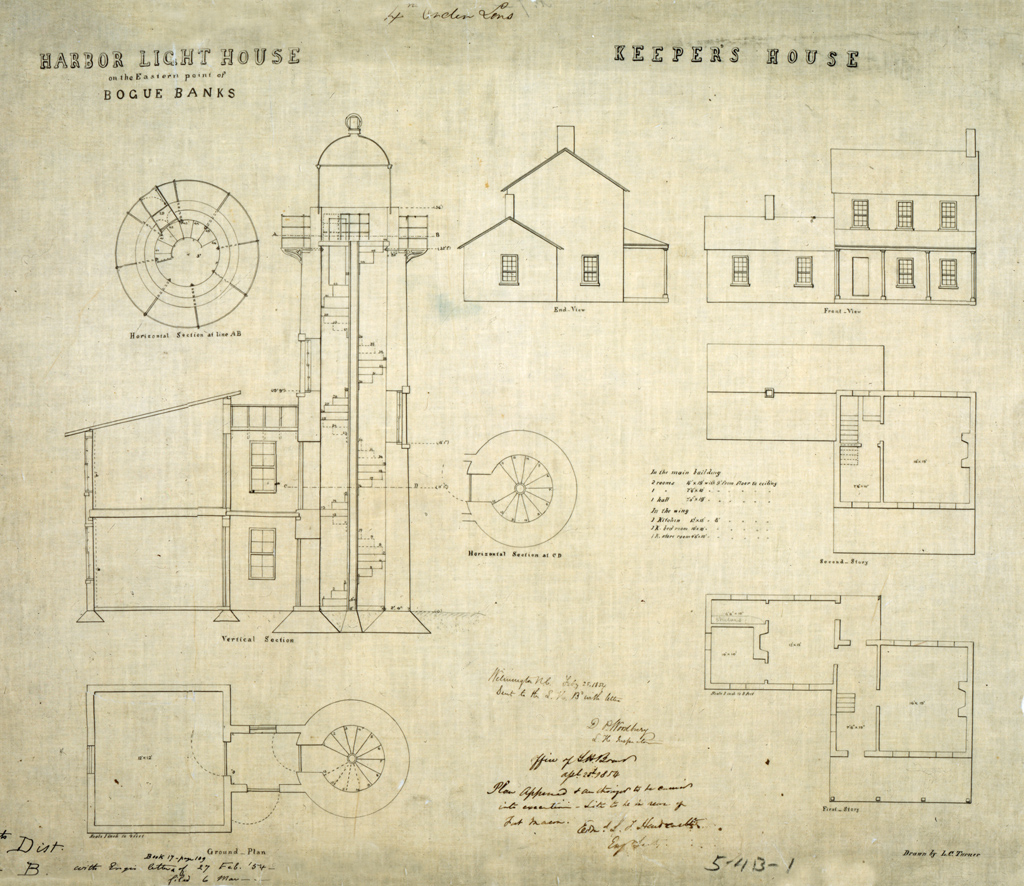
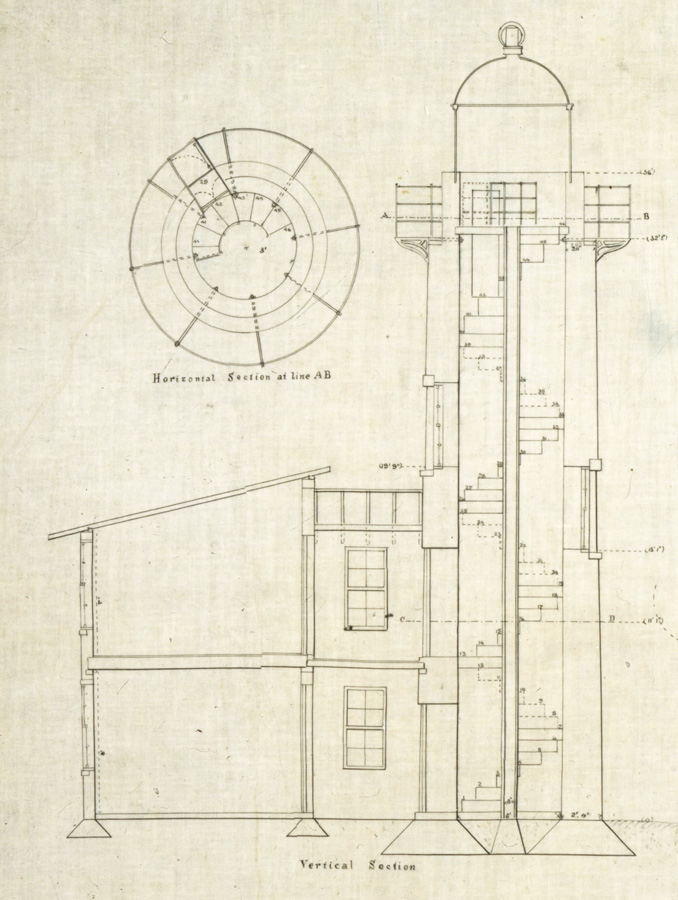
Photo Gallery
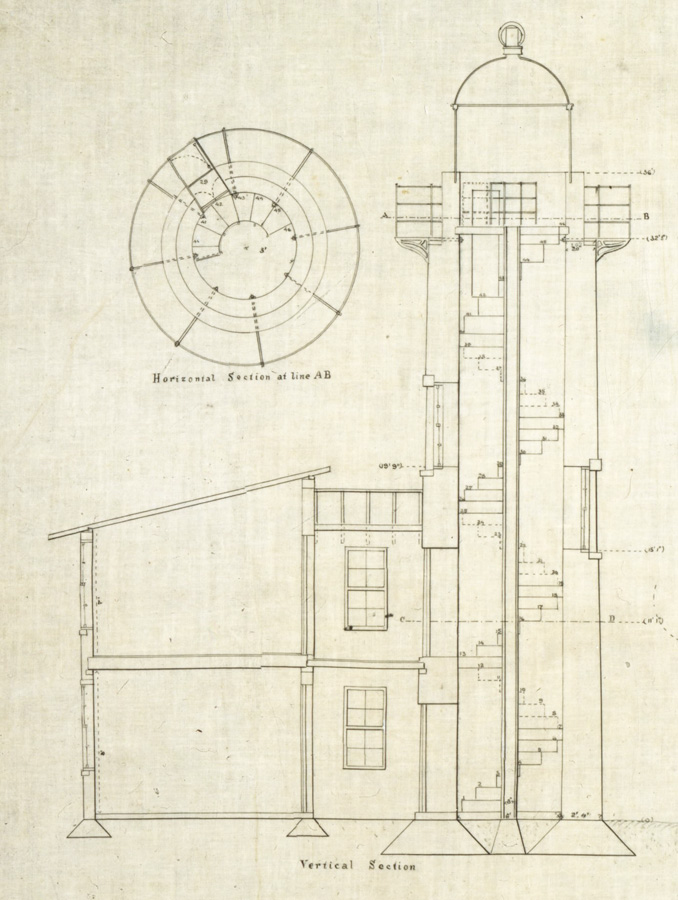
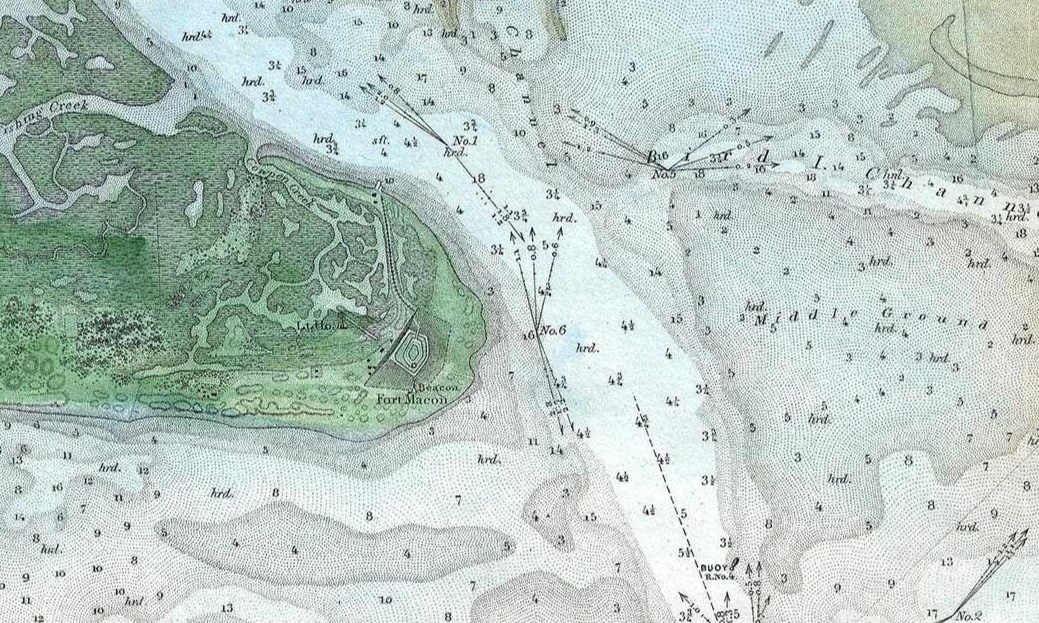
Photo Gallery
Photo Gallery
On the eastern end of North Carolina’s long barrier island of Bogue Banks once stood a small but important light station that marked the entrance to Beaufort Harbor. Though the Bogue Banks Light Station was active for little more than seven years, its history reflects the growing maritime importance of Beaufort Inlet, the technological advances of the lighthouse service in the 1850s, and the destructive impact of the Civil War on coastal navigation along the Atlantic seaboard.
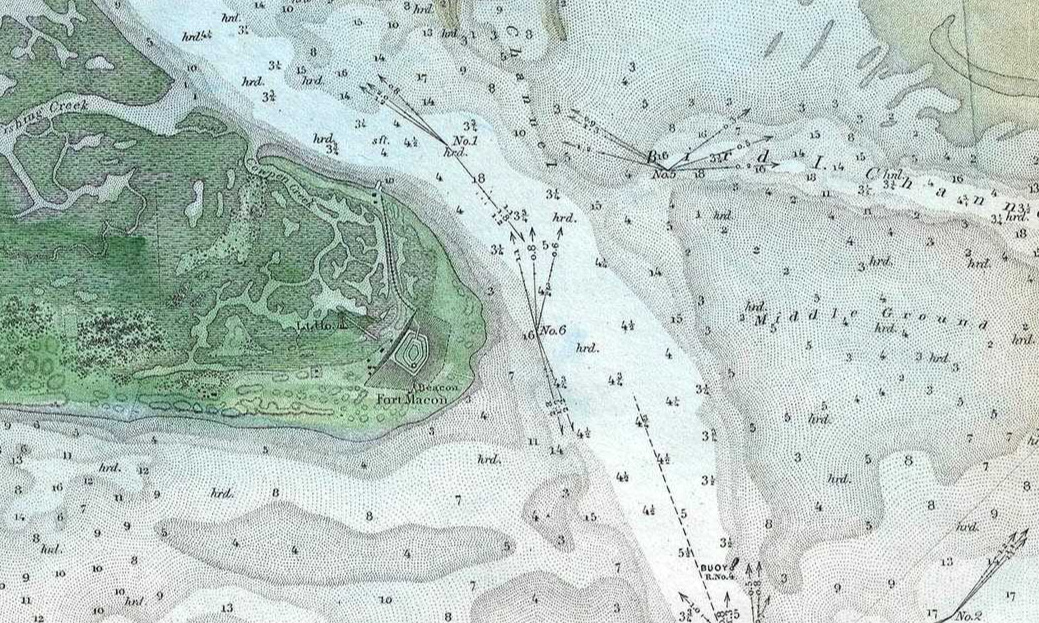
Bogue Banks forms a narrow barrier island approximately twenty-one miles long in Carteret County, separated from the mainland by Bogue Sound. At the island’s eastern extremity lies Beaufort Inlet, historically known as Old Topsail Inlet, which separates Bogue Banks from Shackleford Banks. The inlet served as the gateway to Beaufort Harbor, one of the most strategically significant harbors on the North Carolina coast.
|
Following the War of 1812, the federal government undertook a major coastal defense program designed to protect important American ports from foreign attack. As part of this effort, construction of Fort Macon began in 1826 on the eastern tip of Bogue Banks. Completed in 1834, the massive brick fortification was named for Nathaniel Macon, a distinguished North Carolina statesman who had served in both the United States House of Representatives and Senate.
During the first half of the nineteenth century, Beaufort steadily grew in commercial importance. Designated an official United States port of entry in 1803, the harbor eventually surpassed Ocracoke Inlet as North Carolina’s second most important seaport. Yet despite increasing maritime traffic, navigators entering Beaufort Inlet were forced to rely upon limited and often confusing navigational references. Charts provided only depth soundings and complicated sailing directions using landmarks such as Fort Macon, distant sand dunes, and church spires in Beaufort. Mariners attempting to enter the inlet at night or in poor weather faced considerable danger from shifting shoals and shallow bars. Numerous vessels grounded in the vicinity over the years, including the infamous pirate flagship Queen Anne’s Revenge, believed lost near Beaufort Inlet in 1718.
Recognizing the need for a proper navigational aid, Congress appropriated $5,000 on August 31, 1852, for the construction of a lighthouse on Bogue Banks. Responsibility for the project fell to Captain Daniel P. Woodbury of the United States Army Corps of Engineers, who supervised lighthouse construction along portions of the North Carolina and South Carolina coasts. In 1853, Woodbury reported that plans for the “light-house on Bogue banks” were underway and that work would proceed once land titles and jurisdictional matters had been settled.
Woodbury selected a site approximately two hundred yards northwest of Fort Macon on stable ground set back from the shifting ocean shoreline. Construction began during the summer of 1854 and continued through the winter months. Although original plans depicted a circular brick tower, the completed structure was octagonal in form. Attached to the tower was a two-story storage building intended for lighthouse supplies. Plans also called for a keeper’s dwelling, though historians remain uncertain whether this structure was ever completed.
The principal lighthouse was fitted with a fixed fourth-order Fresnel lens imported from France. Fresnel lenses represented the most advanced lighthouse technology of the era. Developed by French physicist Augustin-Jean Fresnel, the lenses used concentric rings of precision-cut glass prisms to magnify and focus light into a powerful beam visible for many miles. The Bogue Banks lens stood fifty feet above sea level and could be seen approximately twelve and one-half nautical miles offshore.
While construction of the lighthouse was underway, Congress appropriated an additional $1,000 on August 3, 1854, for a separate beacon light to function as a range light for vessels entering Beaufort Inlet. This smaller beacon consisted of a sixth-order Fresnel lens mounted atop a heavy wooden tower thirty feet above the water. Located roughly one-quarter mile southeast of the main lighthouse near Fort Macon, the beacon aligned with the harbor light and the outer channel buoy to guide ships safely across the bar and into Beaufort Harbor at night.
Bogue Banks Lighthouse and beacon officially entered service on May 20, 1855. Contemporary reports noted that both the harbor light and beacon had been completed under Captain Woodbury’s supervision during the preceding winter and spring. Together with newly established channel buoys, the range lights finally provided mariners with reliable nighttime navigation into Beaufort Inlet.
The station’s only keeper was Thomas Delamar, a Carteret County native born on October 15, 1794. Delamar briefly served during the War of 1812 before spending time in Georgia, where he married Hannah Longuest. Following his return to North Carolina, Delamar eventually accepted appointment as keeper of the new lighthouse station. His annual salary in 1855 was $400. Delamar’s personal life was marked by both family and tragedy. He and his first wife Hannah had seven children, including a set of twins. After Hannah’s death in September 1854, Delamar married Abigail Pearce in May 1855, shortly before the lighthouse first exhibited its light. Delamar died in Beaufort on August 22, 1863.
For several years the lighthouse and beacon operated successfully, guiding vessels through Beaufort Inlet. Their service came to an abrupt end with the outbreak of the Civil War in 1861. On April 14 of that year, only two days after the firing on Fort Sumter, state militia forces seized Fort Macon. North Carolina Governor John W. Ellis soon ordered Confederate commanders to extinguish all coastal lights and remove navigational aids that might assist Union naval operations.
Accordingly, the lights at Bogue Banks and nearby Cape Lookout were darkened. The valuable Fresnel lenses were removed from the lighthouse and beacon for safekeeping by Josiah F. Bell, superintendent of lights for the Confederate Lighthouse Bureau in Beaufort. Bell carefully stored the lenses in a Beaufort warehouse, even purchasing blankets to wrap and protect the delicate glass apparatus. As Union military pressure increased during early 1862, the lenses and lighting equipment were transferred inland to Raleigh for greater security.
Following Union victories along the North Carolina coast, Brigadier General Ambrose E. Burnside launched operations against New Bern and Beaufort. Federal forces occupied Morehead City on March 23, 1862, and Beaufort three days later. Confederate troops under Colonel Moses J. White withdrew into Fort Macon to prepare for siege.
Because the lighthouse and beacon interfered with the fort’s fields of fire, Confederate defenders decided to destroy them. On the evening of March 27, 1862, soldiers toppled the octagonal brick lighthouse onto the sand, where it shattered into broken sections. The following morning the wooden beacon tower was likewise pulled down. Later reports simply summarized the event with the stark notation: “Bogue Bank and beacon, blown up.” Union soldiers occupying the area after the fall of Fort Macon sketched the ruined remains of the lighthouse lying collapsed near the fort.
At the conclusion of the Civil War, the Lighthouse Board considered rebuilding the destroyed station. Reports issued in 1867 and 1868 described the former station as consisting of a small brick tower displaying a fourth-order light together with a sixth-order beacon forming a range into Beaufort Harbor. The estimated cost of reconstruction was placed at $18,000. Despite the recognized importance of Beaufort Inlet, Congress declined to appropriate the necessary funds. In 1869, the Lighthouse Board acknowledged that the rebuilding appropriation had been removed from congressional estimates and concluded that “it is not desired to re-establish them.” The Bogue Banks lights were therefore permanently dropped from the official list of United States light stations.
For the remainder of the nineteenth century, mariners entering Beaufort Inlet again relied primarily upon buoys and local knowledge. Not until the early twentieth century were additional lighted aids established to improve navigation into Beaufort Harbor. Although the Bogue Banks Light Station existed only briefly, it represented an important transitional moment in the history of North Carolina navigation, combining advanced Fresnel lens technology with carefully aligned range lights to improve access to one of the state’s principal harbors.
Little physical evidence of the station survives today. The lighthouse foundations reportedly remained visible as late as 1871, but no confirmed remnants have ever been recovered. The site is now occupied by a United States Coast Guard facility adjacent to Fort Macon. Historians believe the ruins may have been removed during later erosion-control projects. The Fresnel lens itself almost certainly survived, however. Like many lighthouse lenses recovered after the Civil War, it was likely reused at another American lighthouse, where it may still exist today as a silent reminder of the lost Bogue Banks Light Station.
Keepers: Thomas Delamar (1854 – 1863).
References