Beacon Island, NC 
Select a photograph to view a photo gallery
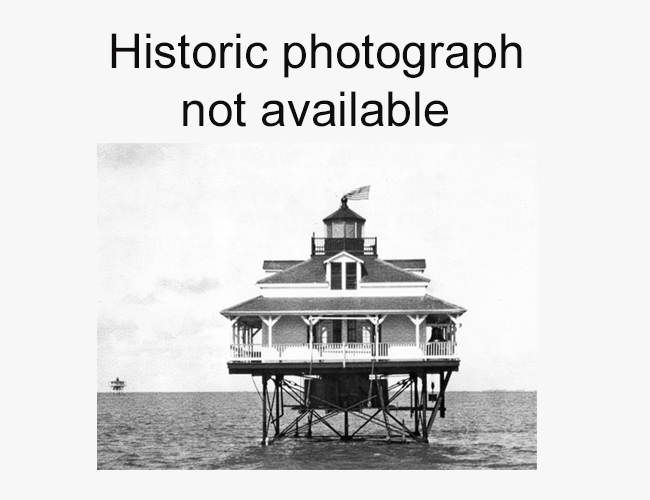
Photo Gallery
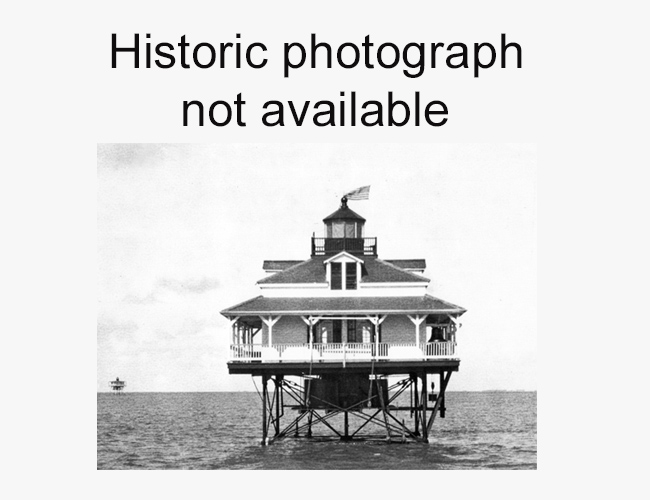
Photo Gallery
Photo Gallery
At the western edge of North Carolina’s Outer Banks, where the shifting waters of Pamlico Sound meet the Atlantic through the narrow opening of Ocracoke Inlet, mariners long confronted one of the more challenging navigational passages on the southern Atlantic coast. For much of the eighteenth and nineteenth centuries, Ocracoke Inlet served as one of the principal entrances into North Carolina’s interior waters, allowing vessels to reach ports such as New Bern, Washington, and inland river communities connected to the Albemarle and Pamlico Sounds. Yet the inlet’s usefulness came with danger. Constantly shifting shoals, narrow channels, and changing bars made passage uncertain, especially after dark or in poor weather. To reduce these hazards, federal officials in the early 1850s established an unusual paired navigation system: a floating light stationed near the bar and a small lighthouse on Beacon Island inside the inlet. Though short-lived, Beacon Island Lighthouse represented an ambitious effort to tame one of the coast’s most unstable waterways.
Beacon Island itself was a small, low, marshy island situated just inside Ocracoke Inlet near the western approaches to the bar. The island’s name likely reflected its longstanding role as a navigational marker, for mariners had used visible points and temporary beacons in the vicinity for generations. By the mid-nineteenth century, however, increasing coastal commerce and concerns for maritime safety led pilots, merchants, and local officials to advocate for more reliable aids to navigation at Ocracoke.
Congress formally authorized a lighthouse at Beacon Island on March 3, 1851, appropriating $6,000 for the project. The appropriation formed part of a broader federal effort to improve navigation along the Atlantic seaboard during the administration of President Millard Fillmore. Yet almost immediately, uncertainty surrounded implementation. On March 26, 1851, Fifth Auditor of the Treasury Stephen Pleasonton informed Ocracoke Superintendent of Lights Joshua Tayloe that Congress had recently amended lighthouse law to require officers of the Army Corps of Engineers to supervise lighthouse construction. Because these officers had not yet been assigned and the Secretary of the Treasury was ill, Pleasonton warned that little progress had yet been made regarding Beacon Island or the companion proposal for a floating light near Ocracoke Bar.
The Beacon Island project emerged from recommendations made by Professor Alexander Dallas Bache of the United States Coast Survey and Lieutenant John Newland Maffitt, an experienced hydrographer whose survey of the inlet highlighted the hazards of local navigation. In December 1851, Pleasonton informed Tayloe that Bache and Maffitt had recommended placing a floating light near Amity Shoal at the entrance to Ocracoke Harbor while erecting a fixed light on Beacon Island to serve in conjunction with it. Together, the two lights would theoretically create a navigational range that vessels could follow safely across the bar at night.
Federal officials initially hoped to save money by adapting an existing structure on Beacon Island rather than erecting a completely new lighthouse. A local store building owned by Mr. Wyman appeared to offer possibilities if modified with a small tower for the lantern apparatus. Writing to Tayloe on January 3, 1852, Pleasonton authorized purchase of the structure if it could be obtained at a reasonable cost, though he cautioned against paying more than $2,500. At the same time, he acknowledged a serious difficulty already noted by local pilots: the island’s marshy terrain and the tendency of channels inside Ocracoke Inlet to shift over time. Some pilots preferred movable range lights that could adapt to channel changes, but Pleasonton nevertheless concluded that adapting the existing building represented the most practical course.
The plan quickly changed. By March 1852, Tayloe had negotiated a conditional agreement with Wyman for part of the building at a cost of $1,800, but Treasury officials rejected the arrangement. Pleasonton objected both to the expense and to the fact that Wyman intended to retain part of the structure as a store, leaving the lighthouse physically connected to a private commercial building. Instead, the government elected to erect an independent station on federal land. Pleasonton instructed Tayloe to advertise for bids on a purpose-built two-story keeper’s dwelling with a brick tower rising approximately ten feet above the roofline. Because Beacon Island frequently flooded and likely lacked suitable ground for a cellar, he advised Tayloe to omit the cellar if necessary and support the structure on piles beneath the walls.
By April 1852, alterations to the plans and construction specifications had received federal approval. Pleasonton emphasized that “the Light at the entrance of the Sound should range with that on Beacon Island,” and authorized Tayloe to hire two boats for twenty dollars to determine the proper location for the lighthouse on Beacon Island.
Meanwhile, work advanced on the companion floating light vessel intended for Ocracoke Bar. On February 14, 1852, Pleasonton approved a contract with Mr. Farrows, the lowest bidder at $10,448, for construction of the vessel. Public enthusiasm for the project appeared in regional newspapers. On March 4, 1852, the Washington Whig praised the Fillmore administration’s attention to commerce and seafaring safety, reporting that a first-class light boat displaying two lights was under construction and that proposals had been invited for the Beacon Island lighthouse. The newspaper credited Congressman Edward Stanly and Collector Joshua Tayloe for tirelessly pressing the federal government to improve navigation at Ocracoke.
Construction progressed rapidly during the summer of 1852. By August, Pleasonton directed Boston suppliers Hooper & Company to furnish ten lamps, fourteen-inch reflectors, and other equipment necessary to illuminate the new lighthouse. Oil sufficient for operation until the next scheduled delivery to North Carolina lights was also ordered. A sixth-order Fresnel lens replaced the original lighting apparatus consisting of lamps and reflectors in 1855.
By November 1852, both the floating light vessel and the Beacon Island station neared completion. On November 20, Joshua Tayloe informed “Masters of Vessels and Others” that the floating light had arrived at its station near the inner point of Amity Shoal in four and a half fathoms of water and that the Beacon Island Lighthouse was complete and would soon be illuminated. Acknowledging uncertainty about the vessel’s exact placement, Tayloe invited mariners to test the arrangement and submit their opinions regarding whether the light vessel should be relocated.
Official lighting commenced on December 10, 1852. Notices to mariners explained that the floating light vessel, displaying two lights, would be visible from the ocean at distances of five miles or more in clear weather and would bear north-northwest from the bar. The Beacon Island light, bearing northwest, would appear simultaneously and together create a nighttime guide for vessels attempting the dangerous crossing. The system represented an innovative attempt to combine fixed and floating aids into a navigational range tailored to one of the most unstable entrances on the Atlantic coast.
Physically, Beacon Island Lighthouse remained among North Carolina’s humblest stations. Inspection reports described it as a small brick tower rising from the center of the keeper’s dwelling. The focal plane stood thirty-nine feet above mean high water, and the octagonal lantern featured an iron frame capped by a copper roof. The two-story brick dwelling measured thirty-eight by twenty feet and carried a slate roof. A brick cistern capable of storing 2,000 gallons supplied fresh water, while a small garden gave the keeper limited opportunity for self-sufficiency on the isolated island. Because of erosion and wave action, inspectors later recommended constructing a substantial brick breakwater extending sixty yards to shield the station from the sea.
The isolated post fell successively to several keepers. James Jones declined his appointment as keeper in 1852, but Benjamin Wyman, likely the same local resident whose property had initially been considered for the station, accepted the job. John T. Hunter assumed responsibility in 1853 and remained keeper through most of the lighthouse’s active life, receiving an annual salary of $350, like all of the prior keepers of the lighthouse. Joseph Carrow replaced Hunter in early 1859 and served until the lighthouse was extinguished.
Almost as soon as the light entered service, the assumptions underlying the project began to fail. Ocracoke Inlet’s channels shifted constantly under the influence of storms, tides, and migrating shoals. By 1855, the Lighthouse Board bluntly acknowledged that the Beacon Island Lighthouse and Ocracoke light-vessel had failed to function as intended. The prescribed range across the bar “never has been, nor can it be now obtained,” officials reported, because newly formed shoals inside the inlet rendered alignment of the lights dangerous rather than helpful. A vessel attempting to cross by bringing the two lights into direct range would likely strike a reef “with every chance of inevitable destruction.”
Board officials considered alternatives, including replacing the lighthouse with another floating light vessel capable of being repositioned as channels shifted. Yet even this proposal raised concerns because the relevant channels changed too rapidly to guarantee a stable mooring location. In unusually candid language, the Board concluded that when definite navigational instructions could not be provided, “it is better there should be no light at all.” Officials recommended discontinuing both Beacon Island Lighthouse and the Ocracoke Channel light-vessel and reassigning the vessel to Royal Shoal, where it could better serve navigational needs until screw-pile lighthouses planned for the sound could be erected.
Despite these recommendations, local mariners resisted losing the station. In 1857, North Carolina Congressman Thomas Ruffin presented a memorial from Thomas S. Howard, Amos Wade, and approximately thirty masters and owners of vessels from New Bern protesting proposed discontinuance of both the light-vessel and Beacon Island Lighthouse. For merchants dependent upon trade through Ocracoke Inlet, even an imperfect navigational aid remained preferable to none.
Federal authorities nevertheless moved toward closure. Congress empowered the Treasury Department in 1859 to discontinue lights rendered useless by changes in commerce or channel conditions. Under authority of this Act of March 3, 1859, Beacon Island Lighthouse officially ceased operation on August 1 of that same year.
Its disappearance must have proved controversial as Congress appropriated $5,000 in 1860 “for re-establishing the Beacon Island Light-house and constructing in connection therewith a beacon light to form a range for running the Ocracoke Inlet.” This new range was not established, and mariners were left with only the faithful light on Ocracoke Island.