Horseshoe Shoal, NC 
Select a photograph to view a photo gallery
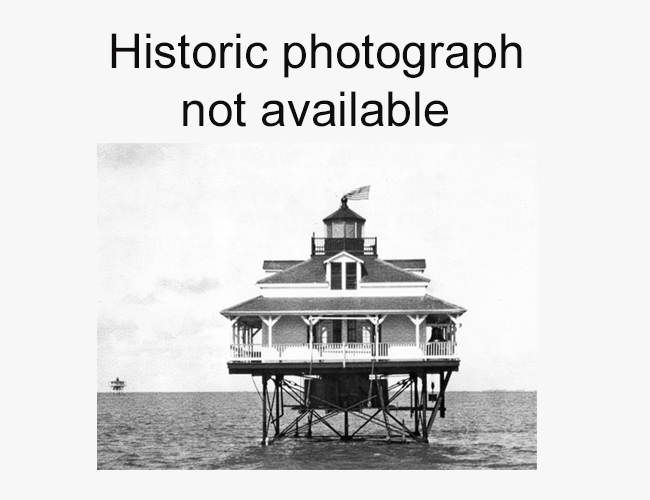
Photo Gallery
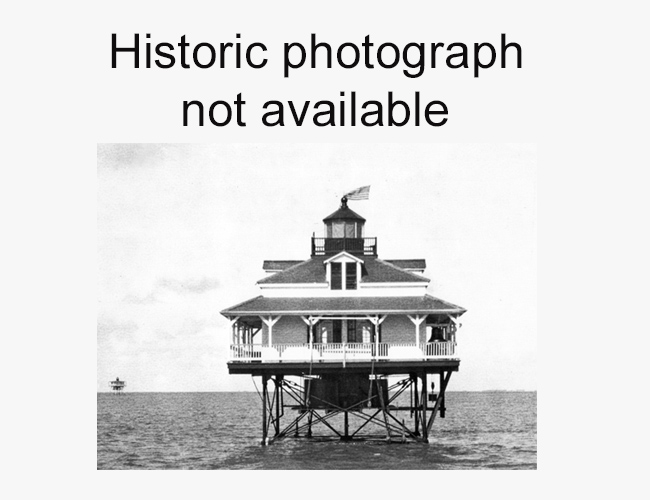
Photo Gallery
Photo Gallery
Along the lower reaches of North Carolina’s Cape Fear River, mariners faced one of the most difficult navigational environments on the southern Atlantic coast. Unlike most of the state’s rivers, the Cape Fear flowed directly into the Atlantic Ocean, making it the principal maritime artery linking the interior of North Carolina with global commerce. Yet vessels entering the river encountered a labyrinth of shifting shoals, narrow channels, dangerous bends, and changing inlets that complicated navigation long before reaching the bustling port of Wilmington. Among the most troublesome hazards was Horseshoe Shoal, a shallow obstruction lying between New Inlet and Price’s Creek where vessels ascending or descending the river required especially careful guidance. For roughly a decade, a lightship anchored near the shoal marked the passage through this dangerous reach. Later, federal officials attempted to replace the floating beacon with a permanent screw-pile lighthouse, but the effort ended in failure almost immediately. Though short-lived and often overlooked, Horseshoe Shoal’s aids to navigation formed an essential part of an ambitious system designed to illuminate the entire lower Cape Fear River.
The Cape Fear River occupied a singular place in North Carolina history. Fed by broad tributary networks extending deep into the coastal plain and piedmont, the river became a natural outlet for naval stores, timber, rice, and agricultural products. During the colonial period, the competing settlements of Brunswick and Wilmington vied for control of this trade. Brunswick, established closer to the river’s mouth, enjoyed access to deeper water and accommodated larger oceangoing vessels, while Wilmington prospered farther inland through connections to regional commerce. By the early nineteenth century, Wilmington had emerged as the state’s leading seaport, but navigation between the ocean and the city remained hazardous.
Ships entering the Cape Fear first confronted the dangerous bars near the mouth of the river before threading a route through a succession of inland hazards. New Inlet, Price’s Creek, Campbell’s Island, Orton Point, and “The Flats” all demanded careful piloting. Much of this passage could be managed during daylight by reference to shorelines and local knowledge, but nighttime travel remained perilous. Mariners, pilots, and merchants increasingly pressed for federal improvements to secure safer navigation between the Atlantic and Wilmington.
Congress responded on August 14, 1848, with one of the most ambitious appropriations for navigational aids yet attempted in North Carolina. Rather than authorizing isolated lights, lawmakers funded an integrated chain of beacons to guide vessels step-by-step inland. The act appropriated funds for two lighthouses on Oak Island to mark the western channel at the river’s mouth, paired range lights at Price’s Creek, a beacon on Campbell’s Island, a beacon at Orton’s Point, a beacon at the Upper Jettee below Wilmington, and—most notably for one especially dangerous stretch—a lightboat at Horseshoe Shoal between New Inlet and Price’s Creek.
Even after the appropriation passed, uncertainty lingered over local navigational needs. Fifth Auditor Stephen Pleasonton admitted that he lacked sufficient familiarity with Cape Fear navigation to determine which aids were truly necessary. Acting under provisions of the new lighthouse law, Treasury officials requested a naval survey. Commander William A. Gardner examined the river later in 1848 and recommended establishing every authorized aid, concluding that the integrated system would substantially improve safety and commerce along the Cape Fear River.
Among the various improvements, the proposed Horseshoe Shoal lightboat stood apart. While most stations involved fixed beacons on land, Horseshoe Shoal lay in an exposed position where a lighthouse site was difficult to establish. Instead, Congress appropriated $10,000 for a floating light vessel to anchor directly near the hazard.
Initially, Treasury officials expected the station might be supplied by transferring an existing vessel. Stephen Pleasonton hoped that once construction finished on a lighthouse at Brandywine Shoal in Delaware Bay, the lightship stationed there could be reassigned to Cape Fear. When delays prevented that transfer, federal authorities instead ordered construction of an entirely new vessel specifically for Horseshoe Shoal.
In September 1850, Pleasonton directed the Superintendent at Wilmington to solicit proposals for building a seventy-two-ton floating light. He expressed confidence that once the vessel was moored, the project would complete the entire navigational chain authorized in 1848 and satisfy those engaged in Cape Fear commerce.
The resulting vessel, christened Millard Fillmore, was built at Washington, North Carolina, and arrived at Wilmington in May 1851, with Captain Bell in command during delivery. Local newspapers celebrated the craft as “a very creditable specimen of North Carolina skill,” reflecting regional pride in the shipbuilding enterprise. The new lightship soon assumed its station near Horseshoe Shoal with Simons S. Grissam as its first keeper, earning an annual salary of $400.
Anchored near the dangerous bend below New Inlet, the vessel served as a critical navigational marker for vessels entering and leaving the Cape Fear River. Unlike a lighthouse fixed permanently ashore, the floating beacon could be positioned directly adjacent to shifting channels and shoals, providing mariners with a guide precisely where it was most needed. By night, its lantern marked the safe route through waters otherwise difficult to distinguish from surrounding shoals and darkness.
The work of maintaining a lightship differed significantly from that of a traditional lighthouse. Crews lived aboard in confined quarters while enduring storms, currents, and the constant strain imposed upon anchors and moorings. Periodic maintenance required temporary removal from station. In 1853, notices to mariners announced that the Horseshoe Shoal lightboat would be absent for repairs for several days, with a red barrel buoy temporarily marking its location.
Despite its apparent usefulness, not everyone considered the Horseshoe Shoal lightship indispensable. By the early 1850s, federal officials increasingly favored replacing costly lightships with cheaper and more permanent structures. In 1853, Lighthouse Inspector Daniel P. Woodbury proposed discontinuing the Horseshoe Shoal vessel entirely and replacing it with a small beacon near Federal Point Lighthouse.
Federal Point Light, standing near New Inlet at the lower end of the river system, already played an important role in marking approaches to Cape Fear. Woodbury believed an additional beacon near the point could guide mariners adequately while eliminating the expense and maintenance burdens associated with a floating station. He argued that the lightship was of limited practical value and sought authorization to erect a replacement beacon costing no more than $800.
To gauge local opinion, the proposal was presented to Wilmington’s Commissioners of Navigation. Their response revealed divided practical concerns. While acknowledging that the Horseshoe Shoal lightship provided the only nighttime guide for vessels traveling downstream between Orton Point and Price’s Creek, the commissioners ultimately judged this drawback relatively minor. Nighttime river traffic remained limited, and local pilots largely agreed that existing lights might suffice.
Yet circumstances soon shifted. By 1855, increasing towboat traffic along the Cape Fear altered navigational patterns. Captains operating by night insisted that the Horseshoe Shoal lightship remained highly useful for safely following the channel above New Inlet toward Orton Point. Recognizing the renewed importance of nighttime navigation, federal officials reconsidered abandonment. Congress appropriated funds for a small Federal Point beacon, but authorities concluded that the Horseshoe Shoal lightship should remain in service “as long as she lasts,” postponing any cheaper substitute.
The outbreak of the Civil War brought abrupt disruption to Cape Fear navigation. Like many southern aids to navigation, the Horseshoe Shoal lightship disappeared from service, almost certainly removed in 1861 to prevent its use by Union vessels. By February 1862, records confirmed that the station no longer existed.
After the war, the Lighthouse Board pursued a broader policy of replacing lightships wherever possible with permanent lighthouses. Floating lights proved expensive to maintain and vulnerable to storms, wartime removal, and mechanical failure. At Horseshoe Shoal, officials selected a screw-pile lighthouse as the preferred solution.
By 1867, plans were underway for construction of an iron screw-pile structure positioned directly off the southern end of Horseshoe Shoal. Such lighthouses, supported by iron piles screwed deep into soft bottoms, had become increasingly popular in shallow southern waters where masonry foundations proved impractical.
The lighthouse was completed and first illuminated on March 9, 1868. Painted with red iron piles supporting a white wooden dwelling and dark lantern, the structure displayed a fixed white fifth-order light visible approximately eleven miles in clear weather. A fog bell sounded every ten seconds to assist mariners during poor visibility. Standing thirty-seven feet above ordinary tides in four and a half feet of water, the lighthouse appeared poised to provide a lasting replacement for the old lightship.
Its success proved brief.
Even before the station officially entered service, engineers observed troubling signs of instability. Settlement became apparent in February 1868, prompting workers to add weight to one side in hopes of balancing the structure. Their efforts failed. On March 23—barely two weeks after illumination—the lighthouse suddenly settled three feet into the shoal.
Officials quickly judged the structure unsafe. The light was extinguished, dismantled as far as practicable, and removed to storage at New Bern. Only portions of the iron piles, screws, sleeves, and lower rods remained embedded in the shoal. On April 3, 1868, formal notices to mariners announced the discontinuance of the light until further notice.
No replacement lighthouse was ever erected, and the lighthouse keeping careers of William Chadwick and Brian Rumley, his assistant, lasted only a few weeks.
Though Horseshoe Shoal Lighthouse survived for only a matter of weeks, and the earlier lightship for little more than a decade, the station occupied a crucial role in one of North Carolina’s earliest coordinated river-lighting systems. Together with the Oak Island lights at the river’s entrance, the Price’s Creek range lights, Campbell’s Island beacon, Orton’s Point Light, Federal Point Light, and the proposed Upper Jettee beacon, Horseshoe Shoal formed part of an ambitious federal effort to transform the Cape Fear River into a safer commercial highway.
Its history also reflects broader changes in American lighthouse policy: the mid-nineteenth-century reliance upon lightships, postwar enthusiasm for screw-pile engineering, and the persistent struggle to adapt navigational technology to unstable coastal environments. In the shifting waters of the lower Cape Fear, where shoals and channels rarely remained fixed for long, even substantial engineering solutions sometimes proved no match for the river itself.