Fort Popham, ME 
Select a photograph to view a photo gallery
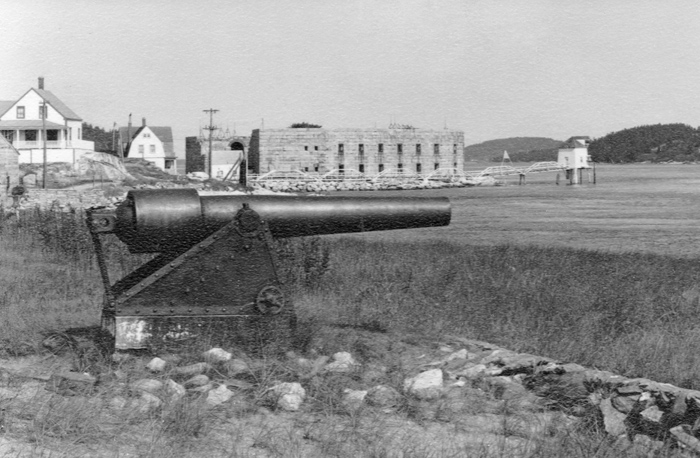
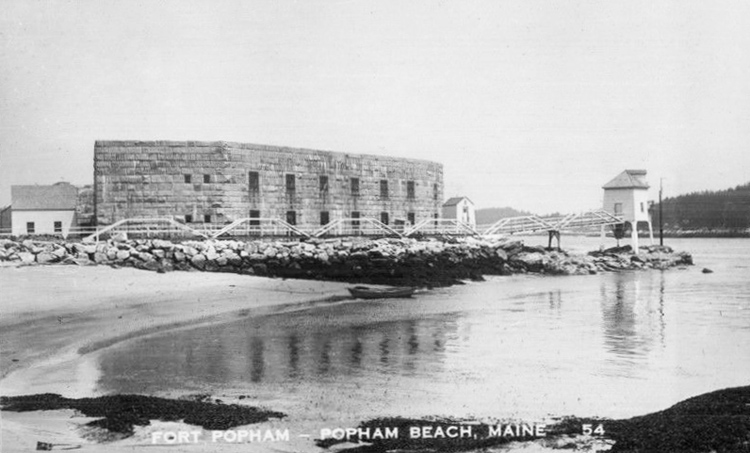
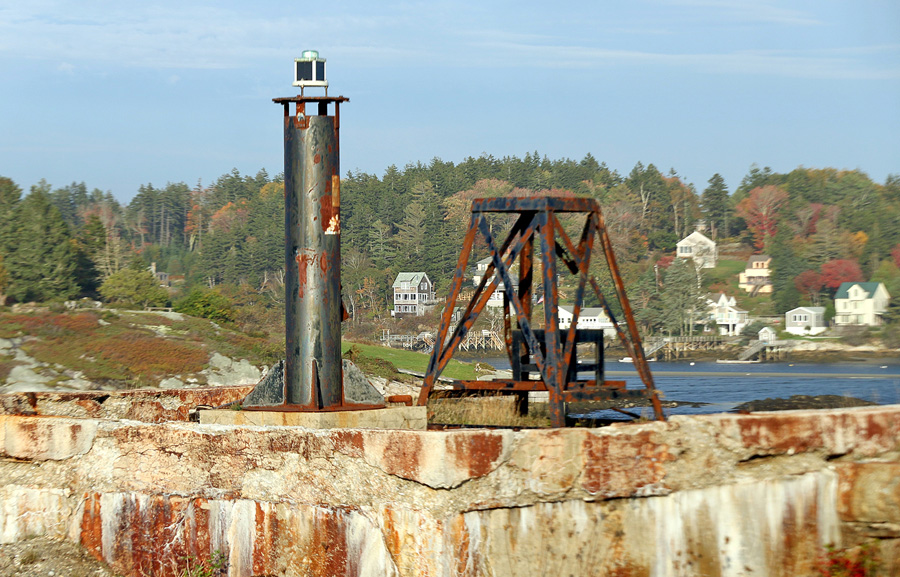
Photo Gallery
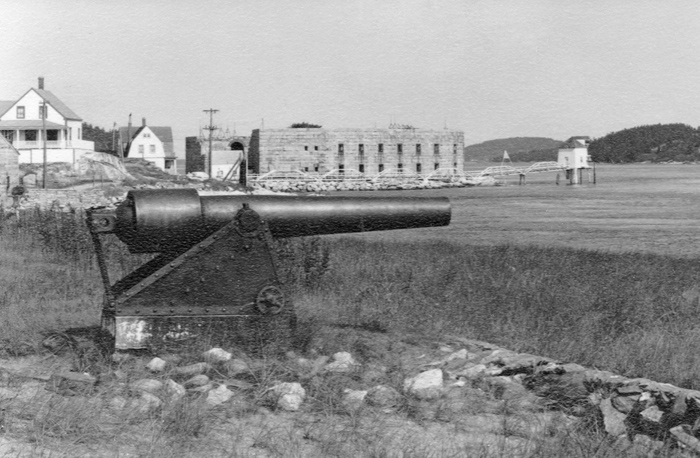
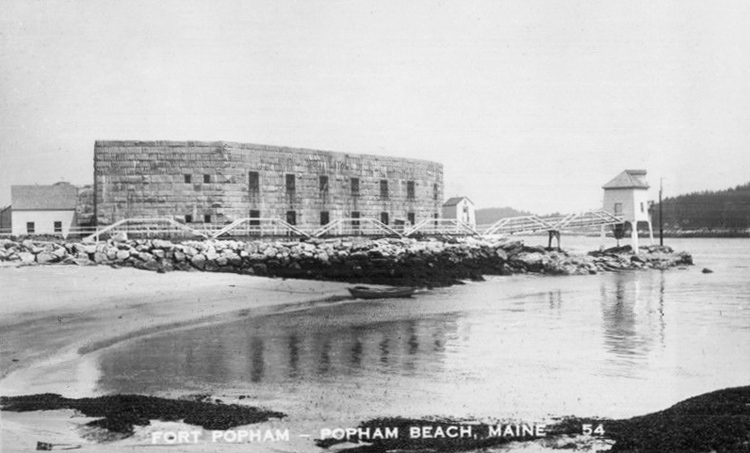
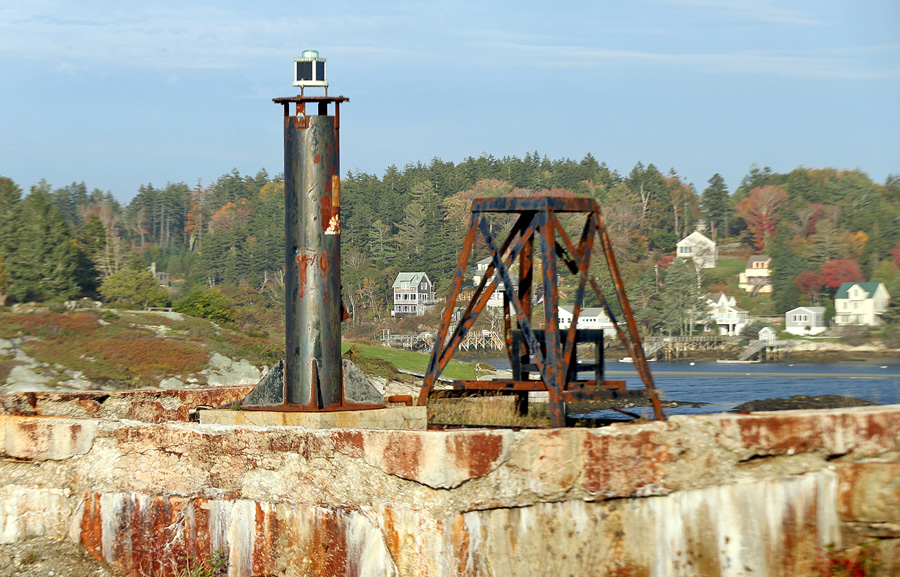
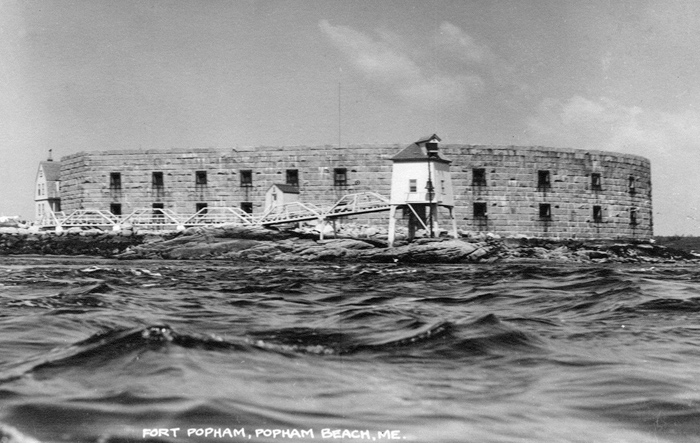
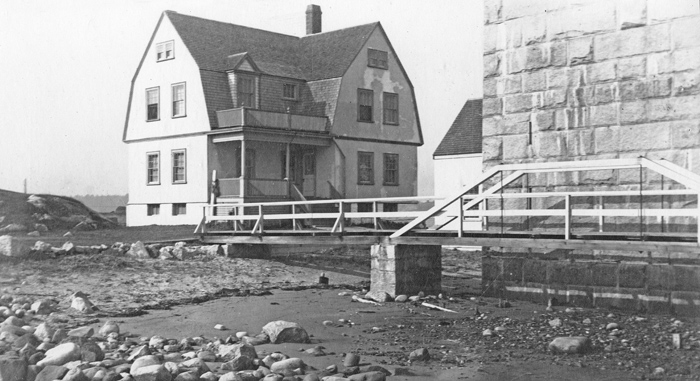
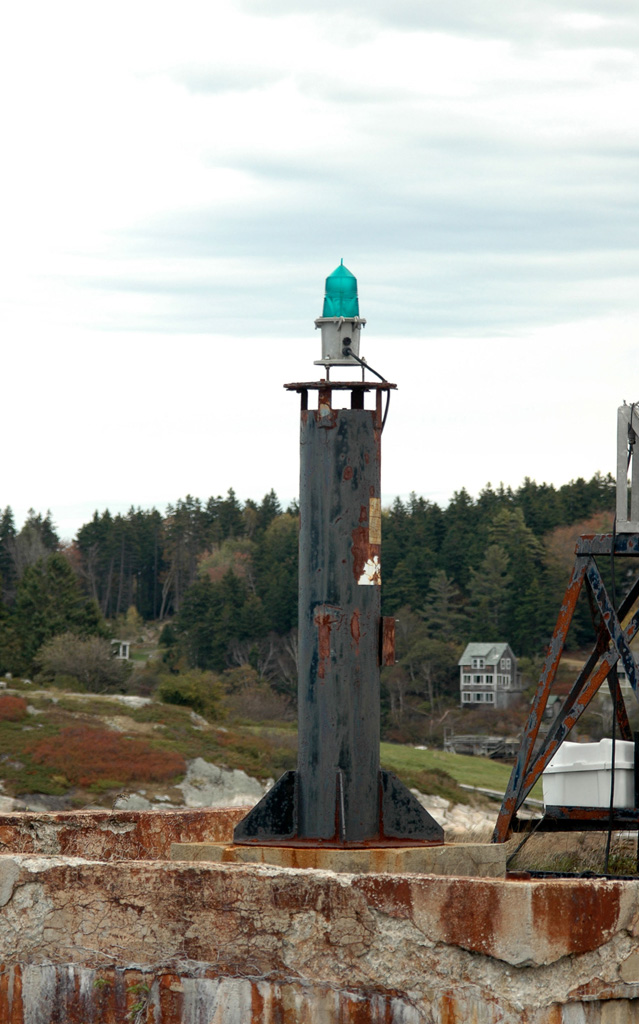
Photo Gallery
Photo Gallery
At the mouth of the Kennebec River, where strong tidal currents sweep past the granite ramparts of Fort Popham and into the Atlantic, Fort Popham Light stands as a small but vital guardian of navigation. Though modest in size and overshadowed by the massive Civil War–era fort, the light has played an essential role in guiding vessels safely through the shifting channel at the river’s entrance.
Fort Popham Light was first established in October 1899. A formal notice issued by the Lighthouse Board announced that a fixed red lens-lantern light would be exhibited approximately twenty-five feet above mean high water on a black iron spindle erected on a rocky point jutting from the western bank of the Kennebec at Fort Popham. Its position was carefully fixed by latitude and longitude and referenced to nearby aids, including Perkins Island Lighthouse, Pond Island Lighthouse, and Seguin Lighthouse.
|
The beacon’s purpose was straightforward: to mark the hazardous channel passing the fort, where strong ebb tides and shoals could imperil vessels entering or leaving the river. The red light, visible in all directions, distinguished this inner river aid from the white coastal lights farther seaward.
In 1903, the station was significantly improved. The light was raised two feet and transferred from the iron spindle to a newly constructed white, square, pyramidal bell tower erected just a few feet from the original site. On May 20 of that year, a 1,000-pound fog bell was installed, to be struck mechanically at fifteen-second intervals during thick or foggy weather. The bell, cast by Meneely & Co. of West Troy, New York, was fitted with striking machinery built at the U.S. Lighthouse Machine Shop in Portland.
A long wooden footbridge connected the new tower to the shore, allowing the keeper to reach the structure even at high tide. The 1903 improvements gave Fort Popham Light its characteristic appearance: a small wood-frame building on timber legs, standing above the rocks and reached by a narrow bridge stretching out from beneath the fort’s looming walls.
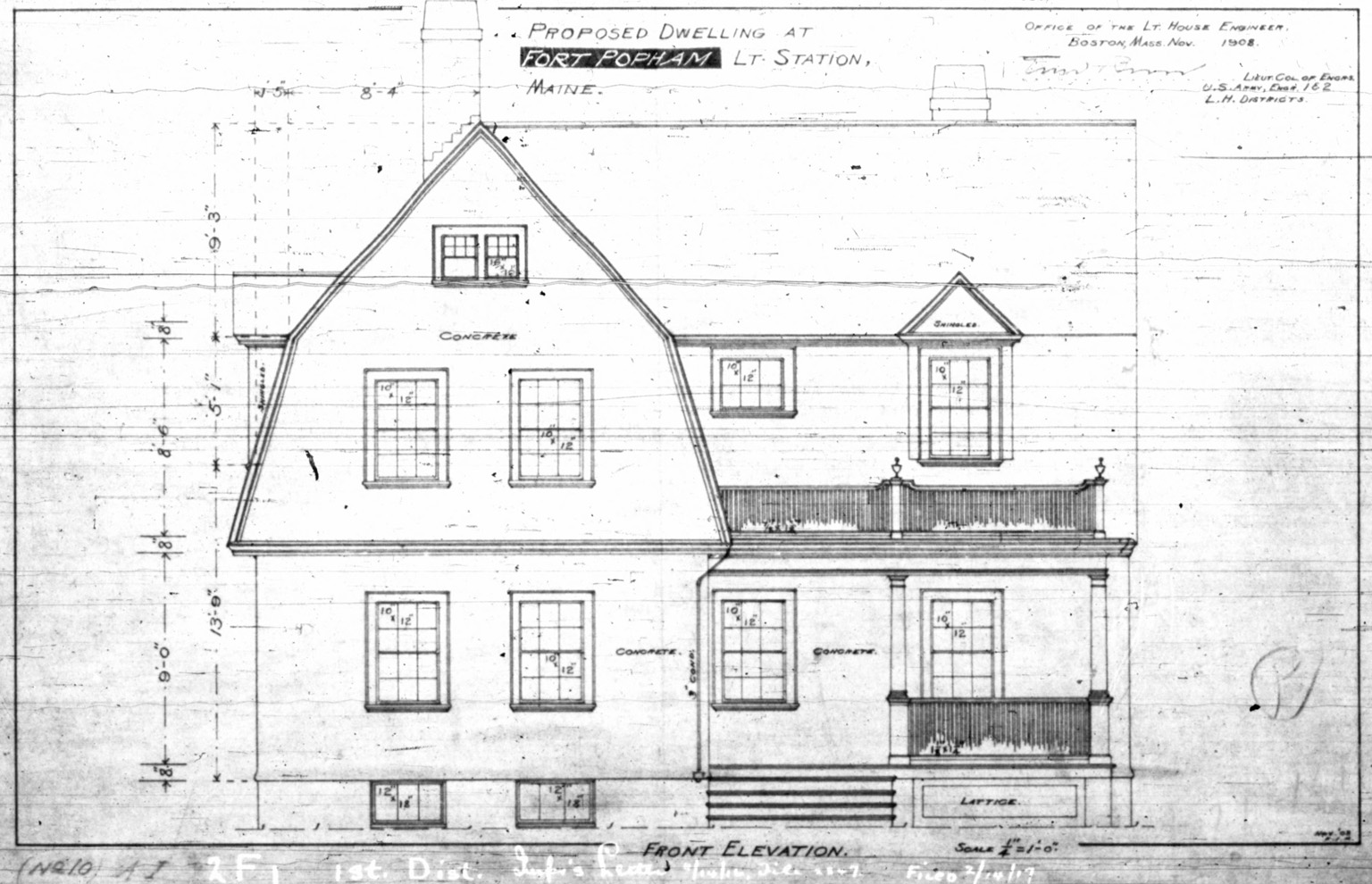
In 1909 and 1910, appropriations were applied toward constructing a proper dwelling for the keeper and erecting an isolated oil house. These additions transformed what had begun as a simple beacon into a complete light station.
The first keeper, Llewellyn Oliver, had been appointed when the light was established in 1899. Born in 1836, Oliver initially earned $250 per year; by 1913 his salary had risen to $552. His long service ended tragically in January 1913. While trimming the lamp in the tower, he suffered a severe shock and was found unconscious with his arms around the lamp, his right hand badly burned in the flame. His wife described how he had to be carried from the tower to the dwelling and was left unable to use his arm, “totally unable to do any labor.” His mental state deteriorated, and a resignation was submitted on his behalf in February 1913. He died the following year.
Oliver was succeeded by Leroy L. Myers, who served from 1913 to 1929—the longest tenure of the station’s four keepers. Myers’ years at Fort Popham illustrate the relentless nature of lighthouse duty. During a fierce fog in 1915, the mechanical fog bell broke down. For forty-eight hours, Myers and his family rang the bell by hand, day and night. Even his daughters took turns sounding the warning as vessels such as the schooner Flora M., towed by the tug Seguin, navigated the murk at the river’s mouth.
Myers’ daily routine, recorded in 1928, reveals the breadth of his responsibilities: extinguishing and cleaning the lamp at sunrise, lighting it at sunset, maintaining the fog signal, painting structures in spring, cleaning brass, making minor repairs, tending grounds, keeping weather observations, and filing reports. “I am on duty twenty-four hours around,” he wrote—a simple phrase that captured the keeper’s constant vigilance.
Not all incidents were maritime. In 1921, during a brief absence of the keeper, John Drews, who had previously been forbidden on the premises, entered the dwelling and abducted his own two-year-old son from the child’s mother, who resided with her parents at the station. The matter, ultimately deemed outside federal jurisdiction, was left to local authorities to handle. It is not known how the matter was resolved, but the boy was living in Illinois with his aunt, his father’s sister, at the time of the 1930 Census.
In September 1925, Myers rendered lifesaving assistance when two young men capsized their dory in a strong ebb tide near the light. He rescued them from the overturned boat and towed it ashore.
Alonzo Morong became keeper in 1929. His family’s later recollections paint a vivid portrait of life at Fort Popham in the 1930s. The six-room keeper’s house stood near the fort, separated from the tower by the long bridge. There was no electricity at first; water came from a rain-fed cistern. The fog bell machinery, driven by a descending weight and cable, shook the tower with each sixteen-pound hammer blow.
The light itself was a kerosene mantle lamp within a lens lantern. Each evening it was carefully trimmed and lighted, then positioned in a green-glass dormer-like enclosure atop the tower. At sunrise it was extinguished, cleaned, and refilled. Electricity finally reached Popham in 1937 via a cable laid across the riverbed.
In 1933, Morong’s son Clifton played a dramatic role in rescuing a man who had leapt from a nearby wharf into the Kennebec. Reaching the struggling veteran in a small skiff, the boy held him afloat until others arrived, and Coast Guardsmen revived him after prolonged efforts.
Tragically, in early 1935 Keeper Morong contracted pneumonia after exposure while tending the light during a snowstorm. He died that March, just months before qualifying for retirement after nearly thirty years of lighthouse service at multiple Maine stations. He was succeeded by Eugene W. Osgood, who served until 1941.
In 1939, the light and bell were electrified, reducing the keeper’s manual labor. After Osgood’s transfer in 1941, the station’s era as a staffed light came to a close.
A 1949 description detailed the structure: a thirty-foot, nine-inch wood-frame building on timber legs dowelled into rock, connected to shore by a 250-foot truss footbridge. The land comprised just 0.11 acre, much of it submerged at high tide. That year, the light and fog bell were removed from the tower and relocated atop the adjacent fort. The original structure was deemed surplus to Coast Guard needs.
Recommendations followed: offer the light, land, and footbridge to the State of Maine for incorporation into the public park at Fort Popham; if declined, sell or demolish them.
Though small in scale, the station embodied the dedication of its keepers—Oliver, Myers, Morong, and Osgood—who maintained their watch through fog, storm, isolation, and personal hardship. Today the great granite fort still overlooks the Kennebec’s mouth, but it is the memory of the little light on its rocky point that recalls an era when human vigilance, more than machinery, safeguarded the river’s gateway.
Llewellyn Oliver (1899 – 1913), Leroy L. Myers (1913 – 1929), Alonzo Morong (1929 – 1935), Eugene W. Osgood (1935 – 1941).