Venus Point, SC 
Select a photograph to view a photo gallery
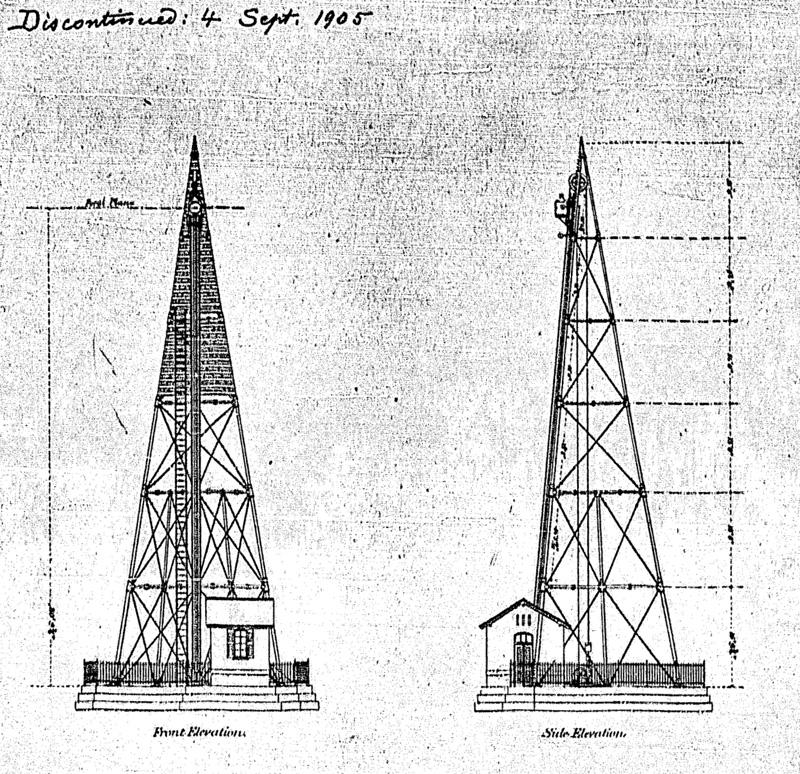
Photo Gallery
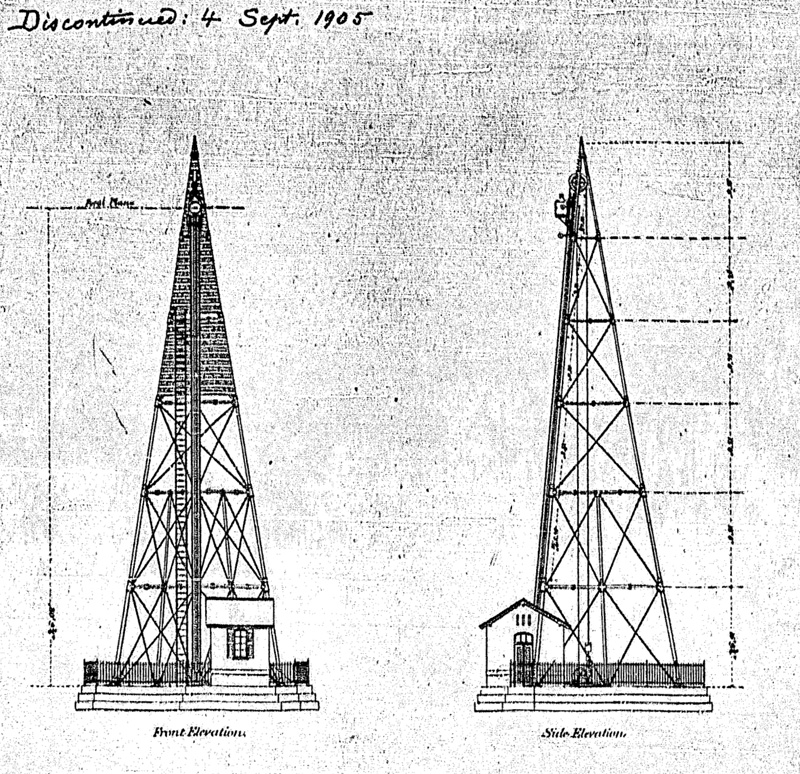
Photo Gallery
Photo Gallery
During the late nineteenth century, the Savannah River was transformed from a difficult tidal waterway into one of the best-lighted inland approaches on the southern Atlantic coast. Steam commerce, expanding rail connections, and federal harbor improvements made it essential that vessels could move safely between the open sea and the city of Savannah at all hours. Among the most important components of this system were the Venus Point Range Lights, erected on Jones Island near the middle reaches of the river.
Jones Island lay along the northern side of the main channel, opposite the South Carolina marshes and just below Elba Island. It was a low, reed-covered tract, regularly flooded by tides and unsuitable for cultivation without extensive diking. From this unstable ground rose the iron beacons of the Venus Point Range—front and rear lights aligned so that mariners could keep to the proper channel between the Bloody Cut and Tybee Knoll cuts.
For more than two decades, the Venus Point lights served as one of the key visual guides leading vessels inward toward Fort Jackson and the wharves of Savannah.
On March 3, 1881, Congress appropriated $60,000 for lighting the Savannah River between its mouth and the city. The Lighthouse Board approved an ambitious plan: the river would be illuminated from Tybee to Savannah, with a chain of range lights and beacons positioned at critical bends, shoals, and crossings.
Local newspapers reported with optimism that the work would begin without delay. The Lighthouse Inspector for the Savannah District, Captain Norton, was directed to place buoys and begin marking the channel, while range lights were planned on Daufuskie Island, Jones Island, Elba Island, Long Island, and near Fort Jackson. When completed, the board believed the river would be “as safe for navigation by night as by day.”
Yet by January 1882, none of the promised lights had appeared.
The delay, as revealed by The Savannah Morning News, was not caused by federal inaction but by the difficulty of acquiring land. The government could not build without clear title, and many property owners demanded exorbitant prices for what were essentially marsh islands.
The two sites needed for the Venus Point Range were on Jones Island, land claimed by the estate of John Stephens. The estate’s representative offered two one-acre sites and a right-of-way for $1,500, a figure the Lighthouse Board considered wildly out of proportion to the land’s value. Similar disputes plagued other sites along the river. Some tracts belonged to the State of Georgia and required gubernatorial approval; others were tied up in defective titles or mortgage claims.
By 1883, the iron structures for all twelve planned lights—including three on Jones Island—had already been fabricated. They sat in storage at Castle Pinckney buoy depot, awaiting clear legal authority to erect them. Only in late 1883 and early 1884 were the necessary titles finally approved or condemned by jury proceedings.
Once the legal obstacles were cleared, work moved quickly. In February 1884, a party was quartered at the Venus Point Light Station to erect the range beacons and build a keeper’s dwelling. At the same time, the tender Pharos and its crew began installing the remaining eight lights up and down the river.
While most of the river beacons stood on brick piers supported by piles and timber grillage, the front beacon at Venus Point was mounted on piles and stringers designed to shift with the changing channel. The rear beacon and the dwelling rested on twenty driven piles each.
More than 5,000 feet of plank walk, two boat houses, and ten landings were built to connect the isolated lights to the river. On May 26, 1884, the full system was illuminated.
The Venus Point Range displayed fixed white locomotive head-lights, a powerful form of reflector lighting that allowed vessels to line up the two beacons and hold the proper course between Bloody Cut and Tybee Knoll Cut. William Campbell, who had previously served as second assistant at Tybee Island Lighthouse, was appointed the first keeper of Venus Point Range at an annual salary of $700.
The setting of the Venus Point Range was as challenging as any along the river. Both beacon sites were subject to flooding, reed fires, and constant shoaling.
The front beacon was a square skeleton tower of angle-iron posts, fastened to iron sills resting on timber caps atop piles driven twenty feet into the ground. The rear beacon was a taller triangular iron structure, supported on six brick piers rising from a grillage foundation submerged just below standing water. A hoist raised and lowered the rear locomotive headlight, which was stored during the day in a brick oil room attached to the base of the tower.
One hundred feet in front of the rear beacon stood the keeper’s dwelling—four rooms above a pile foundation, with a 2,500-gallon cistern beneath. A boathouse and landing on a small creek were connected by a 300-foot plank walk.
Neither site was suitable for cultivation, and both required constant maintenance to survive the shifting river.
In March 1887, a fire racing through the tall reeds reached the wooden tramway of the front beacon, so badly damaging it that the structure was endangered. The tramway was removed and replaced with brick piers.
By the early 1890s, changes in the river’s current—partly the result of federal stone jetties—caused severe shoaling at the front beacon’s landing. The water receded so far that reaching the river by boat became difficult. To compensate, landings were repeatedly extended, and hundreds of feet of elevated plank walk were rebuilt.
By 1893, the shoaling was so permanent that officials decided to abandon the old wharf connection altogether and instead link the two beacons directly by a low plank walk nearly 6,000 feet long across the marsh.
Cyclones, floods, and decay continued to take their toll. Repairs followed almost yearly: new platforms, rebuilt walks, strengthened landings, repaired cisterns, and even oyster shells spread beneath the dwelling for drainage.
In 1895, the front light of the Venus Point Range was permanently extinguished. A training wall extending eastward from Cockspur Island had altered the channel so completely that the old range was no longer needed. The rear beacon remained in use as a single light, though its powerful reflector was later replaced with a lens lantern.
By 1905, with new ranges being built for the re-engineered river channel, the Venus Point light was scheduled for permanent discontinuance. About September 4 of that year, the fixed white light on Jones Island was extinguished, ending more than twenty years of service.
Though the station continued briefly as quarters for keepers of nearby ranges, the role of Venus Point as a guiding alignment for mariners had come to an end.