Fort Ripley Shoal, SC 
Select a photograph to view a photo gallery
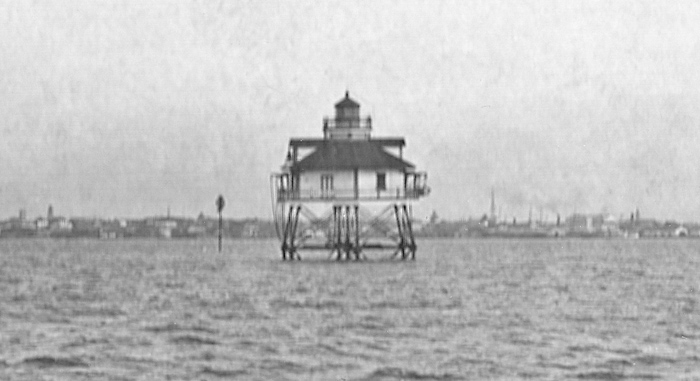
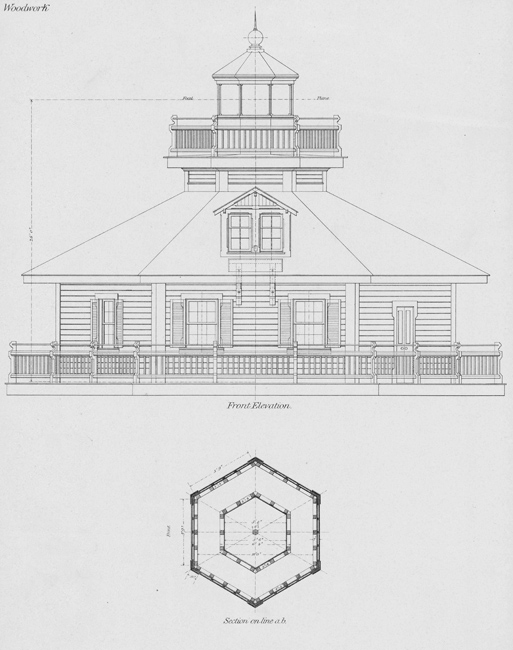
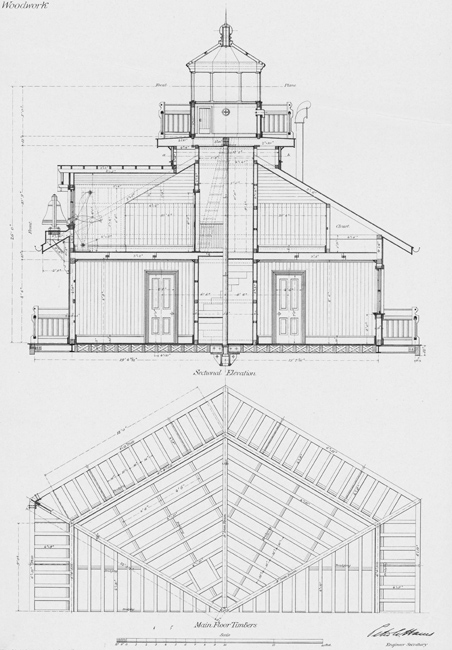
Photo Gallery
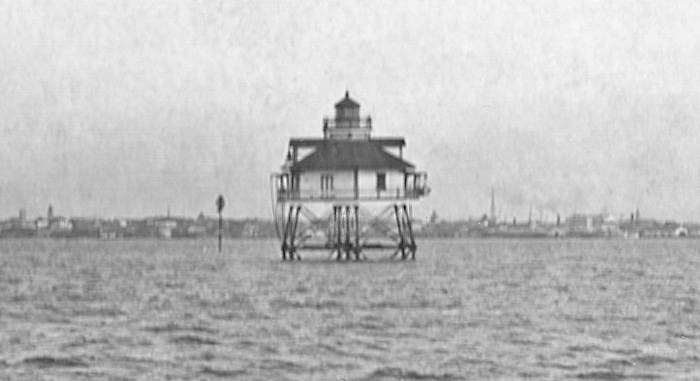
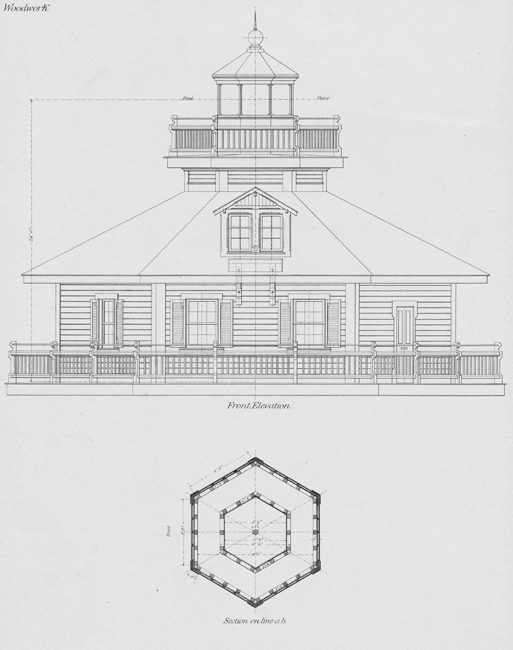
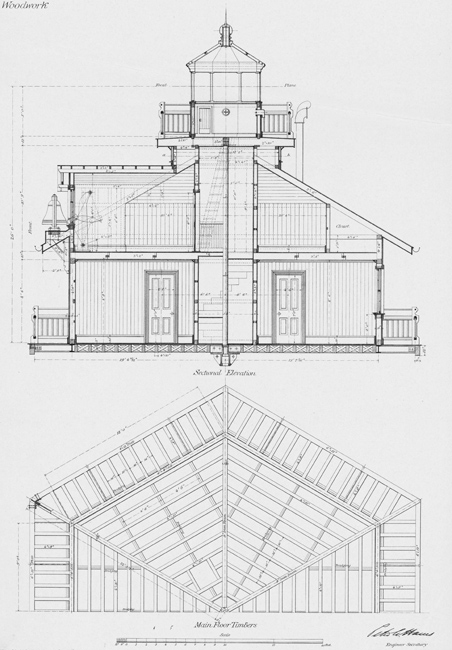
Photo Gallery
Photo Gallery
In the years following the Civil War, Charleston Harbor remained one of the busiest and most hazardous ports on the southern Atlantic coast. A broad shoal, known as the “middle ground,” separated two of the primary routes to the city—the South Channel and the Folly Island Channel. At low tide, the broken tile foundations of a small wartime fort could still be seen on this shoal, a reminder of the harbor’s earlier military defenses. This vanished work, known as Fort Ripley, gave its name to the shoal that would soon support one of Charleston’s most distinctive lighthouses.
By 1875, the navigational problem was clear. A large day-beacon had already been placed on Fort Ripley Shoal, but mariners still lacked a reliable night guide for the better and more frequently used South Channel. The light at Castle Pinckney, positioned to favor the Folly Island Channel, served only part of the harbor traffic and could not effectively mark the central approach. Lighthouse officials recognized that a new light placed on the middle ground would serve both channels at once. Such a station would not only improve safety but would also make the Castle Pinckney light unnecessary.
Engineers estimated that a lighthouse built on iron screw-piles could be erected on the shoal for $15,000. Congress acted quickly. On July 31, 1876, an appropriation was made for a lighthouse on Fort Ripley Shoal to replace Castle Pinckney’s light. With funding in hand, the Lighthouse Board announced that construction would begin as soon as practical.
Progress, however, was slowed by legal and financial obstacles. In 1877, after considerable delay, the federal government finally secured title and jurisdiction over a ten-acre submarine site from the State of South Carolina and the city of Charleston. Only then could proposals be invited for the metal foundation. Even so, the original appropriation proved insufficient. Work stalled until Congress added another $5,000 in June 1878, raising the total cost to $20,000.
That summer, mariners were formally notified that construction was at last underway. The lighthouse would stand about 500 feet east of the existing day-mark, in eight feet of water at low tide. A timber staging was first erected so that iron piles could be screwed down into the shoal. To warn vessels away from the work, a temporary white ship’s lantern was hung fifteen feet above high water and exhibited each night. The project was carried out under the direction of Captain W. A. Jones of the Lighthouse Service.
By autumn, the station neared completion. On December 1, 1878, a fixed red light of the sixth order was officially established on Fort Ripley Shoal. It shone in all directions from a focal plane forty-nine feet above mean low water and was visible for approximately twelve miles in clear weather. The new lighthouse stood in eight feet of water, between the South and Folly Island Channels, directly on the harbor’s middle ground. Its hexagonal house and lantern were painted yellow, while the iron foundation below was red.
The structure itself was a classic screw-pile lighthouse. One central iron pile and six surrounding piles supported the platform, all braced together by wrought-iron ties arranged in two systems—vertical below and inclined above. The dwelling rose like a small house above the water, unlike the traditional towers that marked most coasts. A fog-bell, operated by clockwork machinery, struck every ten seconds in thick weather. With the lighting of Fort Ripley Shoal, the Castle Pinckney light was extinguished, ending one era and beginning another in Charleston Harbor navigation.
The first keeper to tend the new station was B. F. Lytle, formerly in charge at Castle Pinckney. His transfer in 1878 brought a small raise, from $500 to $560 per year. Andrew Anderson was appointed assistant keeper at $400 annually. Under their care, the light quickly proved its value. In 1880 the building was repainted, and a more powerful fifth-order lens replaced the original sixth-order, increasing the range and efficiency of the light.
The isolated station demanded constant maintenance. Fresh water had to be stored in tanks, machinery oiled, and the lens kept spotless. In 1890, three worn boiler-iron water tanks were replaced with new ones of the same size. Although the post originally required two keepers, the assistant position was abolished in 1882, leaving a single keeper responsible for all duties—a reflection of changing policies within the Lighthouse Service.
Life on the middle ground was lonely but never dull. In 1902, Keeper Halvor S. Svendsen, Jr., rescued four men and a boy after their boat capsized near the station. Without his prompt action, all would likely have drowned. Such rescues were not unusual; lighthouse keepers were often the first line of aid for mariners in distress.
One of the most dramatic episodes occurred in July 1926, during a violent storm in Charleston Harbor. Keeper Albert E. Burn left the lighthouse briefly to secure his small motor launch, which was in danger of being torn away. The line parted, and the launch drifted off with him aboard. His mother, Mrs. Lillie H. Burn, who lived with him at the station, watched helplessly as the storm carried her son into darkness. Believing him lost, she nevertheless kept the light burning and the fog bell sounding throughout the night, determined that no vessel would come to harm.
Burn was rescued by a Coast Guard patrol boat, though his launch later sank. He returned safely the next morning, and it was later clarified that his mother had actually seen the rescue. Still, the story captured the imagination of Charleston and became one of the station’s most enduring legends. Mrs. Burn herself treated the incident lightly, even though newspapers had described her as an “aged woman” heroically holding vigil in the storm.
Another act of service came in 1932, when Keeper Burn aided two young men whose boat had capsized near the lighthouse. He helped them recover their equipment and sheltered them until they were safe and dry, earning official commendation.
Despite its record of service, technology and economics brought Fort Ripley Shoal Lighthouse to an end. In November 1932, it was replaced by an automatic lighted bell buoy. With its removal, Charleston lost one of its most unusual landmarks. The lighthouse had long been a source of local humor. Dockworkers delighted in telling visitors that the keepers “raised everything they ate out there.” Only after some puzzled reflection would the joke be explained—they hauled all their supplies up from boats below, and therefore “raised” their food to the house on stilts.
Though the structure is gone, Fort Ripley Shoal Lighthouse remains a vivid chapter in Charleston’s maritime history—a steadfast guardian of the harbor’s middle ground, remembered for its service, its drama, and its enduring charm.
Keepers:
References