Combahee Bank, SC 
Select a photograph to view a photo gallery
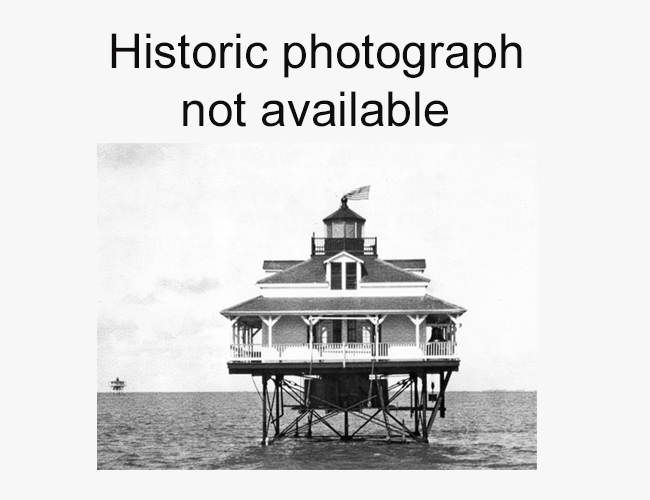
Photo Gallery
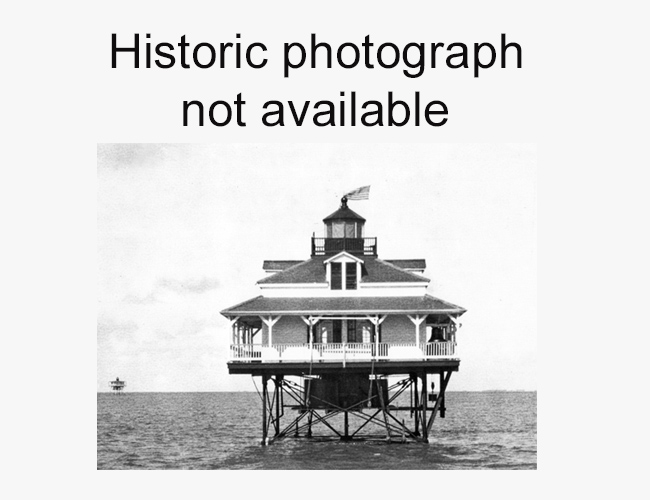
Photo Gallery
Photo Gallery
At the entrance to St. Helena Sound, along the low, marsh-fringed coast of South Carolina, lies Combahee Bank, a long, shifting shoal that has challenged mariners for centuries. Formed by the meeting of tidal currents from the Combahee River, Ashepoo River, and the Atlantic Ocean, the bank stretches in a broad arc across the approaches to the sound. Its shallow waters, constantly reshaped by storms and tides, created a dangerous obstacle on one of the most important waterways between Charleston and Savannah.
Through much of the nineteenth century, St. Helena Sound served as a vital maritime gateway for the agricultural regions of the South Carolina lowcountry. Cotton, rice, naval stores, and timber passed through these waters, while packet ships, coastal steamers, and fishing craft depended on clearly marked channels. Yet Combahee Bank, lying directly in the path of vessels approaching from the sea, made navigation perilous. To protect commerce and life, the federal government undertook a long and evolving effort to mark the bank—an effort that would span nearly sixty years and include light-vessels, a screw-pile lighthouse, a beacon, and finally a gas buoy.
In the mid-nineteenth century, light-vessels were often used where shifting sands made permanent structures impractical. Anchored offshore, these floating lighthouses carried lanterns atop masts and could be moved as channels changed. By the early 1850s, a lightship stationed off St. Helena Sound served both the entrance and the nearby shoals, but its position was less than ideal for marking Combahee Bank directly.
On August 3, 1854, Congress authorized a comprehensive plan to improve navigation in this region. The act provided funds “for a lighthouse and beacon light on the north point of Hunting Island, to serve as a seacoast light and range for the Swash Channel, in place of the light-vessel at present stationed off St. Helena, and for repairing and placing that vessel at Combahee Bank.” The intent was clear: the existing lightship would be shifted from the general entrance of the sound to the precise danger it was meant to mark.
By 1858, federal reports confirmed that once the new Hunting Island Lighthouse was completed, the St. Helena light-vessel would be removed and anchored at Combahee Bank. The transition was completed on December 5, 1859, when the vessel was finally moored off Combahee Bank. There, its lantern became the first dedicated navigational light for the shoal, warning vessels of the long, submerged bar lying across their course.
Despite the improvement, the lightship required frequent maintenance. In 1859, it was listed among those needing repairs, a common problem for vessels exposed to constant salt spray, storms, and heavy seas. Nevertheless, for a brief period, the Combahee Bank lightship served as a crucial guidepost in the hazardous waters of St. Helena Sound.
The outbreak of the Civil War brought sudden ruin to the aids to navigation along the southern coast. To prevent their use by Union forces, Confederate authorities removed, destroyed, or scuttled nearly every lighthouse and lightship from Virginia to Florida.
In 1862, federal records reported that all light-vessels from Cape Henry southward—except for a few in Chesapeake waters—had been removed and sunk or destroyed by insurgents. The following year, a detailed survey of the region revealed the full scale of devastation. Among the lights destroyed were Hunting Island Lighthouse, the Wolf Island beacons, and the Combahee Bank light-vessel, which had been removed and burned.
With the destruction of these aids, the coast was left virtually unmarked. Mariners entering St. Helena Sound had to rely once more on dead reckoning, local knowledge, and daylight, while the shoals of Combahee Bank again became an invisible threat beneath the waves.
After the war, federal authorities faced the task of rebuilding a shattered coastal lighting system. By 1867, it was decided not to restore the Combahee Bank light-vessel. Instead, engineers would erect a screw-pile lighthouse, a type of structure well suited to shallow, sandy waters. Its iron piles, twisted into the seabed like giant screws, offered a stable platform where masonry towers could not stand.
The new lighthouse was completed in early 1868, and on the evening of February 22, the light was exhibited for the first time. Standing in open water on the shoal, the structure served as a fixed warning at the very heart of the danger. The supporting screwpiles were painted red, the wooden superstructure white, and the lantern room black. A fifth-order lens produced a white light that illuminated the entire horizon.
Patrick Comer was hired as the light’s first head keeper at an annual salary of $600, and John McDonald was paid $400 to serve as his assistant
Routine maintenance followed. In 1869, repairs were made to the lantern parapet to prevent leaks, and the iron foundation was cleaned and painted. At that time, the station was reported to be in good condition.
Yet Combahee Bank was not a stable foundation. The same tides and currents that created the shoal continued to reshape it. By 1876, the sand beneath the lighthouse had been washed away so extensively that the structure was rendered unsafe and ineffective. The Lighthouse Board ordered the discontinuance of the light and the removal of the lantern and lens. On June 30, 1876, the light was extinguished, and the abandoned tower was left standing only as a daymark.
Nature soon completed what erosion had begun. In August 1881, a powerful coastal storm struck the region. According to contemporary reports, the abandoned lighthouse was blown over, and half of the structure was carried away by the sea. Within a few years, only fragments of its iron foundation remained.
By 1885, mariners were warned that the remains of the old Combahee Bank Lighthouse lay about a mile from the western extremity of the bank. A few iron piles still protruded above the water—grim reminders of the failed battle between engineering and shifting sand.
Despite the loss of the lighthouse, Combahee Bank remained a hazard that demanded clear marking. In 1901, a new solution was introduced. A beacon was established on the southeastern end of the bank, built of three metalled piles bolted together in a triangular pyramidal form. Each side carried a square daymark, with the tops standing ten feet above the water.
The beacon was carefully positioned, with bearings taken from the ruins of the old lighthouse and from Hunting Island Light. For the first time since the 1870s, Combahee Bank again had a permanent, fixed marker to guide vessels through St. Helena Sound.
Technology continued to advance, and in 1913 the beacon was supplemented by a gas buoy. About fifty yards south of the structure, an acetylene-powered buoy was established, flashing a white light every three seconds. Visible for miles and accompanied by a whistle in poor weather, the buoy provided a reliable, modern warning over the treacherous shoal.
The story of Combahee Bank’s lights is a story of adaptation—of mariners, engineers, and governments responding to one of the most changeable landscapes on the Atlantic coast. From a floating lightship to a screw-pile lighthouse, from a fallen ruin to a beacon and gas buoy, each generation sought new ways to mark a danger that could never be tamed.
Though the original structures are long gone, the need they served remains. Combahee Bank still lies in wait beneath the waters of St. Helena Sound, a reminder that along this coast, navigation has always depended on the fragile partnership between human ingenuity and the restless sea.