Corpus Christi, TX 
Select a photograph to view a photo gallery
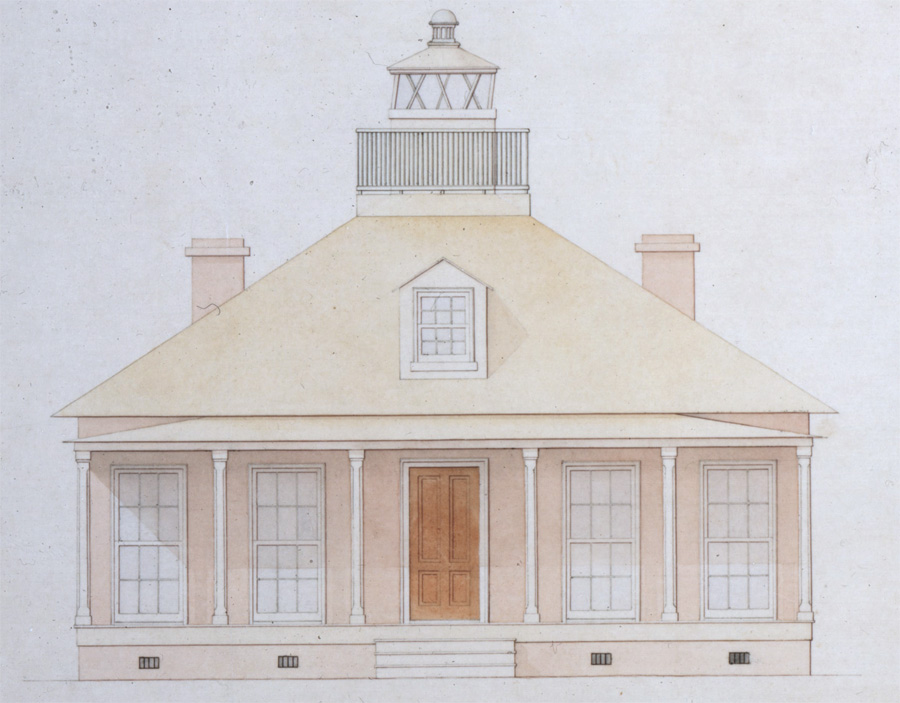
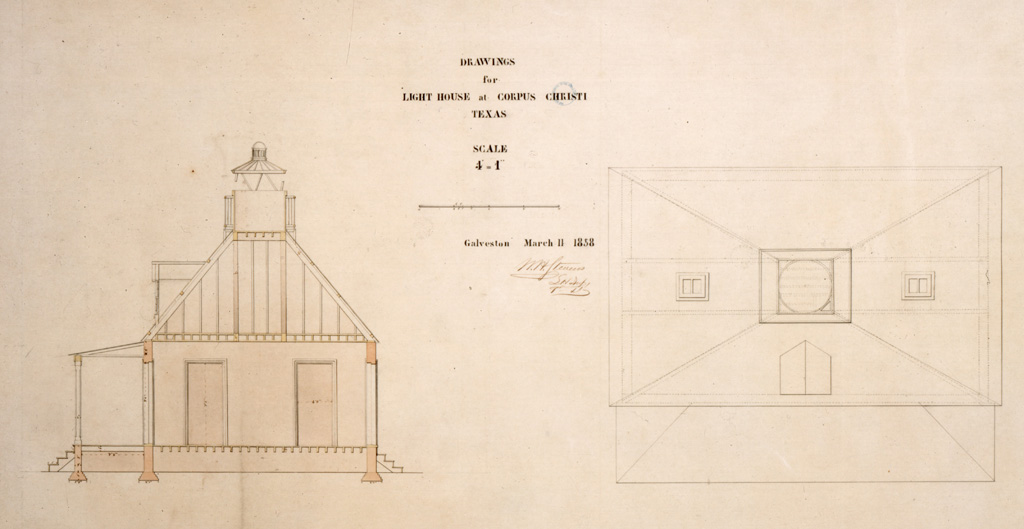
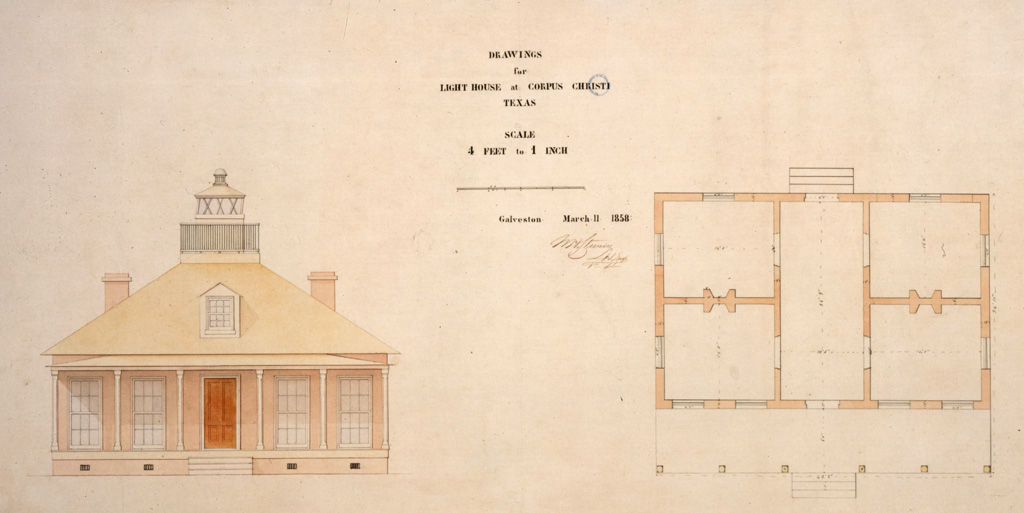
Photo Gallery
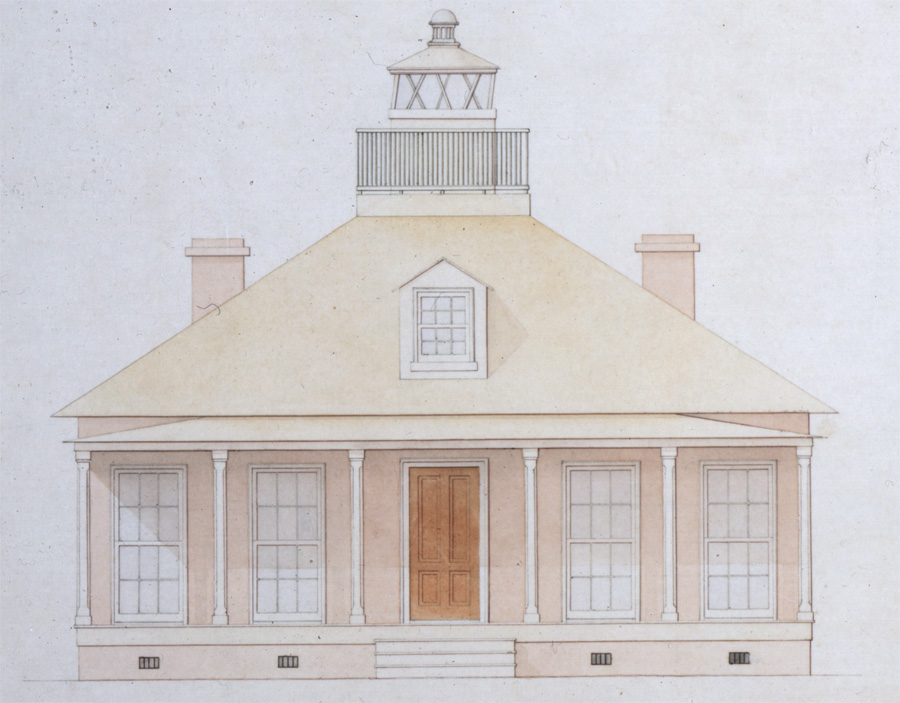
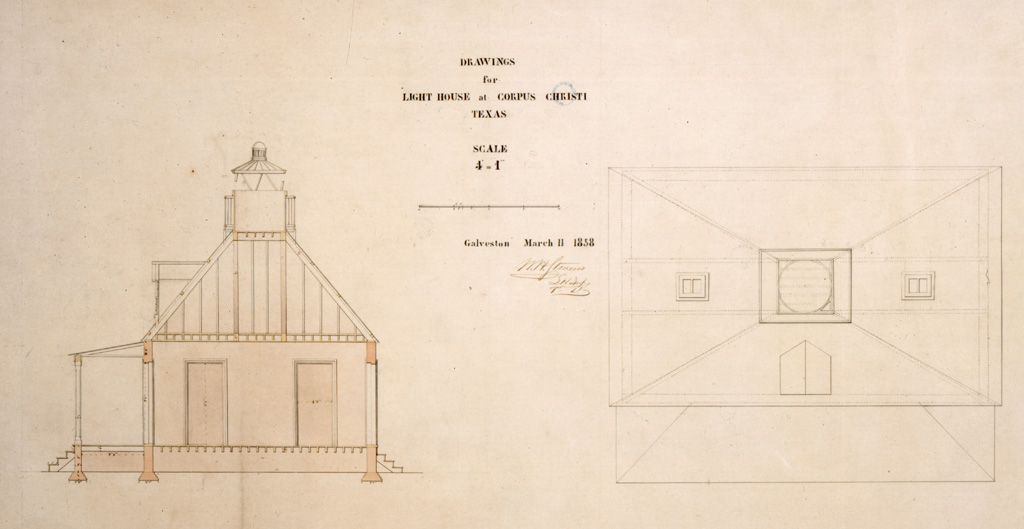
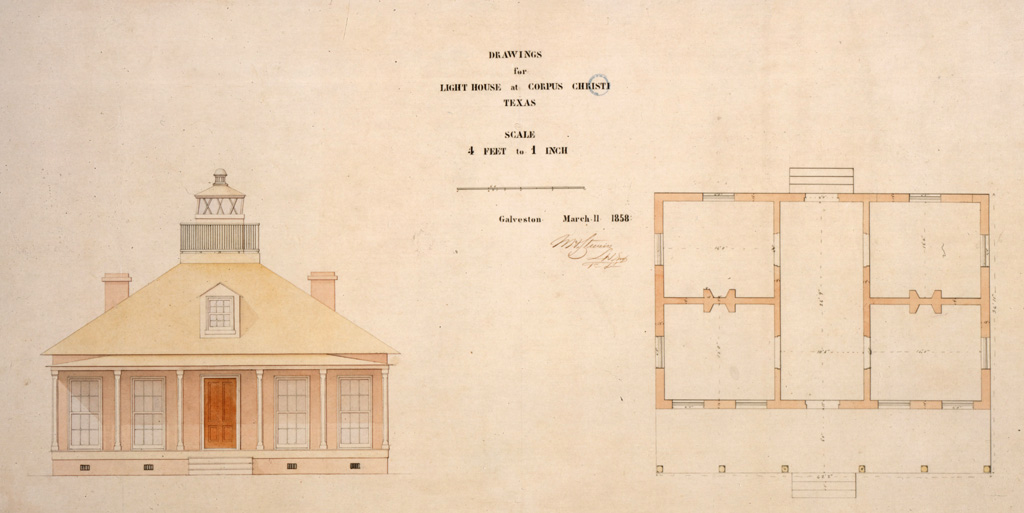
Photo Gallery
Photo Gallery
The effort to establish the light began in the mid-1850s, when Corpus Christi’s civic leaders petitioned the federal government for a navigational beacon that would guide vessels into the shallow but strategically situated bay. The mayor himself had taken the lead in dredging a channel to the city’s wharves, and the addition of a light was considered essential to encouraging commerce and ensuring safer approaches. In 1856, Congress appropriated $5,000 for a lighthouse, and soon a 50-by-150-foot residential lot at the corner of Broadway and Buffalo Streets was selected as the site.
|
Even as the new lighthouse was being prepared for service, something had begun to go profoundly wrong with the building. Within months of its lighting, the exterior brick walls began bulging outward, pulling away from the interior partition walls and threatening the lantern room. The Light House Board ordered an investigation, and the district engineer soon found himself facing a puzzle. The problem, it turned out, was rooted in both materials and environment. The “shell-crete” brick—an early local mixture used in the construction—did not bear weight well, and the lighthouse had been built directly atop the region’s notorious “gumbo” soil. When saturated by rain, the ground swelled; when baked by drought, it shrank and cracked. The building had been erected during a wet period; as the weather dried, deep fissures opened, tearing the masonry apart. A later return of rain swelled the earth again, heaving the foundation and worsening the damage.
Had the foundation been anchored with deep pilings, the structure might have survived the shifting of the bluff. But without them, the lighthouse was doomed. On September 15, 1859—barely months after entering service—the Light House Board resolved to discontinue the light. Engineers considered installing external buttresses to force the walls back into alignment, but the expense could not be justified. Cheaper pier lights on the wharves provided an adequate substitute, and the lighthouse was abandoned. According to a brief newspaper account, the light was permanently extinguished on November 1, 1859, and Keeper Brittain was out of a job.
What followed was a second life far removed from its intended purpose. When the Civil War reached the Texas coast, Confederate forces converted the derelict structure into an arsenal. During the Union attack on Corpus Christi on August 16 and 18, 1862, the USS Arthur directed fire toward the bluff. At least one projectile struck the lighthouse, though—fortunately for the Confederates—it did not ignite the powder stored inside. As Union forces advanced, the Confederates placed an explosive charge in the structure, blowing the rusting lantern from its mount.
After the Union captured the region, the structure—already failing—became a playground for local children. Mischievous boys attempted to demolish the old building themselves, rolling a butter churn filled with gunpowder into the ruins. Their improvised device started a fire, which spread into the structure and ignited leftover powder. The resulting blast gutted much of what remained.
By 1870, the U.S. customs collector at Corpus Christi reported the building in nearly complete ruin. Only two weakened walls continued to support the sagging roof, and he expressed grave concern for the safety of neighborhood children who still wandered among the wreckage. Amazingly, the remnants endured nearly another decade. In 1878, city alderman Dick Jurgan finally ordered a crew to pull down the unstable ruins with ropes, ending the last physical trace of the ill-fated Corpus Christi Lighthouse. A historical marker found at 723 N. Upper Broadway identifies the location where Corpus Christi Lighthouse stood and provides a brief history of the structure.
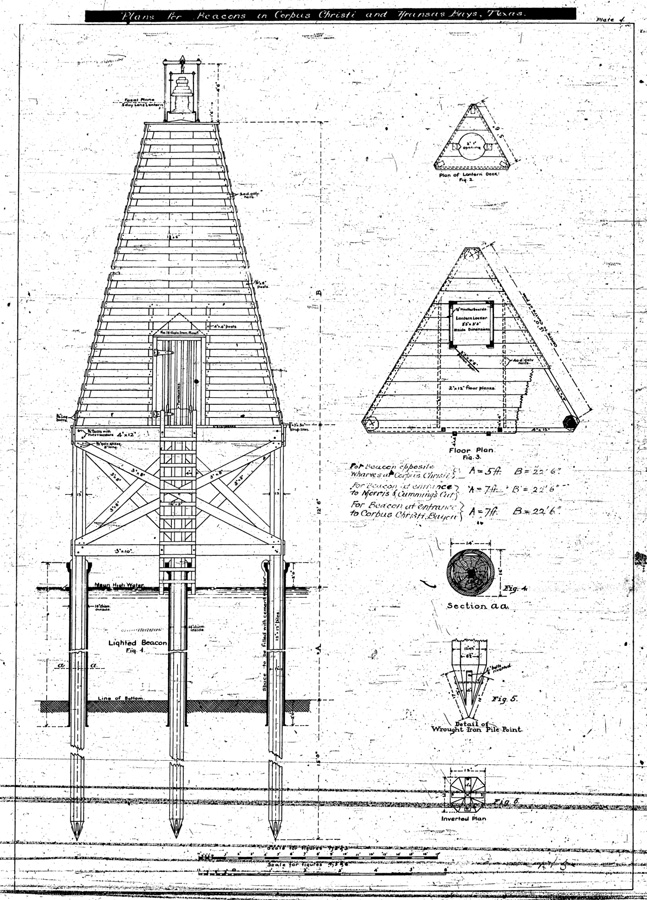
In April 1902, a fixed white lens-lantern light was established atop a pyramidal structure built atop piles and covered with horizontal slats. The light was situated on the reef offshore from the outer end of Central Wharf. John J. Anderson was hired to tend the light at an annual salary of $240.
Keepers:
References: