Rebecca Shoal, FL 
Select a photograph to view a photo gallery
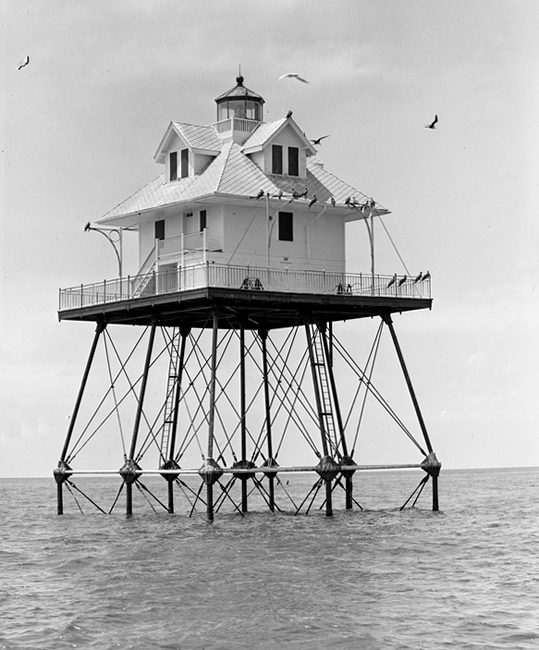
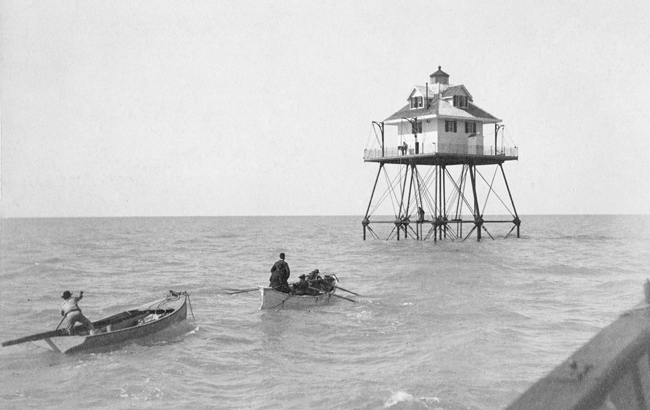
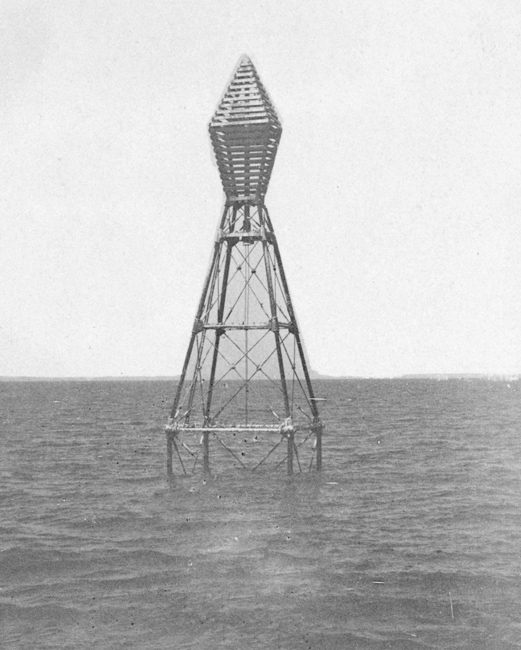
Photo Gallery
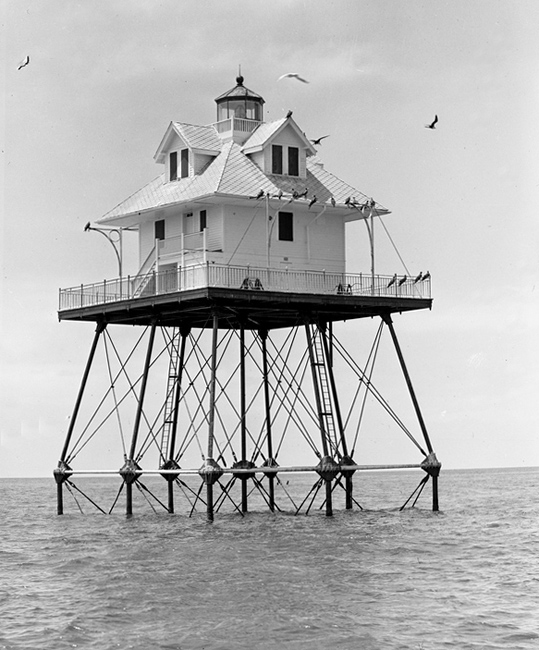
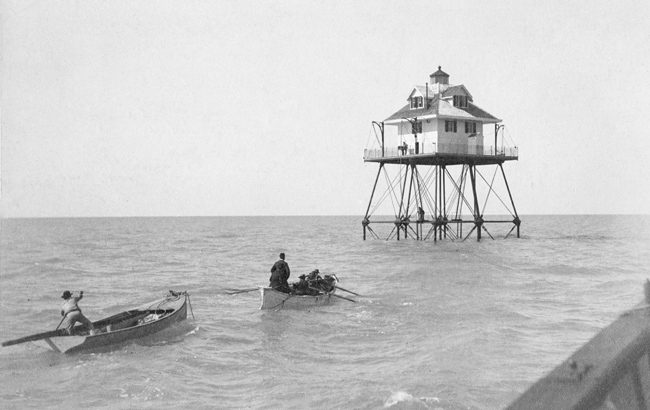
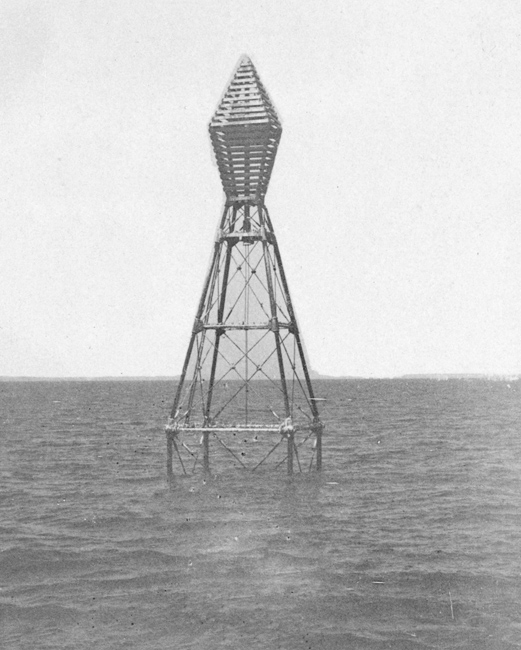
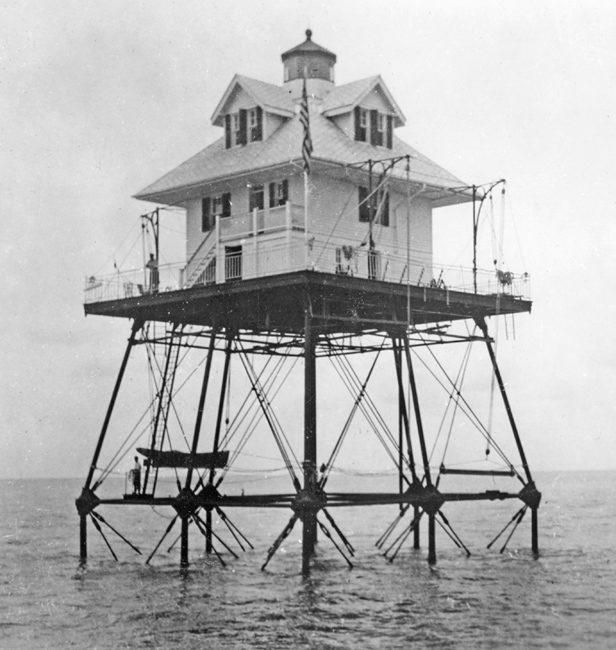
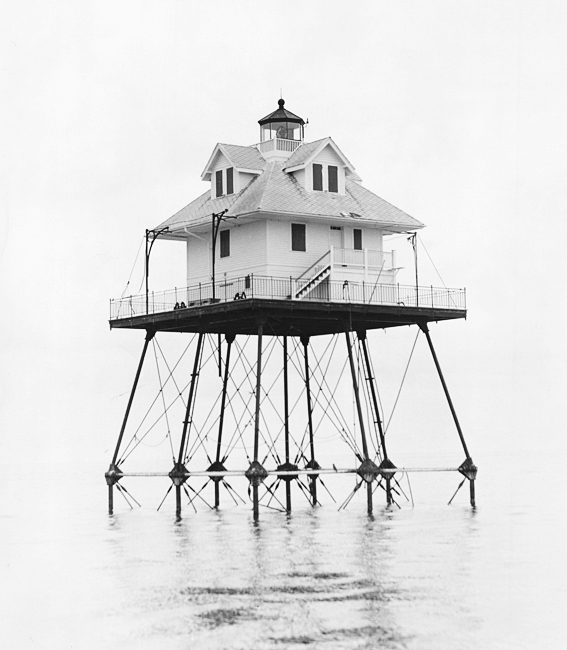
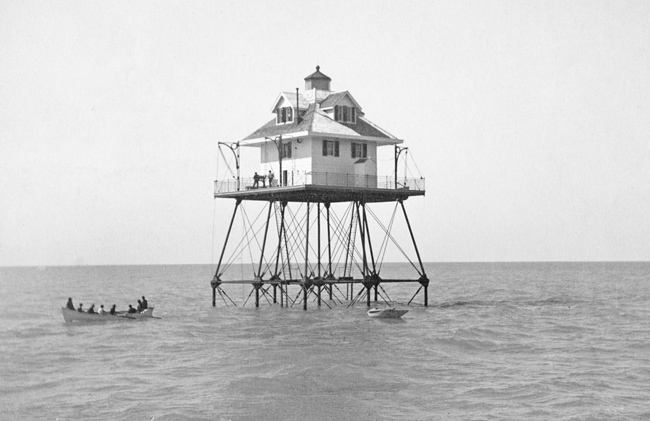
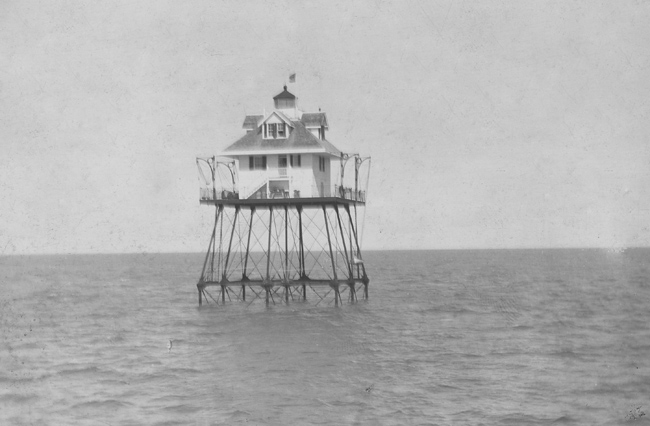
Photo Gallery
Photo Gallery
Rebecca Shoal lies forty-three miles west of Key West, near the outer margin of the Florida Reefs tract where the waters of the Gulf of Mexico collide with those of the Florida Straits. Though the bank itself is submerged in approximately eleven to twelve feet of water, it is surrounded by deep channels and influenced by conflicting tidal systems and powerful currents. Here, the flood tide runs northward at nearly a knot, while the ebb moves southward at slightly less speed, both heavily influenced by wind and weather. The convergence of Gulf tides, Atlantic swells, and the nearby Gulf Stream produces confused seas that are rarely calm, even under clear skies. For mariners passing between the Gulf of Mexico and the Atlantic, Rebecca Shoal represented one of the most treacherous and least forgiving hazards along the Florida coast.
|
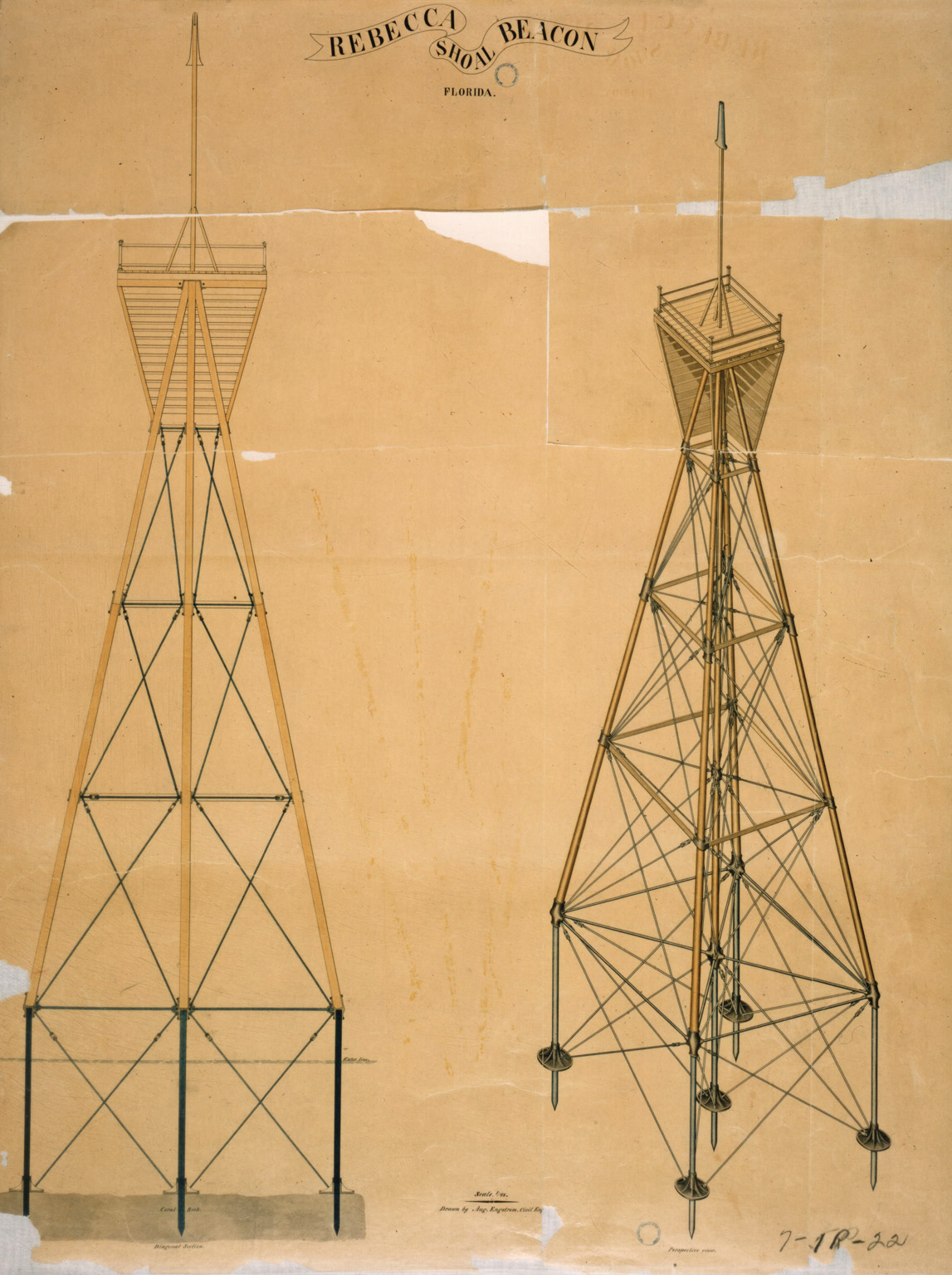
The need to mark this shoal was recognized early. Plans were discussed as early as the 1840s, but it was not until August 31, 1852, that Congress appropriated $10,000 for a day beacon on Rebecca Shoal. In May of that year, the Lighthouse Board dispatched Lieutenant George Gordon Meade of the U.S. Army Corps of Topographical Engineers—fresh from completing Carysfort Reef Lighthouse—to examine the site. Meade reported that a beacon was essential to mark the narrow passage between the Marquesas Keys and the Dry Tortugas, and he prepared designs and estimates accordingly.
By October 1853, Meade reported from Philadelphia that his examination of Rebecca Shoal was complete and that a project for a beacon had been submitted to the Lighthouse Board. Plans and estimates were approved in January 1854, and the wrought-iron skeleton structure was fabricated and shipped to Key West that spring. Yet almost immediately, the realities of Rebecca Shoal intervened. The original appropriation proved insufficient, mangrove piles for a working platform could not be procured due to a yellow fever epidemic, and work was postponed until Congress provided an additional $5,000 later in 1854.
Work resumed in 1855 during what was thought to be the calm season of late spring. Based on earlier soundings suggesting a coral bottom, Meade’s engineers elected to construct a platform on trestles rather than drive piles. For three weeks, the project advanced rapidly, and by mid-May the platform was nearly complete. Then a violent gale forced the work vessel to seek refuge at the Dry Tortugas. When the crew returned three days later, the sea had erased all evidence of their labor.
Undeterred, the engineers attempted a second platform, only to see it destroyed in June when heavy seas rocked the trestles loose in the sandy bottom. By this time, it had become clear that Rebecca Shoal was not the firm coral base originally assumed but a shifting sand formation ill-suited to trestle construction. A new plan called for driving piles directly into the shoal, but weeks passed without a single calm day suitable for pile-driving. The original eight-month labor contracts expired, replacement crews could not be secured locally, and the working season slipped away.
Meade later wrote candidly to the Lighthouse Board that “no light-house structure of any kind has been erected, either in this country or in Europe, at a position more exposed and offering greater obstacles than the Rebecca shoal.” Still, convinced that success was possible under better conditions, he requested additional funds. Congress appropriated another $10,000 in 1856, and efforts resumed yet again in 1857 and 1858. Once more, storms intervened, and by the end of the decade the project was abandoned in favor of temporary buoys.
Meade left the Florida Keys in 1860, soon to gain lasting fame as commander of the Army of the Potomac at Gettysburg. While his reef lights at Carysfort, Sand Key, and Sombrero Key stand as monuments to his engineering skill, Rebecca Shoal remained the one site where nature repeatedly prevailed.
The Lighthouse Board returned to Rebecca Shoal in the 1870s as part of a broader effort to establish a continuous line of iron day beacons along the Florida Reefs. In 1873, Beacon No. 1 of the new numbered series was erected on Rebecca Shoal, only to be destroyed by a hurricane five months later. Rough weather delayed replacement until a taller, seventy-five-foot iron-pile beacon was completed later in the decade. This structure proved more durable and could be seen up to thirteen miles away, but it remained only a daymark.
Recognizing the continuing danger of the unlighted gap between Sand Key and the Dry Tortugas, the Lighthouse Board revived its long-standing plan—first adopted in 1851—to erect a manned lighthouse on Rebecca Shoal. Congress finally appropriated $20,000 in 1884 to convert the beacon into a lighthouse.
Construction began in May 1886. The old beacon was removed, a working platform erected, and iron screwpiles driven into the shoal through heavy iron disks. Progress was slow and dangerous, hampered by rough seas and submerged rock that required divers to clear pile locations. Despite an unusually stormy summer, the lighthouse was completed in six months, and the light was first exhibited on November 1, 1886—an impressive achievement given past failures on the shoal. A fourth-order Fresnel lens produced alternating red and white flashes, spaced by five seconds, at a height of sixty-seven feet above mean sea level.
Rebecca Shoal Lighthouse consisted of a three-story wooden dwelling surmounted by a lantern, mounted on an iron-pile platform surrounded by a broad gallery. The station was constantly shaken by wind and waves. Early inspections revealed that heavy seas striking the iron ladders caused vibrations that traveled throughout the structure, at times damaging the lens. Engineers eventually replaced the ladders with lighter, retractable ones, greatly improving stability.
|
Life at the station was isolated and demanding. In April 1902, Inspector F. Singer reported that several prisms in the lens had cracked due to overheating. He attributed the damage, at least in part, to the impaired eyesight of Assistant Keeper George S. Wilson, noting that Wilson’s vision, even with glasses, tested at only 7/20. Despite this finding, Wilson remained on duty.
Only weeks later, tragedy struck. On April 18, 1902, Head Keeper James R. Walker returned to the station in an exhausted and agitated state. Over the next two days his condition deteriorated into apparent mental collapse. In the early hours of April 21, Walker disappeared from the lighthouse, presumed to have fallen or jumped into the sea. His body was never recovered. His widow received only his back pay; at the time, the Lighthouse Service offered no death benefits.
The misfortunes continued. On June 25, 1903, George S. Wilson himself died while still assigned to Rebecca Shoal. As with Walker’s family, Wilson’s survivors received no compensation beyond his final wages. These events underscored the physical and psychological toll exacted by service on one of the most isolated stations in American waters.
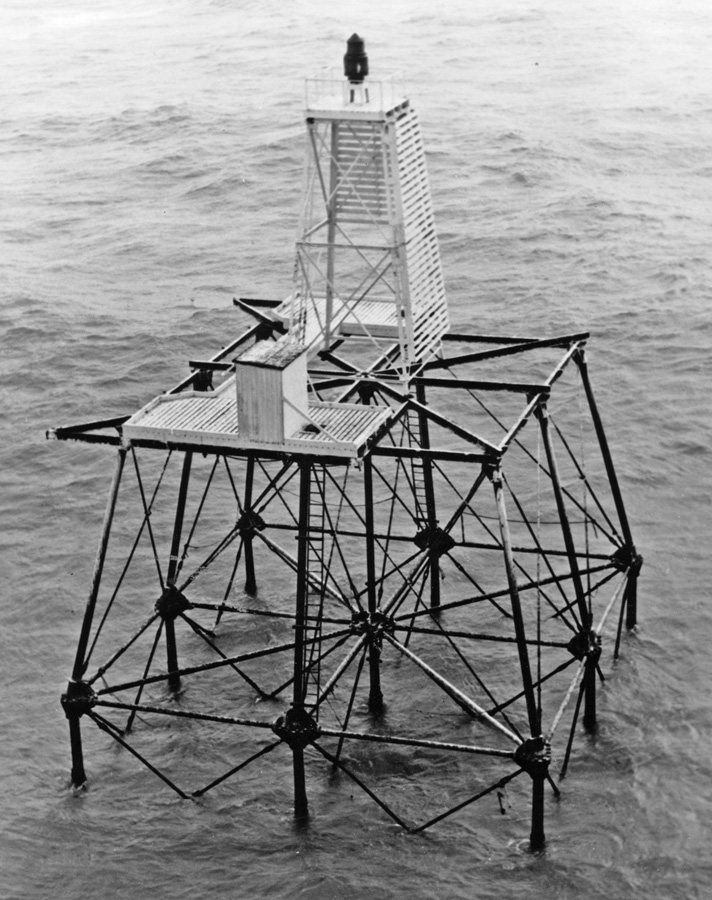
Despite frequent storms and repeated structural repairs, the lighthouse continued to serve mariners faithfully into the twentieth century. Following the devastating hurricane of 1919, repairs were made and wire glass installed to protect the lantern. In August 1925, the light was automated with an acetylene system, eliminating the need for keepers. While automation improved efficiency and safety, it also marked the beginning of the station’s physical decline. The unattended dwelling was vandalized, and in 1953 the wooden superstructure was removed, replaced by a skeletal tower atop the original screwpile foundation.
In 1985, the Coast Guard had a new square pyramidal tower built atop four straight piles driven into Rebecca Shoal. The Coast Guard abandoned this tower in 2014, after saying it was “unstable and considered unsafe.” A storm in 2016 mostly destroyed the tower, and a lighted buoy is now used to mark Rebecca Shoal.
Rebecca Shoal Lighthouse was the last staffed lighthouse built in the Florida Keys—and the most difficult. Its history is one of persistence against extraordinary natural forces, engineering ingenuity tested to its limits, and human endurance in isolation. Though its keeper’s house is gone, the legacy of Rebecca Shoal endures as a testament to the determination that finally illuminated one of the darkest and most dangerous stretches of the Florida Reefs.