Charlotte Harbor (Cape Haze), FL 
Select a photograph to view a photo gallery
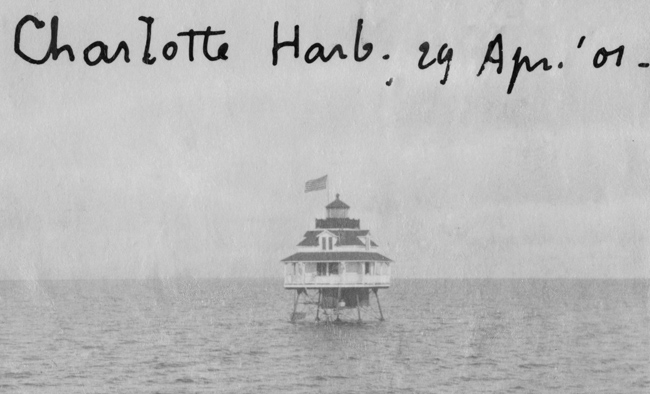
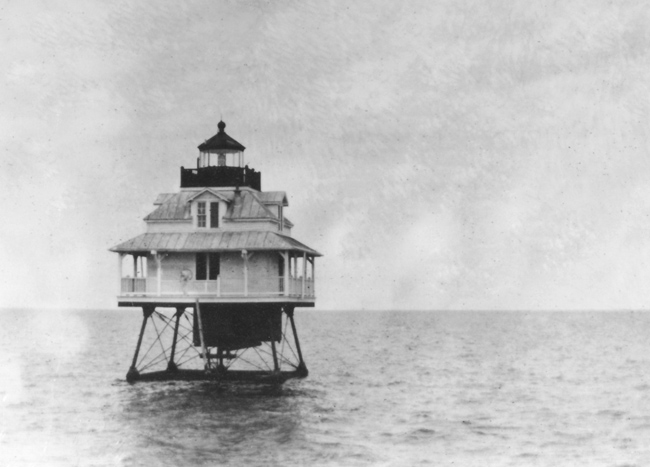
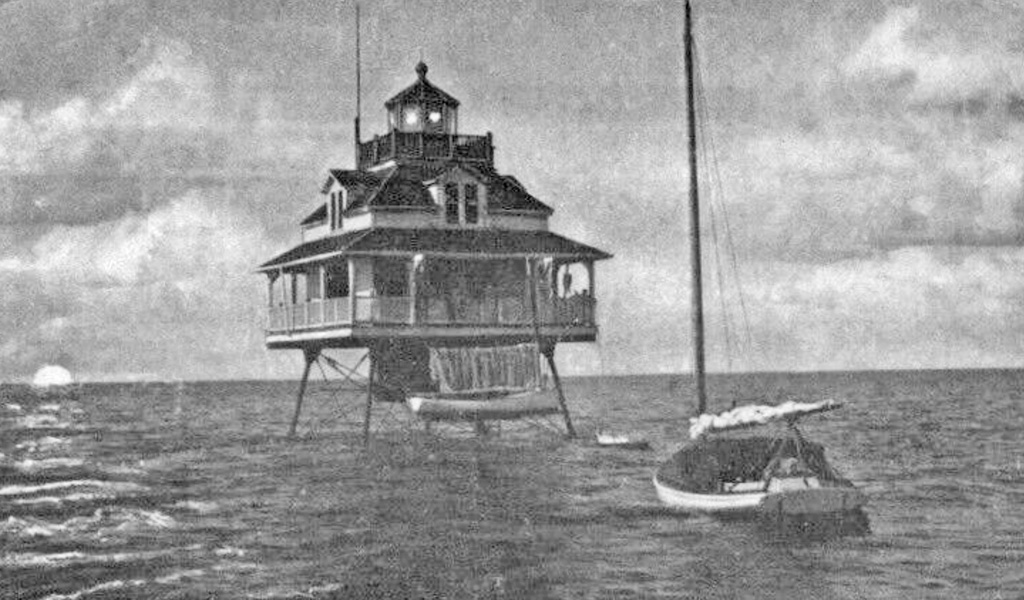
Photo Gallery
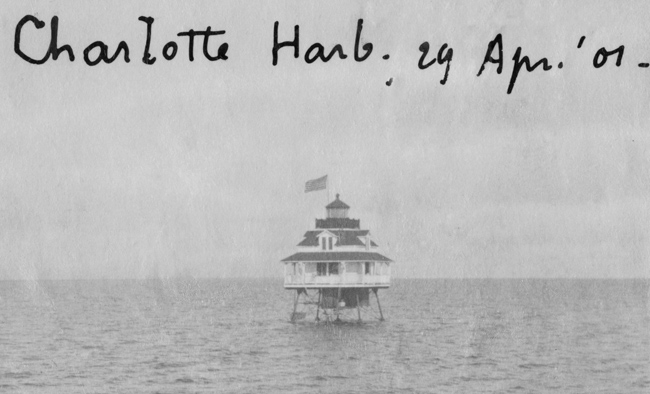
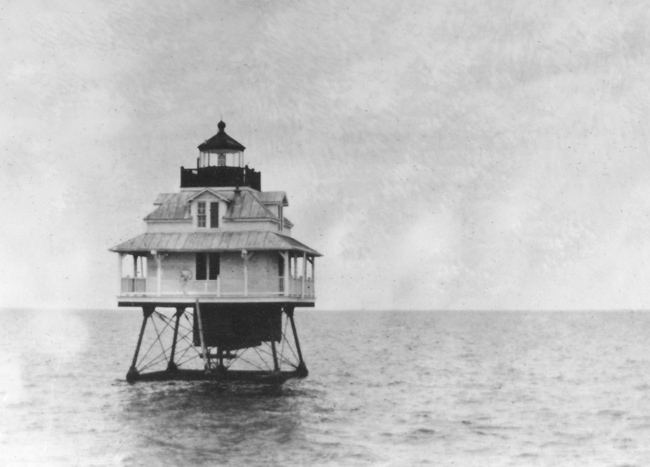
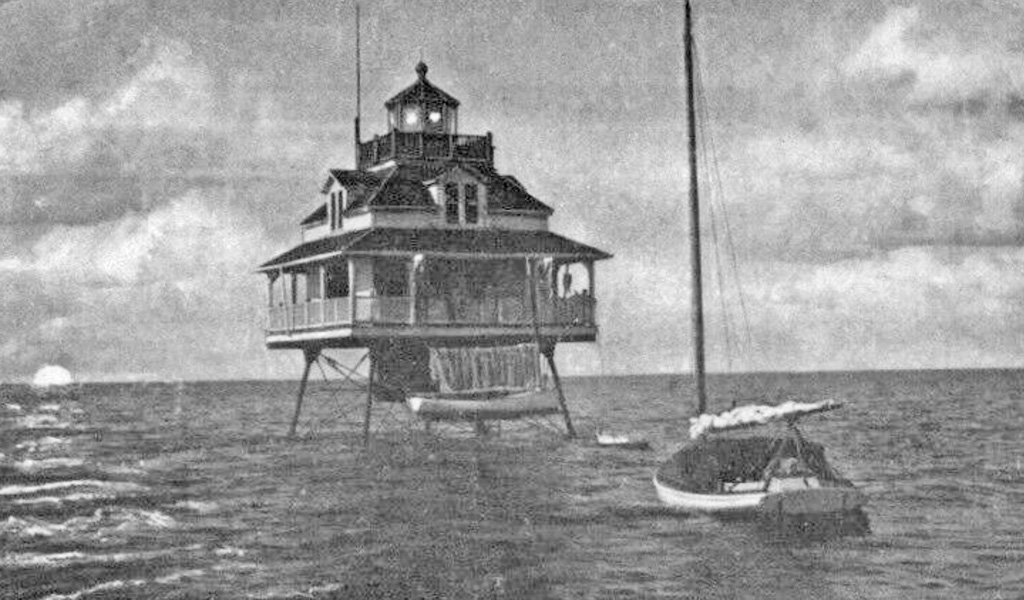
Photo Gallery
Photo Gallery
The establishment of Charlotte Harbor Lighthouse arose directly from the late nineteenth-century transformation of Florida’s Gulf Coast from a sparsely settled frontier into a region of growing commercial and maritime importance. Situated near the center of Charlotte Harbor and complemented by lights at Boca Grande Pass on Gasparilla Island, the lighthouse formed part of a coordinated system designed to guide vessels safely through one of Florida’s most complex and strategically important estuarine entrances.
Charlotte Harbor is the second largest estuary in Florida and one of the most significant open-water estuaries in the United States, encompassing approximately 290 square miles. Located roughly 100 miles south of Tampa Bay along Florida’s west-central coast, the harbor is semi-enclosed by Cape Haze and a chain of barrier islands—including Gasparilla, Boca Grande, Cayo Costa, Captiva, and Sanibel—which shelter the interior waters from the Gulf of Mexico. Boca Grande Pass serves as the primary deep-water entrance to the harbor and has long been recognized as one of the deepest natural passes on Florida’s Gulf Coast.
The harbor receives freshwater inflow from three major rivers—the Myakka, Peace, and Caloosahatchee—along with numerous smaller streams, creating a dynamic estuarine environment of shifting shoals, tidal currents, and sandbars. While these waters supported rich fisheries and provided inland access for commerce, they also posed serious navigational hazards, especially for deep-draft vessels attempting to enter or cross the harbor after passing through Boca Grande Pass.
By the 1880s, Punta Gorda, located at the head of Charlotte Harbor, had emerged as a transportation hub and the southern terminus of the Florida Southern Railroad. Anticipated steamship connections between the railroad and Gulf ports greatly increased the need for reliable aids to navigation, prompting renewed federal attention to the harbor’s entrance and interior waters.
In 1887, the Lighthouse Board formally recognized the growing commercial importance of Charlotte Harbor and recommended the establishment of a light at the entrance. The Board noted that vessels approaching the harbor needed clear guidance to avoid the shoals flanking Gasparilla and Lacosta Islands and to safely navigate the outer approaches. An appropriation of $35,000 was recommended to establish a light or lights and associated aids.
Congress acted on this recommendation on October 2, 1888, appropriating $35,000 for the construction of a light or lights to guide vessels into Charlotte Harbor. The following year, planning moved forward, with designs prepared for multiple structures to mark both the harbor entrance and its interior navigation channels. Work was scheduled to commence as soon as plans and materials were completed.
By the end of 1890, the lighthouse system envisioned by the Lighthouse Board had taken physical form. Three principal aids were established: a primary lighthouse near the southern end of Gasparilla Island, a nearby range beacon, and a screw-pile lighthouse located near the middle of Charlotte Harbor—later known as Charlotte Harbor Lighthouse or Cape Haze Lighthouse.
The central harbor lighthouse was constructed on a brown iron screw-pile foundation in approximately ten feet of water, about 2½ miles southeast by east from Cape Haze. Its superstructure consisted of a square, white, one-and-a-half-story frame dwelling with green blinds and a brown roof, surmounted by a black lantern. The lighthouse displayed a fixed red fifth-order light, with a focal plane 37 feet above mean sea level, illuminating the entire horizon. In clear weather, the light was visible for approximately 8½ nautical miles.
The lighthouse formed a vital interior reference point for vessels that had safely passed Boca Grande Pass and were navigating toward Punta Gorda or other destinations within the harbor. Its position near the center of Charlotte Harbor made it particularly important for avoiding shoals and maintaining safe courses across open water.
Additional lights were officially placed in service at the harbor entrance. Gasparilla Island Lighthouse, erected near the southern extremity of the island on the north side of Boca Grande Pass, displayed a three-and-a-half-order fixed white light varied by a red flash every 20 seconds. The focal plane stood 44 feet above mean sea level, with a visible range of 12 nautical miles.
The lighthouse was mounted on brown iron piles and incorporated a white one-story keeper’s dwelling with green blinds and a shingled roof. A second dwelling nearby provided additional accommodation. A range beacon, located approximately 725 feet southwest by west of the lighthouse, exhibited a fixed white light over a limited arc, assisting mariners in aligning their approach through the pass.
Together, these entrance lights worked in conjunction with Charlotte Harbor Lighthouse to form a cohesive navigational system guiding vessels from the open Gulf through Boca Grande Pass and safely into the harbor’s interior waters. The three lights entered service on December 31, 1890.
John Watkins served as the first keeper of Charlotte Harbor Lighthouse at an annual salary of $600, transferring in from Dry Tortugas Lighthouse, where he had served as an assistant. He was furnished a 16-foot boat, reflecting the isolated nature of the offshore station and the need for reliable access to shore.
Throughout the 1890s, the Lighthouse Service continued to invest in the station’s upkeep and functionality. In 1892, a new boat winch equipped with leading blocks was installed to improve the handling of supplies and small craft. Repairs and maintenance continued into the late 1890s, with materials purchased and delivered for ongoing preservation.
In 1900, extensive maintenance work was undertaken. The ironwork was scaled, scraped, and repainted, the landing platform repaired, and the roof put in order. An oil house was constructed beneath the keeper’s dwelling, suspended on iron rods above the platform. The color of the light was changed at this time from fixed red to fixed white.
As lighthouse technology advanced in the early twentieth century, manned offshore stations like Charlotte Harbor became increasingly expensive to operate. On October 1, 1912, the lighthouse was automated with the installation of an acetylene lighting system, eliminating the need for a resident keeper and marking a significant transition in the station’s operational life.
Robert J. Fine, who had been in charge of Charlotte Harbor Lighthouse since 1899, resigned in June 1912, claiming he was full of rheumatism and paralysis. He was fifty years old at the time. His health must have improved as he returned to the service in 1917 and continued to serve as a keeper until 1927. Charles H. Williams was promoted from assistant to head keeper of Charlotte Harbor Lighthouse upon Fine’s resignation, and he oversaw the light’s automation.
By World War II, changes in navigation technology and harbor use further reduced the need for the original structure. In 1943, a ten-foot-tall tower replaced the wooden superstructure of Charlotte Harbor Lighthouse. The wooden cottage was sold to the Punta Gorda Fish Company, which had it barged to Tarpon Inlet for use as employee housing—a practical but ultimately temporary reuse of the building.
Over time, even the relocated structure disappeared, and in 1975 the iron pilings from the original lighthouse were removed from Charlotte Harbor, erasing the last physical traces of the station from its original site.