Fort McRee (Fort McRae), FL 
Select a photograph to view a photo gallery
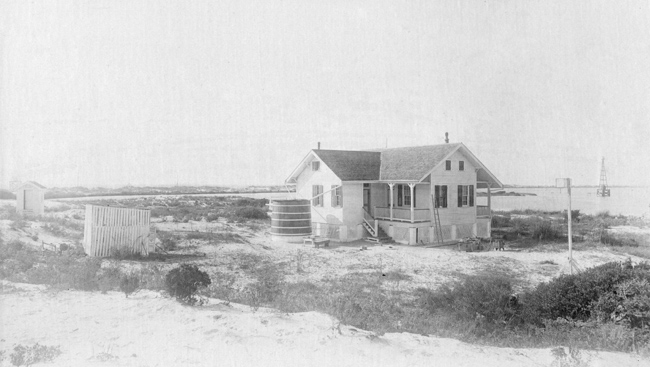
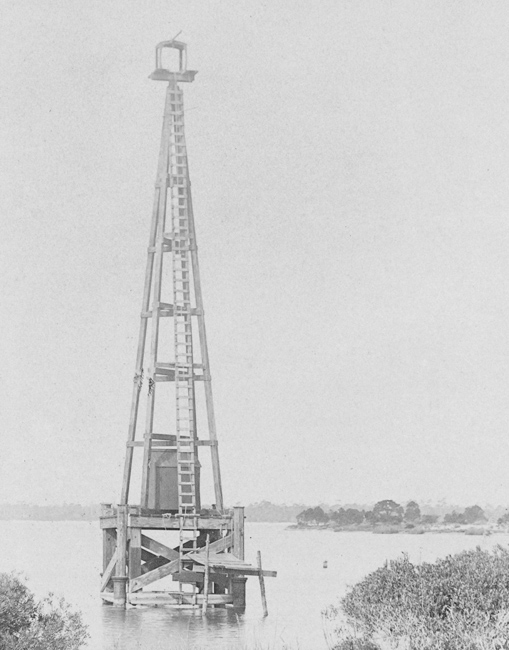
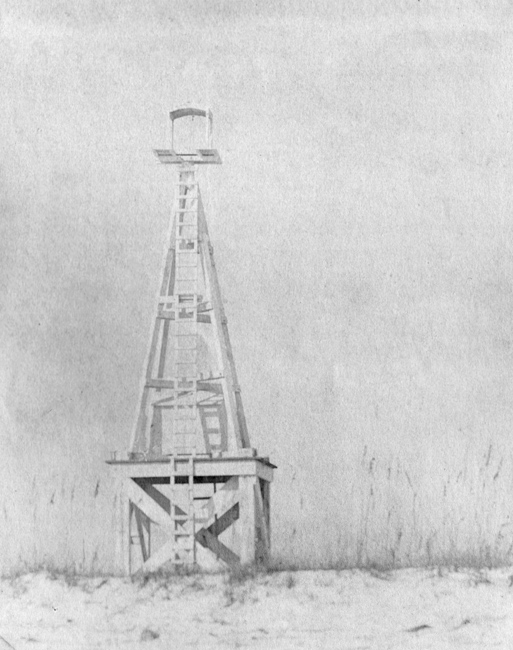
Photo Gallery
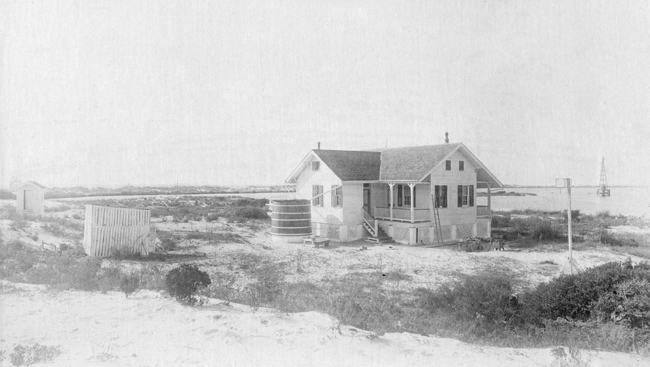
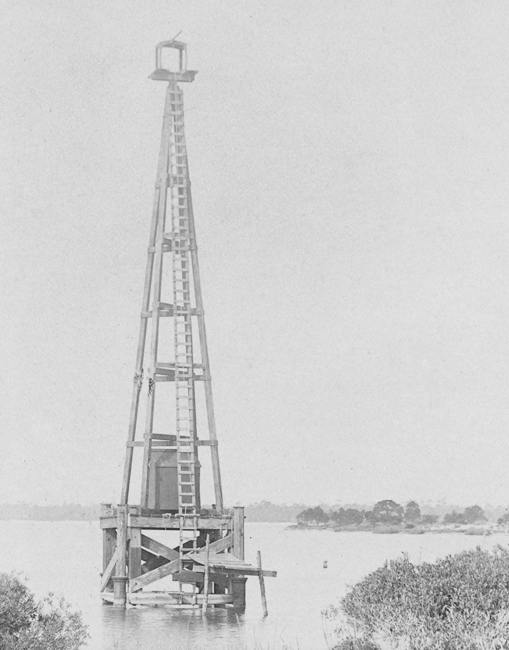
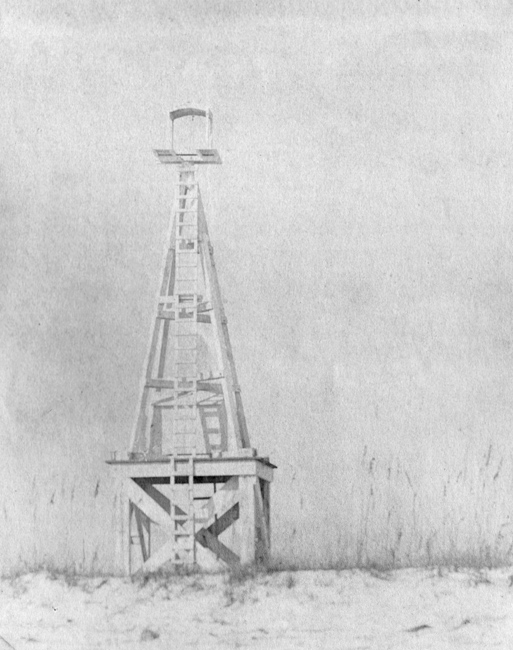
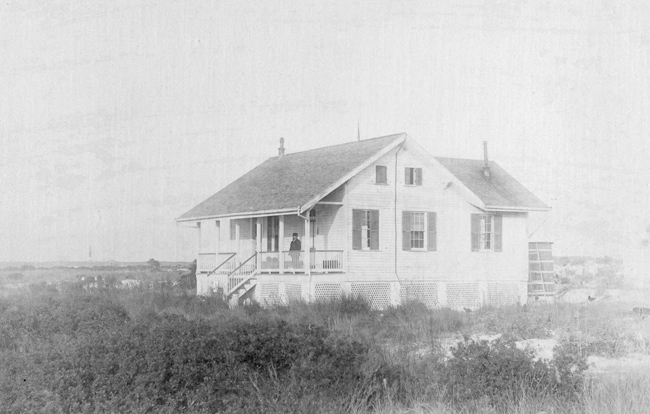
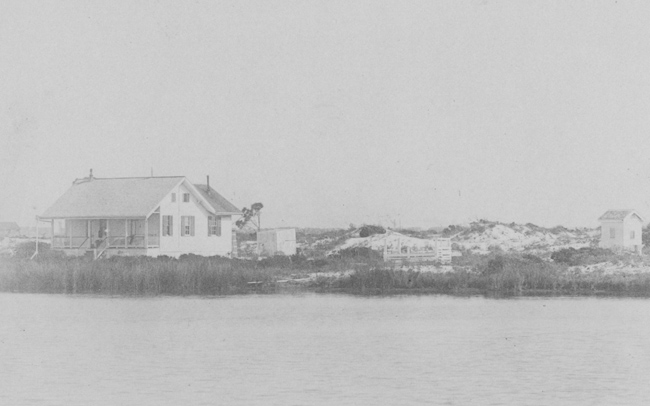
Photo Gallery
Photo Gallery
The entrance to Pensacola Harbor has long been among the most strategically significant and navigationally complex passages along the northern Gulf of Mexico. Shifting sand bars, narrow channels, and strong tidal currents made precise navigation essential for vessels entering one of the Gulf Coast’s finest deep-water harbors. To meet these challenges, the federal government developed an interconnected system of lighthouses and range lights at the harbor’s entrance, including those associated with Fort McRee—also historically known as Fort McRae.
Fort McRee stood on the western side of the harbor entrance, opposite Fort Pickens on Santa Rosa Island and near Fort Barrancas on the mainland. Together, these fortifications guarded Pensacola Bay and protected both military and commercial interests. The same geography that made the site valuable for defense also made it critical for navigation, particularly for vessels crossing the outer bar and aligning themselves for the approach into the bay.
|
One persistent point of confusion in both military and lighthouse records is the spelling of Fort McRee versus Fort McRae. The fort was officially named Fort McRee in honor of Colonel William McRee of the U.S. Army Corps of Engineers. However, nineteenth-century Lighthouse Board reports, correspondence, and nautical publications frequently rendered the name as “McRae.” This alternate spelling appeared so often in official lighthouse documentation that it became effectively institutionalized within the Lighthouse Service, even though it was technically incorrect. Modern historians generally recognize “Fort McRee” as the correct military name while acknowledging “Fort McRae” as a historically entrenched variant in lighthouse records.
Federal efforts to improve navigation at Pensacola accelerated in the mid-nineteenth century. On August 3, 1854, Congress appropriated $25,000 for rebuilding, elevating, and outfitting Pensacola Lighthouse with the most approved illuminating apparatus. Two years later, on August 18, 1856, an additional $30,000 was appropriated for the establishment of proper range lights for crossing the bar at the entrance to Pensacola Harbor and for completing the lighthouse authorized in 1854.
By 1857, the first-class Pensacola Lighthouse was under construction and expected to be completed during the working season. Plans called for range beacons to be erected once the lighthouse was finished, providing mariners with visual alignments to safely cross the bar and make night anchorages. This system was completed in January 1859, when the new Pensacola Lighthouse and new sets of range lights were finished, creating a coordinated navigational network guiding vessels from the Gulf into Pensacola Bay.
The Civil War brought widespread disruption to navigation along the Gulf Coast. Lighthouses and range lights were extinguished or destroyed to prevent their use by enemy vessels, and the Pensacola area suffered heavily during the conflict. After the war, restoring navigational aids became essential to the revival of commerce and shipping.
By 1866, steps were underway to re-establish range beacons marking the entrance to Pensacola Harbor. Work began on November 3, 1866, to rebuild the Barrancas and Caycas (or Fort McRee/McRae) range beacons that had been destroyed during the war. The effort was notable for its speed and efficiency. Wooden structures were framed in advance, transported to the sites, and erected despite difficulties in landing materials by boat, particularly at the Caycas range.
In just sixteen days, five structures serving the Bar, Barrancas, and Caycas ranges were erected, whitewashed, painted, and equipped with illuminating apparatus consisting of steamer’s lenses. The Caycas range was lighted on December 22, 1866, and the Barrancas range followed on February 4, 1867, after delays caused by misunderstandings that kept the assigned keepers from reporting on time.
Despite the success of this restoration, the rebuilt ranges were short-lived. On January 1, 1868, the Barrancas and Caycas range beacons were discontinued as no longer necessary for the commerce of Pensacola. Their apparatus and fixtures were removed and carefully stored, foreshadowing their eventual reuse decades later.
Growing commercial activity and changing channel conditions led to renewed investment in navigational aids near Pensacola in the late nineteenth century. On March 3, 1887, Congress appropriated $17,250 for lights and other aids to navigation serving the channels leading to Pensacola, including range lights near Fort McRae (McRee) and Fort Barrancas.
The new Fort McRee Range Lights were placed in service on February 15, 1888. The front range beacon stood south and west of Fort McRee, about 800 feet back from the low-water line. It was a square pyramidal framework on a pile base, painted white, with its lantern approximately thirty-six feet above mean low water, exhibiting a fixed white light. The rear range beacon stood in a shallow lagoon about 850 feet behind the front beacon. Painted red, its lantern was about forty-nine feet above mean low tide and displayed a fixed red light.
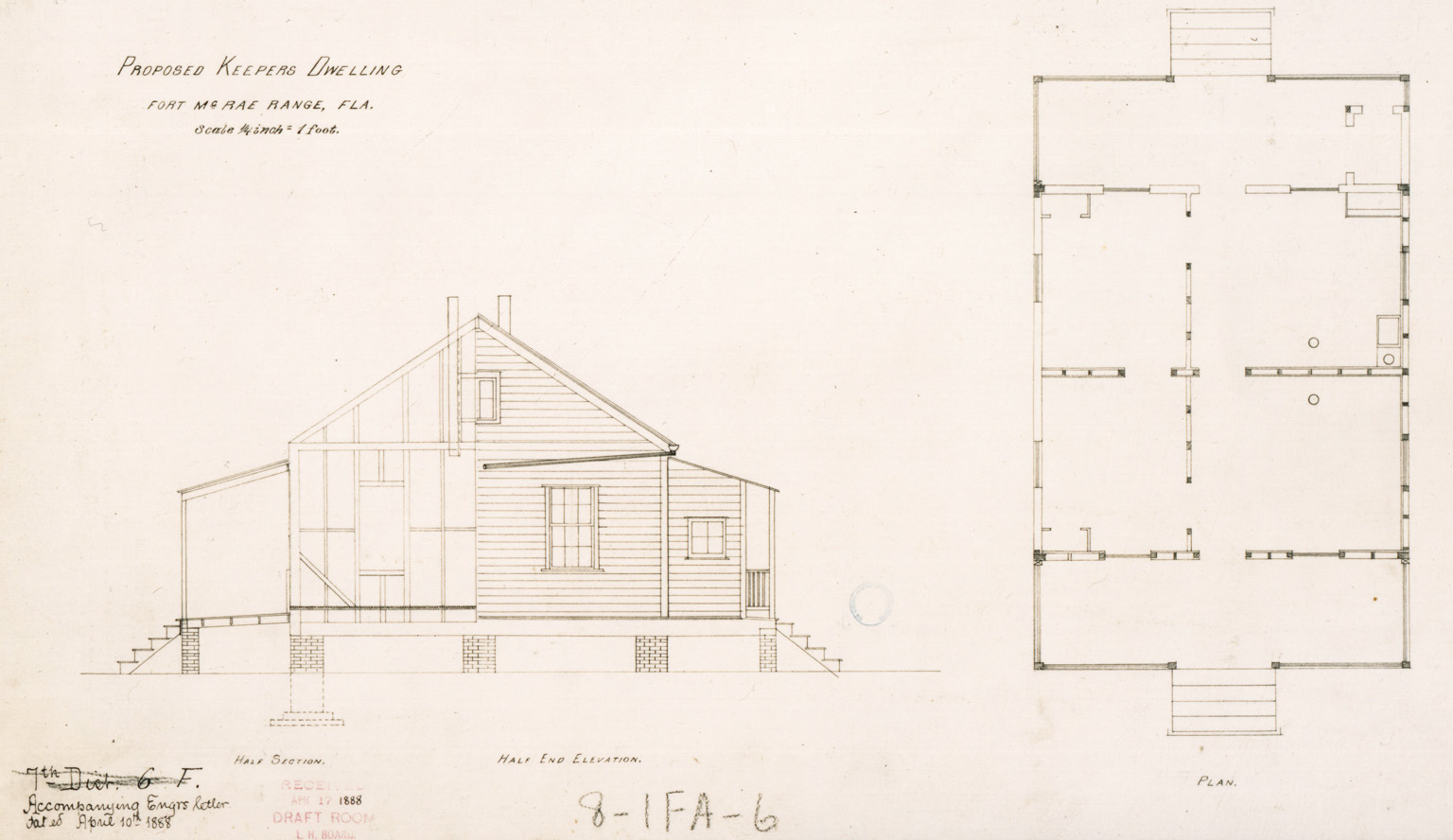
Together, these beacons provided a precise visual alignment that guided vessels across the bar and into the harbor. A keeper’s dwelling was planned, and by 1889 a one-story frame dwelling on brick piers had been erected near the front range, complete with kitchen, piazzas, cistern, and outbuildings.
Throughout the 1890s and early 1900s, Fort McRee Range Lights were repeatedly improved and repaired. Platforms and lantern houses were added, foundations reinforced to resist marine borers, wharves constructed for access, and ladders and hoisting gear upgraded. Storms periodically damaged the structures, including a severe storm in May 1890 that required the front beacon to be taken down and rebuilt 100 feet farther back on the same range.
At the turn of the twentieth century, the Lighthouse Service modernized the station. In 1901, the front beacon was moved slightly westward to better cover the best water across the bar, equipped with a new five-day lens lantern, and its light changed to red. The rear beacon’s focal plane was raised, its color changed to white, and new hoisting gear installed. A substantial brick oil house was constructed in 1902, reflecting the increasing emphasis on fire safety and durability.
In 1905, Fort McRee Range Lights were discontinued as aids to navigation. The beacons were taken down, and their materials stored. This change did not mark the end of navigational responsibilities in the area, however. Instead, attention shifted to newer aids designed to guide vessels along an improved channel in Pensacola Bay.
That same year, Fort McRee Cut-Off Range was established to assist vessels after leaving Caucus Cut. A new rear beacon was built to form a range with the Caucus Cut front light, enabling vessels to run safely up the bay. The keepers who had served the Fort McRee Range continued to live near the old fort and were responsible for maintaining both the Caucus Cut and Fort McRee Cut-Off ranges.
Their duties became especially challenging after the devastating hurricane of September 27–28, 1906, which destroyed the station dwelling. The keepers erected a temporary shanty and continued their work under difficult conditions. In 1907, the storm-destroyed front beacon serving both ranges was rebuilt on its original site, restoring essential guidance to mariners navigating the bay.
In 2025, Caucus Channel Range Lights, a modern set of lights near the remains of Fort McRee, continue to guide mariners into Pensacola Harbor.