Battery Gladden, AL 
Select a photograph to view a photo gallery
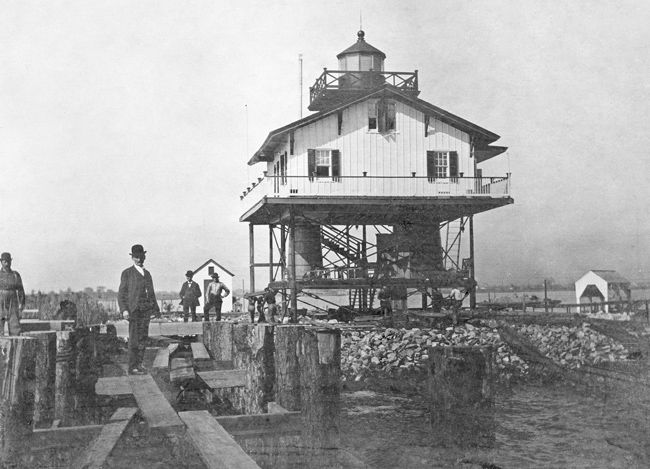
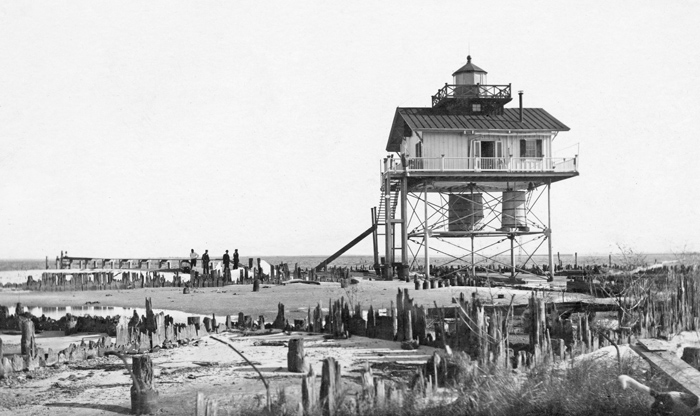
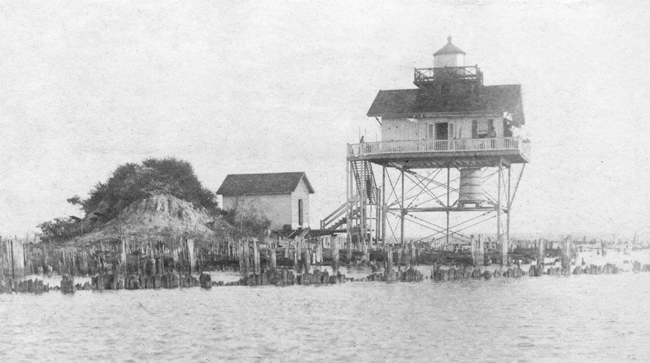
Photo Gallery
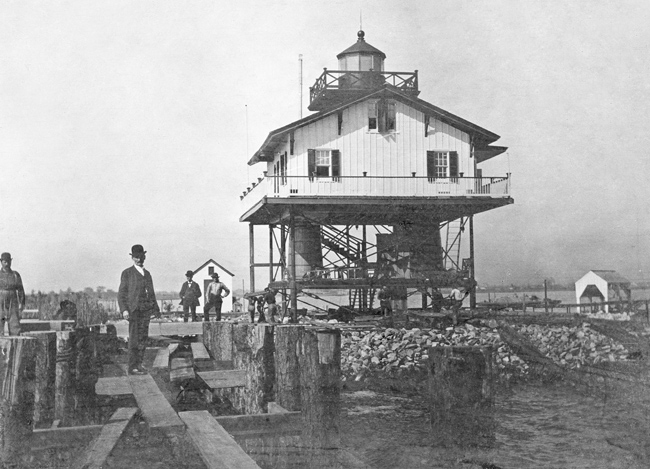
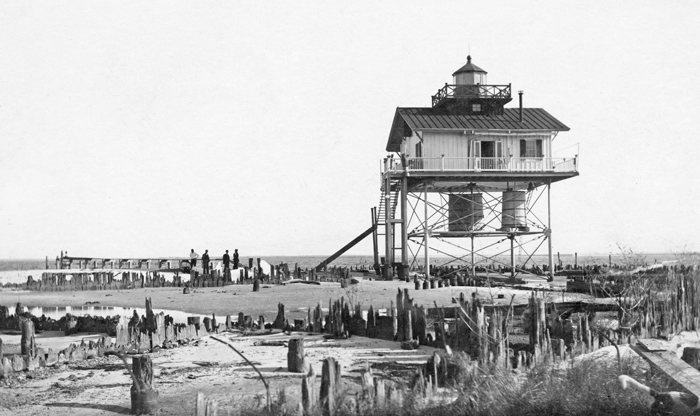
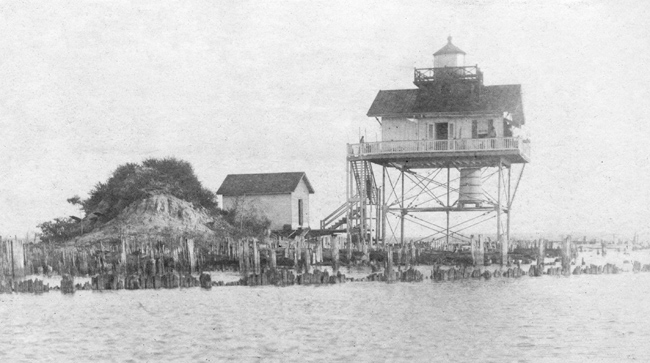
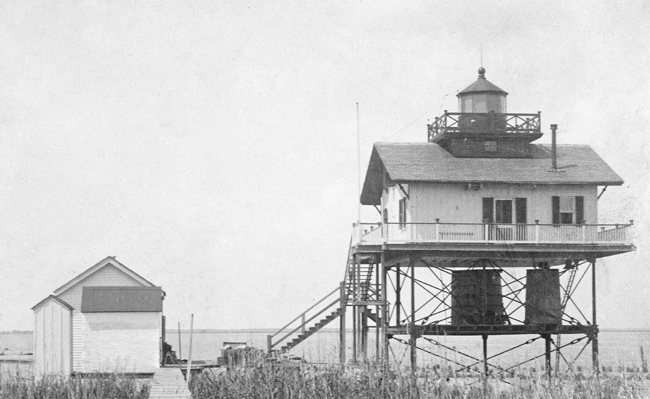

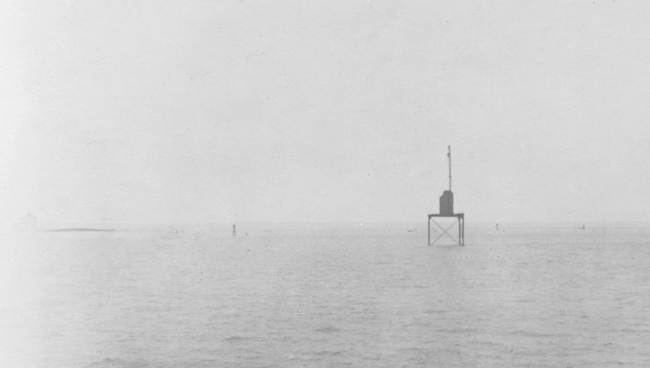
Photo Gallery
Photo Gallery
The history of Battery Gladden Lighthouse is inseparable from the story of Mobile Bay’s recovery after the Civil War. Rising from the ruins of a Confederate fortification at the head of Mobile Bay, the lighthouse marked a turning point in the transformation of Mobile from a war-battered port into a modern commercial harbor. For more than four decades, Battery Gladden Light guided vessels through shifting channels, storms, and technological change, standing as a symbol of both maritime resilience and engineering adaptation.
During the Civil War, the Confederacy constructed Battery Gladden as part of a defensive ring protecting the city of Mobile. Situated near the south end of Pinto Island, the battery consisted largely of broken brick, rubble, and earthworks, mounting seven heavy guns intended to deter Union naval forces. Although the battery never saw direct combat, its presence—and the later abandonment of its structure—would profoundly influence the site’s postwar maritime use.
Following the war, Mobile’s commercial fortunes slowly revived. Cotton exports never regained their antebellum dominance, but the lumber trade flourished, and the City of Mobile began purchasing and rehabilitating neglected wharves. The U.S. Army Corps of Engineers renewed efforts to dredge a reliable ship channel from the bay’s anchorages to the city’s docks, a task complicated by shoaling, storms, and the remnants of wartime obstructions. By the late 1880s, persistent dredging finally produced a dependable channel, setting the stage for improved navigation aids.
Prior to the Civil War, Choctaw Point Lighthouse had served as a critical marker near the mouth of the Mobile River. Changes in the channel—many of them the result of wartime defensive works—rendered that light ineffective. In response, the Lighthouse Board resumed prewar plans in 1870 to establish a new lighthouse better aligned with the altered channel. Under an appropriation for “reestablishing lights on the southern coast,” an iron screw-pile lighthouse was purchased and shipped to Mobile to replace the obsolete Choctaw Point Light.
Progress, however, was abruptly halted by the Act of July 12, 1870, which swept the remaining funds back into the U.S. Treasury. For a time, the future of the new lighthouse remained uncertain. Congressional authorization finally arrived on March 3, 1871, with an appropriation of $5,000 for Battery Gladden Light Station.
The chosen site lay just offshore from the ruins of Battery Gladden, in shallow water at the head of Mobile Bay, approximately five-eighths of a mile east of Choctaw Point. Because the former battery was composed of unstable rubble, engineers determined that driving piles directly into the island was impractical. Instead, the lighthouse was erected in about seven feet of water, just beyond the edge of the artificial island, where screw-piles could be securely anchored into the bay bottom.
The structure followed the standard Light-House Board design for screw-pile stations: a frame dwelling mounted on five wrought-iron screw-piles and surmounted by a fourth-order lantern. Due to the high cost of labor in the postwar South, the hexagonal wooden superstructure was prefabricated in the North and shipped south for assembly. Construction began in December 1871 with the erection of a temporary wharf and workmen’s quarters.
By March 11, 1872, the building was fully furnished, and on the evening of April 8, 1872, the light was exhibited for the first time. The fixed white fourth-order light illuminated the entire horizon and immediately assumed its role marking the entrance to Mobile Harbor. The iron piles were painted red, while the dwelling and tower were finished in a straw color. Keeper Levi Mangold oversaw the station, assisted by two assistant keepers who also tended the chain of channel lights leading up the bay.
A boardwalk connected the lighthouse to the remains of Battery Gladden, where outbuildings—including the oil house and even a chicken coop—were located. Over time, storms steadily eroded the old fortification, and within two decades much of it had nearly disappeared beneath the bay’s waters.
Battery Gladden Lighthouse quickly became an indispensable aid to navigation. A red sector was introduced in the fourth-order lens to mark the critical turning point from Choctaw Pass Channel into the upper dredged channel. As Mobile’s shipping traffic increased, the lighthouse was also designated the rear range light for Dog River Bar, further emphasizing its navigational importance.
The station endured a series of challenges common to exposed bay structures. In 1879, sparks from the kitchen smokepipe ignited the shingle roof. The shingles were promptly removed and replaced with a fire-resistant tin roof. Routine maintenance followed in the 1880s, including scraping and repainting all ironwork, installing mineral-oil lamps, and repairing lightning damage sustained in 1883.
By the mid-1880s, improvements expanded beyond the tower itself. A new storehouse was constructed in 1886, followed by surveys of the site and reservation. Wharves were rebuilt, boats replaced, and walks repaired as storms repeatedly tested the station’s resilience. A severe gale in August 1888 proved especially destructive, washing away wharves, walks, and outbuildings and undermining the oil-house foundation. In response, the oil house was raised four feet, new piles were driven, and extensive rebuilding followed.
Throughout the 1890s, the Lighthouse Service continued to invest in Battery Gladden. New wharves, improved oil houses, lantern repairs, and an iron lantern floor were installed. In 1898, the lens was repaired, improved lamps were furnished, and even the keeper’s boat received attention after being damaged in a violent storm.
The turn of the twentieth century brought both tragedy and innovation. In 1903, major structural improvements were undertaken. Over 1,600 tons of ballast rock were placed around the foundation to stabilize the station against erosion. A substantial new wharf with a T-head was built, and the brick oil house was rebuilt and enlarged.
While supervising this work, R. T. Markham, a foreman in the Lighthouse Department, fell about thirty feet when the lighthouse’s gallery railing gave way. He died from internal injuries while being transported to Mobile, casting a somber shadow over the site’s history.
In 1906, Battery Gladden became part of an experiment with acetylene gas lighting. Equipment was installed to produce and store gas from calcium carbide, reflecting a nationwide shift toward automated and buoy-mounted lights. That year’s devastating hurricane destroyed the station’s acetylene light, along with all wharves and outbuildings, forcing the temporary exhibition of a less powerful light.
Reconstruction followed swiftly. A new carbide house, boathouse, expanded walks, and improved wharf structures were built in 1907, restoring the station’s functionality. In 1911, the head keeper at Battery Gladden and his assistant were in charge of twenty-seven acetylene beacon lights along the Mobile Ship Channel and were also expected to help at the Mobile Lighthouse Depot.
In 1912, the Corps of Engineers completed a new dredged channel that eliminated a dangerous bend near Battery Gladden. The improved alignment allowed vessels to proceed directly from the Gulf to Mobile’s docks without tug assistance. With the channel straightened and modern buoyage in place, the lighthouse’s role diminished.
On March 25, 1913, Battery Gladden Lighthouse was officially discontinued, its function replaced by new lights marking the revised channel. Instead of being in charge of Battery Gladden and Mobile Ship Channel Lights, Keeper Patrick Meloncon was now responsible for the Mobile Ship Channel Lights, though he likely continued to live in Battery Gladden Lighthouse. The wooden superstructure remained standing for decades, weathering quietly above the bay. By mid-century it was known simply as the Old Channel Daybeacon.
Battery Gladden Lighthouse was never the tallest or most ornate beacon on the Gulf Coast, but its history reflects the evolution of American maritime navigation—from wartime ruin to industrial recovery, from oil lamps to acetylene gas, and finally to modern channel marking. Rising from the rubble of war, it guided generations of mariners safely into Mobile Harbor and earned its place among the most historically significant lights of Mobile Bay.