
Origins and Construction (1826–1828)
In the early nineteenth century, Natchez, Mississippi, was one of the most important inland ports in the United States. Located nearly 300 miles upriver from the Gulf of Mexico, it served as a critical hub for Mississippi River commerce and marked the southern terminus of the historic Natchez Trace, one of the nation’s earliest overland routes into the western frontier.
Recognizing the city’s commercial importance, Congress passed an act on May 18, 1826, authorizing the Secretary of the Treasury to provide, by contract, for the construction of a lighthouse on the Mississippi River at Natchez. The initial appropriation amounted to only $1,500, a sum that immediately raised concerns within the Treasury Department.
Stephen Pleasonton, Fifth Auditor of the Treasury and acting Commissioner of the Revenue, questioned whether a lighthouse and keeper’s dwelling could be constructed for so modest an amount. In correspondence to Andrew Marschalk, Surveyor and Inspector of the Customs at Natchez, Pleasonton advised that the experiment must nevertheless be attempted, with the understanding that Congress might be asked for additional funds once the true costs were known.
As anticipated, the original appropriation proved insufficient. On March 2, 1827, Congress authorized an additional $1,926 to complete the lighthouse, bringing the total funding to $3,426. Pleasonton instructed Marschalk to advertise for construction proposals and proceed promptly with contracting, provided the bids did not exceed the appropriated amount.
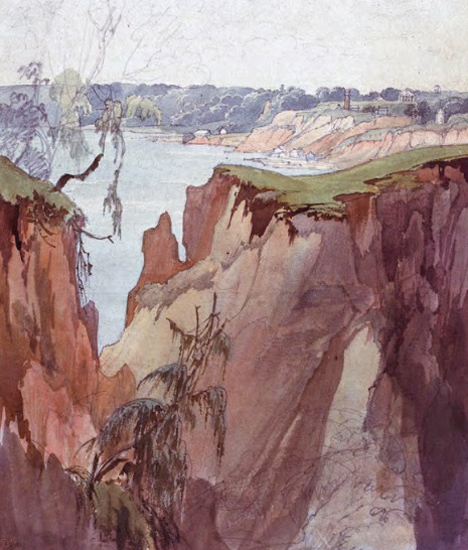
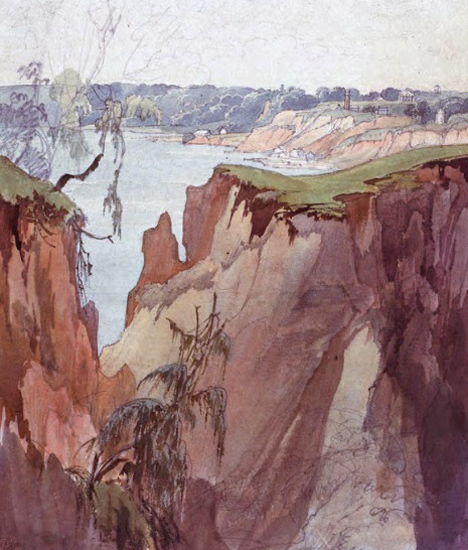
Natchez builder Andrew Brown received the contract and completed the brick lighthouse later in 1827. The tower was erected on the city commons at the foot of what is now High Street, standing atop a bluff overlooking the Mississippi River.
Although the structure was finished by the end of 1827, the lighthouse remained dark for more than six months. The government had failed to arrange for lighting apparatus, a delay that left the completed tower idle. Finally, Boston inventor and contractor Winslow Lewis supplied nine lamps and fourteen-inch reflectors at a cost of approximately $1,000. Natchez Lighthouse officially entered service on July 1, 1828.
Joseph Bowman was appointed the first keeper in 1828, receiving an annual salary of $350.
Operation and Limitations
Natchez Lighthouse was historically significant as the second lighthouse built by the United States on the Mississippi River and the only one constructed above the river’s delta. Despite this distinction, its practical usefulness proved limited.
From its elevated position on the bluff, the light was reportedly visible for approximately twelve miles to the north and south, roughly the distance to the next major bends in the river. However, river pilots found it difficult to use for navigation, as the Mississippi’s winding channel offered few straight lines of approach.
An observer traveling through Natchez in 1835 remarked that the lighthouse would serve better as an observatory than as an aid to navigation, calling it “merely a standing monument.” Federal records likewise suggest that the station received little attention during its short life.
Administrative confusion further undermined the light’s operation. After a new customs collector was appointed in 1836, responsibility for lighthouse supervision was never clearly transferred. As a result, the keeper went unpaid, oil was not purchased, and the light was extinguished for extended periods — reportedly for nearly five years — without generating complaints from river pilots.
The Great Natchez Tornado of May 7, 1840
The event that sealed the fate of Natchez Lighthouse was the catastrophic tornado that struck the region on May 7, 1840, one of the deadliest tornadoes in American history.
The tornado formed southwest of Natchez and followed the course of the Mississippi River before slamming into Natchez Landing, where dozens of flatboats and steamboats were moored. Many of these vessels had gathered at the landing to avoid port taxes elsewhere, placing hundreds of people directly in the storm’s path.
Boats were lifted, smashed, and hurled into the river, resulting in massive loss of life. The storm then tore through the town itself, destroying homes, businesses, and public buildings with little warning. At least 317 people were killed, making the disaster the second-deadliest tornado in U.S. history.
Although Natchez Lighthouse had already fallen into disuse, the tornado inflicted severe damage on the structure. Federal correspondence later acknowledged that the lighthouse had been “materially injured by the Tornado,” and its battered remains became an eyesore in the center of town.
Demolition and Legacy (1841–1842)
In 1841, William Gants, Collector of the Customs at Natchez, formally requested permission from the Treasury Department to demolish the damaged lighthouse and sell its materials. Stephen Pleasonton agreed, noting that the light had not been in use “for some time past.”
By 1842, official reports stated that the lighthouse, erected in 1827 at a cost of $3,426, had been destroyed. Although some accounts attributed its loss to a landslide from the bluff, later clarification made clear that the tornado was the primary cause, with the remaining structure dismantled at the request of local citizens.
No effort was made to replace Natchez Lighthouse. Its brief and troubled existence reflected both the challenges of early river navigation and the limitations of applying coastal lighthouse concepts to the shifting currents of the Mississippi River.