Sabine Pass East Jetty, LA 
Select a photograph to view a photo gallery
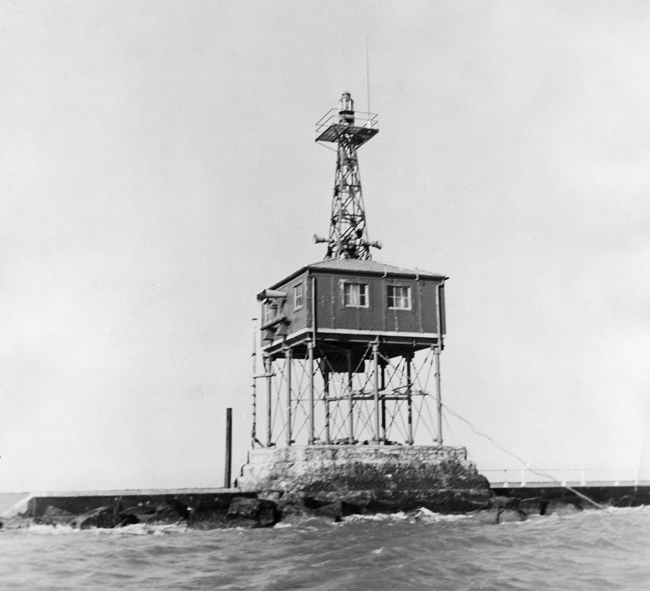
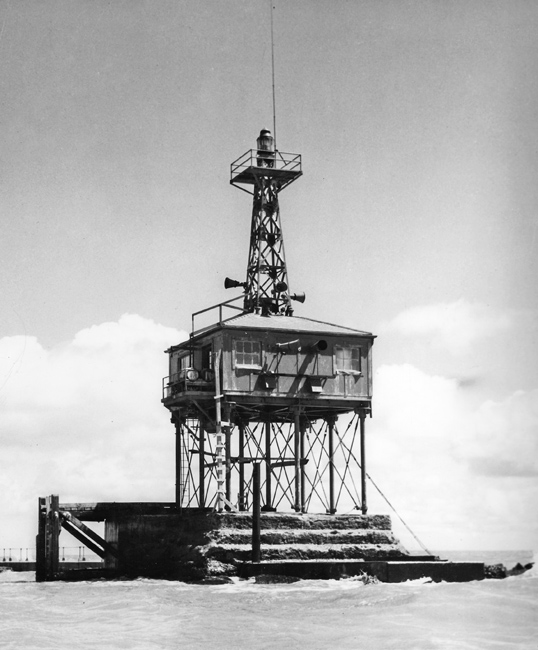
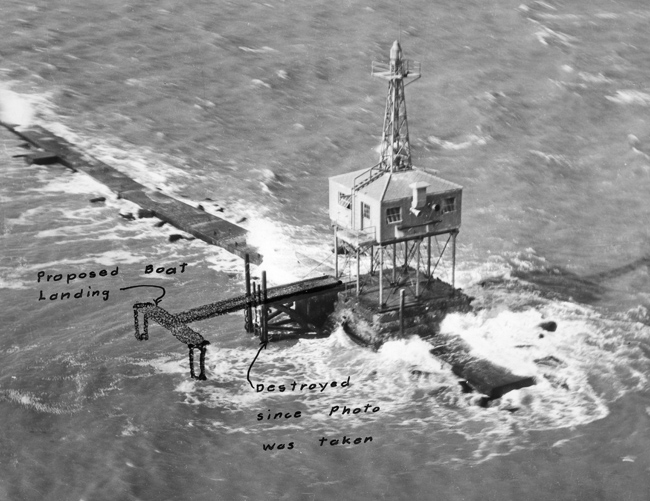
Photo Gallery
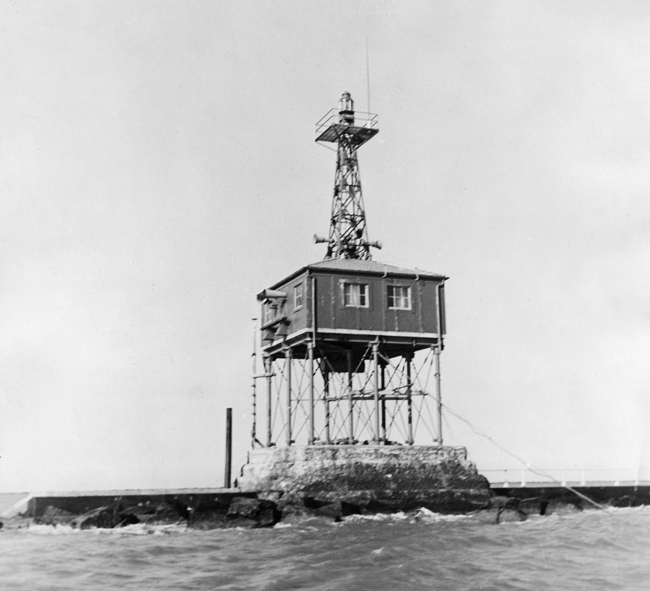
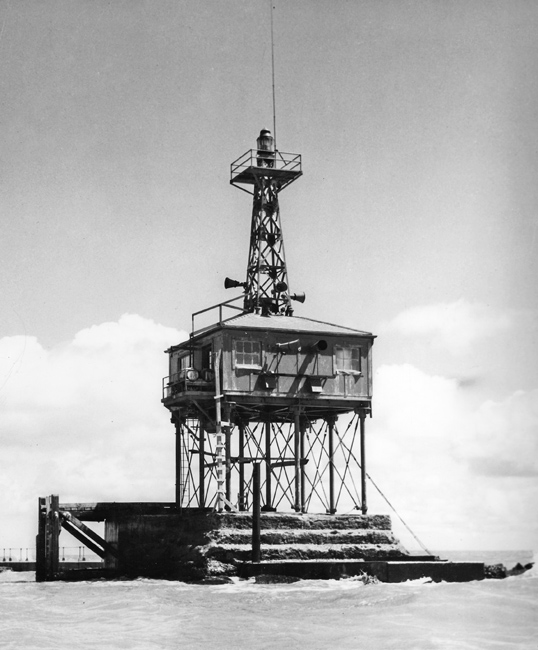
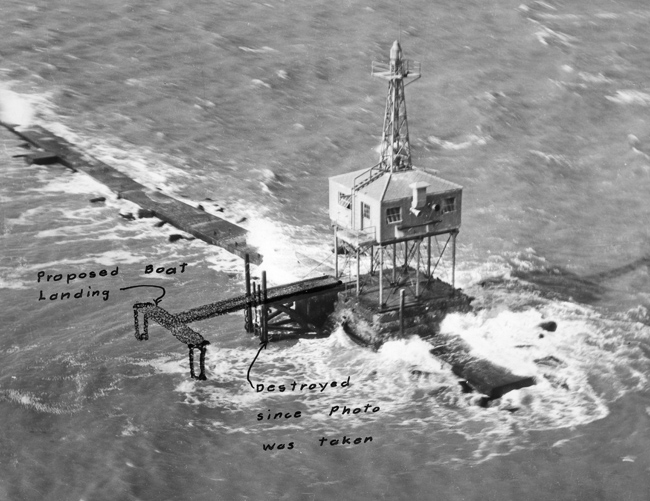
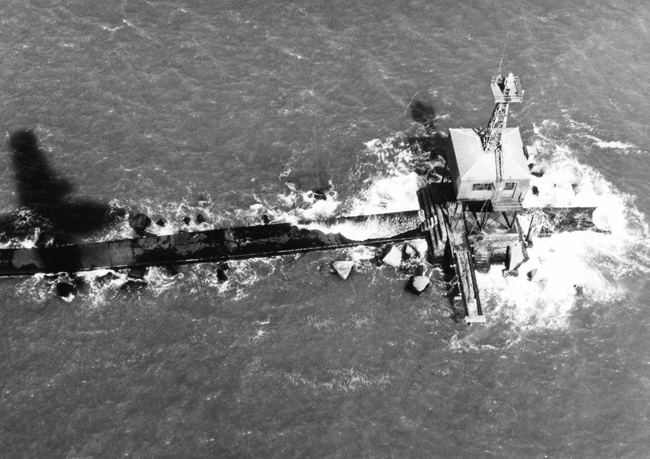
Photo Gallery
Photo Gallery
|
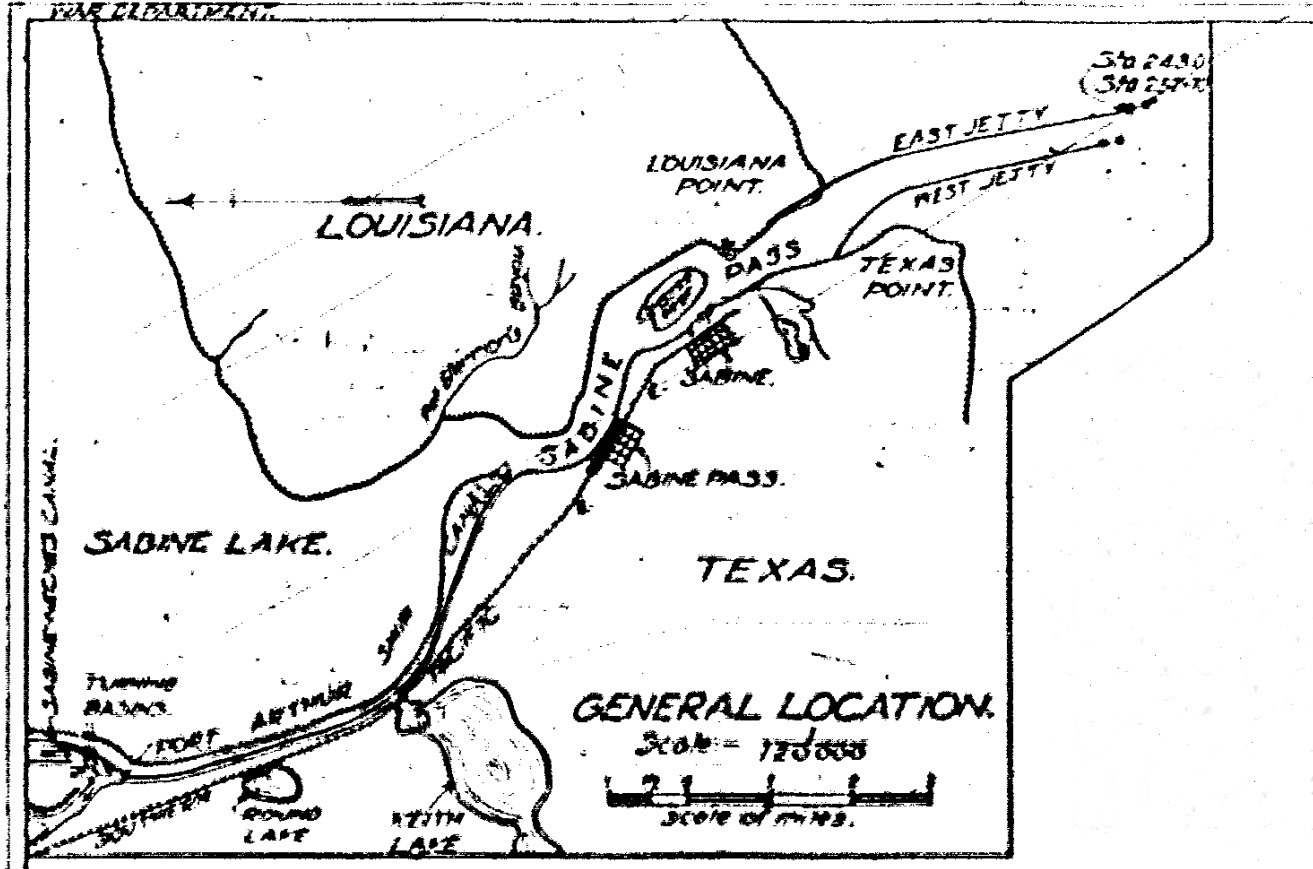
By the mid-1890s, plans for the jetties had been amended to extend them farther seaward. Ultimately, the east jetty reached approximately 25,270 feet (about 4.78 miles), while the west jetty extended some 21,860 feet (about 4.14 miles). As the jetties advanced into deeper water, they created new hazards of their own, particularly for smaller vessels. The low profile of the stone structures made them difficult to see in poor weather or low light.
As early as 1886, District Engineer William H. Heuer observed that the proper way to mark the jetties would eventually be to establish small lights at their outer ends. At that time, however, the jetty heads remained submerged, making such aids impractical. By 1894, conditions had changed. A large concrete block had been poured at the outer end of the east jetty, and District Engineer James B. Quinn, together with Inspector J. B. Coghlan, recommended installing a simple lens lantern atop the structure. They argued that this could be done at minimal cost—estimated at no more than $600—without interfering with ongoing engineering operations, and would be of immediate benefit to commerce.
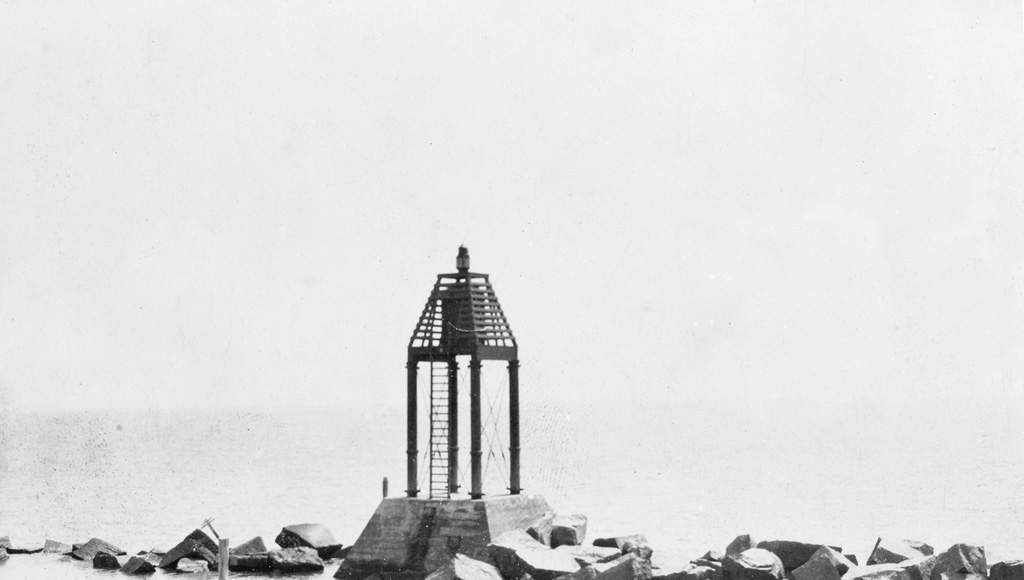
The Bureau of Lighthouses approved the recommendation and Sabine Pass Jetty Beacon was first exhibited on November 25, 1896. Though modest, the beacon marked an important step: it was the first permanent navigational aid placed directly on the jetty itself. A Notice to Mariners described the beacon as a fixed red lens-lantern light that stood on a red box atop a framework of timber supported by four iron pipes projecting above the pyramidal concrete block on the east jetty. The initial light had a focal plane of about twenty-four feet above mean high water.
Repairs and improvements followed, including delivery of materials in 1899 for maintenance and for a landing, underscoring the beacon’s growing operational importance. With the later addition of improved boat landings and conversion to acetylene fuel, this early beacon would remain in service for roughly two decades. Sabine Pass East Jetty Light had dedicated keepers, beginning with Alfred Hoyer (1896-1899) and ending with Kristian Andersen, who served from 1908 until a new flashing red light was established on the jetty in 1917. After this time, a second assistant keeper was added to Sabine Pass Lighthouse, and its keepers also looked after the jetty lights. Kristian Andersen was placed in charge of Sabine Pass Lighthouse at this time in 1917 and served until 1919, when the job of looking after the lights became too much for him.
By the close of the nineteenth century, Sabine Pass was no longer a minor coastal outlet. Shipping statistics told a compelling story. Receipts and shipments increased from $199,042 in 1896 to $475,288 in 1897, with ninety-nine vessels entering and clearing the port and more than 400 trips made that year alone. Net registered tonnage exceeded 100,000, and the largest outbound vessel drew nearly twenty-four feet of water. These figures reflected broader economic forces at work, including the explosive growth of petroleum production following the discovery of oil at Spindletop near Beaumont in 1901 and subsequent finds across the Texas–Louisiana Gulf Coast.
|
Despite repeated renewals of the recommendation in annual reports from 1900 onward, progress was slow. Congress eventually appropriated the requested $40,000 through the Act of May 27, 1908, but the Lighthouse Service hesitated to proceed. The reason lay with the Army Corps of Engineers, which was considering further extension of the jetties to the twenty-five-foot depth contour—possibly two additional miles seaward. Until that question was settled, the Lighthouse Service could not be certain where a permanent light should be placed.
District Lighthouse Inspector H. M. Witzel advised that no work be undertaken until the Corps’ plans were resolved. As a result, year after year—from 1908 through 1916—the appropriation remained unexpended. Meanwhile, the existing aids continued to face harsh conditions. In 1902, the jetty beacon was rebuilt and provided with a new wharf, ladders, and steps to improve access. Even so, the vulnerability of the site was evident. In 1915, a severe storm washed away the wharf, walk, and outbuildings at Sabine Pass and destroyed multiple aids, including the East Jetty Light, entrance range lights, inner range lights, and a channel light.
The long impasse ended after the War Department completed extension of the jetties in 1920. Following a period to allow for settlement of the structure, the Lighthouse Service examined the site in 1921 and began preparing detailed plans. These were reviewed, revised, and finally approved for an unwatched acetylene light with an automatic fog signal operated by carbon-dioxide gas.
Construction was completed in 1924, and Sabine Pass East Jetty Light Station was placed in service that spring. The light was exhibited on March 8, and the fog signal began operation on April 18. The structure was an impressive feat of engineering, designed to withstand the full force of the Gulf. A heavy, stepped concrete foundation was bonded directly into the riprap of the jetty. Above it rose a superstructure of eight-inch solid wrought-iron columns, braced with tie rods and supporting a deck of cast-iron floor plates on steel I-beams. From this deck rose a twenty-foot iron pipe tower carrying a 500-millimeter lantern.
The light stood 50 feet above the water and displayed a distinctive characteristic: a red flash of 270 candlepower to the eastward of the jetty and a white flash to the westward, each of three-tenths second duration every three seconds. An automatic 1,000-pound fog bell, striking a single blow every twenty seconds, provided an audible warning in reduced visibility. A cast-iron shelter housed the gas tanks supplying both the light and the fog signal. The total cost of the project, through June 30, 1924, was $32,730—well within the original appropriation.
With the establishment of the Sabine Pass East Jetty Light and Fog Signal, the effective entrance to Sabine Pass had moved miles seaward. Some officials in Washington suggested that the older Sabine Pass Light Station could now be discontinued, arguing that its usefulness as either a pass or coast light had ended. District Superintendent E. S. Lanphier successfully countered this view, emphasizing the continued value of a watched light staffed by experienced keepers who could be relied upon implicitly, especially given the need to service nearby aids. His defense ensured that the older station remained in operation for decades longer. Sabine Pass East Jetty Light thus represents both an endpoint and a beginning: the culmination of decades of jetty construction and navigational planning, and the start of a new era in which automated aids marked an engineered coastline radically different from the one mariners had known in the nineteenth century. Its history reflects the steady growth of Gulf commerce, the transformative impact of oil and industrial shipping, and the persistence of lighthouse officials who waited nearly thirty years to place a permanent light where it was needed most.
Keepers:
References