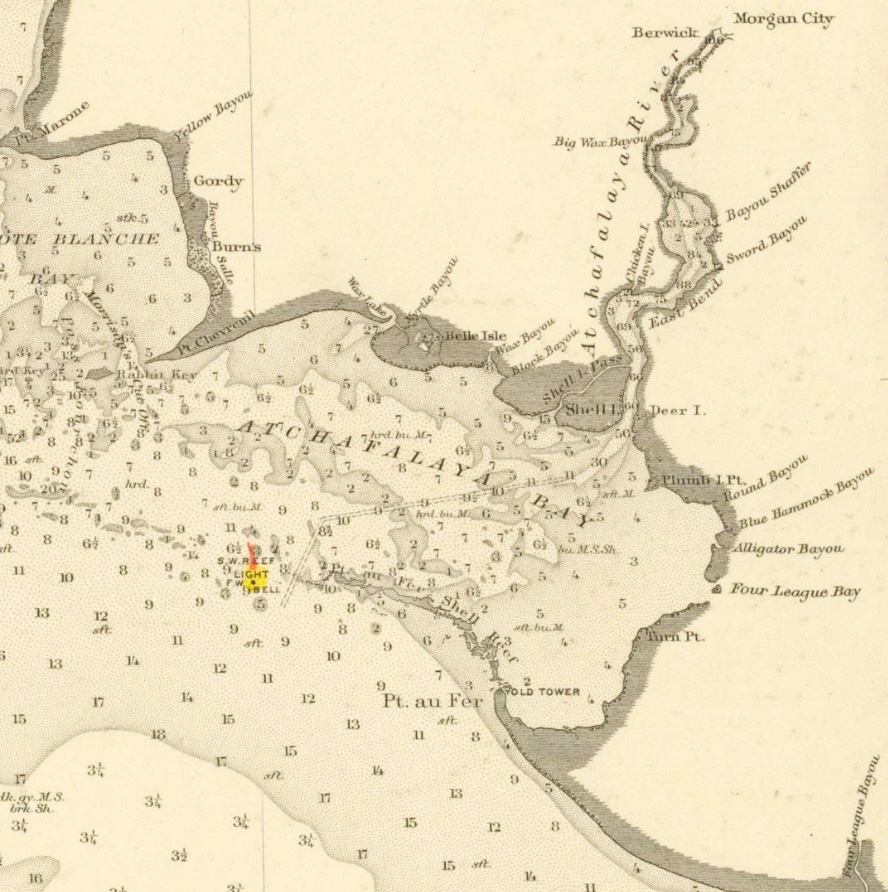
Point Defer, LA 
Select a photograph to view a photo gallery
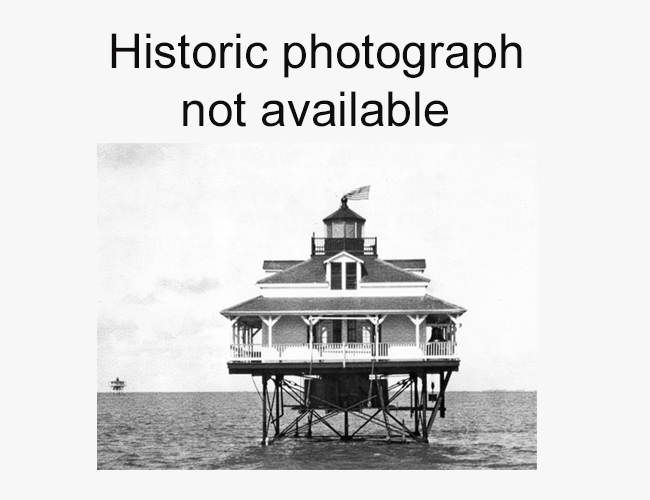
Photo Gallery
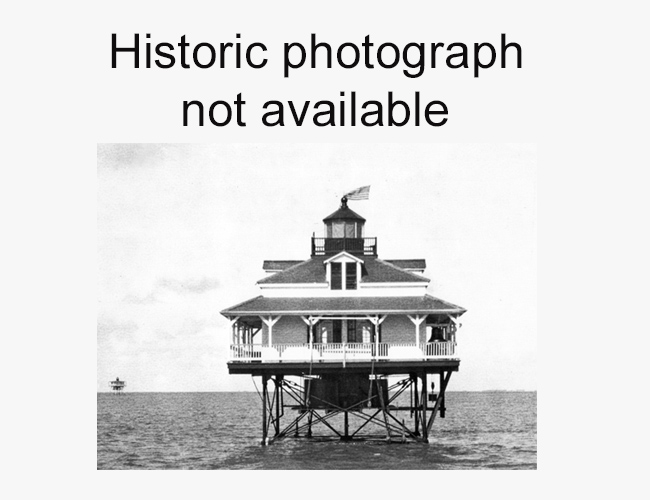
Photo Gallery
Photo Gallery
An early federal survey conducted in 1806 portrayed Point Defer as the mouth of Bayou Teche, despite the actual outlet lying roughly fourteen miles away where it empties into Atchafalaya Bay. The surveyor, Louis de Munn, described the Teche channel as narrow, shallow, and tedious to navigate. Although shallow-draft vessels could reach New Iberia, the upper reaches were restricted to pirogues and small craft. For many years, the limited navigability of the bay and bayou led critics to argue that a lighthouse in the area would be an unnecessary expense.
|
Because Atchafalaya Bay was too shallow and complex for safe nighttime navigation, officials determined that a lighthouse could not serve vessels once they entered the bay itself. Instead, Point Defer Light was intended as a landfall beacon, guiding ships toward the broad mouth of the bay, where they would wait offshore until daylight before navigating the staked and buoyed channel into Bayou Teche.
The remoteness of Point Defer discouraged prospective contractors. Despite the initial appropriations, no bidders came forward. Even when additional funds were authorized, only one Boston builder expressed interest, later refusing to sign the contract. The Treasury Department attempted to interest the well-known lighthouse builder Winslow Lewis, but he declined. Eighteen months passed before James B. Gill and Hersey Stowell of Boston finally accepted the contract to construct the lighthouse, keeper’s dwelling, and lighting apparatus.
Construction was plagued by delays. Gill failed to appear at the site by November 15, 1826, causing his workforce to disperse. Disputes over site selection, illness among laborers, and the general difficulty of working in a malarial marsh environment further slowed progress. The lighthouse was completed near the end of 1827, making it Louisiana’s second coastal lighthouse.
Point Defer Lighthouse stood on a low sandy bank approximately five feet above high tide. Its timber foundation rested on a crude grillage of large stakes laid directly on the ground. The tower elevated the light roughly seventy feet above sea level. Equipped with fifteen lamps, the stationary light could be seen at a distance of about twelve miles in favorable weather—far less than originally hoped.
John Stine was appointed the first keeper of the lighthouse at an annual salary of $400. Julius Smith, the fourth keeper of the lighthouse, was appointed on June 1, 1831, but his tenure was tragically brief. During a severe storm on August 28–29, 1831, Smith drowned, underscoring both the isolation of the station and the hazards faced by lighthouse keepers along this exposed coast.
From its earliest years, Point Defer Lighthouse struggled to fulfill its intended role. The light could not be seen from the Teche channel or from vessels aground on the extensive shoal that extended westward from the point for nearly fifteen miles. By the mid-1840s, structural problems compounded its navigational shortcomings. In 1846, an inspector reported the tower to be three feet out of plumb, the result of rotting timbers beneath one side of the foundation.
As early as 1842, an Army engineer recommended relocating the light several miles offshore on iron screwpiles, a technology recently developed in England. In 1845, the Treasury Department requested funds either for a lightship or a screwpile lighthouse to replace Point Defer Lighthouse, but Congress declined to appropriate money during a tight fiscal year.
In the summer of 1849, a lightship was anchored near the end of the reef to mark the true entrance channel into Atchafalaya Bay. Congress appropriated $12,000 for the vessel in 1848, though it was ultimately constructed and deployed for significantly less. For about a decade, the lightship served as a more practical navigational aid than the lighthouse on shore.
The creation of the Lighthouse Board in 1852 brought renewed scrutiny. By 1855, the Board debated whether Point Defer Lighthouse should be abandoned altogether. A fourth-order Fresnel lens and lantern were procured for the station but were not immediately installed. Officials alternated between proposals to eliminate the lighthouse in favor of improved floating aids, or to dispense with the lightship instead. The hazardous tendency of lightships to break free from moorings during storms weighed heavily in these discussions.
In 1856, legislation authorized the construction of a lighthouse on Southwest Reef, intended to replace both Atchafalaya Bay lightship and Point Defer Lighthouse. Preparations proceeded in 1857 and 1858, and iron screwpile lighthouses were completed at Shell Keys and Southwest Reef in 1859.
Southwest Reef Lighthouse was lighted on September 1, 1859. On that same date, Point Defer Lighthouse was officially discontinued. Keeper George Wright was transferred from Point Defer to the new offshore station. For a brief period before its closure, the old tower temporarily received the Fresnel lens intended for Southwest Reef, a final gesture toward modernization before its obsolescence.
Keepers:
References