Point aux Herbes, LA 
Select a photograph to view a photo gallery
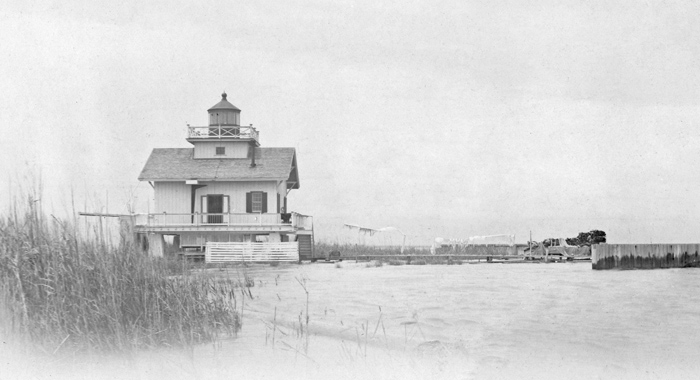
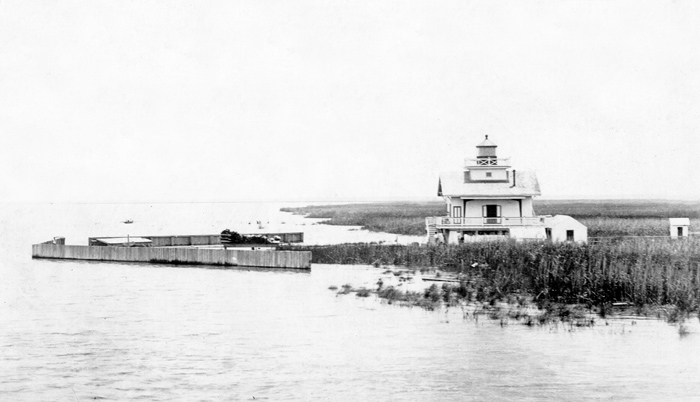
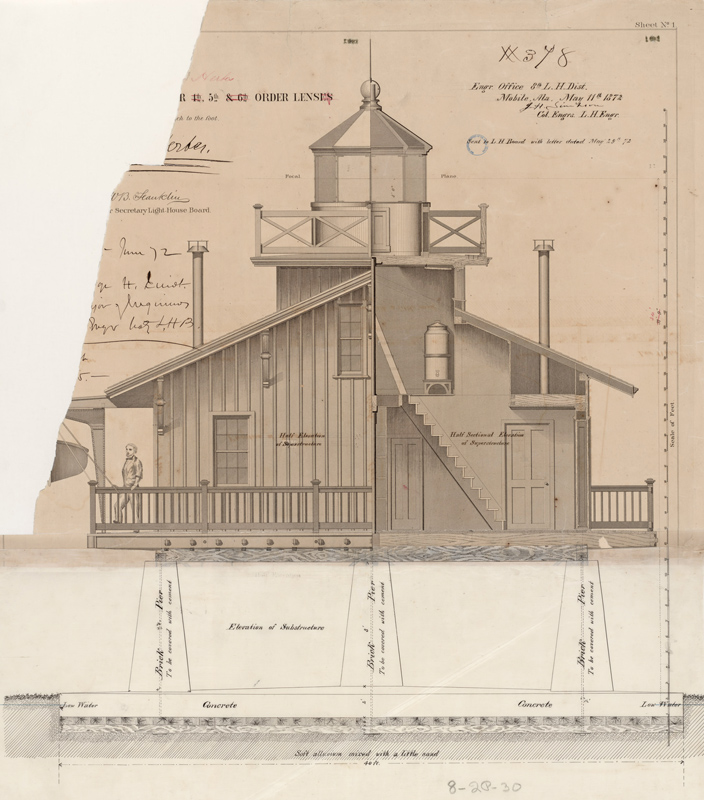
Photo Gallery
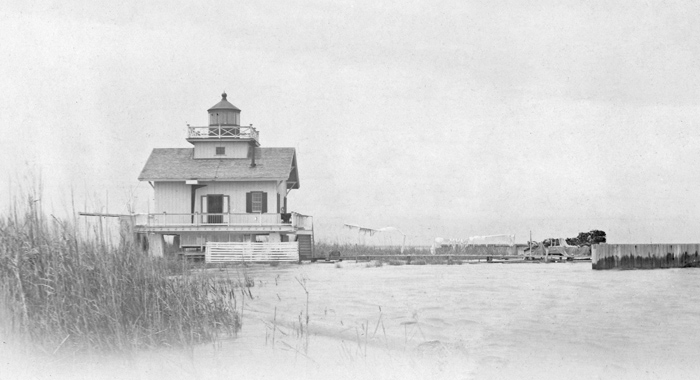
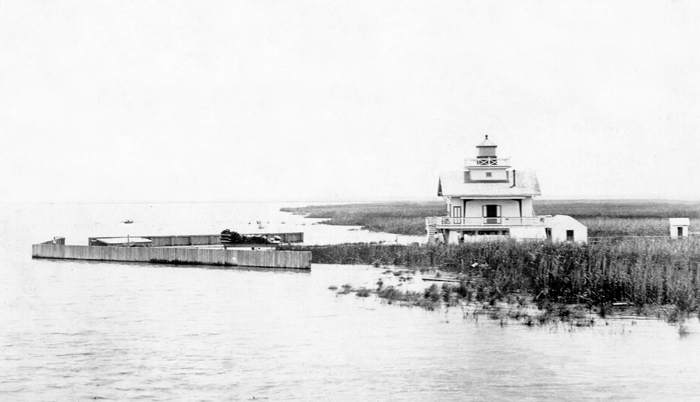
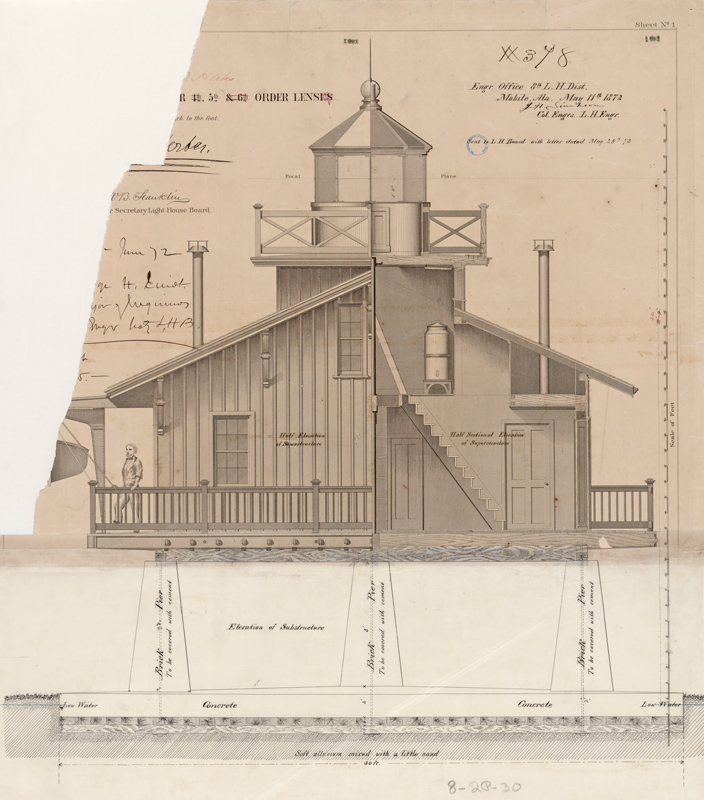
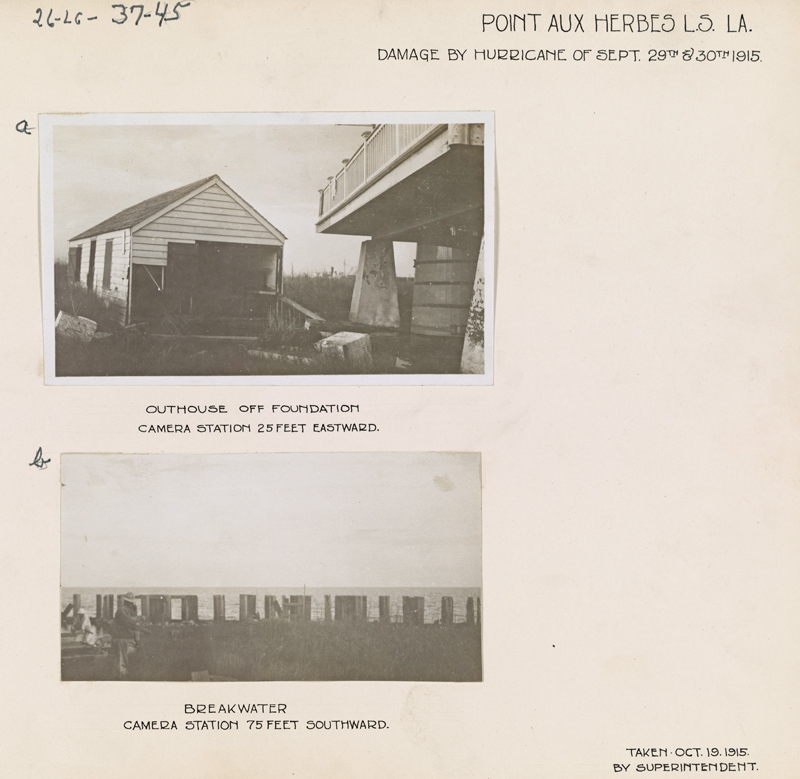
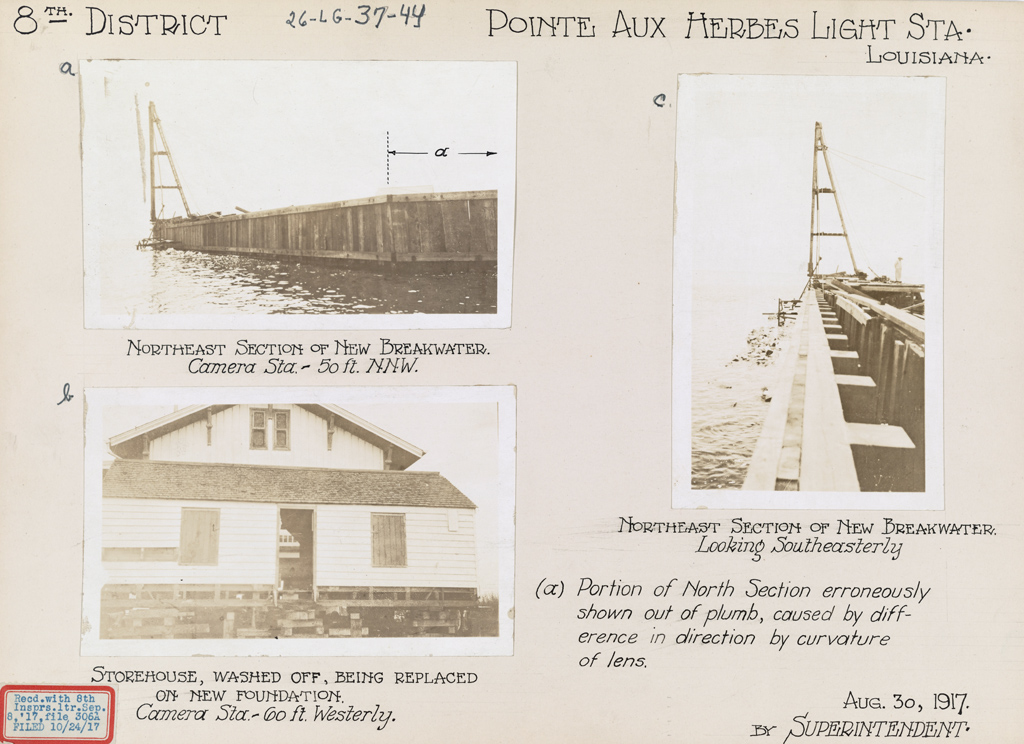
Photo Gallery
Photo Gallery
|
In 1868, reports from the Lighthouse Board noted that the “important point in this vicinity seems to be Pointe aux Herbes,” and formally recommended abandoning the old Bonfouca site in favor of a new lighthouse on the point. Congress responded on March 3, 1869, authorizing $8,000 for a new light “to take the place of Bon Fouca light station, destroyed by the rebels.” Although framed as a replacement, the proposed structure would serve a broader and more modern purpose: guiding traffic between the Rigolets and the growing lakeshore ports on Lake Pontchartrain.
Progress toward construction proved slow and frustrating. Although the 1869 appropriation was made available, clear title to a suitable parcel of land at Point aux Herbes needed to be secured. Negotiations began with a landowner who agreed to sell the necessary acreage for $10 per acre, but before the purchase could be finalized, the appropriation reverted to the U.S. Treasury under the Act of July 12, 1870. With no funds available, all efforts to secure the site were halted.
Congress reauthorized the project on March 3, 1871, increasing the appropriation to $15,000. By 1872, the Lighthouse Board had approved a fifth-order light for Point aux Herbes, and detailed plans and estimates were prepared. Even so, the site itself had still not been secured. Annual reports from 1872 and 1873 repeatedly noted that construction could not begin until title to the land was acquired, despite the efforts of district officers to move the process forward.
Not until 1874 was the necessary land finally obtained. With ownership settled at last, the Lighthouse Board announced that work would commence at an early date.
Construction began in February 1875. Engineers assigned to the project faced a familiar challenge in coastal Louisiana: extremely soft, alluvial soil. Numerous earlier lighthouses in the region had settled or failed after their foundations proved inadequate. Rather than using iron screw-piles, which were common for shallow-water stations but unsuitable for the spongy substrate at Point aux Herbes, designers adopted a hybrid foundation system inspired on a small scale by the massive bases used at Southwest Pass on the Mississippi River delta.
|
Work progressed steadily through the spring of 1875 until May 15, when construction was temporarily suspended due to delays in the delivery of ironwork. After an eleven-day interruption—during which the crew attended to repairs at nearby stations—work resumed. By midsummer the structure was nearly complete. The light was first exhibited on the evening of August 1, 1875.
Point aux Herbes light was a fixed red light, displayed from a fifth-order catadioptric lens. It illuminated approximately 270 degrees of the horizon, with a focal plane thirty-eight feet above ground and forty feet above mean low water. In clear weather, the light could be seen from a distance of about eleven-and-a-quarter nautical miles by a vessel with an eye height of fifteen feet. The dwelling was painted straw color, with white foundation piers and a black lantern. Its location near the extreme northeastern point of Point aux Herbes made it an unmistakable daymark as well as a reliable nighttime aid.
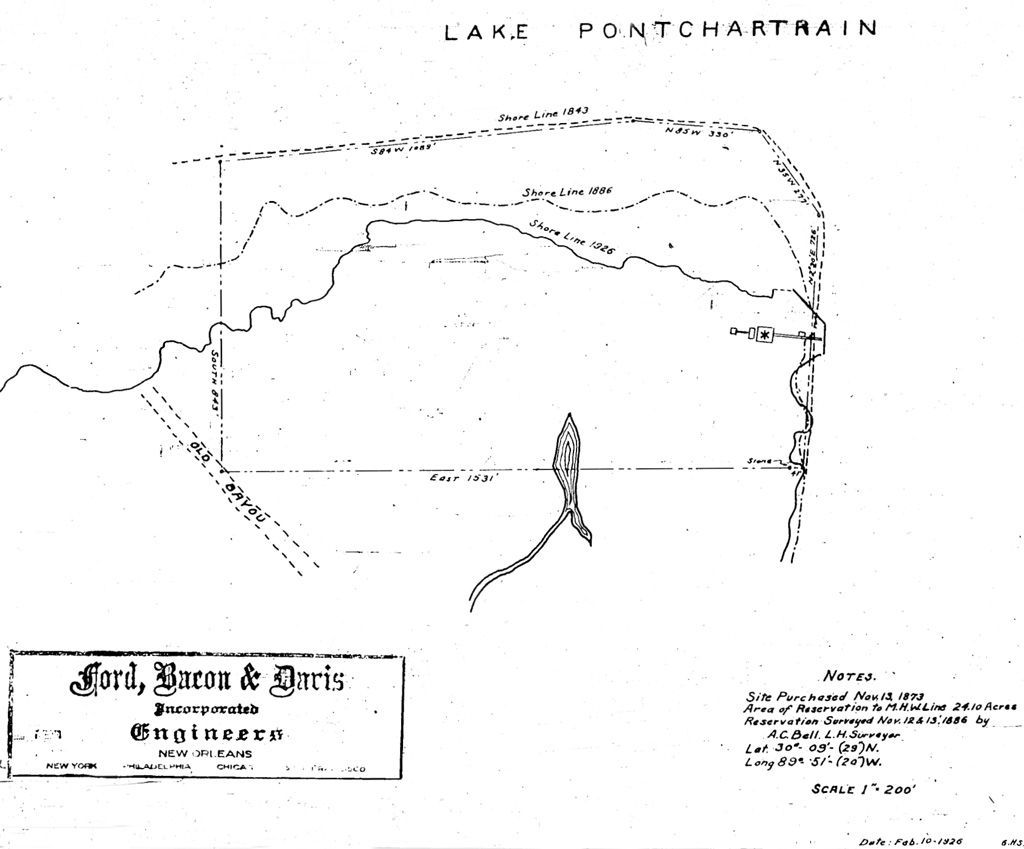
From its earliest years, the lighthouse stood in a highly exposed position, vulnerable to wave action and storms sweeping across the open lake. In 1877, a breakwater of heavy sheet-piling was constructed to the northeast and east of the dwelling to protect it from erosion and encroaching water. This marked the beginning of a long cycle of repairs, rebuilding, and reinforcement that would define much of the station’s later history.
Throughout the 1880s and 1890s, annual reports document continual maintenance: plank walks laid and rebuilt, raised galleries repaired, cisterns replaced, sills renewed, and additional sections of breakwater constructed or repaired. Severe storms repeatedly damaged the protective works. In August 1888, a powerful gale destroyed plank walks, washed away outbuildings, and badly damaged the breakwater. Extensive repairs followed in 1889 and 1890, including rebuilding hundreds of feet of breakwater and driving large cypress piles into the lakebed.
Engineers increasingly recognized that Point aux Herbes required a more substantial form of protection. Reports from 1890 warned that the existing breakwater was inadequate for the station’s exposed position and recommended a heavier, rock-reinforced structure similar to that at New Canal Light Station.
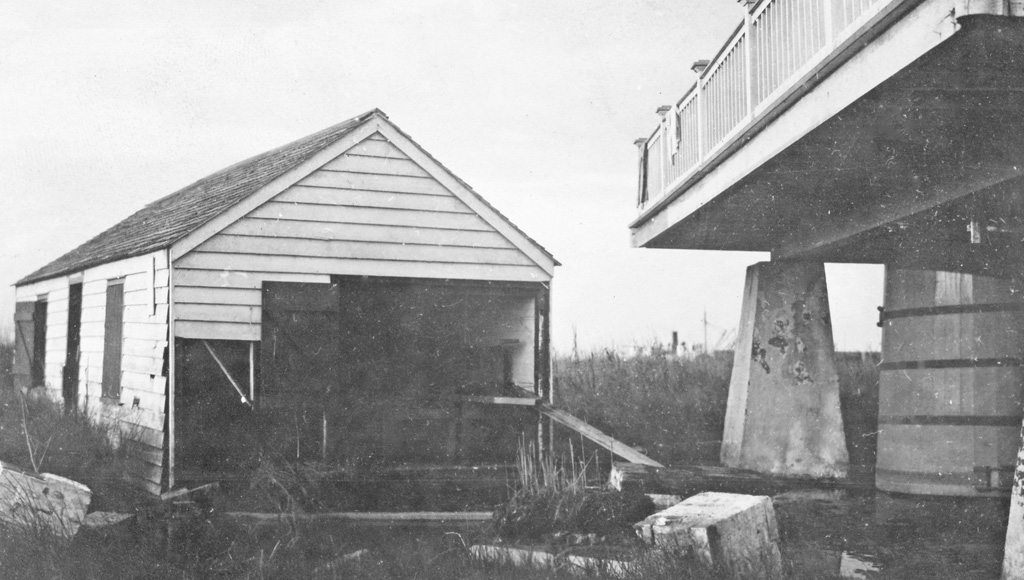
By the turn of the twentieth century, improvements continued. Between 1900 and 1902, the breakwater was extended and wings were built on its ends. Large quantities of ballast rock—ultimately more than 1,400 tons—were placed in the breakwater. A combination boat and store house was built, platforms added, and the keeper’s dwelling repaired and whitewashed.
Hurricanes along the Gulf Coast remained a constant threat. During the hurricane of September 1915, Fergus H. Johnston, foreman of a working party at Point aux Herbes Light Station, maintained the light by making temporary repairs and replacing storm panes destroyed during the hurricane. After multiple hurricanes struck the Gulf Coast in 1915, Congress passed the Act of February 28, 1916, appropriating funds to repair and rebuild aids to navigation damaged by hurricanes. Under this program, 510 feet of breakwater at Point aux Herbes were rebuilt in 1917, followed by additional cypress sheet-pile construction and new walks in 1918.
Despite these challenges, the station continued to function reliably. In April 1924, keeper Charles J. Dunn rendered assistance to two men from the schooner Viola Haas, which dragged anchor and ran aground near the lighthouse during a gale—an incident that underscored the station’s enduring role as both navigational aid and refuge.
The end of Point aux Herbes Lighthouse came not from neglect or storm, but from progress. In 1928, much of the lighthouse reservation was sold to the New Orleans Pontchartrain Bridge Company, which was constructing the Watson–Williams Bridge under the direction of Eli Watson and George Williams. Completed at a cost of $5 million, the bridge—later known as the Maestri Bridge—was the first permanent structure to cross Lake Pontchartrain and, at 4.78 miles, the longest bridge in the world at the time.
With the bridge providing a fixed visual reference across the lake, the lighthouse was no longer considered necessary. On or about January 8, 1928, Point aux Herbes Light was officially discontinued. The structure remained standing as a daymark, but its role as a nighttime aid to navigation had ended.
The abandoned lighthouse stood for several decades before vandals burned the wooden superstructure in the 1950s, leaving only remnants of its foundation and protective works.
Keepers: E.S. Belton (1875 – 1878), John Anderson (1878 – 1879), John Flowers (1879 – 1890), John Descovich (1890 – 1897), Daniel A. Joyce (1897 – 1908), Carl Wagner (1908), Charles J. Dunn (1908 – 1925), Epps Danley (1925 – 1926).
References