Point au Fer Reef, LA 
Select a photograph to view a photo gallery
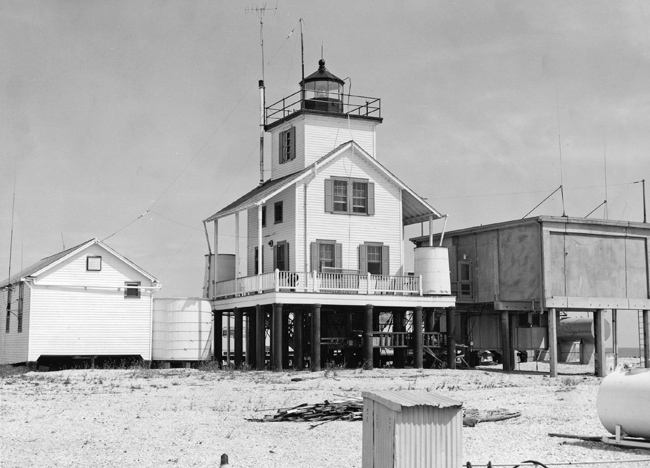
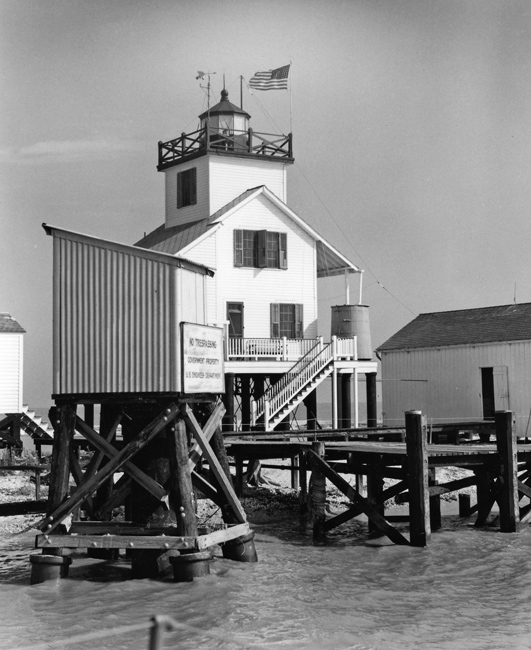
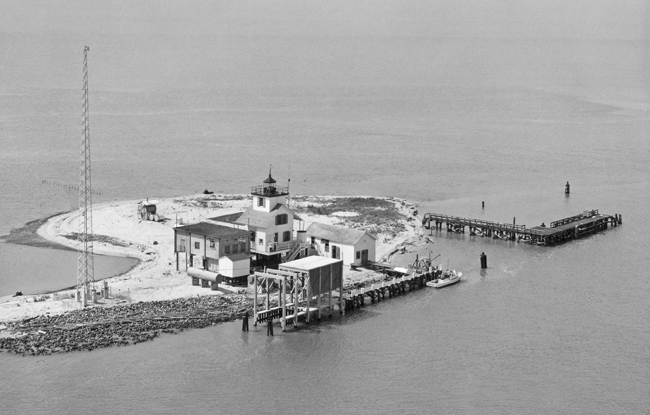
Photo Gallery
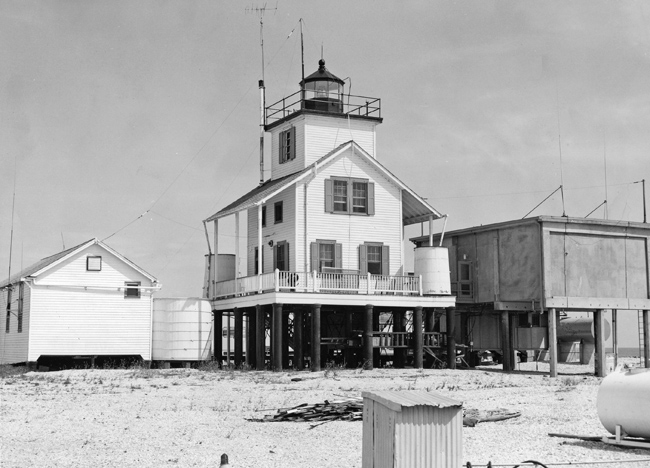
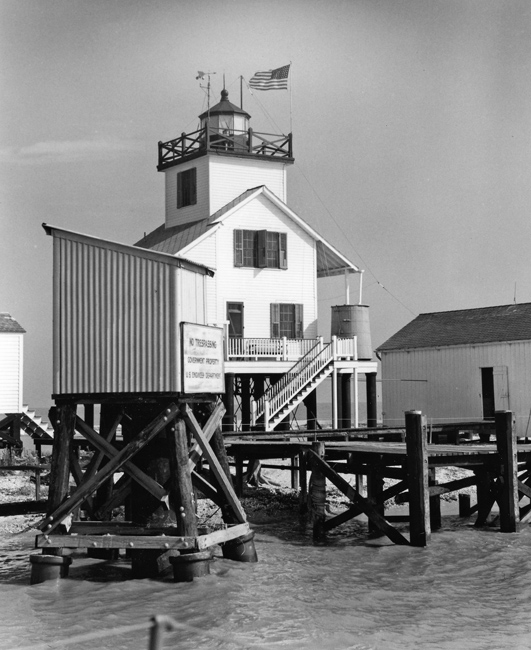
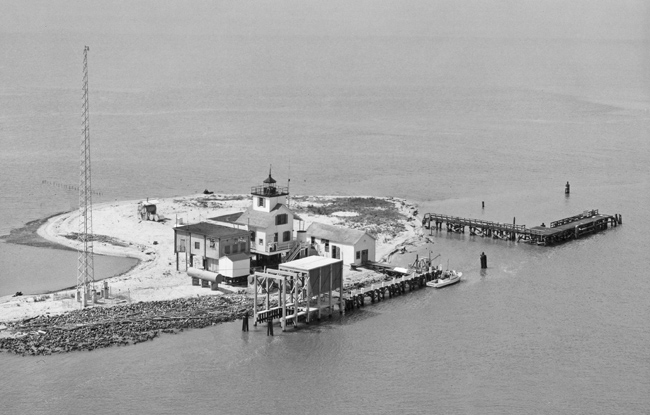
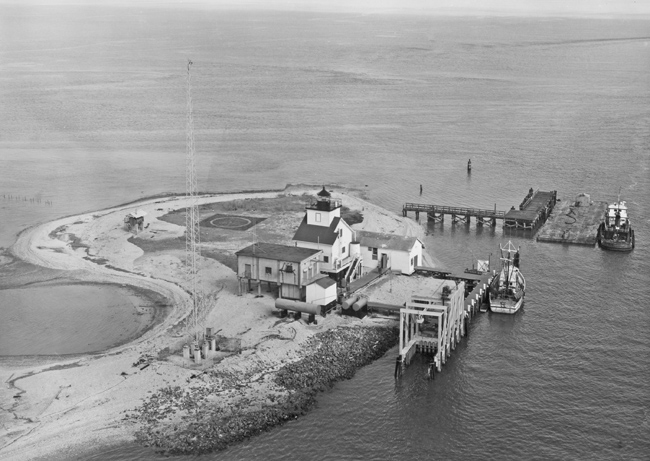
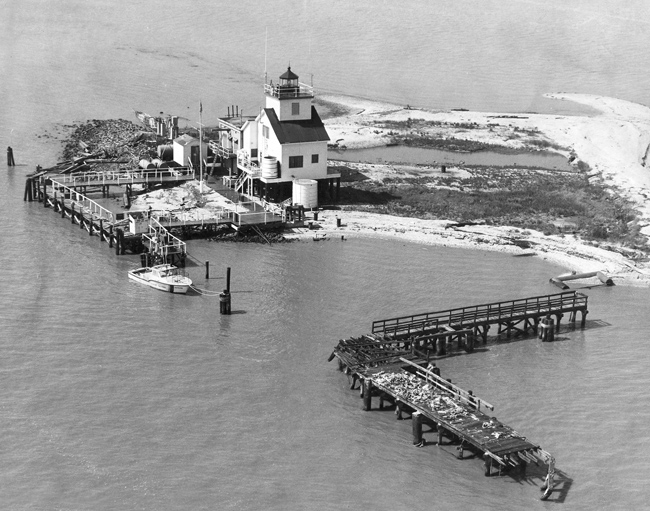
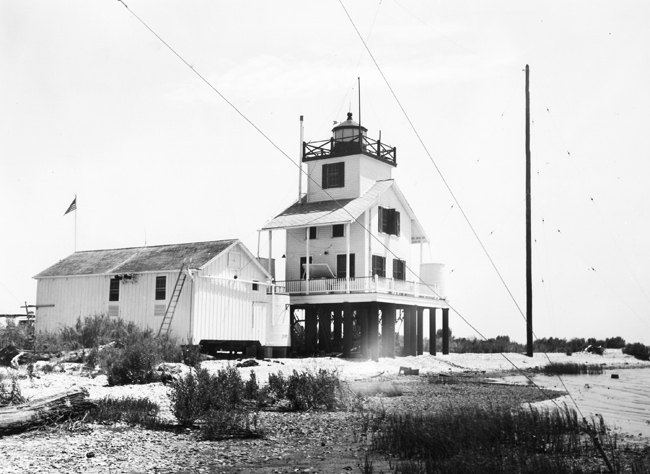
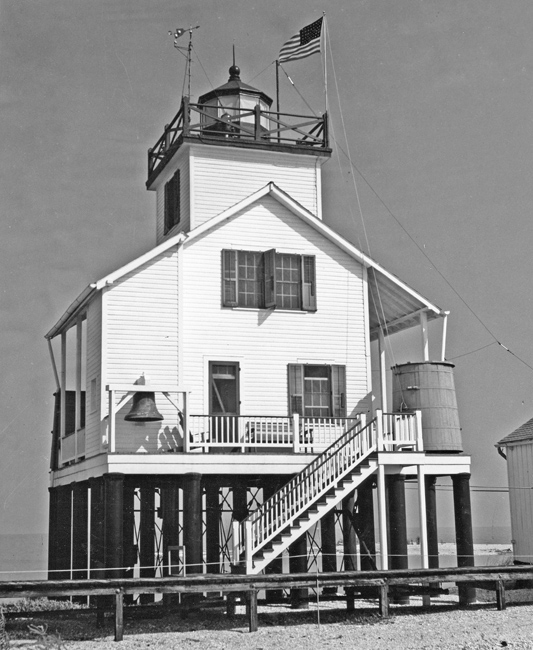
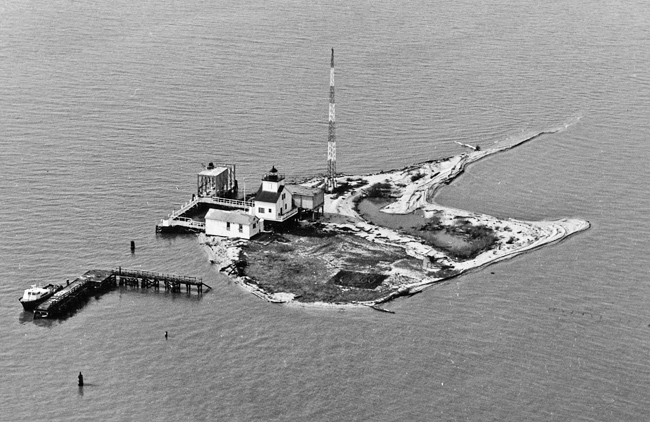
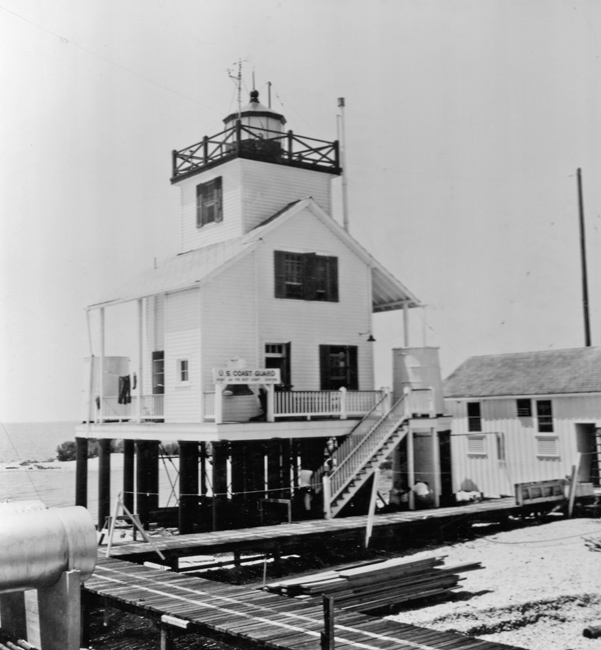
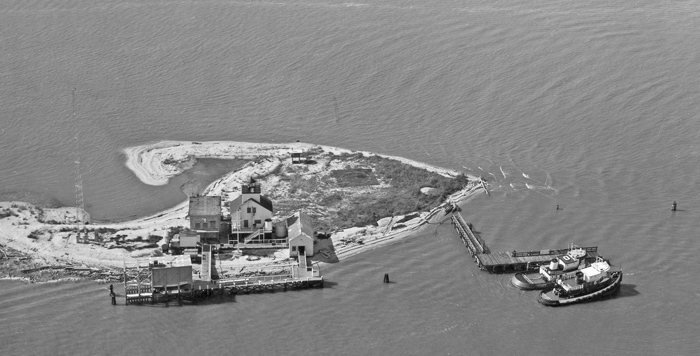
Photo Gallery
Photo Gallery
Point Defer Lighthouse was built in 1827 to mark the entrance to Atchafalaya Bay, and then the screwpile Southwest Reef Lighthouse was built offshore from the point in 1859 to better serve mariners. After a newly dredged channel to the Atchafalaya River was cut through Point au Fer Reef, the Lighthouse Service decided yet another lighthouse was needed.
|
Construction began with the driving of foundation piles on December 4, 1915. By May 7, 1916, both the Point au Fer Reef Lighthouse and five additional Atchafalaya Entrance Channel Lights (Nos. 1, 3, 5, 7, and 2) had been completed under contract with Peter Eskald of Biloxi, Mississippi, at a cost of $18,749.75. Total expenditures to mid-1916 approached $19,616.69, reflecting progress toward a fully marked channel.
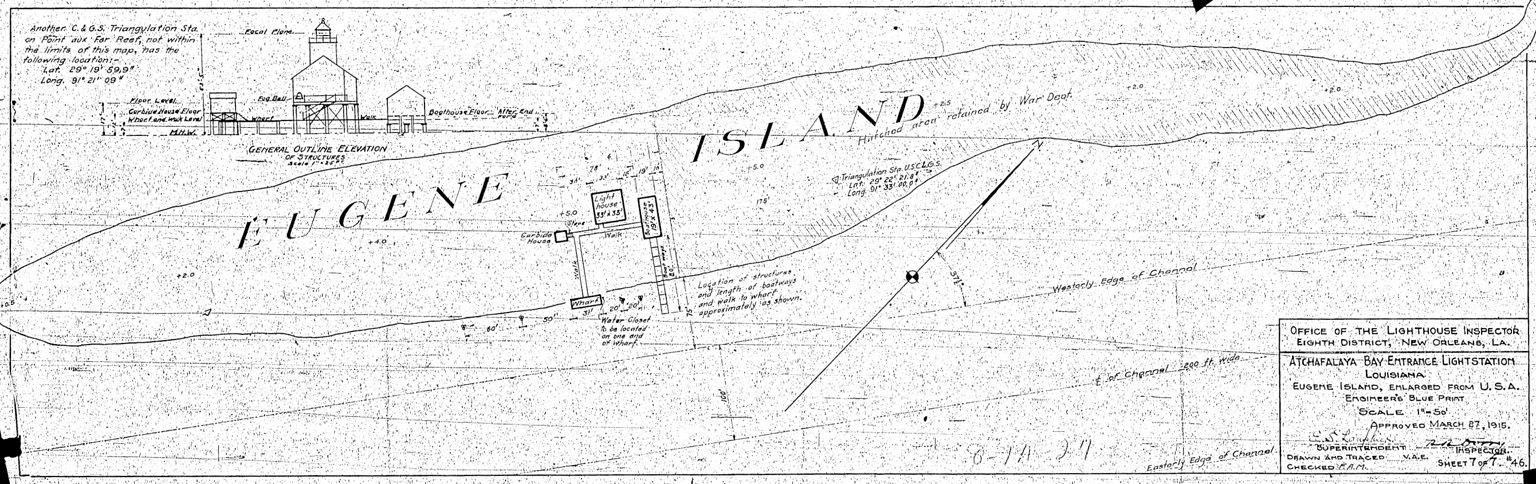
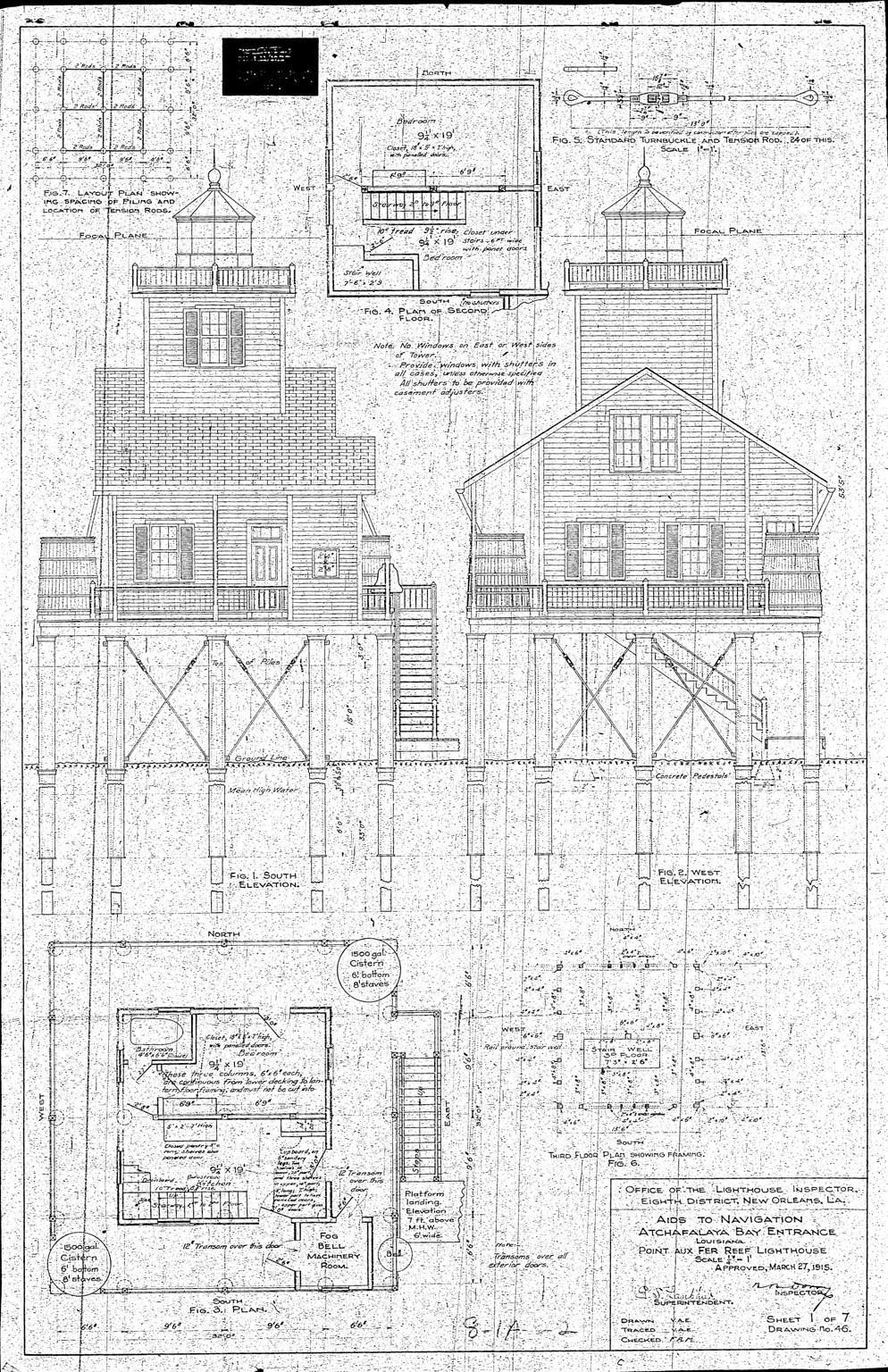
The Point au Fer Reef Light and Fog Signal Station was situated on Eugene Island, a low-lying shell and mud formation midway along the dredged channel. Its principal structure was a thirty-two-foot-square wooden platform raised seventeen feet above mean high water on twenty-five iron-cased, creosoted piles. A story-and-a-half frame dwelling supported a square tower, from which a fourth-order Fresnel lens shone a continuous white light visible for up to thirteen miles in clear weather. Illumination came from a 35 mm Type B oil-vapor lamp, rated at about 2,900 candlepower.
Supplementing the main light were five beacon lights placed along the entrance channel: two outer beacons on nine piles each, and three inner beacons on four piles apiece. All were fitted with standard five-day lens lanterns showing fixed white lights visible up to nine miles and fueled by single-wick mineral lamps.
To aid navigation in foggy conditions — common in winter and early spring along Louisiana’s coast — a 1,000-pound bell was installed on the main platform, mechanically struck once every twenty seconds. Quarters for three keepers were integrated into the light station’s structure, with a kitchen/living room, bedroom, bathroom, and a room for the fog-signal machinery on the first floor, and two additional bedrooms on the second floor. Elevated walkways connected the main station to support buildings and the wharf where supplies were delivered by tender.
By the summer of 1916, Point au Fer Reef Lighthouse and its associated channel lights were officially placed into commission, marking a major milestone in the federal government’s efforts to guide mariners through the recently dredged channel from the Gulf of Mexico through Atchafalaya Bay to the Atchafalaya River.
|
In August 1916, Keeper Rollingson was returning to the station from Morgan City when the government motorboat apparently had issues. It is believed Edward must have thought the boat was out of gas and fell overboard while trying to transfer fuel from a five-gallon can to the tank, which was accessed from the rounded bow of the vessel. Seven years earlier, Edward’s son Clarence Patrick Rollingson was also lost overboard from a launch near the same location in the bay while he was trying to return to Ship Shoal Lighthouse. Edward’s wife Josephine gave birth to a baby eleven weeks after the death of her husband. As the U.S. Employees Compensation act that provided compensation to the widows of lighthouse keepers who died as the result of an accident during service passed on September 7, 1916, one month after the death of her husband, Josephine received no pension.
In the years immediately following its establishment, the Atchafalaya Entrance Channel system continued to develop. By June 30, 1917, requisitions had been made for gas-lighted buoys and a forty-two-foot motor launch to further improve navigation; although the launch remained unfinished and the buoys were only partly in place, ongoing expenditures reflected the commitment to a fully equipped channel.
The motor launch, completed during fiscal 1918 at a cost of $6,951.71, enhanced the service’s ability to maintain lights and buoys and support keepers on station. By mid-1918, expenditures had grown to $36,383.59, rising over subsequent years as the aids to navigation matured and became fully operational.
Through fiscal 1920, nearly the entire $50,000 appropriated in 1913 had been expended on the lighthouse, beacons, buoys, and support equipment that ensured safe passage for commercial and fishing vessels alike.
Decades later, Point au Fer Reef Light continued serving mariners but also adapted to advancing technology. In June 1949, a Class A radiobeacon—capable of broadcast ranges up to 200 miles—was established at Point au Fer, replacing the smaller Class B radiobeacon previously at nearby Ship Shoal Light. At the same time, the light was converted from oil to electric power, increasing its candlepower to roughly 4,000 and altering its characteristic to a flashing signal, improving visibility for a new generation of navigators.
However, by the mid-1970s, changing navigational practices and cost concerns led the U.S. Coast Guard to deactivate many traditional lighthouses. In 1975, Point au Fer Reef Lighthouse was decommissioned and replaced with a more utilitarian skeleton tower that continued to mark the channel entrance. The Coast Guard offered the historic lighthouse to the South Lafourche Cultural and Historical Society, but when no group accepted responsibility for preservation, it was deliberately burned down—a fate shared by several obsolete Gulf Coast lighthouses. With that, the light station that had guided mariners for nearly six decades passed into history.
Keepers:
References