Oyster Bayou, LA 
Select a photograph to view a photo gallery
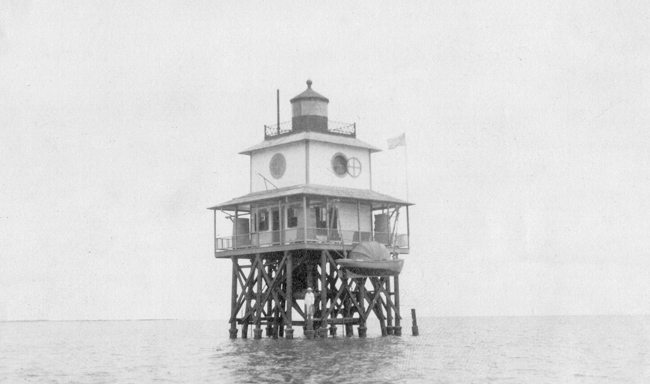
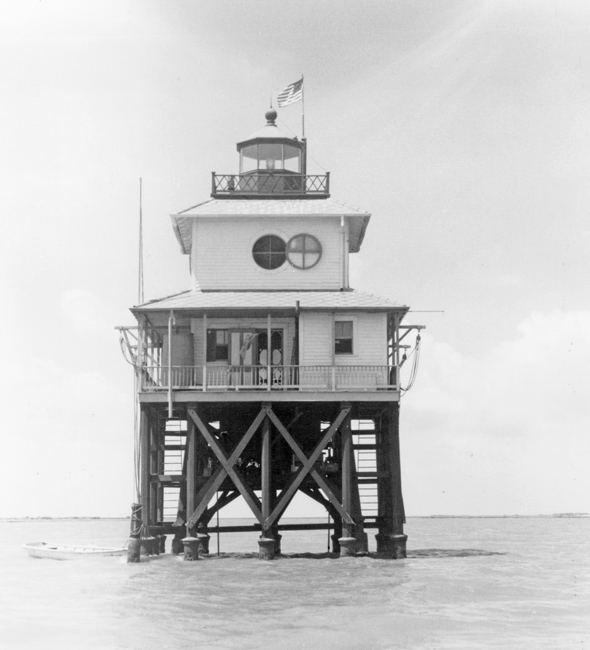
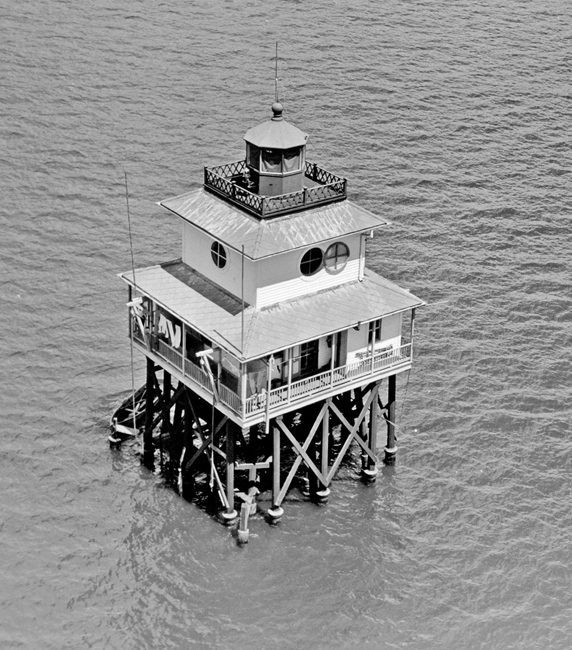
Photo Gallery

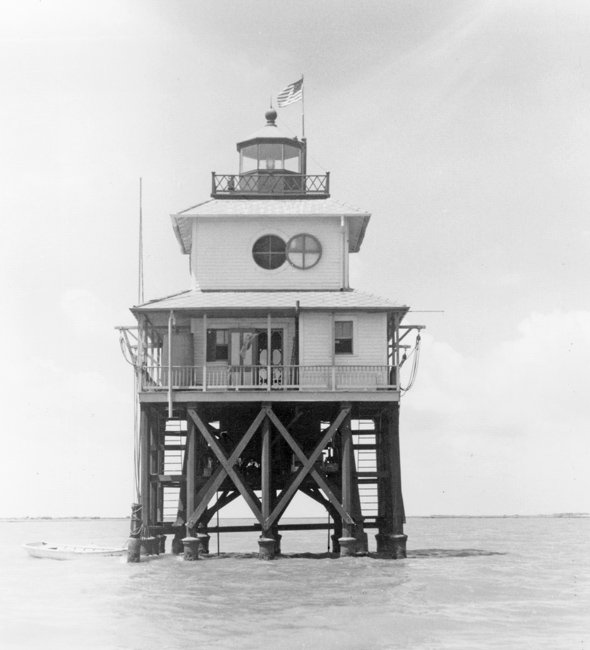
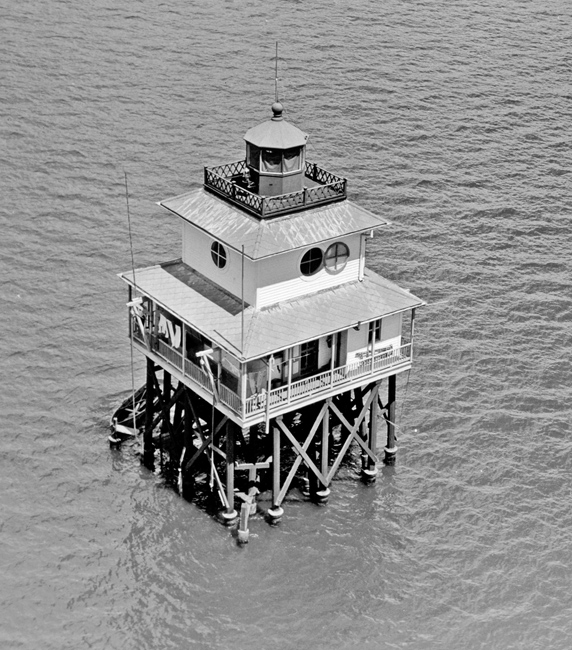
Photo Gallery
Photo Gallery
|
The U.S. Lighthouse Board formally acknowledged these conditions in its 1894 annual report, recommending the establishment of a lighthouse at Oyster Bayou on the point formerly occupied by a private light maintained by certain oyster packers of Morgan City. The report described the site as highly exposed to Gulf storms, where southerly gales could bank water six or seven feet above ordinary levels and sweep violently across the marsh. Any structure placed there, the Board warned, would need to be elevated above storm waves, likely on iron piles. The proposed station was modest in scale: a keeper’s dwelling surmounted by a white light displayed from a lens lantern. The estimated cost was $5,000, and the Board recommended that Congress appropriate that amount.
Yet year after year, the recommendation went unfunded. The same language appeared again in the Lighthouse Board’s annual reports of 1897, 1898, 1899, 1900, and 1901—each time renewed without result.
Momentum finally shifted in early 1902. On March 22 of that year, The Abbeville Meridional reported that the House of Representatives had passed a bill introduced by Congressman Robert F. Broussard providing for a lighthouse at Oyster Bayou. The Senate had approved the measure a week earlier at the request of Senator Murphy J. Foster. Broussard, the paper noted, was especially pleased, as the lighthouse had been one of the planks in his campaign platform. The act was approved on June 28, 1902, and included an appropriation of $5,000 for construction.
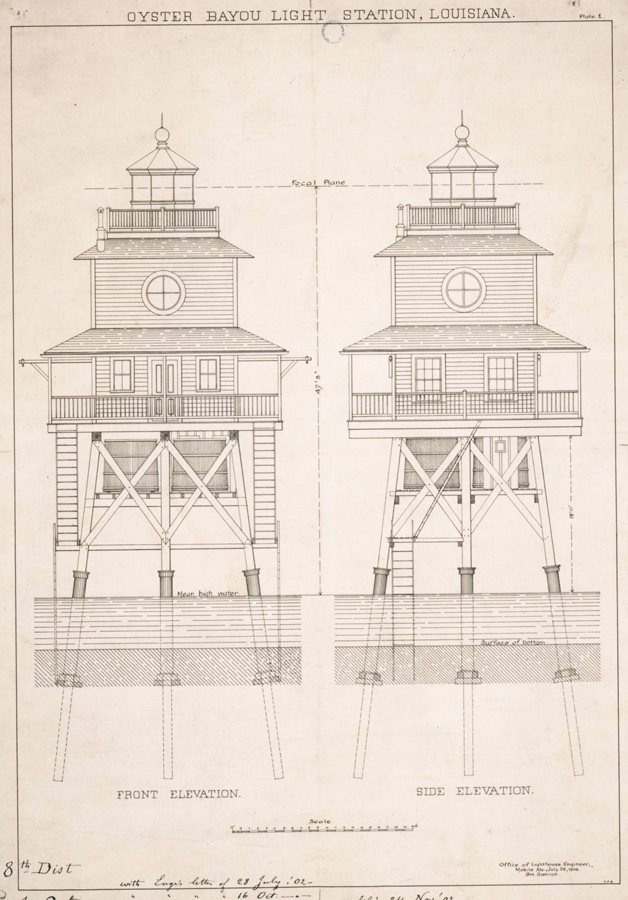
With funding secured, the Lighthouse Board proposed a structure similar in type to the Lake Borgne Light Station in Mississippi: a small wooden dwelling raised on piles, with the light displayed from a tower rising above the roofline. Plans called for the foundation to stand approximately eight feet above the marsh, supported by iron-cased piles to withstand storm surge and wave action.
By early 1903, plans and specifications had been completed, and four construction bids were opened on January 12. All were rejected, however, as their costs exceeded the available appropriation once the price of the illuminating apparatus was deducted. Faced with this obstacle, the Board decided to construct the station using hired labor rather than a private contractor.
|
Construction finally began in May 1903. By the end of the fiscal year, the station’s wooden frame had been erected, much of the roof installed, and the metalwork for the lantern delivered and stored on site. The structure stood on a foundation of nine iron-cased piles in approximately five feet of water. However, because of the earlier losses, insufficient funds remained to complete the lighthouse. The Lighthouse Board therefore recommended an additional appropriation of $1,000 to finish the work.
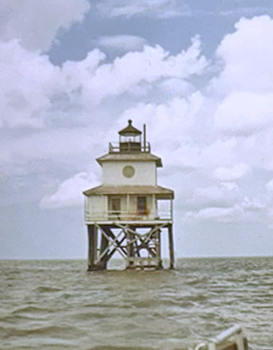
Despite its incomplete state, the station was far enough along to serve mariners. On or about August 1, 1903, a temporary fixed red lens-lantern light was established on the lantern gallery. Displayed from a focal plane 47¼ feet above the water, the light illuminated the entire horizon and marked the easterly side of the bayou’s entrance from the Gulf. A formal Notice to Mariners described the structure in detail: a white, square, two-story wooden dwelling with shingled roof, lead-colored trim, green blinds, and a black lantern above. On a platform below the dwelling sat two green cisterns and two small white outbuildings.
The permanent illuminating apparatus followed several months later. On January 20, 1904, the Lighthouse Board increased the intensity of the light by replacing the temporary lantern with a fixed red fifth-order Fresnel lens. The new light was visible for approximately eight miles and provided a reliable guide for vessels approaching the bayou in darkness or foul weather.
Congress approved the requested supplemental appropriation on April 28, 1904, allowing the Lighthouse Board to complete the station fully. By 1905, Oyster Bayou Light Station was officially finished. The first keeper was Robert G. Miller, who assumed responsibility for maintaining the light, the dwelling, and the surrounding station in an isolated and storm-prone environment.
The lighthouse soon proved its resilience, though not without suffering damage. On September 21, 1909, a powerful hurricane struck the Louisiana coast, killing over 300 people along the Louisiana coast and severely damaging Oyster Bayou Light Station. The fixed red light was discontinued immediately after the storm. A Notice to Mariners assured mariners that repairs would be made and the light reestablished as soon as practicable. True to that promise, the fifth-order light was relit on October 6, 1909, less than three weeks later.
Shortly after Oyster Bayou Light was electrified, the Coast Guard held a hearing in Houma in August 1946 to discuss the continued maintenance of personnel at the lighthouse. Prior to the meeting, Maurice D. Shannon, Mayor of Morgan City, sent a telegram to Representative James Domengeaux in Washington, D.C., requesting him to solicit the help of senators and other representatives to protest the planned automation. “Tremendous shrimp industry depends largely on the services of this lighthouse,” Shannon wrote. He also noted that many watermen were disturbed over the move to eliminate personnel and the vital news and weather reports they provided to “fishing boats and all craft with ship-shore phones.”
In 1947, the Coast Guard automated Oyster Bayou Lighthouse, ending the era of resident keepers. The square wooden structure remained standing, but its role gradually diminished as navigation technology evolved. In 1975, the lantern room was removed altogether. A small wooden structure on piles was built nearby to serve as the official aid to navigation, reflecting the Coast Guard’s shift toward simpler, unmanned markers.
Keepers:
References