Cubits Gap, LA 
Select a photograph to view a photo gallery
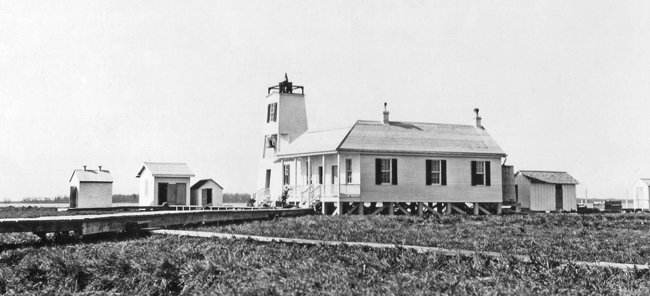
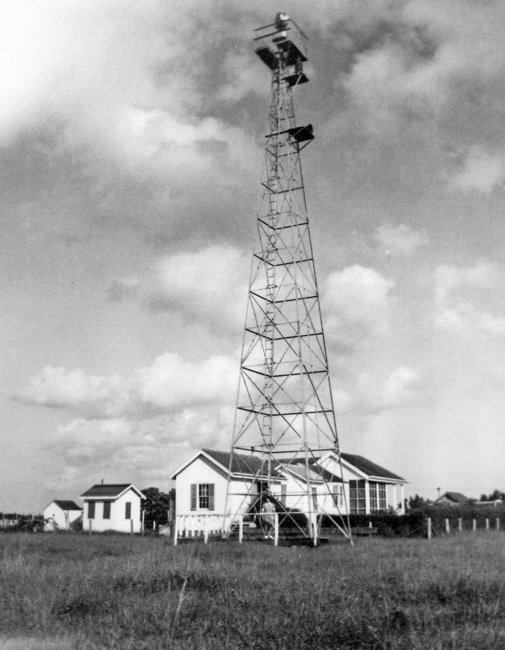
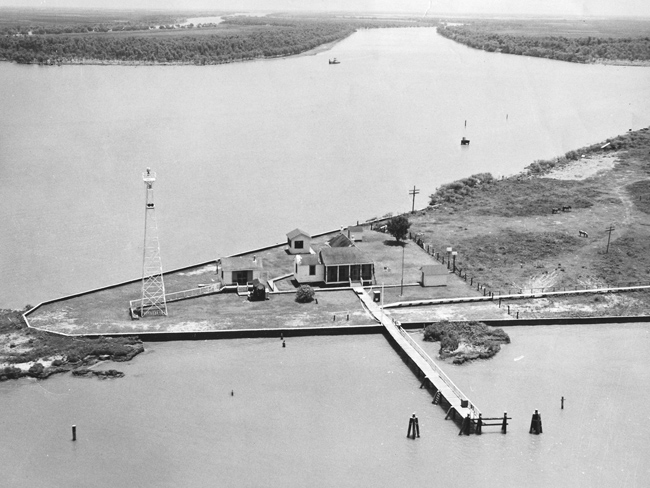
Photo Gallery
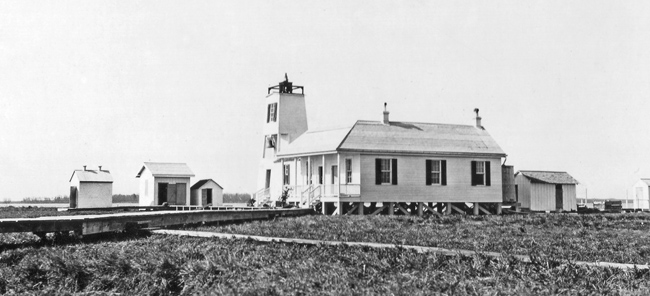
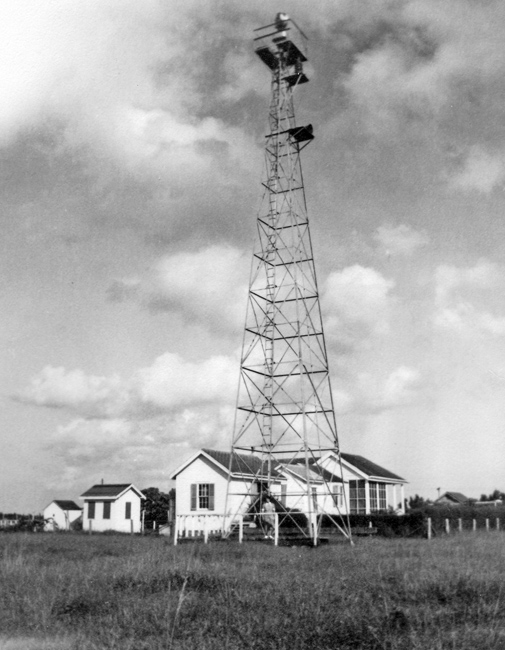
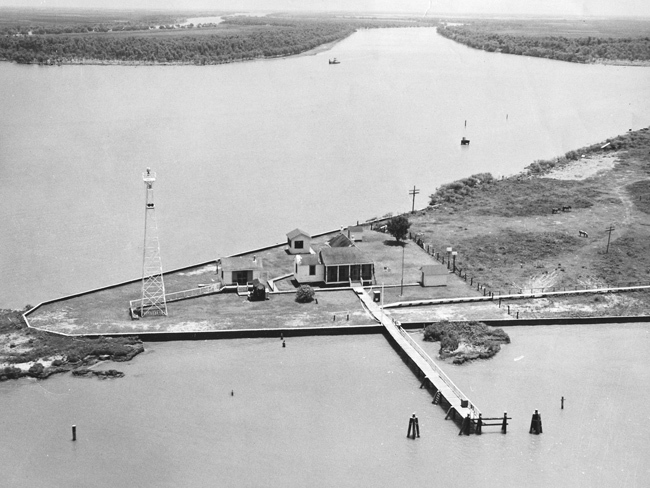
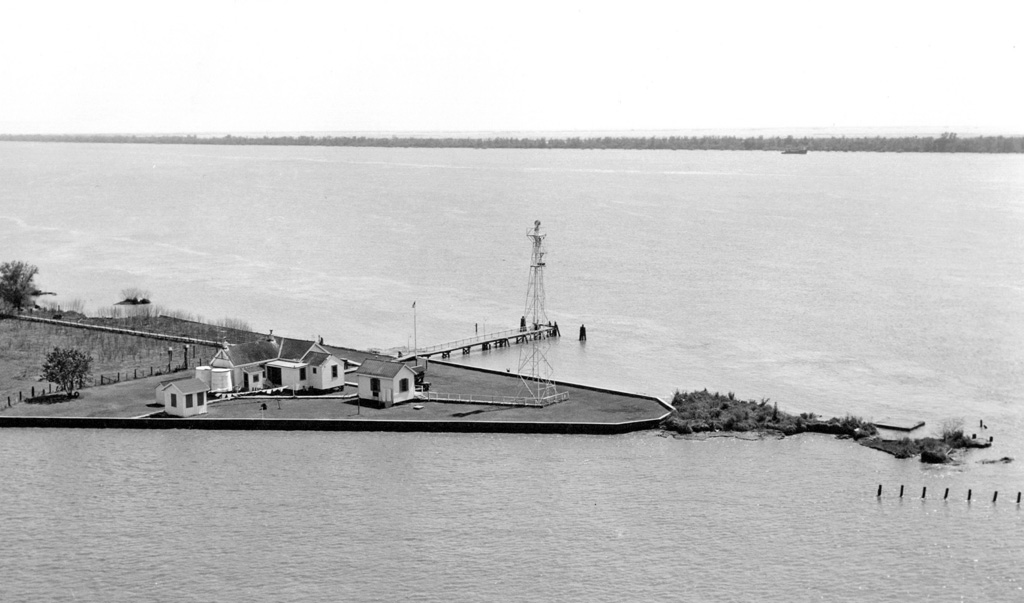
Photo Gallery
Photo Gallery
|
On March 1, 1891, Cubits Gap Fog-Signal Station was operational. The structure was a square wooden tower resting on four creosoted piles, twenty-six feet high, painted white with a brown roof, and positioned at the lower point of the gap. A Notice to Mariners that spring formally announced the establishment of the new fog bell. The tower stood in relative isolation: the nearest house lay some 600 feet away, and the nearest pilot station a half-mile farther upstream.
Even as the station began its service, the Mississippi River’s unpredictable power threatened its survival. In 1894, government reports noted that the land immediately above the tower was being “rapidly cut away.” Although repairs were made, the erosion foreshadowed constant maintenance problems.
By 1897, a new challenge emerged: the living conditions of the station’s personnel. The keeper, essential for maintaining both the light and the fog-signal machinery, was forced to live in a rented structure described as “barely habitable.” Because no other buildings were available in the area, officials repeated their pleas for funding to construct a proper keeper’s dwelling, estimating the needed appropriation at $2,500. This recommendation would be reiterated—verbatim—for the next several years.
The year 1898 saw the most significant early overhaul of the station. The old fog-signal tower was dismantled and moved 175 feet to a new foundation, then raised an additional twelve feet. The light—previously exhibited from a simple pole—was relocated to the roof of the rebuilt tower, consolidating the station’s functions into a more practical and elevated structure. A storeroom, a small wharf with fender piles, and boardwalks connecting the wharf, tower, and keeper’s quarters (still rented) were constructed.
Despite these improvements, the pressing need for a proper dwelling remained. The Lighthouse Board repeated its annual appeal for funding in 1898, 1899, 1900, and again in 1901, each time emphasizing the unhealthy, inadequate conditions endured by the keeper.
Relief finally arrived in 1902, when a long-awaited keeper’s dwelling was built. Rather than a separate structure, the new house was attached directly to the fog-bell tower by a hallway, forming an integrated station. It was a single-story, four-room framed cottage standing on wooden piers, with a shingled roof suited to the river’s humid climate. That same year, an oil house with a lead floor was built for fuel storage, and a 156-foot walk was extended to a wharf reaching five feet of water. For the first time, Cubits Gap Light Station possessed the essential elements of a permanent facility.
Infrastructure improvements continued. In 1904, a T-head was added to the wharf, along with new breakwater sections and a twenty-foot bulkhead filled with earth to stabilize the bank. A year later, in 1905, the station received a new fog-bell striking machine.
Operational accounts from this period reflect steady, if difficult, service. In 1915, keeper Charles W. Heartt was specifically commended for maintaining the light during the hurricane of September 3-4, an act that underscores both the vulnerability of the station and the dedication of its personnel. Located near the deltaic head of the passes, Cubits Gap was exposed to storm surge, wind, and rapidly shifting landforms; yet the light and bell remained functioning thanks to the vigilance of its keepers.
The need for a fog signal at Cubits Gap was stressed in the December 1915 issue of the Lighthouse Service Bulletin that contained the following information. In the eighth lighthouse district, which included Texas, Louisiana, Mississippi, Alabama, and the Florida panhandle, Cubits Gap had the most fog in a year and the highest yearly average for the period of 1885 to 1915. The station saw 819 hours of fog in 1907, and averaged 562 hours of fog each year.
The station’s utility extended beyond its formal navigational duties. On August 20, 1927, keeper Frank L. Staniel rendered critical assistance to the schooner Ocean Queen, which struck a submerged pile near the station and sank. Its cargo—100 drums of gasoline—posed a severe hazard. Staniel recovered the cargo and stored it safely on the extreme point of the reservation until authorities could retrieve it. His actions likely prevented both environmental damage and potential loss of life.
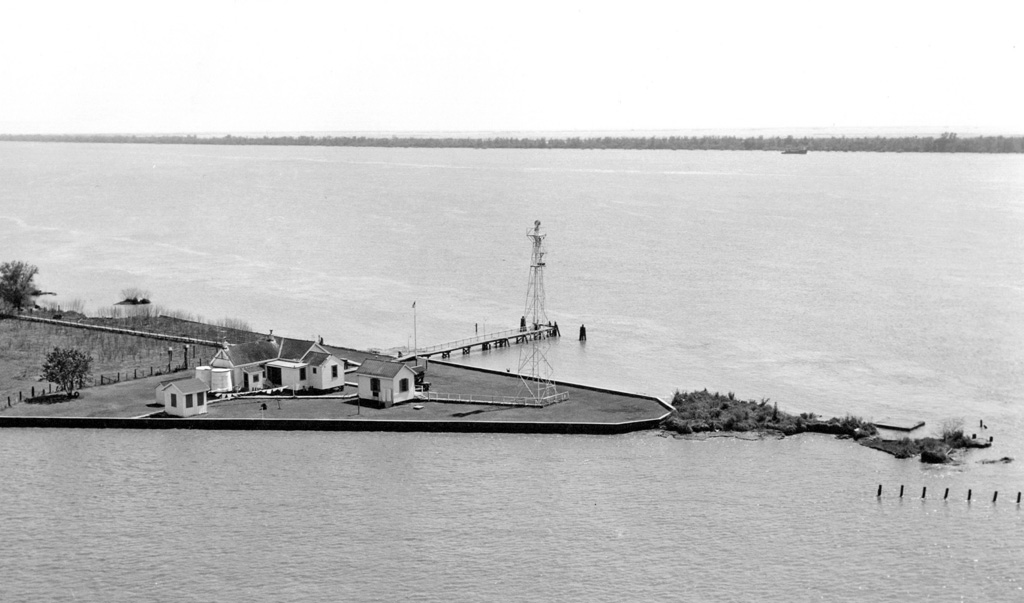
In 1931, the light was moved from the fog-bell tower to a skeletal tower. A fixed light of 200 candlepower was shown from a height of seventy-five feet on the new tower, and a flashing light with a period of ten seconds and with 200,000 candlepower was shown at a height of eighty feet on the same tower but only during foggy weather. The fog signal was also changed at the same time from the bell to an electronic siren that produced a five-second blast every twenty seconds when needed.
Perhaps the most dramatic and humanizing episode in the station’s history occurred in 1957, illustrating the isolation and improvisational demands of life at Cubits Gap. When Mrs. C. R. Smith, wife of a Coast Guardsman stationed at the lighthouse, went into labor during a thunderstorm, help had to be summoned from more than sixty miles away. A helicopter carrying a Navy medic was delayed by storms; a Coast Guard cutter illuminated the landing area; and when evacuation proved too dangerous, the cutter was sent to fetch an experienced nurse from Pilottown. Together, amid stormy conditions and in cramped lighthouse quarters, medic M. Cupples and nurse Irene Crabtree delivered a healthy baby girl—a breech birth, no less. Mother and child were later flown to New Orleans and declared in excellent condition. The episode highlighted the mixture of isolation, danger, and tight-knit cooperation that characterized life at delta stations like Cubits Gap.
The station was converted to automatic operation in June 1961. At that time, the fog lantern/light became the main light, and the fog signal was changed to a diaphragm horn that sounded a one-second blast every ten seconds. The fog signal operated continuously from November 1 to April 30. An isophase red light was being shown from a skeleton tower on piles at Cubits Gap in 2025.
Keepers: John B. Savage (1891 – 1913), John B. Savage, Jr. (1913), Charles W. Heartt (1913 – 1917), Julius Snow (1917 – 1918), Charles W. Heartt (1918 – 1920), Frank L. Staniel (1920 – 1948), C. R. Smith (at least 1957).
References