Bayou Bonfouca, LA 
Select a photograph to view a photo gallery
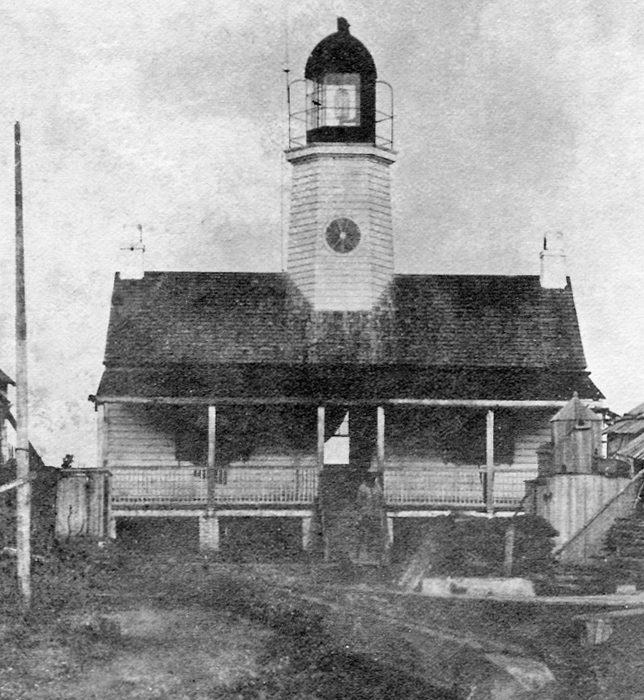

Photo Gallery
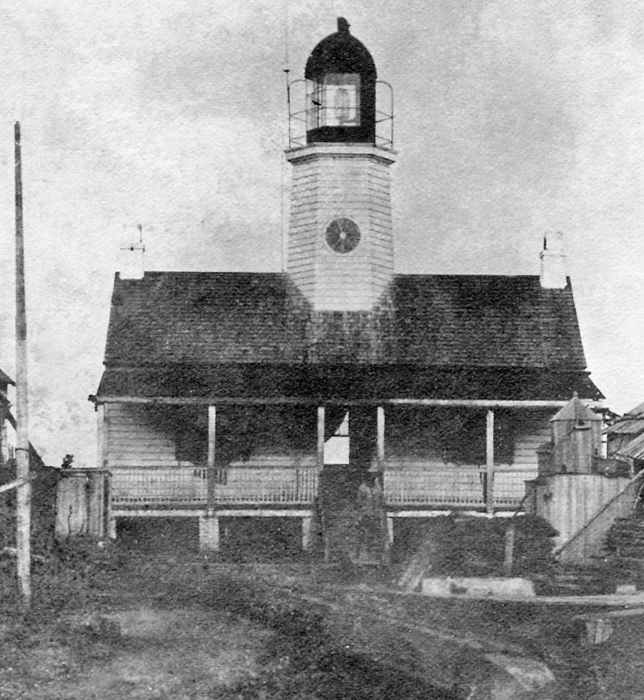


Photo Gallery
Photo Gallery
During the colonial period a small Spanish garrison exercised authority over the area, maintaining order in a region still claimed by Spain as part of West Florida. By 1807, however, American claims to the territory had grown increasingly assertive, and the cultural and economic life of the bayou became more closely tied to New Orleans. Among its most notable products was an exceptionally strong “hard-burnt lake brick,” locally manufactured and widely admired. These bricks were used in many prominent New Orleans buildings and are believed to have supplied construction at several early Louisiana lighthouses. Boatyards along Bayou Bonfouca supported the brisk lake trade, and by the 1840s some eighteen lake schooners were reportedly under construction specifically to haul bricks and local produce to the Crescent City.
|
The Treasury Department instructed the customs collector at New Orleans to model the new structure on the recently completed lighthouse at Pass Manchac. Architect George Bowditch, however, adapted the design to suit Bonfouca’s limited needs. “As it is not necessary to see this light more than five miles,” he wrote, “I have drawn the house but one story.” From the outset, the light was not intended as a major coastal signal but rather as a local guide into the bayou, though advertisements later described it as a helpful marker for vessels traveling between the Rigolets and other lights on Lake Pontchartrain.
Construction was awarded to a new partnership, Joseph M. Howell and Moses Coats of New Orleans, at a winning bid of $2,975—just under the Congressional appropriation. The dwelling was a simple two-room, wood-frame house raised on a five-foot brick foundation wall to protect it from flooding. At its center, a nine-foot square chamber supported a small tower that rose twelve feet above the roof. The lantern, tiny even by the standards of minor harbor lights, measured only three feet in diameter and six feet high. It accommodated four small lamps set approximately thirty-nine feet above sea level: sufficient illumination to mark the bayou entrance, but far from a major beacon on the lake.
Construction progressed rapidly. Bayou Bonfouca Lighthouse was completed by early March 1848, and John Wadsworth was appointed its first keeper. Wadsworth’s tenure was brief, and in 1849 he was succeeded by Vincenzo Scorza, who would remain in charge for the next thirteen years.
Although small, the station received periodic maintenance. A routine inspection in 1854 led to a complete repainting of the exterior: the dwelling and tower were painted white; shutters were given a green finish; and the gallery balusters and railings were refreshed. Two cisterns were painted lead-color, the hearths were re-laid, chimney backs repaired, all window sashes repainted, and the lantern’s ironwork touched up. These improvements left the little lighthouse in excellent condition at mid-century.
In 1857, the light was refitted with a fifth-order Fresnel lens—an upgrade from its original multiple-lamp configuration—and the station entered the final years of its antebellum service.
The outbreak of the Civil War in 1861 transformed the strategic landscape of the Gulf Coast. In April 1862, New Orleans fell to Union forces, prompting Confederate troops in the region to retreat toward the lake’s north shore. Sometime in May or June of that year, a small Confederate detachment burned Bayou Bonfouca Lighthouse as they withdrew and took Keeper Vincenzo Scorza prisoner. Scorza, ironically, was then serving as an employee of the Confederate States lighthouse establishment. He was transported to Camp Moore, but he managed to escape and eventually reported to the United States customs collector in New Orleans.
The destruction of the lighthouse had immediate consequences for local commerce. The 1850s had been an economic high point for the region, especially for the brick industry and lake trade. After the station burned, however, shipping at Bonfouca declined sharply and never fully recovered. Unlike many southern ports that revived after the war, Bayou Bonfouca’s trade remained stunted—an indication of how closely its viability had depended on its navigational beacon and its limited but once-steady commercial ties to New Orleans.
In the years following the war, federal lighthouse authorities debated whether the Bonfouca station should be rebuilt. Max Bonzano, the New Orleans lighthouse engineer, advised strongly against reconstruction. The entrance to Bayou Bonfouca held barely three feet of water—insufficient for most commercial vessels—and the light had never been particularly useful for navigation across the lake. Bonzano criticized the original decision, writing in frustration: “It is difficult to conceive the motive which could have led to the placing of a lighthouse at this point, when Point aux Herbes… remains to the present without a dumb beacon.”
The Light-House Board concurred. Its 1868 report noted that the station had been “destroyed in 1862 and not re-established,” and argued that the important landmark in the area was not Bonfouca but Pointe aux Herbes, directly opposite on the south shore of Lake Pontchartrain. That location served as the primary guidepost for steamers and sailing vessels navigating the lake’s interior routes. Accordingly, the Board recommended abandoning the Bayou Bonfouca site entirely and constructing a new lighthouse at Pointe aux Herbes.
Congress responded the following year by appropriating $8,000 for a replacement lighthouse at Pointe aux Herbes. Before work could begin, however, title to the preferred land had to be acquired. While these legal and logistical matters were addressed, the Bonfouca site languished without restoration, and its role as a port diminished further. Ultimately a light was built at Pointe aux Herbes, but Bayou Bonfouca never again received a full lighthouse—only a small beacon to help mark the bayou entrance.
After working as an inspector at the Customs House in New Orleans for several years, Vincenzo Scorza returned to lighthouse keeping in 1871 at Tchefuncte River Lighthouse. Having been born in Genoa, Italy in 1797, Vincenzo was seventy-four at the time, and he would pass away in 1872.
Keepers: John Wadsworth (1848 – 1849), Vincenzo Scorza (1849 – 1862).
Laborers: Silvestre Puchnau (1900 – 1901), Roswell King (1901), Silvestre Puchnau (1901 – 1906), Manuel Trigo (1906), Edgar Doucet (1906 – 1910), Fritz Schutlz (1911), Nelville Pichon (1911 – at least 1921).
References:
