Barataria Bay, LA 
Select a photograph to view a photo gallery
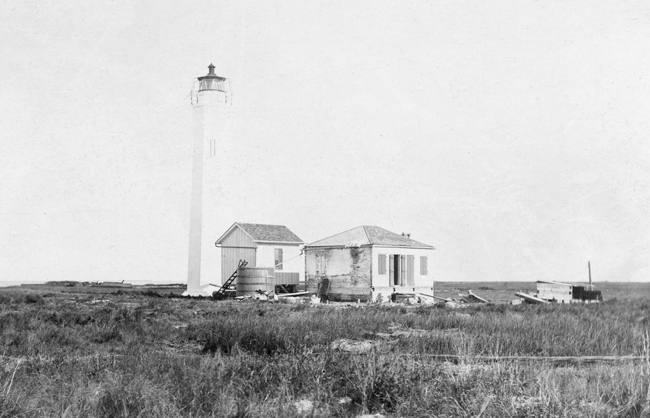
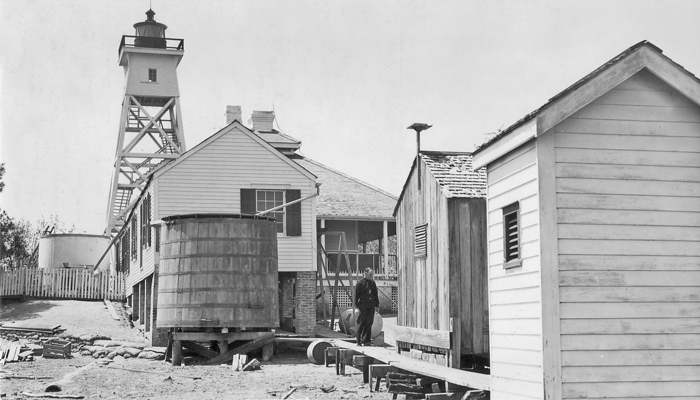
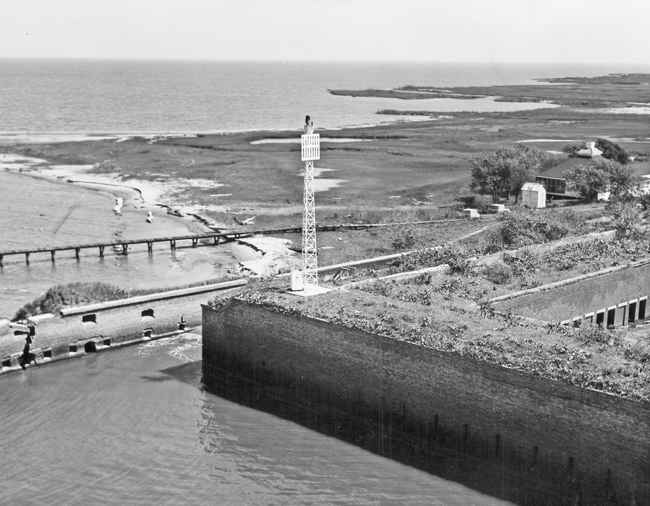
Photo Gallery
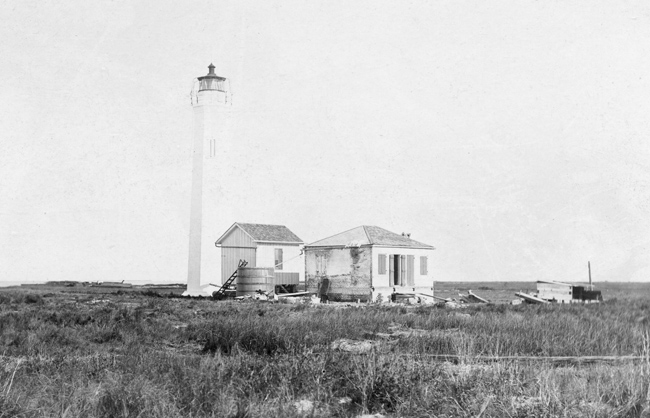
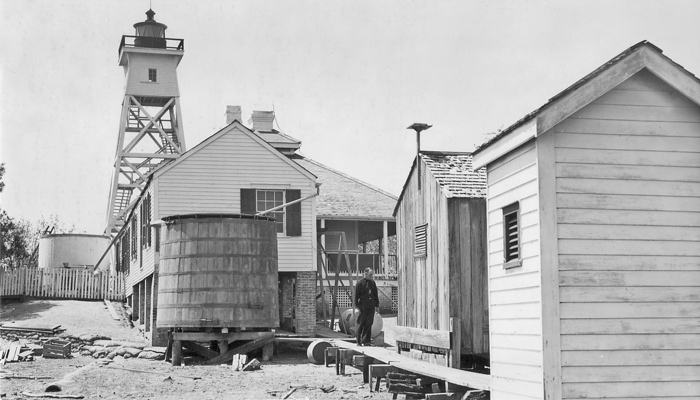
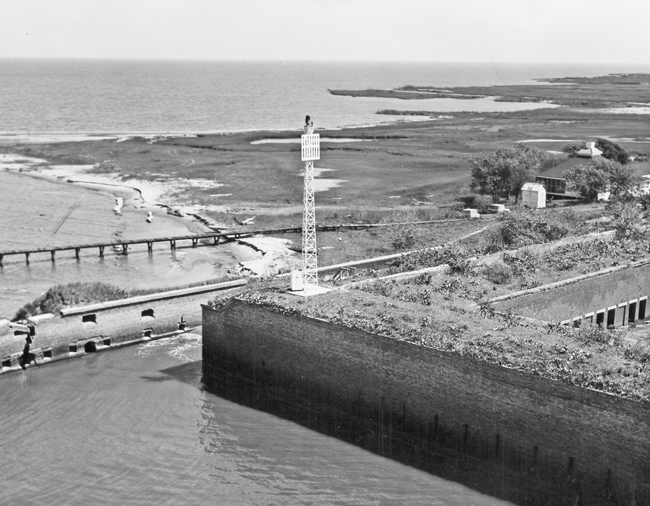
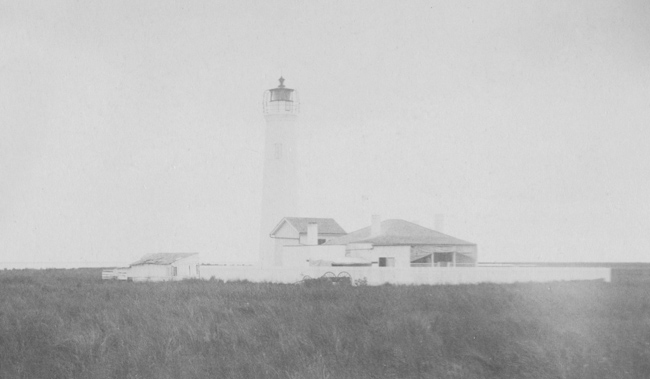
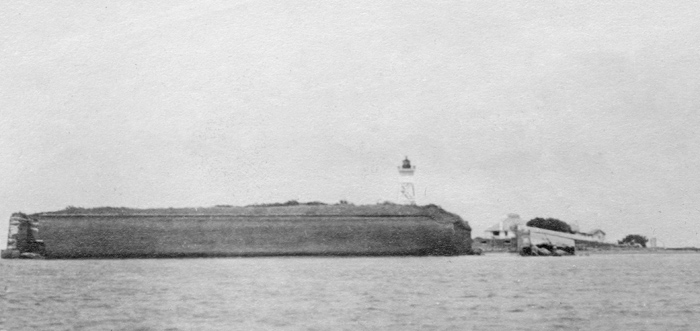
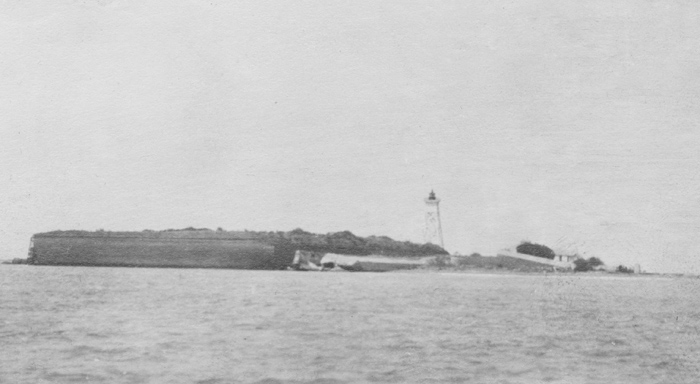
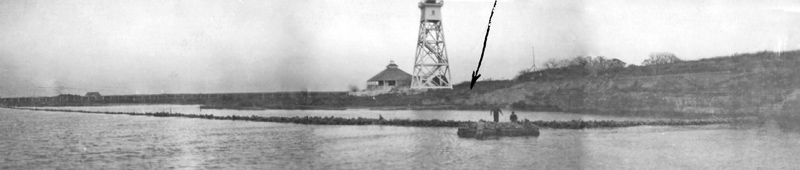

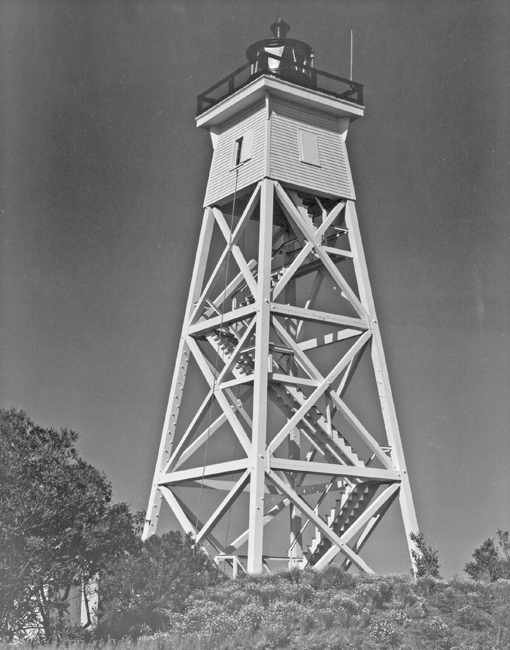
Photo Gallery
Photo Gallery
|
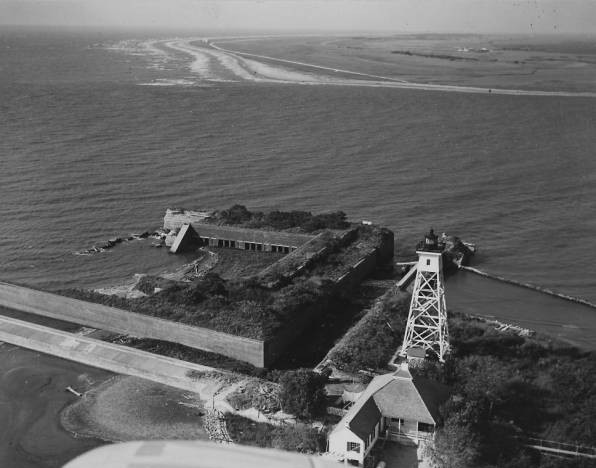
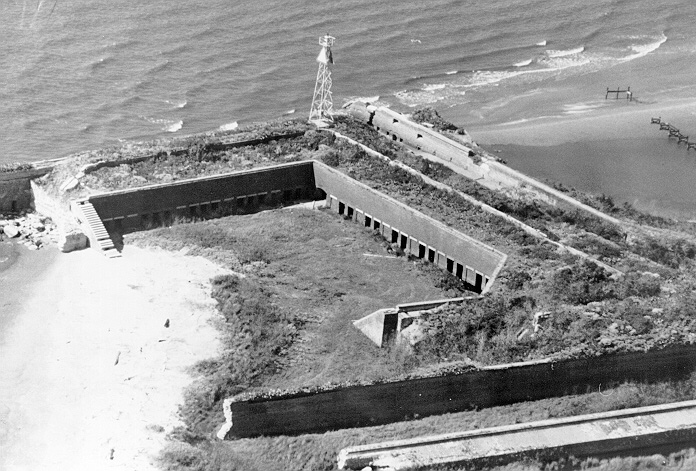
In 1835, the federal government began constructing Fort Livingston on the western end of Grand Terre, not far from the site of Lafitte’s old encampment. Though the fort was never completed, its position made it an important coastal stronghold, used intermittently by U.S. forces and later by occupying Union troops during the Civil War. With its proximity to the main pass into Barataria Bay, Grand Terre was also a logical place for a lighthouse—though not the ideal one.
A Coast Survey inspection in 1853 recommended that the lighthouse be placed on Grand Isle, which was accreting sand, rather than on the eroding sands of Grand Terre. But because the government already owned the land at Fort Livingston, cost and convenience prevailed, and Grand Terre remained the chosen site.
Congress appropriated $10,000 for a lighthouse to mark the change of the “Grand Pass to Barataria Bay” on August 3, 1854, and construction started in 1856. Army Captain Danville Leadbetter, the district lighthouse engineer, oversaw the project, which was carried out simultaneously with the nearly identical towers at Sabine Pass, Timbalier Bay, and Aransas Pass.
The octagonal brick tower, whitewashed and standing fifty-five feet tall, had been completed in mid-1857, but delays in shipping the fourth-order Fresnel lens postponed the station’s opening. Finally, on December 7, 1857, the Lighthouse Board announced that the tower’s fixed white beam that shone sixty feet above mean sea level and had an arc of visibility covered 270 degrees—adequate for the main approaches through the pass—was now active.
Nicholas Johnson was appointed the first keeper of Barataria Bay Lighthouse at an annual salary of $500, but he resigned before the light became operational, and Pleasant D. Cocke was appointed in his stead, with Richard E. Cocke, his son, as his assistant. In 1859, only two years after the light’s debut, Congress granted the authority to extinguish unnecessary lights, and Barataria Bay Lighthouse was discontinued that same year.
The tower did not remain dark for long. During the Civil War, Union forces occupied Fort Livingston, using Barataria Bay as a staging point for troops and supplies bound westward for the Texas coastline. The fort’s caretaker garrison needed a navigational beacon for military transport vessels traveling through the inland passage toward Ship Shoal.
In 1864, the Lighthouse Board authorized the re-establishment of the light, citing both military need and increased coastal traffic. The station was refurbished, and on January 10, 1865, keeper Jacob Brankhorst took charge of the relit tower.
Throughout the late nineteenth century, Barataria Bay Lighthouse remained active despite the challenges of isolation and the relentless erosion of Grand Terre Island. Annual reports generally described the station as “in good condition,” but maintenance and change were constant:
|
Barataria Bay Lighthouse endured hurricanes and storms during the early twentieth century. A pair of hurricanes in September 1915 caused damage to many lighthouses on the Gulf Coast. Keeper Robert G. Miller at Barataria Bay was one of many keepers commended for performing their duties under hazardous or trying conditions. Congress provided $100,000 on March 28, 1918 to repair and rebuild lighthouse structures on the Gulf Coast damaged in the hurricanes. As a result, the roofs of the dwellings and outbuildings were repaired, 712 feet of wharf was rebuilt, sills under the dwelling were renewed, and the station was painted. Federal hurricane-relief funding in 1918–1922 supported renewed repairs to the dwelling, roofs, wharf, and outbuildings. Further storms struck in 1926 and 1931, undermining the earthen fill around the tower and washing away protective rock.
Joseph M. Waits’ service as head keeper from 1926 until his retirement in 1947 was longer than any other keeper of Barataria Bay Lighthouse. He entered the service in 1899 and served at Ship Shoal, South Pass, Sand Island, Southwest Reef, and Point au Fer Reef before being transferred to Barataria Bay. Keeper Waits had to take a cut in annual salary from $1,560 to $1,320 when he accepted the transfer to Barataria Bay, but the move allowed him to have his family live with him.
On November 9, 1937, Keeper Waits and two laborers who were working at the station went to the assistance of the trawler Lucky Star, which was sinking. The men used buckets from the station to bail water and keep the boat afloat until the Coast Guard arrived and towed the vessel to safety.
After World War II, the station was automated and fitted with a 200-millimeter electric lens displayed from a skeletal tower mounted on the fort. The Coast Guard station at Grand Isle assumed responsibility for its upkeep, marking the end of resident keepers at Barataria Bay. Today, offshore lights mark Barataria Pass.
Keepers:
References: