Fort Point (Galveston Harbor), TX 
Select a photograph to view a photo gallery
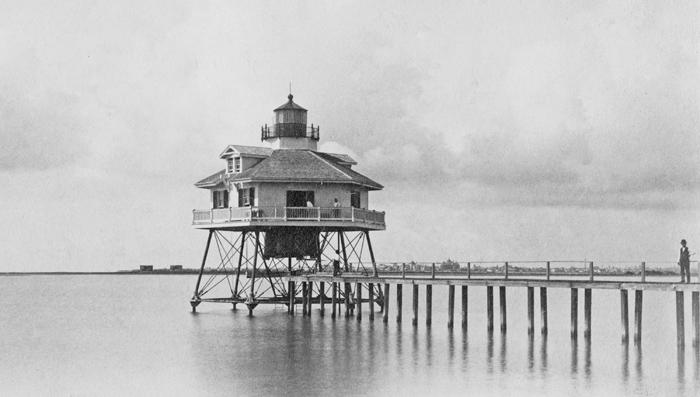
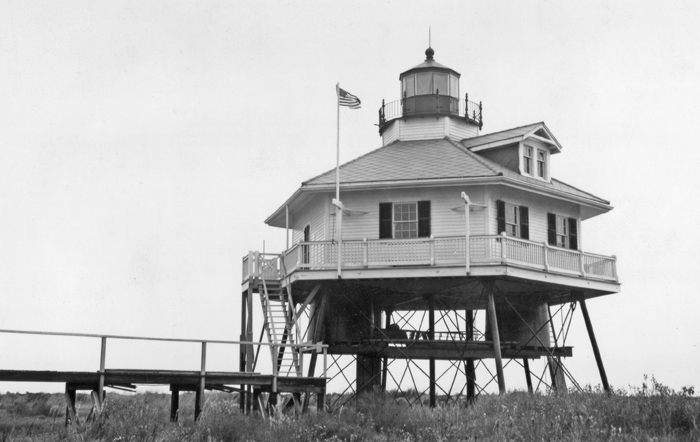
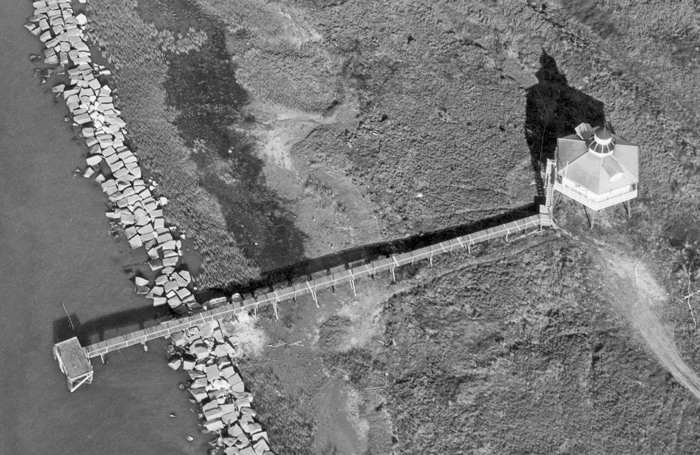
Photo Gallery
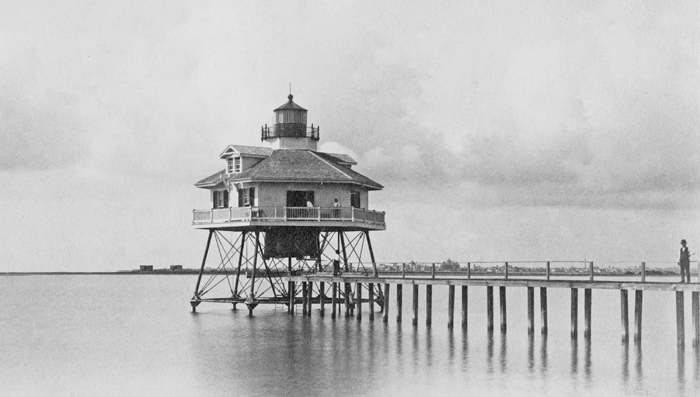
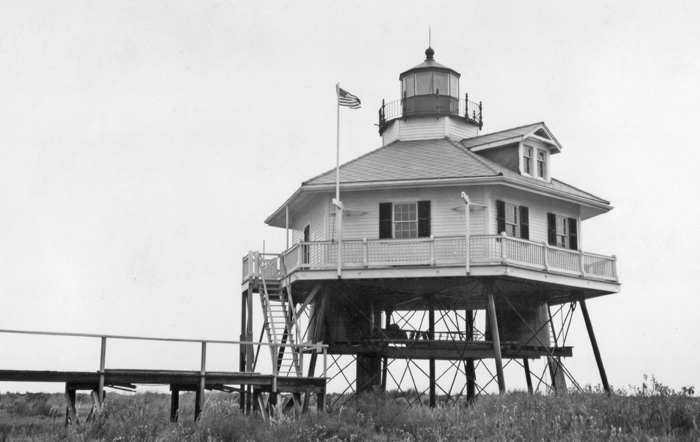
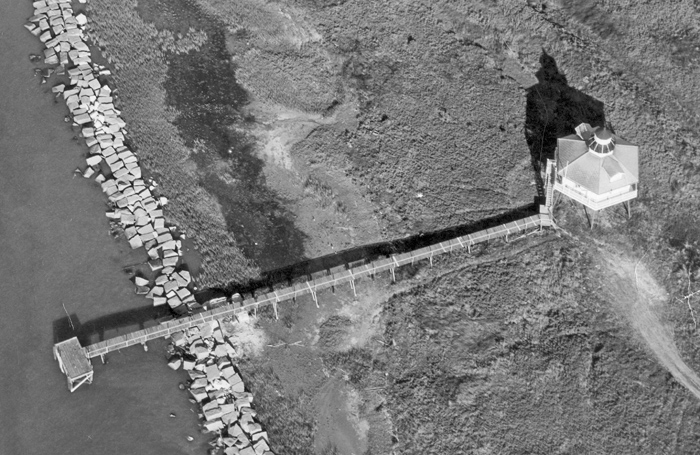
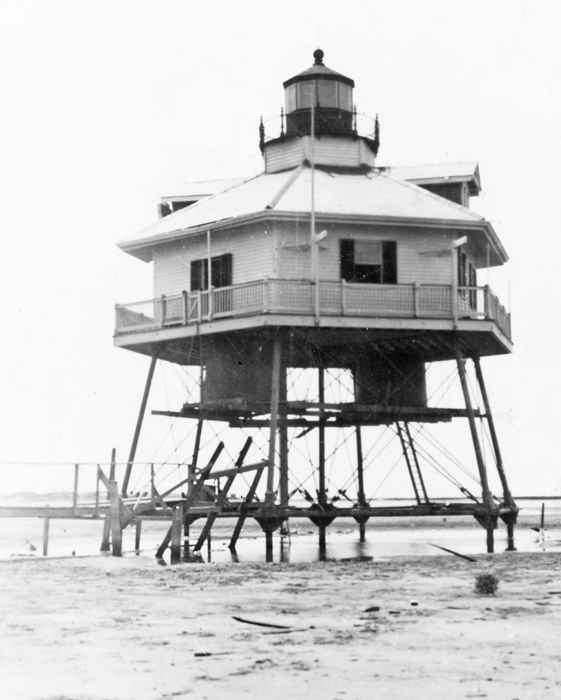
Photo Gallery
Photo Gallery
|
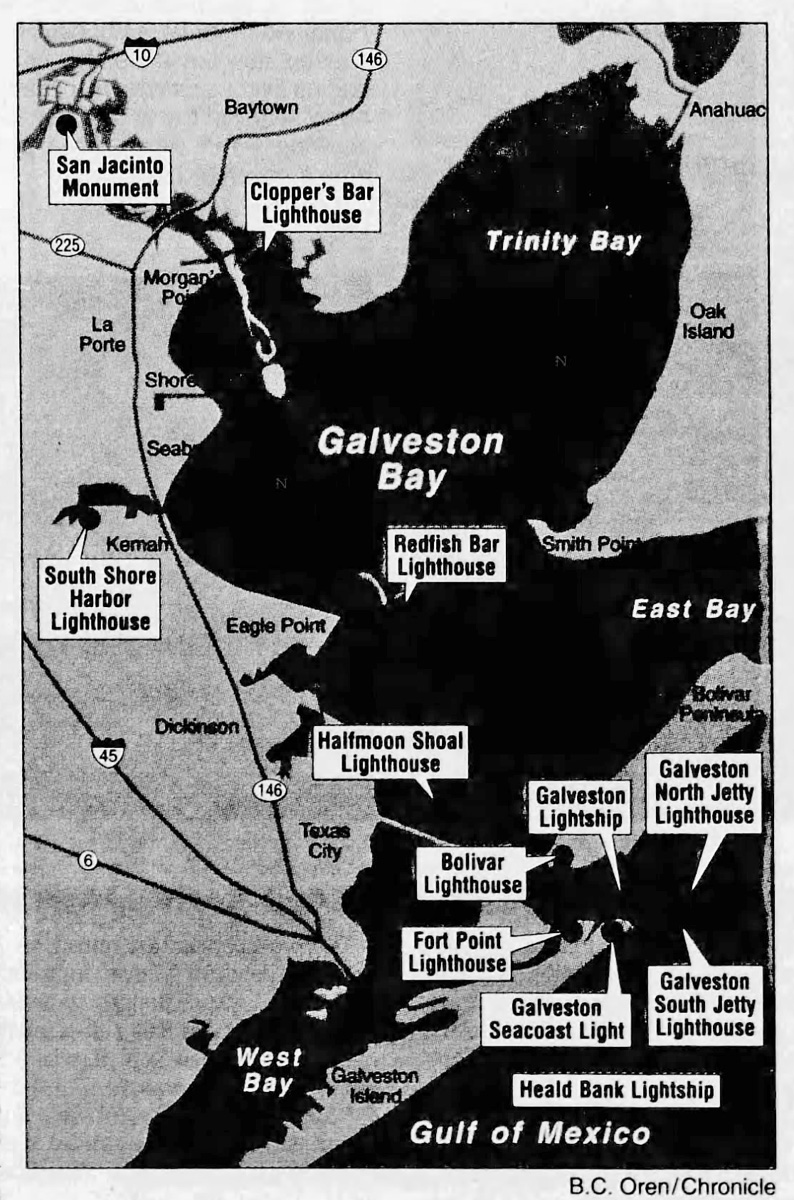
Local pilots offered a solution grounded in practical experience. They advised placing the new beacon not on the historical reservation but closer to the end of the newly built breakwater and jetty that extended northward from the island’s wharves. In response, the Lighthouse Board purchased a ten-acre submarine plot for one dollar in 1880. Situated roughly two miles south of Bolivar Point Lighthouse and about 1,000 yards west of the breakwater, this revised site met the needs of mariners far better than the original reservation.
Construction moved forward rapidly. By July 1881, the foundation was in place, jurisdiction had been secured from the State of Texas, and the octagonal screw-pile superstructure was rising over the shallow waters of the harbor entrance. On August 15, 1881, keeper Emilius Gerhardt, who had previously served as an assistant at Sabine Pass Lighthouse, lit the lamp for the first time. Fort Point Lighthouse presented a striking appearance: a hexagonal dwelling perched atop iron piles driven eighteen feet into the seabed, all connected with longitudinal and diagonal braces for stability. The lantern stood directly above the central living quarters, elevating the fourth-order fixed lens to a focal plane of approximately forty-six feet above water level.
The optical design reflected the complexity of navigating Galveston Harbor. While the main light shone steady white, it also incorporated two red sectors to indicate the locations of the wharves and turning buoy. Mariners approaching at night first saw uninterrupted white. As they proceeded over the course toward the harbor entrance, the light turned red as they neared the black buoy, signaling when to change direction to enter the channel. After rounding the buoy, the light returned to white, then shifted to red once more as vessels neared the busy wharf area. This system proved highly effective, and contemporary accounts praised the lighthouse as a substantial aid to navigation in one of the coast’s most important ports.
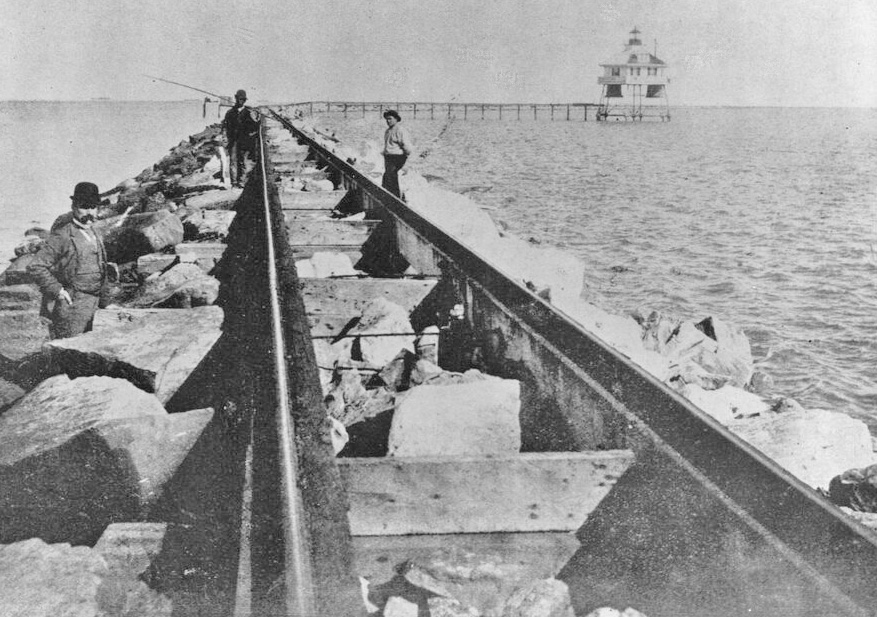
Over the next decades, the station experienced continual improvements, reflecting both technological change and the harsh conditions faced by Gulf Coast structures. In 1883, the lighthouse received a fresh coat of paint and its metallic roof shingles were covered in hot coal tar. An updated red-and-white sector was added that July to reflect new channel alignments. Five years later, a cypress cistern capable of holding more than 2,600 gallons was installed. In 1889, workers added a 195-foot elevated walkway linking the lighthouse to the jetty, along with a wooden platform and other minor repairs.
At the turn of the century, extensive maintenance was again necessary. The devastating 1900 hurricane did not destroy the screw-pile tower, but it brought damage requiring the scraping and repainting of the keeper’s dwelling and ironwork. An oil house was built on the platform under the dwelling at this time, and the boathouse was rebuilt. A wharf was also built from the boathouse to the railroad track on the jetty. The site continued to expand its capabilities in 1905 with the installation of a mechanically struck fog bell, an essential tool in fog-prone Galveston Bay.
Alongside the official reports detailing repairs, wharf extensions, and lantern maintenance, the surviving keeper’s logbook offers a rare glimpse into life at the station. On February 21, 1902, William B. Johnson wrote in a steady hand, “William B. Johnson took charge at 11:40 A.M. & relieved acting keeper Louis Larsen.” For the next three years, he maintained the light, recorded the weather, and chronicled both the quiet routine and human drama of life upon the isolated platform.
|
But the log also reveals moments of urgency and tragedy. On March 17, 1903, Johnson wrote that he had “saved Jack Houlehan’s life, as he was almost dead from drowning.” Not all such incidents ended so well. In the early morning hours of November 20, 1903, Johnson’s son drowned, after he plunged into the bay while attempting to step from a scow onto the deck of the tugboat Seminole. The grieving father noted the burial in Lakeview Cemetery the next day, where a modest granite stone still marks the grave.
Weather entries punctuate nearly every page—southerly winds, heavy seas rolling in from the Gulf, warm and damp conditions. The lighthouse, elevated above the water on its screw-piles, trembled beneath storm waves and shifted with changing tides. In 1905, the log begins to list another theme: “Keeper sick.” Day after day the same phrase appears, occasionally accompanied by notes of Jessie consulting a doctor or visits from officials on nearby vessels. On October 4, 1905, Jessie’s handwriting replaces her father’s: “Took papa to hospital.” The following day’s line is blank. On October 6 another hand recorded: “Keeper W. B. Johnson was taken to St. Mary’s Hospital. On the 5th he died. On the 7th, Asst. Keeper L. F. Edgecombe was placed in charge.” And just like that, the station’s routine resumed: “Stiff Norther moderating at 3:30 P.M. Dry and clear…”
By the end of the nineteenth century, newer lighting technologies were reshaping maritime navigation. The introduction of acetylene made it possible to illuminate buoys and beacons that required little maintenance. During the Spanish-American War in 1898, Fort Point Light was temporarily extinguished due to wartime restrictions on nighttime navigation. Although relit afterward, its strategic necessity was already diminishing. On July 31, 1909, the light was officially discontinued, though its fog signal continued to operate. The station was renamed the Galveston Harbor Fog Signal Station in November of that year.
The keepers of Galveston Harbor Fog Signal station had numerous responsibilities in addition to tending the fog bell. George W. Bardwell was in charge of the station in 1928, and he had three assistants at that time. In a questionnaire he filled out that year, Keeper Bardwell noted that the majority of the keepers’ time was spent using a forty-two-foot launch to make weekly inspections of forty-five beacons and fifteen gas buoys attached to the station. The keepers cleaned and recharged the acetylene generators when necessary, and relighted the buoys as needed.
In March 1928, Captain Montgomery, a pilot, reported that Houston Channel Beacon No. 13 was extinguished. The keepers went to investigate and found the lantern and beacon full of bees. Keeper Bardwell reported, “I will place a piece of wire screen over the draft holes in the lantern. We will also have to close the house on the beacon so they can not get in, as it is full of them at present.”
During his time in charge of the station, Keeper John D. Balsillie and his assistants rescued many people. In a letter to the superintendent of the eighth district in 1919, Keeper Balsillie reported one such instance: “On a run from Texas City Channel Range Light today, we were signaled for help by a disabled launch aground on mud banks and reefs. I went to their assistance, and ran out a long line by skiff, and towed the launch to town, a distance of about 6½ miles. The launch belongs to the Texas & Gulf Steamship Co. of Galveston, Texas. Value about $2,500, length 45, 20 H.P. Sterling Engine, name of launch Helios. Dead batteries and engine troubles were the cause of asking help.”
Galveston Harbor Fog Signal was discontinued in December 1950. Four years later, the Army Corps of Engineers assumed control of the site, and the structure was eventually demolished. Today nothing remains of the iron-pile lighthouse that once guided ships between Bolivar Roads and the busy wharves of Galveston. Yet the history of Fort Point Lighthouse endures—in official reports recording every repair, in the logbook preserved by the Rosenberg Library, and in the recollections of a harbor that for nearly three decades depended upon its steady white light and faint bell tolling through the fog. It stood at the juncture of military history, technological innovation, and human endurance, a testament to the maritime story of Galveston and the isolated men and women who kept its beams burning in the night.
Keepers:
References: