Brazos Santiago, TX 
Select a photograph to view a photo gallery
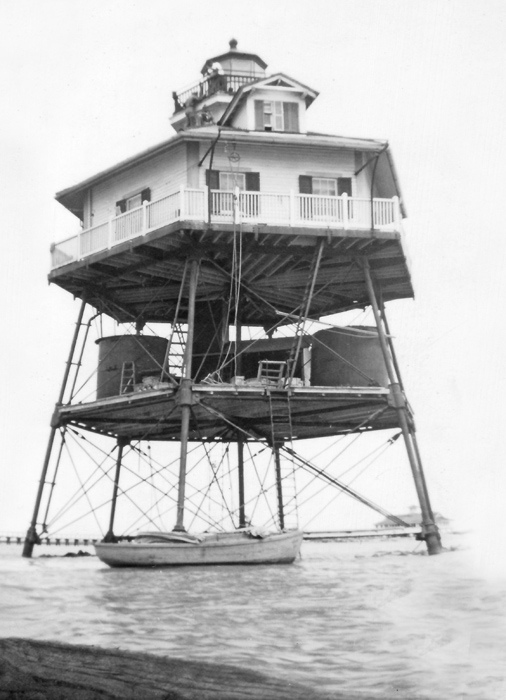
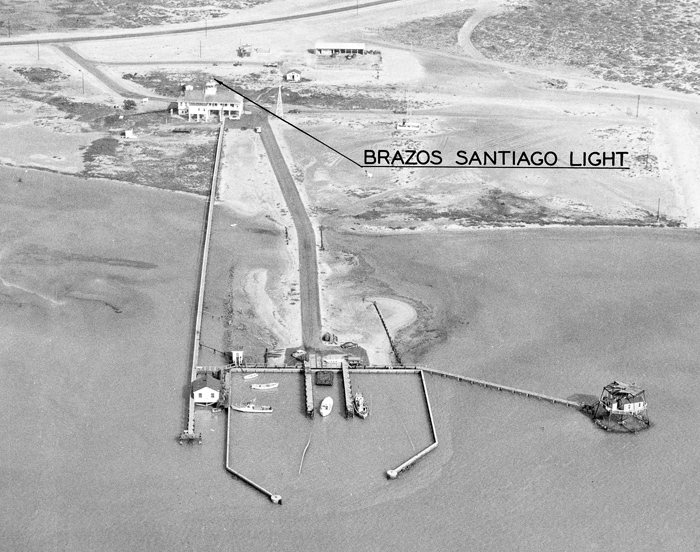
Photo Gallery
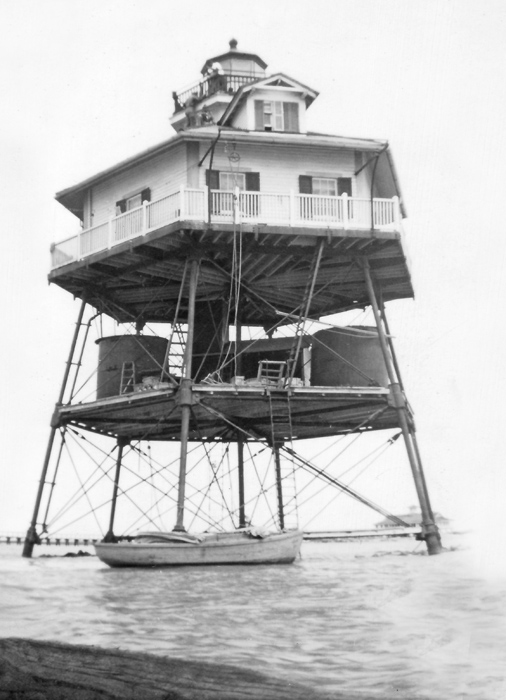
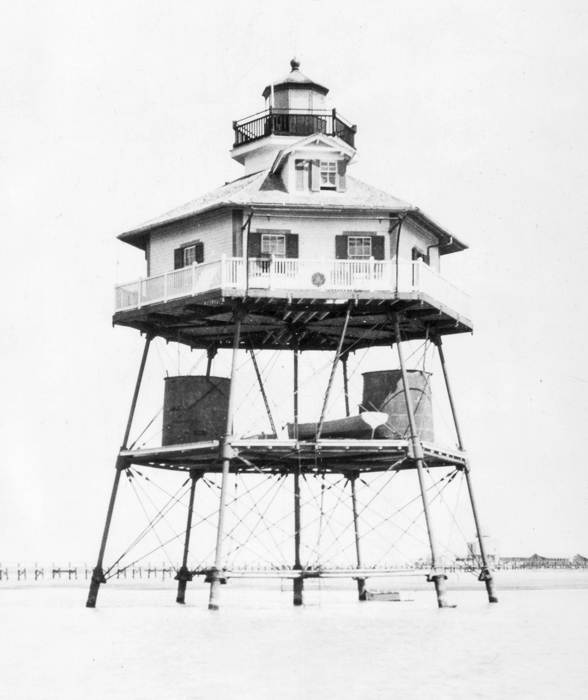
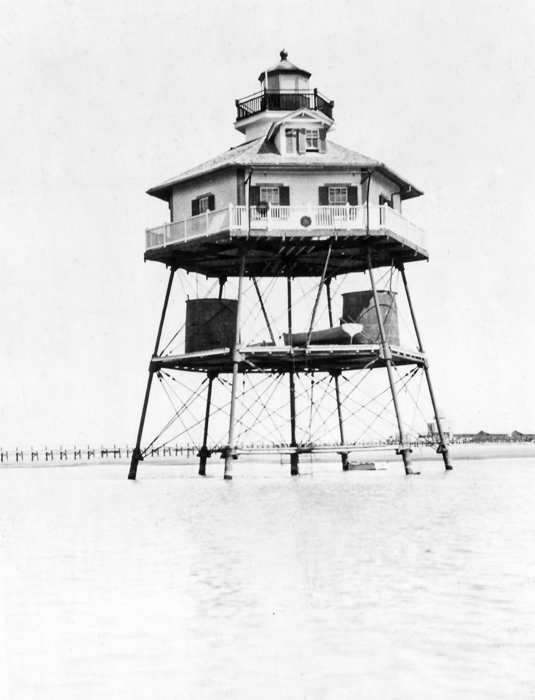
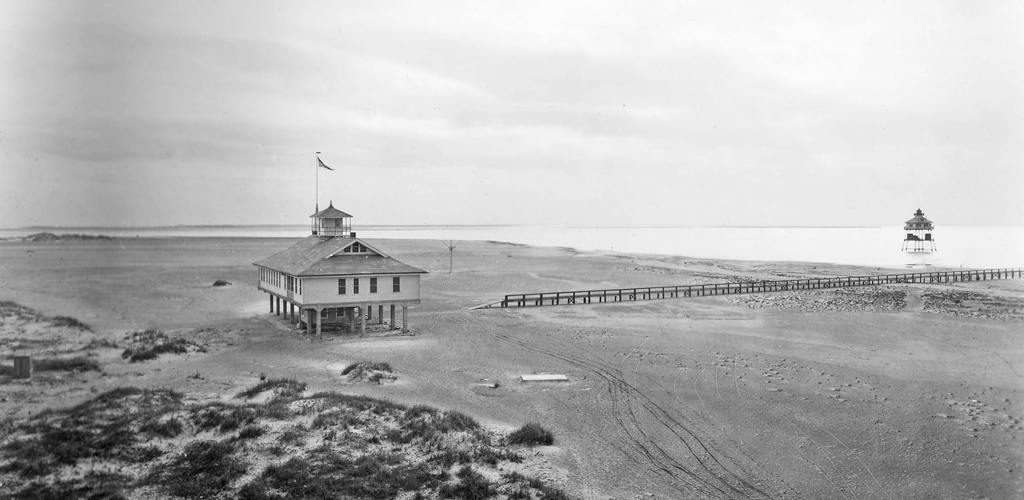
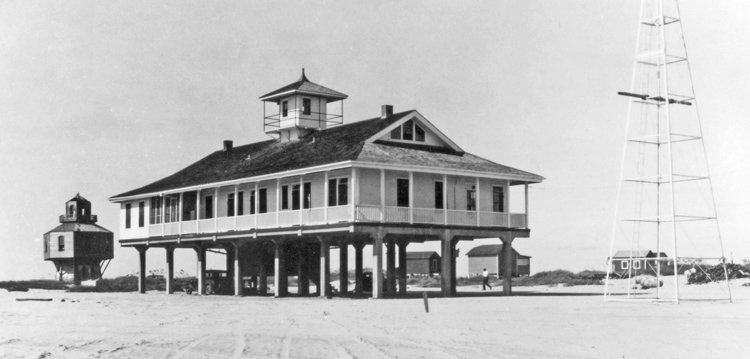
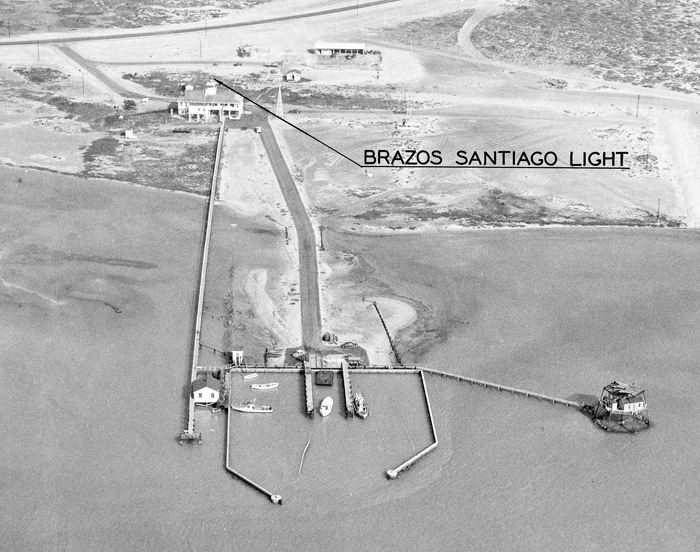
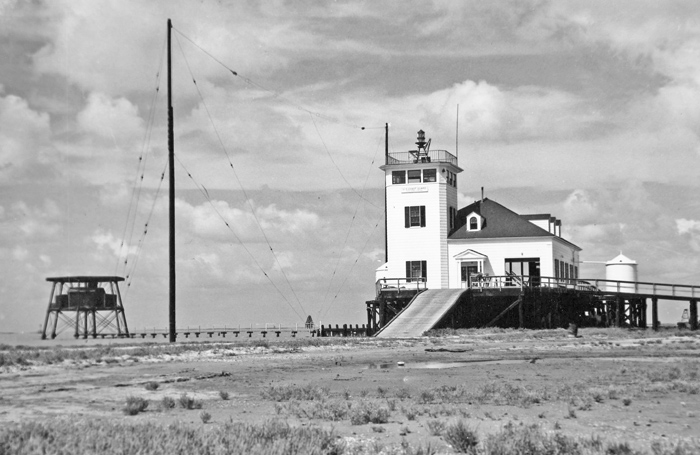
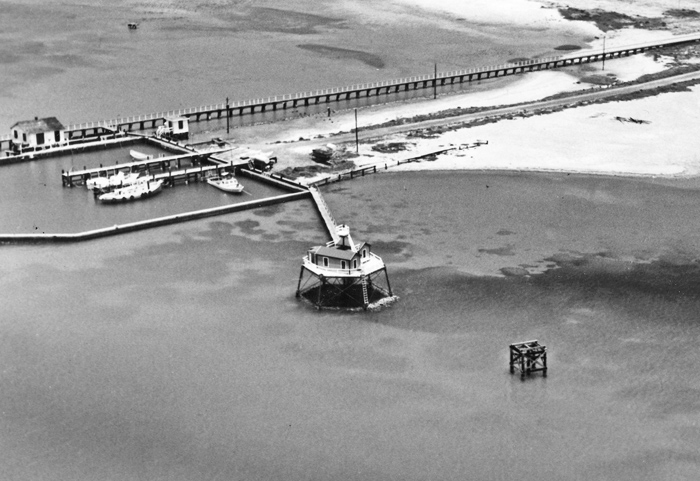
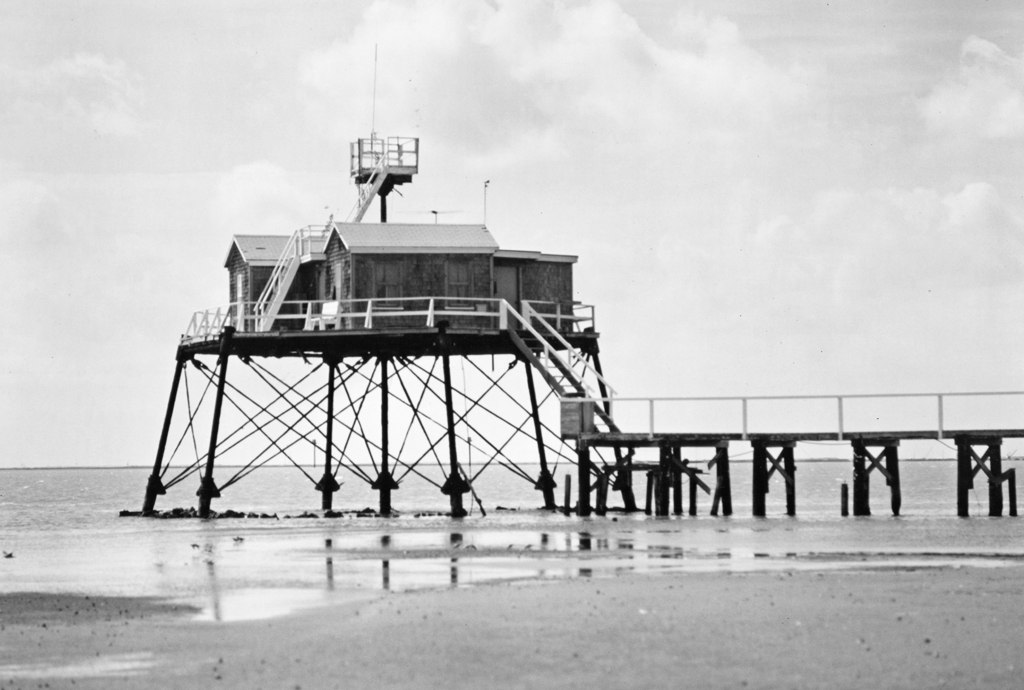
Photo Gallery
Photo Gallery
|
Federal recognition of this need came on September 28, 1850, when Congress appropriated $15,000 for a lighthouse at Brazos Santiago and a beacon on Padre Island. The lighthouse ended up being constructed on Point Isabel, while a portable beacon was placed on the southern end of Padre Island. The beacon light was exhibited from a wooden structure, with four, five-foot-diameter wheels, that could be moved to mark the best channel into the harbor. The beacon light was activated in August 1852, while Point Isabel Lighthouse entered service on March 20, 1853. The Lighthouse Board provided funds for a new beacon in 1854, as a substitute for the “present very expensive and inefficient light,” and a new wooden structure supporting a metal and glass lantern housing a fifth-order lens was finished in 1855.
The outbreak of the Civil War dramatically disrupted maritime activity along the Gulf Coast. Confederate authorities ordered the destruction of the beacon light in December 1862. Union forces gained control of Brazos Santiago in 1863, and the Lighthouse Board sent a first-class buoy there that year.
In July 1865, Max Bonzano, Acting Lighthouse Engineer in New Orleans, sent a prefabricated three-story wooden structure to serve as a temporary light to mark Brazos Santiago. Rather than place the light on Padre Island, Bonzano directed that it be placed on Brazos Island. The beacon to mark Brazos Santiago returned to service on August 24, 1865. Point Isabel Lighthouse would not return to service until February 22, 1866, as it required extensive repairs after the damage it suffered in the war.
The condition of the Brazos Island Beacon deteriorated steadily in the years following the war. By 1871, the Lighthouse Board reported that the temporary wooden tower—one of several hastily erected as stopgap replacements during the conflict—had become dangerously decayed. Its frail structure was vulnerable to destruction during the heavy gales common to the region, and the Lighthouse Board recommended a new iron tower.
|
A year later, in 1873, the Board repeated its request and emphasized the temporary nature of the existing tower. Comparable wartime replacements at Sand Island, Bolivar Point, and Matagorda had already been rebuilt as durable structures, and Brazos Island remained the last of the fragile wooden towers still in service. Although the need was urgent, the Board suggested postponing funding due to the heavy workload already imposed on the Eighth Lighthouse District.
A catastrophic hurricane in September 1874 made postponement no longer possible. The storm completely swept away the old wooden tower, destroying all station buildings and tragically killing Mary Hamilton, wife of Keeper Francis Hamilton, when the collapsing tower fell. The Brownsville Sentinel reported that Mary Hamilton “was in the act of carrying oil to her husband, when the lighthouse fell and crushed her to a jelly. Her body has not been recovered.” Somehow, Keeper Hamilton survived and would continue to look after the light at Brazos Santiago until his death in 1887 at the age of seventy-eight.
To maintain at least minimal navigational guidance, a small temporary beacon was erected near the original site. Congress had already appropriated $25,000 for a new lighthouse, and with the old structure gone, planning and site selection quickly began.
Progress moved slowly, hampered by issues over land title and jurisdiction. By 1876, federal authorities were still awaiting the State of Texas’s formal cession of the chosen site, and no construction work could begin. Nonetheless, preparations advanced elsewhere: by 1878, the ironwork for the new lighthouse had been fabricated in Philadelphia by I.P. Morris and Company, while the wooden superstructure was completed in Mobile, Alabama, awaiting shipment to the Gulf.
At last, in 1879, the long-delayed project reached completion. The new lighthouse at Brazos Island was finished, and its beacon was kindled on the evening of March 1, 1879. After nearly three decades of service, wartime destruction, temporary repairs, repeated structural failures, and a devastating hurricane, Brazos Santiago finally possessed a durable, purpose-built light to guide mariners safely into the southernmost port on the Texas coast.
The following Notice to Mariners announced the establishment of the new light:
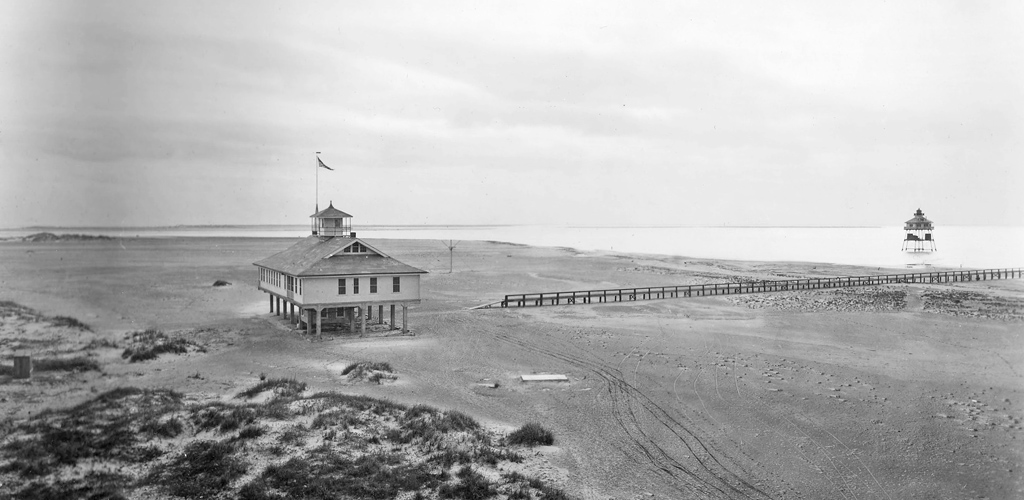
Notice is given that on and after March 1, 1879, a fixed white light of the 4th order, lighting 300 degrees of the horizon, will be shown from the lighthouse recently erected at the south end of the Padre Island, entrance to Brazos de Santiago, Texas.The structure is a hexagonal dwelling on a screw-pile foundation. The foundation, roof and lantern are painted black; the dwelling slate color.
The focal plane is 60 feet above mean low water. The light should be seen at sea 13 miles.
On September 15, 1887, the tender Mignonette arrived at Brazos Santiago Lighthouse to make repairs. Disaster struck six days later when a hurricane struck causing the Mignonette to drag her anchor and be swept out to sea. The vessel likely struck the bar and ruptured its hull. A keeper at Brazos Santiago hired a horse and rode up and down the beach looking for debris from the tender. A fragment of the copper-covered hull was recovered a month after the disaster, erasing any doubt that the tender and the sixteen men aboard had been lost in the greatest lighthouse-related tragedy ever to happen on the Texas coast.
The longest serving keeper at Brazos Santiago Lighthouse was Francisco (Pancho) Garza, who retired in 1939 after spending thirty-two years looking after the light. During his time, the light source was changed from kerosene, to incandescent oil vapor, and then finally to electricity in 1936, when a generator was installed at the lighthouse. Garza did not mind the isolation. In an interview at the time of his retirement, he said, “Maybe I would go 10 days without seeing anybody – maybe 15 days. But I got along. There were fish around the lighthouse—lots of fish, and I could catch them any time I wanted some to eat. Then if somebody came along, we had a visit, and it was pleasant while he was there.”
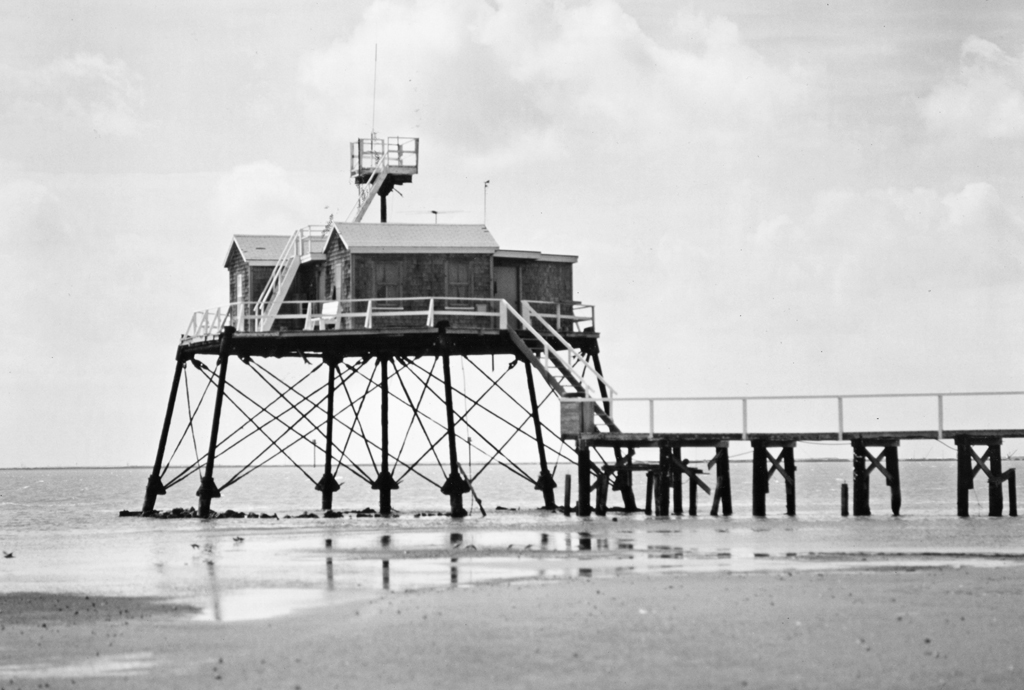
For the next sixty years, Brazos Santiago Lighthouse served ships navigating the ever-shifting and treacherous approaches to the southern entrance of Laguna Madre. But its long career came to an abrupt end in 1940. On March 7, a painting crew accidentally ignited a fire that consumed the lighthouse. A temporary fixed white light was quickly established atop the screwpile foundation until a provisional light, alternately showing two-and-a-half seconds of light and a two-and-a-half-second eclipse, was placed in service atop the remains of the lighthouse a few days later.
In 1943, the Coast Guard placed the light atop a nearby building to maintain illumination for passing vessels. It was this light that would have been marking the entrance to the pass when the Potomac, with President Franklin D. Roosevelt aboard, steamed into Brazos Santiago Pass in December 1942. The President, like President-elect William G. Harding seventeen years earlier, was there to fish for tarpon.
Keepers:
References