Point Conception, CA 



Select a photograph to view a photo gallery
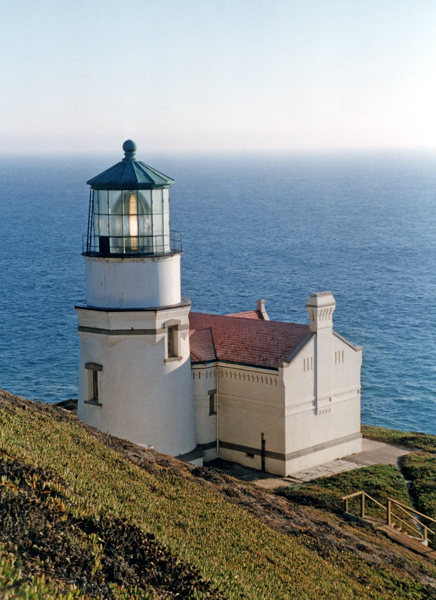
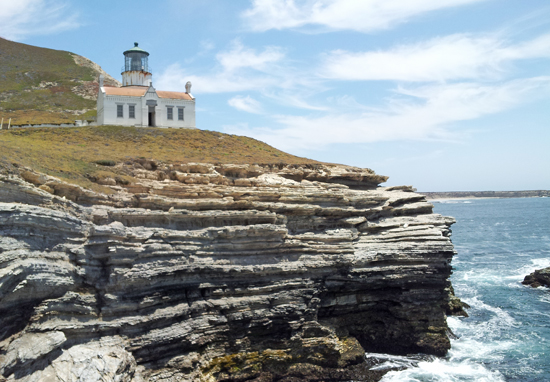
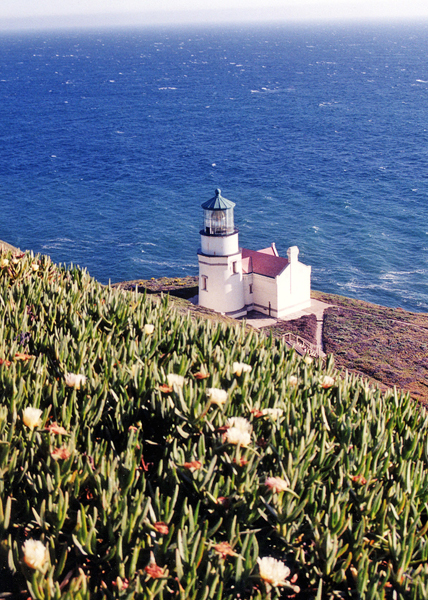
Photo Gallery
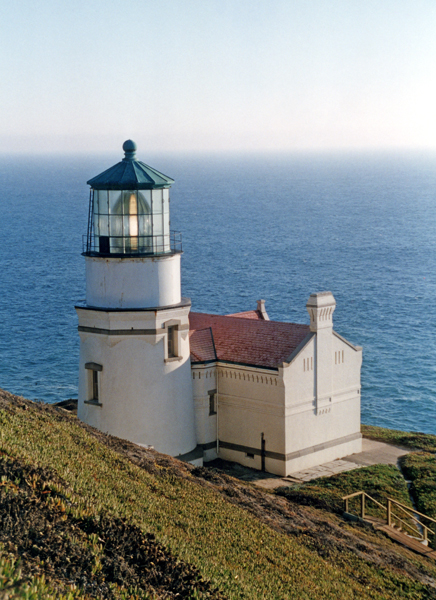
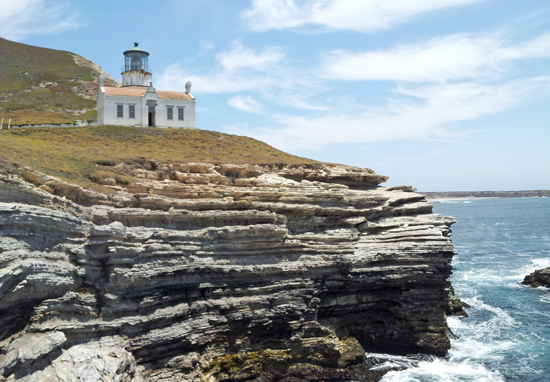
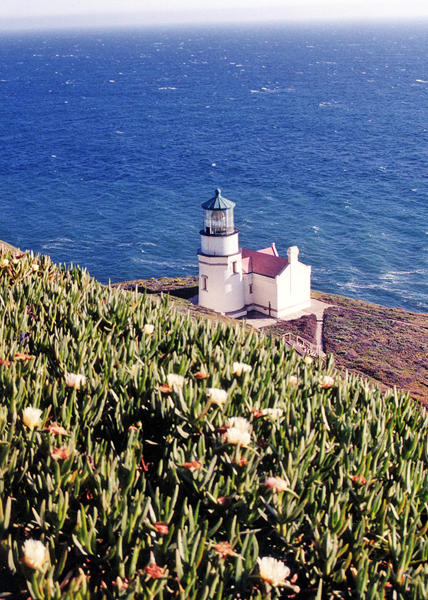
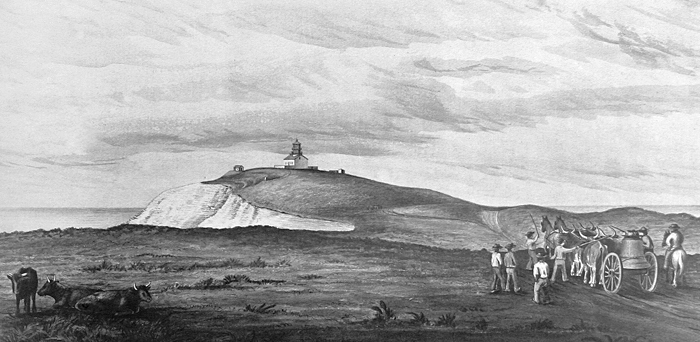
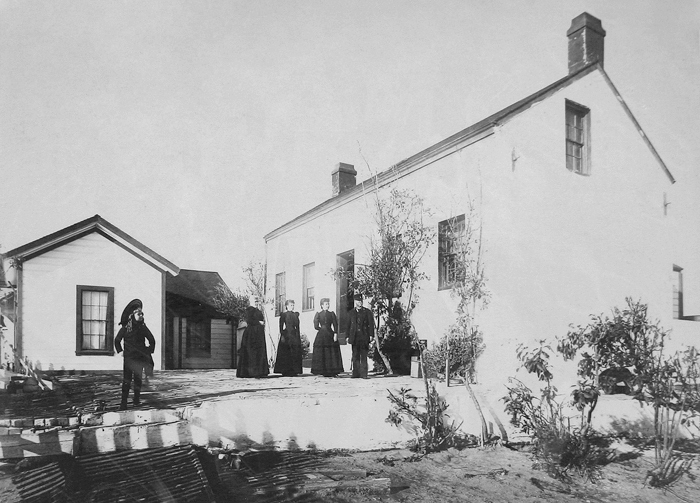
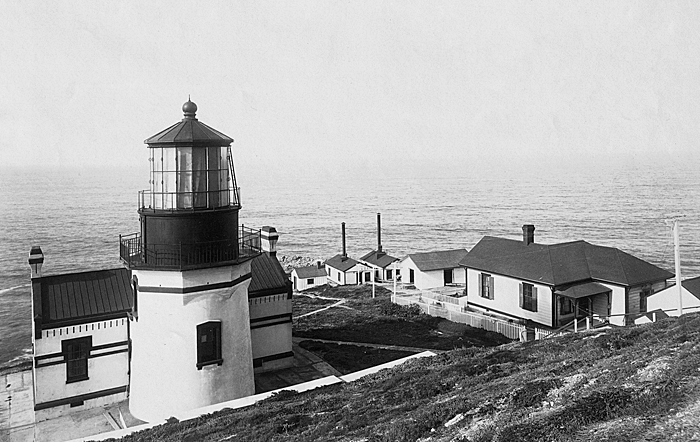
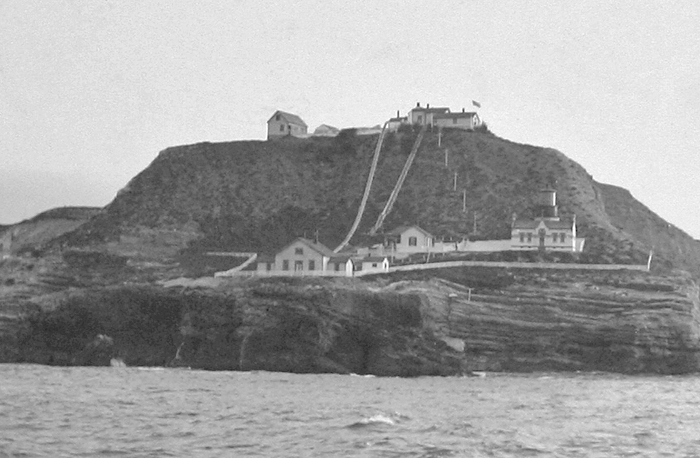
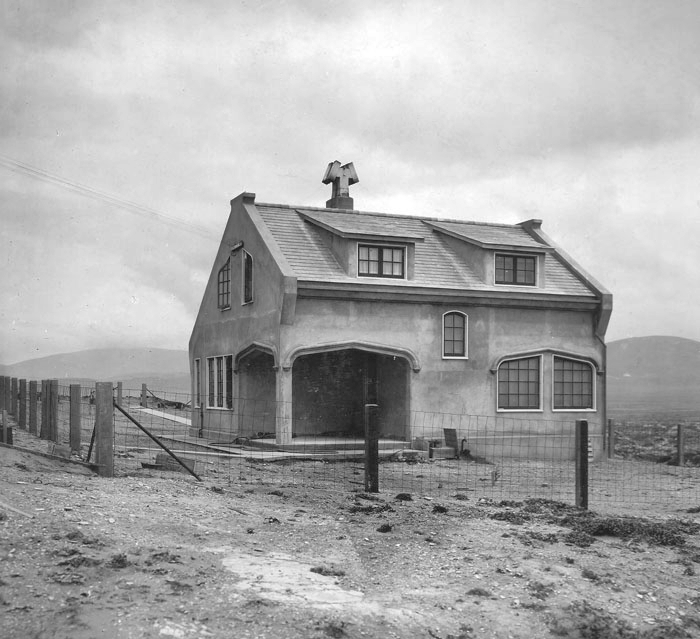
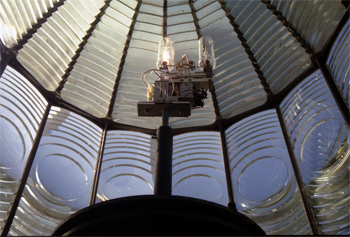
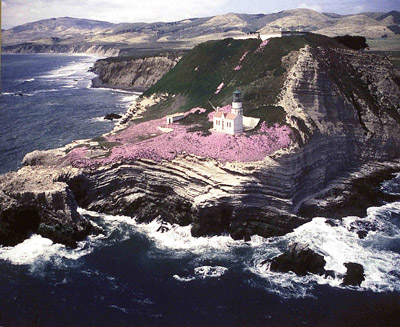
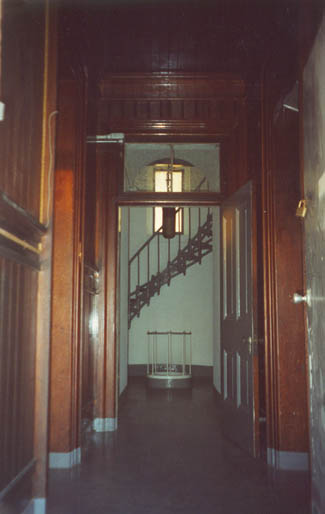
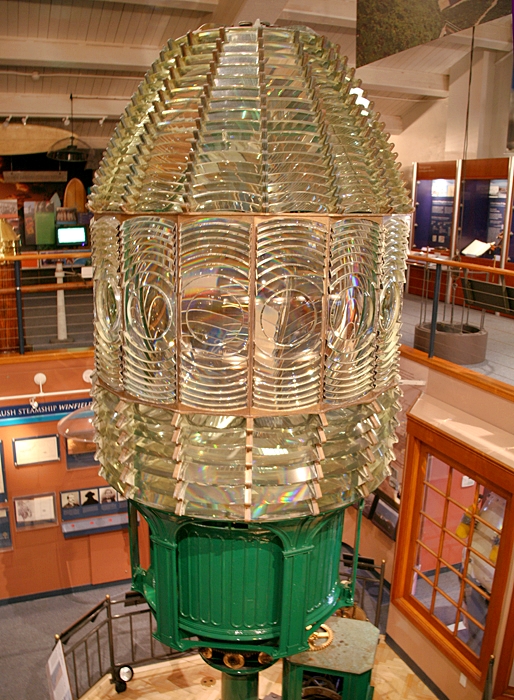
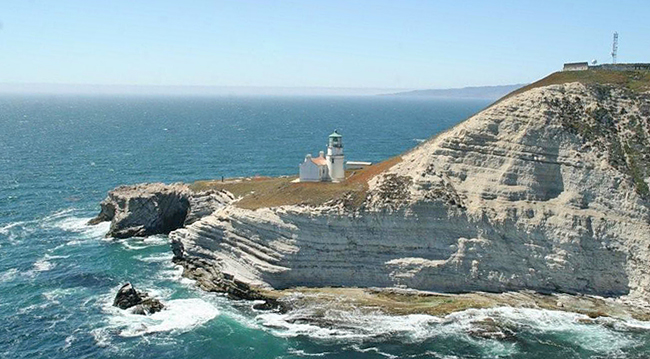
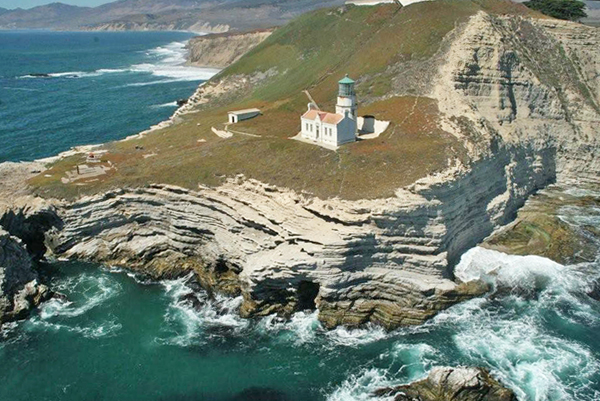
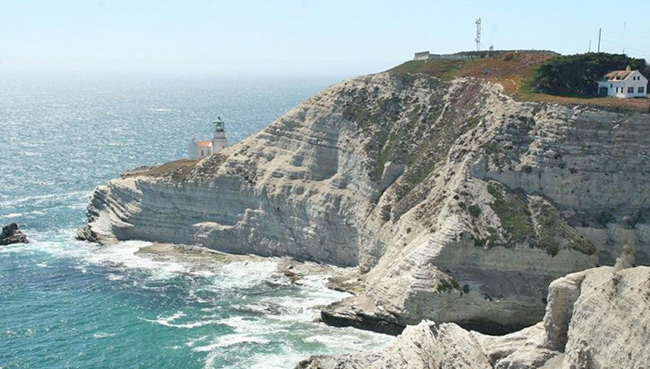
Photo Gallery
Photo Gallery
|
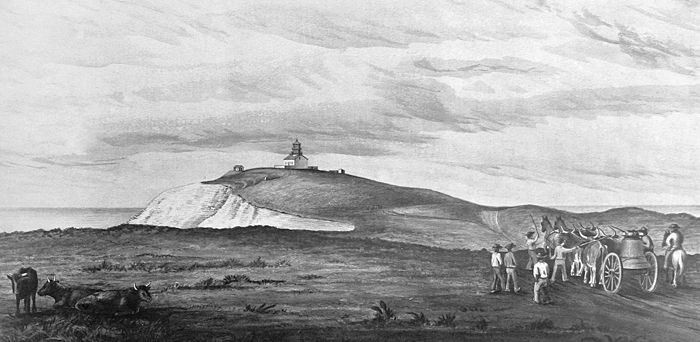
Supplies to construct Point Conception Lighthouse were freighted down the coast from San Francisco and then off-loaded through the surf at Cojo Landing, located just west of the point. From the beach, the construction materials were then hauled by wagon through deep sand that at points reached the hubs of the wheels. Originally designed to house the old-fashioned Argand lamp and reflector system, the tower portion of the lighthouse, which was completed in 1854, had to be torn down and reconstructed to accommodate the Lighthouse Board’s decision to use a first-order Fresnel lens in the lantern room.
George Parkinson, picked to be the first keeper of the lighthouse, arrived on scene in 1855, before the tower had been modified and spent months at the lighthouse without any duties or pay. Work on the new tower began in August, the lens showed up in September, and Parkinson was finally able to activate the light on February 1, 1856, when Point Conception Lighthouse became the seventh operating lighthouse on the west coast.
Major Hartman Bache wrote the following to the Lighthouse Board regarding the tearing down and rebuilding of the tower, which was carried out under the direction of a Mr. Merrill:
It required three days for the crew of the schooner, assisted by the workmen, to land the freight through the surf at the Coxo. The floors of the dwelling were already shored up, and the tower pulled down quite to the foundation; the new materials in part hauled to the site; the old materials in course of preparation for re-use, and one slope of the roof of the dwelling nearly shingled. The work had been somewhat retarded by the indisposition of one of the masons, caused by exposure to water in landing the materials. The only changes made in the plan already forwarded to the board were in removing the tower a few inches back from the centre of the building, in order to give room for opening the front door; to retain the position of the old walls of the cistern, as they are required as foundations for the walls carried up through the house, and for extending the cistern to the northwesterly corner of the cellar. Personal examination fully confirmed the report of Mr. Merrill of the character of the materials and workmanship employed in the construction. The rebuilding the tower was to commence on the 3d [of September], with a fair prospect, considering the adverse circumstances under which the operations must be carried on, of completing the work at an early day. Among these may be mentioned the hauling of the materials, even to the sand and water used in building, over roads at points deep with sand, and of considerable acclivity, requiring the employment of four mule trains to draw even a fourth the usual load, and the absence of all labor and materials at any price, to meet a pressing emergency.
|
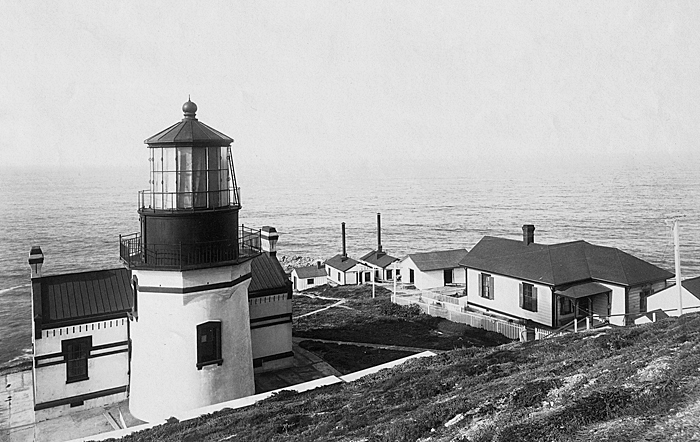
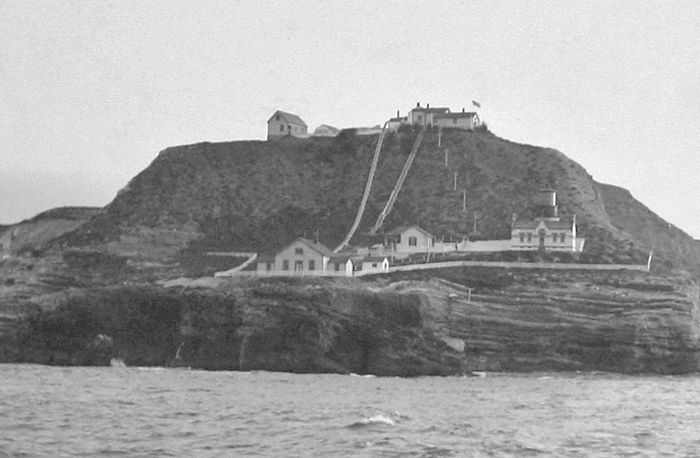
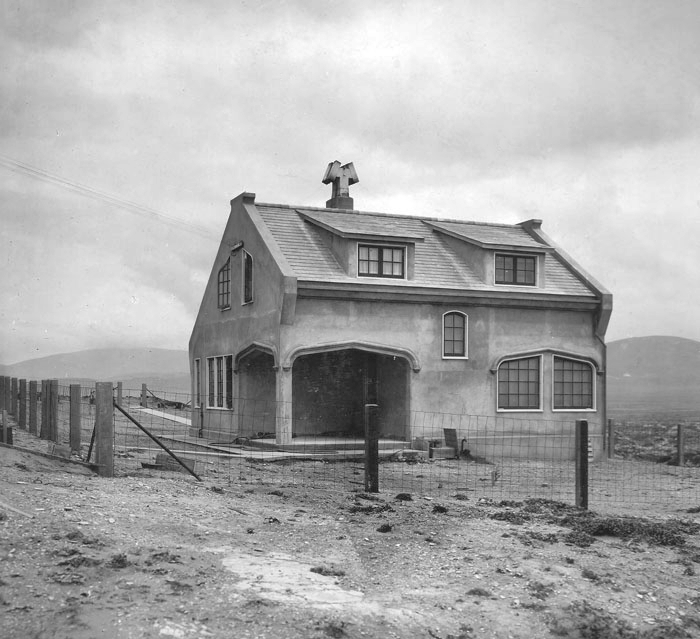
Over the years, numerous changes were made to the station. In 1868, the cistern received a new floor and plaster coating, after an earthquake rendered it incapable of holding water. In 1872, a first class, steam fog signal was installed on a large flat area, over 100 feet down the bluff from the lighthouse, to replace an earlier fog bell. The necessary water for the twelve-inch steam whistle was obtained from a nearby spring and by collecting rainwater and storing it in a cistern. In 1875, the Lighthouse Board reported, “The old dwelling at the station is in bad condition, and the best plan is to pull it down, leaving the tower by itself, and to build for the accommodation of the keepers two more cottages similar to the one built last year.” In 1880, after no appropriation was made to fulfill its 1875 request, the Lighthouse Board reported to Congress that the original tower required wooden supports to hold it up, and that it should be scrapped in favor of a new light to be constructed lower on the bluff, near the fog signal building, where fog would be less likely to obscure the light. The request for $38,000 was approved, and work on the new lighthouse, with an oil room and keeper’s watchroom at its front, began in 1881 on the lower bluff along with a cottage for an assistant keeper.
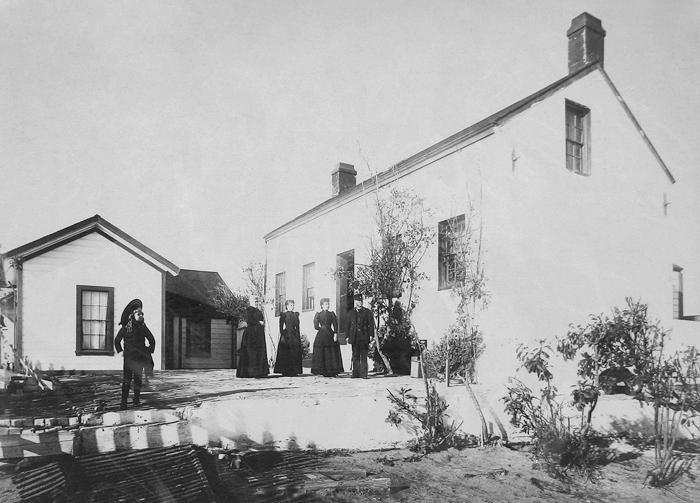
In May 1882, a fourth-order Fresnel lens was transported to the point where it was used in the new tower, while the first-order, Henry-Lepaute lens was disassembled in the old tower. The fourth-order lens was then displayed from a temporary platform atop the old lighthouse, until the first-order lens was installed in the new tower and exhibited for the first time on June 20, 1882. With its tower removed, the original lighthouse, which had to have stabilizing iron tie rods run through it, received a two-room, wooden addition and continued to serve as a dwelling for several more years. A duplicate fog signal, transferred from Point Reyes, was installed in an old coal shed on the bluff as part of the work in 1881 – 1882.
|
Charlie Hellwig, a grizzled, one-eyed, civilian lighthouse keeper, was in charge of Point Conception Lighthouse in 1948 when it was finally converted to electricity. “It’s a good thing. A lot less work,” claimed Keeper Hellwig. “When they first built this light they used sperm oil to light it. In the 10 years I have been here we been using kerosene.” The lighthouse was the last one on the West Coast of the United States to be electrified, and the change increased the intensity of the light more than five-fold. The light station was automated in 1973.
Jeanette Miller lived in the duplex when her husband was stationed at Point Conception in the early 1960s and has fond memories of life at the remote outpost. “For exercise after our second son was born at Vandenberg Air Force Base, I used to turn on the light when it was my husband’s watch,” recalled Jeanette. “I figured walking up and down the 180 steps (yes, I did count them) was good exercise. That lasted until I saw the movie ‘The Monster of Piedras Blancas’ that was filmed at the lighthouse. [After that, it was] too creepy to go in the building alone, even though our dog was always with me.’
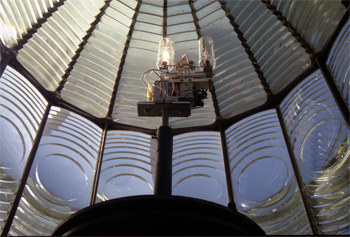
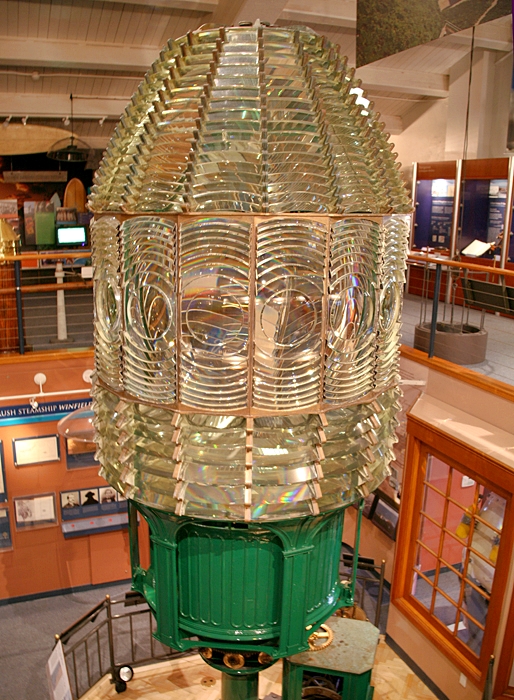
The first-order Fresnel lens was still revolving in the tower in 1999. Originally, a 150-pound weight, which remains suspended in the lighthouse, was cranked up every four hours to provide the energy to rotate the lens. That system of gears and pulleys was replaced by a motor, when electricity reached the station. With sixteen bull’s-eye panels and making a revolution every eight minutes, the lens produces a two-second flash every thirty seconds. Sadly, due to the expense of repairs necessary to keep the Fresnel lens revolving, a modern beacon is now used at the lighthouse.
The lighthouse has always been an isolated place, evoking strong emotions in its caretakers. The first keeper, George Parkinson called it a “dreadful promontory of desolation.” The following excerpt from a Coast Guard report on Point Conception Lighthouse describes the mood produced each evening at the point. “When the sun nears the swirling horizon and the sudden cold descends at dusk, ...[the keepers] begin to stir against the night. Loneliness comes down like a shade, and the light goes on.”
The railroad was eventually extended to the area, and a depot and telegraph office were established about a mile from the lighthouse, but the station was still considered remote.
|
The eerie sound of the fog horn and crashing waves against the cliff and the often foggy days gave the place a ghostly feeling. Of course no lighthouse worth its salt would be without a ghost story or two, and Point Conception had its stories too. I chose to heed the stories, given the overall feeling that the area gave out. On one occasion we had to replace the chimes on the light. These are brass wheels that the base of the light rotates on. Over time they wear and need to be replaced. The job isn’t difficult but you have to be careful. It entails jacking up the base of the light, removing the old wheels and installing new ones. On this given day, everyone was in a happy mood and the jokes were flying. Soon the crew started to joke about the Ghost at Conception. This, I guess, didn’t sit well, because our tools started to go missing. We would put a wrench down then go to pick it up again only to not be able to find it. After searching high and low, it would later turn up at the bottom of the stairs. This happened several times during the day, making a half-day replacement job last all day. Needless to say, the jokes stopped. After that, whenever I would enter the lighthouse, I would knock on the door first and announce that we were there to service the light.
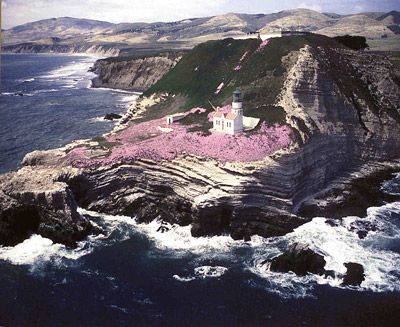
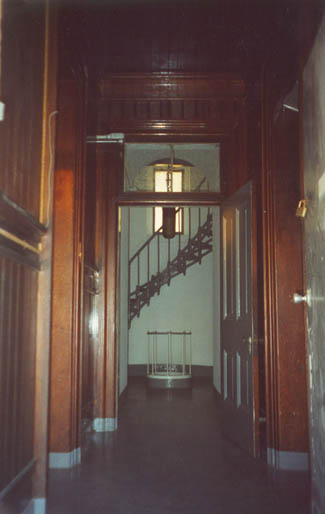
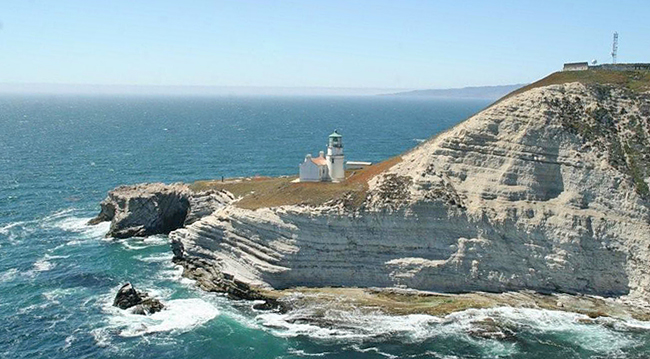
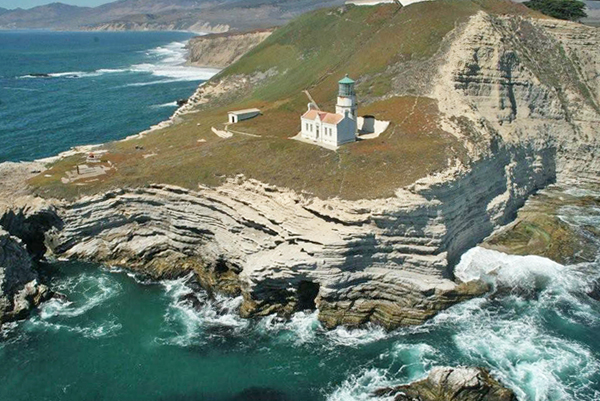
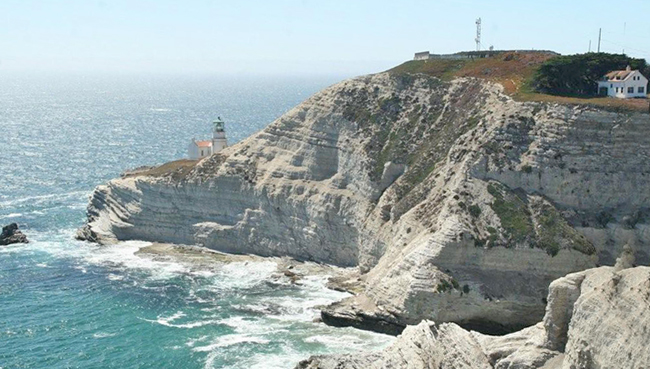
With a red roof, sea green lantern room, a skirt of granite around its base, and wood paneling inside, the lighthouse is still in good condition and is an impressive building. Today, the lighthouse is surrounded by a huge private ranch and is far from any public road. Due to the remoteness and inaccessibility of the lighthouse, few are the people who get to enjoy the beauty of this location with its ice-plant-covered hills and incredible views, but perhaps it is the isolation that makes this spot so magical. Around 1999, a modern offshore oil rig, easily seen from the lighthouse, was dismantled, returning the area to what seems like a former century.
The Fresnel lens was secured in March 2000 to prevent further damage to the lens, and an emergency backup light was used until September 2001, when a VRB-25 was activated atop the lighthouse. In 2012, the Coast Guard announced that the first-order Fresnel lens would be removed from the tower and placed on display at the Santa Barbara Maritime Museum. Three lampists arrived at the lighthouse on June 3, 2013 to begin removing the lens, and a grand opening for the museum’s lens exhibit was help on September 21, 2013. An LED beacon is mounted in the lantern room today.
In December 2017, The Nature Conservancy purchased the expansive Cojo Jalama Ranches surrounding Point Conception for $165 million. The purchase was made possible by a donation by Jack and Laura Dangermond, and the property is now known as the Jack and Laura Dangermond Preserve. The preserve is only open for approved research, educational, and guided activities.
Keepers:
2009 Aerial photographs by Bruce Hamilton: 1 2 3
References