Delaware Breakwater Rear Range (Green Hill), DE 

Select a photograph to view a photo gallery
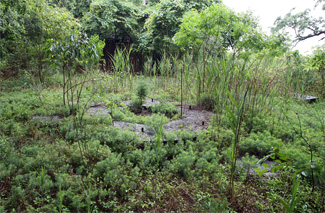
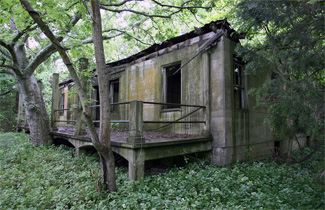
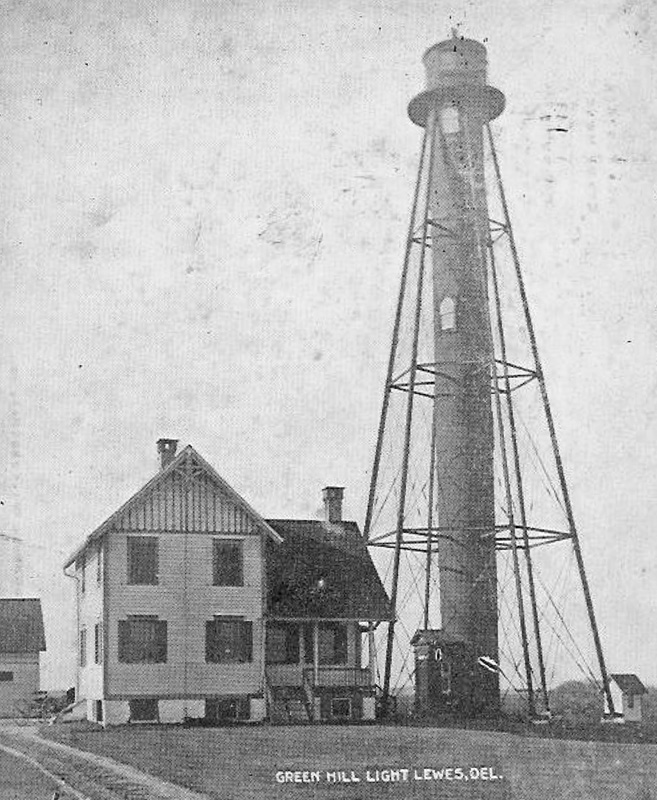
Photo Gallery
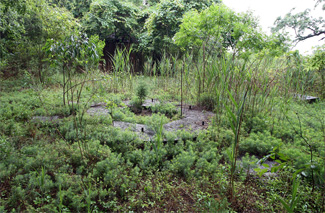
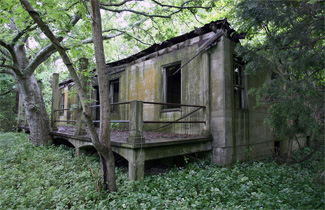
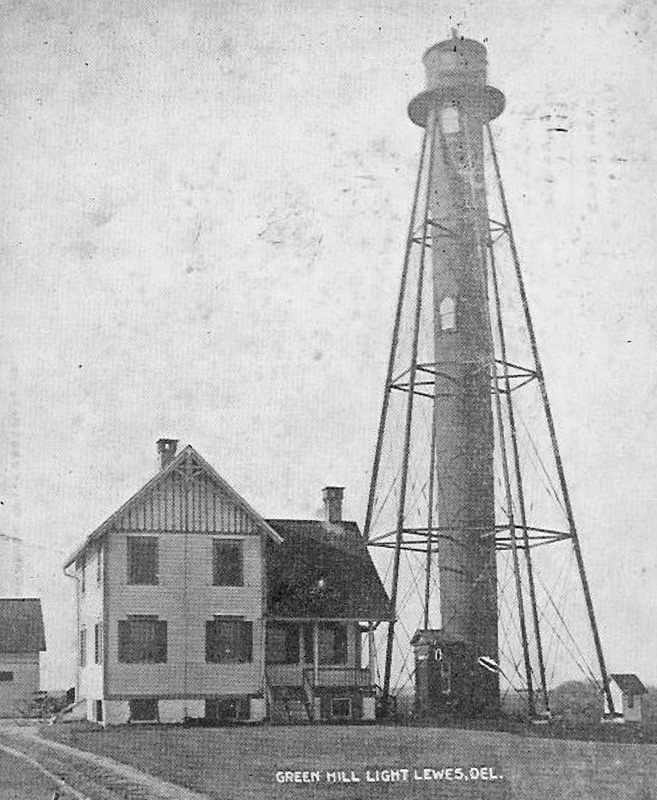
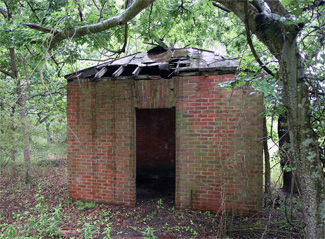
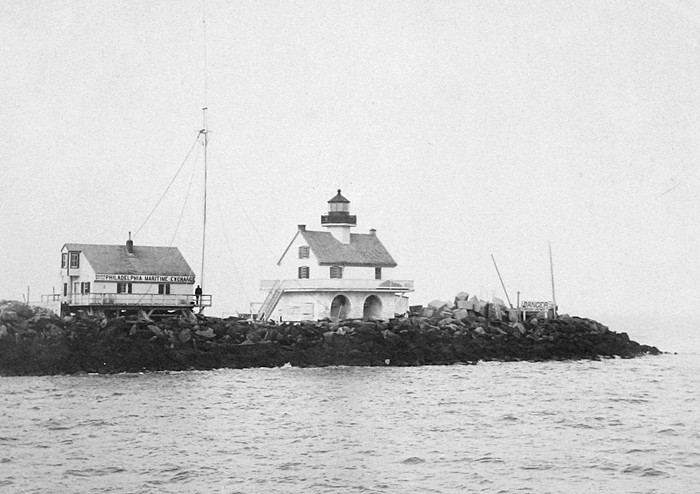
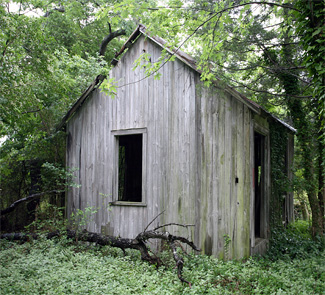
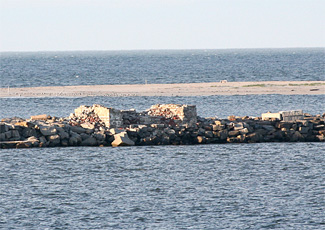
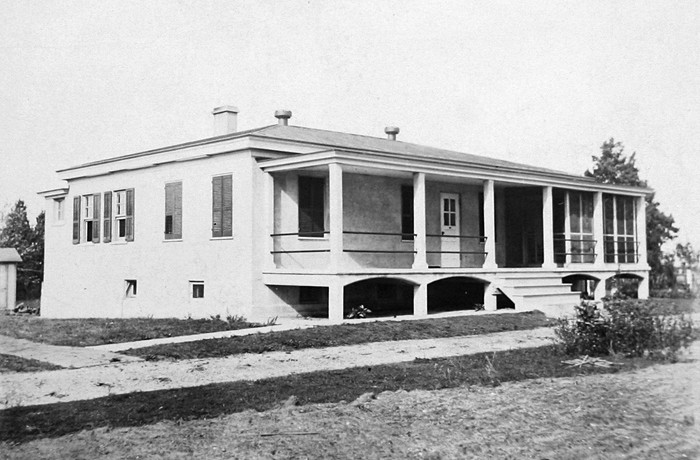
Photo Gallery
Photo Gallery
|
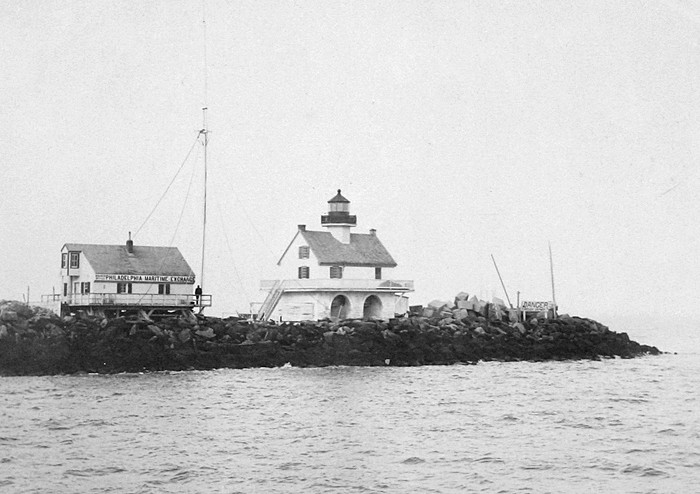
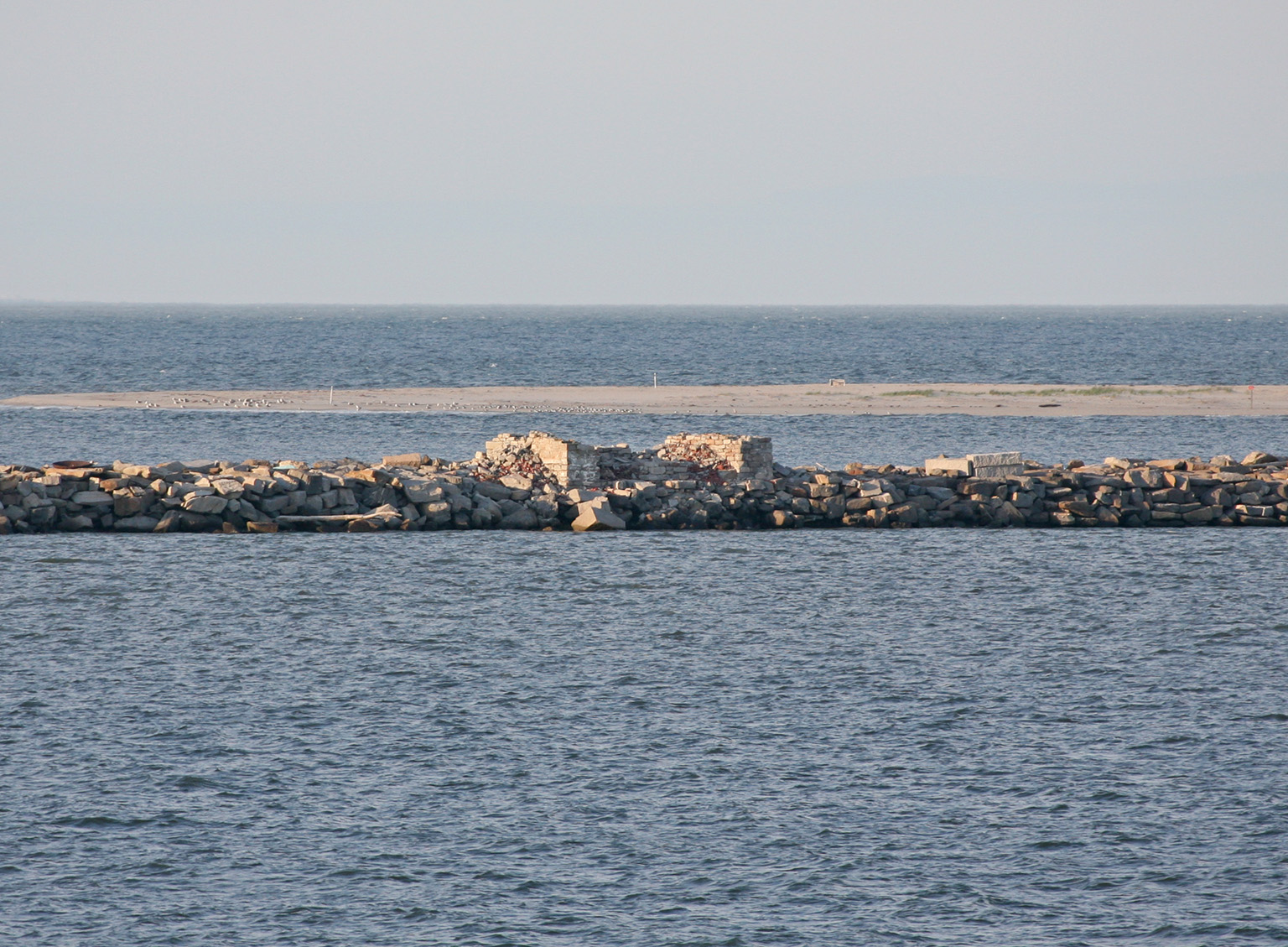
The lighthouse built on the west end of the breakwater in 1849 was not its first, as a light had been exhibited starting around 1838 from the roof of the dwelling constructed on the breakwater to house the project’s superintendent. The 1849 lighthouse was situated adjacent to the superintendent’s dwelling and consisted of a one-and-a-half-story dwelling with a lantern room centered atop its pitched roof. Brick arches elevated the lighthouse, allowing the sea to pass over the breakwater and under the lighthouse. Six lamps set in fourteen-inch spherical reflectors originally produced the light, but a Fresnel lens manufactured by Sautter & Cie was later installed.
Such was the state of the lighthouse on the west end of Delaware Breakwater when construction began on its onshore companion located just over three miles to the southwest. A ten-acre site at Green Hill was purchased in December 1880, and three months later the Phoenix Iron Company of Trenton, New Jersey was awarded a contract to fabricate the iron tower, while John C. Kelley of Philadelphia was awarded a contract to construct the keeper’s dwelling, build the necessary stone foundations, and line the tower.
Work progressed rapidly on the station for the tower was completed and accepted on August 6, 1881, and the dwelling and lining of the tower followed suit on September 8. The tower stood 100 feet tall from its base to the focal plane of the lantern room, while the dwelling was a two-story affair most likely built of wood. Thomas Wright was the first keeper of Delaware Breakwater Rear Range Lighthouse, and he activated the light on November 1, 1881 in accordance with a published notice to mariners. Paired with the light on the west end of Delaware Breakwater, the rear range light helped define a line that guided mariners safely into Delaware Bay.
On October 1, 1884, the characteristic of the rear light was changed from red to white to prevent it from interfering with the red sector in Cape Henlopen Light. A dark angle of about ninety degrees was added to the light in November 1887 to mark a dangerous shoal known as “The Shears.” In 1899, the southerly edge of the dark sector was shifted south to cover the entire site of the Harbor of Refuge Breakwater that was being built near “The Shears.”
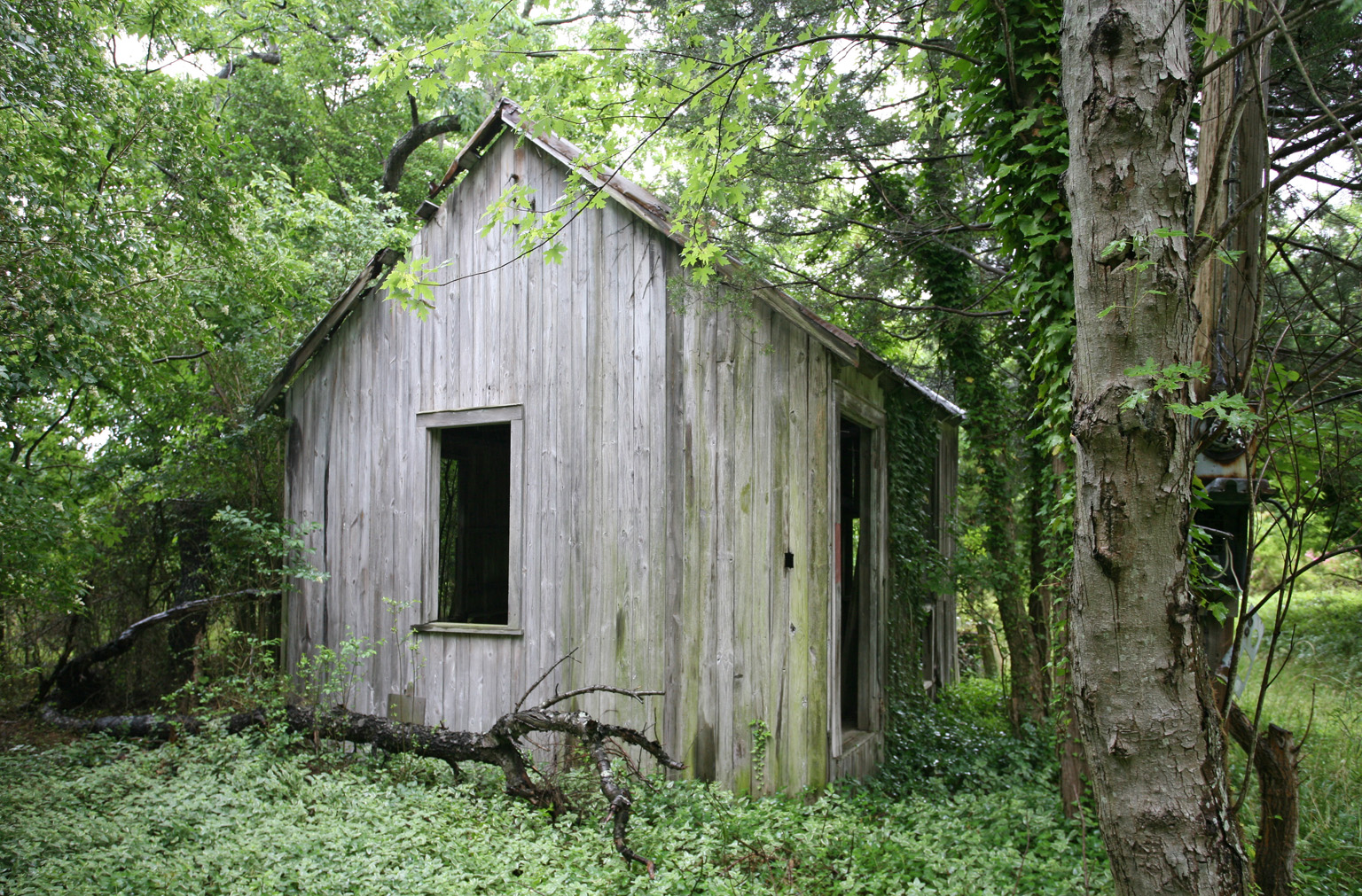
The Annual Report of the Lighthouse Board for 1898 mentions the construction of the station’s brick oil house, which remains standing today, along with the addition of a kitchen to the dwelling and the installation of a galvanized iron hand rail in the tower’s stairway. The grounds received a major sprucing up in 1901 when 600 ornamental trees and shrubs were planted and about 650 square feet of brick walkways, with brick-on-end borders, were laid out between the dwelling, tower, oil house, and barn.
|
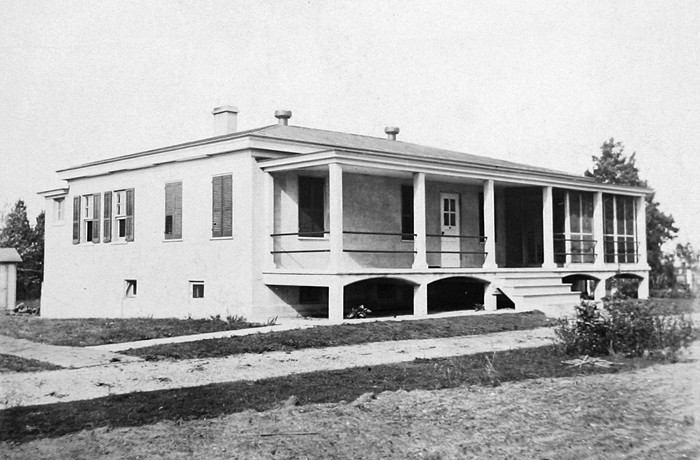
A second dwelling was completed at the rear range station in February 1910. The need for a second assistant was probably justified by this keeper spending a portion of his time working at the Lighthouse Depot in Lewes. Being built of concrete, this dwelling was meant to last. A few years later, the original dwelling was sold, relocated, used as housing for workers at a chicken farm, and then burned to the ground around 1970.
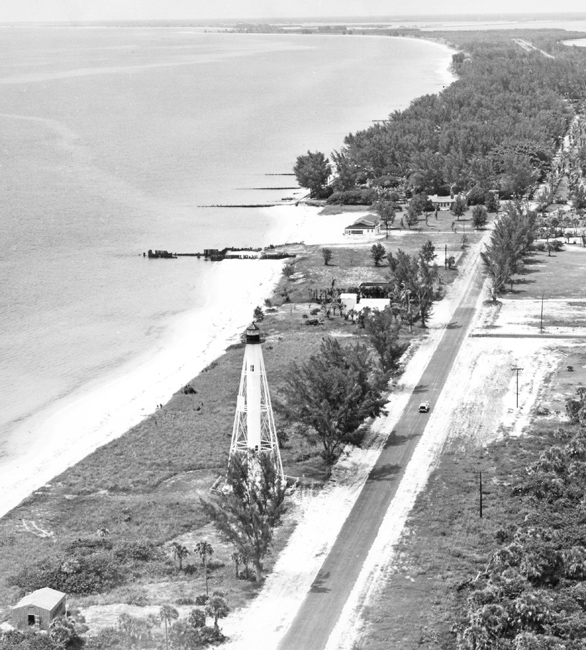
The buildup of sand at the tip of Cape Henlopen led to Delaware Breakwater Range being discontinued on January 15, 1919. The lens from the rear tower was removed and shipped to San Francisco for use in that area, and the next year another lighthouse district expressed interest in using the iron structure in Florida. The tower was disassembled in August and September of 1919 by William Rodney Robinson, but funds for relocating the lighthouse were not immediately available, so the move was delayed until adequate money was obtained in 1921. At that time, the pieces of the tower were shipped on a train from Lewes to Miami, and the tower eventually made its way to Florida’s Gulf Coast where it was re-erected in 1927 on Gasparilla Island. The transplanted tower remains active to this day, helping guide vessels into Port Boca Grande.
A preliminary plan with four possible levels of commitment was introduced by the Lewes Greenways and Trails Committee in September 2002 for restoring and interpreting the site of Delaware Breakwater Rear Range Lighthouse. The first level called for the constructing a trail, erecting signage, and leaving just the shell of the concrete dwelling for a cost of $124,000. Level two included level one but would restore the shells of the oil house and dwelling and cost $250,000. The third level added the rebuilding of the tower at a cost of $642,400, while level four included the complete restoration of the keeper’s dwelling for a total cost of $946,000.
The committee reportedly opted for an enhanced version of level two that would cost $294,000, but during a visit to the site in 2006 it was apparent that no work has started. (Conditions had not changed in 2013 according to another visitor.) Hopefully the project has just been delayed and Lewes will soon have yet another lighthouse destination to add to its already remarkable list.
Keepers:
References