Calumet Harbor, IN 
Select a photograph to view a photo gallery
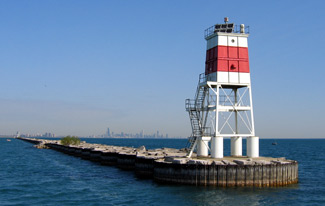
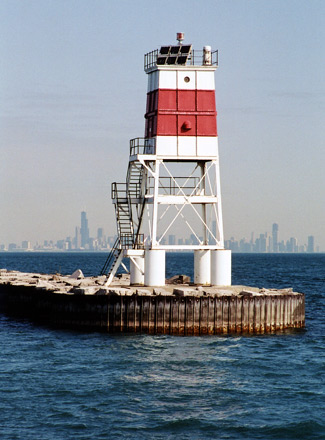
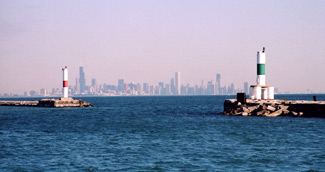
Photo Gallery
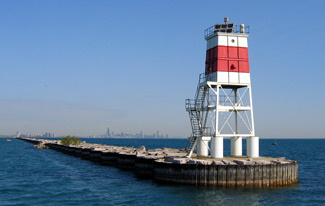
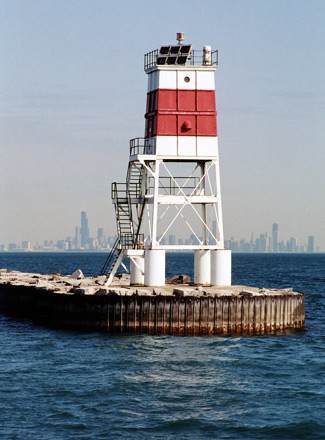
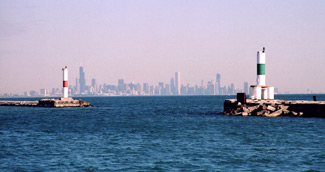
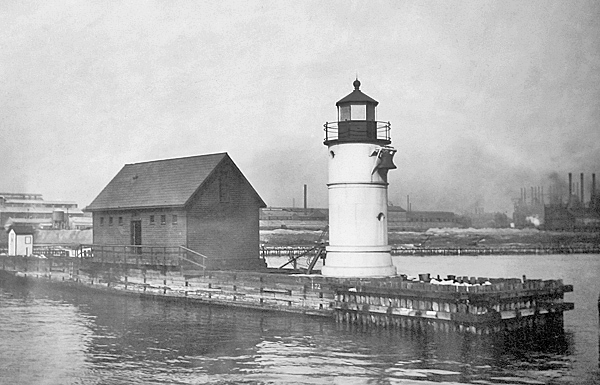
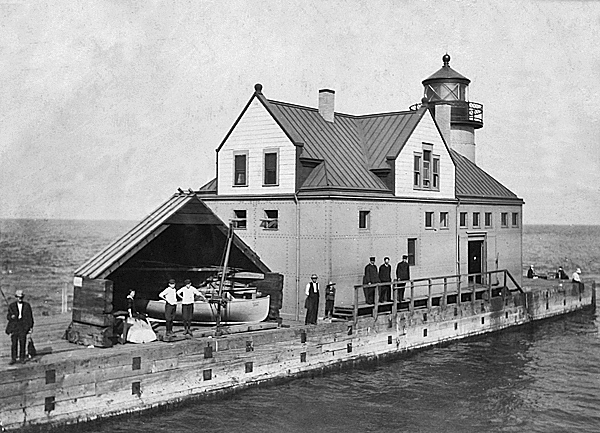
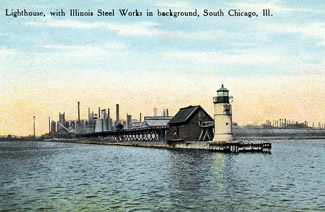
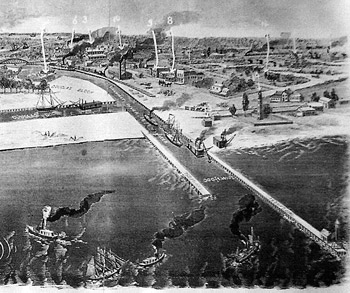
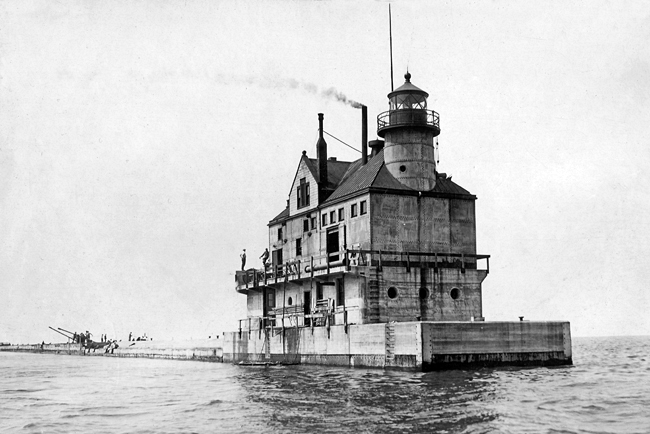
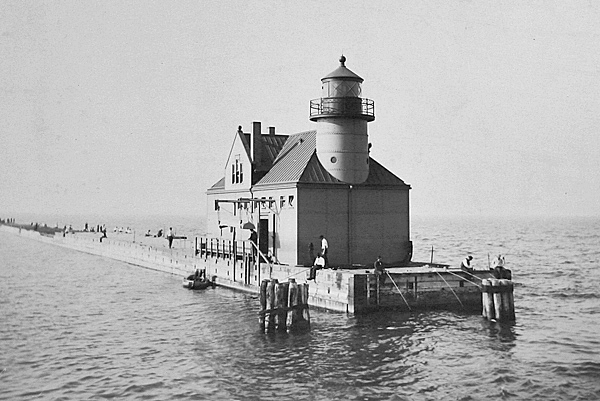
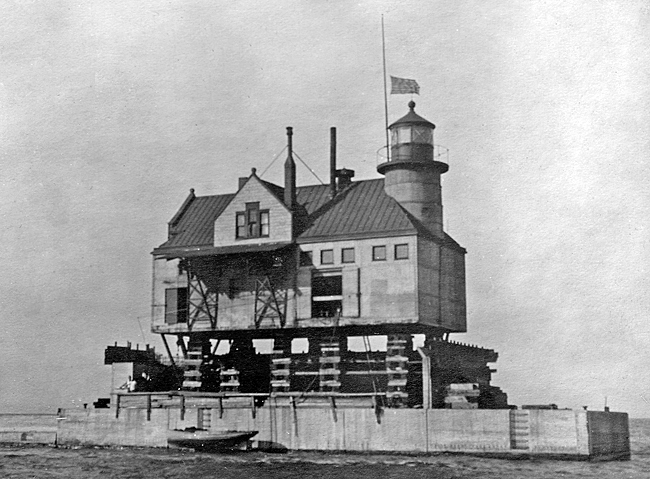
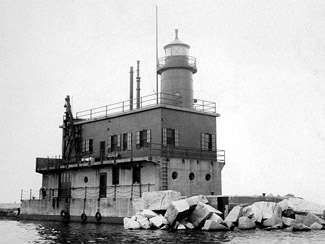
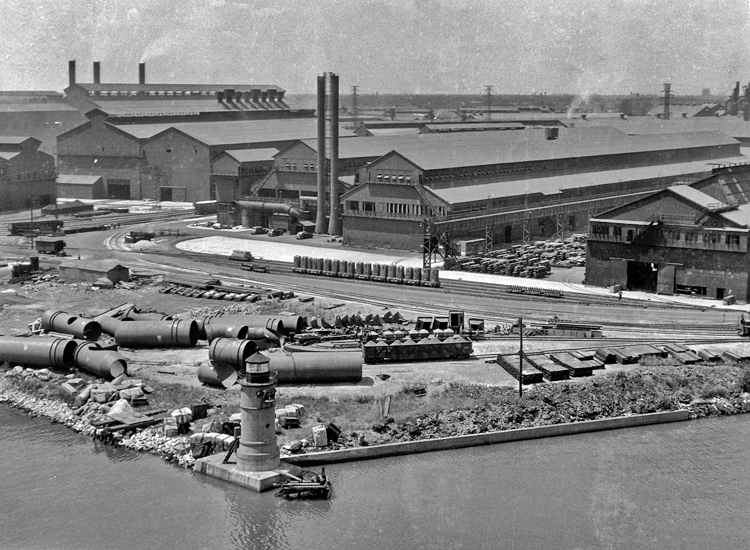
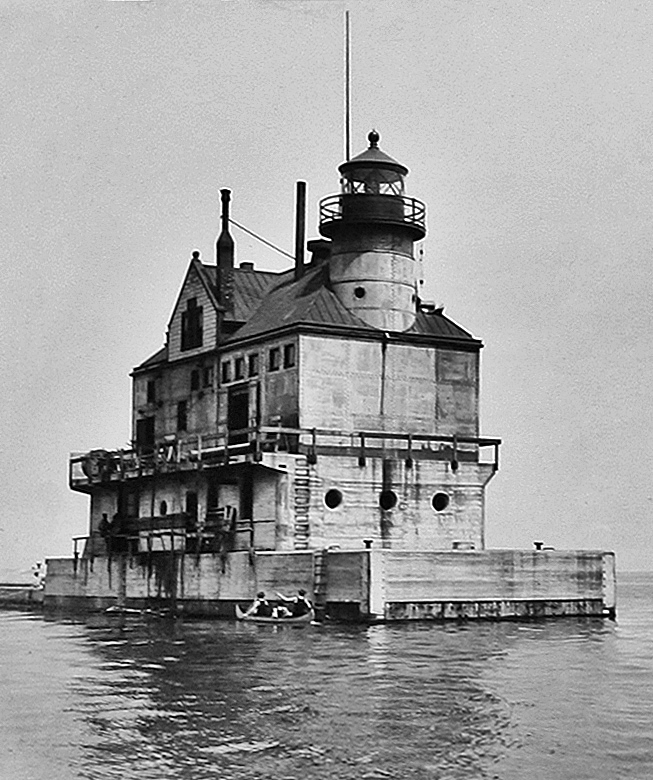
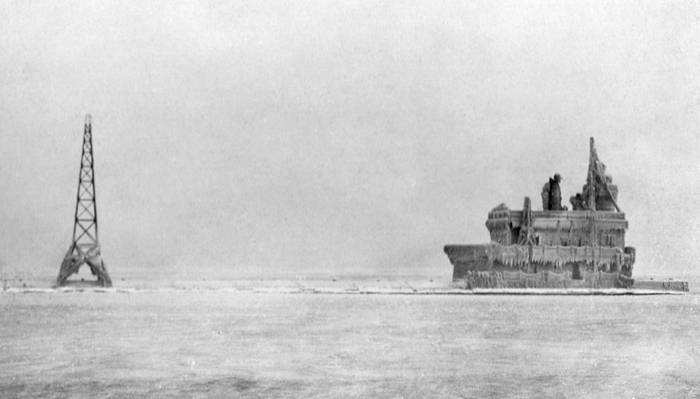
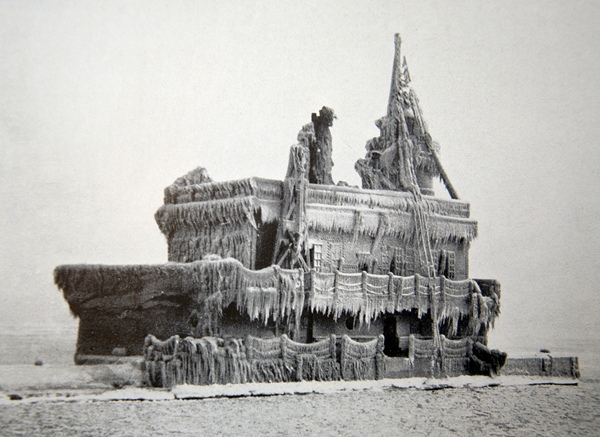
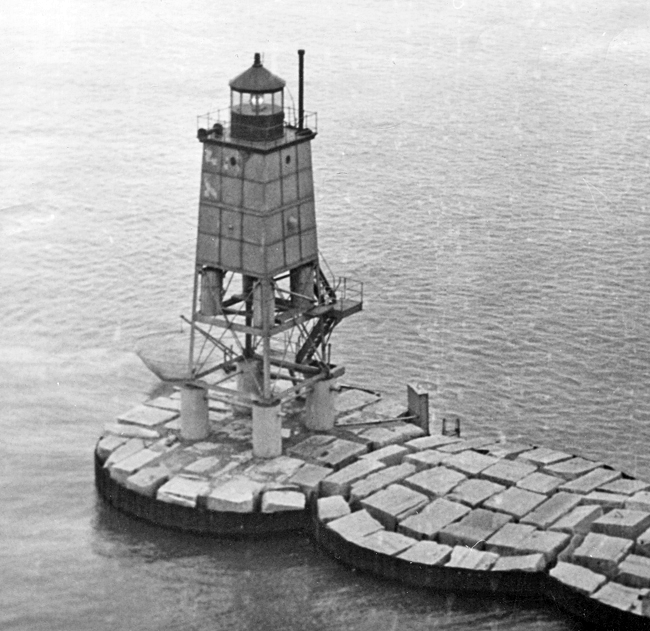
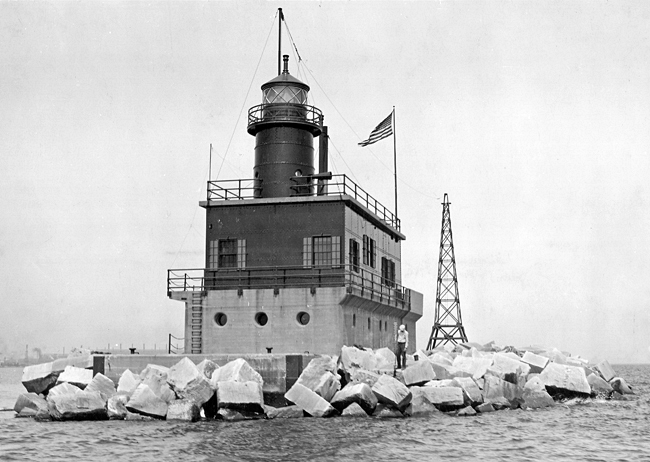
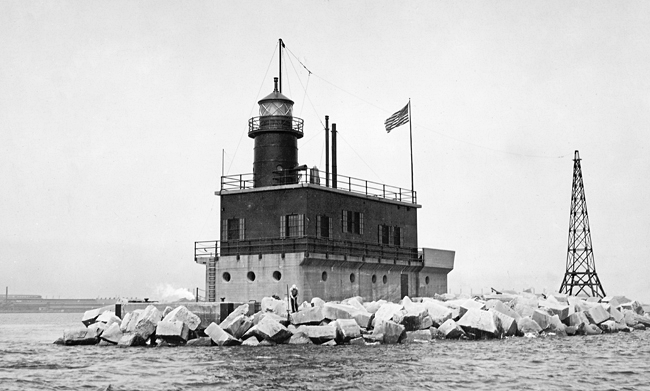
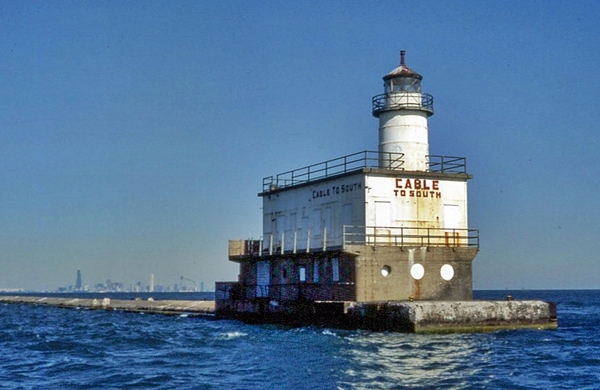
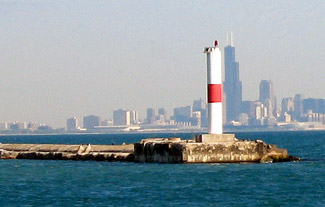
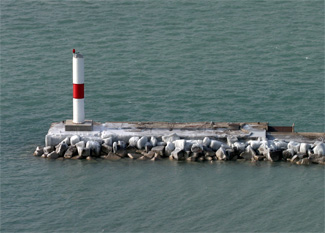
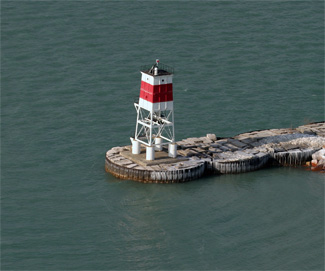
Photo Gallery
Photo Gallery
After surveying potential sites for new lighthouses on the Great Lakes in 1837, Lieutenant G.J. Pendergrast gave the following report on Calumet River:
Little Calumet river is twelve miles distant from Chicago. It possesses no very great advantages other than its being in the south bend of the lake, and affording sufficient water to allow of a harbor being formed at its mouth. Harbors at the head of this lake are of the utmost importance to the sailor who is so unfortunate as to encounter a gale from any quarter except from southeast to southwest. A lee shore is met with in all directions, and his only alternative is to beach his vessel; for as to beating off in a flat, shallow vessel, such as are usually met with here, it is out of the question. Hence it is that we hear of so many vessels being lost on the lakes, and the great anxiety felt to have places of shelter provided for them.
|
On October 28, 1853, several ship owners and captains sent a letter to the Secretary of the Treasury that called for the discontinuance of the lighthouse. The light “results in serious inconvenience,” the men wrote, “and greatly endangers both property and life, from the fact that there is no harbor, and the light is mistaken for that at Chicago.” At the time, the mouth of the river was about a half-mile from the lighthouse and blocked by a bar, whereas the river’s mouth used to be close to the lighthouse. The superintendent of lights at Chicago urged that the bar be removed so the river could once again afford protection to shipping.
Calumet Lighthouse was extinguished on July 28, 1855, and the property was sold at auction for $125 to George W. Clark, who rented it to the Oehmich family for $50 a year.
With improvements planned for the harbor at Calumet, the government decided in 1870 that it would reactivate the light. This proved to be both difficult and expensive, and it wasn’t until the spring of 1873 that a title to the old lighthouse had been obtained at a cost of $10,000. Repairs commenced in May 1873, and the lighthouse was reactivated on September 7, 1873, by Mary Ryan.
Keeper Ryan remained at the post for over seven years, which given the following sampling of her log entries, might have felt like an eternity.
| Dec. 4, 1873 | Wind so bad, I think it will blow the tower over. |
| Dec. 25, 1873 | I was supposed to have been informed when this light would be discontinued, not a vessel since the 15th of Nov. and nothing to light for and this is such a dreary place to be all alone in. |
| April 7, 1874 | So dull, in this place it is killing me. Wind blowing violently. |
| April 15, 1874 | Oh, for a home in the sunny south, such a climate. |
| April 16, 1874 | Such a time, everyone is in despaired think summer is never coming. |
| May 1, 1874 | So cold, mayday, those people who goes for flowers will be disappointed. |
| May 2, 1874 | Nothing but gloom without and WITH IN. |
| Oct. 31, 1874 | The promise of a cold hard winter as old signs goes, so many out of employment at this early season, and what will it before winter is over? God “only knows.” |
| May 31, 1874 | So dull in South Chicago. This place is growin down all the time. |
| April 22, 1880 | I think some changes will have to be made this is not a fit place for anyone to live in. |
| July 31, 1880 | This has been the most trying month of my keeping a light house, the most important question, can anything worse come? |
| Aug. 28, 1880 | The light house Engineers never do anything for me. |
| Aug. 30, 1880 | Oh what a place. |
| Oct. 1, 1880 | The news is that the light will soon go from me forever. |
| Nov. 1, 1880 | This is all gloom and darkness. |
Mary Ryan’s final day on the job was November 6, 1880. Chester B. Rushmore, a new keeper with a new outlook on things, took over shortly thereafter.
| Nov. 13, 1880 | Commence the duties of light keeper. The sun set behind a bank of dark clouds, yet it is not gloomy for the poets and our good sense teach us that there is a Silver Lining beyond. |
|
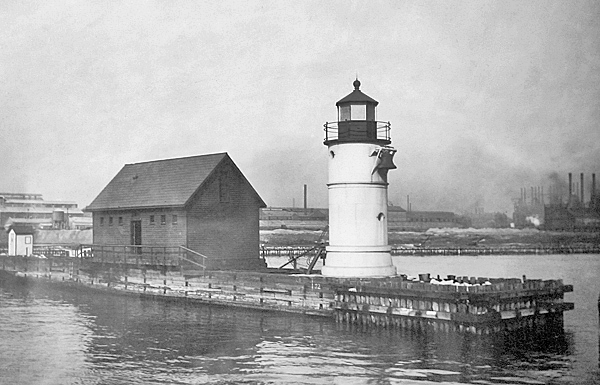
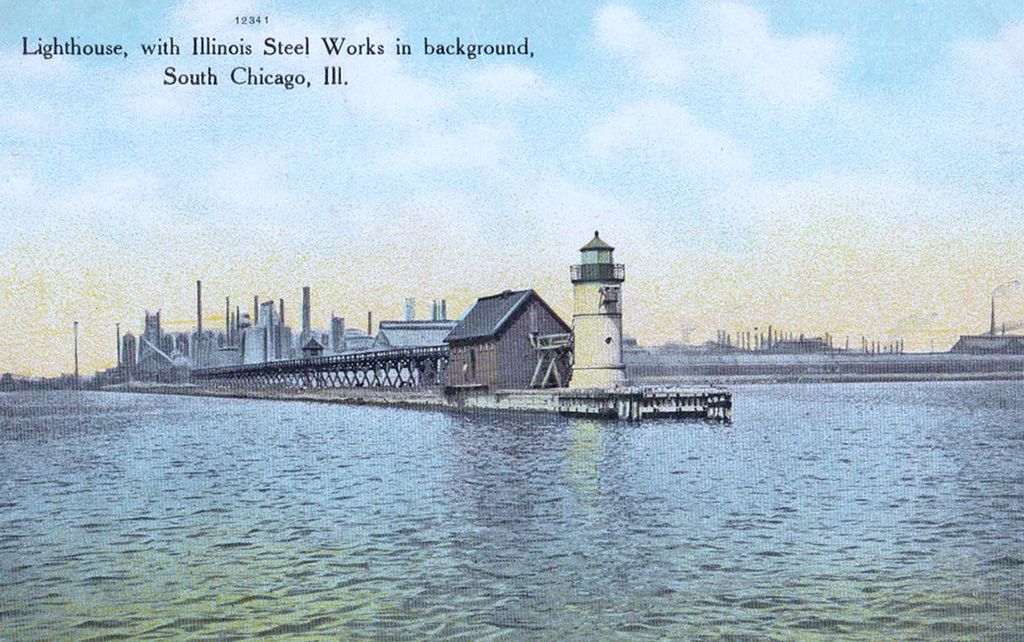
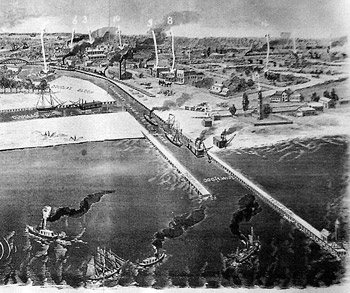
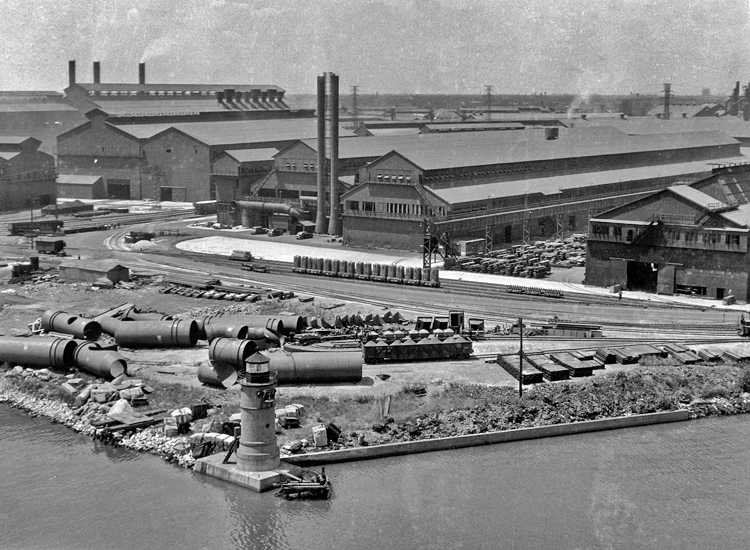
After a new foundation, consisting of fifty-two yards of concrete with embedded rubblestone, was built in the pier, a cylindrical metal tower was erected in 1898 to replace the wooden pierhead tower. The following year, a twenty-by-forty-foot fog signal building was built just shoreward of the tower, and a ten-inch steam whistle commenced operation on July 1, 1899. Two assistants were assigned to the station in 1899 to help with the increased workload caused by the new fog signal. This mural shows both the 1853 lighthouse and pierhead light.
On June 28, 1902, Congress provided $7,500 for a new dwelling for the station, as the old lighthouse had been declared “unfit for human habitation” by the Lighthouse Board. A two-story triplex was built for the station’s keepers in 1903.
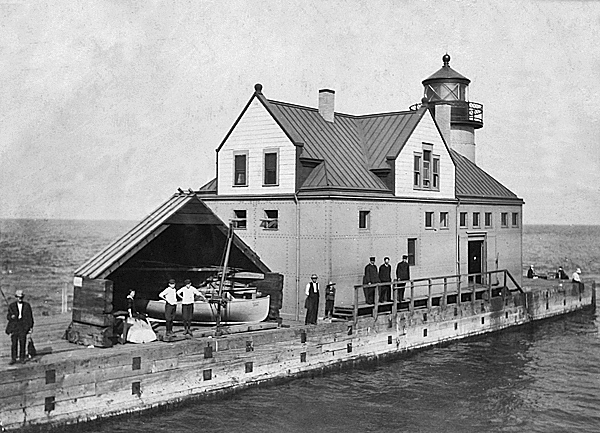
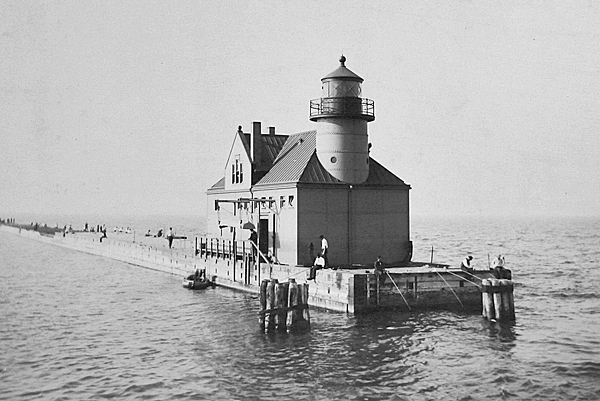
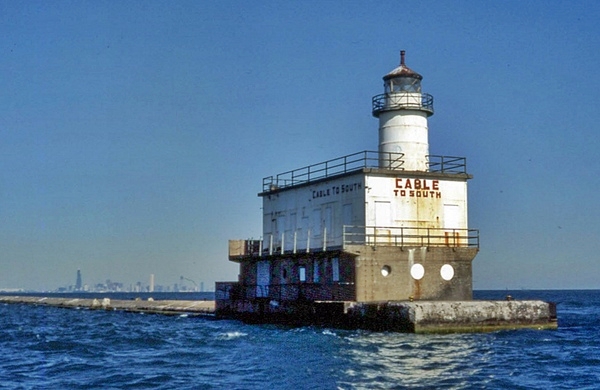
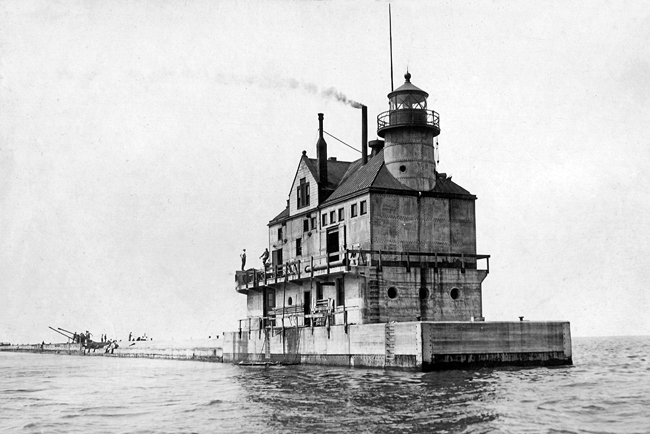
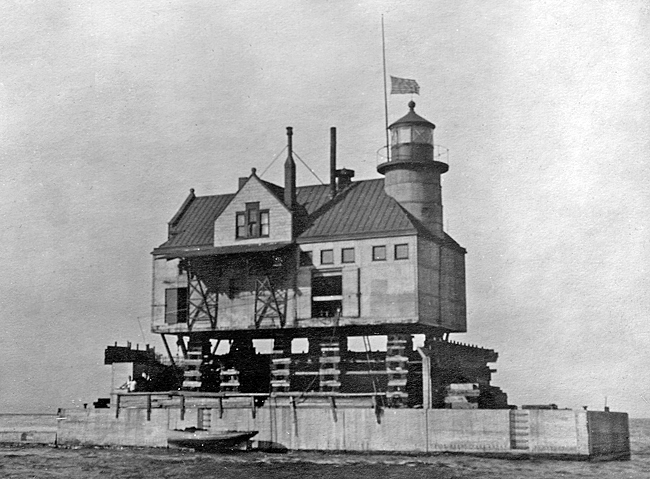
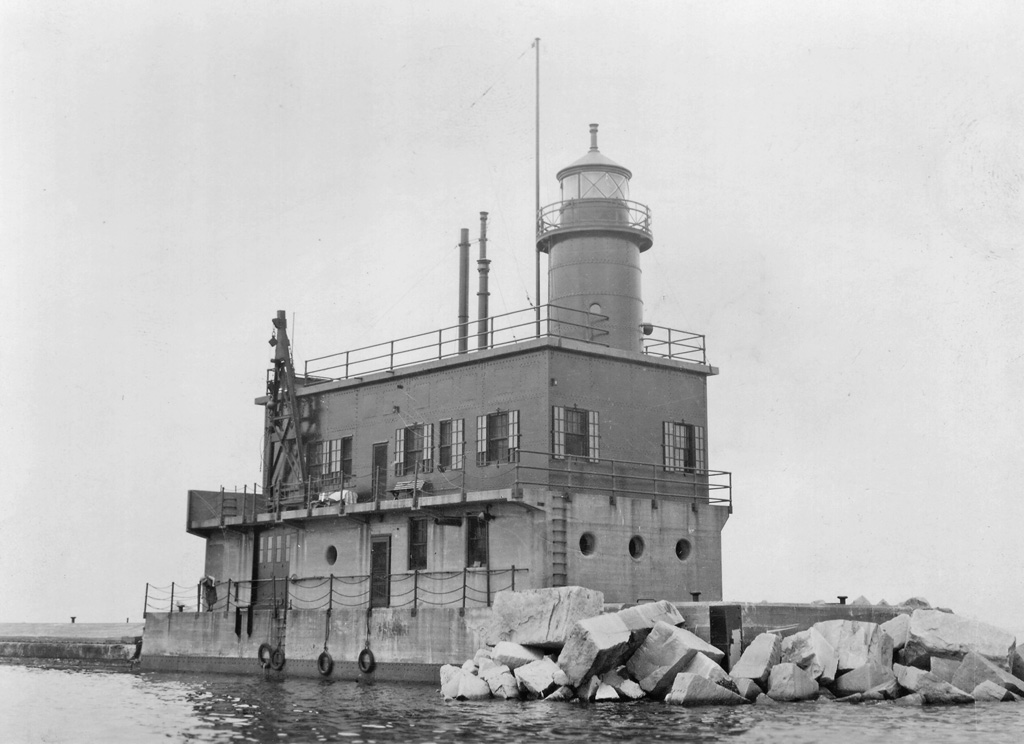
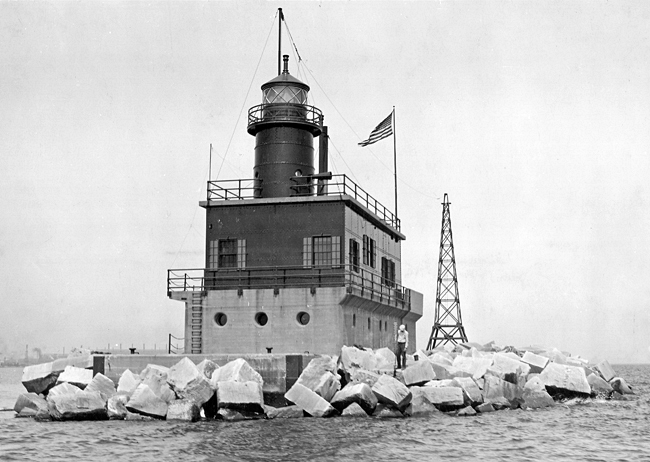
In 1899, the construction of a breakwater to create an artificial harbor at the entrance to the Calumet River was authorized. Starting from a point roughly a half mile north of the river’s entrance, the breakwater, formed of timber cribs capped by concrete, projects east into the lake for about 4,000 feet before bending to the southeast. Work on a new metal combination lighthouse and fog signal building to mark the end of the 6,714-foot breakwater began in 1905. The stout, rectangular structure originally consisted of two full stories, topped by a pitched roof, with a cylindrical tower extending above one end of the roof. The new light and compressed-air fog signal commenced operation on July 20, 1906. Exactly a year later, a fog bell replaced the old pierhead steam whistle.
|
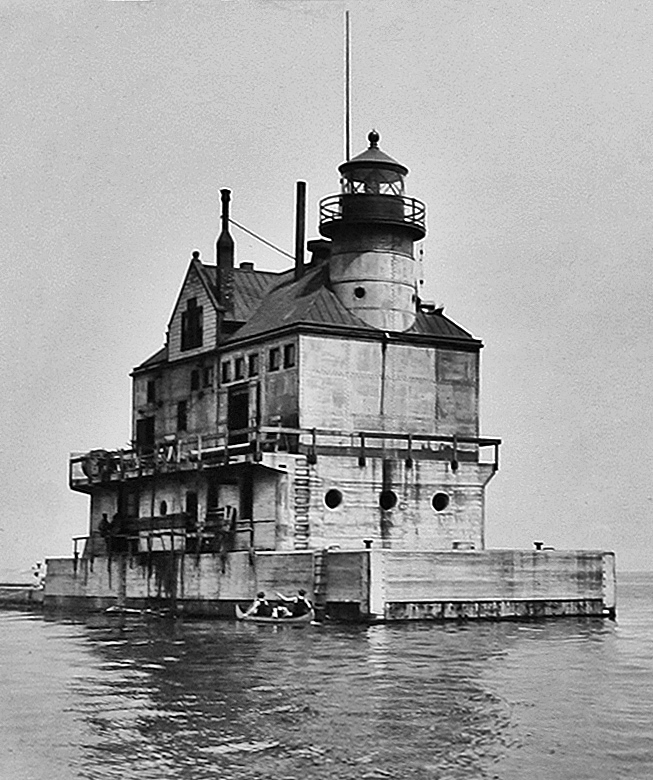
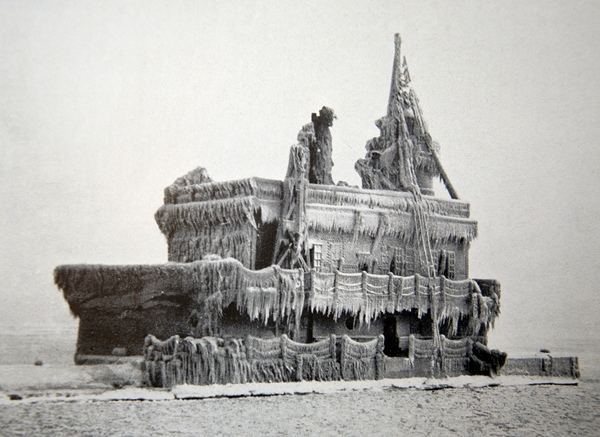
Early on the morning of April 16, 1921, the surfman on lookout noticed the distress signal was being flown at the outer breakwater lighthouse. A gale wind was blowing, the seas were very high, and the temperature was just above freezing. As the lifesaving station’s lifeboat was out of commission, a rescue team was forced to request that the M.B. Mary tow their surfboat to the lighthouse. Accompanied by the two keepers of the pierhead lighthouse (James Muckiam and Carl Graan), the crew rowed the surfboat the final few yards up to the lee side of the breakwater lighthouse.
The lifesaving keeper recorded the condition of the breakwater lighthouse: “The windows of the lighthouse were broken in. The floors flooded. The building shifted about two feet, breakwater going to pieces around it and other places.” Still, the keepers refused to leave the lighthouse. They did, however, request that the lighthouse superintendent be informed of their situation. After returning to shore, the lifesaving keeper telegraphed the superintendent, who gave his permission for the keepers to be removed from the lighthouse if their lives were endangered. The lifesaving keeper judged the lighthouse keepers’ situation to be quite grave, and they were accordingly brought ashore with the assistance of a tugboat. During the storm, the tower shook so badly that the revolving machinery could not keep the lens in motion.
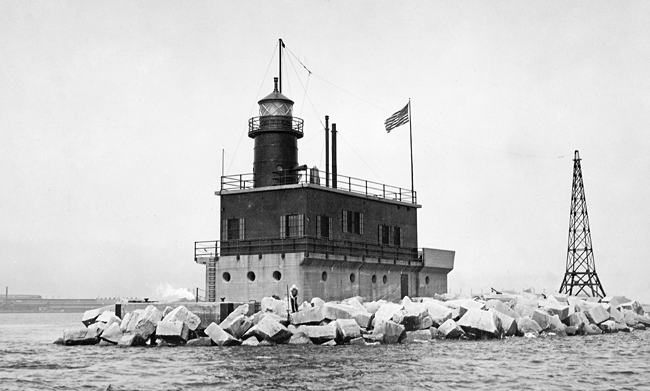
On March 28, 1922, $66,000 was provided for reconstructing the “old, inadequate, and unsafe building” on the breakwater and replacing its worn out fog signal machinery with a “modern electric motor-driven air compressor air diaphone and electric light in lens.” That year, the outer end of the breakwater was removed down to the water and rebuilt in concrete. The old steel lighthouse was raised and a deck slab and a basement with reinforced concrete walls were built beneath it. The new diaphone fog signal commenced operation on July 1, 1924, and the lighthouse’s old frame second story was later removed. In parallel with the work on the breakwater, the outer 400 feet of the north pier was removed, and the cast-iron pierhead tower was installed on top of the shortened pier and equipped with an electric type “C” diaphone, which went into operation on September 10, 1924. With the pierhead lighthouse now controlled remotely from the breakwater light, its two keepers were no longer needed.
|
Due partly to the nearby steel mills that pumped plumes of black smoke into the air, the fog horn at Calumet was typically in operation 260 hours a month, usually more than any other fog signal on Lake Michigan. After Keeper Robinson transferred to Sheboygan Lighthouse in 1930, he was elated to find that the horn there averaged just over 90 hours a month.
The mouth of Calumet River and the surrounding land all lie within the State of Illinois, however due to the length of the breakwater, the breakwater lighthouse was located just east of the Illinois-Indiana State Line, which runs north-south. Since it is exposed to the full force of northern storms that can sweep the entire length of Lake Michigan, the lighthouse was damaged on several occasions. After two severe storms struck the station late in 1929, over 12,000 tons of rip rap were placed along the breakwater in 1930 to provide better protection for the station.
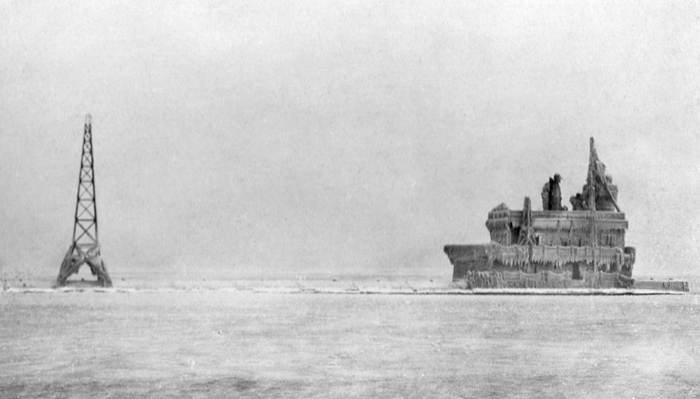
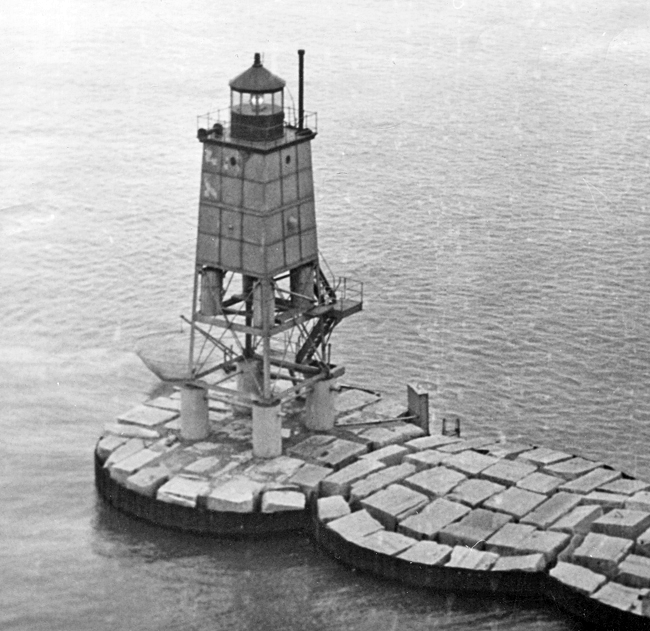
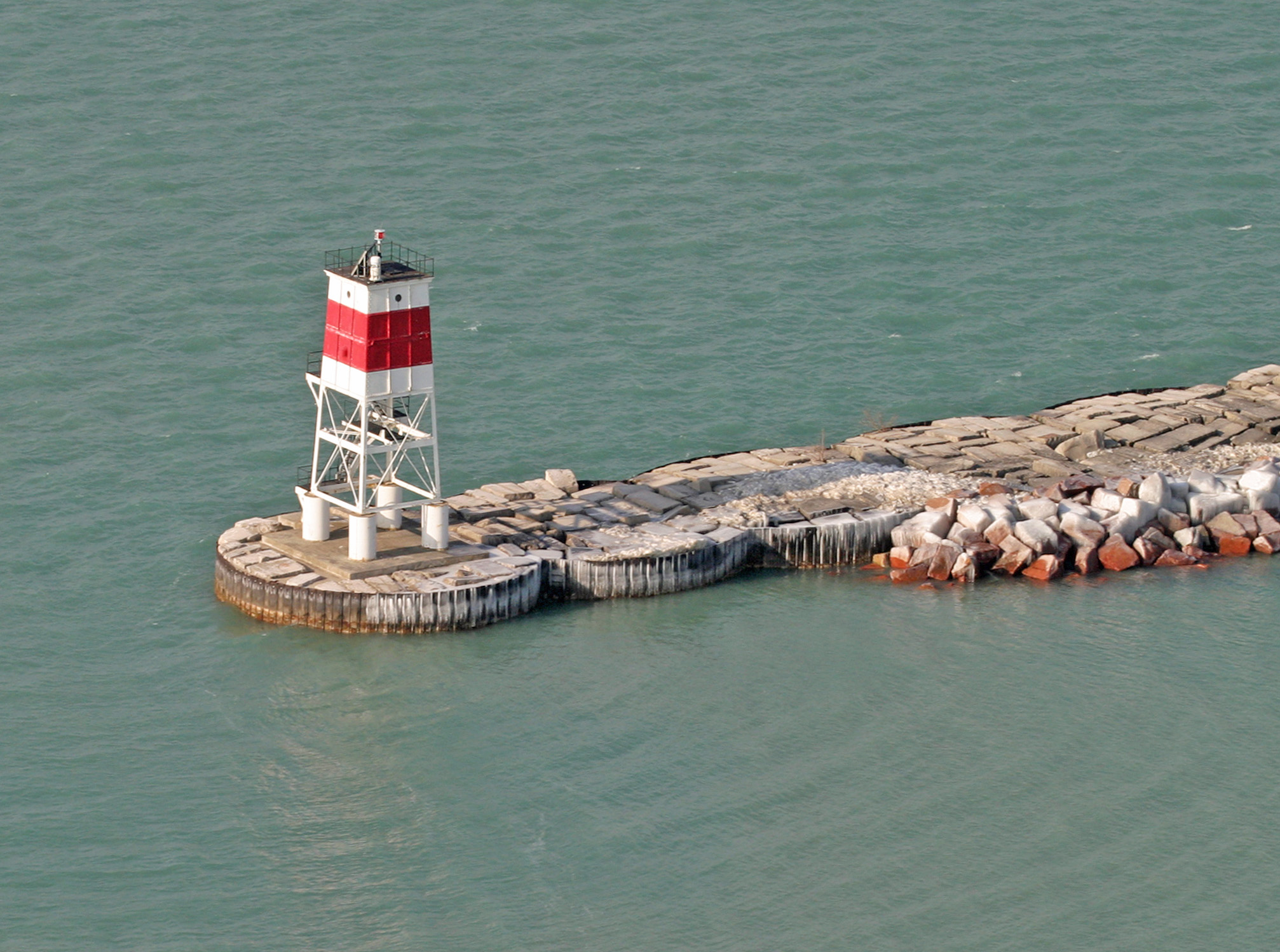
In 1934, a new dwelling was built on shore for the station’s keepers, and plans were begun for two new lights for the detached, 5,020-foot breakwater that was under construction. A 600-foot gap, which provides a direct route to Calumet River from the lake, separates the old and new breakwaters. A light and fog signal tower, which had previously been in use at Holland Harbor, was transported to Calumet and placed at the southeast end of the detached breakwater. The new light and fog signal, which were remotely controlled from the breakwater lighthouse, were placed in commission on June 4, 1937.
A radiobeacon was established at the old breakwater lighthouse in 1927, and in 1940, it was synchronized with the station’s fog signal for distance finding. By counting the number of seconds between the reception of the radio signal and the audible fog signal, a ship’s crew could determine their distance from the breakwater lighthouse.
Armand Seguin was stationed at the breakwater lighthouse in 1961-1962. During his service, the lighthouse was generally staffed by two coastguardsmen who spent four days at the lighthouse followed by two days off. Seguin remembers that there were two bedrooms, a kitchen, a bathroom, and an office/living room on the upper level, while the lower level housed the furnace, a water tank, and the air compressor for the fog signal.
|
Inspectors from Chicago visited the station and found that the well water was contaminated. When Sequin inquired how bad it was, the inspector replied “Well, you might take a bath in it, but don’t get it anyplace by your face! And, boil it like mad before you cook with it.” From then on, the coastguardsmen had to haul their own drinking water out to the lighthouse.
Calumet Harbor Light was automated on November 11, 1966. On that day, the last three crew members, Robert G. Watson EN1, John P. Schleh SA, and Howard W. Birchard SN, left the lighthouse and were transferred for duty to Calumet Harbor Lifeboat Station.
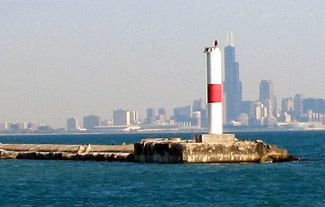
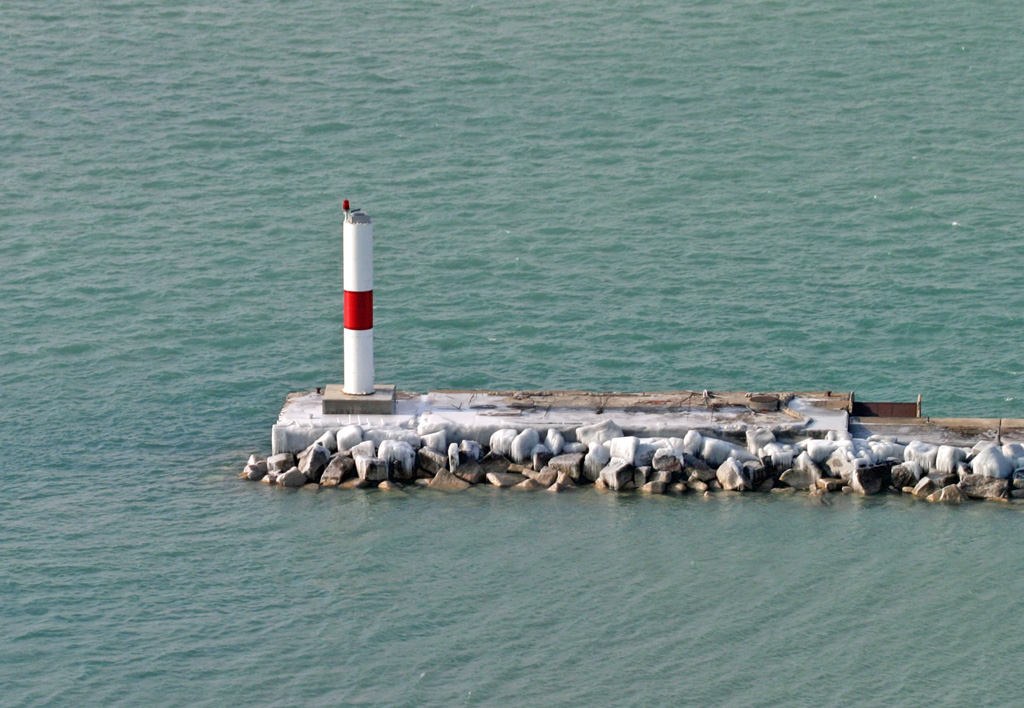
In 1995, the two-story, breakwater lighthouse was demolished over a period of twenty-two days. In its place, stands a white cylindrical tower marked with a red band, as seen in the bottom photo to the left. The nearby end of the detached breakwater is marked by a similar tower with a green band. The steel tower standing on four cylinders shown in the top two photographs is the one relocated from Holland Harbor that marks the other end of the detached breakwater.
Calumet Lighthouse Head Keepers: A.B. Dalton (1852 – 1853), Hiram Squires (1853 – 1855).
Pierhead Keepers:
Breakwater Keepers:
References