Cape Hinchinbrook, AK 
Select a photograph to view a photo gallery
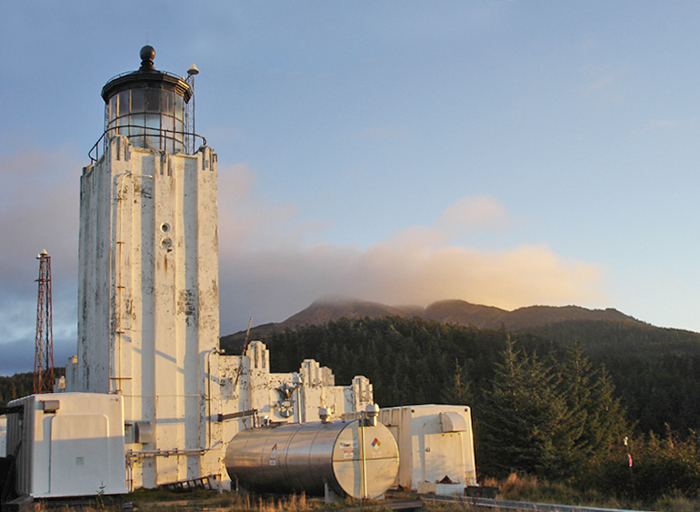
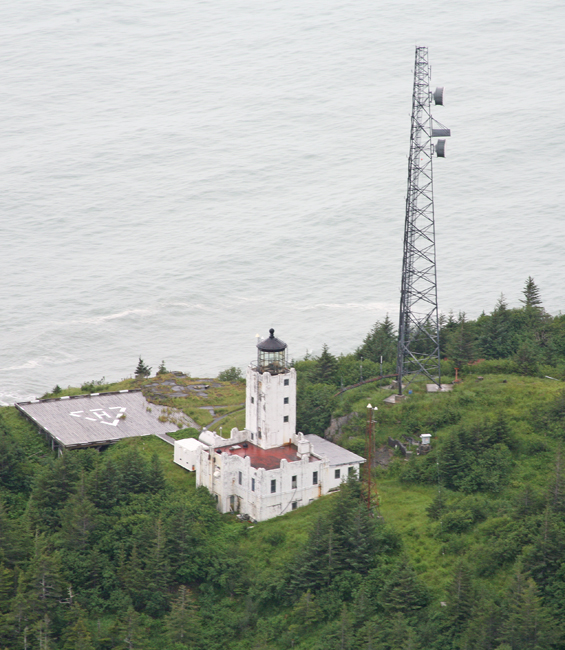
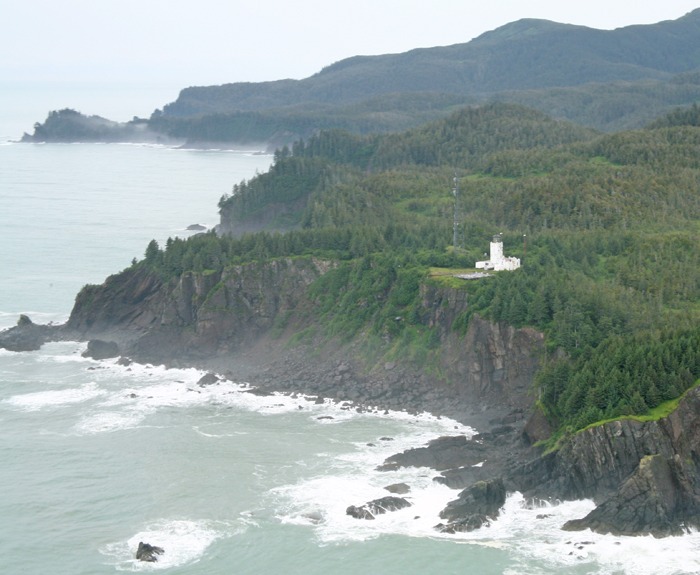
Photo Gallery
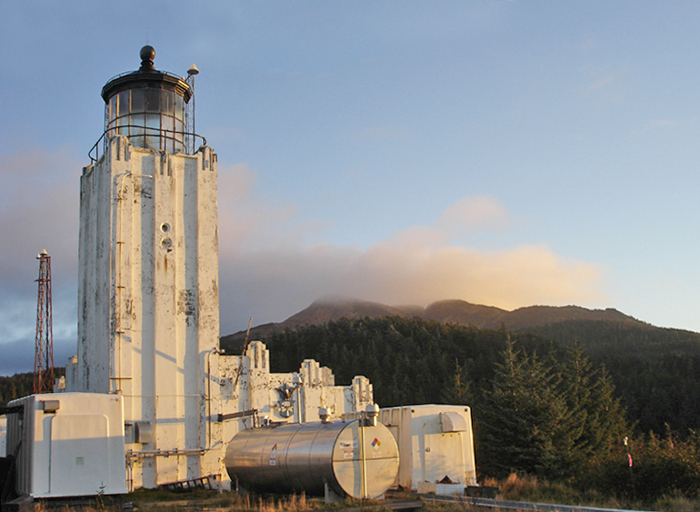
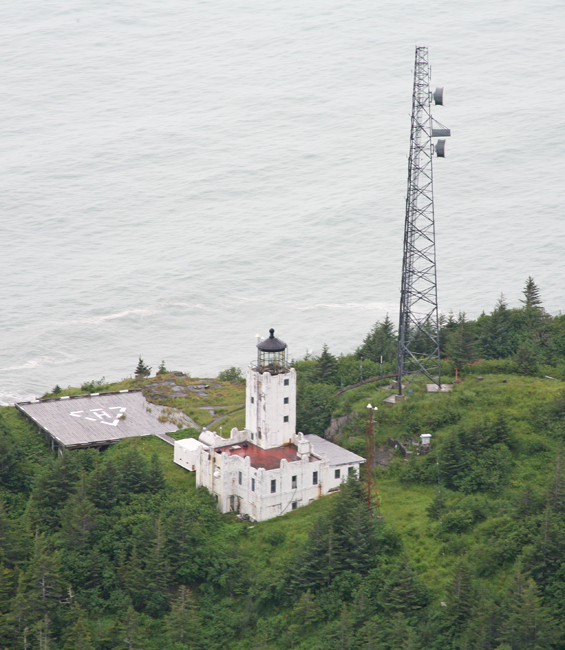
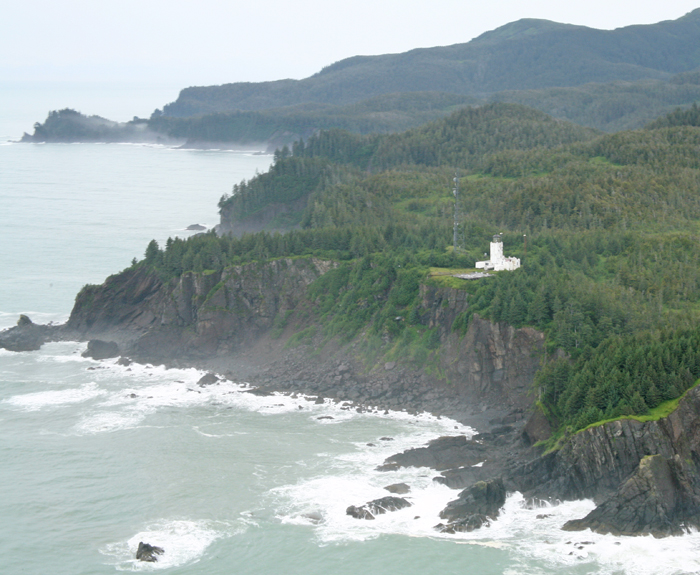
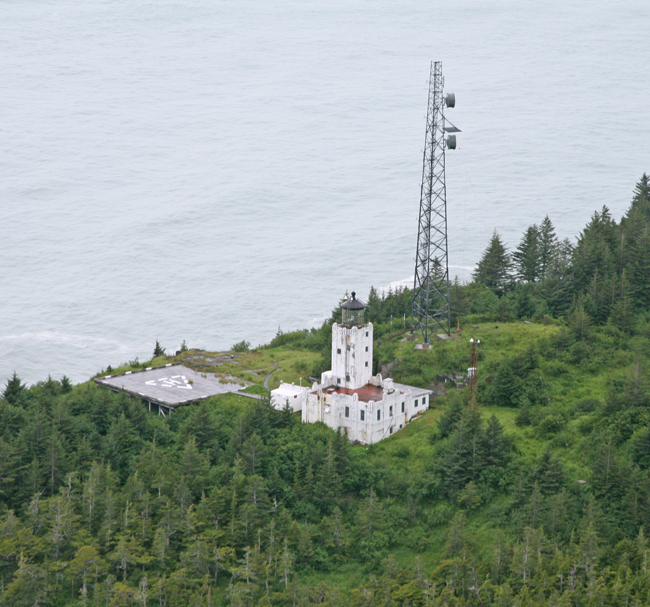
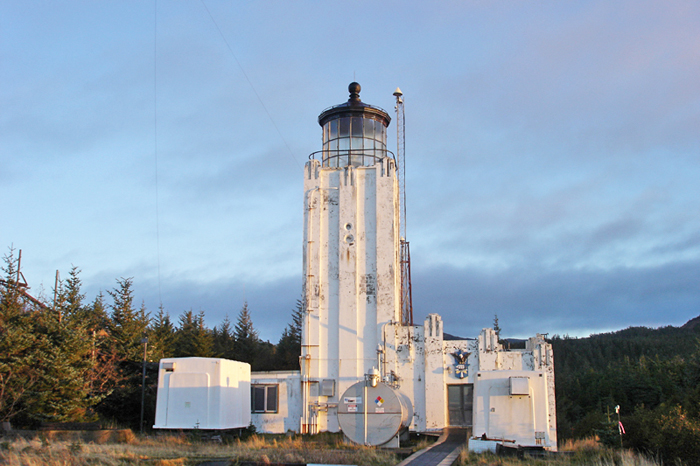
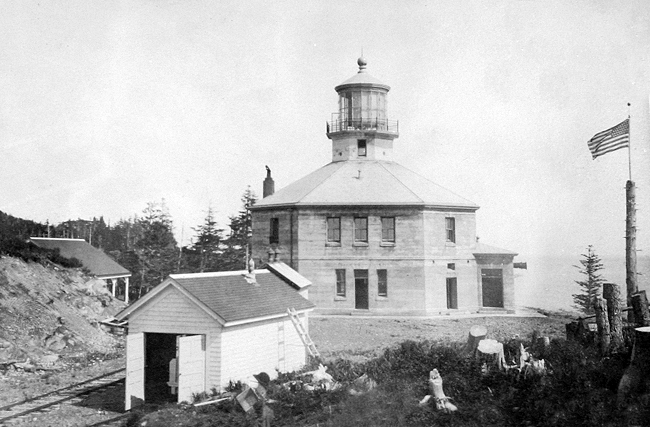
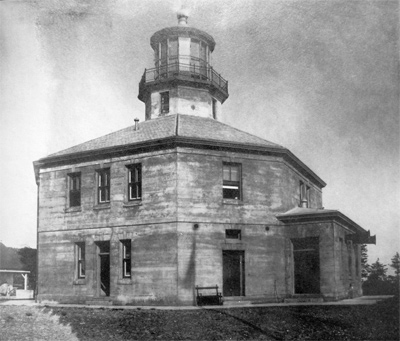
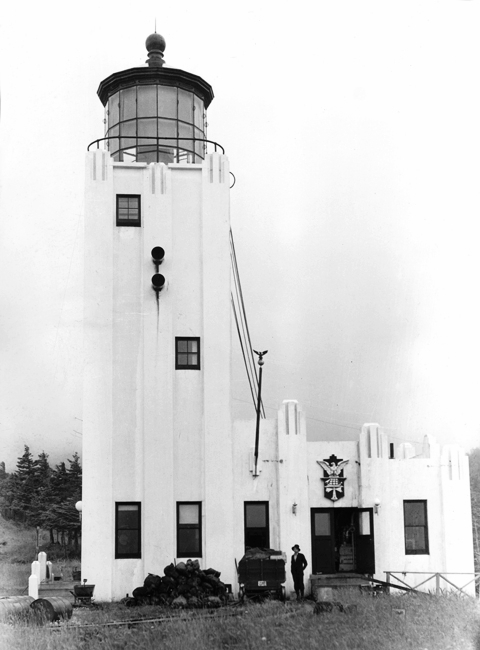
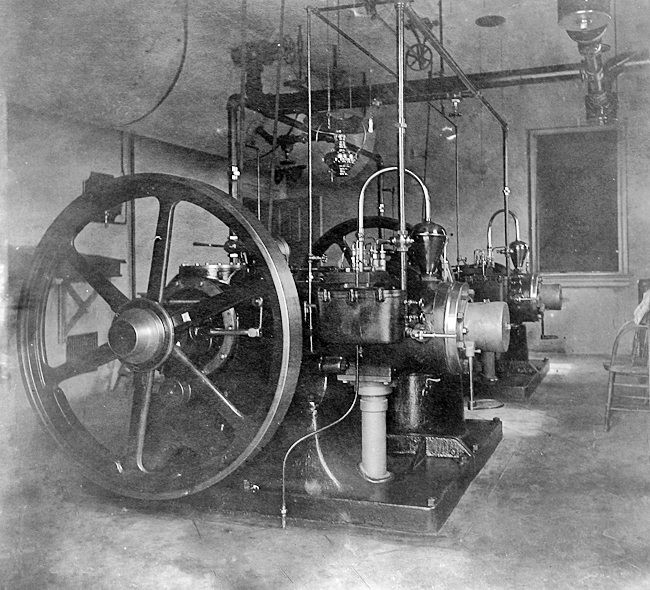
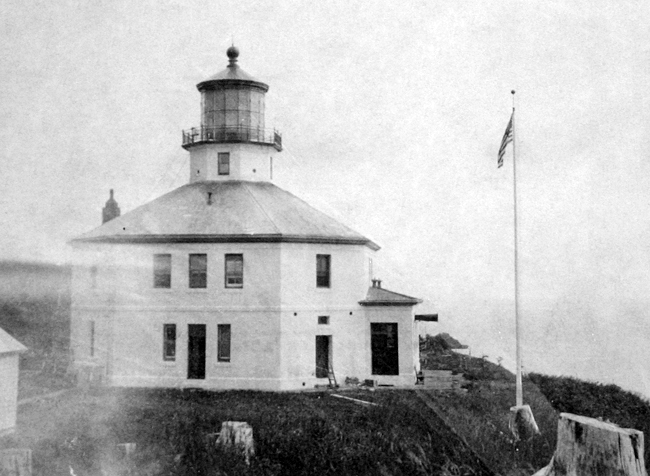
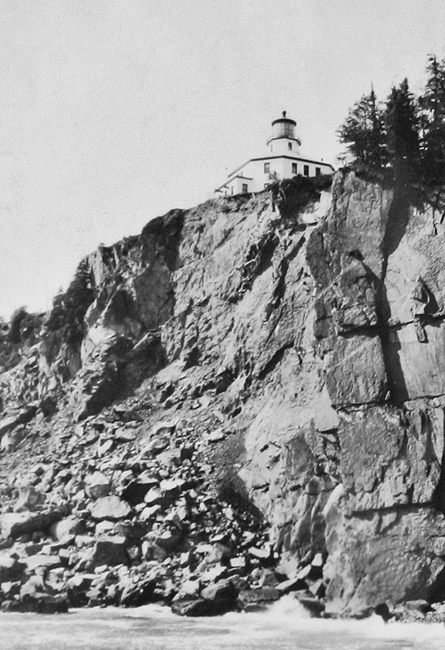
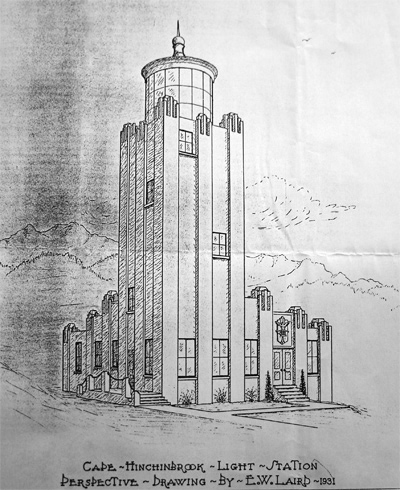
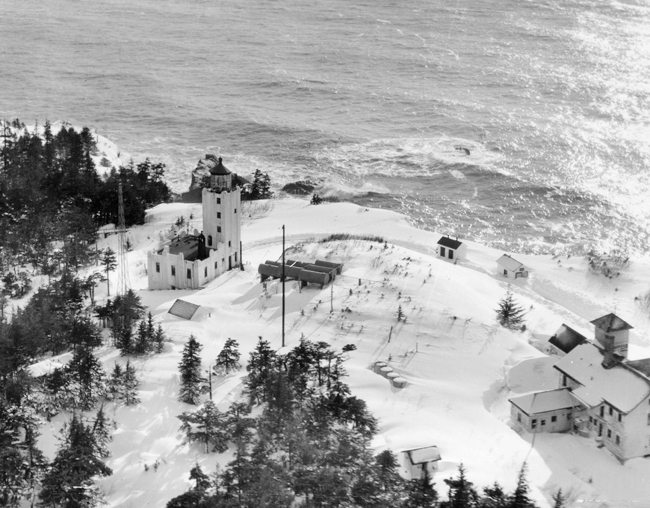
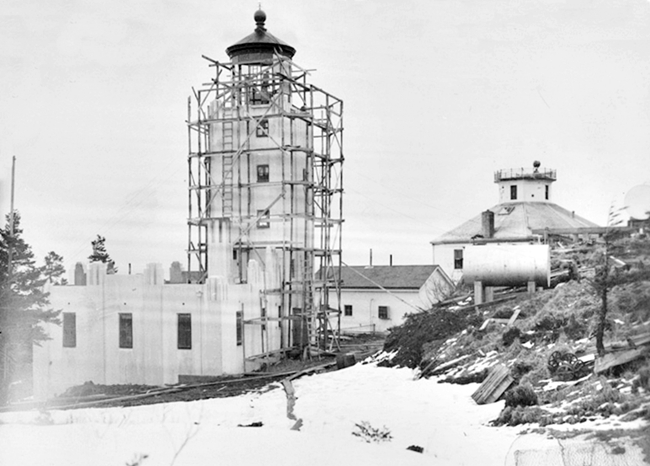
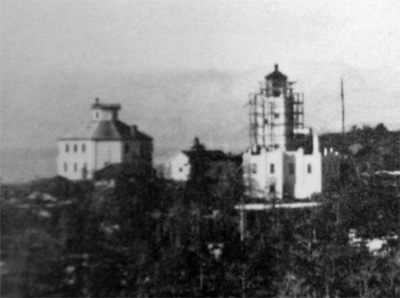
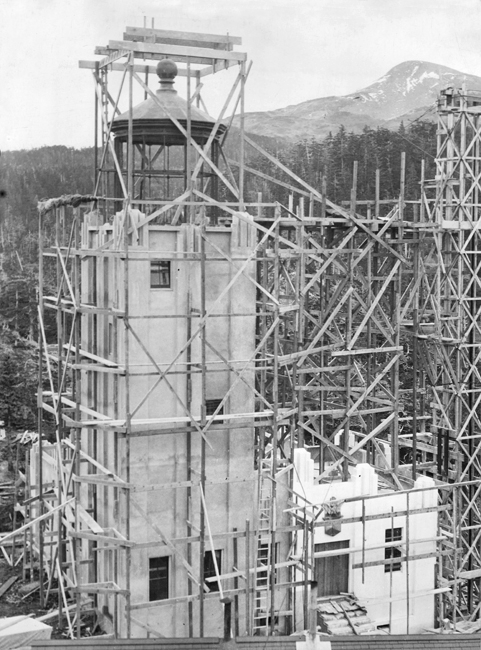
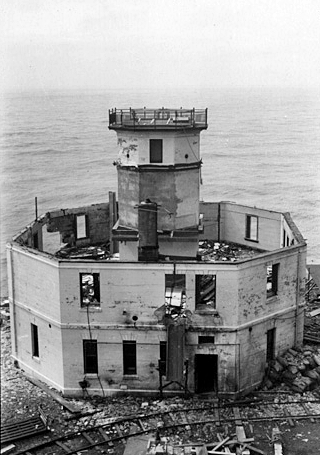
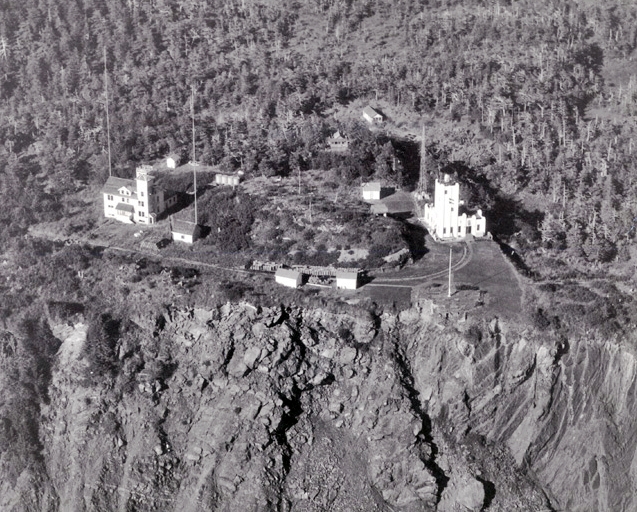
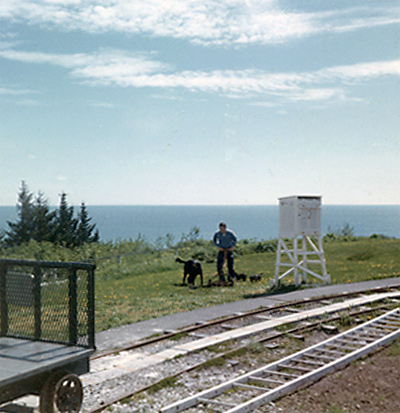
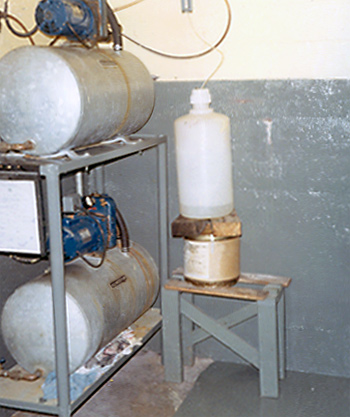
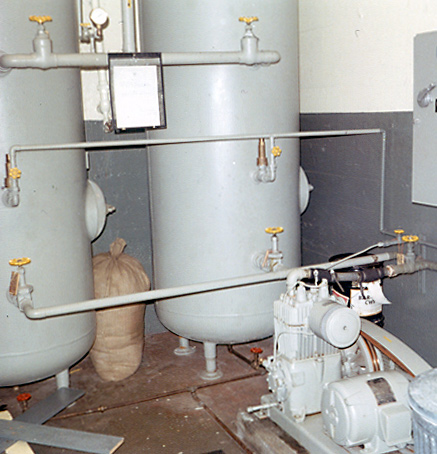
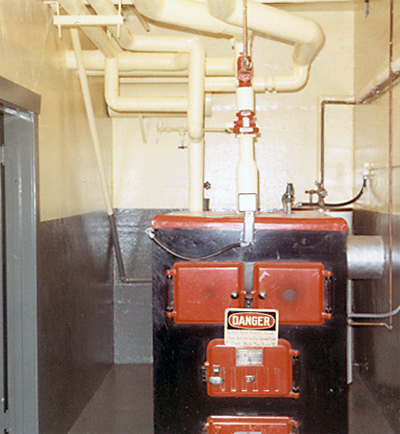

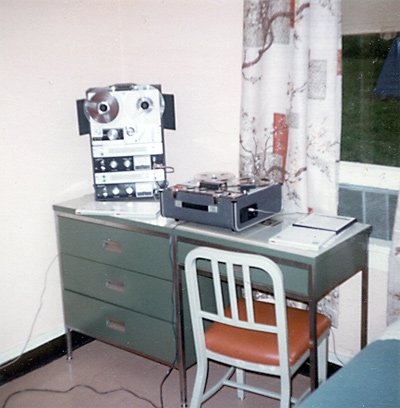
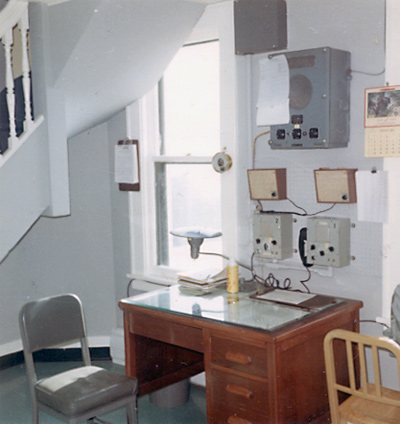
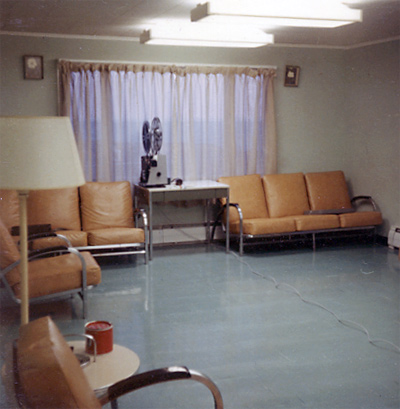
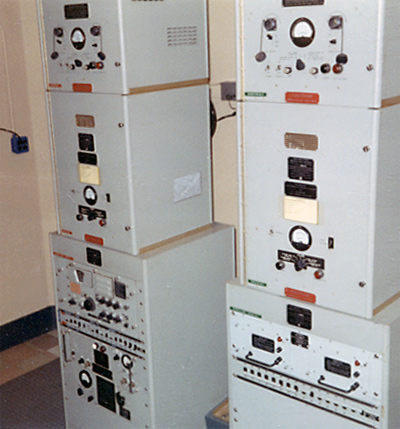
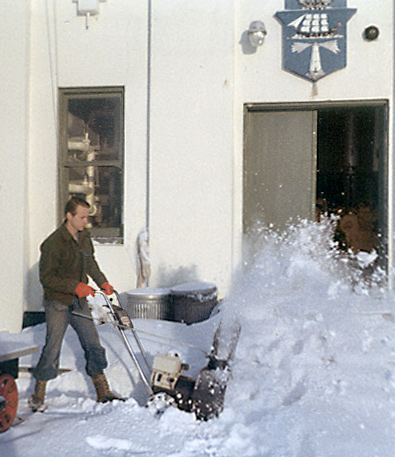
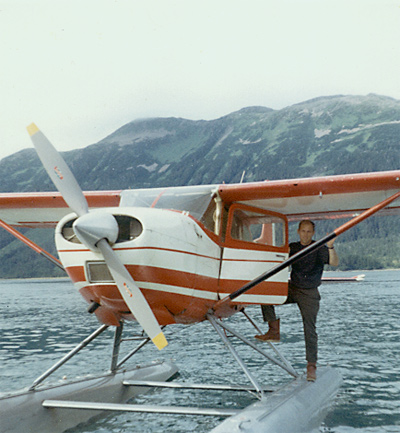
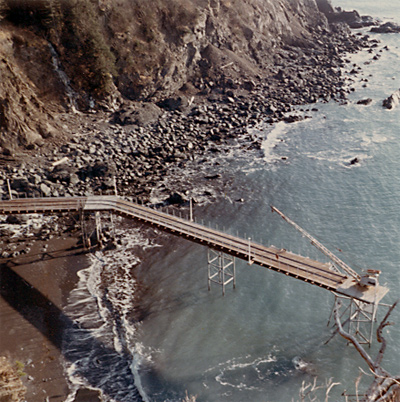
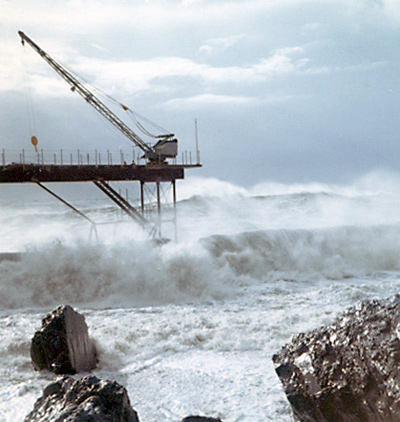
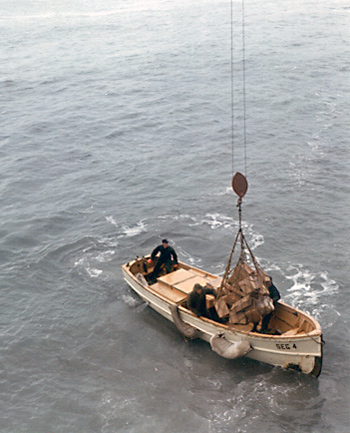
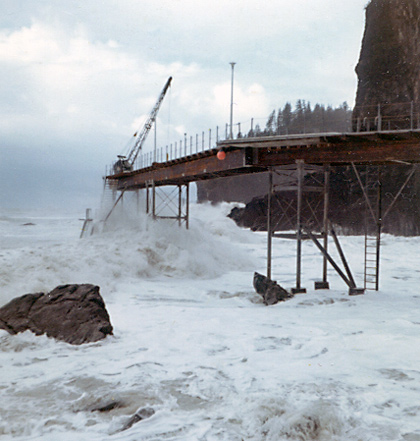
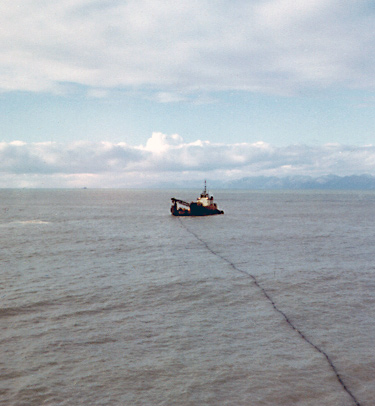
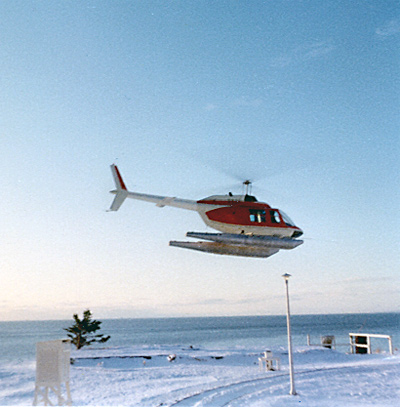
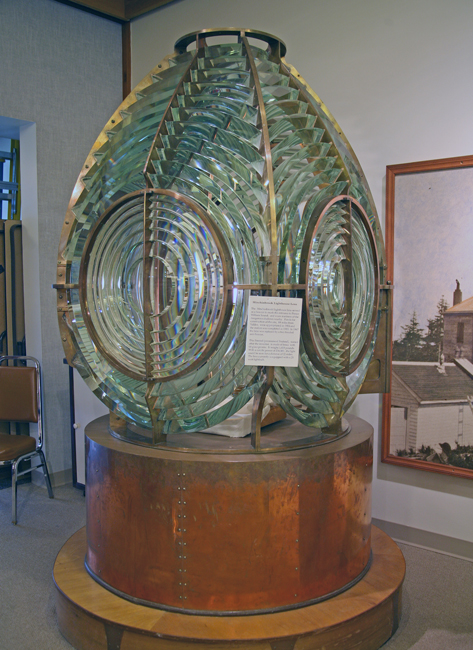
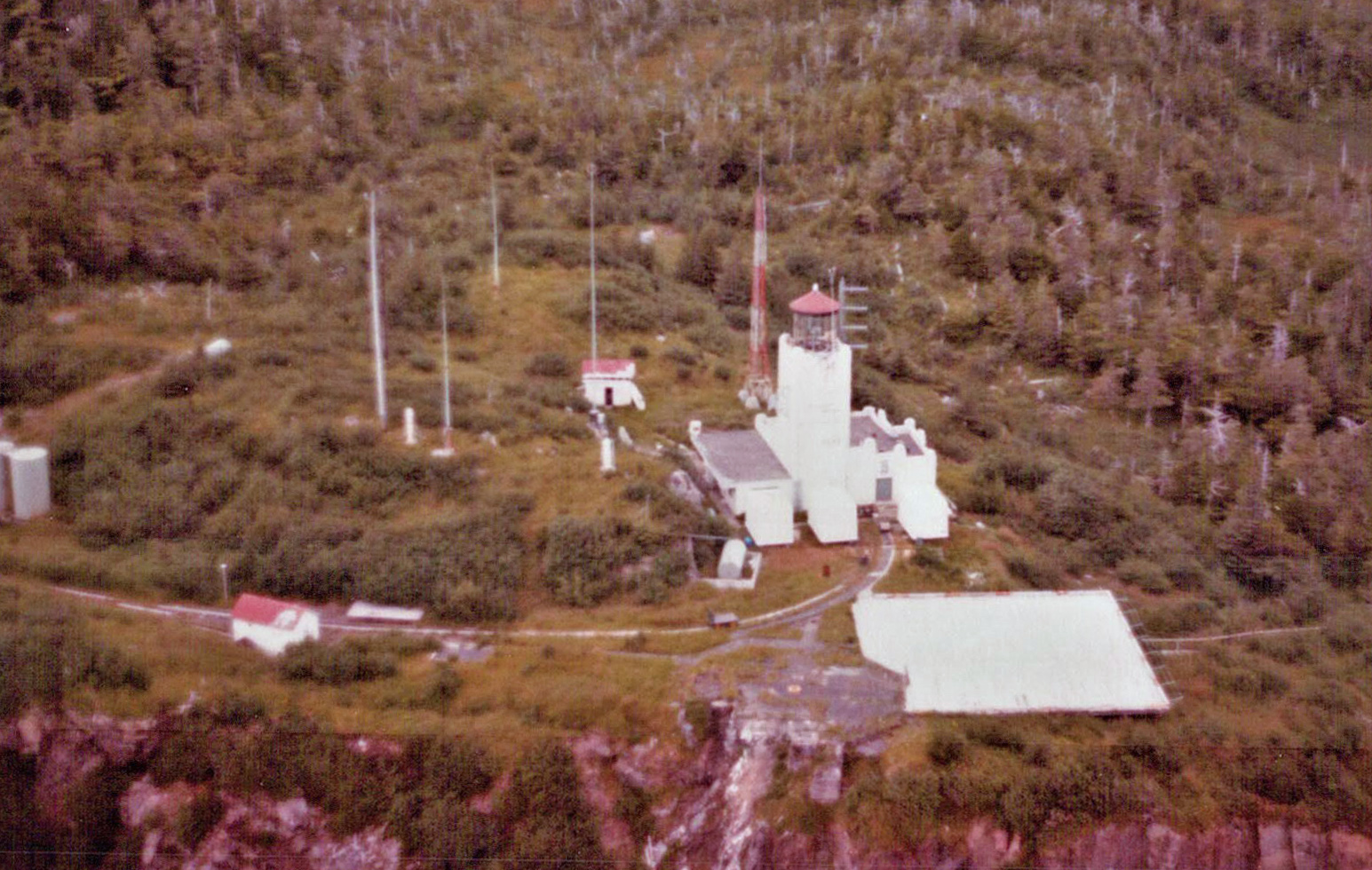
Photo Gallery
Photo Gallery
|
Under the act of 1906, the cost of Cape Hinchinbrook Lighthouse was limited to $125,000, and an initial appropriation of $25,000 was made on June 30th of that same year, with $50,000 appropriations following in 1907 and 1909. Fully funded, the project got underway in the early spring of 1909 supervised by A.B. Lewis of Standard Building Company of Seattle, Washington. Progress was slow that first year due to inclement weather and a couple of mishaps, which included the collapse of the derrick during its erection, causing the loss of large quantities of cement, and the subsequent loss of a scow filled with supplies valued at $12,000. Two Indians eventually discovered the scow on the beach of neighboring Montague Island, and its contents were returned. When work was halted in September, the tramway was complete along with the first story of the main structure. A keeper and his wife remained on the island through the winter to maintain a temporary light, exhibited from atop the incomplete lighthouse.
The contractor was apparently better prepared for the second year of work as C.W. Leick, chief draftsman of lighthouse construction in Alaska, remarked that “in all his experience he never saw more substantial preparations and arrangements…than is going on at Cape Hinchinbrook.” The lighthouse, which one reporter described as “practically indestructible,” came in under budget at $100,323 and was officially activated on November 15, 1910.
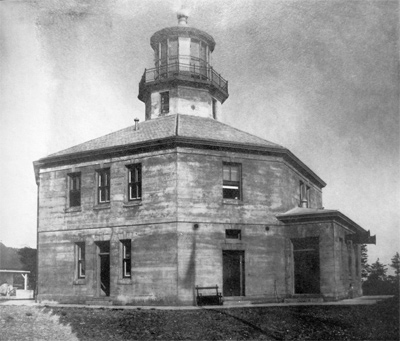
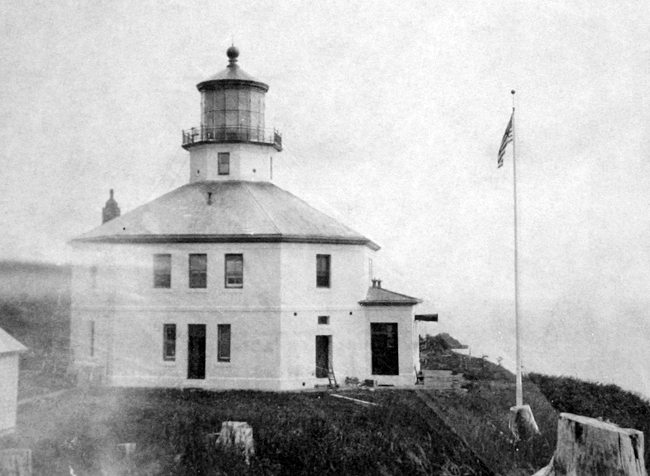
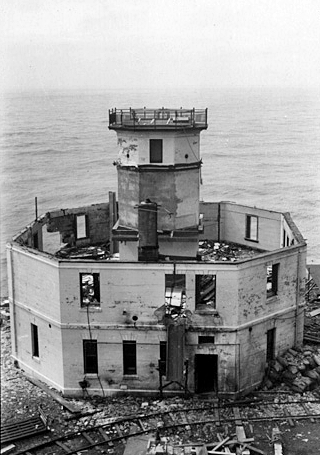
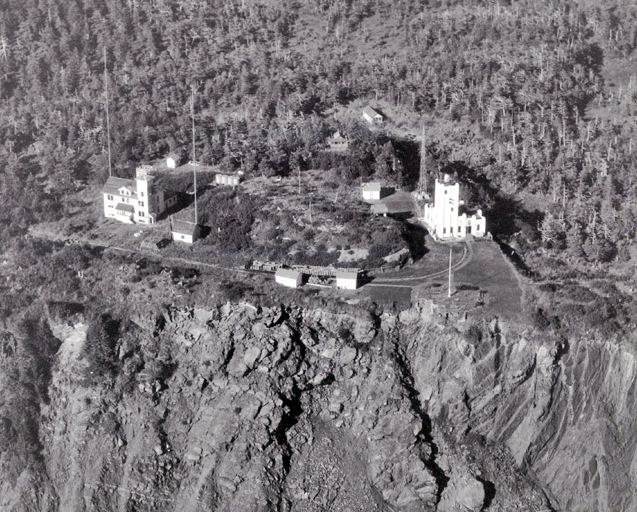
The combination fog signal, light tower, and keepers’ dwelling took the form of a two-story octagonal concrete building with a central octagonal tower rising an additional seven feet above the structure’s pyramidal frame roof. A cast-iron deck and a first-order lantern capped the tower, while part of the fog signal room was a one-story bay extending from the westerly side of the building. Perched atop a 188-foot cliff, the tower’s light, produced by an incandescent oil vapor lamp and a Barbier, Benard & Turenne, third-order Fresnel lens, had a focal plane of 235 feet above the water. A clockwork mechanism was used to revolve the four-panel lens, which floated in a bed of 187 pounds of mercury, producing a white flash every five seconds. Concrete walks and a tramway connected the lighthouse to the station’s outbuildings, which included a carpenter shop, an oil house, and, far below on the shore, a boathouse.
|
On May 20, 1912, the lighthouse tender Armeria, the first tender permanently assigned to the newly established Sixteenth Lighthouse District, struck an unchartered rock while anchored near Hinchinbrook Island to unload supplies for the lighthouse. Within a few minutes, water being pouring into the engine room, and Captain Gregory ordered the anchor raised so an attempt could be made to reach English Bay. Water soon submerged the boilers, and Captain Gregory wisely beached the steamer at Rock Point and had all thirty-six people aboard take to the lifeboats. The Admiral Sampson had just passed the Armeria and returned to pick up the vessel’s crew after seeing distress signals flying.
Lighthouse Superintendent Ralph Tinkham paid a surprise visit to Cape Hinchinbrook Lighthouse and found all three keepers asleep, a violation of service rules. This, however, was just the first of many problems to be uncovered that day. Upon requesting breakfast, Tinkham was told that the station’s supplies were exhausted. A quick look in the station’s pantry revealed empty racks, bins, and meathooks. There was, however, one eighteen-foot-long shelf full of Aunt Jemimah’s pancake flour. None of the keepers cared for it, but a pancake breakfast was just fine for the superintendent.
As the inspection continued, Tinkham discovered that the three keepers had not spoken a word to each other during the prior six months. As related by Tinkham, this all occurred after “one of the assistant keepers had lost a ring. Failing to find it after a diligent search, his brooding eventually convinced him that the other assistant had stolen it. Accusation had started a row and the principal keeper had stepped in in an attempt at reconciliation. As usual with would-be peacemakers, both assistants turned on him, thereafter all three ceased to have anything to do with each other.”
Fortunately, the three silent men did fulfill their duties for the most part and would even divide the spoils of any hunting or fishing expedition. Two weeks after the inspection, the six-month standoff came to an end when the lighthouse tender Cedar arrived with a load of supplies and a relief keeper.
After mariners complained that the air siren at Cape Hinchinbrook was ineffective, an air diaphone was installed at the station in 1923.
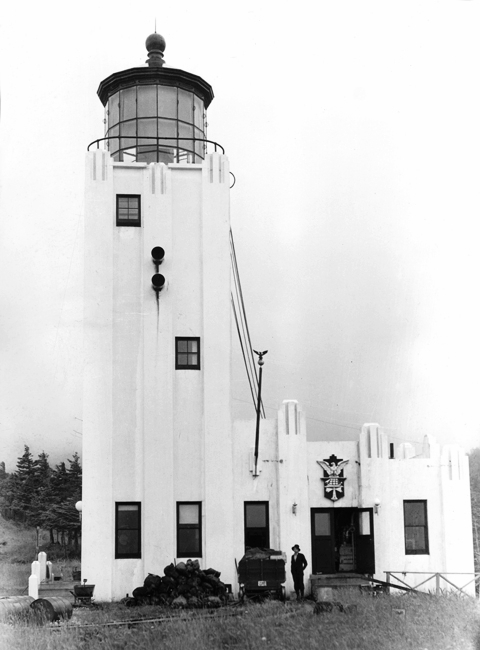
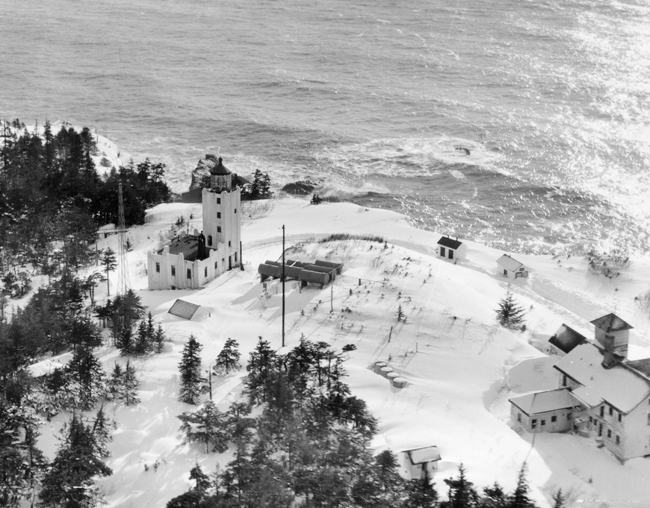
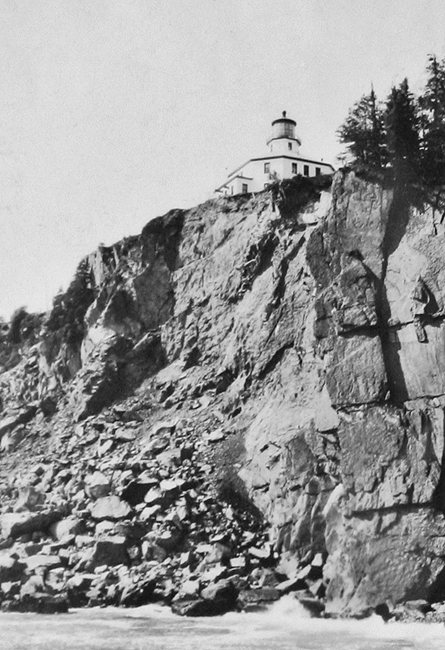
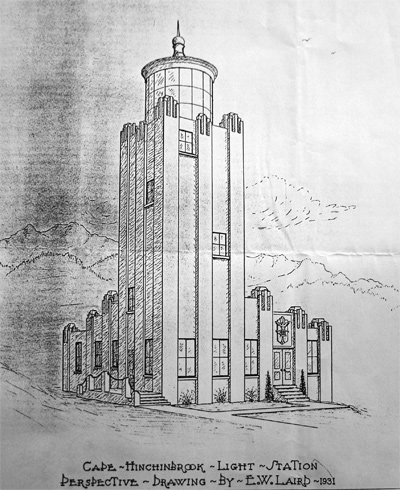
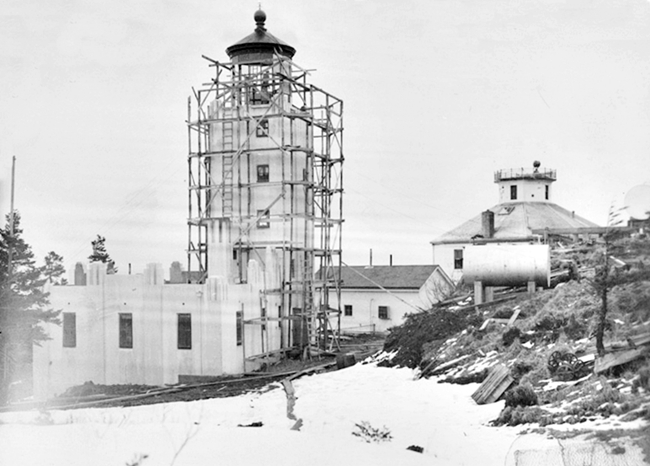
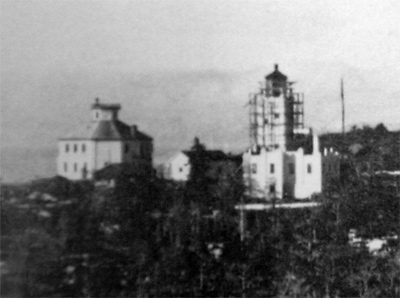
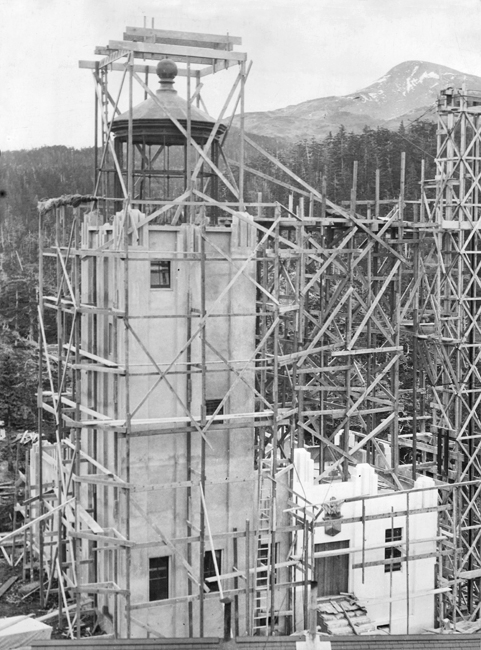
The lighthouse was originally built thirty-six feet from the edge of the cliff, but earthquakes in 1927 and 1928 caused large sections of the cliff to fall, endangering the lighthouse. Relocating the structure was considered, but it had been cracked by the earthquakes and the quality of its concrete was poor, so a replacement structure was built farther removed from the cliff’s edge. The second Cape Hinchinbrook Lighthouse, designed by Edward Laird and Dwight Chase in the Lighthouse Service’s Sixteenth District office in Ketchikan and completed in 1934, is unique amongst American lighthouses. Built of reinforced concrete in an Art Moderne/Art Deco style, the lighthouse features a square, sixty-seven-foot tower built into one corner of the 44’ x 54’ one-story base, with decoratively capped pilasters rising from the ground and projecting above stepped parapets. The initial appropriation of $30,000 for the project was made on February 23, 1931, and the total cost came to $91,793.
|
After the Coast Guard took over the nation’s navigational aids in 1939, the job of lightkeeping became a year-long assignment rather than a lifelong vocation. The keeper’s tours of duty were staggered so experienced men were always at the station.
Charles Umpstead served at Cape Hinchinbrook in 1947 and related a tale of a New Year’s Eve spent at the lighthouse by fellow coastguardsman Ed Baker – “The weather was calm and still and the four men were sitting around the kitchen table drinking coffee when they thought they heard voices and music. Coffee cups in hand, they climbed the stairs to the weather deck to peer out. The water was so flat and calm, it was spooky. An Alaskan ocean liner was passing by, and a New Year’s Eve party was in full swing. Ed could see people dancing and laughing. He said he just stood there and cried like a baby.”
On March 27, 1964, a 9.2 magnitude earthquake, the strongest ever recorded in the northern hemisphere, struck Prince William Sound. One of the men at Cape Hinchinbrook radioed in the following report of the quake’s effect on the station: “We are getting tremors every 10 to 15 minutes and loud noises like the cliffs are falling on top of islands. So far no injury to personnel. The building is shaking badly. Got to leave the station again. There is an awful roar coming from the sea now. Will call back.”
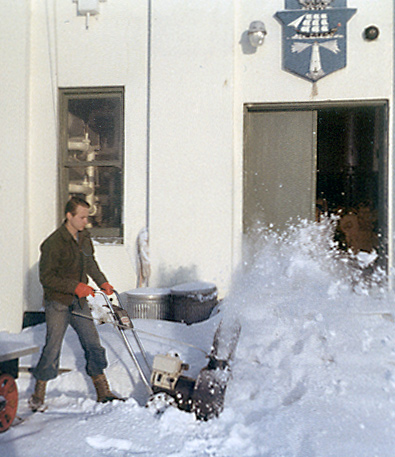
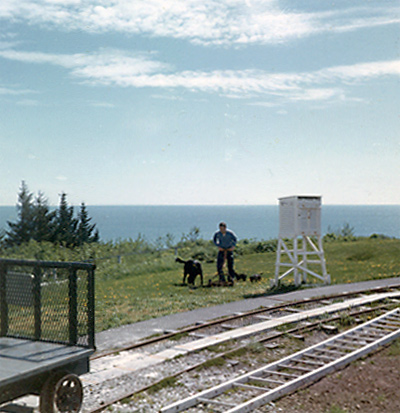
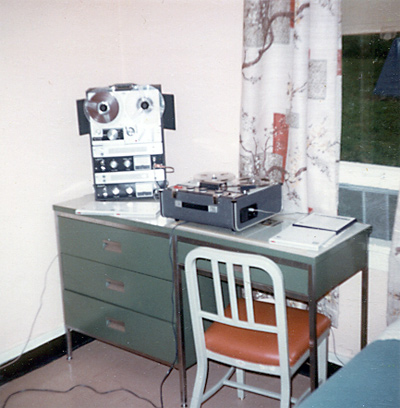
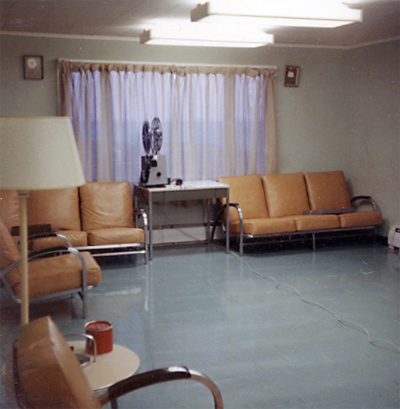
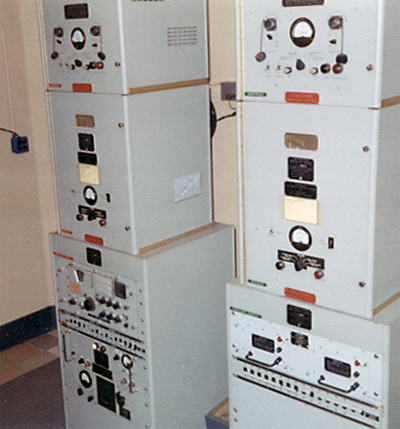
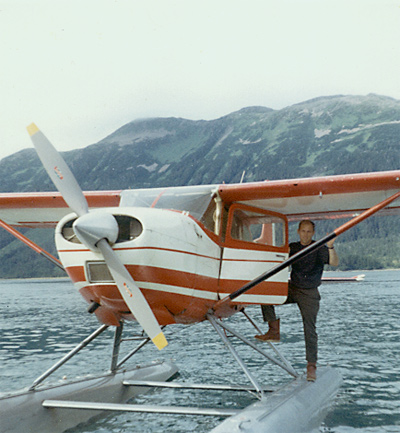
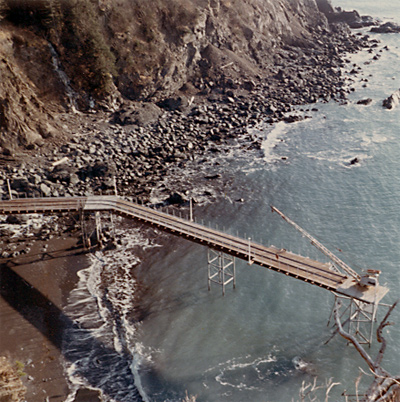
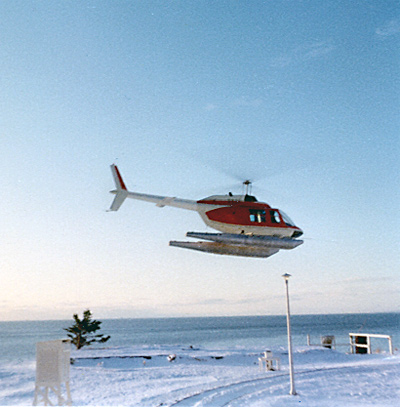
When Tim Escher arrived at Cape Hinchinbrook Lighthouse in 1968, his first thought was “I’m going to be here for a whole year?!” It wasn’t long though before he adapted to the station’s routine life, and he now has fond memories of his Hinchinbrook experience. Escher kindly provided a collection of pictures that provides a rare glimpse of a coastguardsman’s life on an offshore station.
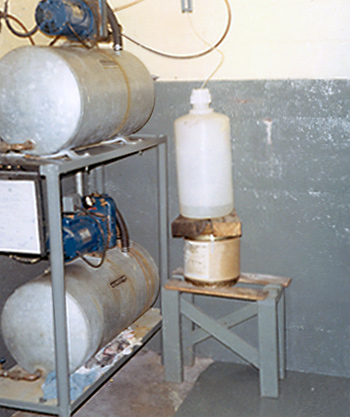
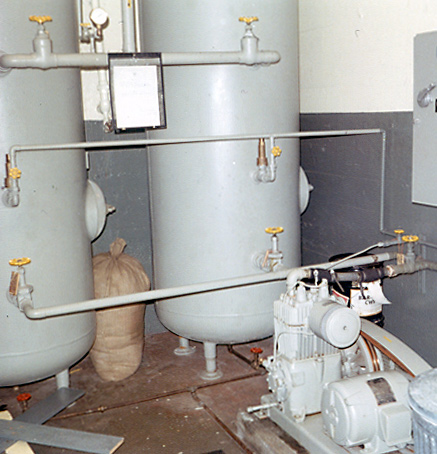
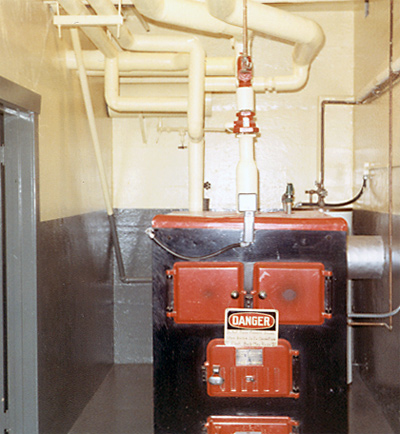
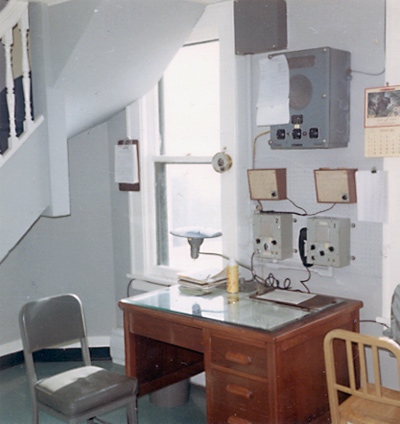
During Escher’s assignment, the basement of the lighthouse held water storage tanks, tanks for the foghorn, a furnace, and a food pantry. The main floor of the lighthouse consisted of four bedrooms along the east wall, a central kitchen, a bathroom along the south wall, an engine room just inside the main entrance, a radio room below the tower, and a living room, where movies were often shown, along the north wall. The second story of the tower housed equipment for the station’s radiobeacon.
|
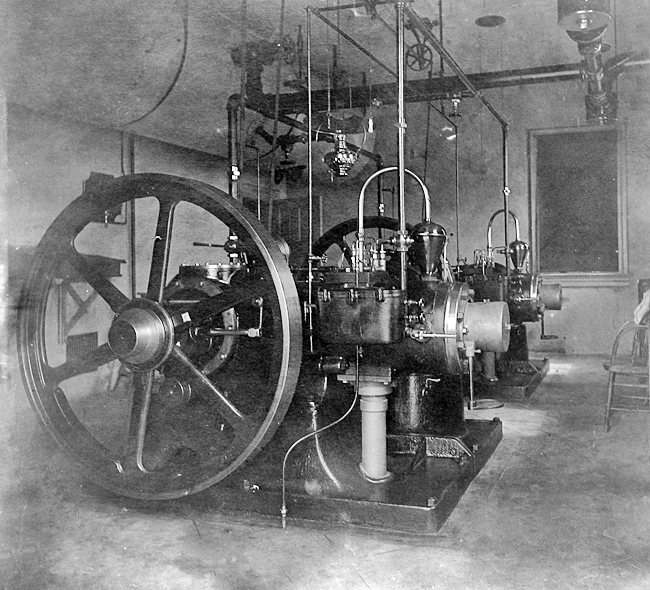
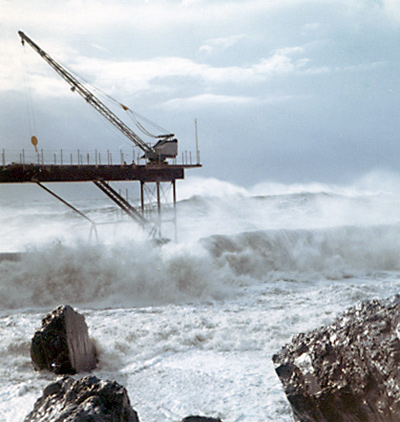
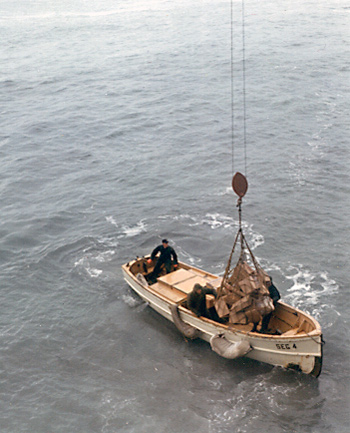
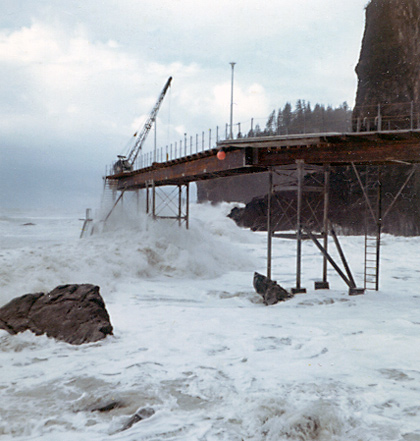
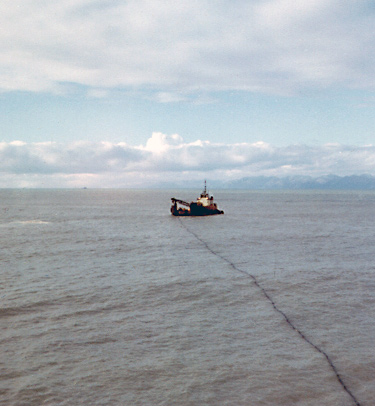
Supplying the station could be problematic, as weather would often delay delivery of items, such as the station’s highly anticipated mail. When supplies did arrive, they were typically lightered to shore where, enclosed in a cargo net, they were hoisted skyward by the station’s crane. Three diesel generators were used on a rotating basis to supply power to the lighthouse. When the diesel tanks needed filling, a ship would anchor offshore, and a hose would have to be run from the vessel to the landing area and up the tramway to reach the storage tanks. In emergency situations, such as when Officer-in-Charge Jerry Bennett experienced a nosebleed that could not be stopped, a helicopter could be dispatched to the island.
One of the main duties performed by the station personnel was to stand radio watch, twenty-four hours a day. On one night, with visibility at a quarter mile and winds gusting to 75 mph, Escher received a distress call from the captain of a fishing vessel ten miles away. The captain radioed that his bilge pumps could not keep up with the amount of water he was taking on and that he was trying to reach the safety of a small bay. At one point in the radio exchange, the captain alerted Escher that two of his crew had just been swept overboard. Not long thereafter, the third crewman went over the side and disappeared, leaving the captain alone. Escher had advised Air Station Kodiak of the situation, but conditions prevented any rescue attempt. After about thirty minutes of radio contact, the captain’s radio went silent mid-sentence. Escher tried repeatedly to hail the captain with no success. The next day a seaplane, dispatched from Kodiak to search for the vessel, found remains of the boat but no bodies. It was an experience that Escher would never forget.
|
On August 14, 1974, the crew at Cape Hinchinbrook carried out a direct order to put down Red and Snowball, the station’s dogs, in preparation for full automation of the lighthouse. The final entries in Cape Hinchinbrook’s Register of Visitors capture the crew’s feelings about being forced to carry out the gruesome task. After noting that the dogs had done their best to make the stays of the station’s personnel more enjoyable, the Officer-in-Charge concluded with the following lines. “No one seemed to care but us and the task of getting rid of them was left to us. God forgive us for taking their lives. We are sure they are up in heaven with you now. We wish there would have been someone to at least do the job for us. It was hard to swallow, and it will be harder to live with. It is over and done with now; but God forbid we will be called upon to do something like this again.”
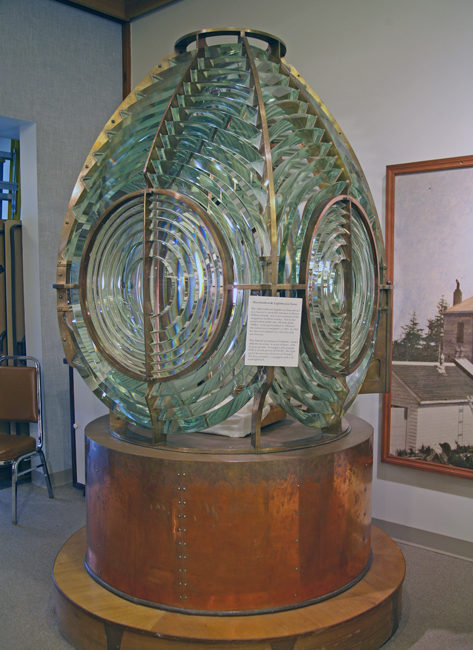
Cape Hinchinbrook’s third-order Fresnel lens, which had been replaced in 1967 by a two-headed aerobeacon, was officially transferred to the State of Alaska in 1975 under the condition that it be placed on public display. In the memorandum of agreement, the lens was described as “consisting of four 90-degree lenses, each with seven central elements, eleven elements above and four elements below.” In 1976, the lens was relocated to Valdez and placed on display.
Cape Hinchinbrook Lighthouse was added to the National Register of Historic Places in 2005.
From its beginning, Cape Hinchinbrook Lighthouse has proved invaluable at directing vessels to and from Prince William Sound. In the early years, steamship lines carrying passengers and supplies, barges bearing ore from the world’s largest copper mines at Kennecott, and ships transporting oil from the fields at Katalla all relied on the flashing beacon at Hinchinbrook. Today, supertankers laden with oil from the Alaskan pipeline, huge cruise ships chock-full of tourists, and fishing vessels filled with valuable catch pass under the shadow of the lighthouse. Though no longer used by many as a primary navigational aid, the beacon still serves as a reassuring presence along the rugged Alaskan coast.
Keepers:
References