Cape Spencer, AK 
Select a photograph to view a photo gallery
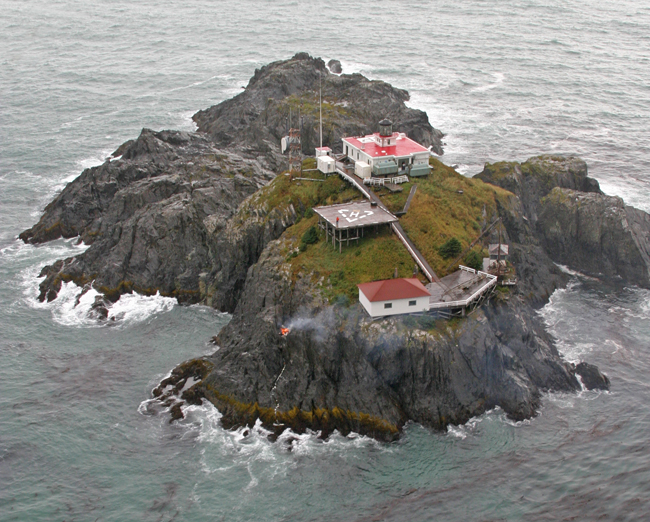
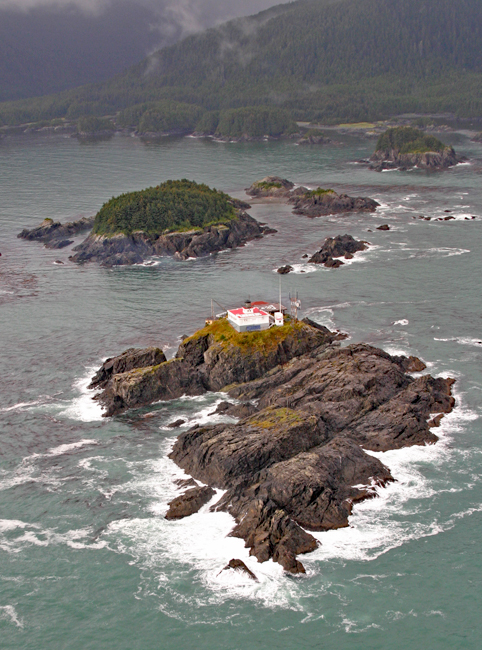
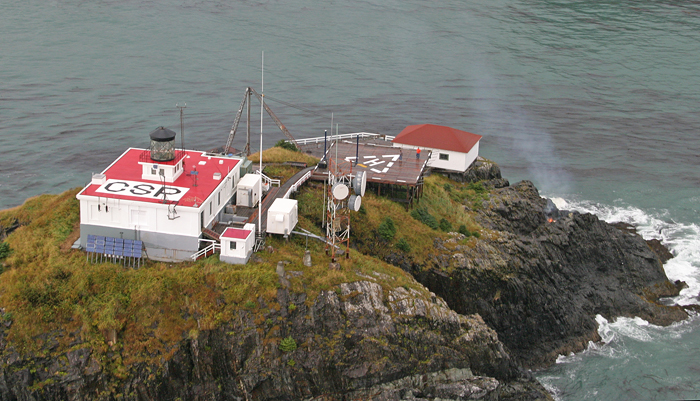
Photo Gallery
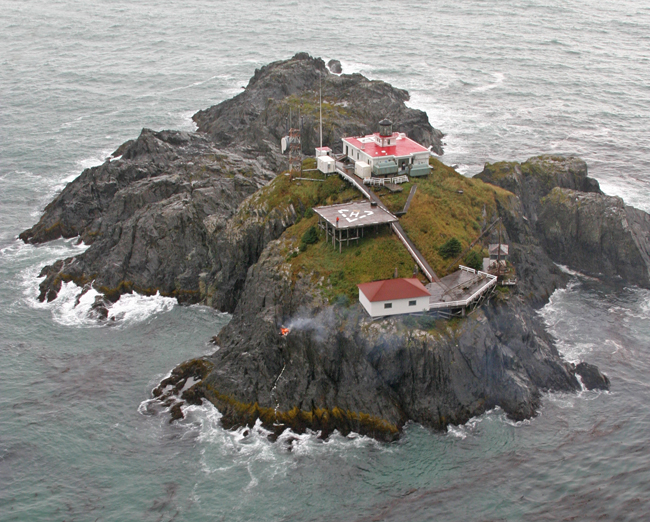
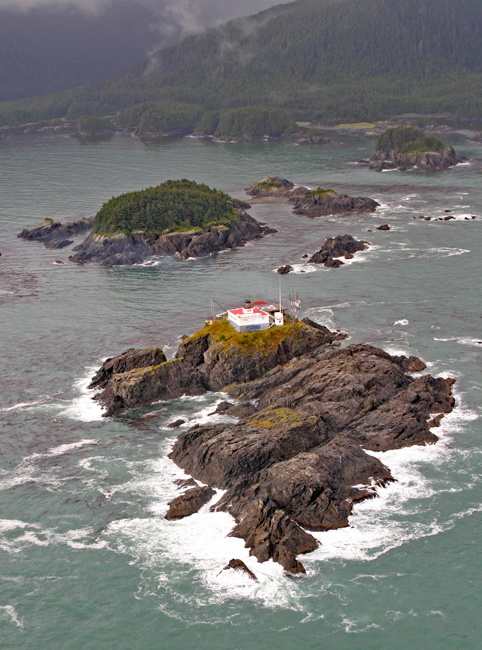
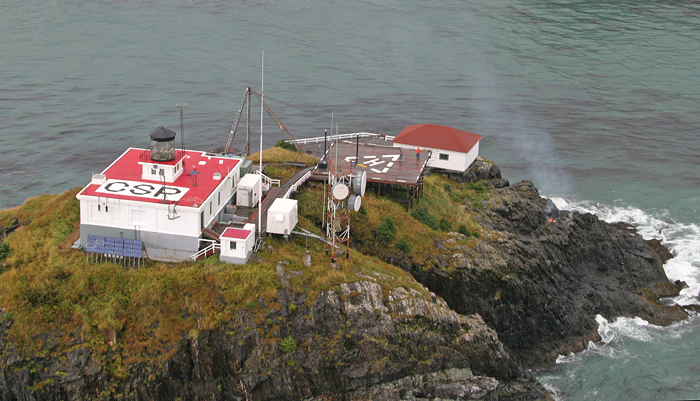
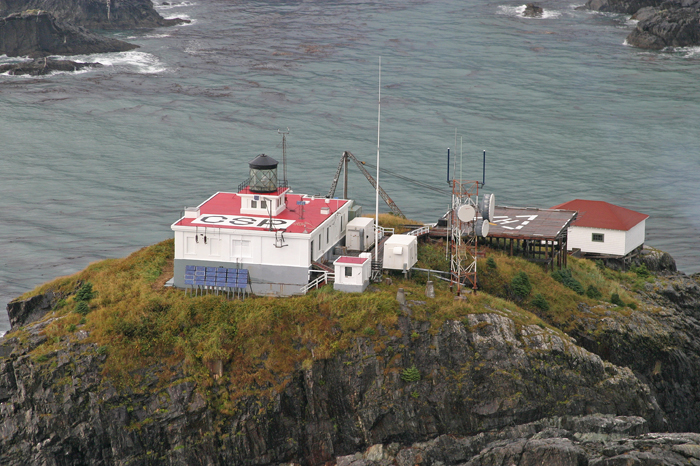
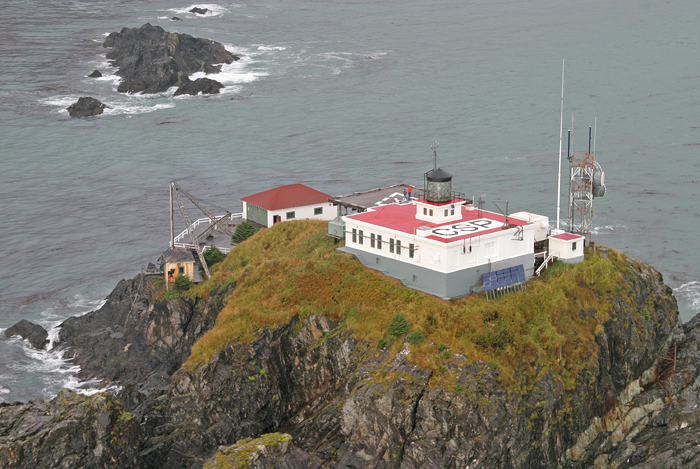
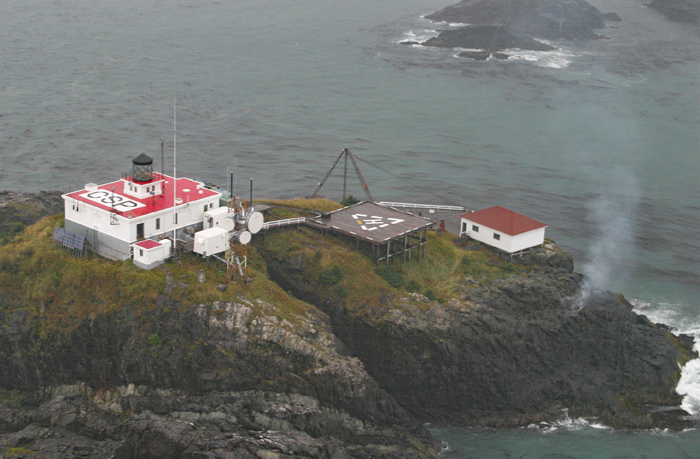
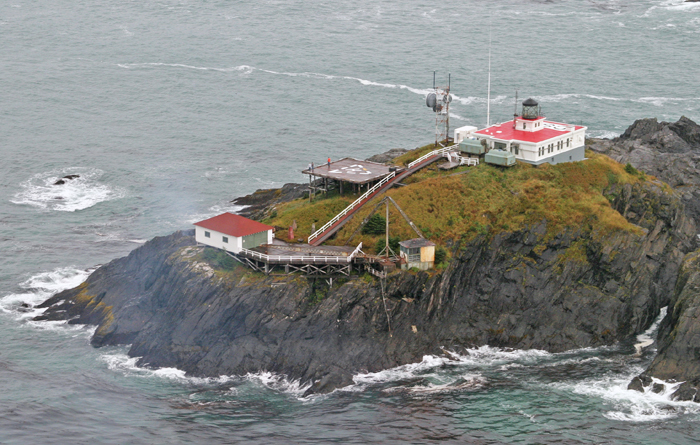
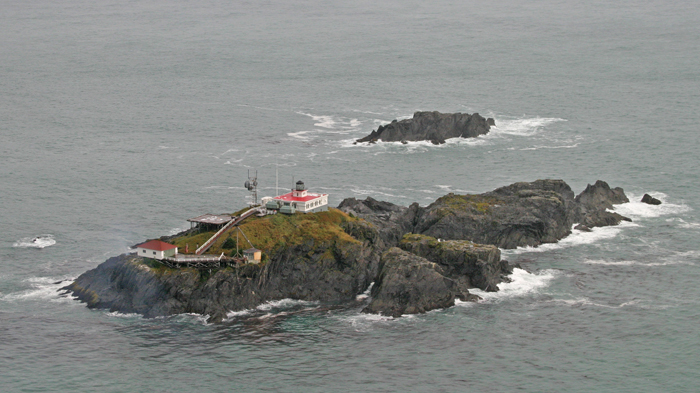
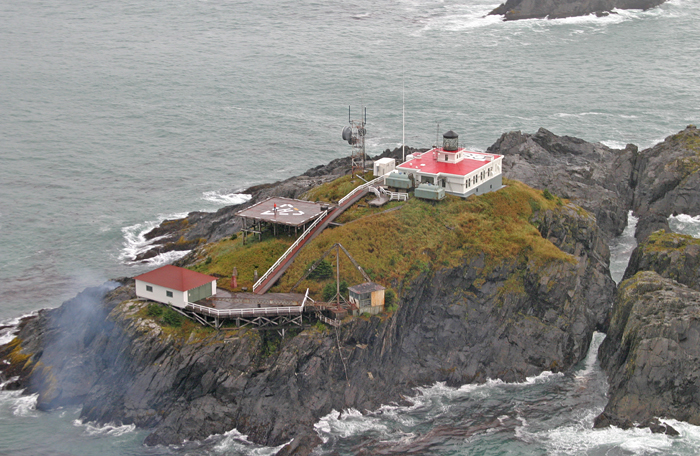
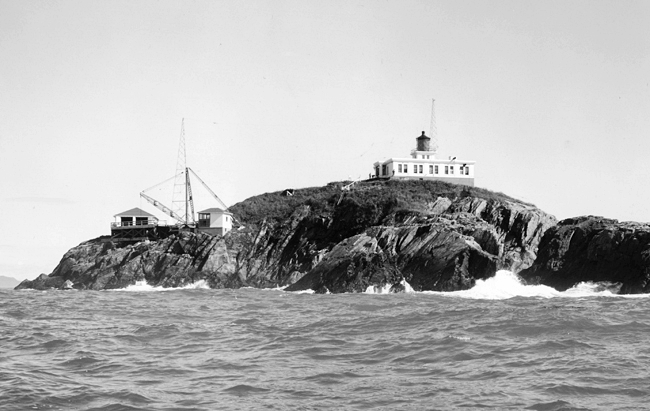
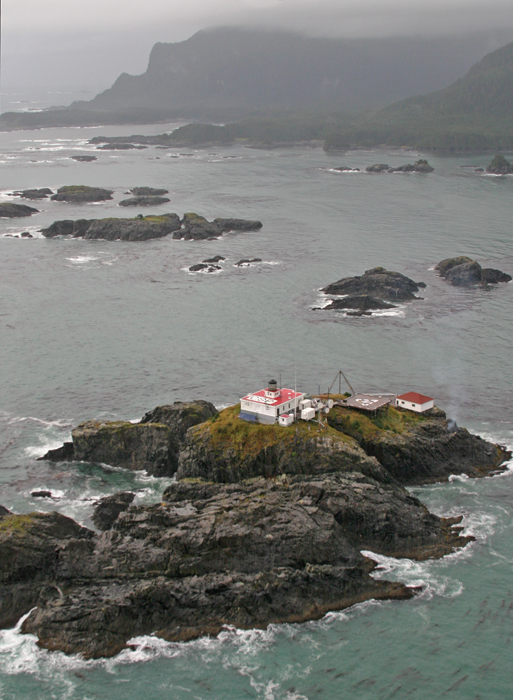
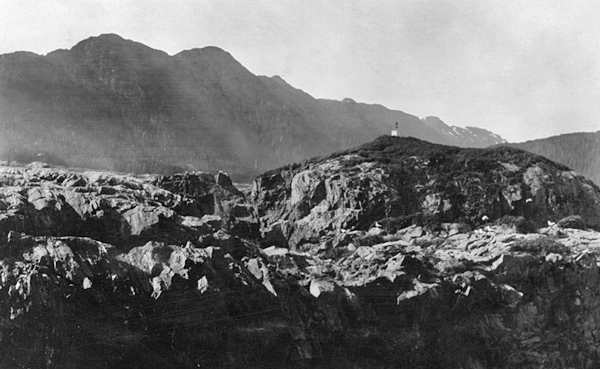
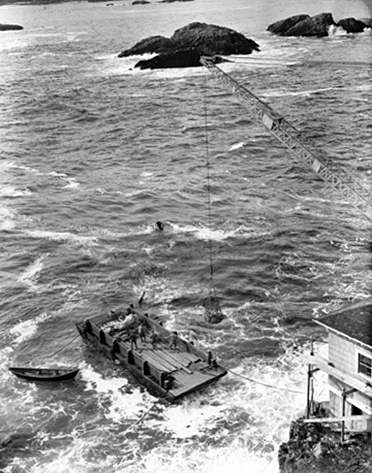
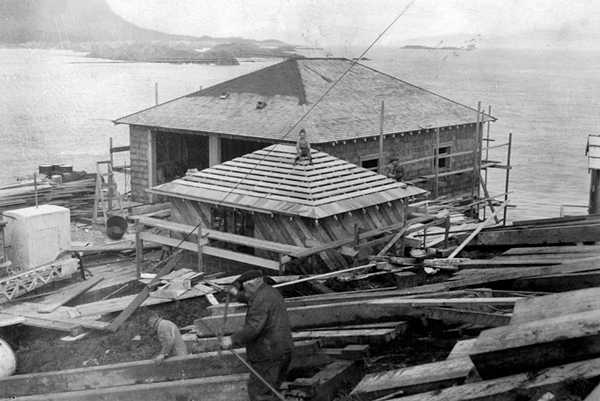
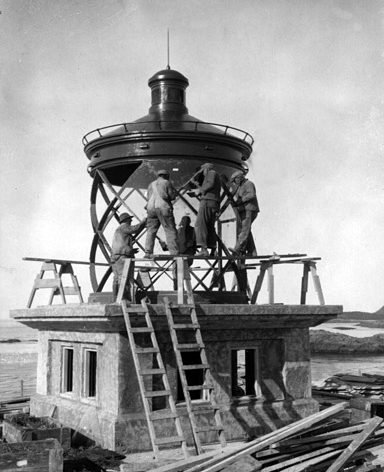
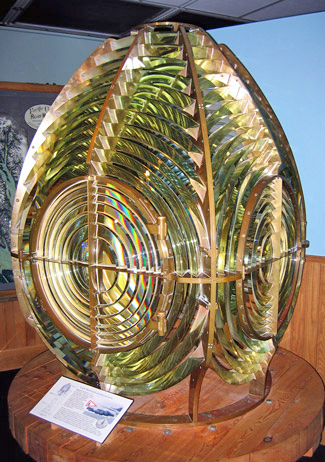
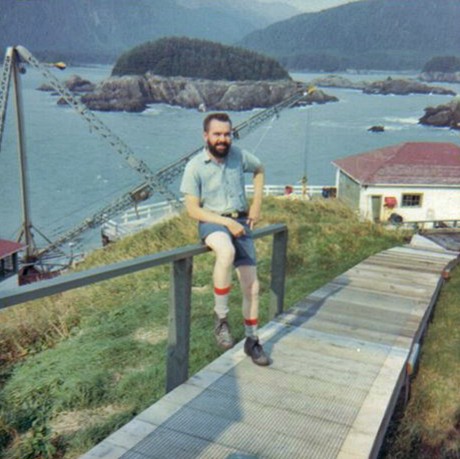
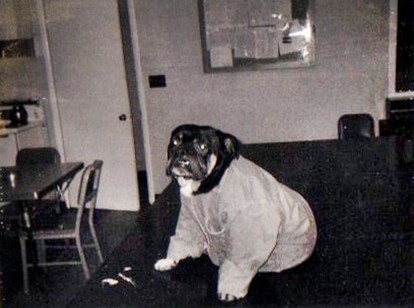
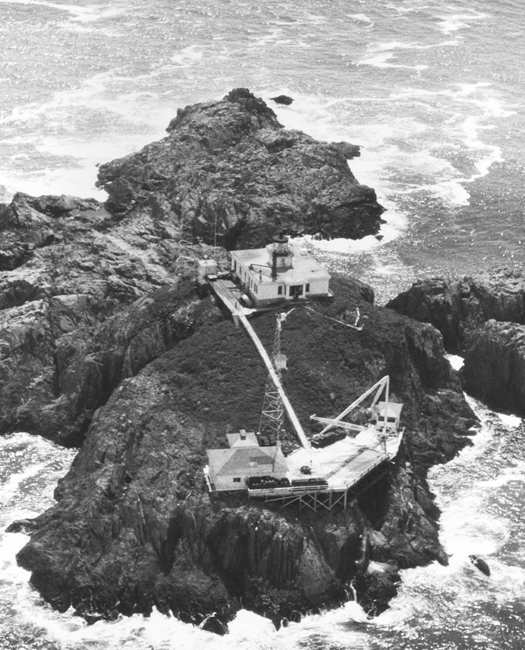
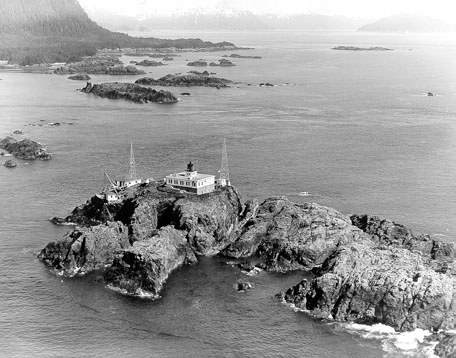
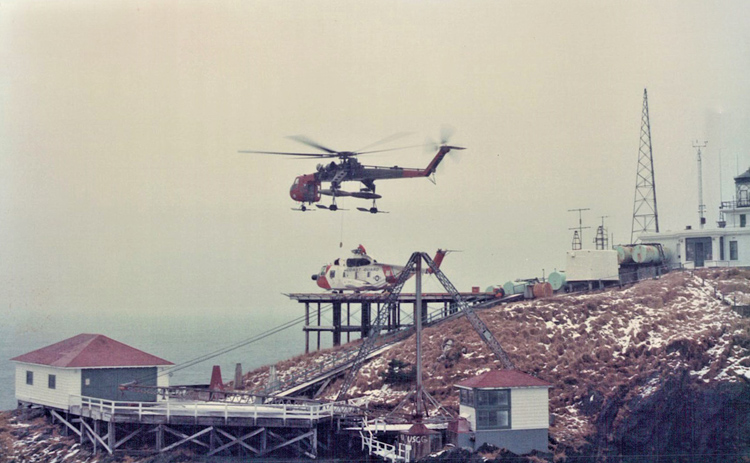
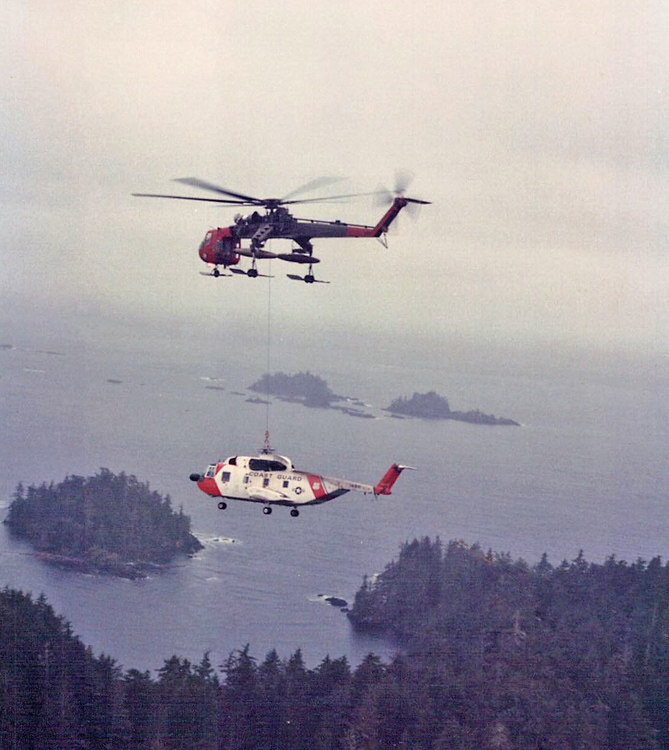
Photo Gallery
Photo Gallery
|
Congress appropriated $115,000 in 1912 for aids to navigation in Alaska, and while this was nearly double what had been provided the previous year and included funds for a major light at Cape St. Elias, Territorial Governor Walter Clark wanted major lights constructed at Cape Spencer and Cape Decision as well. “Since April 1910 – twenty months ago – 58 aids to navigation, including a number of acetylene gas lighter beacons have been installed in Alaska water,” Clark noted. While this increased the number of lights in Alaska severalfold, Clark felt it would be better to postpone additional small lights in favor of formal lighthouses at Cape Spencer and Cape Decision.
The Lighthouse Board requested a light and fog signal at Cape Spencer as early as 1906, but it wasn’t until 1912 that this rocky region received its first light – an unmanned acetylene lens lantern. Despite Governor Clark’s plea, mariners had to be content with this small beacon for nearly two decades. In 1922, the Lighthouse Service requested $165,000 for a light and fog signal at or near Cape Spencer and provided the following paragraph as justification:
Cape Spencer is at the entrance to Cross Sound and Icy Strait, through which pass all vessels running between Puget Sound ports and Prince William Sound, Seward, Cook Inlet, and Kodiak, excepting only occasional freighters proceeding by outside route. Traffic by way of Cape Spencer is materially increasing owing to work on the Government railroad, which will probably be completed within the next two years, and the consequent development of southern and southwestern Alaska. A small unwatched light is now maintained on the Cape, but a more powerful watched light and a fog signal of the first class should be provided. A landfall must be made in this vicinity by all vessels returning from the westward, and as the entrance to Cross Sound is difficult to make, especially in thick weather, it is important they be given all the assistance possible. Maritime interests are urging the establishment of this aid as their most important need in Alaska.
|
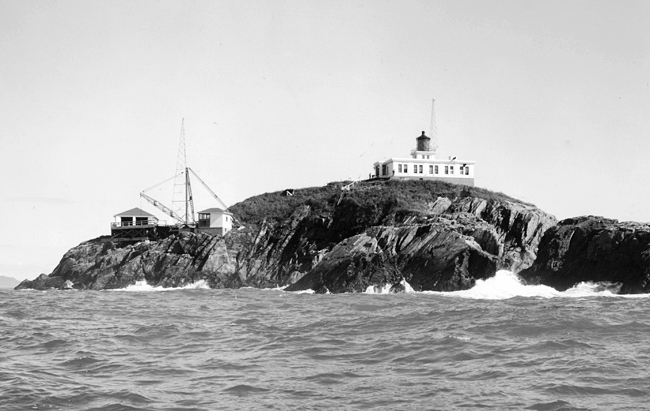
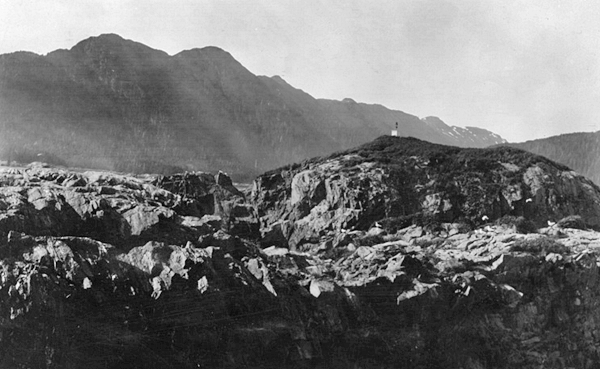
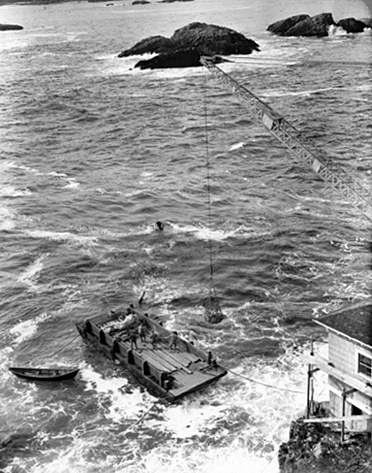
Congress allocated $66,000 toward the project in 1923, and construction commenced in May 1924. One can only imagine how difficult the initial landings on the rocky islet must have been. A landing platform, derrick, and hoisting machinery were put in place first to facilitate the transfer of further supplies to the construction site, and during the first work season, which ended in September 1924, a boathouse, blacksmith shop, tram, and excavation for the lighthouse foundation were completed.
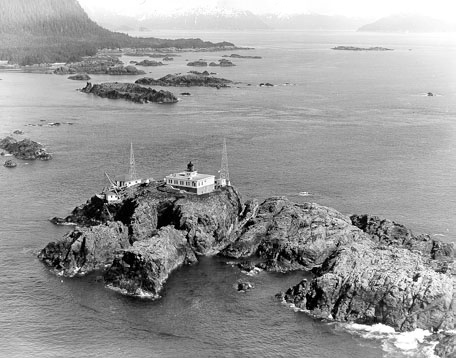
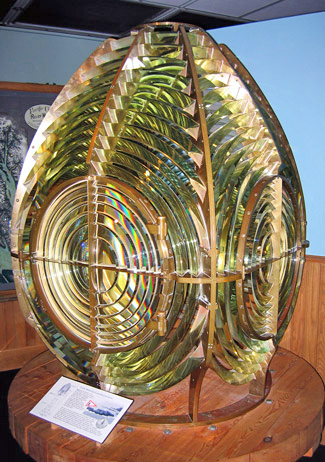
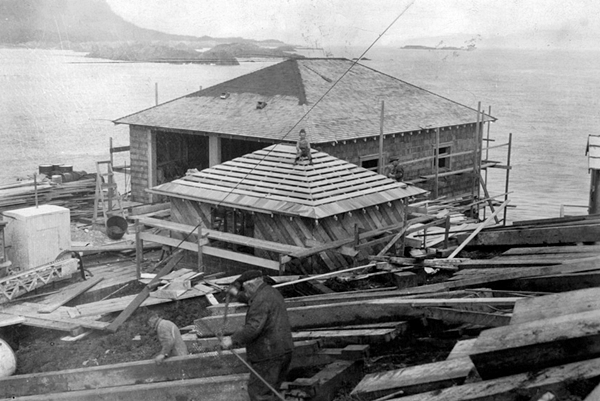
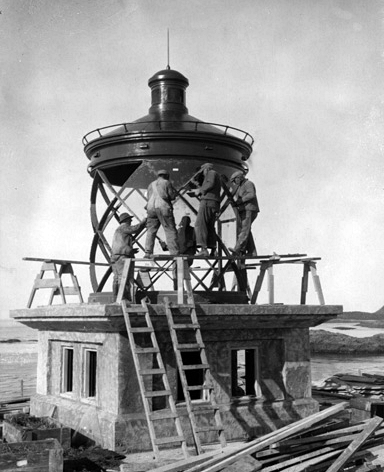
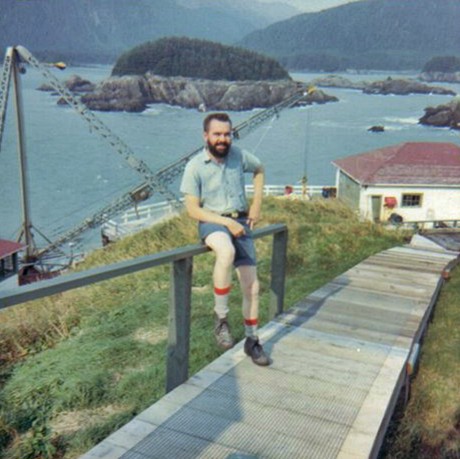
A single-story reinforced concrete building (51’ x 62’) was built at the summit of the rocky mass in 1925 to house the diaphone fog signal equipment, the light, and the keepers. From the center of the squat structure’s roof, a fourteen-foot-square tower rose another twenty-five feet. A third-order Fresnel lens, constructed in Paris by Barbier, Benard and Turenne, produced the lighthouse’s light characteristic of a white flash every fifteen seconds at a focal plane of 105 feet above the surrounding water. The only part of the station that could be easily traversed was the hundred yards of plank walkways linking the lighthouse to the boathouse, crane, and garbage chute. The remote station was built at a cost of $174,881 and commenced operation on December 11, 1925. The following July, Alaska’s first “radio fog signal” or radiobeacon was placed in operation at Cape Spencer, further indication of the station’s importance to maritime navigation. Ships at sea with a radiocompass could pick up the radiobeacon at distances of over 100 miles and use the signal to safely approach the station.
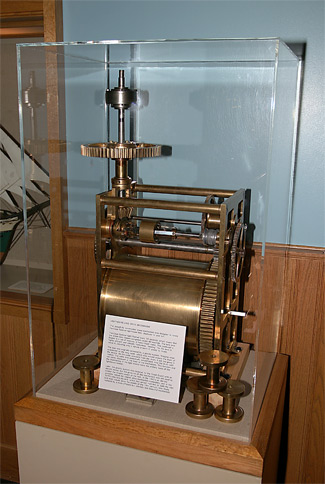
As evidenced by the following stories, a year’s tour of duty at Cape Spencer seems to have provided ample material for a lifetime of interesting dinner conversations. Paul Reager was stationed at Cape Spencer during 1946. He recalls that the station’s groceries came from Pelican City, but the weather often interfered with their regular arrival. As a result, at times they had to be both creative and conservative with their supplies. “I once made a lemon pie out of brass polish, which was high in citric acid. Made a darn good pie too,” remembers Reager. The crew also saved all its cigarette butts and used a rolling machine to make new cigarettes.
|
Pat O’Brien spent part of 1963 and 1964 at Cape Spencer with three other members of the Coast Guard and a German Shepherd named Duke. “I observed many things at Cape Spencer that I have never seen anywhere else,” says O’Brien. “Probably the most dramatic was a tsunami warning. Of course, we got the call in the middle of the night. Can you imagine, with all the danger of getting off the station by crane in daylight, on a calm day, what it was like to abandon the station at night? Once we got our sixteen-foot outboard in the water, we had to weave in and out, avoiding the rock garden, until we reached the safety of an inlet called Dick’s Arm. We did this by putting a man on the bow with a flashlight. Any volunteers? We all had our M1 rifles. We were wide-eyed and loaded for bear. Glad we didn’t see any.”
Fortunately, there was no tsunami that night, but the warnings were definitely taken seriously after the Scotch Cap Lighthouse and its entire crew were lost to a tsunami in 1946. Another unique experience O’Brien had at Cape Spencer occurred one evening when a heavy mist enshrouded the station in a halo of light produced by the lens’ four revolving beams.
“It must have been during a major bird migration,” O’Brien said, “because the night sky was filled with millions of little birds, none of them larger than a robin. The beams of light were so heavy with them that it looked like a blizzard in the reflected light. You could hit them with a stick. If you opened the door, the room would fill with birds.”
“The rotating light obviously attracted them. Because we received our drinking water off the roof from rainfall, the seaman and myself checked the roof the next morning, and we threw literally bucketfuls of dead birds off the roof; they had died flying into the light. I have never seen so many birds and so many varieties in my life.”
Thirty-year-old Russell Newberry was in charge of the station in 1968 and supervised three men who were roughly a decade younger. “The weather means nothing to us,” Newberry told a reporter. “If it isn’t pouring rain, it’s snowing. Winds whistle through here constantly 50 to 100 m.p.h. The last time we saw the sun was 35 days ago.”
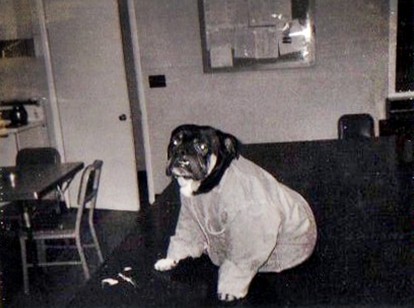
The Coast Guard cutter Clover would make a ninety-mile, two-day run from Sitka to deliver supplies to Cape Spencer about every month, but weather would often postpone the trip, and the men always kept a six-month supply of food on hand. The crew in 1968 had a bulldog as a mascot, but they decided they were going to send him back to Juneau. “There is nowhere for the dog to exercise,” said one of the men. “A dog shouldn’t have to take this kind of existence.”
“The first week or two a new man is assigned to Cape Spencer, everybody does a lot of talking,” Newberry explained. “We learn the man’s life history. He learns ours. Then we stop talking to each other except for a few words now and then. We pass one another and usually don’t even grunt. There’s nothing to say. What can we talk about? Certainly not the weather. It never changes.”
While on an aids-to-navigation mission in February 1985, a Coast Guard helicopter stopped at Cape Spencer and suffered a transmission failure there. A team, which included Ken Cochran, was flown out to prepare the helicopter to be slung back to Sitka for repairs. The blades were removed from the disabled helicopter, and a Sikorsky S-64 Skycrane from the Alaska National Guard in Anchorage, the last remaining Skycrane in Alaska, flew to Stika and then out to Cape Spencer to retrieve the helicopter. The Skycrane successfully lifted the helicopter and flew it back to Sitka, but when a helicopter was sent back to retrieve the team on the island, the weather prevented it from landing, and the team had to spend another night on the island.
The Coast Guard removed the Fresnel lens from Cape Spencer in 1974, the same year in which the lighthouse was automated and destaffed. Cape Spencer Lighthouse was placed on the National Register of Historic Places in 1975, along with Eldred Rock Lighthouse and Cape St. Elias Lighthouse. These three lighthouses were the first Alaskan lighthouses to be added to the register. The other eight surviving Alaskan lighthouses were not added to the register until 2002 – 2005
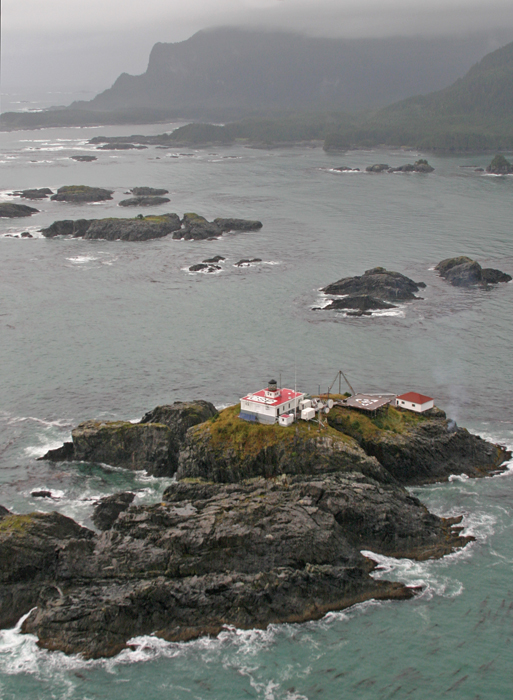
The small lighthouse, perched atop the seventy-foot-tall rock, is still considered an important navigational aid and receives regular Coast Guard visits. These crews are likely glad their stays at the secluded station last only a few hours or at most a couple of days. However, they won’t have the storehouse of memories accumulated by the crews who spent a full year at the station that marks the outermost edge of Southeast Alaska.
Keepers:
References