Port Pontchartrain, LA 
Select a photograph to view a photo gallery


Photo Gallery


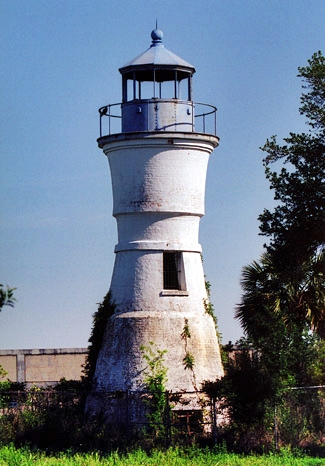
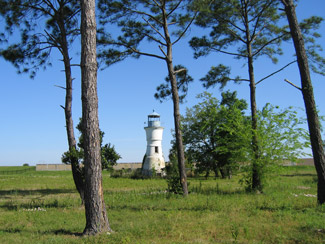
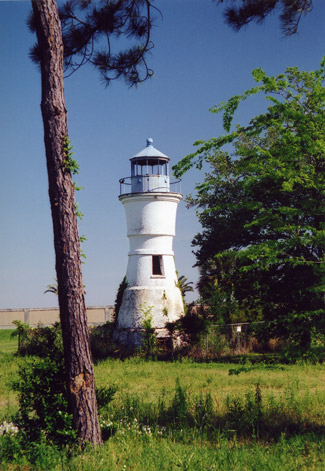
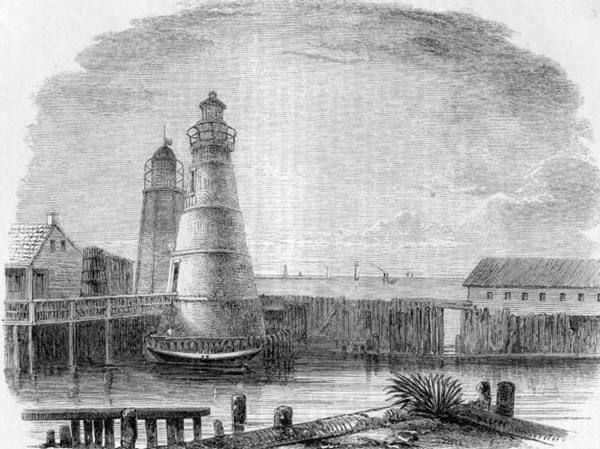
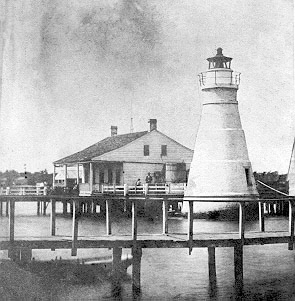
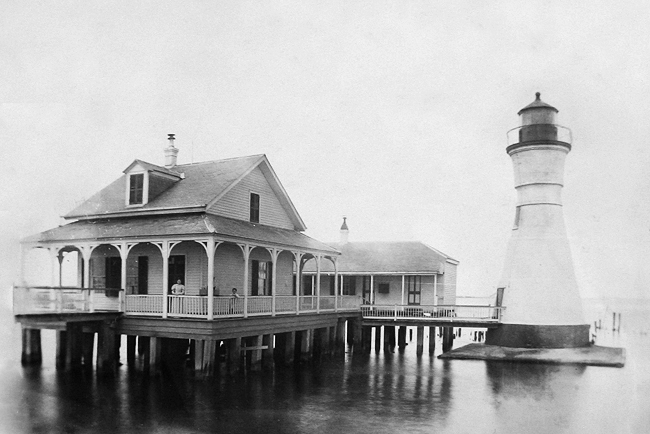
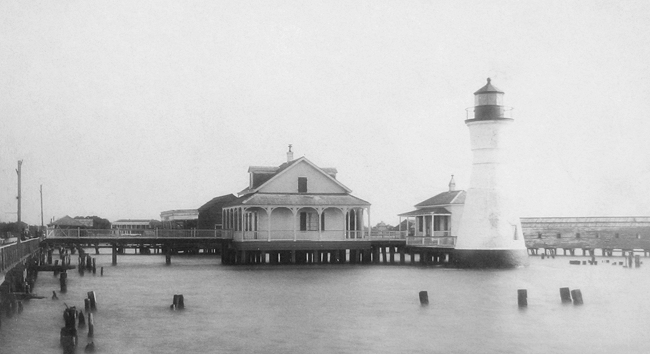
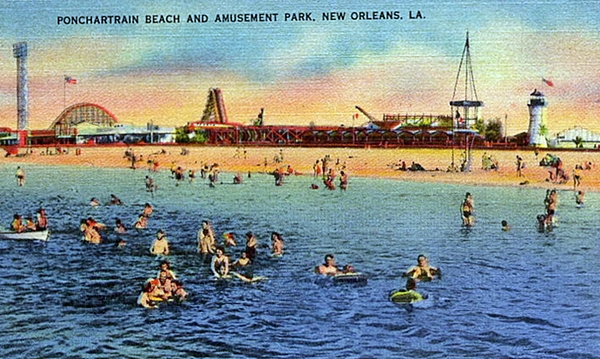
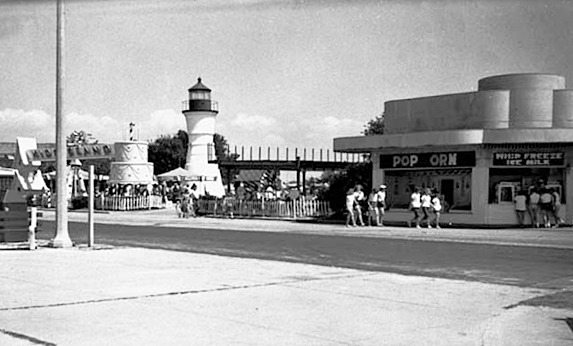
Photo Gallery
Photo Gallery
|
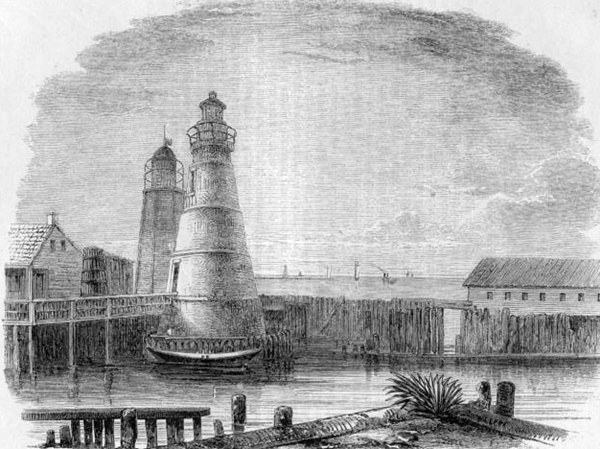
In 1834, Congress allocated $5,000 for the construction of a light with a height of eighteen feet, but the railroad company preferred the higher focal plane of their light and suggested the government just take it over. Three years later, a larger sum was earmarked for a lighthouse, and this time an octagonal wooden tower, similar to those constructed nearby at Bayou St. John and New Canal, was built. From its base with a diameter of eighteen feet, the tower rose to a height of twenty-eight feet where a revolving chandelier created a flashing light, distinguishing it from the fixed lights at the two nearby ports. Ten lamps and fourteen-inch reflectors were affixed to the chandelier.
Benjamin J. Shane became the lighthouse’s first keeper on February 15, 1839. According to oral history passed down through his family, Keeper Shane died the following year after tripping over a bucket and falling down the lighthouse stairs.
By the early 1850s, the three octagonal lighthouses marking the ports along the southern shore of Lake Pontchartrain were in need of replacement. Danville Leadbetter, the lighthouse inspector for the Gulf of Mexico, wrote in 1853 that the three towers were “wholly worthless” and were being repaired “only in the hope of making them serve till new ones can be built.”
|
Port Pontchartrain Lighthouse was reportedly the only one on the Gulf Coast to retain its keeper throughout the Civil War. Before the war was over, the old abandoned octagonal tower described as “a weather-boarded, eight-sided truncated pyramid of very ugly shape” was dismantled and used to build a walkway over the lake to the railroad pier.
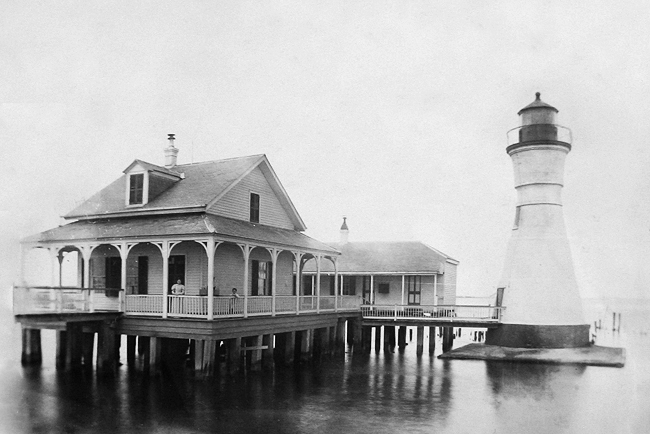
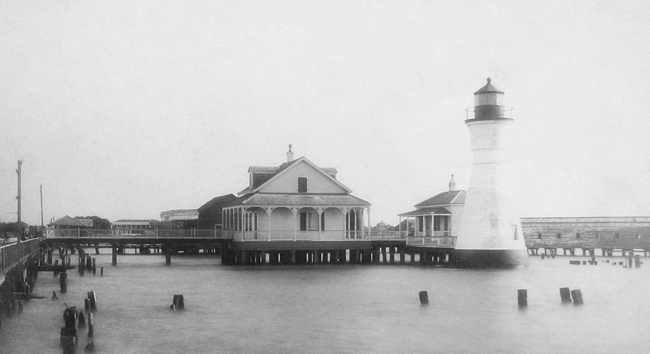
A hurricane in September 1869 carried away the station’s kitchen, capsized the cistern, and destroyed the plank walk leading from the dwelling to the railroad wharf. The old frame dwelling rested on piles that were very rotten, and it was thought another storm of the same magnitude would sweep it away with its occupants. A new dwelling, kitchen, 3,000-gallon cistern, and a plank walk were built in 1871.
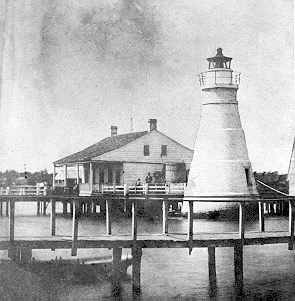
In 1880, the diameter of the top of the tower was increased to support a new lantern room. Additional brickwork flared out the top of the tower, raising its height by seven feet and giving it a unique dumbbell appearance. Just two years after the tower was extended, another change came to the station. Beginning in 1882, a string of three women keepers served at Port Pontchartrain Lighthouse, and their tenure lasted until the light was discontinued on May 10, 1928.
Minnie E. Coteron, the last of the three women keepers, was allowed to continue to reside in the dwelling at the lighthouse after the light was discontinued and serve as a custodian for the property. Minnie took charge of Port Pontchartrain Lighthouse in 1924, after Bayou St. John Lighthouse, which she had looked after for eighteen years, was automated. Her father and mother had preceeded her as keepers of Bayou St. John Lighthouse.
The middle keeper of this trio was Margaret R. Norvell. Margaret’s husband drowned in 1891, while serving as keeper of Head of Passes Lighthouse, and, with two small children two support, Margaret was appointed in his place. The sailors at sea became the men in Margaret’s life. She said, “There isn’t anything unusual in a woman keeping a light in her window to guide men folks home. I just happen to keep a bigger light than most women because I have got to see that so many men get safely home.”
The Morning Tribune of June 26, 1932 carried the following about Margaret Norvell. “In every big hurricane or storm here since 1891, her lighthouse has been a refuge for fishermen and others whose homes have been swept away. In the… storm of 1903 Mrs. Norvell’s lighthouse was the only building left standing on the lower coast, and over 200 survivors found a welcome and shelter in her home.” In 1914, Keeper Norvell brought a man to the lighthouse who had suddenly taken ill aboard the steamer Hanover and cared for him until his passing. Margaret transferred to New Canal Lighthouse in 1924 and served for eight more years, bringing her years of service to nearly forty-one. In 2013, the Coast Guard named its newest Fast Response Cutter in honor of Margaret Norvell.
|
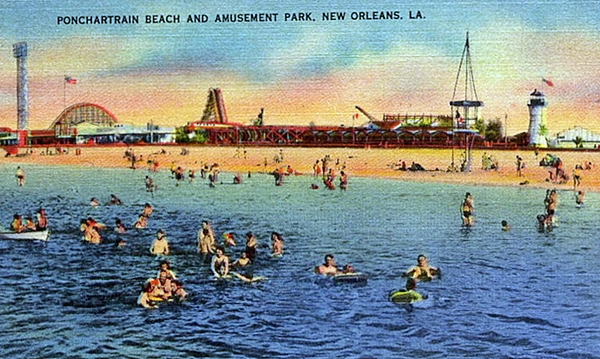
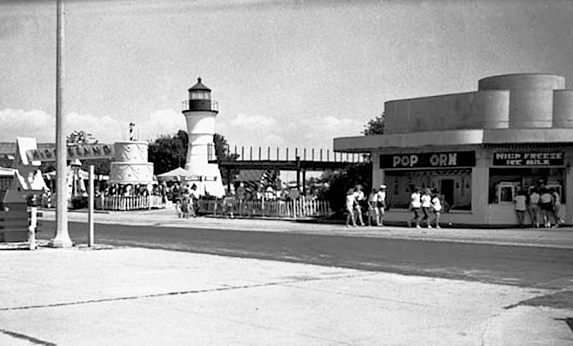
“Pontchartrain Beach was just one gaudy display after another,” recalled Bob Walker, a New Orleans radio personality, “and the lighthouse just fit into the scenery. I suppose its big attraction was that it was not only right in front of Kiddieland and to the right of the Bali Hai Polynesian restaurant and bar, but directly across the midway from the legendary Beach Stage that hosted numerous shows through the years, from Elvis, the Big Bopper, circus acts, the Cartwrights live from Bonanza, and even live rock concerts from 1957 to 1964.” Pontchartrain Beach was considered the south’s largest thrill park during the 1970s, but other parks soon surpassed it, forcing it to close in 1983.
The land was dormant until 1991 when the University of New Orleans (UNO) acquired the property from the Orleans Levee District. The area is now part of the UNO Research and Technology Park. The lighthouse has lost some of its height to settling, but appears to be in good condition.
Keepers:
References