Sombrero Key, FL 
Select a photograph to view a photo gallery
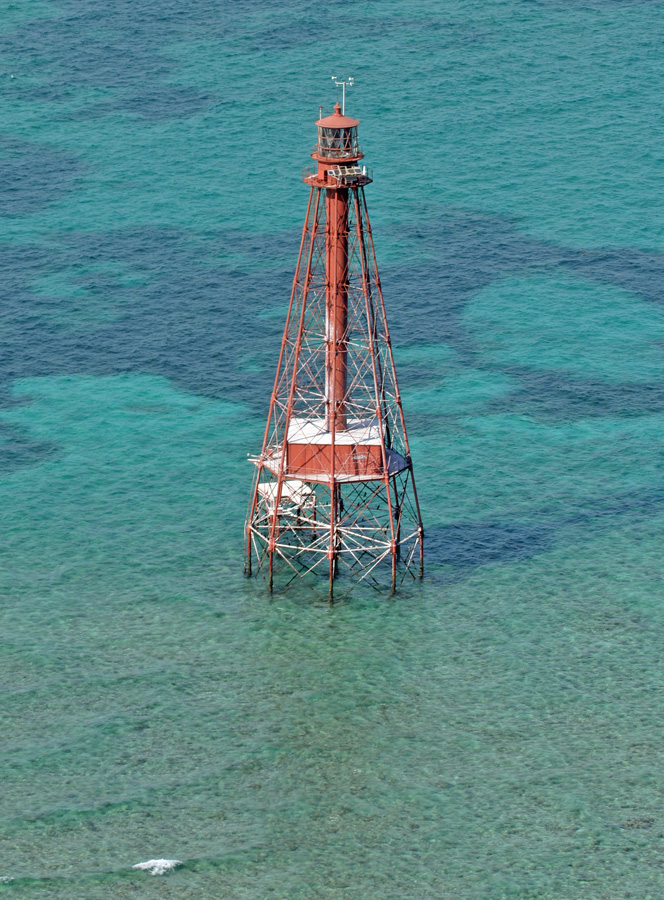
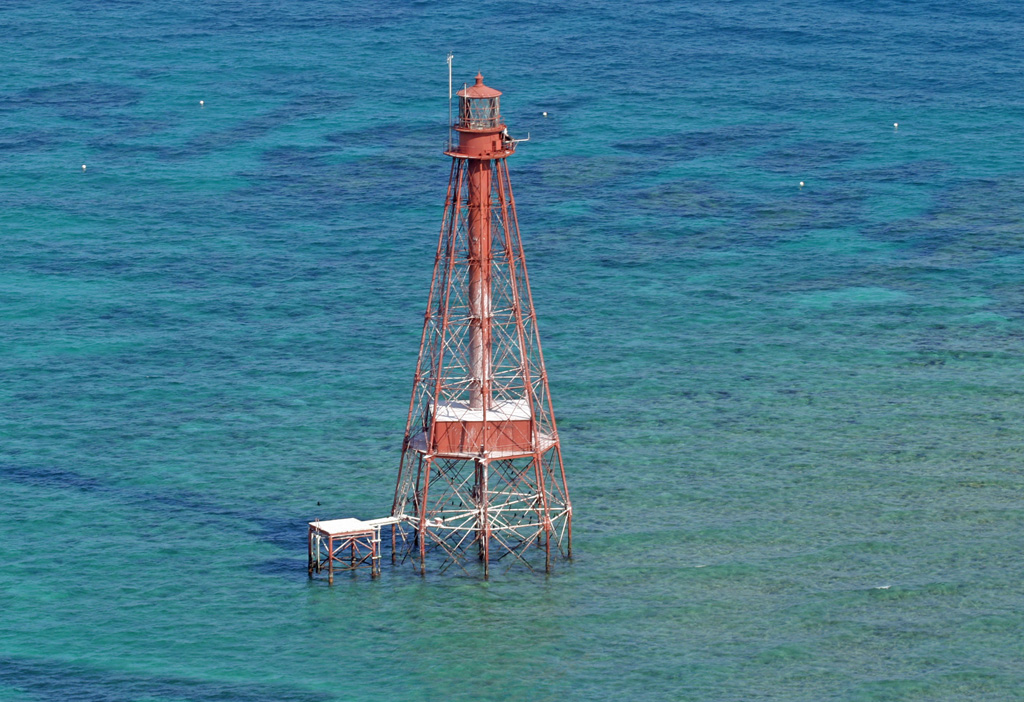
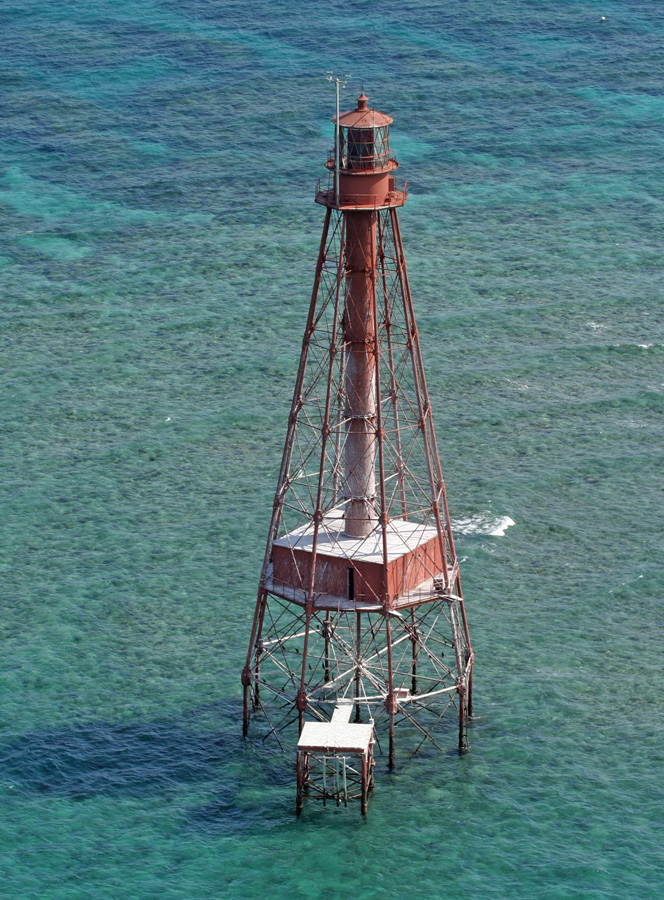
Photo Gallery
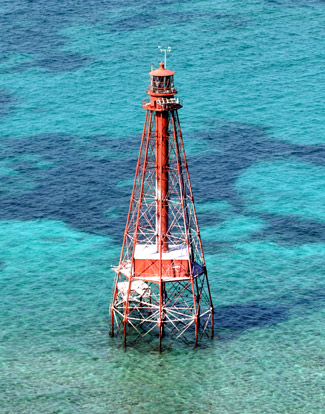
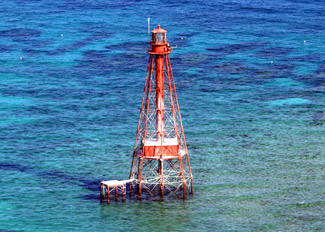
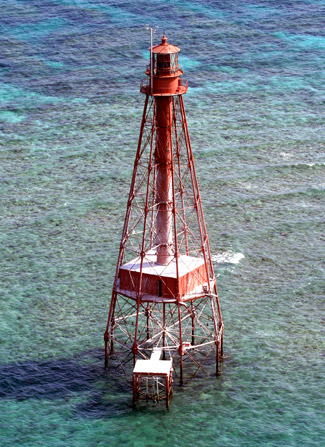
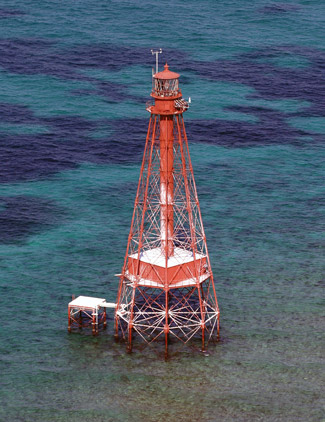
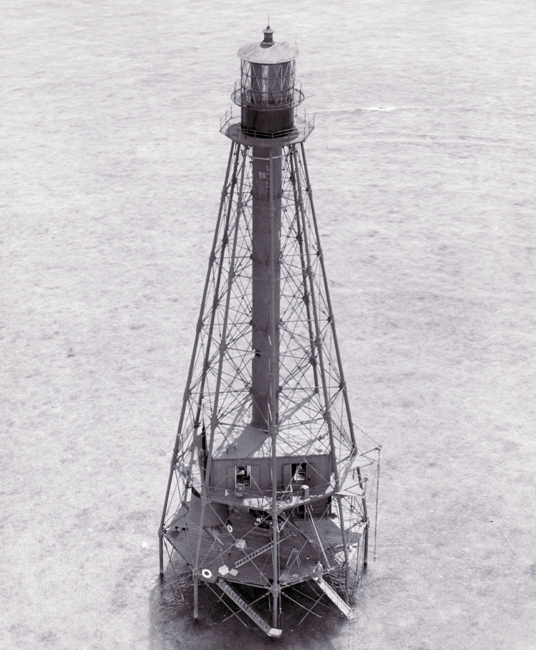
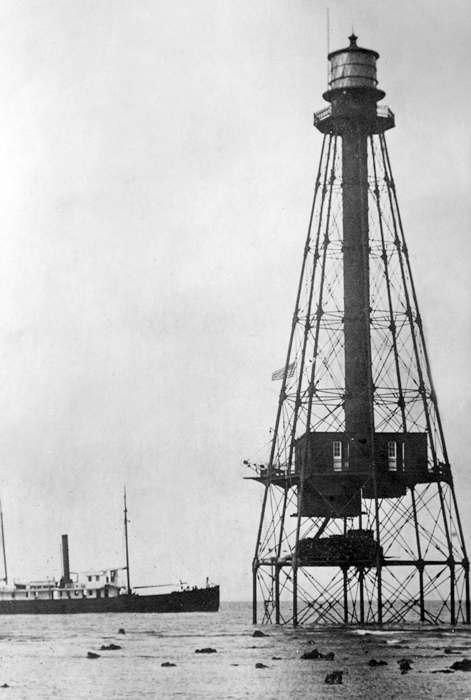
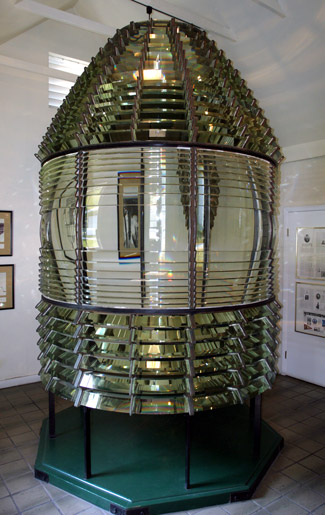
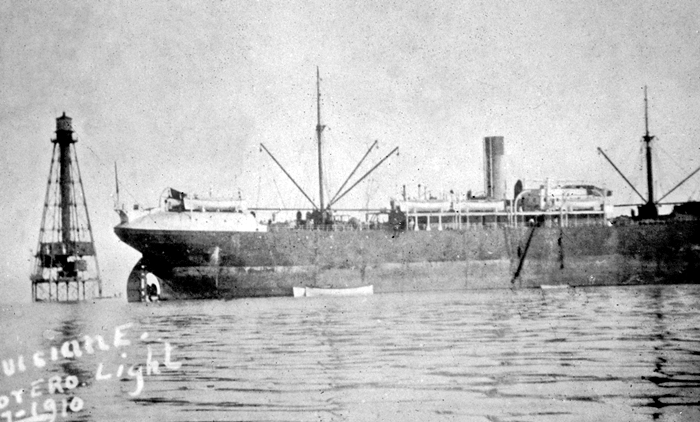
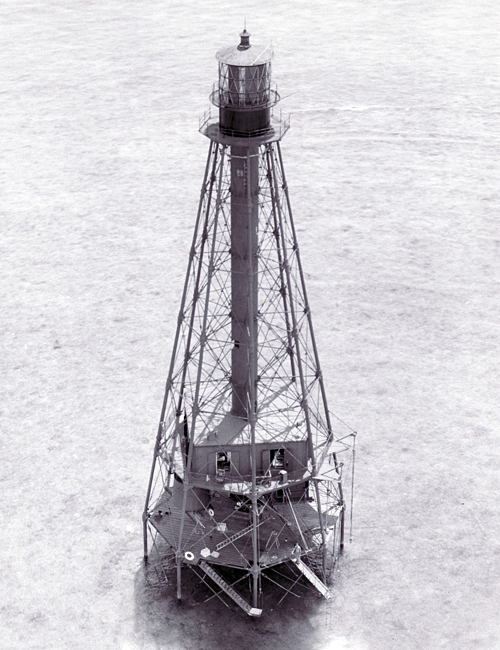
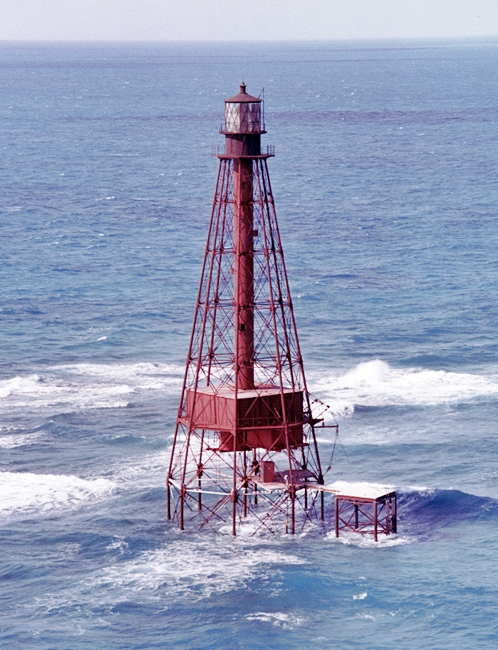
Photo Gallery
Photo Gallery
Born on December 31, 1815 in Cadiz, Spain, where his father was working as a U.S. naval agent, Meade was enrolled at West Point in 1831 at a youthful age. Four years later, he graduated nineteenth in his class. Meade served a brief period in the Army, before resigning and working as a survey engineer, but wanting a steadier income for his new wife and family, Meade reenlisted in 1842 and was assigned to the Army Corps of Topographical Engineers.
|
Surprisingly, Meade actually proposed a masonry tower for Sombrero Reef, believing that it would be able to withstand the force of the sea. However, after considering the enormous expense required to construct a submarine masonry foundation for such a tower, Meade stuck with a skeletal-style design. During his career, Meade did have an opportunity to construct several masonry towers, including the tall, sleek lighthouses of Barnegat, Absecon, and Cape May, New Jersey, along with Florida’s Jupiter Inlet Lighthouse.
The site selected for the lighthouse had been named Cayo Sombrero by the Spanish, but was also known as Dry Bank since part of the reef frequently protruded above the water. A red and white barrel, mounted atop a thirty-six-foot iron pole, had been placed on the treacherous reef as a day beacon in 1852, the same year Congress appropriated $35,000 to start work on the lighthouse. Two years later, Meade submitted plans and a budget for Sombrero Key Lighthouse. The tower’s foundation would consist of eight iron piles placed at the corners of an octagon and driven through massive cast-iron disks to a depth of ten feet, with a ninth pile at the center, just as at Carysfort Reef. Part of the concern in building an iron reef tower was how the piles near the water line would hold up to the alternating exposure to water and air. After calculating the necessary diameter of the foundation piles required to support the tower, Meade figured an extra inch should be added for every one hundred years the tower would stand. For further protection against corrosion, all iron that would normally be exposed to salt water was galvanized. Meade’s estimated cost for the lighthouse was $107,641.46.
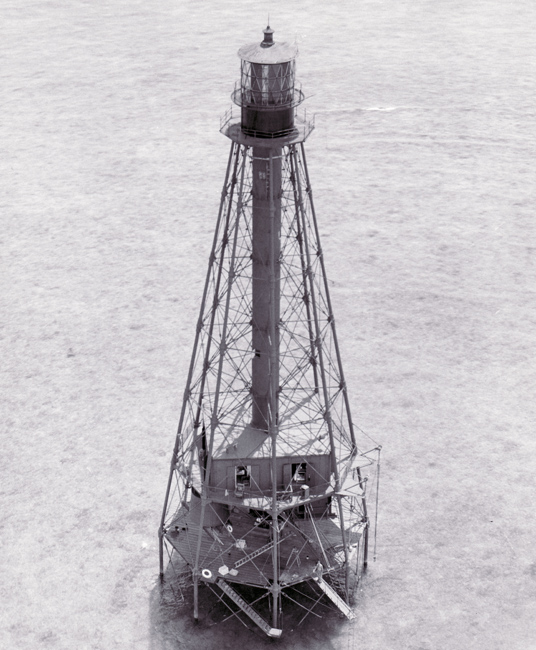
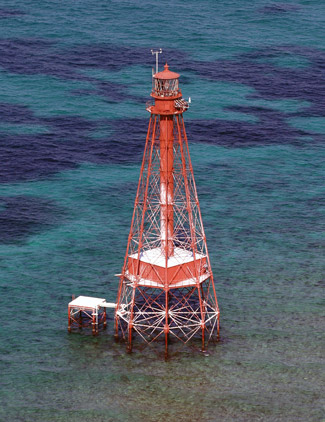
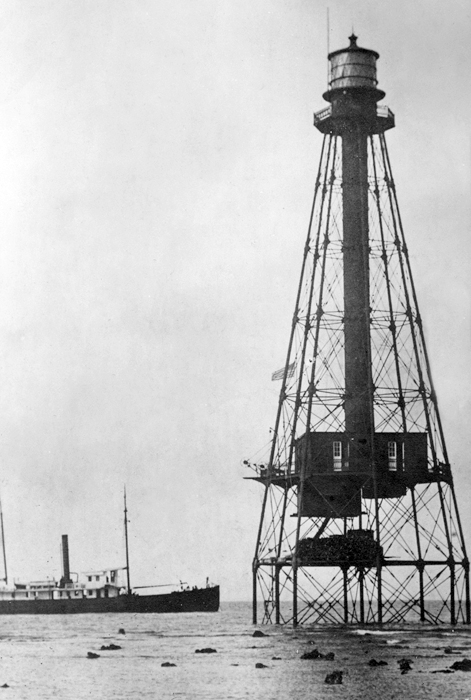
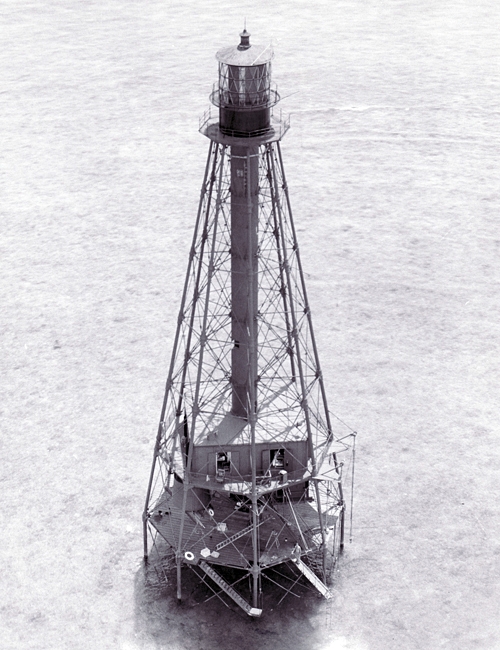
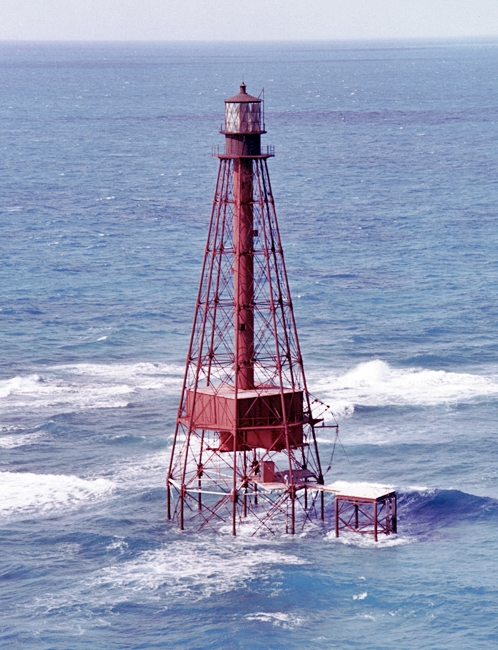
The iron parts for the lighthouse were manufactured by I.P. Morris and Company in Philadelphia and then shipped to Duck Key, which would serve as the headquarters for the project. Preparation work began at the site in 1856, after Congress had provided $65,000 the previous year to continue the project, but a hurricane swept through the area on August 27 and 28, ruining the temporary platform. Work began anew the following year. Six sections of pilings, supported by cross braces, ran from the foundation pilings to the lantern room. A one-story, thirty-foot-square keepers’ dwelling, built of quarter-inch boiler iron and consisting of four rooms, was built on a platform at the bottom of the second section of pilings, forty feet above the water. The keepers could access the lantern room via an enclosed central circular stairway, or descend to the water using a ladder. With a focal plane of 142 feet, Sombrero Key Lighthouse is the tallest of Florida’s six reef lights.
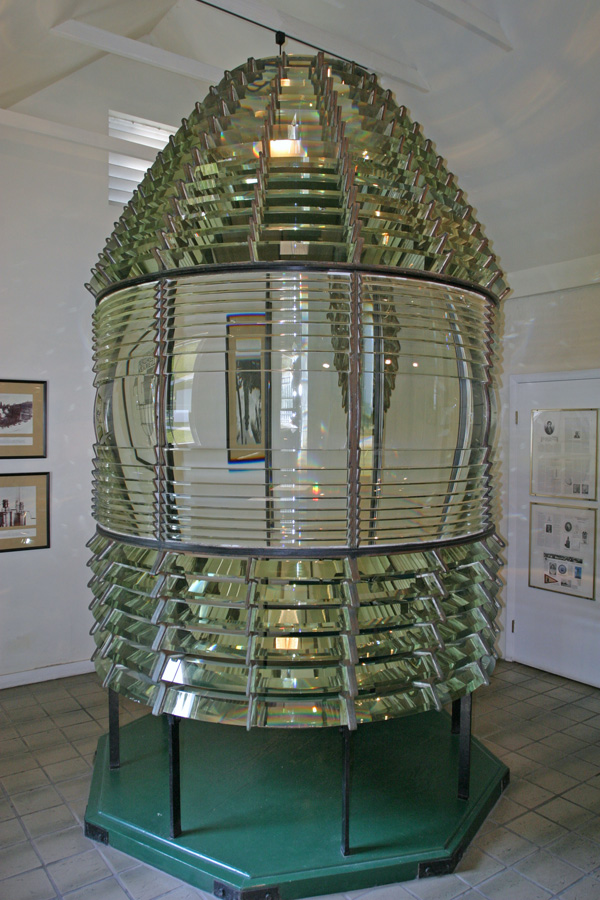
A fixed, first-order lens was acquired from Henry-Lepaute of Paris for $20,000, bringing the total cost of the lighthouse to just over $153,000. Joseph Bethel was transferred from Garden Key Light in the Dry Tortugas to become the first head keeper responsible for the light at Sombrero Key. His wife, Nicholosa, was the daughter of Michael and Barbara Mabrity, both keepers at Key West. The Bethel’s son William and his wife would also later serve at Key West. Joseph Bethel lit Sombrero Key light for the first time on March 17, 1858, a routine he would repeat often during his year at the lighthouse. Keeper Bethel had his family with him at the lighthouse, and in 1859, after the lighthouse ran out of water, Bethel was ordered to send his family ashore. Rather than live apart, Bethel resigned, but tragically he wouldn’t spend too much more time with his family, as he and his son perished when the schooner Sarah Bartlett wrecked off Louisiana in 1859.
|
We saw nothing more of him or the boat until August 6th at 10:00 A.M. We discovered the boat was coming from Hogg Key. It was blowing fresh and began to be getting squally. At 10:30 we saw the boat when it was struck by a squall and instantly capsized. After a few minutes, the squall passed over. We saw the man floating on the collapsed boom and the sail of the boat. The boat was capsized, still floating a few yards away from him. He was very visible, for at the time of the accident he was not over one and a half miles from the lighthouse. The tide set in toward us, till we could distinctly see his features and could he have assisted the spar that bore him up by swimming in the least he would have most assuredly reached the house. The tide turned against him and swept him in a west-southwest direction about four miles from us. This was about 3:30 P.M. at which time we lost sight of him altogether.Not having a second vessel with which to attempt a rescue, the keepers on the tower tried in vain to hail vessels in the area. Finally, on the following day the steamer Clyde answered the tower’s distress signal. By that time though, all the steamer could do was carry notice of the tragedy to the lighthouse official in Key West.
Keeper Rudolph Rieke and First Assistant Michael Eichhoff were alone on the lighthouse on October 18, 1893, when Eichhoff gave a groan and collapsed while cooking on the lower platform. Rieke found his assistant in a stupor and promptly hoisted a distress signal. Later that day, the Comal passed the station so close that Rieke could read its name and see one of its officer examining the lighthouses with marine glasses. Despite the inverted flag flying at half-mast from the lighthouse, the Comal didn’t stop nor make any report of the matter. Eichhoff expired the following day, and two days later, Rieke was forced to sew the corpse up in a hammock, read a burial service, and commit the body to the sea. Keeper Rieke was alone on the light for nine days before the second assistant returned.
Thanks to the efforts of head keepers Miguel Fabal and William H. Pierce and their assistants, Sombrero Key Lighthouse was able to fly the lighthouse efficiency flag from 1917 through 1922, signifying that it was the model station in the district.
During a conference of lighthouse officers in 1926, Secretary of Commerce Herbert Hoover made the following appeal to the press after hearing that most lighthouse keepers were without radios: “I don’t know of any of other class of shut-ins who are more entitled to such aid. The Government does not pay them any too well, and the instruments which they can hardly afford are in many cases their only means of keeping in touch with the world.”
|
I find a great deal of pleasure and educational features in the benefits derived from the donated radio set at our station. There is also possible the reception of divine services which are enjoyed by the station personnel, the services of the Men’s Bible Class at Miami, Fla, every Sunday morning being eagerly looked forward to, as it always comes in fine. When radio weather is favorable, concerts, political speeches, operas, and other enjoyable programs are very much appreciated by all of us. When bad weather or storms are in the vicinity, our set keeps us posted as to conditions, progress of the storm, etc., and enables us to take all necessary precautions, give messages to any vessels in the immediate locality, and follow the progress of the hurricane after it passes. By the medium of the radio we are kept in touch with the news of the country, and this is the only means of procuring same, as newspapers are not accessible. I know I speak for the three keepers of Sombrero Key Lighthouse when I say we are very thankful for this very useful and entertaining gift.
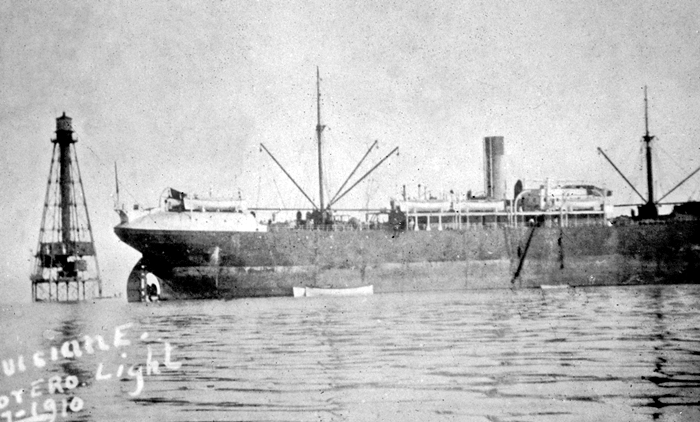
Being trapped on the lighthouse during a hurricane must have been a terrifying ordeal, even with a radio to receive weather updates. In October 1926, the tenth hurricane of the season developed near Panama and passed over Cuba before running east along the Florida Keys. At Sombrero Key, the keepers estimated the wind velocity at 125 miles per hour, and the hurricane washed away part of the landing platform and damaged the ladders beyond repair. A hurricane in October 1910 followed a similar track and drove the French Steamer Louisiane onto the reef near Sombrero Key Lighthouse. All 600 passengers were rescued by the U.S. revenue cutter Forward, and dynamite was then used to break up the reef and free the stranded vessel. Hurricane Donna, the strongest of the 1960 Atlantic hurricane season, passed close by Sombrero Key Lighthouse. At 9 p.m. on September 9, Herman Crow noted that the wind was blowing at 80 m.p.h. By 11 p.m., the velocity had increased to 100 m.p.h. Terry Luker took over the watch at midnight and noted at 2 a.m. that peak wind gusts were reaching 166 m.p.h. The hurricane swept everything off the bottom platform except for the hoisting engine, the catwalk, and a ladder. Amon the items lost were fuel tanks and a workshop.
Another fatal return trip to the lighthouse occurred in August 1959, when Seaman Willis Parker was making his way back to the lighthouse after having transported a special work crew back to Key West. Boatswain’s mate Furman Williamson, who was alone at the lighthouse, lowered the large block and hook to retrieve the launch from the water. When it was within reach, Parker grabbed the block, but before he could attach the hook to the boat’s line, a wave lifted the vessel up and away from the tower. Instinctively, Parker grabbed onto the block, which then swung back like a pendulum towards the tower ramming his head into a piling and causing him to fall into the water. Williamson quickly threw him a life ring, to which Parker was able to cling for a couple of moments before slipping below the waves. Again, the keeper aboard the tower could only watch in horror. The next day, Parker’s body was found by a member of the search party – his brother.
On October 23, 1962, personnel were pulled from the lighthouse after the light was automated. The Fresnel lens was removed from the lantern room in 1982, and is now on display at Key West Lighthouse.
Sombrero Reef is a popular dive and snorkel site, and boats are regularly sprinkled about the lighthouse. For over 150 years, as the sun slipped into the water each evening, Sombrero Light would come to life, emitting its guiding white light. Two red sectors, added to the lantern in 1893, changed a portion of the white light to red, informing vessels of the location of the dangerous reef.
In 2105, Sombrero Key Lighthouse was deactivated, and a thirty-foot-tall tower, erected nearby and topped by an automated light, took over the function of warning mariners of the reef.
On February 1, 2019, Sombrero Key Lighthouse was declared excess to the needs of the United States Coast Guard and made available to eligible organizations under the provisions of the National Historic Lighthouse Preservation Act of 2000. Qualified entities were given sixty days to submit a letter of interest. After no organization was selected to assume responsibility for Sand Key Lighthouse, the General Services Administration initiated an online auction for the structure in February 2022. The bidding started at $15,000, and bidders were required to supply a $5,000 deposit. Nine bidders participated in the auction, which ended on May 17, 2022 with a high bid of $575,000.
Keepers:
References