Point Arguello, CA 
Select a photograph to view a photo gallery
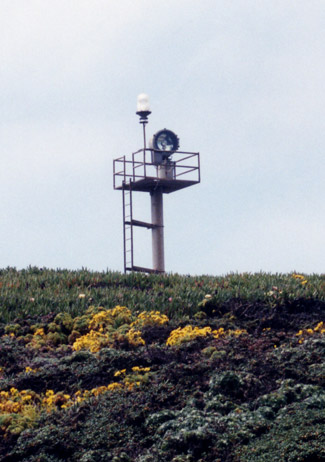
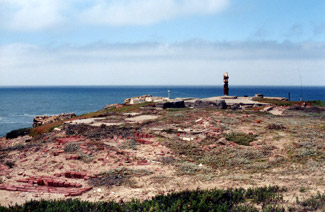
Photo Gallery
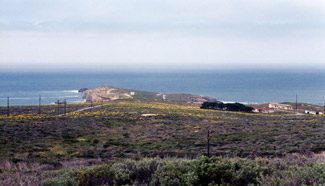
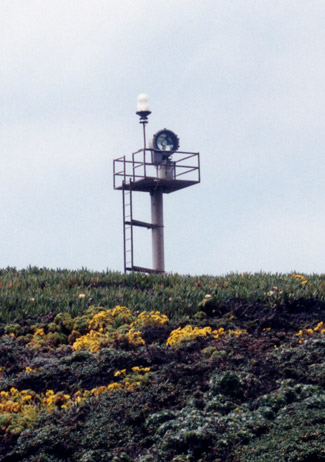
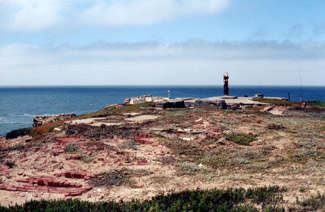
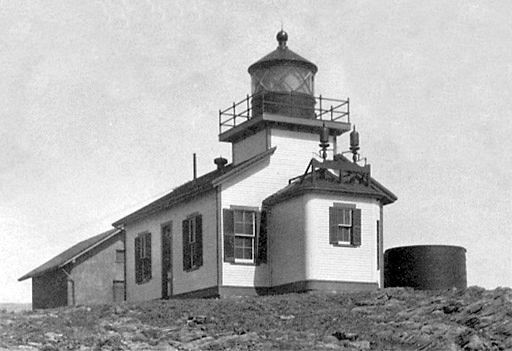
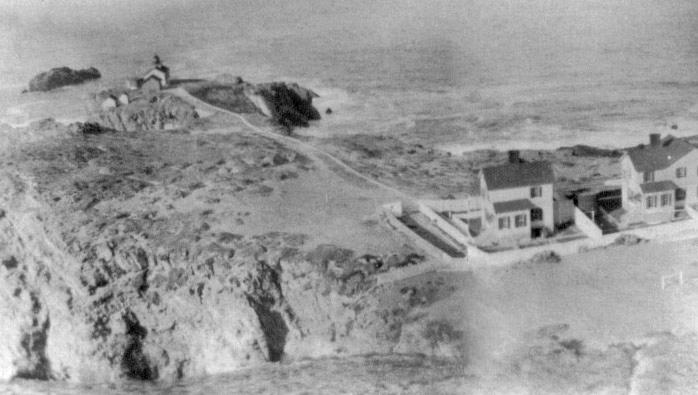
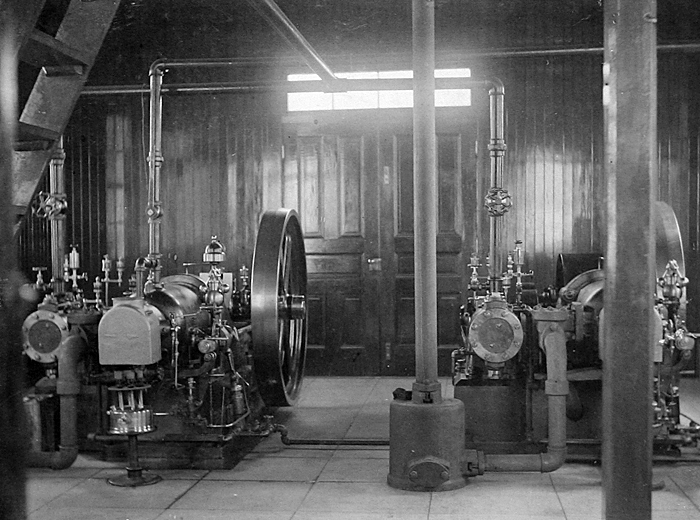
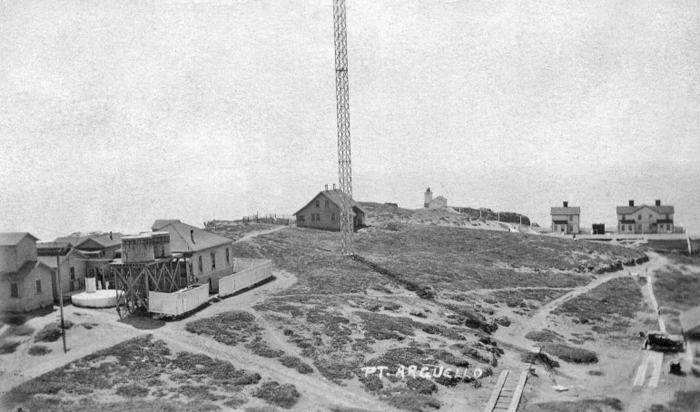
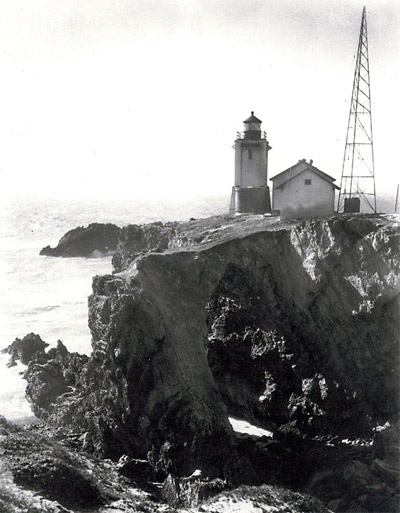
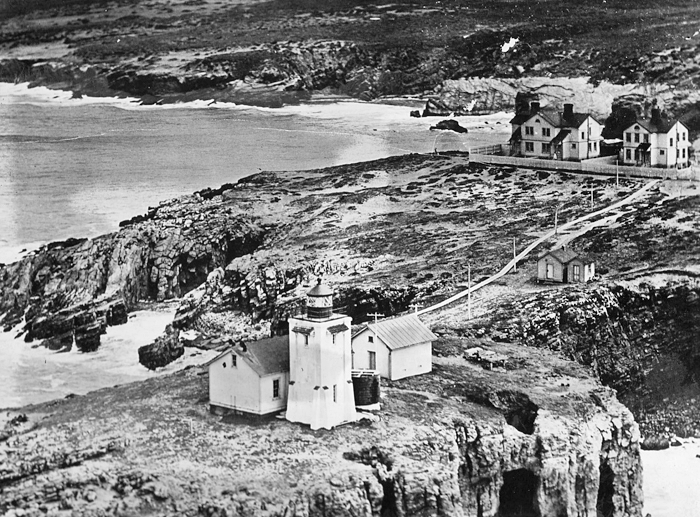
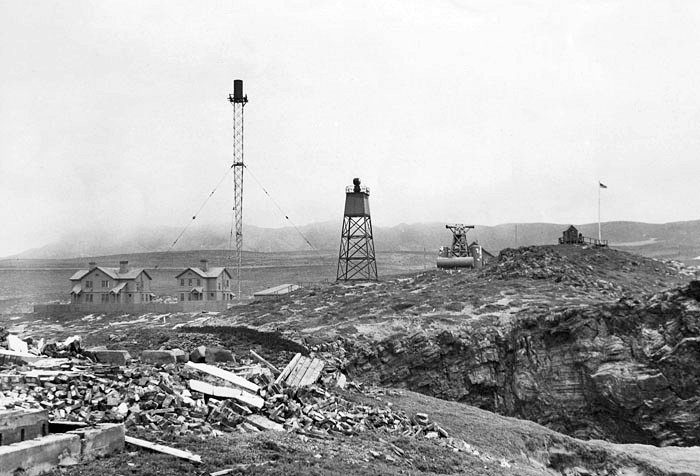
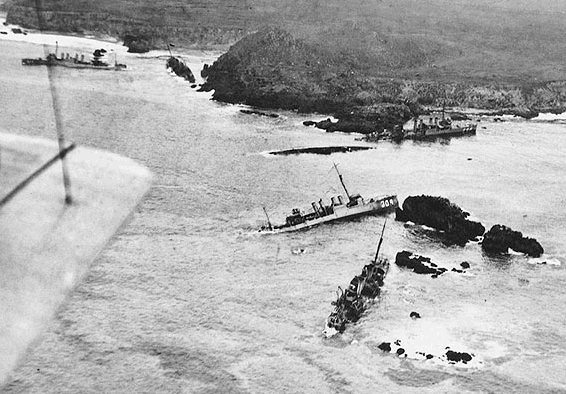
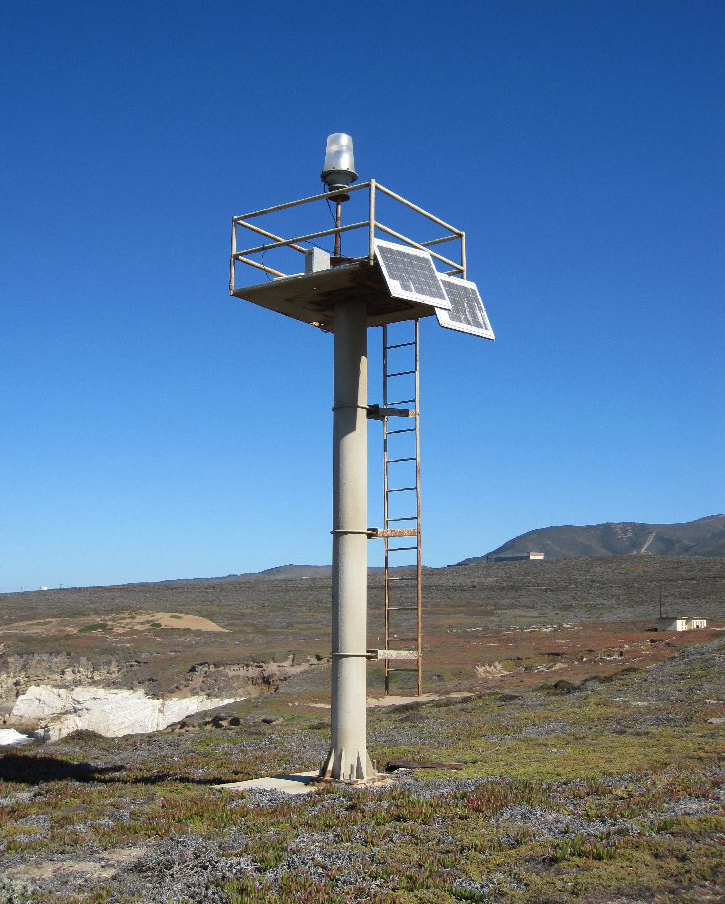
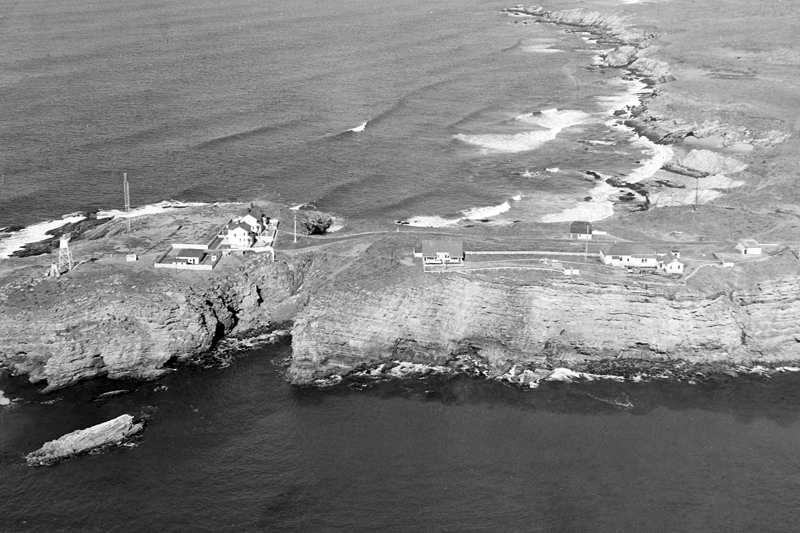
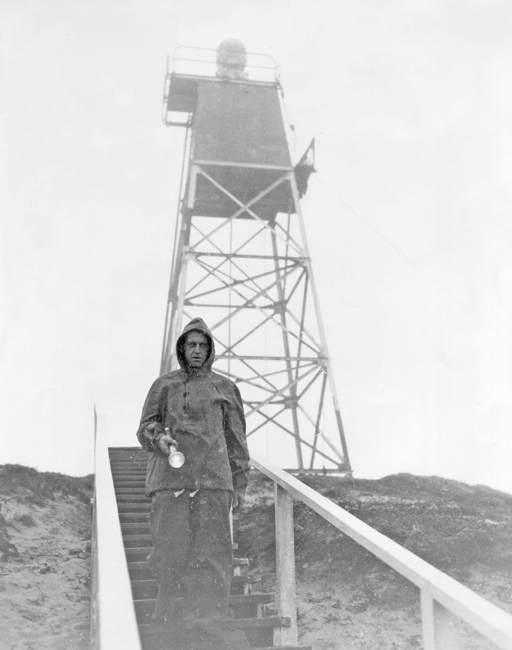
Photo Gallery
Photo Gallery
|
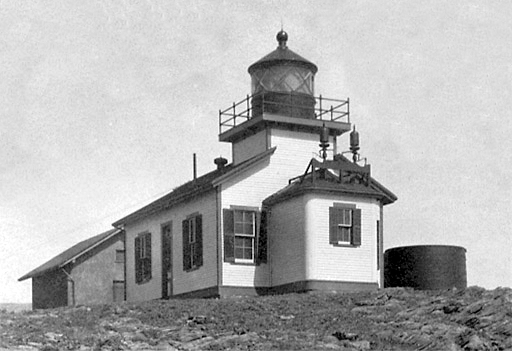
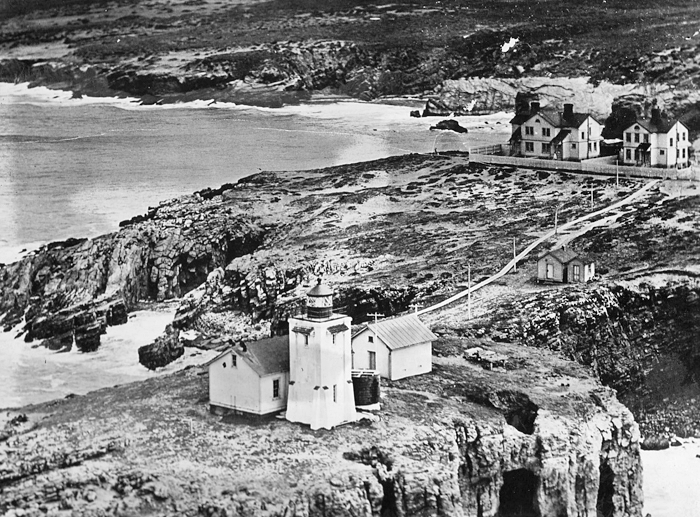
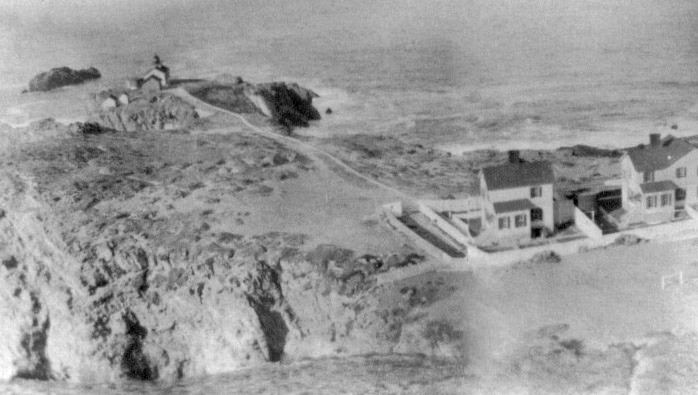
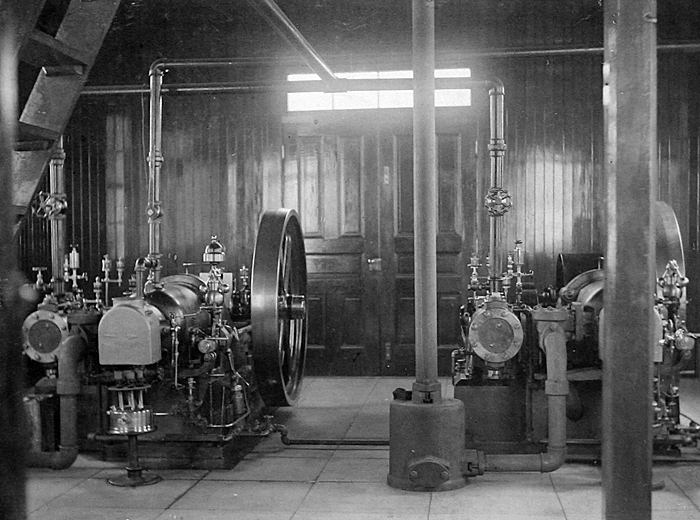
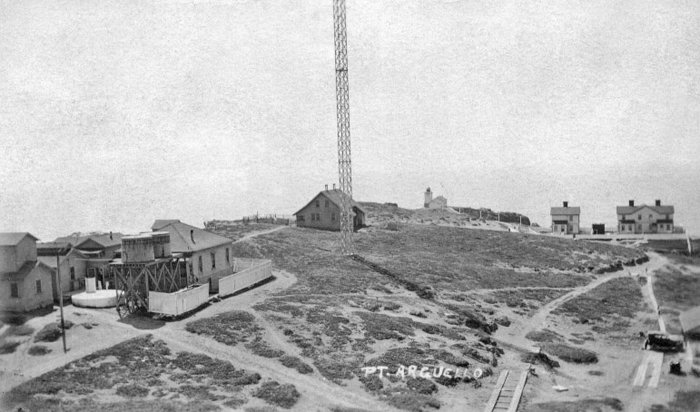
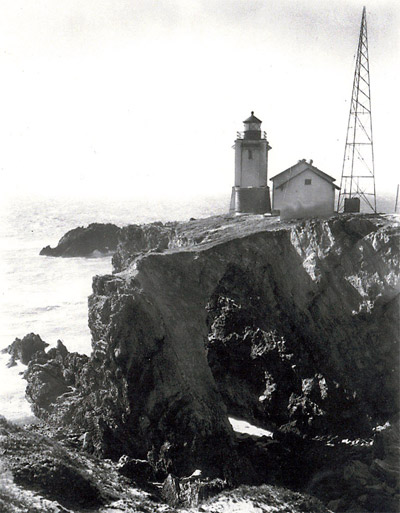
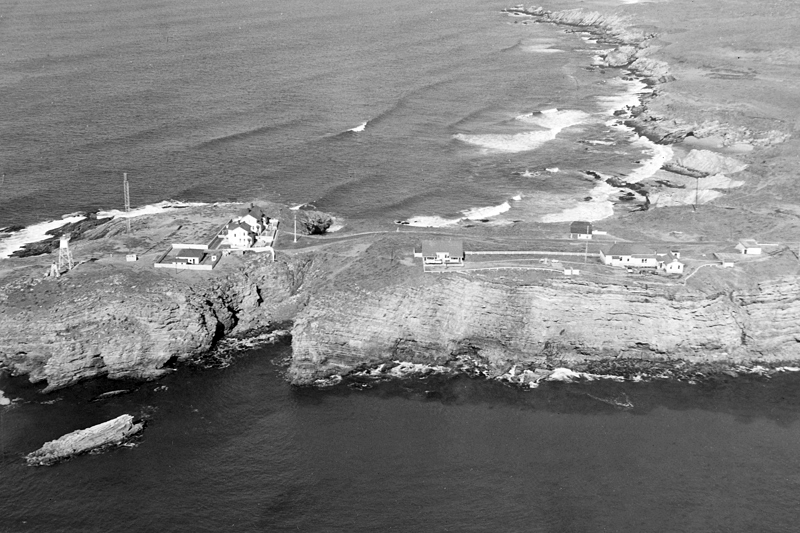
Work on the point began in July 1900, and Keeper William A. Beeman first lit the lamp in Point Arguello Lighthouse on February 22, 1901. The lighthouse, a one-story rectangular fog building with a pitched roof and a tower extending from the center of its western end, resembled a church, calling forth worshipers from the sea. Atop the short tower was a circular lantern room, which housed a fourth-order, F. Barbier Fresnel lens formerly used at Point Hueneme Lighthouse. The lighthouse stood near the outer end of a rocky finger of land that extended from the coast, and six hundred feet farther up the finger a single family dwelling and a two-story duplex were constructed to house the keepers. Two first class sirens, operated by two thirteen-horsepower oil engines and compressors, were activated three months after the initial lighting to serve mariners when fog shrouded the coast.
Additional buildings at the station included a blacksmith shop, a barn, and an oil house that was capable of storing a year’s supply of oil to operate both the light and the fog signal. Water for the station was taken from a spring on adjoining land and piped 7,000 feet to two masonry cisterns, which then distributed the water by gravity to the various buildings.
Twelve-inch whistles replaced the sirens on November 17, 1902, and as Point Arguello was one of the foggiest places on the California coast, they saw a lot of use. During the twelve-month period ending June 30, 1907, the fog signal was in operation 1,267 hours or nearly fifty-three days.
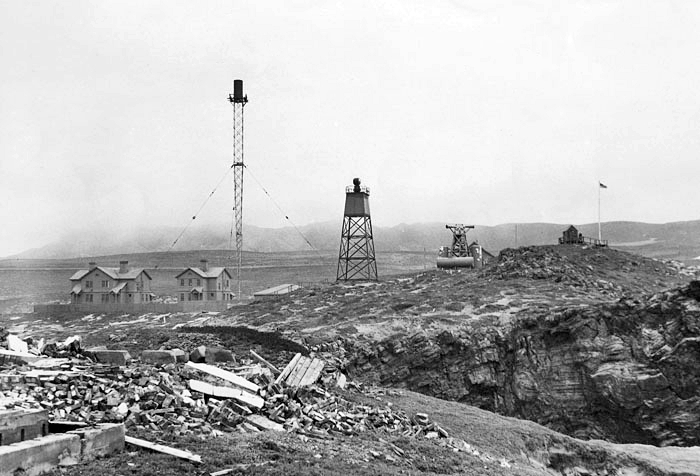
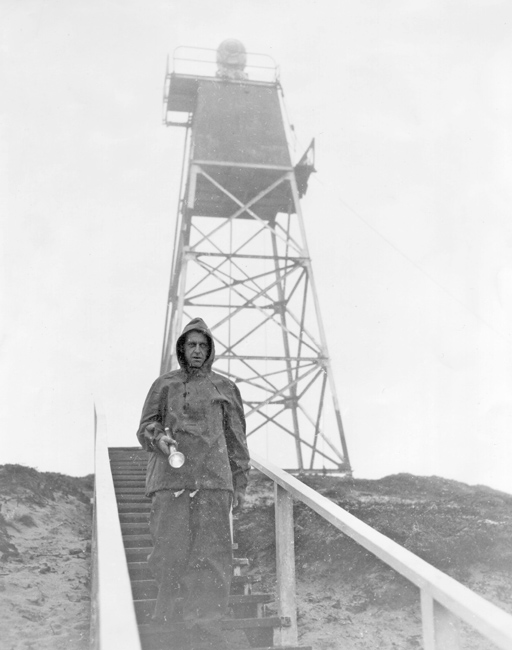
A decade after the lighthouse was activated, a detached tower for the light was built adjacent to the fog signal building in 1911.
|
A lifeboat and life raft were employed to shuttle passengers ashore, but landing in the pounding surf proved dangerous. Helpers on shore formed human chains and waded into the water to pull people out of the surf and undertow. Later, a breeches buoy was established between the ship and a nearby railroad trestle, and passengers were pulled along the line to the beach. By 10:30 that night, all the surviving passengers were ashore, and work had begun on salvaging some of the ship’s stores. Wet, cold, hungry, and exhausted from a day of rescue work, Keeper Henderson arrived back at the lighthouse at 11:30. Over 200 people were saved form the Santa Rosa, but roughly twenty perished while trying to reach shore.
With the addition of a Radio Direction Finding (RDF) Station, a small community was starting to form at Point Arguello. The town was given the name of Arlight, a contraction of Arguello and lighthouse, and was even granted its own post office. Keeper Arvel Settles and his wife Helga served as the postal agents, and their dining room table was used as the mail sorter. Incoming mail was thrown from the passing trains in sacks, while the outgoing mail was snatched from a pole erected next to the tracks.
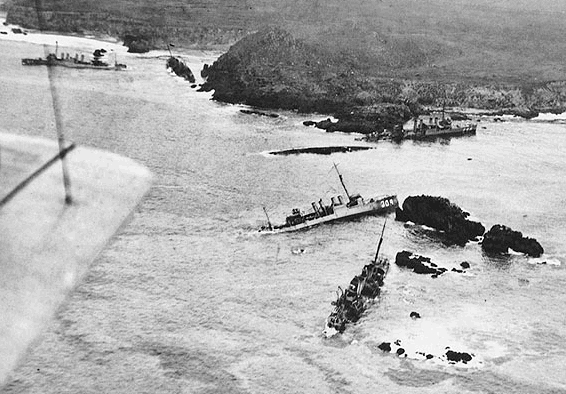
In spite of the presence of both a lighthouse and RDF station on Point Arguello, the U.S Navy’s worst navigational tragedy occurred at Honda Point just north of the lighthouse on September 8, 1923. A flotilla of destroyers based in San Diego had been on maneuvers in Puget Sound, and after a layover at San Francisco, fourteen vessels sailed toward home at 7:30 a.m. on the twenty-third. As it grew dark, the ships, which were steaming south at twenty knots, formed a single-line column behind the flagship USS Delphy. Due to dense fog, the captain and navigators aboard the Delphy were forced to rely on dead reckoning and the RDF to determine when to turn east into Santa Barbara Channel.
|
The USS Young was ripped open by a submerged rock near where the Delphy ran aground, and quickly flooded and rolled over. Twenty sailors aboard the Young perished, before they could escape. The Delphy was the only other destroyer to suffer casualties; three of her crew were lost.
Several sailors thought they had run aground on San Miguel Island, but the blast of a train’s whistle shortly after the incident gave notice that they were on the mainland. A frantic rescue effort continued through the night and into the next day. The keepers from Point Arguello Lighthouse (Gottfrid Olson, Arevel Settles, and Jesse Mygrants), along with men from Lompoc and a nearby railway maintenance house, joined in the effort, and the following afternoon, over 550 survivors boarded a special train sent from San Francisco, which carried them on to their intended destination of San Diego. The Point Arguello keepers were alerted to the incident by the distress calls of five sailors aboard a life raft who were hauled up the steep rugged cliffs at the station and given medical assistance.
A contingent of eighteen sailors was left behind to protect the wrecked destroyers from looters. News of the incident traveled fast, and the Southern Pacific Railway capitalized on the opportunity by running sightseeing excursion trains to the site. Salvage operations recovered valuable weapons and instruments from the ships, and then dynamite was used to submerge most of the remaining traces of the embarrassing wreckage. Reminders of the tragedy still exist, and an offshore rock on which the USS Woodbury was stranded is now known as Woodbury Rock or Destroyer Rock.
Fifty years after the disaster, a team of divers recovered an anchor from one of the destroyers and placed it on a cement pad near the site as a memorial. During a ceremony held to commemorate the seventy-fifth anniversary of the wrecks, a plaque listing the names of the twenty-three lost sailors was dedicated. Since then, the bluff on which the anchor rested has been deemed unstable, and the anchor has been removed and loaned to the Lompoc Valley Historical Society, who has it on display in Lompoc.
|
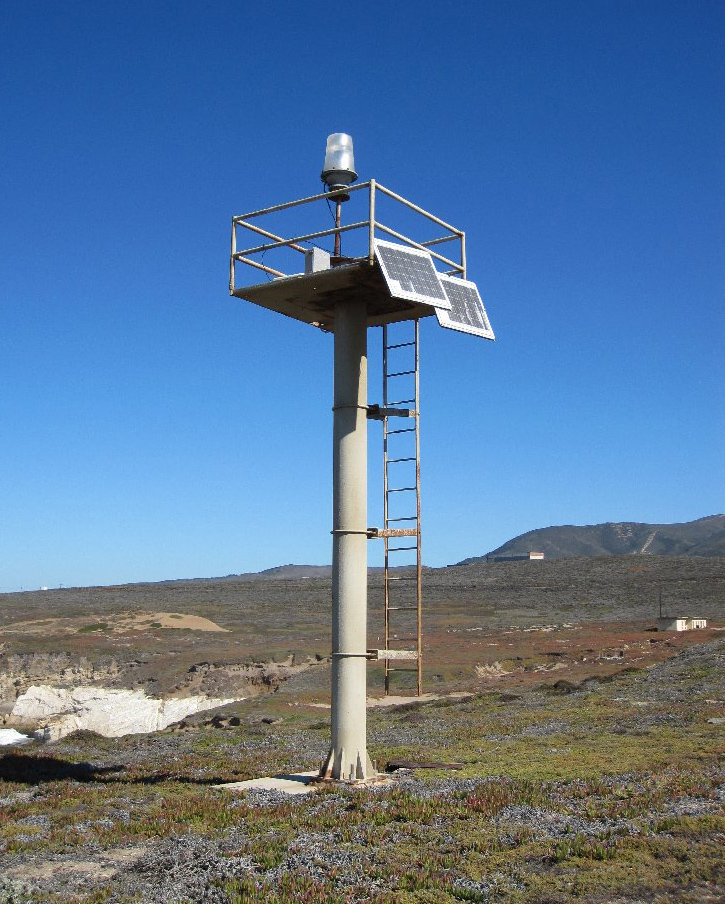
After a Loran Station was added to Point Arguello in 1945, there were up to sixteen personnel on site. In 1967, the original dwellings associated with the lighthouse were razed, and a new metal tower was installed. On December 31, 1979, the LORAN-A station was shut down. William Towne, officer-in-charge of Point Arguello Light Station for the previous four years said on the occasion, “It’s the end of an era. Now it’s time to move on to something new.” When the LORAN-A was discontinued, an old light beacon was also switched off and a new automatic light, which stood about three feet higher, was activated.
Today, Point Arguello is part of Vandenberg Air Force Base, and as such is typically off limits for civilians. However, you can catch a glimpse of the point from the Amtrak trains, which pass nearby. The station is now automated and all that remains at the site is a metal tower with a modern, solar-powered optic, the remains of an inoperative fog signal, and the Coast Guard housing, which is in very poor condition.
If you happen to live in Southern California, perhaps you have witnessed those curious spiraling contrails that occasionally appear in our western skies. Those interesting patterns are created by rockets launched from facilities located at the base of the hills just east of where the lighthouse stood on Point Arguello.
Keepers:
References