Gay Head, MA 



Select a photograph to view a photo gallery
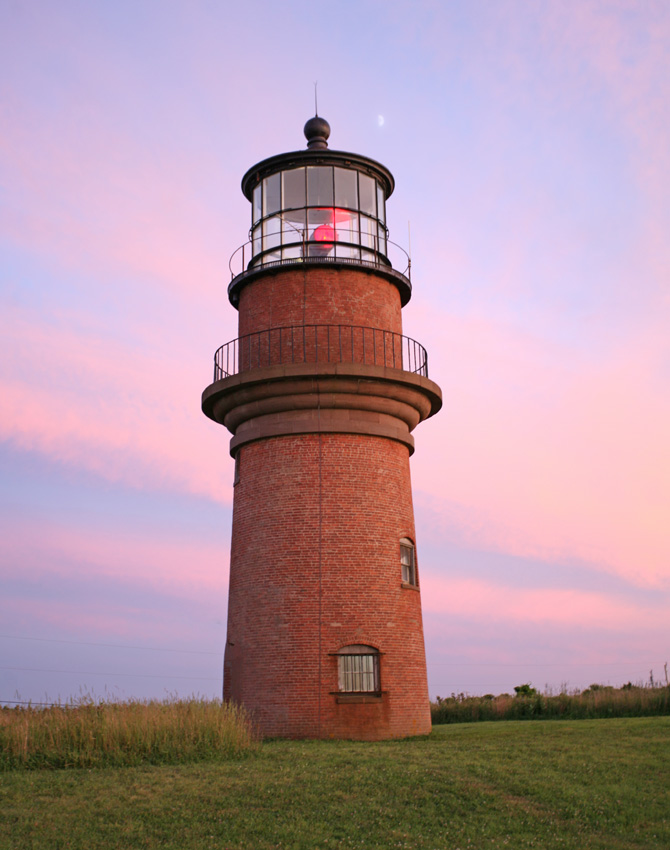
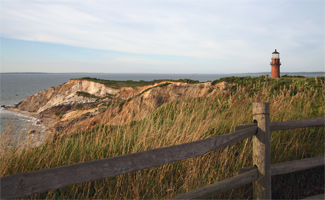
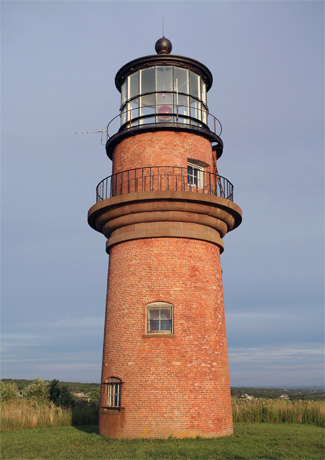
Photo Gallery
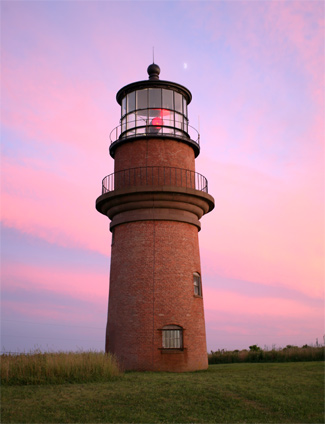
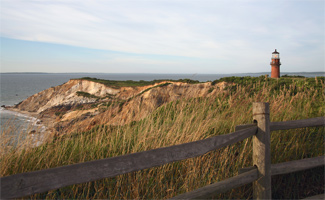
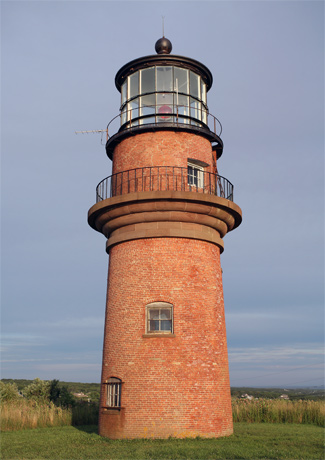
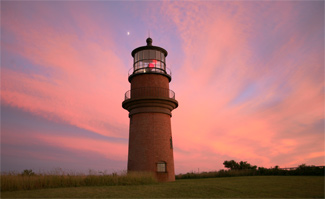
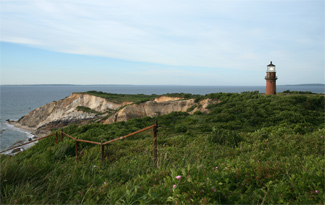
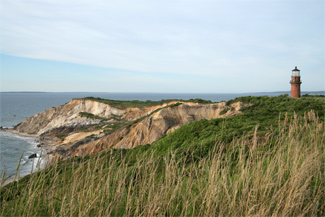
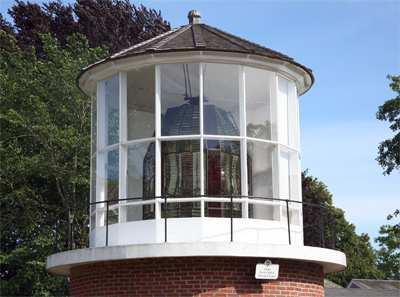
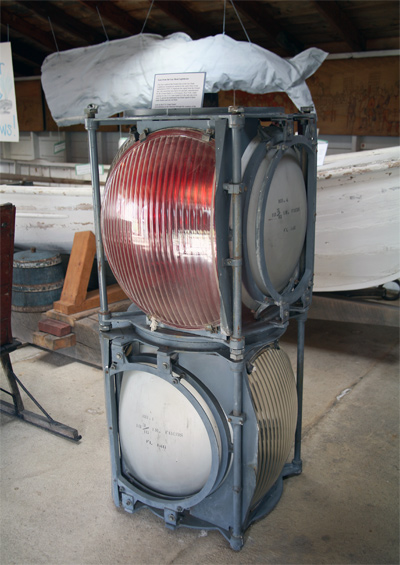
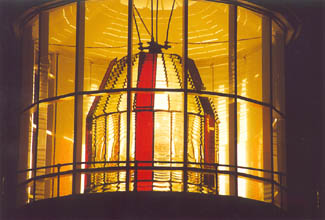
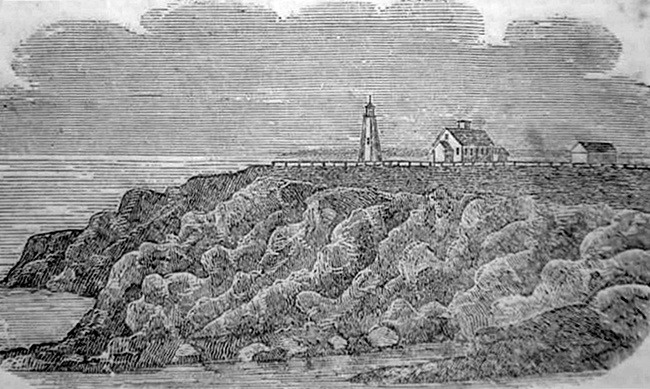
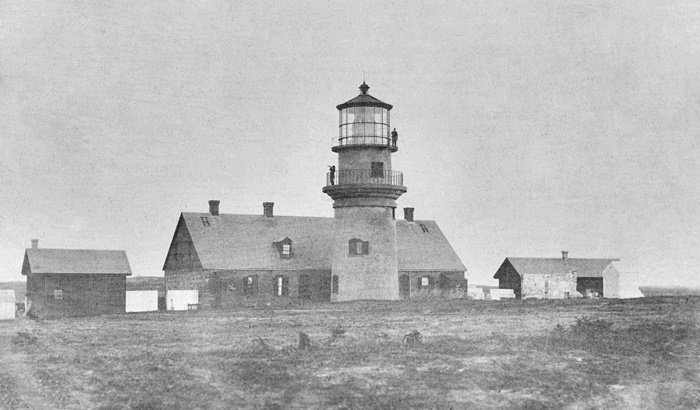
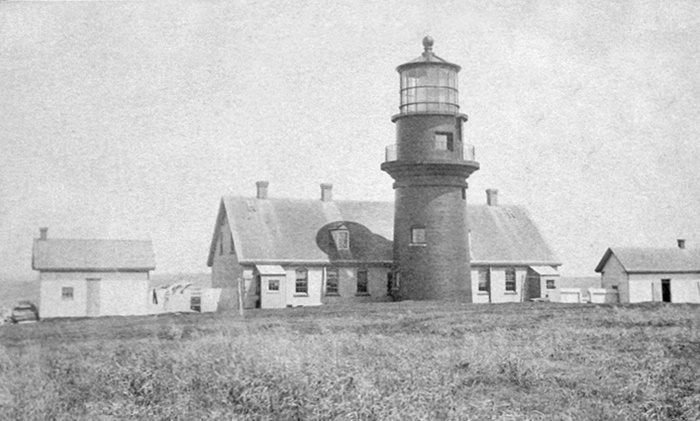
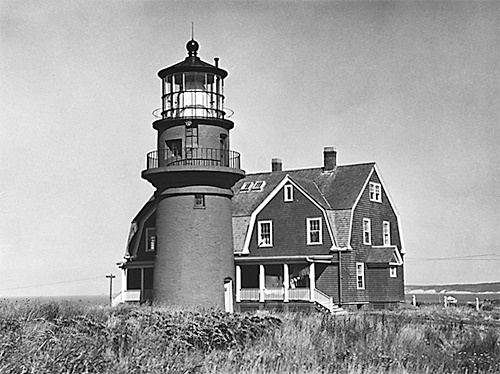
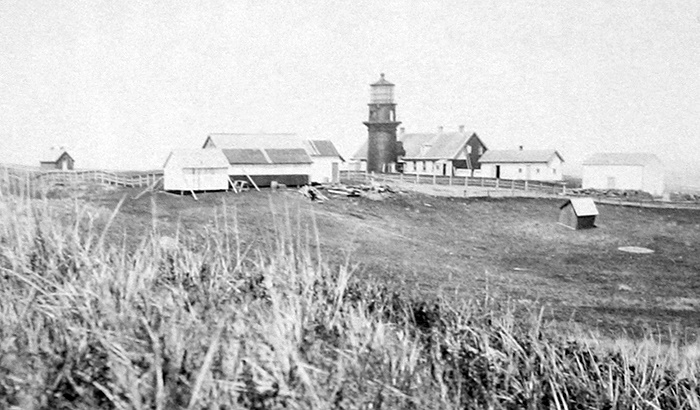
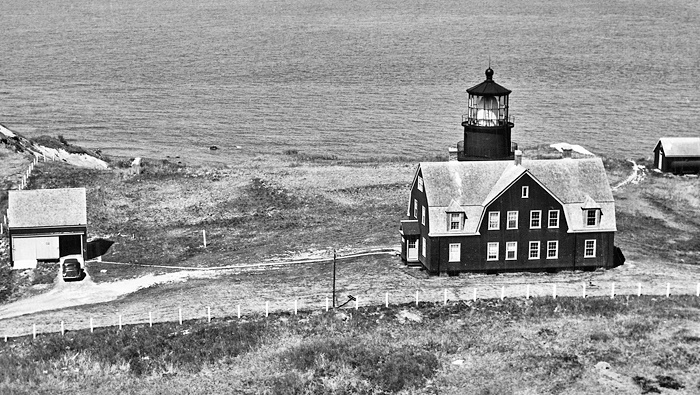
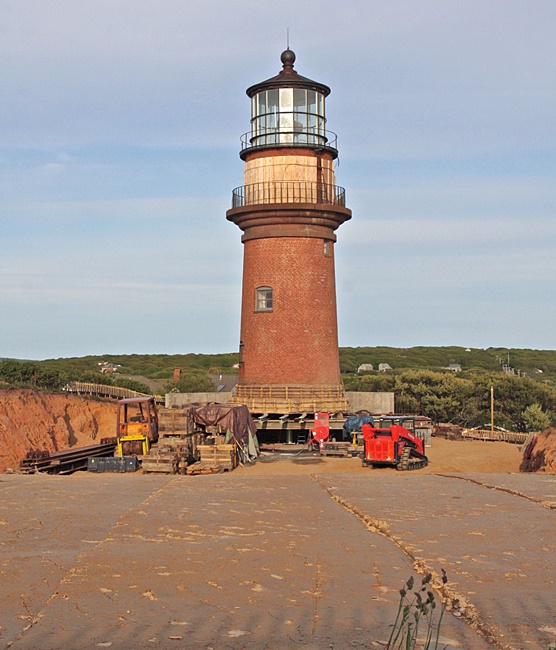
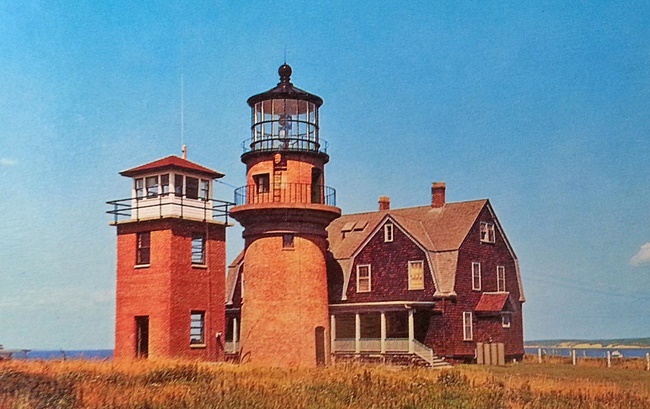
Photo Gallery
Photo Gallery
|
The passage between Gay Head and the Elizabeth Islands to the west is treacherous for maritime traffic due to the submerged obstruction called Devil’s Bridge, which extends seaward from Gay Head. In 1796, a Massachusetts State Senator asked for a lighthouse to protect the numerous vessels passing through Vineyard Sound, and in 1798 Congress approved $5,750 to build a lighthouse at Gay Head.
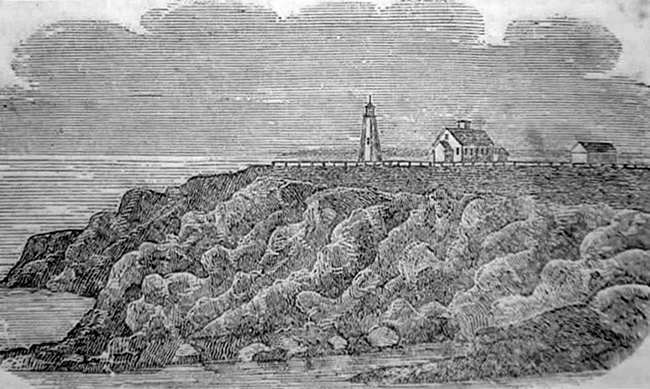
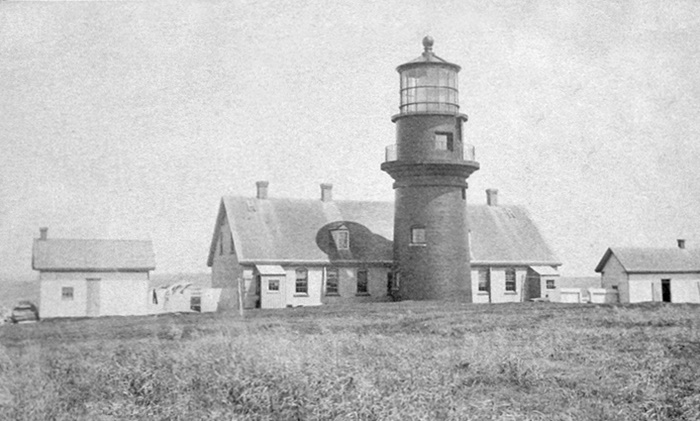
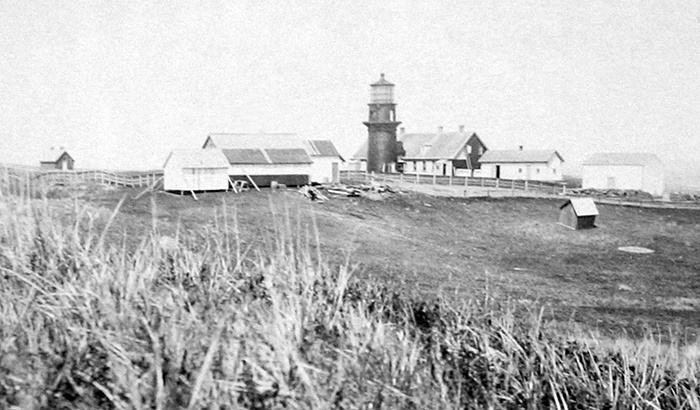
The original Gay Head Lighthouse, an octagonal wooden tower built on a stone base, was accompanied by a wooden keeper’s dwelling, a barn, and an oil storage building. Ebenezer Skiff, the first European to live in the town of Gay Head, made the inaugural lighting of the spider lamp inside the tower’s lantern room on November 18, 1799. After a few years at Gay Head, Keeper Skiff felt he merited a pay increase and penned the following letter to Albert Gallatin, Secretary of the Treasury.
Gayhead, October 25, 1805Sir: Clay and Oker of different colours from which this place derived its name ascend in a Sheet of wind pened by the high Clifts and catch on the light House Glass, which often requires cleaning on the outside – tedious service in cold weather, and additional to what is necessary in any other part of the Massachusetts.
The Spring of water in the edge of the Clift is not sufficient. I have carted almost the whole of the water used in my family during the last Summer and until this Month commenced, from nearly one mile distant.
These impediments were neither known nor under Consideration at the time of fixing my Salary.
I humbly pray you to think of me, and (if it shall be consistent with your wisdom) increase my Salary.
And in duty bound I am your’s to Command.
EBENEZER SKIFF
Keeper of Gayhead Light House
|
Early in the nineteenth century, the tower at Gay Head was lowered fourteen feet to reduce the probability of its light being obscured in fog. In 1838, a local blacksmith rebuilt the tower’s lantern and deck, and the tower was lowered another three feet. To be distinguishable from fixed lights in the area, the lighting apparatus at Gay Head was a revolving system of ten oil lamps each set in a fourteen-inch reflector.
I.W.P. Lewis described the lighthouse in 1842 as “decayed in several places” and declared that the tower and the keeper’s house, both forty-three years old, needed to be rebuilt. Keeper Ellis Skiff made the following statement as part of a report Lewis submitted to authorities:
The chambers of my house are not lathed, plastered, or ceiled; and the house is not only cold and uncomfortable, but, from its elevated situation, likely to be blown down, as it shakes fearfully with every gale of wind. There are no shutters to the windows, and the sand blows in at all the crevices. There is no well of water on the premises. The barn has become so rotten in the framing, that I hardly think it can stand through another winter. There is not cellar to my house, and the oil is therefore kept in the wooden tower. In winter, I am often obliged to cut the oil out of the butts solid, bring it to the house, and warm it, before it can be used in the lamps. The distance from the house to the tower is sixty-four feet. During the heavy northwest snow storms that are common here in winter, it is difficult for me to get from one building to the other. My oil has been good. I am allowed a boat. There is no white population within four miles of this point, the neighbors being all colored or Indians, descendants of the Gay Head tribe.
In 1844, the tower was moved back from the edge of the eroding bluff about seventy-five feet, but the much-needed new lighthouse and dwelling for Gay Head were not provided until after the formation of the Lighthouse Board in 1852.
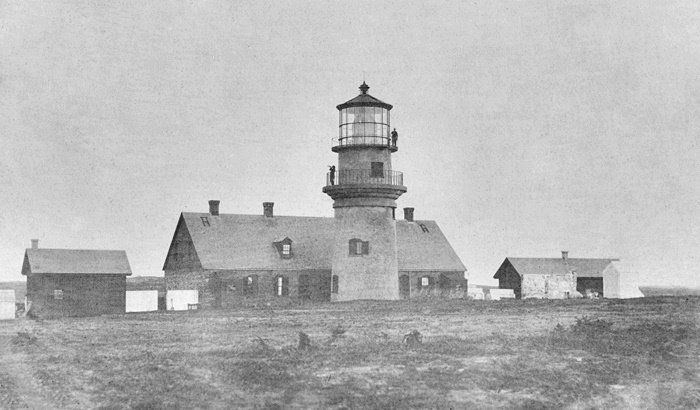
Just as the country started to deploy Fresnel lenses, $30,000 for a new lighthouse featuring a first-order lens was budgeted for Gay Head in 1854. Caleb King was contracted to build the new fifty-one-foot brick tower and brick dwelling, while the lens, winner of a gold medal at the Exposition Universelle of 1855 and containing 1,008 prisms, was purchased from the Parisian firm of Henry-Lepaute. Powered by a clockwork mechanism that had to be wound every four hours, the lens’ twenty-four flash panels revolved to produce a flash every ten seconds. The new lens was placed in operation on December 1, 1856, and panels of ruby-colored glass were installed in May 1874 to make every fourth flash red.
|
At night we mounted the tower and visited the look-out gallery that belts the lighthouse at some distance below the lantern. Here we were surprised by a unique and splendid spectacle. The whole dome of heaven, from the centre to the horizon, was flecked with bars of misty light, revolving majestically on the axis of the tower. These luminous bars, although clearly defined, were transparent; and we could distinctly see the clouds and stars behind them. Of all the heavenly phenomena that I have had the good fortune to witness — borealis lights, mock suns, or meteoric showers — I have never seen anything that in mystic splendor equaled this trick of the magic lantern at Gay Head.
Even with the powerful beacon in place, shipwrecks still occurred in the waters offshore. One of the worst tragedies was on January 19, 1884, when Keeper Horatio N. Pease and his assistant Orion Poole were in charge of the light as the steamer City of Columbus, filled with winter vacationers, sailed by en route to New York and points south. When the ship struck Devil’s Bridge at 3:45a.m., its captain immediately reversed the engines, but the vessel was hard aground and taking on water.
The keepers gathered a crew of Indians to reach the steamer using a lifeboat kept at the station. While attempting to pass through the surf, the vessel overturned, but everyone scrambled back aboard, and they soon neared the wrecked City of Columbus. A strong swell kept the lifeboat from closely approaching the stranded ship, so the surviving passengers were urged to jump into the icy waters and swim to the lifeboat. Over 100 people perished in the accident, but many lives were saved thanks to the quick action taken by the keepers and local Indians.
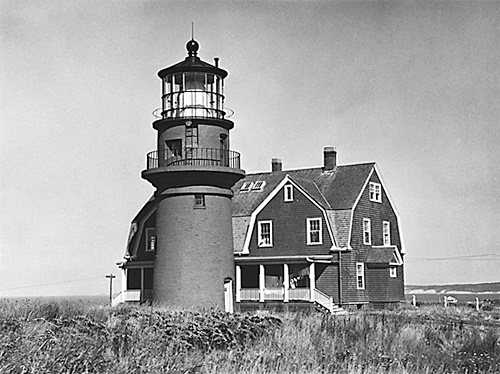
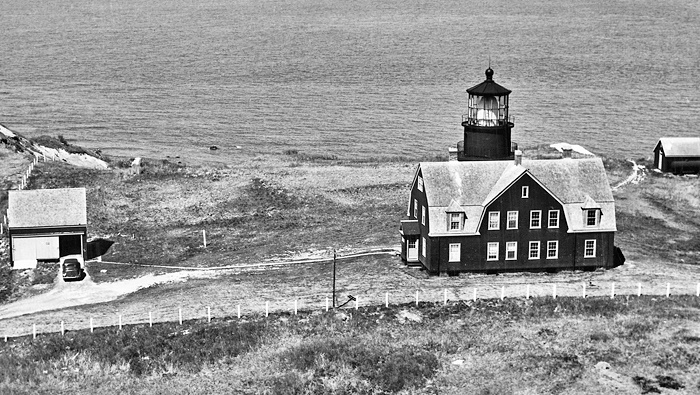
Crosby L. Crocker, who served at Gay Head from 1892 to 1920, had four of his children die in a span of just fifteen months. Ten years after their passing, a fifth child died at the age of fifteen. If this string of deaths weren’t enough to indicate something was wrong at the station, the keeper whom Crocker replaced had died at the age of forty-four after just one year at Gay Head. The cause of the deaths was finally determined to be the mold and mildew growing on the walls and furnishings of the always damp double-dwelling. The Lighthouse Board noted in 1899 that the house was “too damp and unsanitary for safe occupation by human beings,” and recommended $6,500 for a new house. A spacious gambrel-roofed, double-dwelling was built in 1902.
Charles Vanderhoop, an Aquinnah Wampanoag, served as assistant keeper at Gay Head from 1913 to 1919 and then returned in 1920 to take charge of the station. When Vanderhoop became head keeper at Sankaty Head Lighthouse in 1919, he was believed to be the first Native American to serve as head keeper of a U.S. lighthouse. Keeper Vanderhoop’s assistant at Gay Head was Max Attaquin, also an Aquinnah Wampanoag. On at least three occasions, Vanderhoop and Attaquin helped fight fires at residences in the vicinity of Gay Head Lighthouse. In February 1930, the fire was at the Madison homestead where one of the occupants was a ninety-four-year-old woman suffering from pneumonia.
|
Keeper Vanderhoop was retired on disability in 1933 at the age of fifty-three, and according to a newspaper article announcing the change, the cause was “visitor-itis.” Assistant Keeper Attaquin weighed more than 200 pounds, making it difficult for him to navigate the stairs in the tower, so escorting visitors up the tower was left to Vanderhoop. The article provided the following description of Vanderhoop’s painful condition:
A chronic overdose of summer visitors and loyal obedience to regulations requiring every courtesy to be shown to visitors has literally broken down this sturdy man so that he cannot stand up to work for any length of time.If he ventures to try it, the terrible varicose veins which have netted his legs swell and threaten to burst.
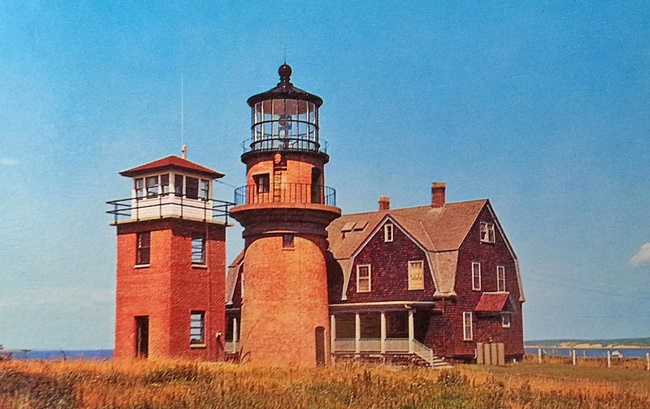
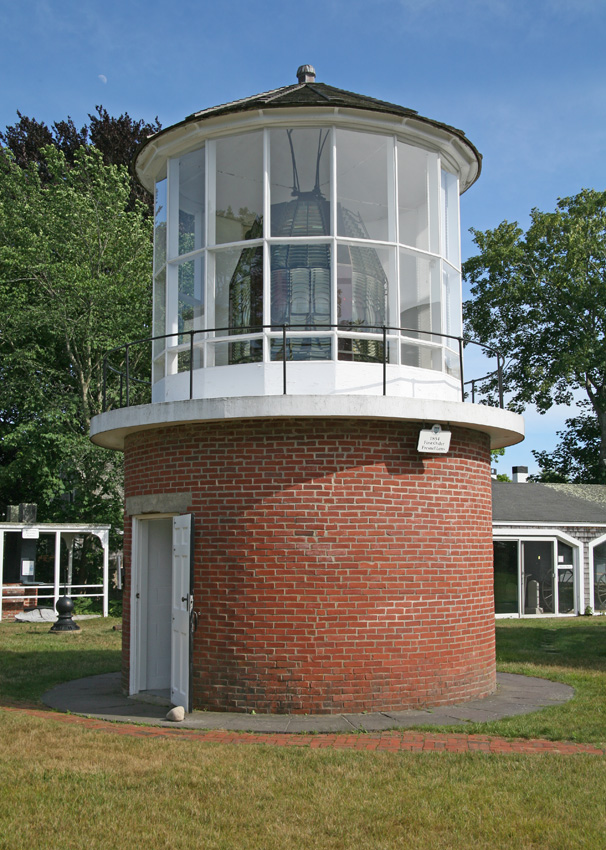
After the light was electrified, the first-order Fresnel lens was removed from Gay Head in 1952 and placed in a brick tower built on the grounds of the Martha’s Vineyard Historical Society Museum in Edgartown. Fittingly, Keeper Vanderhoop had the honor of lighting the lens at the dedication ceremony. The beautiful 1902 dwelling was demolished after the station was fully automated in 1956, leaving the redbrick tower alone atop the cliffs.
The Coast Guard leased the tower to the Vineyard Environmental Research Institute in 1985, and the Martha’s Vineyard Historical Society took over responsibility for it in 1994. The society has stewardship of the Edgartown and East Chop Lighthouses as well and has successfully raised funds for restoration of all three.
In December 2012, Congressman William Keating appealed to the commandant of the U.S. Coast Guard to expedite the transfer of ownership of Gay Head Lighthouse, so that it could be relocated. “The land on which the light tower is situated is eroding at a rate of nearly two feet per year and only 50 feet now remain between the tower and the approaching cliffs,” Keating wrote. “If the Gay Head Light is not relocated, Martha’s Vineyard will undoubtedly lose a historic emblem within just a few short years.” As a buffer of thirty feet was needed to move the lighthouse, it was known the relocation had to occur before 2022.
A twelve-member committee, appointed by the town selectmen and charged with developing a plan to relocate the historic brick tower, held its first meeting on January 3, 2013. On February 5, 2013, residents of Aquinnah voted to acquire the lighthouse and appropriated $5,000 from the town’s Community Preservation Act (CPA) funds for a feasibility and planning study for saving the lighthouse.
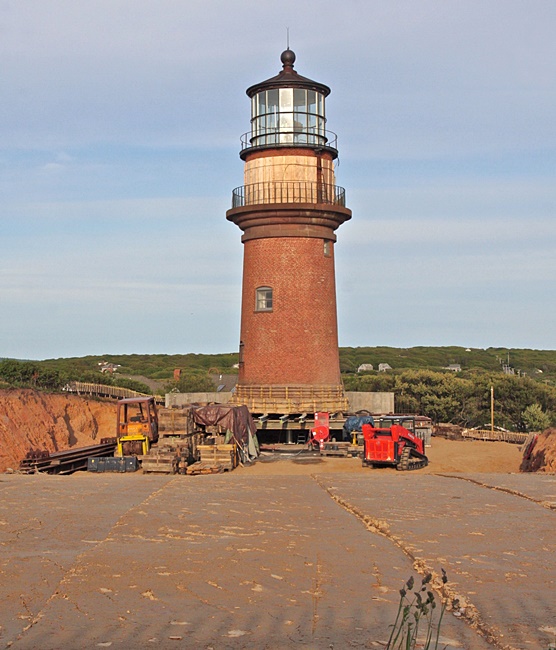
In September 2014, the Town of Aquinnah’s application to take ownership of the lighthouse was approved, and the structure was officially awarded to the town on February 20, 2015. At the time of the transfer, $2.5 million of the $3 million needed for the move had been raised. Relocation of the tower was carried out over a three-day period in May 2015, after a concrete pad at the new site had been prepared. The lighthouse came to rest atop its new foundation at 11:10 a.m. on May 30, and a champagne bottle was smashed against the lighthouse to celebrate the end of its 175-foot journey. International Chimney Corporation, which moved Sankaty Head Lighthouse on Nantucket in 2007 and Highland Lighthouse and Nauset Lighthouse on Cape Cod in 1996, supervised the relocation and employed the services of Expert House Movers.
While preparations were underway for moving the lighthouse, it was announced that its Fresnel lens, which had been on exhibit at Martha’s Vineyard Museum in Edgartown, would be relocated to the Marine Hospital in Vineyard Haven, where the museum reopened in 2018. A new building was constructed to display the lens, which is the museum’s most-prized possession. While checking out the lens in May 2015 prior to its move, Fresnel lens expert Jim Woodward commented that the lens “was as close to factory-perfect” as any he had seen.
International Chimney Corporation was hired in 2016 to study needed restoration of Gay Head Lighthouse and found that repairs would cost $1.3 million. In 2017, International Chimney removed bricks where the balcony and lantern room meet the brick tower and repaired areas where water damage was found. Historically accurate balusters were also fabricated and installed on the stairway landings to enhance the safety of visitors.
Keepers:
References