Trinidad Head, CA 
Select a photograph to view a photo gallery
Photo Gallery
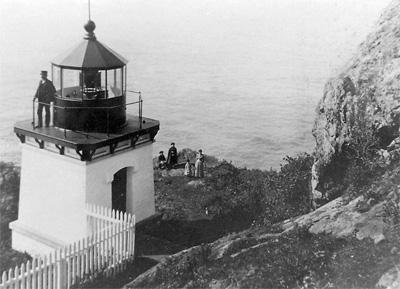
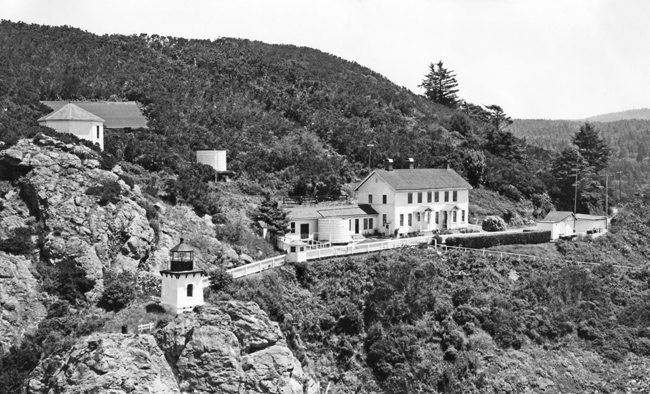
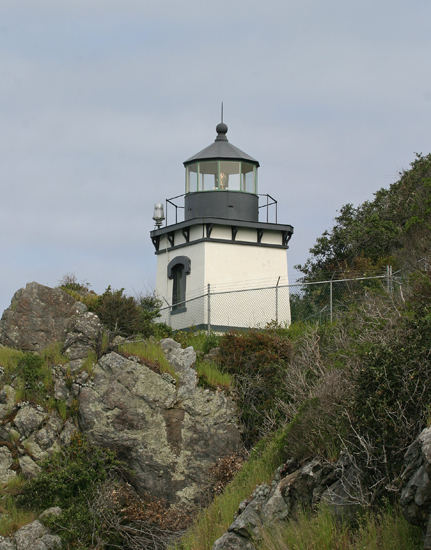
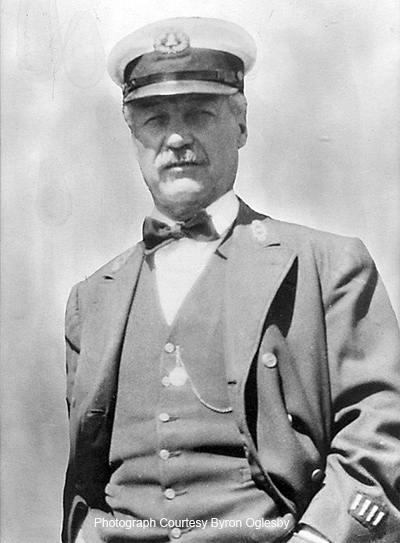
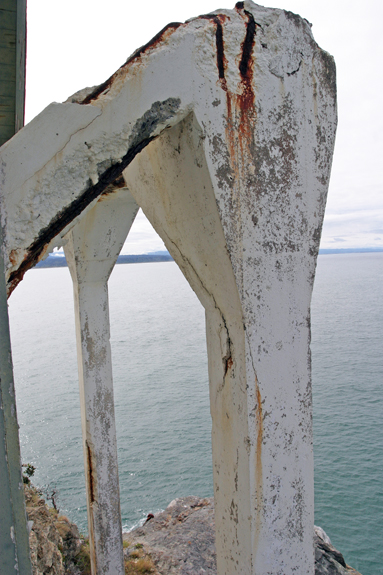
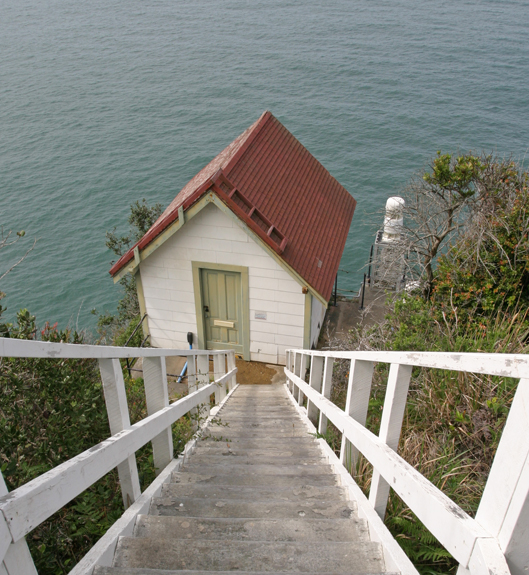
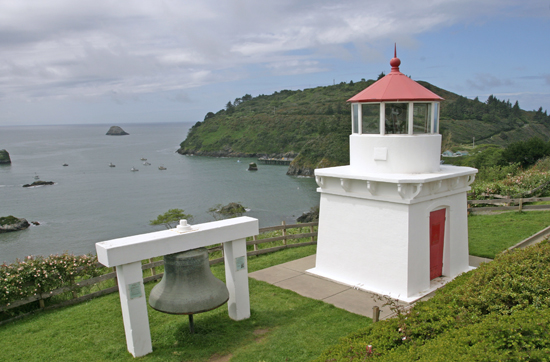
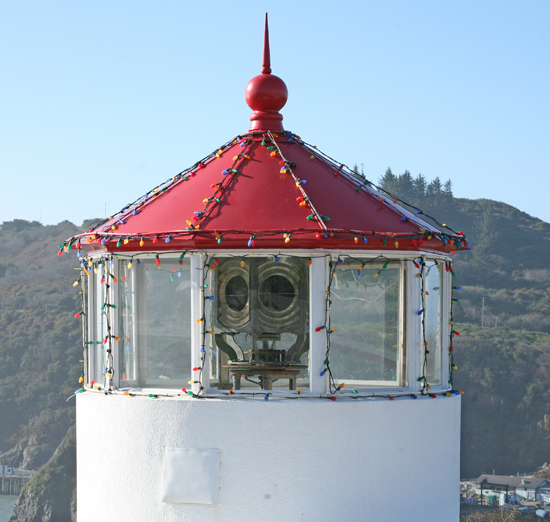
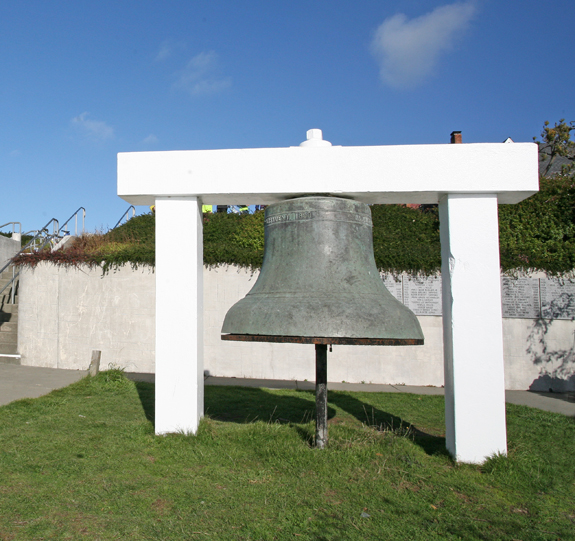
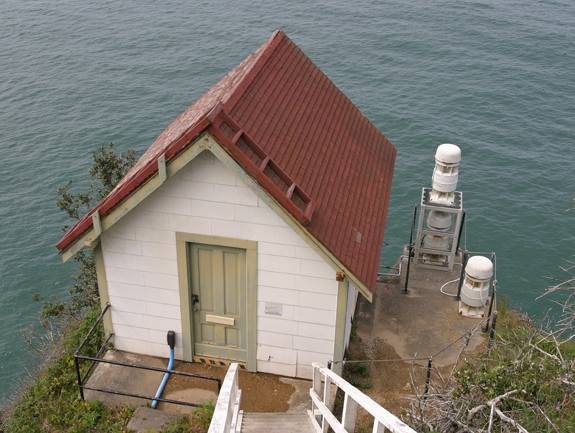
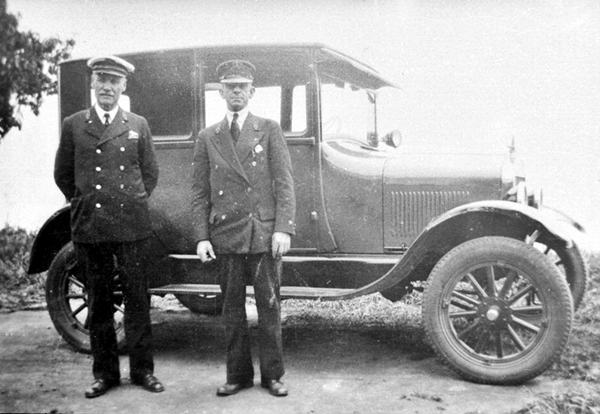
Photo Gallery
Photo Gallery
|
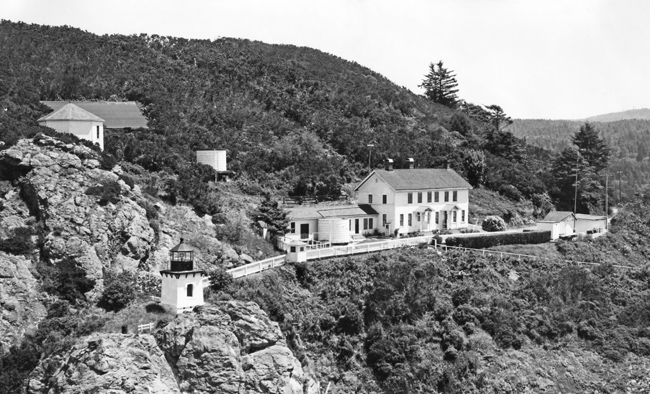
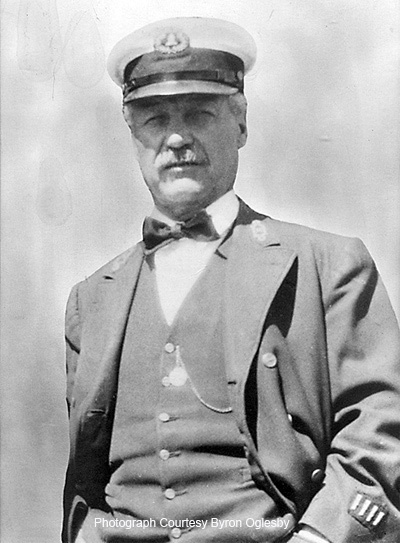
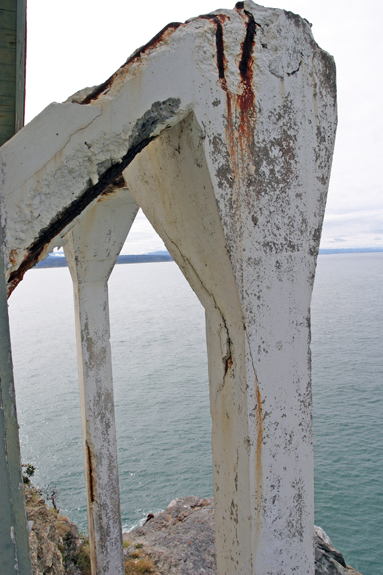
Keeper Kiler faithfully stood watch over the light for a lengthy tenure of seventeen years before he passed away in 1888, but amazingly his successor, Fred L. Harrington would top this by remaining at the station for twenty-eight years before retiring in 1916 and being replaced by Edward Wiborg. Harrington oversaw the installation in 1898 of a fog bell atop a rock outcropping, roughly fifty feet below the level of the light. Suspended from a concrete gallows, the 4,000-pound bell was struck at prescribed intervals by a heavy hammer. A clockwork mechanism was housed in a frame bell house just east of the bell, and weights descended down the face of the cliff to power the apparatus. As the keeper had to wind the machinery every two hours, the single-family dwelling was expanded into a double-dwelling to house the additional keeper assigned to share the increased workload at the station.
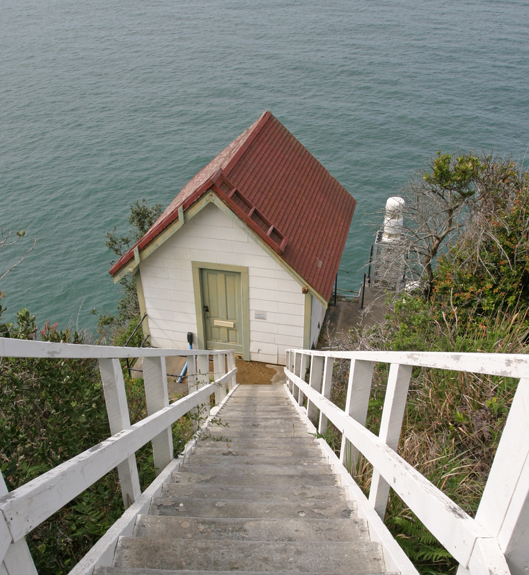
The fog bell, which was manufactured in San Francisco by White & Deronn, worked fine for a couple of years until the weight cable snapped, sending the weights plummeting down the face of the cliff and into the ocean. To prevent the loss of additional weights, a wooden weight tower was constructed on a concrete foundation next to the gallows and bell house. As the tower was much shorter than the height of the cliff, the keepers most likely got a lot more exercise running up and down the forty-eight steps and sloping boardwalk that led from the dwelling to the fog bell.
The sum of $250 was appropriated in 1899 for a telephone line to connect the lighthouse to Trinidad, and the Sunset Telephone Company was contracted to erect the redwood poles and string the wire. After roughly a year of use, the Lighthouse Board discontinued the telephone service, as the Sunset Company charged an annual rental fee of $60 for the use of its equipment and the phone had “proved to be of no use to the Light-House Establishment.”
|
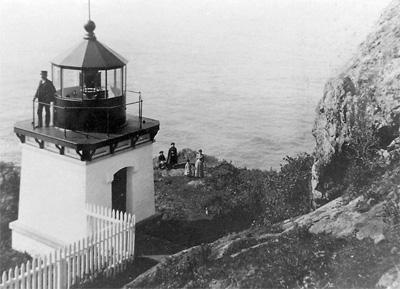
The storm commenced on December 28, 1914, blowing a gale that night. The gale continued for a whole week and was accompanied by a very heavy sea from the southwest. On the 30th and 31st, the sea increased and at 3 p.m. on the 31st seemed to have reached its height, when it washed a number of times over [93-foot-high] Pilot Rock, a half mile south of the head.Although Harrington had the lens leveled and running in just thirty minutes, who knows how long it took for him to recover from that experience.At 4:40 p.m., I was in the tower and had just set the lens in operation and turned to wipe the lantern room windows when I observed a sea of unusual height, then about 200 yards distant, approaching. I watched it as it came in. When it struck the bluff, the jar was very heavy, and the sea shot up to the face of the bluff and over it, until the solid sea seemed to me to be on a level with where I stood in the lantern. Then it commenced to recede and the spray went 25 feet or more higher. The sea itself fell over onto the top of the bluff and struck the tower on about a level with the balcony, making a terrible jar. The whole point between the tower and the bluff was buried in water. The lens immediately stopped revolving and the tower was shivering from the impact for several seconds.
Whether the lens was thrown off level by the jar on the bluff, or the sea striking the tower, I could not say. Either one would have been enough. However, I had it leveled and running in half an hour. About an hour later another sea threw spray up on the level of the bluff, and the constant jars of the heavy sea was much over normal during the night and the whole of the next day. On the 3rd, the sea moderated to some extent, but a strong southeast wind and high sea continued until the 5th. During the 26 years that I have been stationed here, there has at no time been a sea of any such size as that of the 31st experienced here; but once during that time have I know the spray to come onto the bluff in front of the tower, and but twice have I seen sea or spray go over Pilot Rock.
|
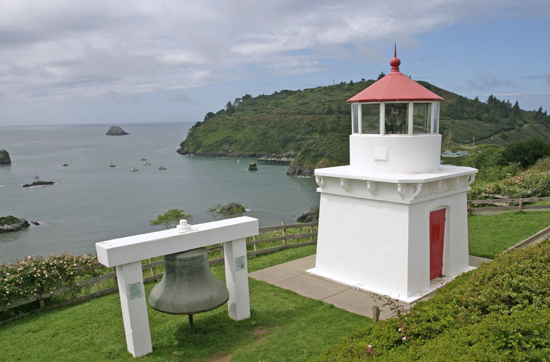
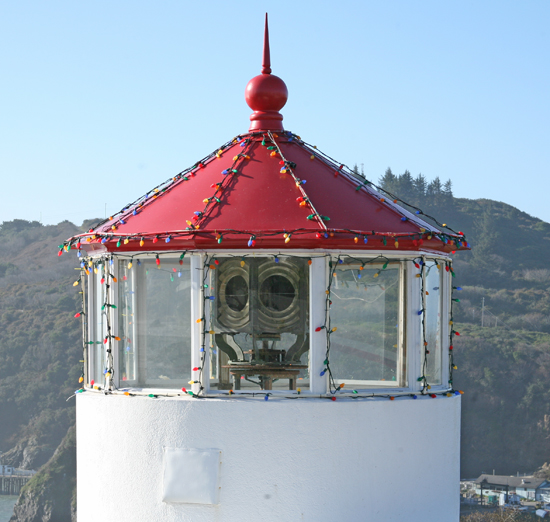
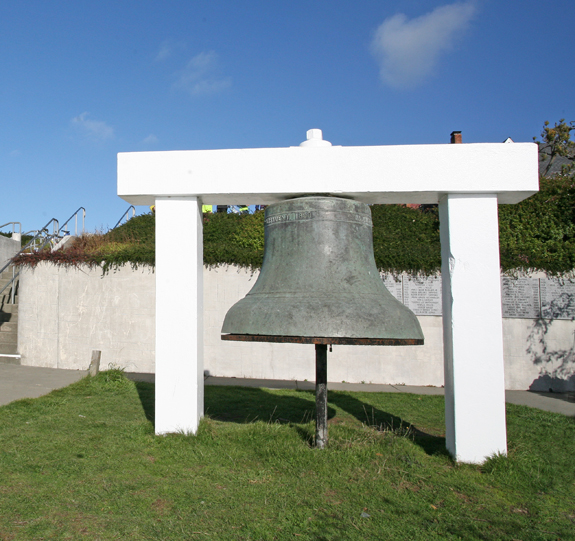
Electricity came to the station in 1942. As a result, in 1947 the fog bell was replaced by compressed air horns, and the lens was removed in favor of a modern beacon. Two years later, a replica of the tower called the Trinidad Memorial Lighthouse was built in town on a bluff overlooking the bay, and the original lens was placed in the lantern room. The original fog bell, suspended from a wooden structure, is on display next to the memorial lighthouse.
Water for the use of the station’s occupants was captured on the roof of the keeper’s dwelling and then fed into underground cisterns and a large wooden tank. In 1907, each of the two cisterns had a capacity of 7,000-gallons, and the wooden tank, which rested on a concrete foundation, could store 9,500 gallons. The station would run out of water in dry years, forcing the keepers to haul in water by wagon. After the Coast Guard took control of the station in 1939, buoy tenders would periodically call at Trinidad Head and pump water up to the station using long hoses. A water pipe was run between the station and the town of Trinidad in 1960, and the station finally had a virtually unlimited water supply.
The original keeper’s dwelling was razed in the late 1960s, and the Coast Guard built a triplex to house its personnel. The station was automated in 1974, but Coast Guard personnel continued to live in the housing until sometime after 2000.
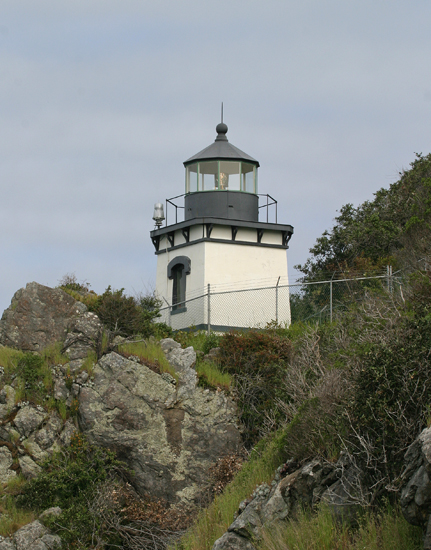
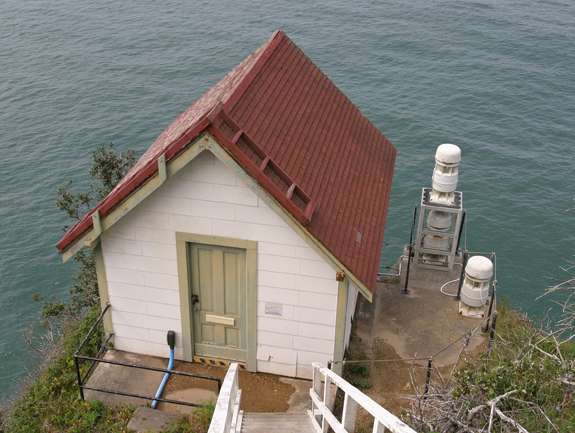
The fifth-order, drum-type Fresnel lens that had been used in Trinidad Head Lighthouse since 1947 was removed in 2013 and replaced with an LED beacon. A pair of fog signals are stacked next to the fog bell house, which is the only remaining bell house in California. The drum-type Fresnel lens is now on display at Trinidad Museum.
A ceremony with docent-guided tours was held at the lighthouse on May 16, 2014 to celebrate the transfer of the property from the Coast Guard to the Bureau of Land Management. On December 4, 2021, the Bureau of Land Management hosted a celebration to mark the 150th anniversary of Trinidad Head Lighthouse. The event included living history performances, guided walks, a book signing, and a speech by a daughter of one of the lighthouse keepers.
Keepers:
References