St. Marks, FL 



Select a photograph to view a photo gallery
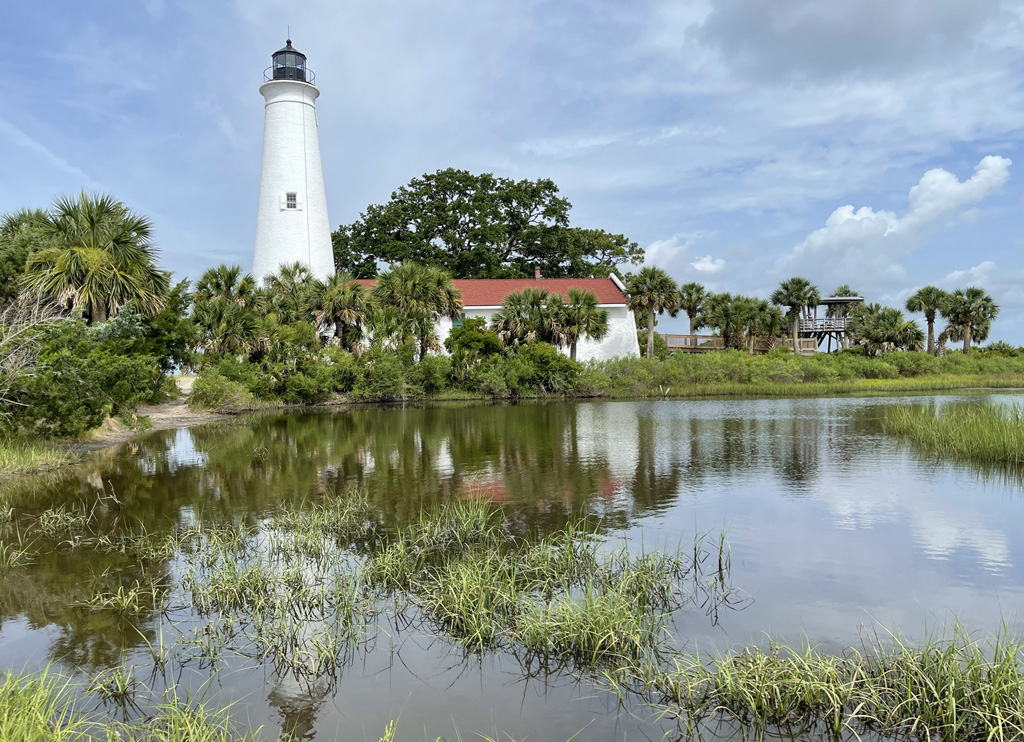

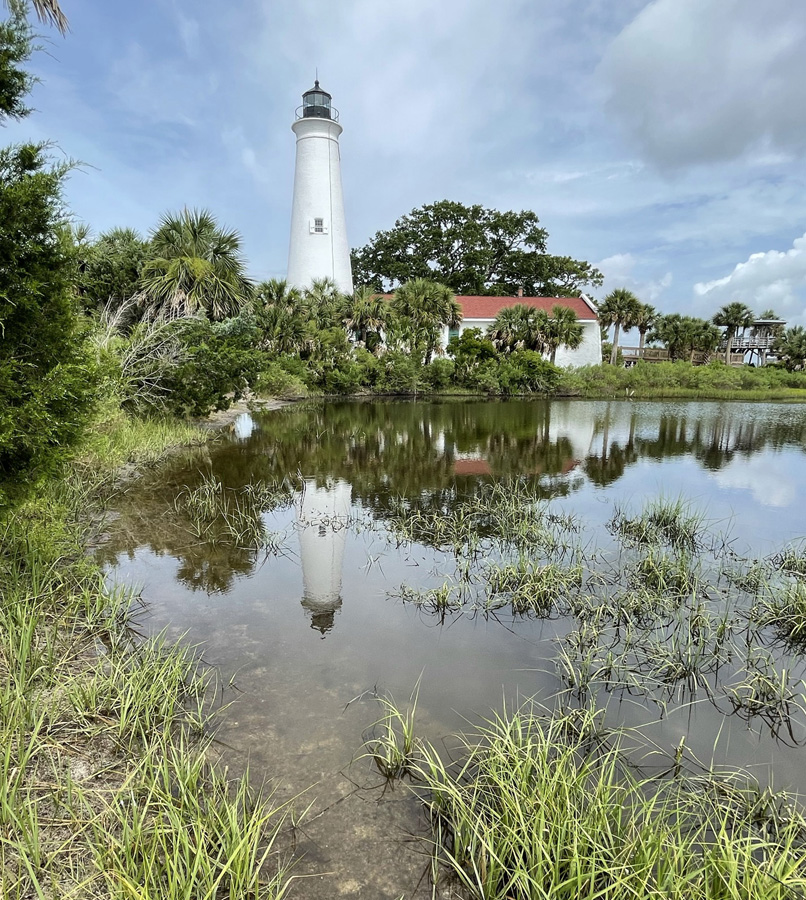
Photo Gallery
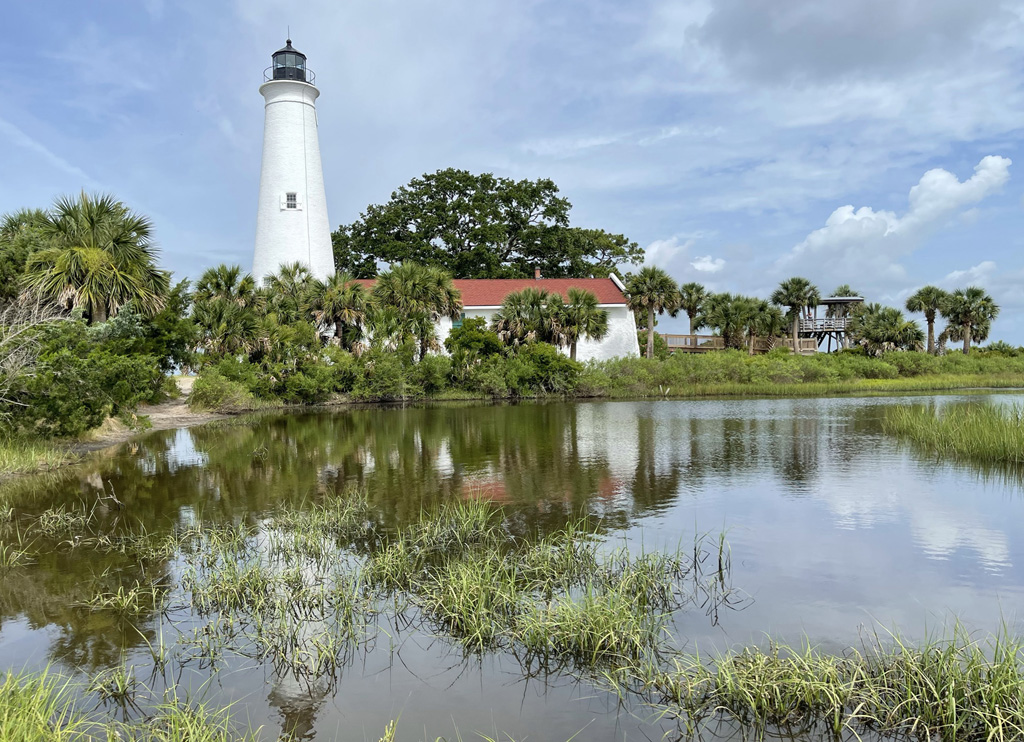

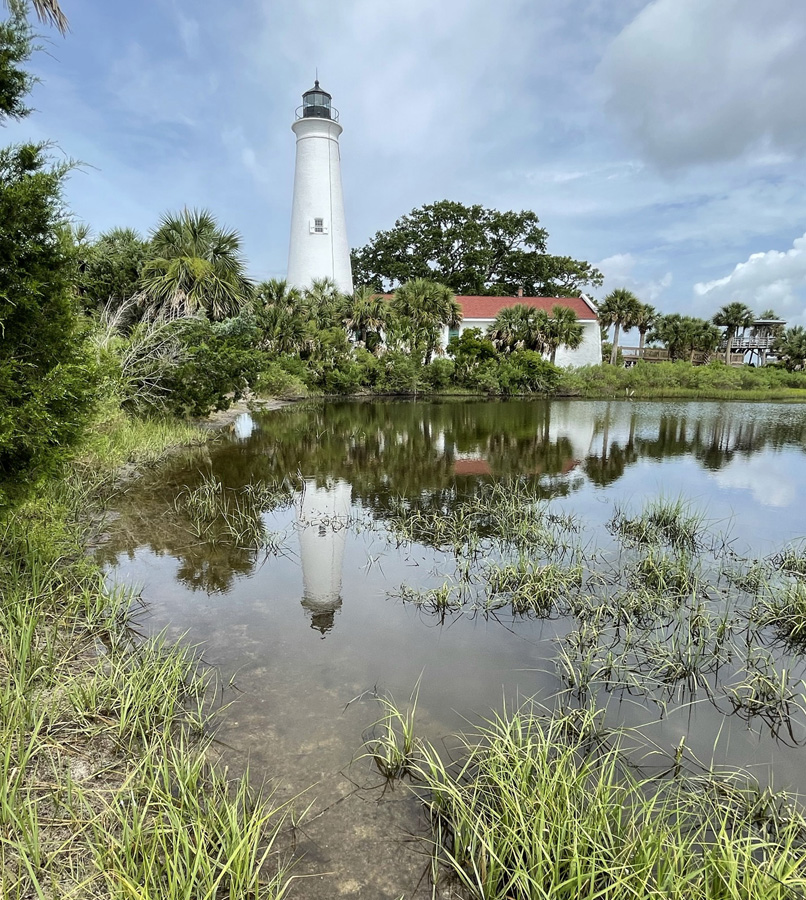
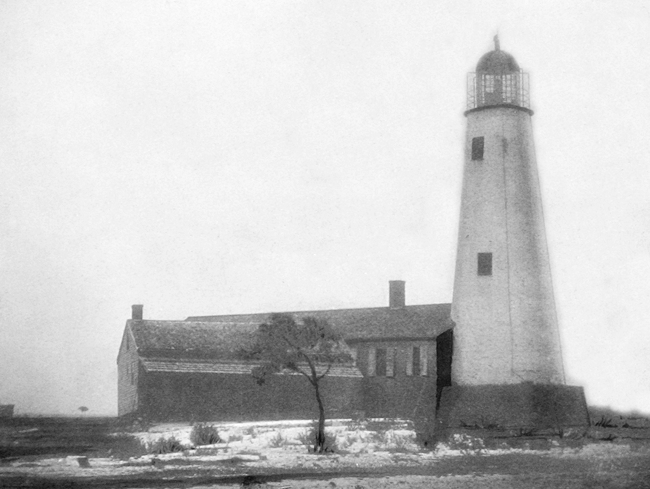
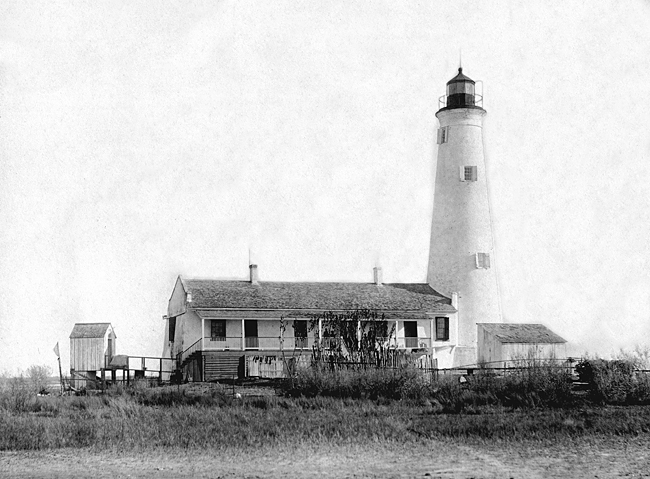
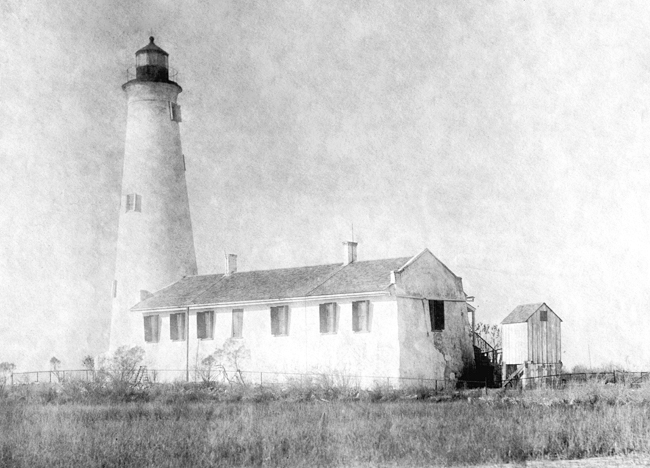
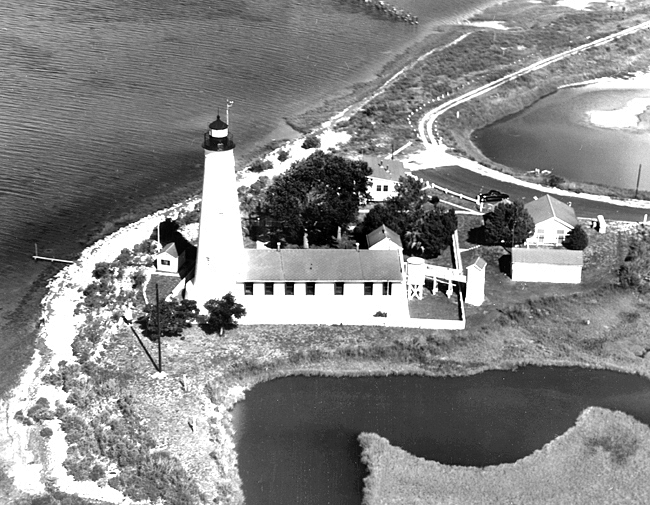
Photo Gallery
Photo Gallery
|
The contract for the lighthouse was awarded to Winslow Lewis, and under his direction Benjamin Beal and Jairus Thayer constructed a tower at a cost of $11,765. The Collector of Customs for St. Marks refused to accept the lighthouse as it was built with hollow walls, a practice that was not yet widely accepted. Calvin Knowlton, Lewis’ partner, supervised the construction of a solid, replacement tower, which was accepted by the finicky collector in January 1830. Samuel Crosby became the first keeper of St. Marks Lighthouse, assuming responsibility for the tower’s fifteen lamps, set in fifteen-inch reflectors, that produced a fixed white light at a height of seventy-three feet.
Under the 1832 Treaty of Payne’s Landing, Florida’s Seminole Indians were to relocate west of the Mississippi River by 1835. However, when 1835 arrived, the Indians refused to leave, and the Second Seminole Indian War, which would last for seven years, erupted. During the first two years of the war, the lighthouses at Mosquito Inlet and Cape Florida were attacked. Fearing for the safety of his family, Keeper Crosby requested that a detachment of soldiers be stationed near St. Marks Lighthouse. When his request was denied, Crosby asked for an escape boat that he could use in case of an attack, but again his petition was not granted. Fortunately, no attack was made on St. Marks Lighthouse during Crosby’s tenure, which ended in 1839.
In 1837, the twenty-mile-long Tallahassee-St. Marks Railroad, Florida’s first, was conceived and financed by plantation owners to aid in transporting their cotton crops to the port at St. Marks. The cars were initially pulled by mules, but in the 1850s locomotives were purchased to aid the cotton trade.
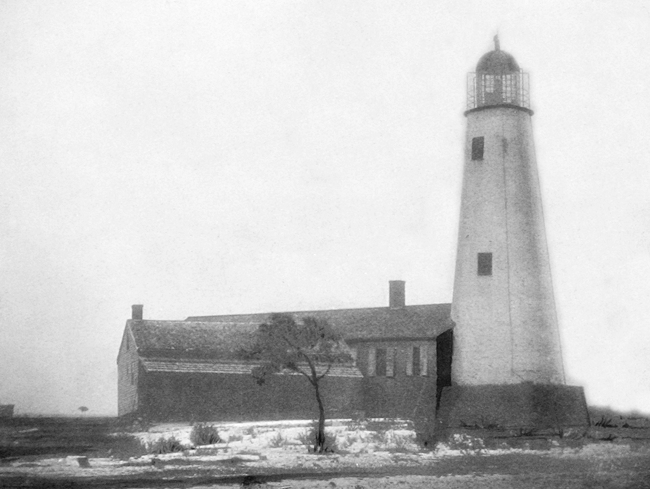
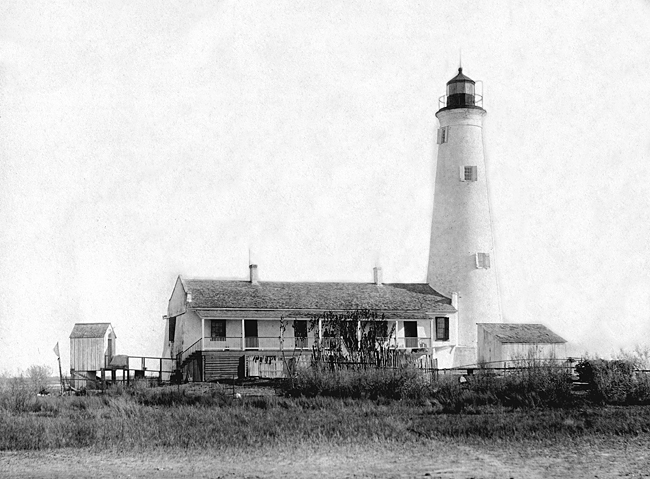
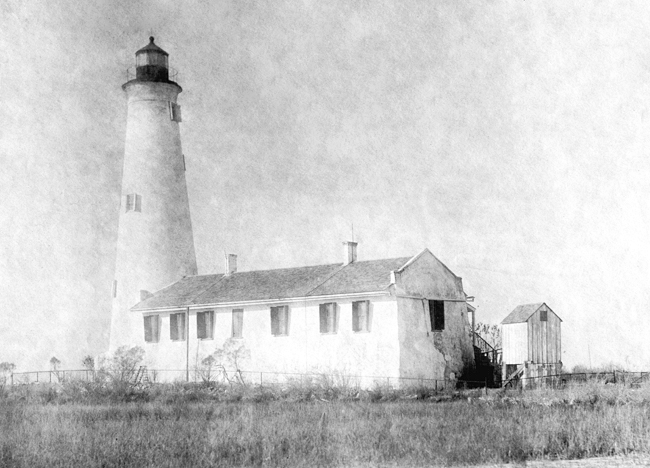
As the port of St. Marks was growing, the land protecting the lighthouse from the Gulf was shrinking. By 1842, erosion was threatening the tower, and a new lighthouse was erected farther inland. This third St. Marks Lighthouse, which still stands today, rests on a base of limestone rocks taken from Fort San Marcos de Apalache. The stout walls are four feet thick at the bottom, and taper to a thickness of eighteen inches at the lantern room. The sturdy construction saved the lives of Keeper John Hungerford and his family, when a hurricane struck in September 1843. The fierce winds and accompanying tidal surge destroyed the nearby town of Port Leon and inflicted substantial damage on St. Marks, located farther upriver.
Following the hurricane, a rugged breakwater was built to protect the lighthouse. A second powerful hurricane struck in 1851, but again the tower withstood the blast remarkably well. The dwelling, however, was damaged and eventually replaced in 1854, at which time a new breakwater was constructed and a new foundation was placed under the lighthouse.
|
After the end of the conflict, the tower was repaired between September and December of 1866, and a new fourth-order Fresnel lens was installed in the lantern room, allowing Keeper David Kennedy to return to the post he had briefly held before the war and place the light back in operation on January 7, 1867. An assistant was assigned to the station at this time, and the position went to Kennedy’s seventeen-year-old son James. A new dwelling for Keeper Kennedy and his family was not completed until 1871.
During a hurricane in September 1873, water inundated the dwelling, forcing the Kennedys families to seek refuge in the tower. The damage to the dwelling’s windows, doors, and interior was promptly repaired, but expensive repairs to the concrete filling around the tower’s foundation took more time.
Charles Fine served as keeper from 1892 until his death in 1904, when he was succeeded by his wife, Sarah. Lela, the youngest of Fine’s eight children, was born and raised at the lighthouse and eventually married John Y. Gresham, who became keeper of the lighthouse in 1918 and served for thirty-one years, longer than any other keeper at St. Marks. The Gresham children, two sons and six daughters, were raised in relative isolation at the lighthouse, and a private schoolteacher lived with the family during the summer months to provide a formal education.
Vera Gresham recorded her childhood memories in a narrative entitled “Life at the Lighthouse,” which describes in detail the children’s schooling.
We had a room, the living room, made into a classroom with school desks and blackboard. We went to class promptly at eight in the morning, and my mother would have our lunch prepared at noon. We returned to the class room at 1 p.m. and stayed until 3:30 in the afternoon. There were always four or five pupils, the smaller children being too young and the older ones going away to school or work as they grew up. We were, of course, each in a different grade and would make a grade in three months. We all went through the eighth grade this way. I stayed home longer than the others and just to have something to do went over the 8th grade three times.Our teacher, usually a lady, became a dear friend. She not only taught us our books but all about the way other people lived. She would tell us about going to movies, to parties, about neighbors and things that we read about but never did. She taught us girls how to fix our hair pretty and discussed clothes, and, if she were young, boys. We, in turn, would take her rowing or sailing, fishing and in swimming. Our way of life was as fascinating to her as hers was to us. We often corresponded for years after they returned home. …
When I was 13 years old we had a young man [Eugene W. Roberts from Mississippi], 21 years old, to come teach us one summer. He had taught a term of school in St. Marks and my father knew him and asked him to teach us the following summer. He liked it so much at the lighthouse he stayed on longer and helped with the painting and cleaning. This young man was very serious minded and strict with us and I didn’t care for him at all. Some 10 years later when I was attending business school in Tallahassee, he wrote me a letter and asked to visit me. Two years later we were married in the same room at the lighthouse where he had taught me.
|
Keeper Graham kept a watchful eye on the water surrounding the lighthouse for anyone who might need his assistance. In January 1926 alone, he towed a disabled motorboat to St. Marks, conveyed two lost men from a hunting party to St. Marks, and towed another disabled motorboat six miles to the station.
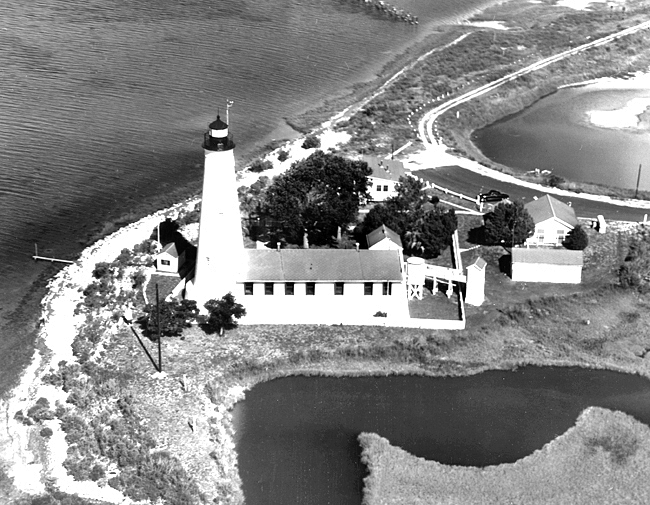
During Keeper Gresham’s service, the area around the lighthouse was incorporated into St. Marks National Wildlife Refuge, which encompasses some 68,000 acres that serve as wintering habitat for migratory birds. The Greshams continued to serve at the lighthouse after the Coast Guard assumed responsibility for the nation’s lighthouses in 1939. Alton T. Gresham, son of Keeper John Gresham, joined the Coast Guard and in 1957 was assigned to St. Marks Lighthouse, where he served until 1959. Gerald R. King took charge of the lighthouse from Alton Gresham, and not long thereafter, his twenty-two-month-old son drowned at the station. After watching television with his mother, young Gerald R. King, Jr. went outside and crawled under a fence, using a depression that the family’s dachshund had dug. Mrs. King found the youngster floating in a brackish slough near the yard and started giving him mouth-to-mouth resuscitation. Gerald R. King, Sr. returned from town shortly after the incident and relieved his wife while she called for help. A fire chief and ambulance raced to the scene, but the child was pronounced dead upon arrival at the Tallahassee Memorial Hospital.
In 2000, the Coast Guard spent $150,000 to repair and stabilize the lighthouse. Congress passed an act in June 2006 that transferred the lighthouse and the surrounding eight acres from the Coast Guard to the Fish and Wildlife Service, however, the transfer did not take place until October 10, 2013 as lead-contaminated soil around the lighthouse had to first be removed. An official transfer ceremony, that included a band, a color guard, and descendants of the lighthouse keepers, was held on March 28, 2014.
Using grant money, the Fish and Wildlife Service had the Fresnel lens removed from atop St. Marks Lighthouse in November 2014 so the lantern room could be restored. The lens was transported to Ponce de Leon Inlet Lighthouse, where a team of volunteers spent over 500 hours cleaning the historic artifact before it was returned home the following March and placed on display in St. Marks Wildlife Refuge’s visitors center.
On March 17, 2016, Governor Rick Scott signed the 2016 General Appropriations Act, which allocated $550,000 for St. Marks Lighthouse - $50,000 for restoring the lantern room, and $500,0000 for preservation of the lighthouse itself. “I’ve waited years to see the lighthouse get the attention it deserves,” said Chuck Shields, Mayor of St. Marks and fundraising committee member. “A restored lighthouse will be an economic benefit to this area. We still have a long way to go to raise all the necessary funds needed to complete the project and make the lighthouse available to the public. I hope people recognize that and help contribute to the lighthouse fund.”
The Fresnel lens was removed from the lantern room in November 2014, and, after being restored, was placed on display in the refuge visitor center. Phase I restoration of the lighthouse, which included restoring, waterproofing, and painting the lantern room, was carried out in 2016. A contract to carry out Phase II restoration of the lighthouse was granted to Rippee Construction and work on the station began in November 2017. “Most of our crew have fished in front of the lighthouse all of our lives and we are excited to be part of its preservation for future generations,” said Callie Neal, President of Rippee Construction. Phase II focused on the keeper’s dwelling, and after this work completed in early 2018, museum exhibits were installed and the renovated lighthouse was opened to the public on September 29.
The work to restore the lighthouse and open it to the public cost $750,000, and an additional $500,000 was needed to add period-style shutters, repair the water cistern hidden below the dining room floor, replace a white picket fence that surrounded the property, and add modern amenities such as security and a new walkway. After the cost of a replica lens was donated, Artworks Florida installed a fourth-order Fresnel lens atop the restored lighthouse on July 12, 2019. St. Marks National Wildlife refuge celebrated its eighty-eighth birthday on October 31, 2019 with the relighting of the lighthouse.
Keepers:
References