Race Point, MA 



Select a photograph to view a photo gallery
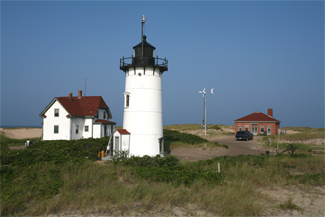
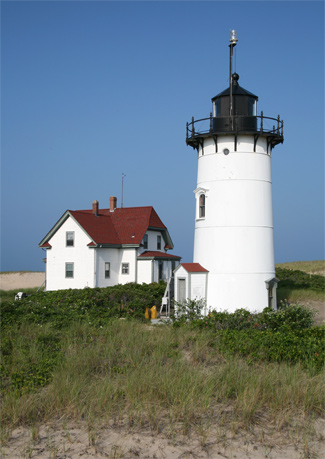
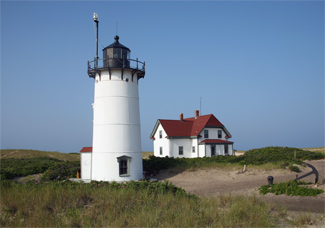
Photo Gallery
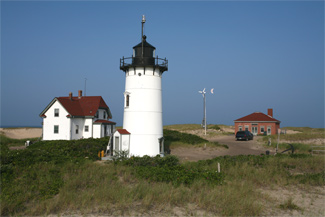
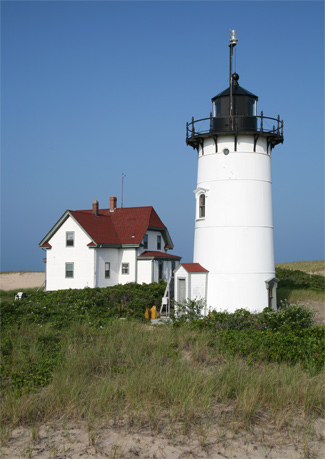
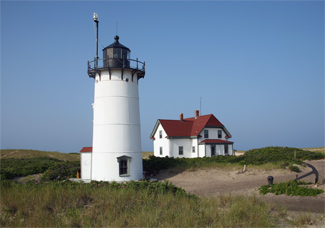
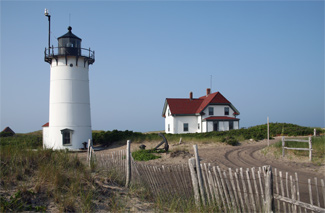
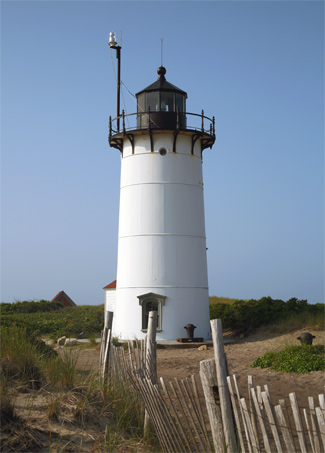
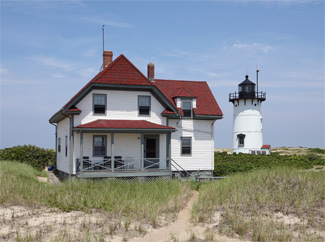
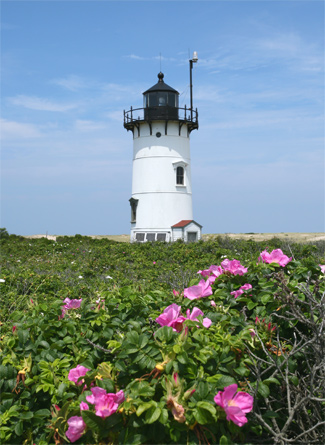
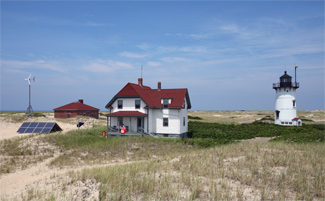
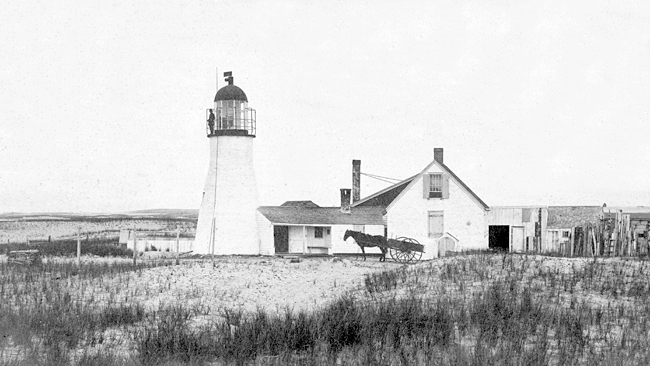
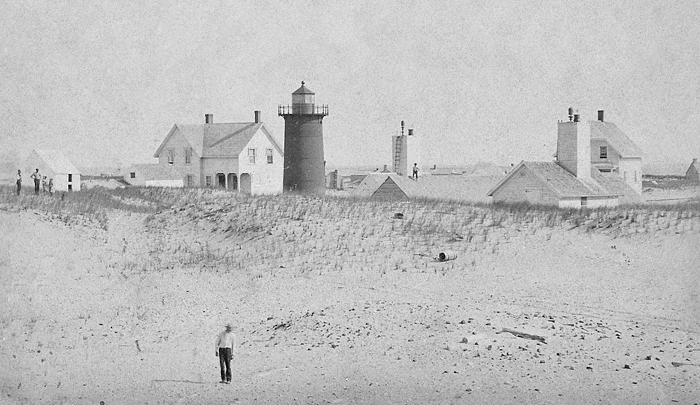
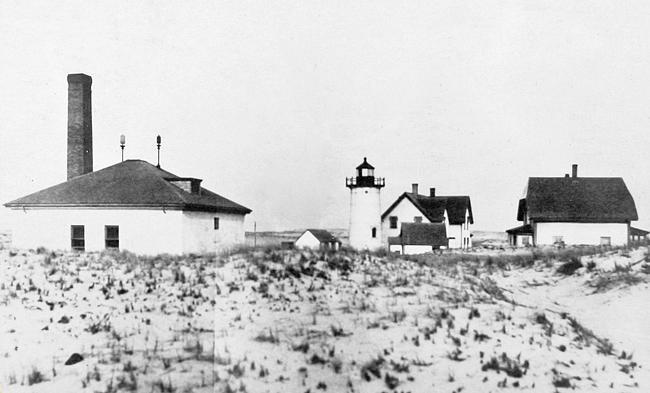
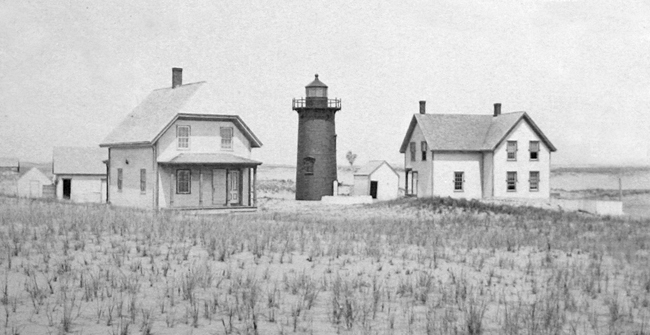
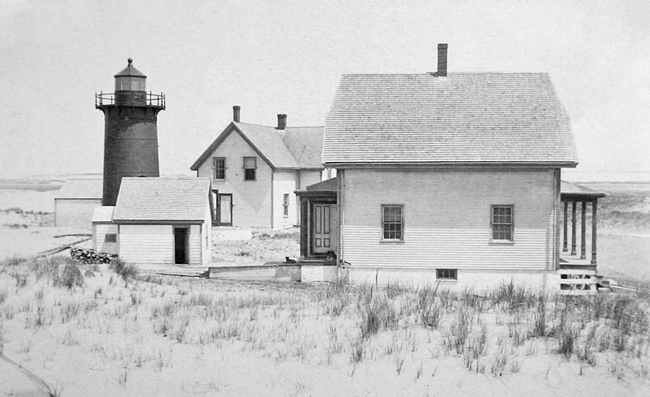
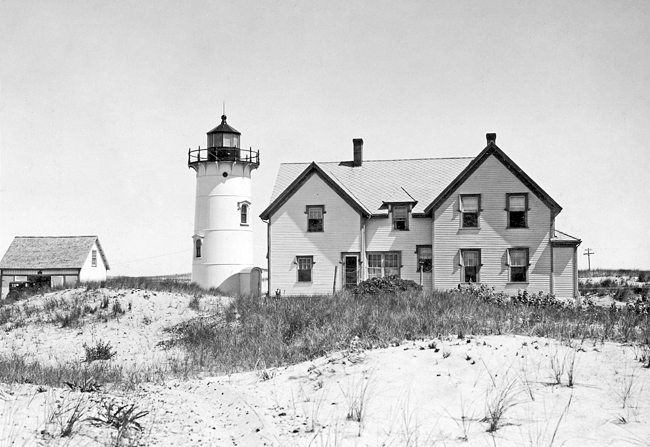
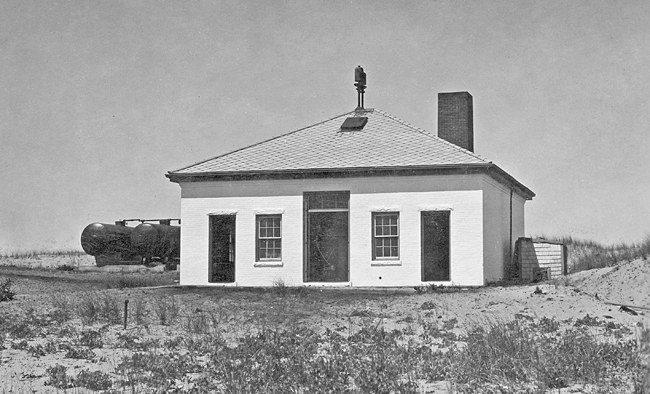
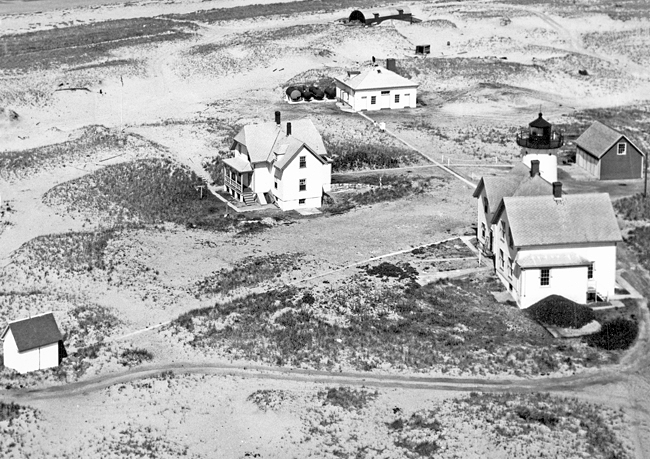
Photo Gallery
Photo Gallery
|
The location is isolated, and it is said that guests (there is room for eleven of them) like it that way. But this section of Cape Cod, which provides a restful retreat for modern man, has long been a site of death and destruction for hapless ship captains. The American Coast Pilot, published in the 1800s, warned mariners of Race Point:
The shore, which extends…to Race Point, is unquestionably the part of the coast most exposed to shipwrecks. A northeast storm, the most violent, and fatal to seamen, as it is frequently accompanied with snow, blows directly on the land’ a strong current sets along the shore; add to which, that ships, during the operation of such a storm, endeavor to work to the northward, that they may get into the bay. Should they be unable to weather Race Point, the wind drives them on the shore, and a shipwreck is inevitable. Accordingly, the strand is everywhere covered with the fragments of vessels.
Race Point takes its name from the strong crosscurrent, called a “race,” which makes travel around the tip of Cape Cod fraught with danger. Vessels navigating the coast from Boston and southward were forced to pass through the area’s perilous bars prior to the building of the Cape Cod Canal in 1914. Seafarers and merchants began to petition for a lighthouse on the point as early as 1808.
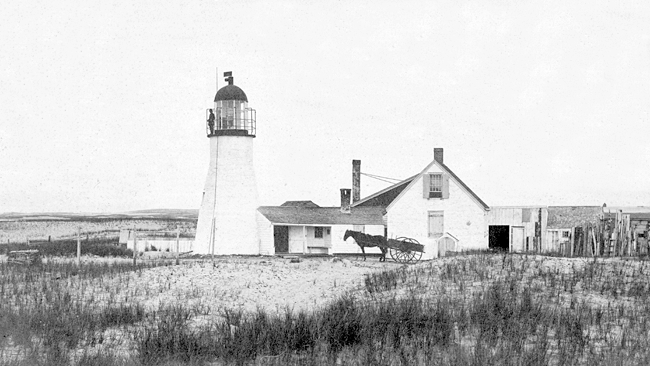
Congress approved $8,000 on April 17, 1816 for lighthouses at Race Point and Point Gammon in Massachusetts and Petit Manan in Maine, and by July that year Henry A.S. Dearborn, superintendent of lighthouses of Massachusetts, issued a request for bids. A twenty-foot-tall, octagonal wooden tower was originally specified, but a twenty-five-foot-tall rubblestone tower, with a light thirty feet above the water was constructed after the plans were modified. Race Point, Cape Cod’s third light station after those at Truro and Chatham, first exhibited its light on November 5, 1816, under the care of Joshua Dyer. A covered passageway off the kitchen linked the stone keeper’s house with the tower.
The flash of Race Point’s revolving light could be seen nineteen miles away, and while the inspection reports of Lieutenant Edward W. Carpender frequently recommended that the number of whale oil lamps at a light station should be decreased, his 1838 survey did not suggest that for Race Point. Carpender realized the value of the light with its ten lamps backed by thirteen-inch reflectors. Keeper Elijah Dyer, however, received a mixed review.
|
Its location renders it a light of great value and importance to the navigation of Boston bay, and to vessels arriving from sea; consequently, I have not thought of proposing any reduction to it. I visited it near the middle of the forenoon, and met the keeper absenting himself from home without having guarded against detention by preparing his lamps, reflectors and glass for the night. They were, however, in such order as to induce favorable impressions of the manner in which the light is kept. The tower and dwelling are of stone, judiciously connected together by the kitchen, which has been lengthened for that purpose.
A change in the light was suggested following a visit by I.W.P. Lewis in 1842, when Elijah Dyer was still serving as keeper.
The light is useful to all vessels leaving Boston, and bound to the eastward, or round the cape, through the South channel; and also as a point of departure for Provincetown harbor, as well as Boston. Its illuminating power is, however, so weak that when a fleet of fishermen are anchored in Herring cove, close by, a stranger would hardly be able to distinguish it from the lights set on board these vessels. A reciprocating light of one good lamp and suitable reflector would be much more efficient than the present apparatus with ten lamps.
I.W.P. Lewis noted that the tower had no foundation and leaked, the lantern had three broken panes of glass, and the reflectors were out of alignment. He did mention that the keeper’s house was “in very good repair, and most neatly kept.” Another 1842 inspection stated sixty-five dollars was direly needed for a new boat, because the old one “would not withstand a rough sea five minutes.”
During Lemuel Cook’s tenure as keeper, an inspection report from 1850 noted that ten lamps were still in use. The lighting apparatus was rotated by a clockwork mechanism and everything was “in good order.” For the keepers, this meant that the mechanism had to be regularly wound, and the lamps filled and wicks trimmed every four hours.
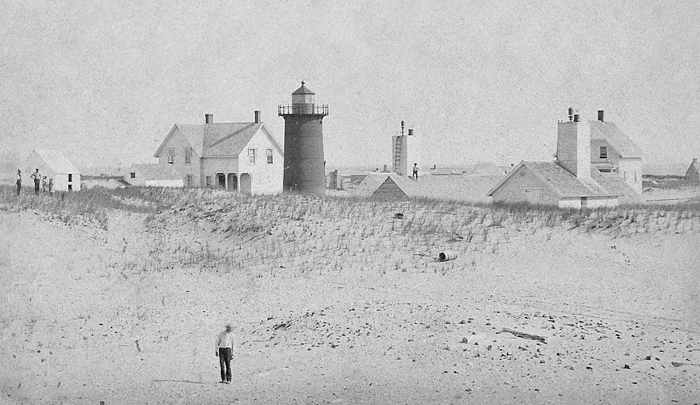
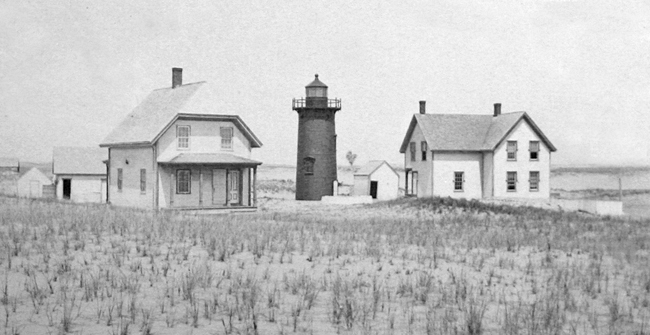
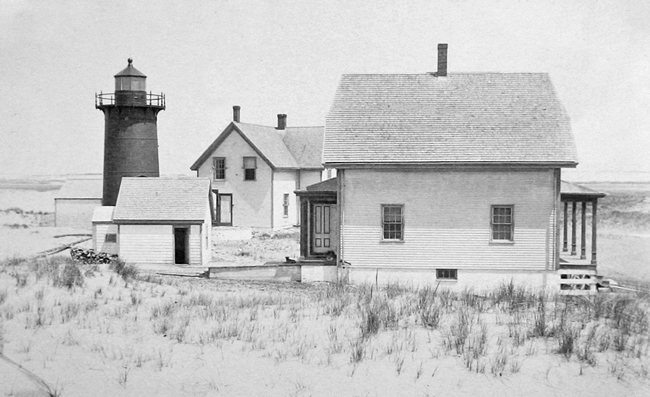
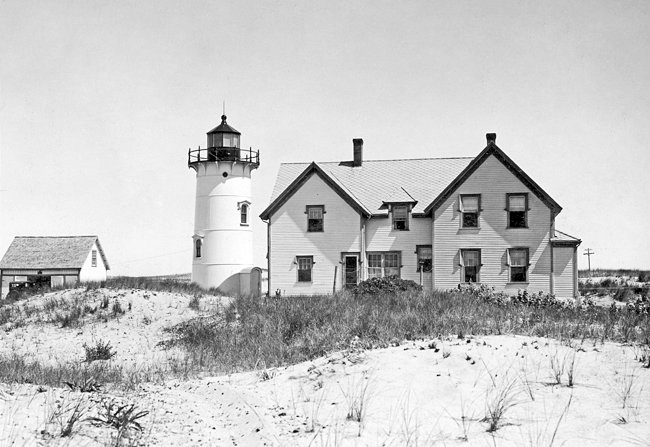
Other improvements to Race Point Lighthouse included a five-foot brick extension to the tower in 1845 and the installation of a fog bell and a revolving fourth-order Fresnel lens in 1855. The position of assistant keeper was added to Race Point in 1855 to help with the added responsibility of operating the fog bell. The Lighthouse Board’s report for 1863 lists changes made during the previous year: “tower partly taken down and rebuilt, new lantern provided, woodwork renewed, kitchen lathed, plastered and newly floored, roofs repaired, chimneys partly rebuilt, grounds graded, &c., fog-bell removed to a position near the dwelling.” In 1873, a twelve-inch, steam whistle, housed in a new, twelve by twenty-four-foot, wood-frame building, replaced the fog bell. A second assistant keeper was assigned to Race Point to help with the fog signal, after a new one-and-half-story, wood-frame house was erected in 1874 for the assistants.
The annual Lighthouse Board report for 1875 requested $8,000 for critical improvements at the station: “The tower at this station was originally built of rubblestone, laid in common lime mortar. The lime disappeared, and the tower became so leaky that it was necessary to cover it with shingles. The shingles are now rotten, as are also the wooden stairs inside, and the tower is so dilapidated that it is necessary to rebuild it. Extensive repairs are also required on the keeper’s dwelling.”
|
Not all found conditions at the lighthouse and its environs enticing. “What a dreary prospect lay before us!” wrote Sarah Leslie in the April-September 1884 issue of Outing and the Wheelman. “A long white sand-beach, backed by brown sand-hills, sloping steeply to the shore at the place where the Race Point light tower stands, and the life-saving station – a solitary cluster of buildings in the sandy desolation – and then a long, steep white beach, backed by innumerable white sand-hillocks, here and there scrubbily wooded.”
The living conditions for the keepers, their assistants, and families were harsh, as the following notation in Lighthouse Board records for 1899, 1900, 1901, and 1902 demonstrate:
The assistants’ dwelling has only one outer door, besides which the lower hall, stairs, and upper hall have to be used in common by both families. One family has only a kitchen on the lower floor and the other its kitchen and dining room, there being but three rooms on this floor. All other rooms used by both families are reached in common by one flight of stairs. The two families are deprived of privacy and are compelled to intermingle more or less, which causes dissatisfaction and discontent and is unfavorable to retaining assistants of the grade which the light and the first-class fog-signal at Race Point require. The keeper’s dwelling has only two rooms on each floor, and he much needs and should have another room on each floor. It is estimated that the dwelling occupied by the two assistant keeper’s dwelling can be remodeled at a cost not exceeding $1,900, and that the keeper’s dwelling can be remodeled at a cost not exceeding $900. The Board therefore recommends that an appropriation of $2,800 be made for remodeling the two dwellings as proposed.
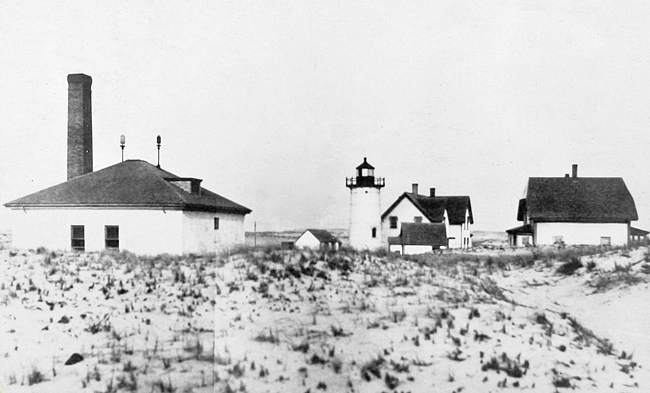
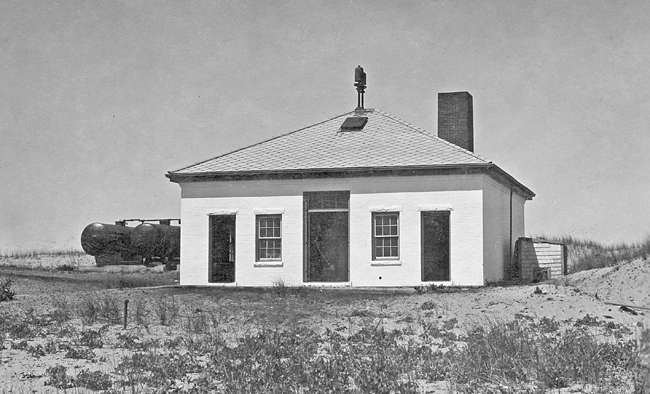
Materials for “repairing, enlarging, and rearranging the dwelling of the two assistants and to convert it to a double dwelling,” arrived at the station by July 1901, and the alterations were made during the following months. The principal keeper’s dwelling was improved in 1904. The present brick fog signal building and oil house date, respectively, from 1888 and 1902. A brick cistern, capable of storing 5,600 gallons of rainwater, was also added in 1888, and this served as the water supply for the steam whistle until a well was driven in 1896. The power for the whistle was changed in 1917 from steam to oil engines.
Gerard Lowther, son of William H. Lowther who had been head keeper since 1915, would walk two miles each way in soft sand on school days, and that was not the least of the unpleasantness. Mrs. Lowther recalled that she had witnessed a number of shipwrecks while living at Race Point Lighthouse, but one in particular deeply disturbed her. “Two men were drowned. I saw everything: the appeals of the men and the shouting and the screeching of the men at the light was so terrible it was in my ears for weeks afterward. I had to go away from the light for a week.”
James W. Hinckley served as first assistant keeper at Race Point beginning in 1920. Initially, he would hand carry fifteen pounds of groceries the two miles to the lighthouse, but soon employed a horse to ease the burden. After taking over as principal keeper in 1935, Hinckley converted a Ford into a primitive dune buggy with large tires that cut his trip to town from seventy-five minutes on horseback to just thirty minutes.
The driving wind of Race Point, one of the windiest spots on the coast, made a deep impression on Keeper Hinckley:
The wind often touches a mile a minute. Some of the gusts will throw you several feet, and it’s hard going. The sand is bad enough, cutting into your skin, but a combination of sand and snow is almost unbearable. That’s when those Coast Guard boys who walk the beach earn their money. This is the only light, after leaving Boston Lightship that ships have to guide them around the head of the Cape. In thick weather you haven’t a thing to tell you where you are until you hear my whistle. We give two blasts every minute that can be heard 12 to 15 miles out to sea.
|
Modern conveniences made living at the light more pleasant for Clifford Morong’s family. Clifford was Coast Guard assistant keeper at Race Point Lighthouse beginning not long after WWII. His wife, Shirley, recalls, “Water was obtained from a pump connected to a cistern in the basement. The small outside toilet was perched on the side of a sand dune behind the house. A refrigerator was operated by a kerosene powered lamp…The Coast Guard furnished the station with a jeep that had sand tires. We needed transportation to the boys’ school in Provincetown… For amusement we walked the beach during the day and read at night. Watches were divided by the three crew members.” Eventually, the family moved to the other side of the assistant keeper’s house and gained a full indoor bathroom.
Life was a bit like an extended treasure hunt as the family’s beach combing uncovered the remains of old wrecks and even a human leg bone on one occasion.
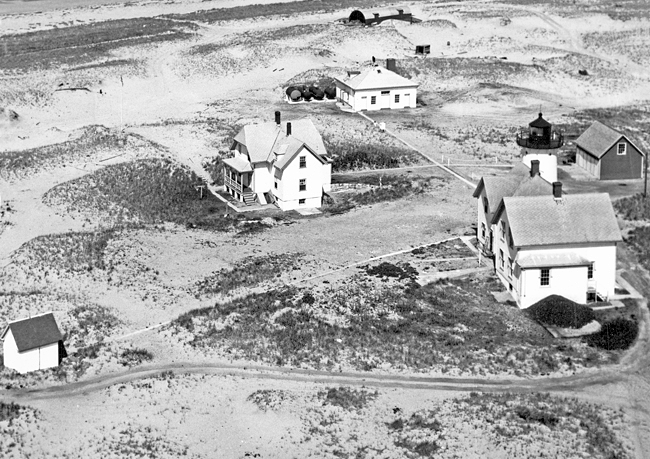
Race Point Light was electrified in 1957, and in 1960, the duplex assistant keepers’ house was demolished, and the remaining one updated. Race Point Lighthouse was automated 1972, and the unmanned station quickly became a popular party place for vandals, who would kick in a cellar door to gain access.
Race Point Lighthouse was leased to the New England Lighthouse Foundation (now American Lighthouse Foundation) in 1995, and the keeper’s house was repaired and modernized with heat, hot water, flush toilets, refrigeration, and a gas stove. Overnight stays were initiated in 1998. A solar electrical system was installed in October 2003, and a wind turbine back-up generator was added in 2007, making the use of a diesel generator unnecessary. The restored brick whistle house was opened to guests for week-long stays in 2008.
Race Point Lighthouse remains an active navigational guide maintained by the Coast Guard. It has a solar-powered VRB-25 optic exhibiting a 400,000 candlepower white flash every ten seconds from a height of forty-one feet that is visible for twelve miles.
It takes about forty-five minutes to walk to the park at Race Point Beach, where in addition to the view of the lighthouse tower nestled amongst the wild pink and white roses, sometimes humpback whales may be sighted from the beach and sunsets are particularly lovely.
Keepers:
References