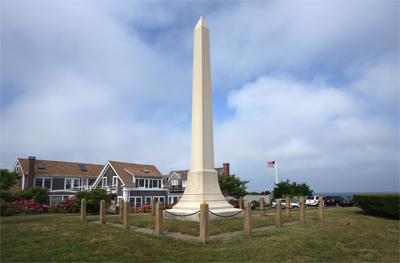
Chatham, MA 

Select a photograph to view a photo gallery
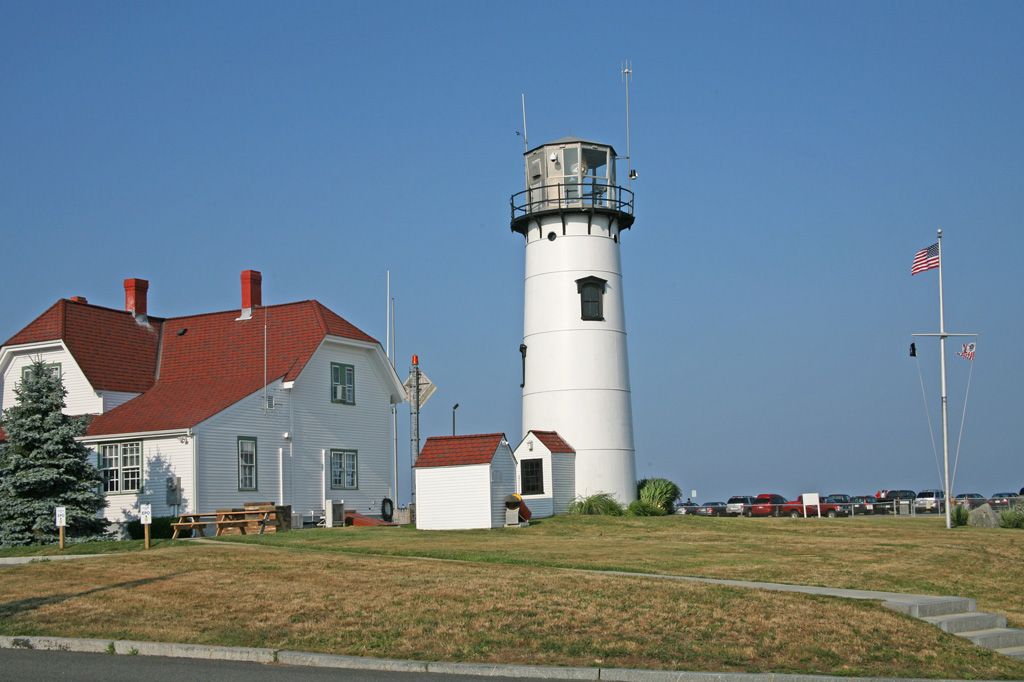
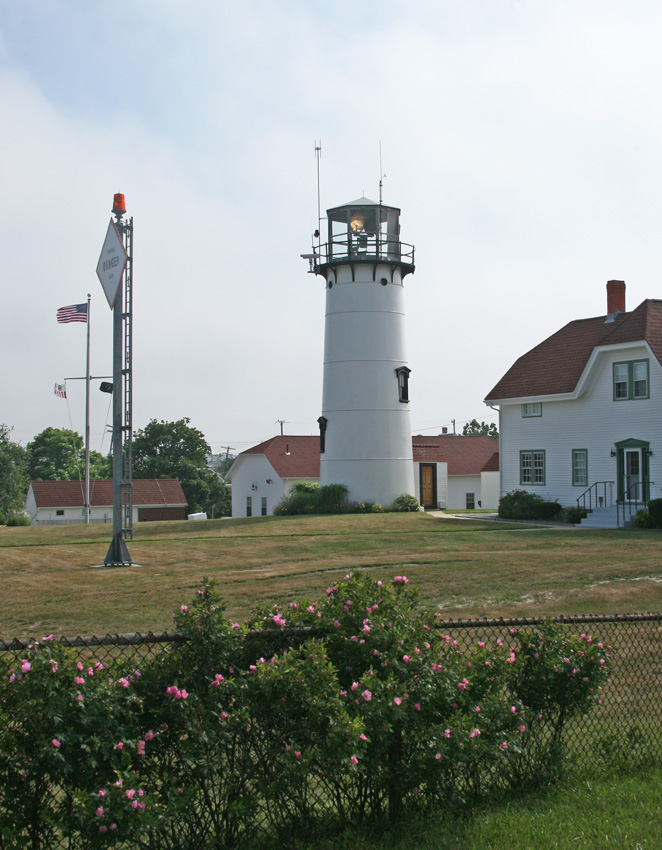
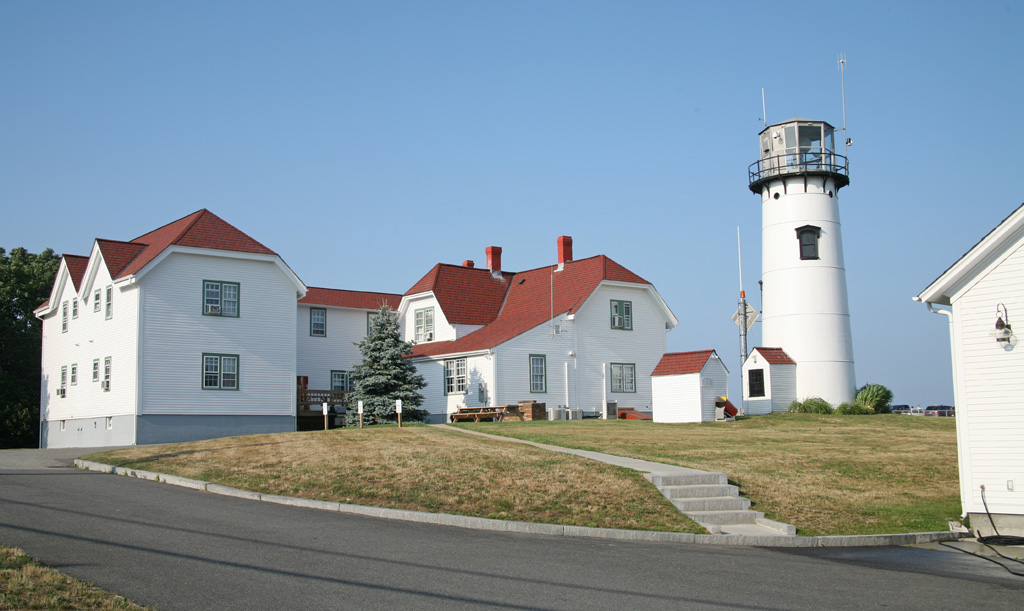
Photo Gallery
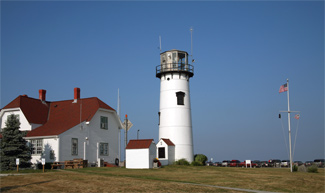
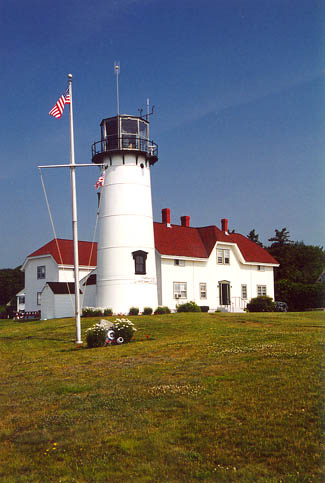
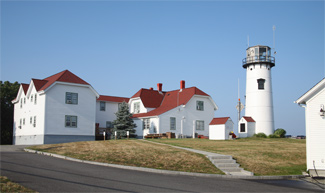
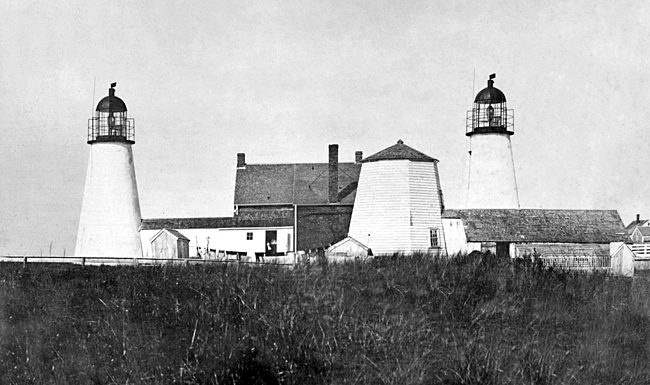
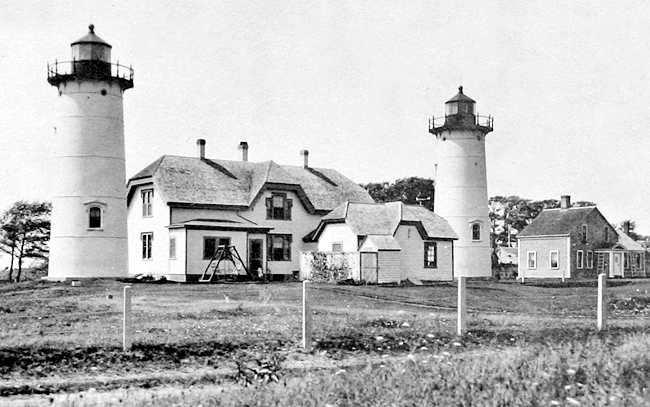
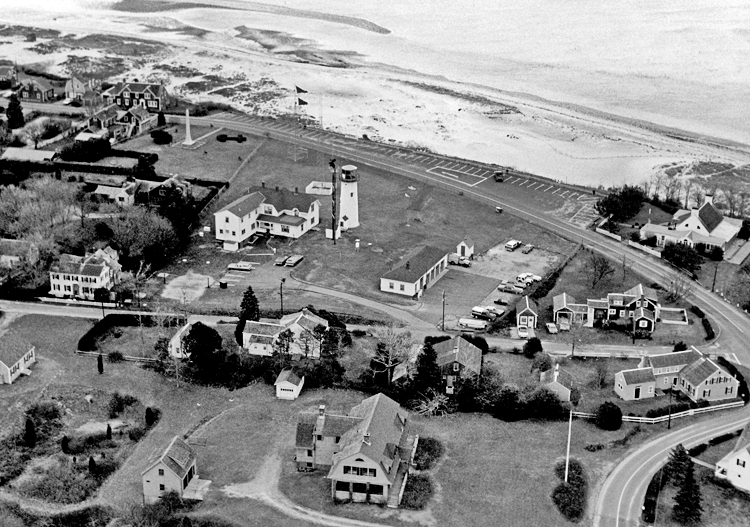

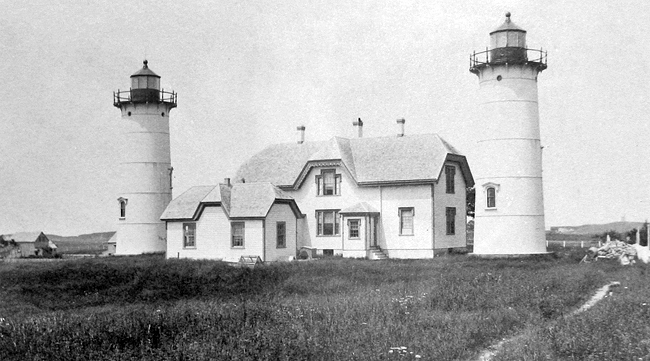
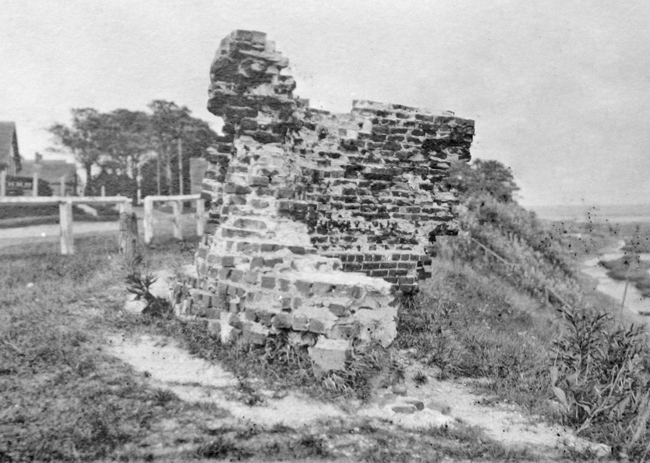
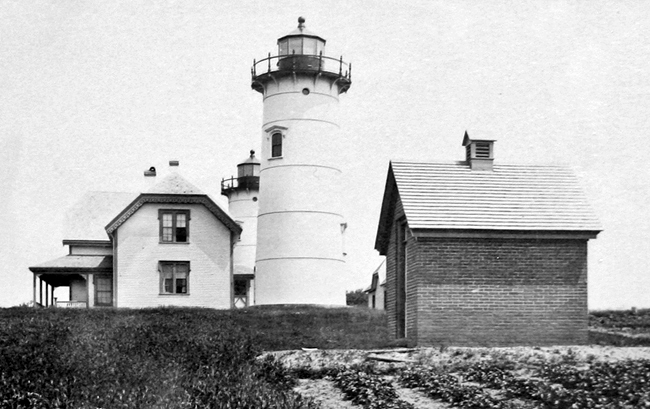
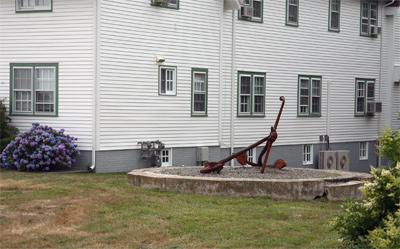
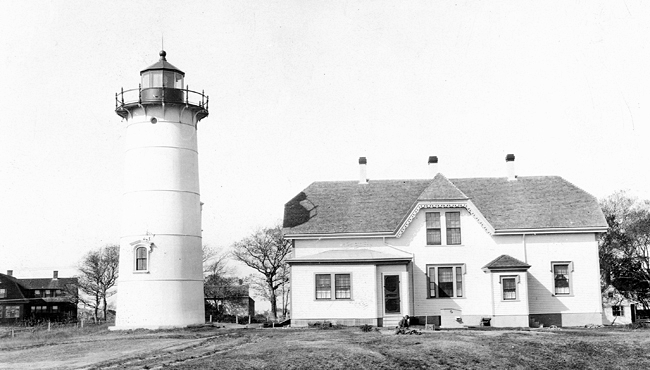
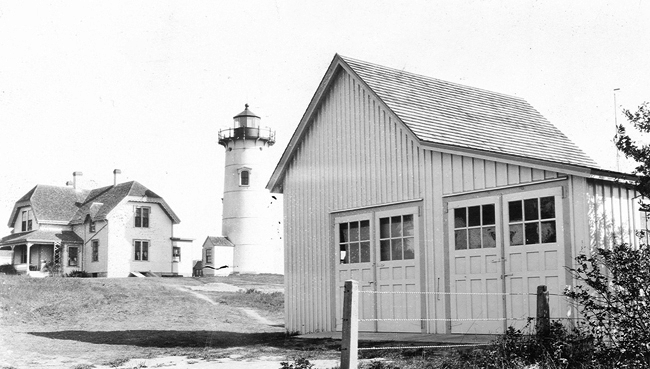
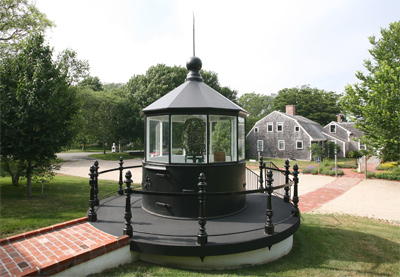
Photo Gallery
Photo Gallery
|
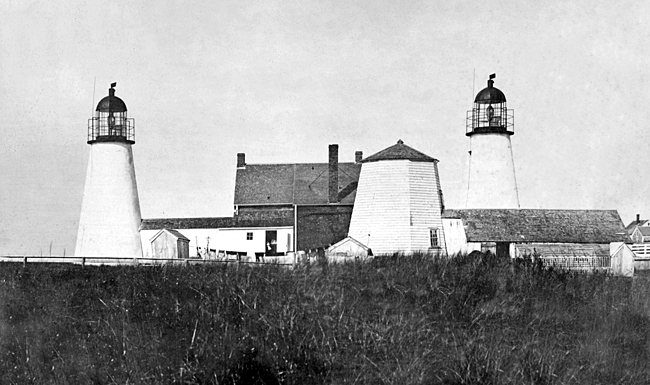
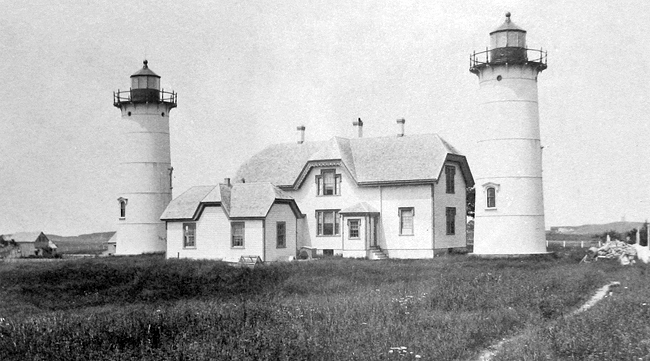
The two octagonal, wooden towers, about forty-feet tall, were placed seventy feet apart atop movable wooden skids (which were later used once to move the towers). Also constructed was a single story, one-bedroom keeper’s house measuring seventeen by twenty-six feet. The lights, which were suspended on chains, used lard as fuel.
Before construction was even completed, several petitions were filed seeking the appointment of an acquaintance to the coveted post of Chatham’s first keeper. One such petition contained 125 names in favor of Samuel Nye, and on October 7, 1808 President Thomas Jefferson appointed Nye keeper.
Joseph Loveland succeeded Nye as keeper, and he was followed by Samuel Stinson. In 1839, Stinson resigned after being charged of dereliction of duty by local inspector David Henshaw. Stinson requested reimbursement for an addition to the keeper’s house he had made, but his petition was denied.
From the beginning, many people, including Lieutenant Edward W. Carpender, believed a single distinguishable light at Chatham would have been sufficient. Carpender’s November 1, 1838 report suggested a single red fixed light and contained the following write-up on Keeper Stinson.
The present towers at Chatham are of wood, very much shaken and decayed, so as to make it dangerous to ascend them in windy weather. They each contain 6 lamps, with 8 ½-inch reflectors, and with plano-convex lenses of green glass, nine inches, in front of them. The reputation of this light is very low, owing, however, I apprehend, principally to the very neglectful manner in which they have been attended. I visited them late in the afternoon, and found them in as bad order as they well could been—nothing done to them from the previous night; the reflectors, apparently, not having been burnished for a length of time; the glass very smoked, and the lamps neither filled nor trimmed. A sly attempt was made by the keeper to have them prepared through his son; but what were partially done only served to show more plainly the condition of the remainder. If there can be any excuse for this keeper, it is the dilapidated condition of these towers, requiring a severe tax upon the pride he may possess for a faithful discharge of his duty.
Carpender recommended that the keeper’s house be replaced and that the southern tower should be rebuilt of brick or stone. According to Carpender’s calculations, the reduction to a single tower would save $215.25i in oil annually, but his words fell on deaf ears, and nearly ninety years would pass before one of the towers would be removed.
|
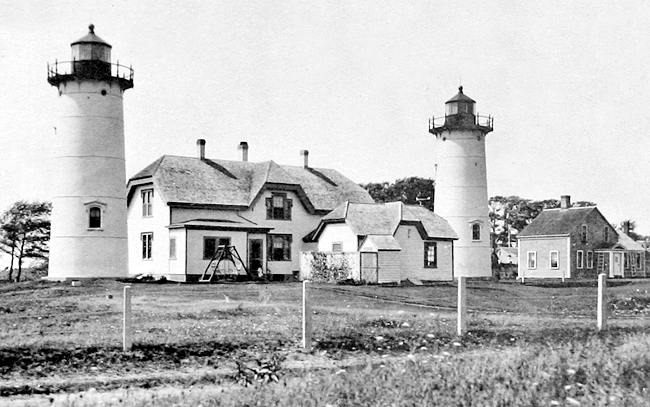
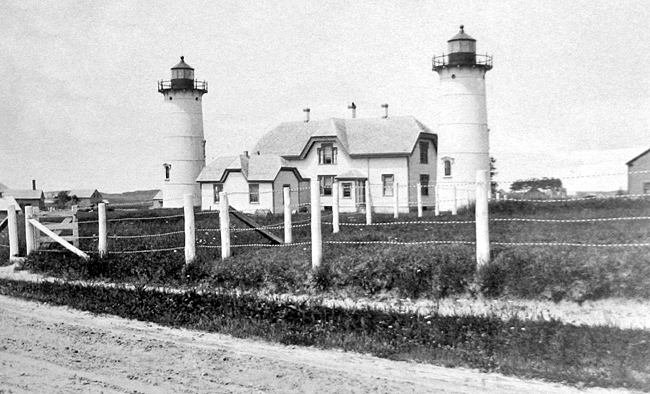
In 1841, “being entirely unfit for use” the two forty-foot light towers were torn down and rebuilt in brick for $6,750, by Winslow Lewis. A new brick keeper’s dwelling was connected by covered walkways to the twin towers, each of which were outfitted with ten oil lamps and an equal number of fourteen-inch reflectors.
Scarcely twelve months later the inspection report of civil engineer I.W.P. Lewis, Winslow Lewis’ nephew, contained a statement from Keeper Howes complaining about the wretched construction practices used:
I expected to have a light-house, and everything in first rate order, when these new buildings were put up; but I was mistaken. In first place, the house is leaky about the roof and windows, every part being badly built as far as I can judge. The cellar and foundation walls are laid on sand, without any footing to the walls, and so little below the surface, that rats burrow from the surface and infest the cellar. All the chimneys in the house smoke baldy. The kitchen is built particularly bad - in the oven, which is not large enough to get any thing like a good batch of bread into it; also in the walls being plastered into the brick work without furring. The house stands midway between the two towers, with a covered way leading to each; this covered way leaks badly. The lanterns were glazed with plate glass, and, during the gale of October last, both lanterns were burst in by the force of the winds; and 17 panes of glass were broken, this accident occurred entirely in consequence of the insufficient manner in which the glass was originally set by the contractor; and had I not been so fortunate as to discover the accident before the whole of the glass was blown in, both of the lanterns would have been destroyed, and the light put out. …The numerous leaks about my house cause so much dampness, that I find it difficult to preserve my provisions from moulding.
Fourth-order Fresnel lenses with lamps burning lard oil were installed in the tower in 1857.
Captain Josiah Hardy II was keeper from 1872 to 1899 and kept a daily log in which he recorded frequent entries detailing the erosion of the bluff near the station after the outer beach was washed away. Keeper Hardy noted that on December 21, 1874, the south tower was 190 feet from the bank. On September 30, 1876, the distance from the same tower to the bluff was 126 feet, and roughly five months later, on February 28, 1877, the distance was just 95 feet.
|
On September 30, 1878, Keeper Hardy noted that the old south tower was twenty-six feet from the edge of the bluff. Exactly one year later that distance had shrunk to merely twenty-seven inches. Two months later, a third of the foundation was over the edge, and locals began to place bets on the exact time when the tower would topple over the bluff.
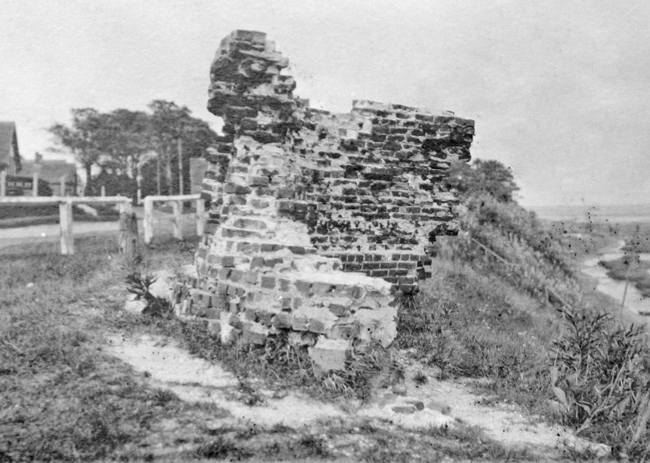
At 1 p.m. on December 15, 1878, the south tower plummeted to the beach below. Fifteen months later, the 1841 keeper’s home and the north tower followed suit. Remains of the north tower could still be seen at the edge of the bluff as late as 1919.
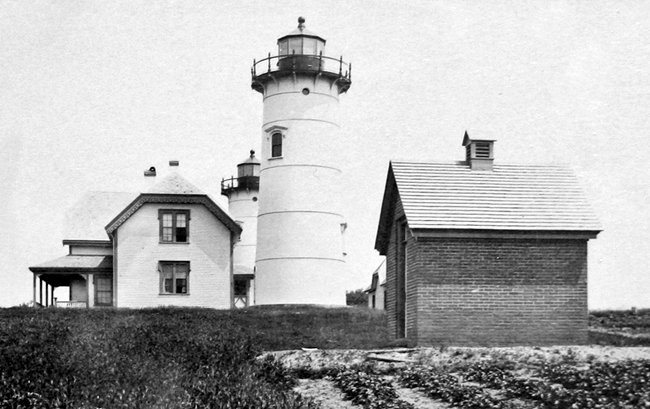
A brick oil house, measuring roughly nine by eleven feet, was added to the station in 1893.
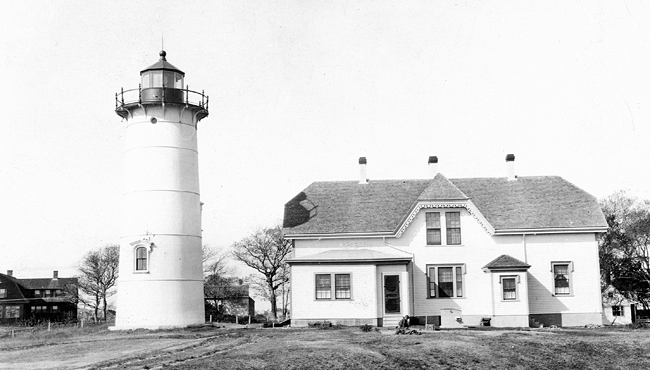
Beginning in the early 1900s, the government began to phase out twin lights as a cost-cutting measure. In 1923, a fourth-order, L. Sautter & Cie. Fresnel lens that flashed four times every thirty seconds was installed in the south tower. The lens used a clockwork mechanism for rotation, while its lamp used incandescent oil vapor for fuel. The increased range of the light and its new characteristic negated the need for two towers.
In May 1923, the government opted to relocate Chatham’s northern tower to Nauset Beach to replace the final remaining tower of the Three Sisters of Nauset, which had deteriorated beyond repair. The newly situated tower became known as Nauset Light or Nauset Beach Light.
George F. Woodman, who became keeper in 1928, received a number of superintendent’s efficiency stars for excellent service. He was noted for his outstanding courtesy, even when responding to the silliest of questions posed by visitors, such as, “Is that the lighthouse?” In addition to his regular duties, he received 1,500 visitors between mid-July and mid-September 1936.
An electric motor replaced the clockwork drive at Chatham Light in 1939, when the Coast Guard took over control of the country’s lighthouses. During World War II, Chatham was one of just a few lights that remained an active navigational aid.
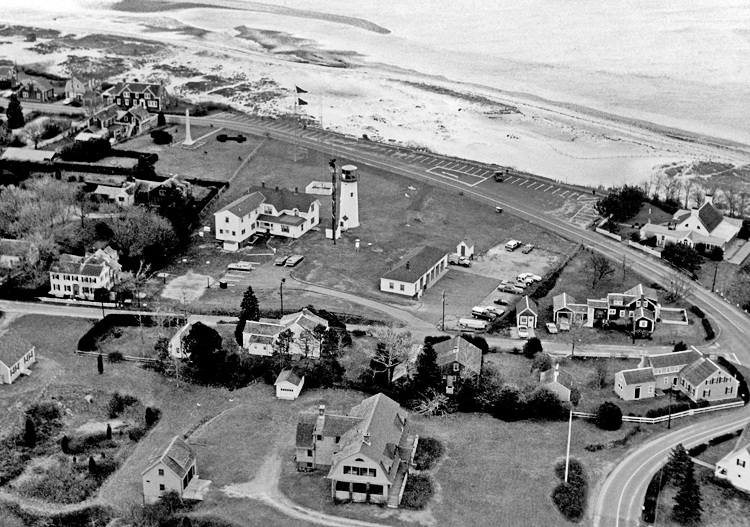
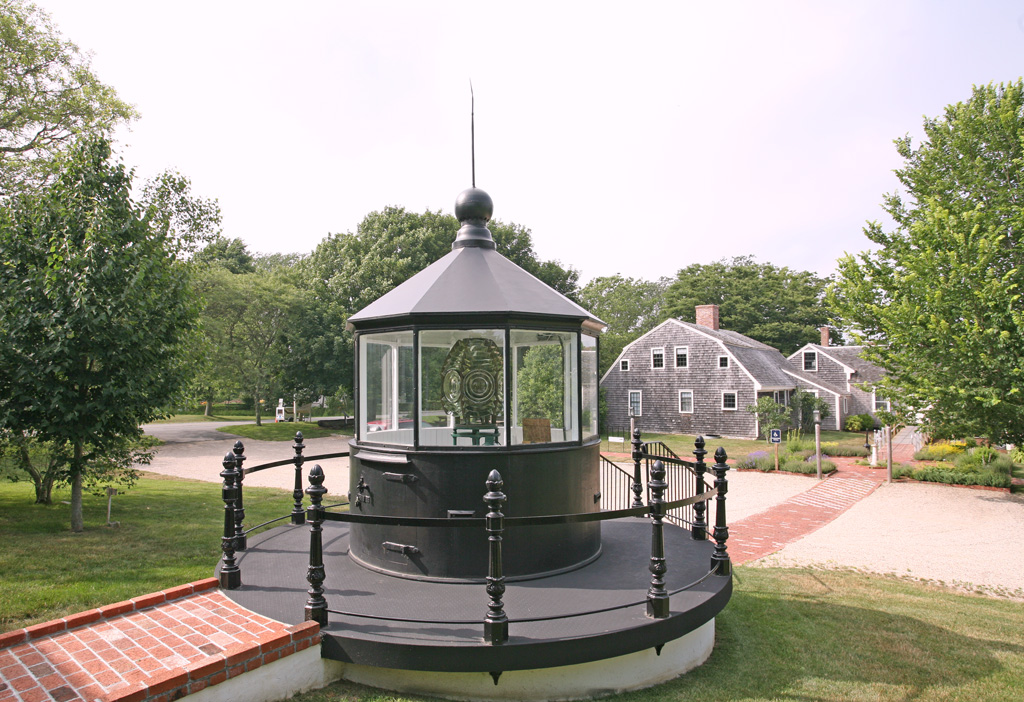
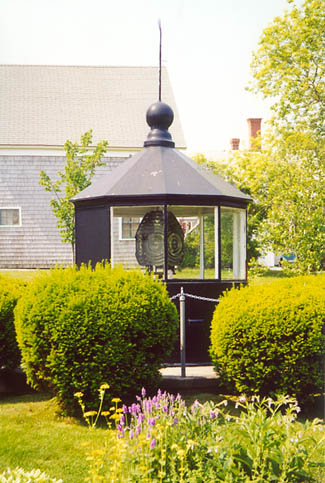
In 1969, a 2.8 million candlepower aerobeacon that can be seen twenty-eight nautical miles out to sea was installed in a new, larger lantern room (which was required to house the beacon). Chatham’s old lantern room and Fresnel lens were removed to the grounds of Chatham Historical Society’s Atwood House Museum.
Chatham Light was automated in 1982, and in August 1993, crowds gathered to watch as new DCB-224 aerobeacons were installed in the lantern room.
Despite the town’s efforts to stem ongoing erosion and damage to Chatham’s shore and bluff-top buildings, the coastline continues to wear away. At present, Chatham Light remains unthreatened due to its relocation on the west side of the road by forward-thinking individuals in 1877, but the day will likely come when Chatham Light will need to be moved again.
Keepers:
References