Fenwick Island, DE 

Select a photograph to view a photo gallery
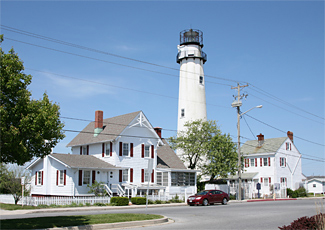
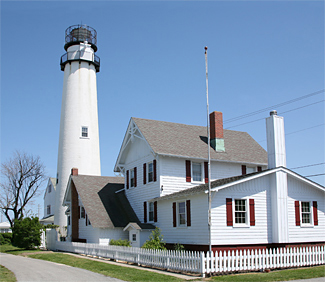
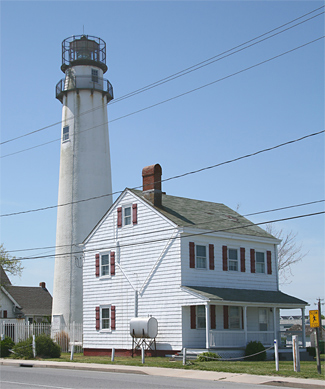
Photo Gallery
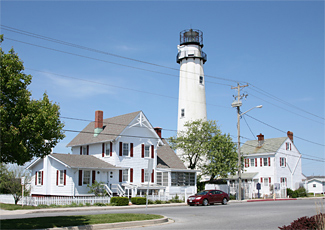
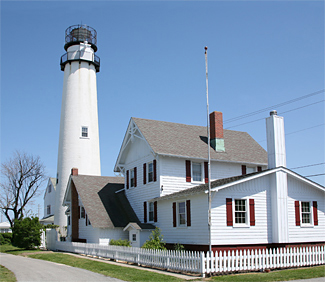
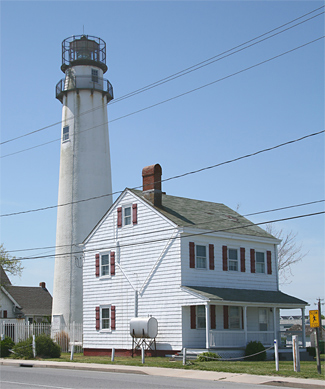
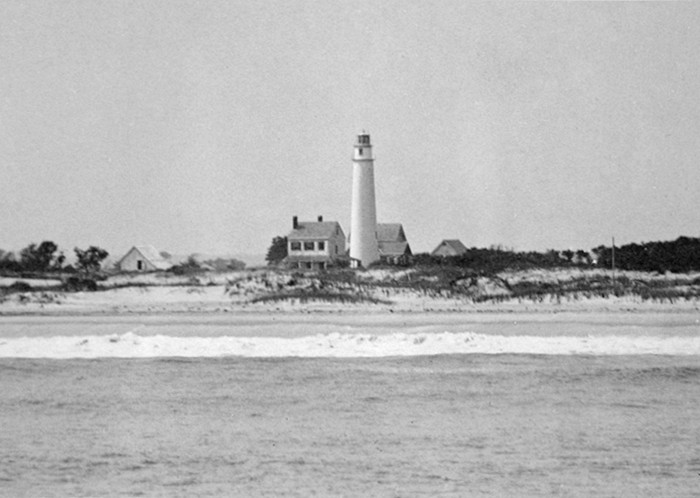
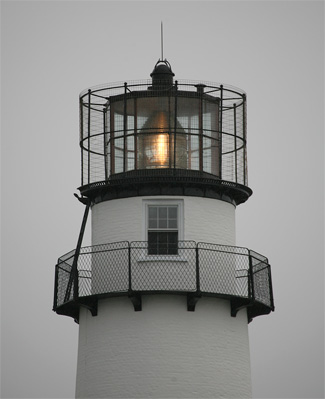
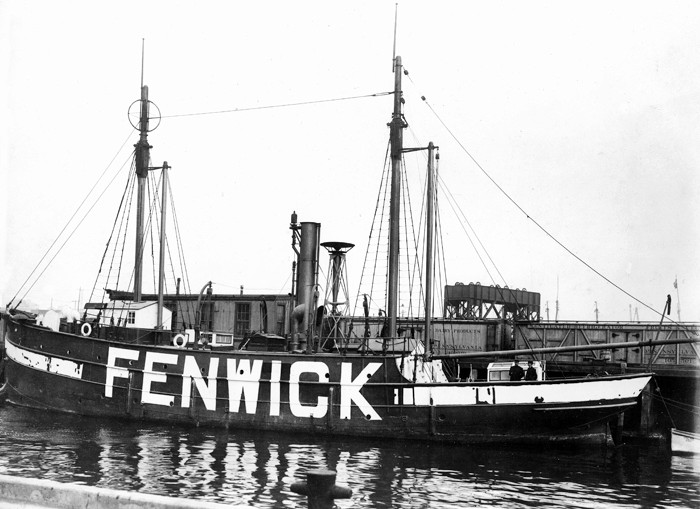
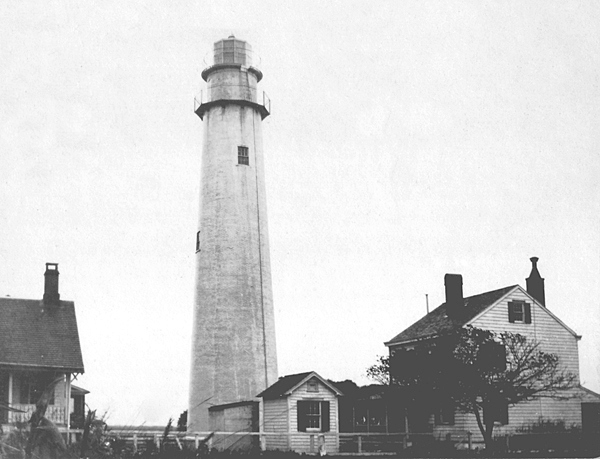
Photo Gallery
Photo Gallery
The 1855 Annual Report of the Lighthouse Board contains the following appeal for a lighthouse on Fenwick Island:
A light-house in the vicinity of Fenwick’s island will serve to guide vessels from the southern ports, bound into the Delaware, and also the great coasting trade with the same or a more northern destination. Fenwick’s Island shoal is a very dangerous one for those, and also in some degree for the European trade of Philadelphia. It is very common for ships coming from the eastward to fall in with the coast considerably to the southward of Cape Henlopen, and in thick weather a light on Fenwick’s island would serve to ascertain their position when the Henlopen light was invisible.
|
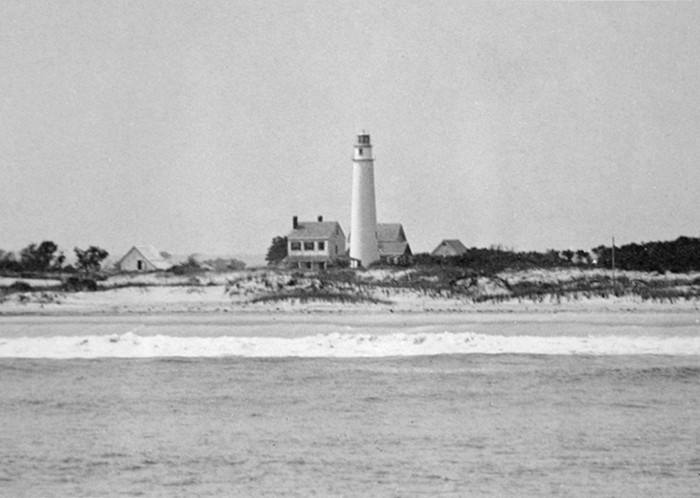
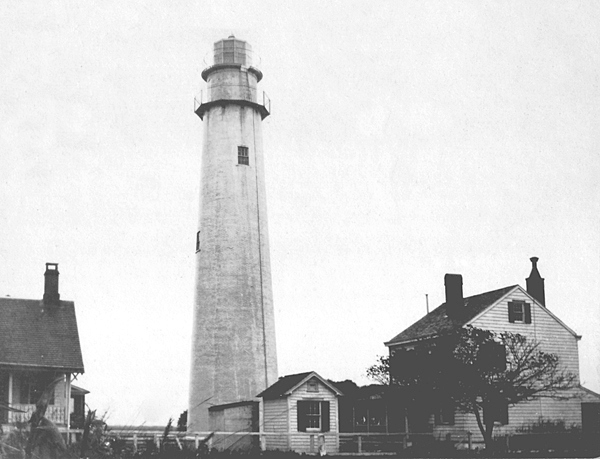
A two-story, frame keeper’s dwelling was built just east of the tower atop a brick cellar that housed a 2,500-gallon cistern for storing rainwater captured from the dwelling’s roof. The buildings at the station were constructed under the direction of Captain William F. Raynolds of the U.S. Army Corps of Engineers for a total cost of $23,749. According to Notice to Mariners, No. 284, dated December 29, 1858, work on Fenwick Island Lighthouse was complete, but for some reason not given, the light would not be exhibited until August 1 of the following year.
John Smith was hired as the light’s first head keeper, with H. Hickman serving as his assistant. One dwelling was considered sufficient for the station’s two keepers until around 1878, when the Lighthouse Board noted: “A single dwelling at this station is occupied by two keepers with large families, and requires an addition to accommodate them, which will cost $5,000.” Bids for construction of a new dwelling were opened on June 8, 1881, and the winning contractor, Thomas W. Ferree & Brother of Yorklyn, Delaware, had the structure ready for its formal acceptance on November 12, 1881. Assistant Keeper William Pepper remained in the original dwelling with his family, while Keeper Jehu Bennett took up residence in the new structure with his family.
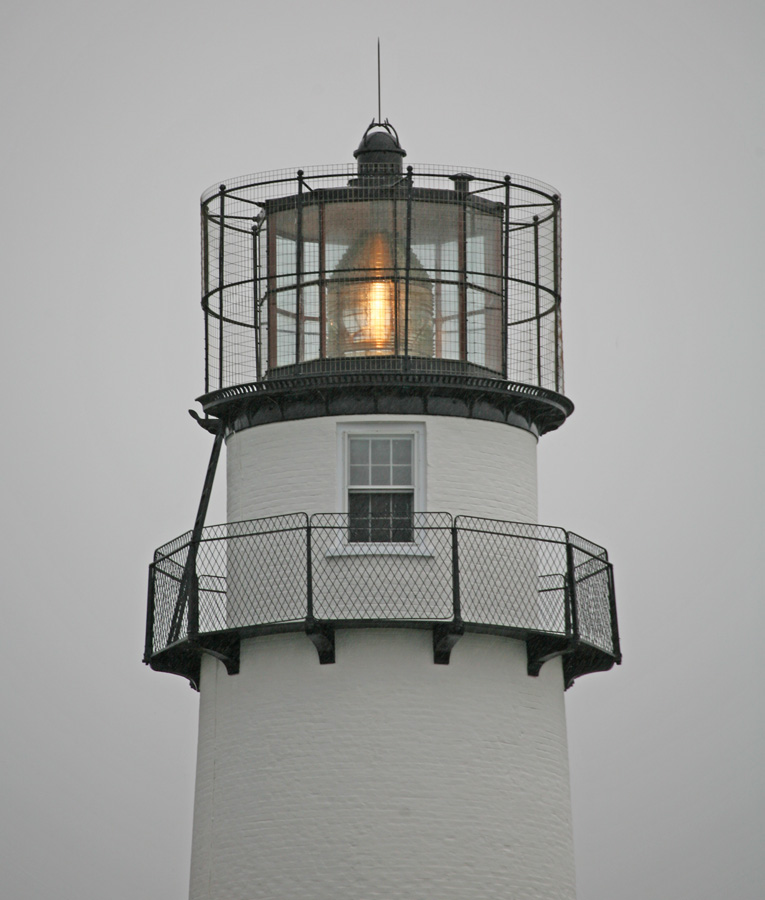
While the tower’s third-order Fresnel lens was fixed, a flash panel revolved around it that resulted in the light’s characteristic being a fixed white light punctuated every two minutes by a flash. In 1868, a galvanized iron drop-tube was installed in the tower to contain the weights that powered the revolving machinery. A detached oil house was added to the station in 1883 and again in 1910.
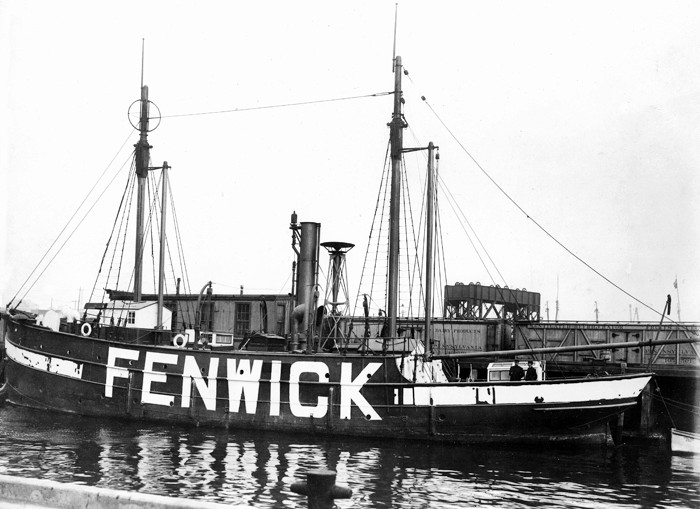
Fenwick Island Lighthouse guided mariners along the coast in clear conditions, but during periods of limited visibility, they were in danger of running aground Fenwick Island Shoal, located roughly eight miles east of the lighthouse. Starting in 1888, Fenwick Island Shoal Lightship was anchored just east of the shoal to help vessels avoid this menace to navigation. A lightship was assigned to the station until 1933, when a lighted whistle buoy was deployed there instead.
On Christmas morning 1931, as a keeper was extinguishing the Fenwick Island Light, he noticed a small sailboat stranded on a sandbar about a half mile south of the lighthouse. Seeing what appeared to be a person huddled inside the craft, the keeper set out for the boat and discovered the occupant to be an unconscious man clothed in fur garments. The keeper took the man back to the lighthouse, where he soon recovered. Amazingly, the man turned out to be an Eskimo who weeks earlier had embarked on a solo journey from Greenland to Alaska via the Panama Canal. After two days spent at the lighthouse regaining his strength and taking on new provisions, the Eskimo resumed his lengthy journey to Alaska.
Fenwick Island Lighthouse was electrified in 1936, at which time the position of assistant keeper was abolished. George Walker, who has served as the assistant keeper for a decade, was transferred to Fourteen Foot Bank Lighthouse.
|
Paul Pepper’s crusade proved successful, and on September 21, 1981, the Coast Guard transferred ownership of the tower to the State of Delaware, which then leased it to the Friends of the Fenwick Island Lighthouse. Pepper was elected president of the group, and the following year the lighthouse, equipped with a less powerful light source and its returned Fresnel lens, was relit. By this time, the lighthouse was starting to show its age, but fortunately State Senators Cordrey and Sharp, both summer residents of Fenwick Island, were avid supporters of the lighthouse group and succeeded in obtaining $400,000 to restore the tower.
During restoration work in 1997, the lighthouse was encircled with scaffolding, and this outer layer was then wrapped in protective coating. When the tower emerged after the reparative work, it was almost as good as new. In July 1998, a rededication ceremony was held at the lighthouse. A plaque honoring the tireless effort of Paul and Dorothy Pepper was presented to Paul Pepper and then later placed on display at the lighthouse. Unfortunately, Dorothy had passed away two years earlier.
Speaking at the ceremony, eighty-nine-year-old Paul Pepper stated, “When I look at the lighthouse now, I sorta feel like I have been the manager or quarterback of our team of The Friends of Fenwick Island Lighthouse and we have just scored a big winning touchdown by convincing the State of Delaware to do a complete renovation job for us. This would not have happened if we had not all pulled together, donating our time, effort and money. I want to thank everybody . . . I am so happy. I just wish Dorothy could have lived to see this accomplished. She would have been thrilled.”
Oliver H. Cropper succeeded Pepper as president of the Friends of the Fenwick Island Lighthouse in 1992 and helped raise more than $100,000 for the upkeep of the lighthouse. Cropper faithfully served as president for over fifteen years, until a “new” friends support group was formed in 2007 under the direction of Winnie Lewis, granddaughter of a former lighthouse keeper. Now, another generation of friends is responsible for the care and maintenance of the stately structure.
In 2017, Fenwick Island Town Councilman Richard Mais announced that the state had acquired the keeper’s dwelling west of the lighthouse and had hired a Wilmington architecture firm to return the house to its original state. As part of the restoration, a greenhouse will be removed and a new handicap accessible entrance will be added. “We are looking forward to it,” Mais said. “Even though it is not part of the Town of Fenwick Island it is certainly our icon and a big draw for tourism. It’s a nice thing to have around, so we are looking forward to the state finally … taking it over and I think they are going to do a great job.”
Keepers:
References