Port Boca Grande (Gasparilla Island), FL 




Select a photograph to view a photo gallery
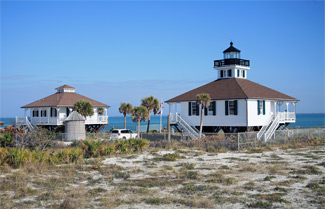
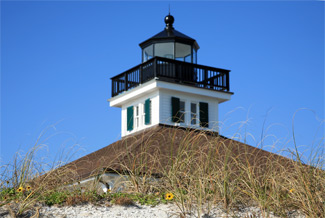
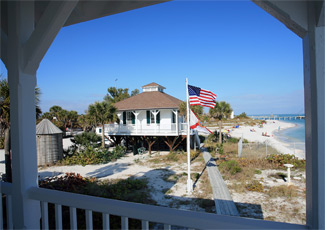
Photo Gallery
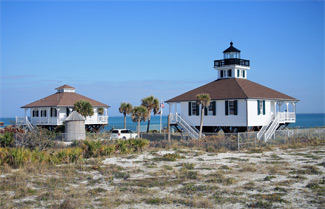
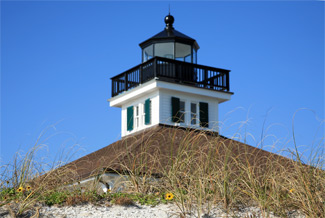
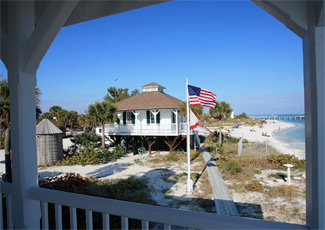
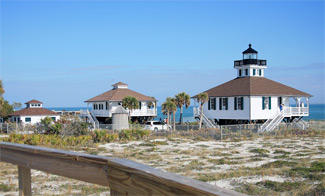
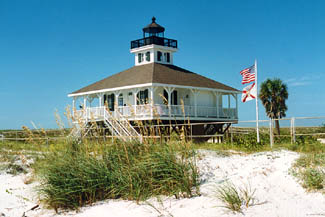
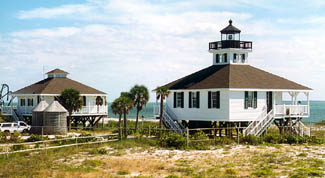
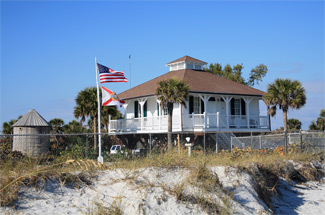
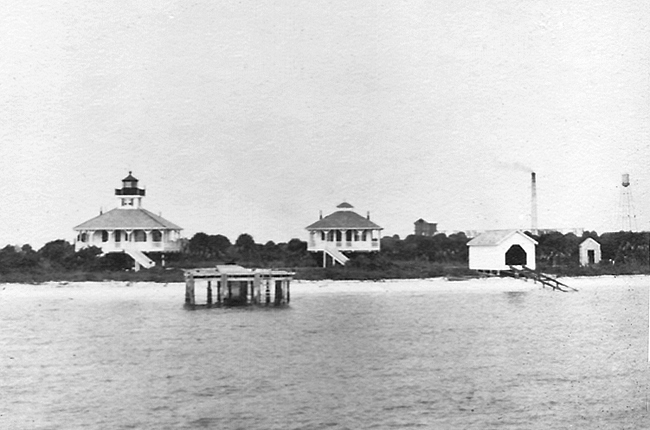
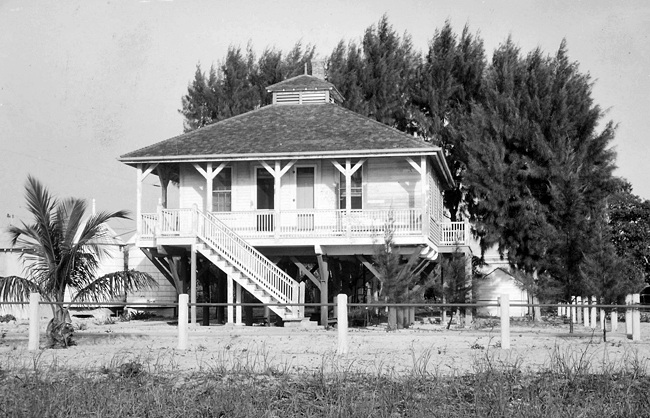
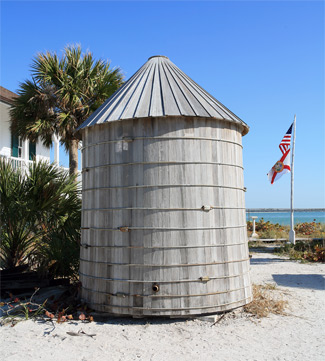
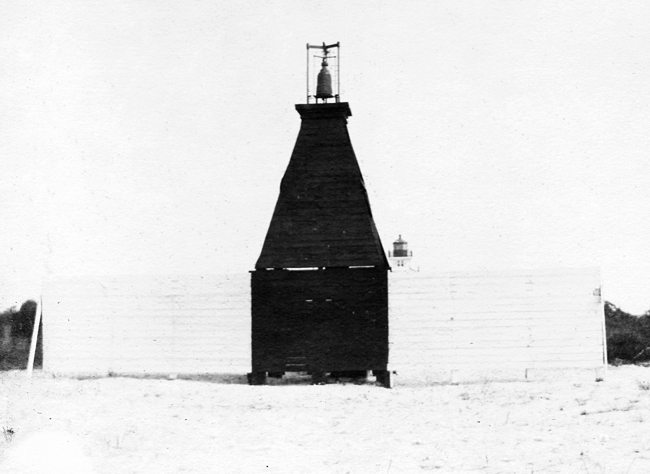
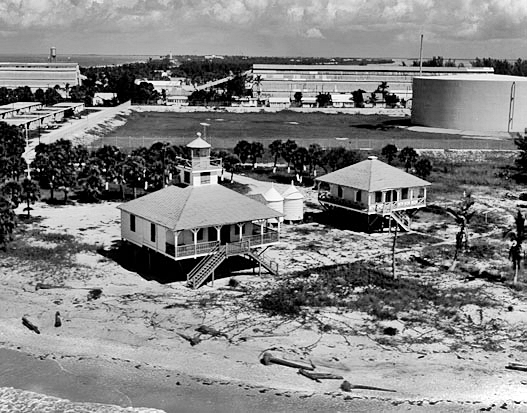
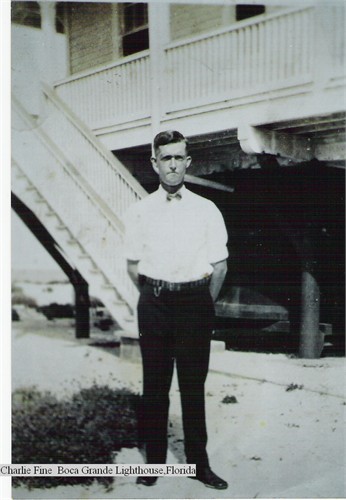
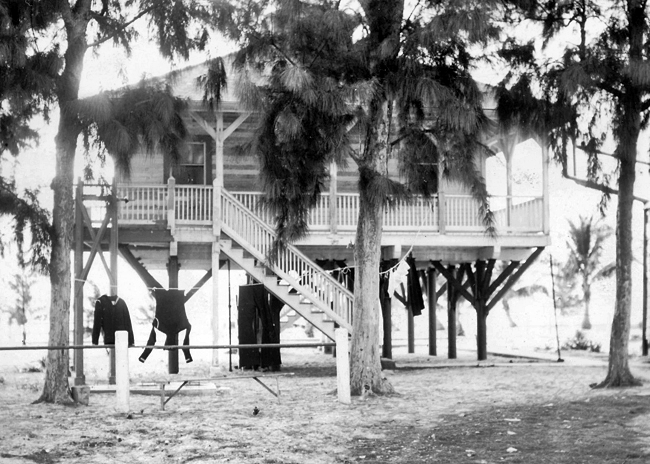
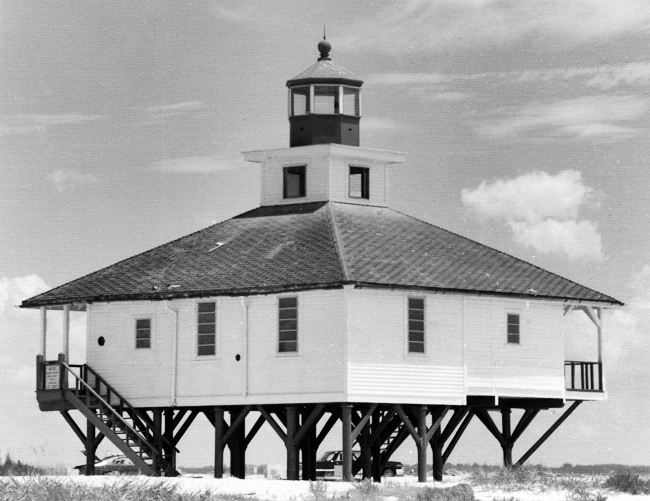
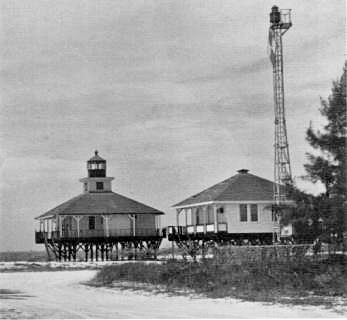
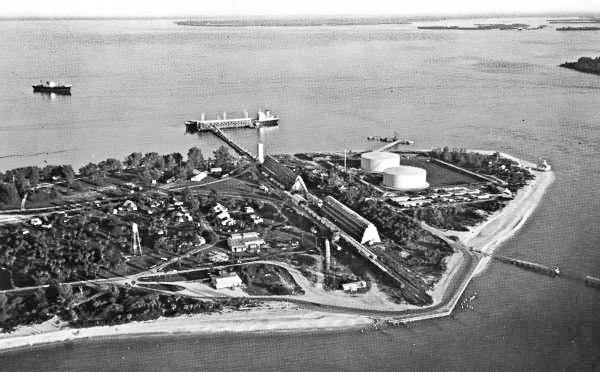
Photo Gallery
Photo Gallery
|
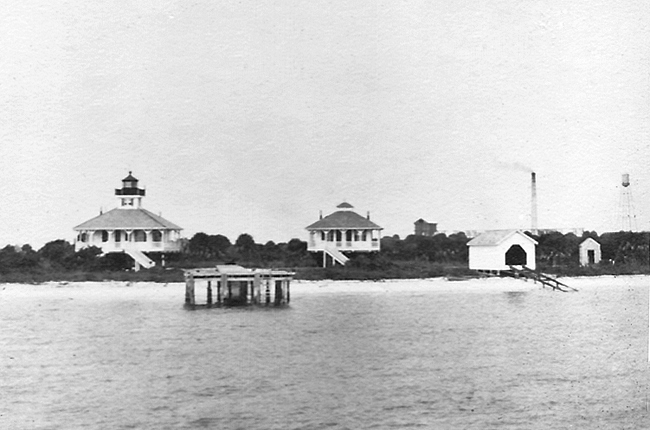
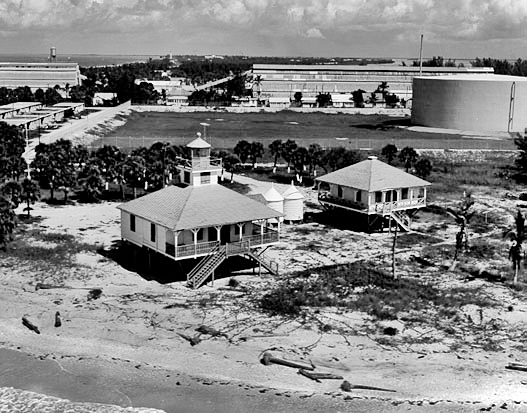
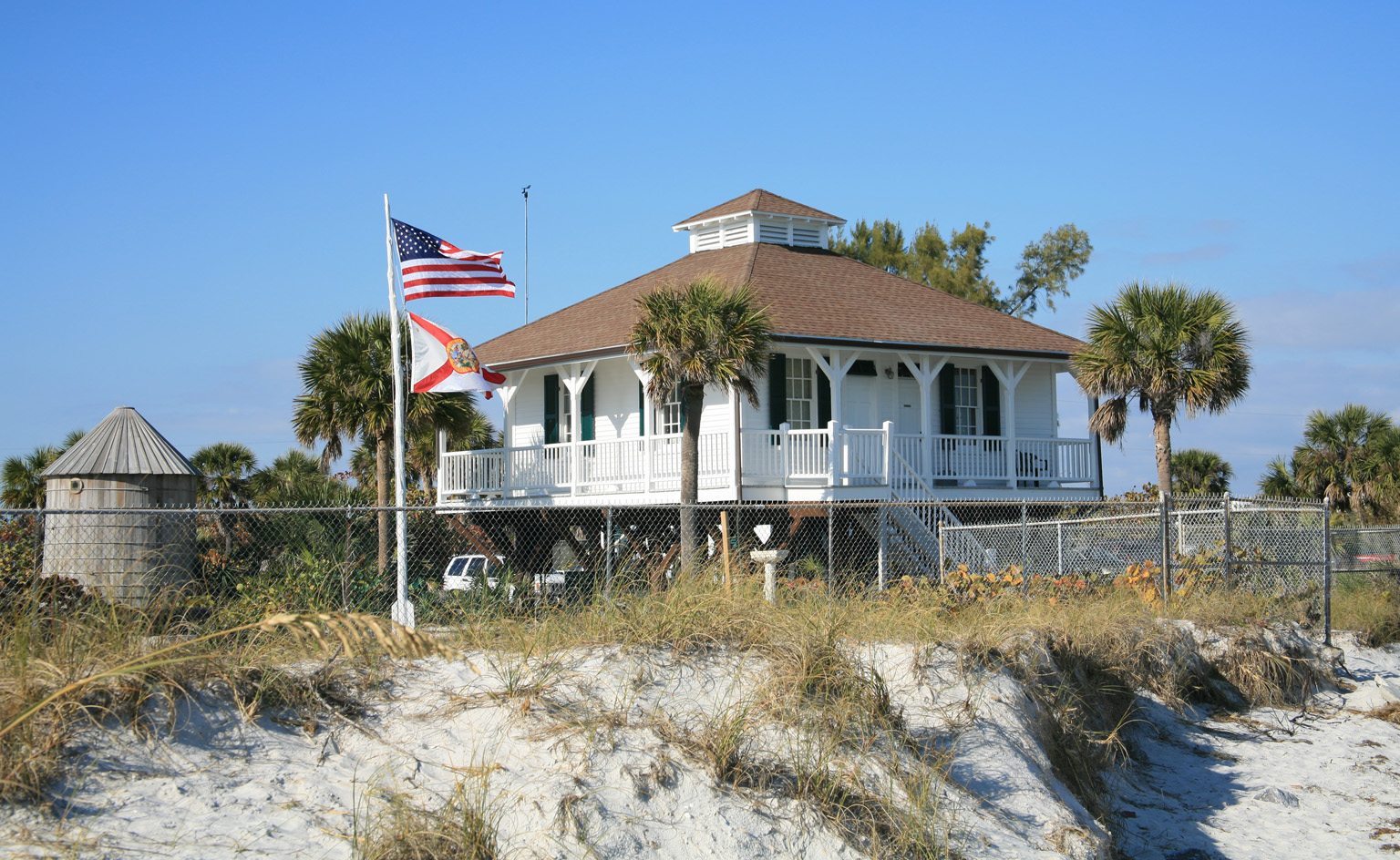
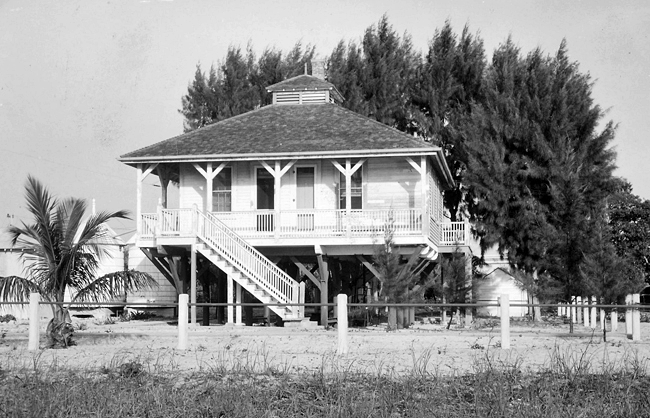
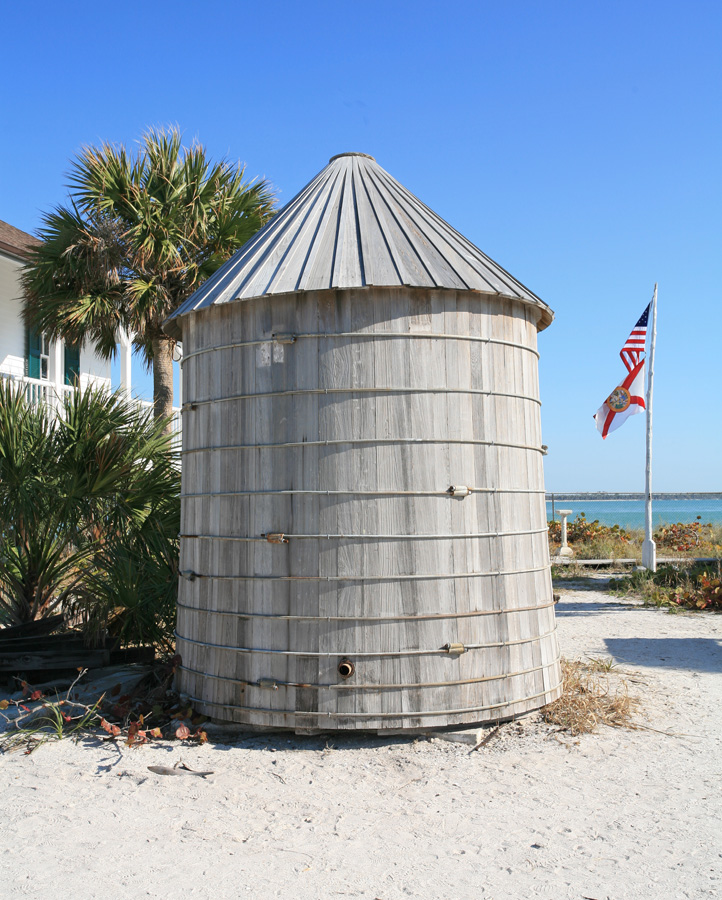
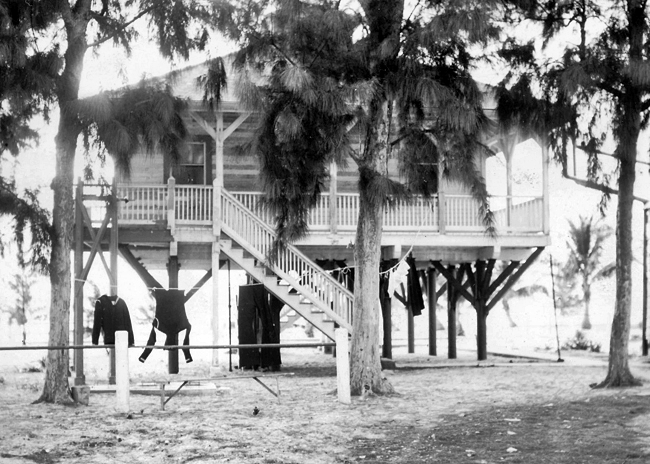
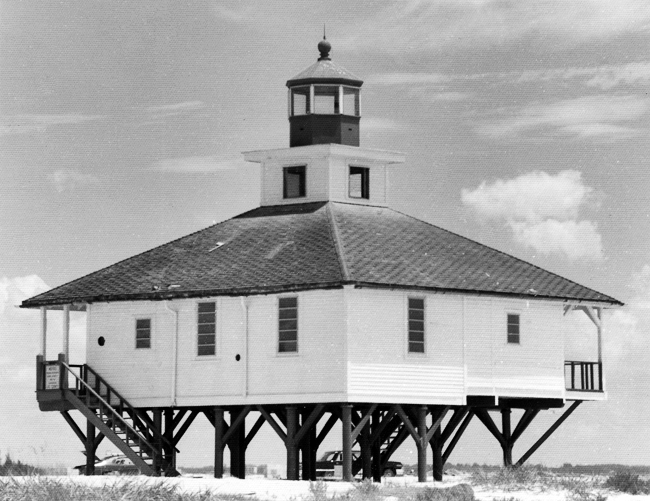
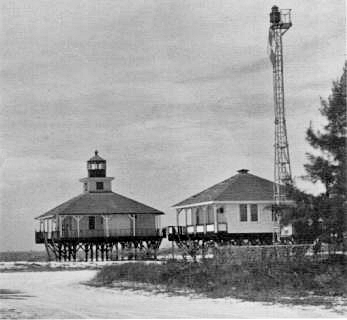
Built in 1890, the lighthouse consists of a one-story dwelling, supported by pilings, with a square tower protruding through the center of its hipped roof. Atop the tower is mounted an octagonal lantern room that originally protected a rare third-and-a-half-order Fresnel lens, which produced a white light interrupted every twenty seconds by a red flash at a focal plane of forty-four feet. The dwelling was painted white, its shutters green, and the lantern room black. Roughly seventy feet away, a nearly identical dwelling, minus the tower, was built for the assistant keeper, and wooden storage tanks were provided to hold a supply of water for the keepers. Keeper Francis McNulty activated the lighthouse on December 31, 1890, just in time to welcome the new year.
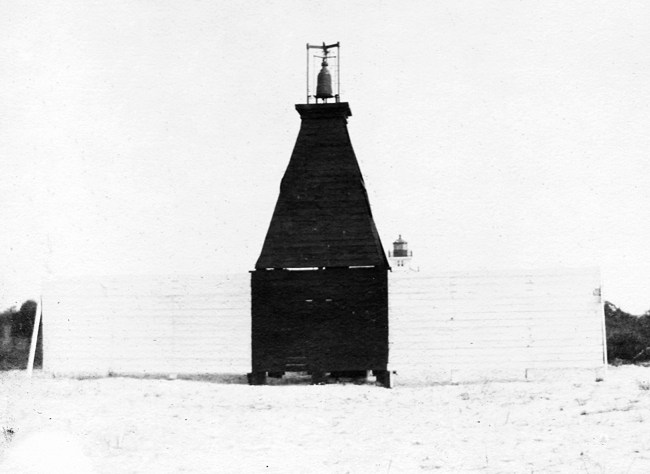
Four foundation piles were driven into the seabed about 735 feet southwest of the lighthouse to support a square, pyramidal structure, surmounted by a black lantern that, with the lighthouse, formed a pair of range lights to guide mariners into Charlotte Harbor. An eighteen-foot boat was given to Keeper McNulty so he could tend the front range light. In 1892, the front range light was washed out by the shifting of the channel leading to it being re-erected on land, 175 feet from the high-water mark and 475 feet from the lighthouse. An oil house was added to the station in 1895, and in 1898 a eighty-foot-long wharf with a T-head was extended into the waters near the station.
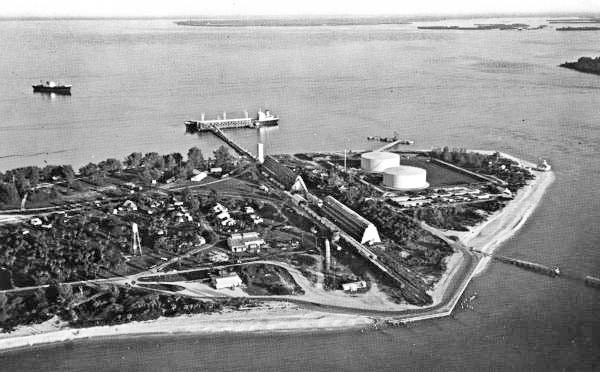
As the phosphate trade continued to grow, a railroad line was extended to Port Boca Grande, just north of the lighthouse, for transporting the phosphate from the mines to the port in a more economical manner. The rail line opened in 1907, and for the next several decades the phosphate flowed to the island where it was transferred from the trains directly to large freighters. In 1969, Port Boca Grande was Florida’s fourth busiest port, and Florida provided well over half of the nation’s supply of phosphate, which was used primarily in fertilizer.
|
In 1914, Keeper Lester, by far the station’s longest-serving keeper, was commended along with his assistant James T. Williams for assisting the occupants of two motorboats that were blown onto the beach near the lighthouse. The four men from the motorboats were furnished food and shelter until their boats were refloated.
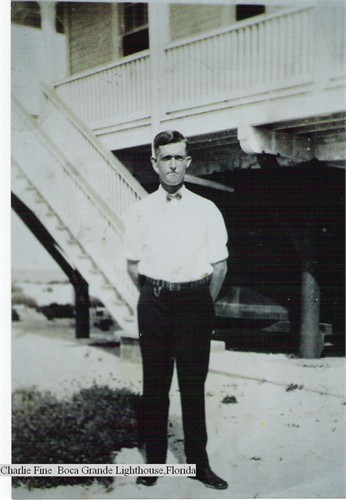
Charles Fine began serving as an assistant keeper at the lighthouse in 1922, when he was just nineteen years old. In 1931, he informed relatives that he planned to get married and had obtained leave to visit them in Key West with his bride on May 1, but for some unknown reason he shot himself through the heart with a shotgun at the lighthouse on April 28. The wife of Keeper Charles Williams heard the gunshot, rushed to the scene, and discovered the body. Fine had suspended the shotgun from the ceiling of a room in his dwelling using an electric light cord, and then he held the muzzle with one hand and used his other hand to push the trigger with a stick. The lighthouse tender Ivy transported Fine’s body to Key West, where his father, Robert J. Fine, a retired lighthouse keeper, was living.
Boca Grande Lighthouse is known as a haunted lighthouse, but it isn’t the ghost of Keeper Fine that roams the grounds. Rather, strange occurrences at the lighthouse are attributed to a keeper’s daughter who died at the lighthouse and to Josefa, a Spanish princess decapitated by Jose Gaspar, a pirate after whom Gasparilla Island is reportedly named.
The lighthouse was home to several keepers and their families until it was automated in 1956. Just two years later, visitors could arrive on Gasparilla Island by car instead of train, as a new bridge connected the island to the mainland. In 1966, the lighthouse was abandoned by the Coast Guard, and a modern light atop a fifty-eight-foot-tall steel skeleton tower was established nearby. By 1970, erosion on Gasparilla Island was threatening the old lighthouse along with other structures. The lighthouse’s foundation was undermined, imparting a dangerous lean to the structure, and its stairs had rotted away. In response, the Boca Grande Conservation Council was formed to lead the battle against erosion. The government finally acted in 1971, and a 265-foot granite jetty was built near the lighthouse to protect the sandy island. Florida Power and Light, which had storage facilities at Port Boca Grande, then pumped 100,000 cubic yards of fill into the area, much of it around the lighthouse itself.
|
The lighthouse, dwelling, and surrounding acreage were transferred to the State of Florida in 1988 and became Gasparilla Island State Park. The following year, a small group of local citizens formed the Barrier Island Parks Society (BIPS), and one of their first objectives was to establish a museum in Port Boca Grande Lighthouse. A decade later, the $165,000 project was complete, and the museum, run by BIPS for the Florida Park Service, opened its doors. The museum tells the story of the area starting with the Native Americans, and also covers the Spanish influence, the local fishing industry, Port Boca Grande, and, of course, the history of the lighthouse.
The light station suffered a nearly direct hit from Hurricane Charley on August 13, 2004 that destroyed the lighthouse catwalk and two cedar cisterns. In 2017, the state legislature approved a $89,435 grant for needed repairs to the assistant keeper’s house. Hurricane Ian caused structural and water damage to the lighthouse in September 2022, forcing the property to close until needed repairs could be made. In July 2023, the state Department of Environmental Protection signed a $3.8 million contract to repair and restore the lighthouse and other historic structures in the area. After work was completed, the lighthouse reopened in February 2024.
Port Boca Grande diminished in significance after 1979, when the railroad line was abandoned and the phosphate industry moved north to Tampa. Florida Power and Light (FPL) started using the port as an oil storage facility in 1958. Oil from the Gulf of Mexico would be off-loaded at the port, stored in four large tanks, and then barged down the Intracoastal Waterway to the FPL power plant in Fort Myers. In 2002, the power plant was converted to natural gas, and the oil barges ceased calling at Port Boca Grande. Today, traffic near Port Boca Grande Lighthouse, the oldest building on Gasparilla Island, consists primarily of fishermen, pleasure boaters, and park visitors coming to learn of the island’s storied past.
Keepers:
References